\What Is Recycled Polyester? A Complete Guide to Sustainable Fabric
The fashion industry uses many types of synthetic fabrics to produce everyday clothing, sportswear, jackets, and activewear. Polyester is one of the most common materials because it is durable, lightweight, and versatile. However, traditional polyester is made from petroleum-based resources. This has encouraged clothing brands to explore alternative materials with a lower reliance on newly produced raw materials.
One popular option is recycled polyester. But what is recycled polyester, and how does it differ from regular polyester?
Recycled polyester is a synthetic fabric made by processing existing polyester materials into reusable fibers. These materials can include used plastic bottles, textile waste, and other suitable polyester products. The recycled material is processed and turned into fibers or yarns for new products.
Many fashion brands use this material to support their efforts to reduce waste and use existing resources. However, recycled polyester also has limitations. Understanding its production, benefits, environmental impact, and uses can help brands make better fabric choices.
What Is Recycled Polyester?
Recycled polyester is a type of polyester made from previously used plastic or polyester materials. It is also commonly called rPET when it is made from recycled polyethylene terephthalate.
Polyethylene terephthalate, or PET, is a plastic used in beverage bottles, food packaging, and polyester textile fibers. Recycling suitable PET materials allows manufacturers to process them into new products instead of relying entirely on virgin raw materials.
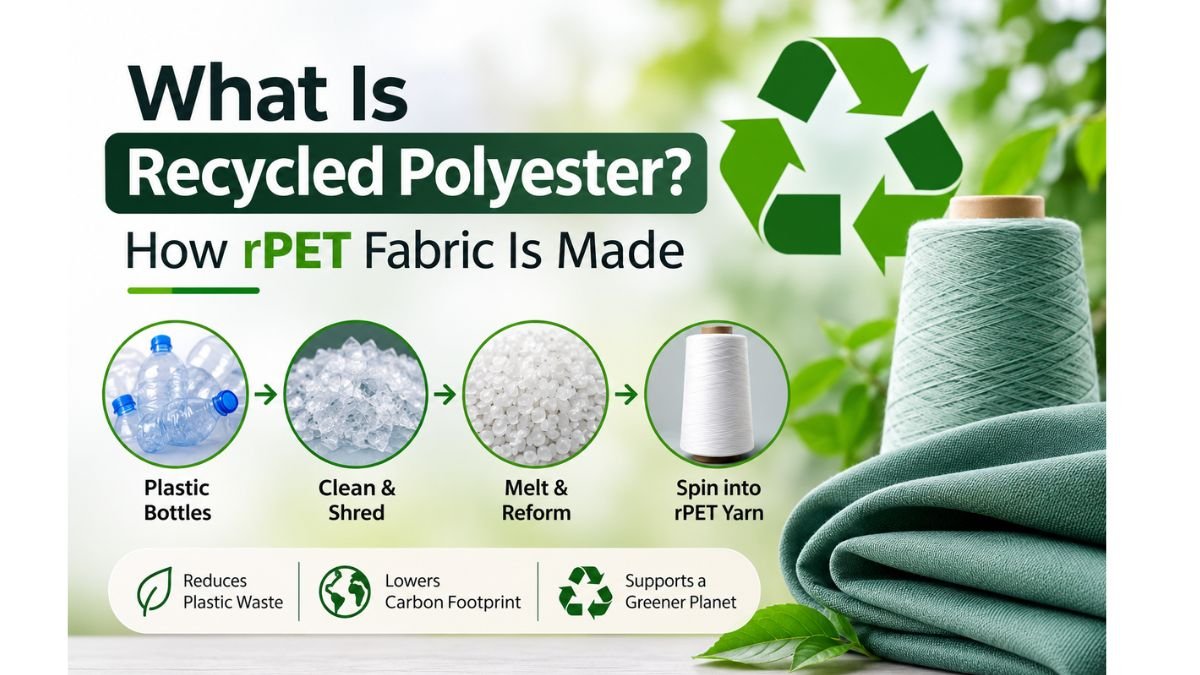
The recycled material is cleaned, processed, and converted into small pieces or chemical building blocks. These are then used to produce polyester fibers and yarns.
Recycled polyester can be used in many clothing products, including:
- T-shirts and sportswear
- Leggings and activewear
- Jackets and outerwear
- Hoodies and sweatshirts
- Tracksuits
- Bags and accessories
- Workwear and uniforms
The final fabric depends on the yarn, knitting or weaving method, finishing, and other materials used in production.
Although recycled polyester comes from existing materials, it remains a synthetic fiber. It does not become a natural fabric simply because its raw material has been recycled.
How Is Recycled Polyester Made?
The manufacturing process depends on the type of recycled material and recycling technology. Two major methods are mechanical recycling and chemical recycling.
1. Collecting Recyclable Materials
The process begins with collecting suitable materials. These may include used PET bottles, discarded polyester garments, and industrial textile waste.
The materials must be suitable for recycling. Contamination, mixed materials, labels, dyes, and other components can affect the process.
For bottle-based recycling, collection systems gather used plastic bottles. These bottles are then sent to recycling facilities for sorting and processing.
Textile waste may come from clothing factories, fabric production, or discarded garments. Recycling this material can be more complex because textiles often contain several fibers, trims, dyes, and finishes.
2. Sorting and Cleaning
After collection, recyclable materials are sorted according to their type and quality.
For plastic bottles, facilities remove unsuitable materials and separate PET from other plastics. The selected bottles are washed to remove dirt, labels, adhesives, and remaining contents.
For textile waste, the material may need sorting by fiber composition and color. Zippers, buttons, and other non-textile parts may also need removal.
Proper sorting helps improve the quality of the recycled material.
3. Shredding and Processing
In mechanical recycling, cleaned PET materials are shredded into small flakes. These flakes are washed and processed to remove remaining impurities.
The flakes can then be melted and converted into a form suitable for making new polyester fibers.
In textile recycling, the process may involve cutting, shredding, and separating fibers. The exact method depends on the material and recycling equipment.
4. Producing Polyester Fibers
The processed material is used to produce polyester fibers. In mechanical recycling, PET flakes are melted and pushed through small openings called spinnerets.
The material cools and forms continuous filaments. These filaments can be stretched and processed into yarn.
Chemical recycling follows a different route. It breaks polyester down into chemical building blocks that can be purified and used to make new polyester.
5. Spinning and Fabric Production
Once the fibers are ready, manufacturers turn them into yarn. The yarn can be knitted or woven into fabric.
The fabric may then receive additional treatments, such as dyeing, finishing, brushing, or moisture-management treatments.
Finally, the material is inspected and prepared for clothing production.
The finished recycled polyester fabric can look and feel similar to fabric made from virgin polyester. Its performance depends on the fiber quality and manufacturing process.
Types of Recycled Polyester
Not all recycled polyester comes from the same source. Understanding the main types helps clothing brands make informed sourcing decisions.
1. Bottle-Based Recycled Polyester
Bottle-based recycled polyester is made from used PET bottles.
The bottles are collected, sorted, cleaned, and processed into flakes. These flakes are then converted into polyester fibers and yarn.
This is a common form of recycled polyester used in clothing and textile products.
It can be used for sportswear, jackets, T-shirts, bags, and other products. However, the recycling process must meet appropriate quality requirements.
2. Textile-to-Textile Recycled Polyester
Textile-to-textile recycling uses discarded polyester fabrics or garments as raw material for new textile products.
This approach aims to keep textile materials in circulation rather than relying only on plastic packaging waste.
However, recycling old garments can be challenging. Clothing may contain polyester mixed with cotton, elastane, or other fibers.
Trims, coatings, dyes, and finishes can also make separation more difficult.
As recycling technology develops, textile-to-textile recycling may provide more opportunities for recovering materials from used clothing.
3. Mechanically Recycled Polyester
Mechanically recycled polyester is produced by physically processing existing polyester materials.
The material is sorted, cleaned, shredded, melted, and converted into new fibers.
This method is widely used for suitable PET waste. However, repeated processing can affect material properties, depending on the input quality and process controls.
4. Chemically Recycled Polyester
Chemical recycling breaks polyester down into its chemical building blocks.
These building blocks are purified and used to produce new polyester material.
Some chemical recycling methods can handle certain textile waste streams that are difficult to process mechanically. However, the technology, cost, energy use, and commercial availability vary.
When comparing recycled polyester options, ask suppliers which process they use and what evidence supports their claims.
What Is the Difference Between Recycled Polyester and Regular Polyester?
Both materials are polyester. The main difference is the source of their raw materials.
Regular polyester is generally made using newly produced petrochemical raw materials. Recycled polyester uses existing polyester or suitable PET materials.
Here is a simple comparison:
| Feature | Regular Polyester | Recycled Polyester |
|---|---|---|
| Raw material | Mainly virgin petrochemical resources | Previously used PET or polyester materials |
| Fiber type | Synthetic | Synthetic |
| Durability | Depends on fiber and fabric construction | Depends on fiber and fabric construction |
| Appearance | Available in many textures and finishes | Can offer similar options |
| Moisture behavior | Depends on fabric construction and finish | Depends on fabric construction and finish |
| Recycling source | New raw material | Existing plastic or polyester material |
| Environmental considerations | Uses virgin raw materials | Can reduce demand for virgin material and use existing waste |
Recycled polyester is not automatically stronger, softer, or more comfortable than regular polyester. These properties depend on the fiber quality, yarn construction, fabric weight, and finishing.
For clothing brands, the most important step is to compare actual fabric samples and technical specifications.
Benefits of Recycled Polyester
Recycled polyester offers several potential benefits for textile manufacturers, clothing brands, and consumers.
1. Uses Existing Plastic Materials
One major benefit is that recycled polyester uses existing plastic or polyester materials.
For example, used PET bottles can become raw material for new textile fibers. This creates another use for suitable plastic waste.
However, recycling does not solve every plastic waste problem. Collection, sorting, processing, and responsible waste management remain important.
2. Reduces Dependence on Virgin Raw Materials
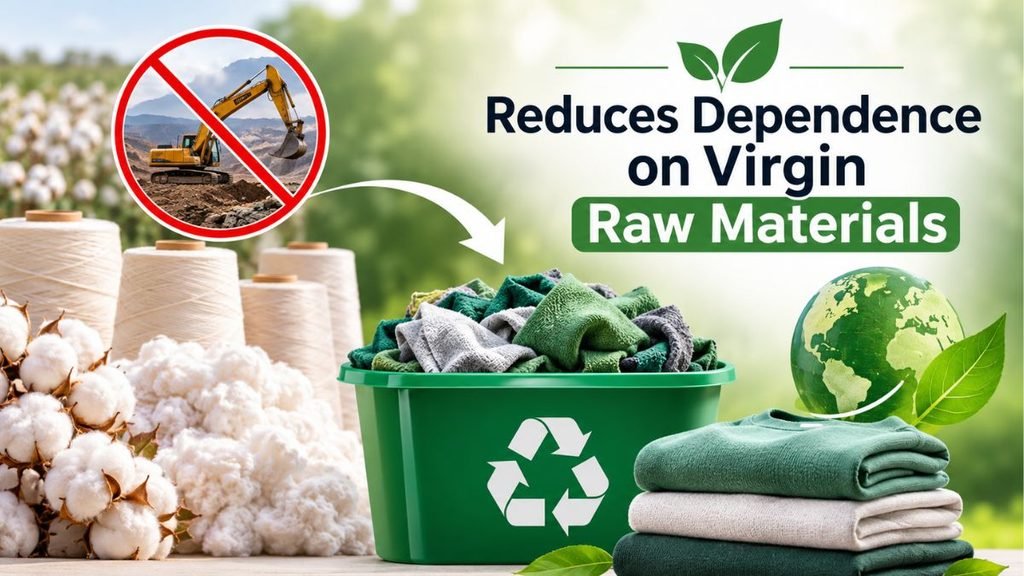
Traditional polyester production relies on virgin petrochemical resources.
Recycled polyester can reduce the need for some newly produced raw materials. The exact reduction depends on the recycling method, material source, and manufacturing process.
This can help brands explore material options that use existing resources.
3. Supports Waste Reduction Efforts
Plastic waste and discarded textiles create environmental challenges.
Using suitable recycled materials can help keep some resources in use for longer. It can also support recycling systems by creating demand for recovered materials.
However, recycled polyester should be part of a wider waste-reduction strategy. Reducing unnecessary production and improving garment durability are also important.
4. Offers Versatile Fabric Applications
Recycled polyester can be used in many textile products.
It can be knitted into lightweight fabrics or woven into stronger materials. Manufacturers can also blend it with other fibers when the product requires different properties.
Common applications include sportswear, activewear, outerwear, uniforms, bags, and everyday clothing.
5. Can Provide Performance Similar to Virgin Polyester
Well-produced recycled polyester can offer performance properties similar to virgin polyester.
Depending on the fabric construction, it may provide:
- Lightweight construction
- Durability
- Quick-drying behavior
- Shape retention
- Wrinkle resistance
- Easy-care properties
These features make it useful for many clothing applications.
Brands should still request samples and test the finished material. The word “recycled” alone does not guarantee performance.
6. Helps Brands Develop Recycled Collections
Fashion brands increasingly consider material sourcing when planning new collections.
Recycled polyester can provide another option for brands interested in using recycled fibers.
It may be suitable for selected products where the material meets the required comfort, appearance, durability, and cost.
Brands should communicate recycled-content claims accurately and keep supporting documentation.
Disadvantages of Recycled Polyester
Although recycled polyester has useful benefits, it also has limitations. Brands should understand these before selecting it for production.
1. It Is Not Biodegradable
Recycled polyester remains a synthetic plastic-based fiber.
It does not become biodegradable simply because it comes from recycled materials. Polyester can remain in the environment for a long time if it is not properly managed.
This is an important difference between recycled polyester and some natural fibers.
2. Microfiber Shedding
Polyester garments can release tiny fibers during washing and use. These are often called microfibers.
The amount released depends on fabric construction, fiber properties, garment design, and washing conditions.
Recycled polyester does not automatically prevent microfiber shedding. Brands should consider fabric construction, durability, and product care when developing garments.
3. Recycling Can Be Difficult
Not all polyester products are easy to recycle.
Some garments contain blended fibers, coatings, prints, zippers, buttons, and other components. These materials can make separation and processing more difficult.
Textile-to-textile recycling is especially challenging when fibers are mixed.
4. Quality Can Vary
Recycled material quality depends on the input waste and processing method.
Poor sorting or contamination can affect the quality of the final material. Manufacturers need suitable controls to produce consistent fibers and fabrics.
Always review samples and technical information before approving a material.
5. Limited Availability of Some Materials
Certain recycled polyester fabrics may not be available in every color, weight, or construction.
Custom colors and specialized finishes may require additional development time or larger minimum quantities.
Brands should confirm availability before finalizing their product plans.
6. It Is Not Automatically Environmentally Harmless
Recycled polyester can help use existing resources, but it still requires manufacturing, energy, water, chemicals, and transportation.
Its overall environmental impact depends on the full production process.
Brands should avoid presenting recycled polyester as a completely sustainable or impact-free material.
Is Recycled Polyester Sustainable?
Recycled polyester can support more responsible material sourcing, but sustainability depends on several factors.
Its use can reduce reliance on virgin raw materials and provide another purpose for suitable plastic or textile waste.
However, the complete environmental picture includes:
- Collection and transportation of waste
- Sorting and cleaning
- Energy used during recycling
- Chemicals and water used in processing
- Fiber and fabric production
- Garment manufacturing
- Washing and product use
- End-of-life disposal or recycling
A recycled material is not automatically the best choice for every garment.
For example, a durable garment that stays in use for many years may offer advantages over a product that wears out quickly. Product design, quality, repair, reuse, and recycling all matter.
Clothing brands should evaluate the full product lifecycle rather than relying on one material claim.
How Is Recycled Polyester Used in the Fashion Industry?
Recycled polyester is used across different clothing categories. Its versatility makes it suitable for both everyday garments and performance apparel.
Recycled Polyester in Sportswear
Sportswear often requires lightweight and durable fabrics.
Recycled polyester can be used in training shirts, athletic shorts, tracksuits, and performance tops.
Some fabrics also include moisture-management finishes. These can help move moisture across the fabric surface, depending on the construction and treatment.
Recycled Polyester in Activewear
Activewear brands use polyester blends for products that need flexibility and comfort.
Recycled polyester may be combined with elastane to add stretch. These blends can be used for leggings, sports bras, fitted tops, and training clothes.
The right composition depends on the intended fit and activity.
Recycled Polyester in Jackets
Outerwear manufacturers use polyester fabrics for lightweight jackets, lining materials, and selected performance products.
Recycled polyester can be woven into different fabric structures. Some materials may also receive water-repellent or other functional finishes.
The final performance depends on the fabric and treatment.
Recycled Polyester in T-Shirts
Recycled polyester can be used to make lightweight T-shirts and sports tops.
It may also be blended with cotton to combine different fabric properties.
Brands should check the softness, breathability, appearance, and care requirements before selecting a blend.
Recycled Polyester in Bags and Accessories
The material is also used in backpacks, sports bags, shopping bags, and accessories.
Its versatility allows manufacturers to create different weights and fabric structures for different products.
How to Choose Recycled Polyester for Clothing Manufacturing
Selecting the right fabric requires more than asking whether it contains recycled material. You should review its composition, performance, source, and documentation.
1. Check the Fiber Composition
Ask the supplier for the exact fiber composition.
A fabric may contain 100% recycled polyester or a blend of recycled polyester and other fibers.
If the material contains elastane, cotton, or another fiber, confirm the percentage of each component.
2. Confirm the Recycled Content
Ask what percentage of the material comes from recycled sources.
Also confirm whether the recycled content comes from PET bottles, textile waste, or another source.
Request documentation that supports the claim.
3. Review Fabric Weight and Construction
GSM measures fabric weight in grams per square metre.
The required weight depends on the product. A lightweight T-shirt and a structured jacket may need different fabric specifications.
Also check whether the material is knitted or woven. Construction affects stretch, texture, drape, and appearance.
4. Request Physical Samples
A physical sample helps you evaluate the fabric before production.
Check its texture, color, thickness, stretch, recovery, and overall appearance.
If you are producing activewear, test the material during movement and washing.
5. Ask About Testing
Depending on the product, useful tests may include:
- Colorfastness
- Shrinkage
- Pilling resistance
- Tensile strength
- Stretch and recovery
- Fabric composition
- Dimensional stability
Ask suppliers which tests they have completed and request relevant reports.
6. Confirm MOQ and Lead Time
Recycled fabrics may have different minimum order requirements.
Stock materials may be easier to purchase in smaller quantities. Custom colors or specialized constructions may require larger orders.
Confirm availability, production time, and pricing before approving your clothing collection.
What Certifications and Standards Should Buyers Check?
Certifications and material standards can help buyers evaluate recycled-content claims. However, each certification has a specific purpose and scope.
For example, the Global Recycled Standard (GRS) is a certification standard that addresses recycled content and includes additional requirements related to processing and responsible production practices.
The Recycled Claim Standard (RCS) focuses on verifying recycled material content through the supply chain.
When evaluating a supplier, ask:
- Does the supplier hold a current certificate?
- Which facility and products does it cover?
- Does the certificate apply to the exact material being purchased?
- Can the supplier provide transaction or product documentation?
- Is the recycled-content percentage clearly stated?
Do not assume that every recycled polyester product is certified. Also, a supplier’s general certificate does not necessarily prove that every fabric it sells is covered.
Check the certificate scope and validity before using certification claims in marketing.
Recycled Polyester vs. Other Sustainable Fabric Options
Recycled polyester is one option among several materials used by clothing brands. Comparing alternatives can help you choose the right fabric for each product.
| Material | Main characteristics | Common uses |
|---|---|---|
| Recycled polyester | Uses existing polyester or PET materials | Sportswear, activewear, jackets |
| Organic cotton | Cotton grown under applicable organic production standards | T-shirts, casualwear, sweatshirts |
| Linen | Plant-based fiber made from flax | Shirts, summer clothing |
| Hemp | Plant-based fiber with different possible fabric textures | Casualwear, selected accessories |
| Recycled nylon | Nylon made from recovered materials | Activewear, swimwear, outerwear |
No material is automatically the most sustainable in every situation.
Compare performance, durability, processing, care requirements, recycled or certified content, and product lifespan.
For example, a stretch activewear garment may require a material with suitable recovery. A relaxed casual T-shirt may work well with a different fiber.
How Clothing Brands Can Use Recycled Polyester Responsibly
Brands interested in recycled polyester should build their material strategy around product needs and accurate claims.
Start by identifying the garments where recycled polyester offers suitable performance. It may work well for selected activewear, sportswear, jackets, and accessories.
Next, work with suppliers that can provide clear material specifications. Request samples and confirm recycled content before approving production.
Keep records of supplier documentation, fabric composition, and purchase details. These records can help support accurate product descriptions and customer information.
Brands should also consider garment durability and end-of-life options. A product designed for long-term use can help reduce the need for frequent replacement.
Avoid broad claims such as “100% sustainable” unless they are clearly defined and supported. Explain exactly what is recycled and how much recycled content the product contains.
How Fashion Soul International Supports Custom Clothing Manufacturing
Fashion Soul International is a factory-owned custom clothing manufacturer based in Sialkot, Pakistan. The company provides private-label, OEM, ODM, white-label, cut-and-sew, and full-package apparel manufacturing.
Its stated services include product development, fabric and trim sourcing, sampling, bulk production, quality control, custom branding, packaging, export documentation, and international shipping.
For brands considering recycled polyester clothing, material selection should begin with the product’s intended use. Sportswear, activewear, jackets, and everyday garments may require different fabric weights and compositions.
Buyers should confirm the availability of specific recycled polyester materials, recycled-content percentages, and supporting documentation before production. The company should also confirm the required MOQ, sample process, and project timeline.
Fashion Soul International publishes a standard MOQ starting at 100 pieces. Actual requirements depend on the product and project specifications.
If you are planning a recycled-material clothing collection, prepare your designs, estimated quantities, preferred fabric composition, colors, and branding details. These details can help the manufacturing team assess your requirements and provide a project-specific quotation.
Frequently Asked Questions
What is recycled polyester made from?
Recycled polyester is made from existing polyester materials or suitable PET plastic. Common sources include used plastic bottles and discarded polyester textiles. These materials are processed into fibers and yarns for new textile products.
Is recycled polyester the same as regular polyester?
Both are synthetic polyester fibers. The main difference is the raw material source. Regular polyester generally uses virgin petrochemical resources, while recycled polyester uses previously existing materials.
Is recycled polyester better for the environment?
It can reduce reliance on virgin raw materials and help use existing plastic or textile waste. However, its total environmental impact depends on collection, recycling, energy use, manufacturing, transportation, and product lifespan.
Is recycled polyester biodegradable?
No. Recycled polyester is still a synthetic plastic-based fiber. Recycling changes the source of the material, not its basic synthetic nature.
Is recycled polyester good for activewear?
It can be suitable for activewear, especially when blended with elastane for stretch. The final fabric should be tested for comfort, recovery, durability, and other performance requirements.
Does recycled polyester release microfibers?
Yes. Polyester garments can release microfibers during washing and use. Recycled polyester does not automatically eliminate this issue. Fabric construction and garment care can influence fiber shedding.
Can recycled polyester be recycled again?
Some recycled polyester can be processed again, depending on its condition, composition, and available recycling technology. Blended fabrics and garments with trims or coatings can make recycling more difficult.
Is recycled polyester made from plastic bottles?
Some recycled polyester is made from used PET bottles. However, other types can come from discarded polyester textiles and industrial waste.
Is recycled polyester expensive?
The price depends on the source material, processing method, fabric construction, recycled-content requirements, order quantity, and supplier. Compare complete quotations and material specifications before purchasing.
How can I identify genuine recycled polyester?
Ask the supplier for fiber composition details, recycled-content information, and relevant certification or transaction documentation. Review the scope of any certificate to confirm that it covers the material you plan to purchase.
Conclusion
Understanding what is recycled polyester helps clothing brands make better decisions about fabric sourcing and product development. It is a synthetic material made from existing polyester or suitable PET materials. These materials are processed into new fibers and used in many clothing products.
Recycled polyester offers potential benefits, including reduced reliance on virgin raw materials and better use of existing waste. It can also provide useful properties for sportswear, activewear, jackets, and everyday clothing.
However, it is not biodegradable or impact-free. Brands should consider microfiber shedding, recycling challenges, material quality, and the complete production process.
Before choosing recycled polyester, check its composition, recycled content, fabric weight, performance, supplier documentation, and availability. With careful sourcing and responsible product planning, brands can use recycled materials while creating durable and functional clothing.