How Do I Start My Own Brand of Clothing? A Step-by-Step Guide
Starting a clothing brand can be an exciting business opportunity, but turning an idea into a successful business takes planning. You need more than creative designs. You also need a clear target audience, a product range, a realistic budget, reliable suppliers, and a plan for selling your clothing.
If you are wondering, how do I start my own brand of clothing, the best approach is to begin with a focused idea and build your business step by step. You do not need to launch a large collection immediately. You can start with a few well-planned products, test customer interest, and expand as your business grows.
This starting clothing brand step by step guide explains how to choose a niche, develop your clothing designs, find a manufacturer, calculate costs, create a brand identity, and market your products. It is designed for beginners, entrepreneurs, and small businesses that want to enter the fashion industry.
1. Decide What Type of Clothing Brand You Want to Start
Before investing money, decide what kind of clothing you want your business to sell. The fashion industry includes many product categories, and trying to serve everyone can make your brand difficult to recognise.
Start by identifying the type of customer you want to reach and the clothing they need.
Some popular clothing brand categories include:
- Streetwear: Oversized T-shirts, hoodies, joggers, and casual outfits.
- Sportswear: Clothing designed for sports and physical activities.
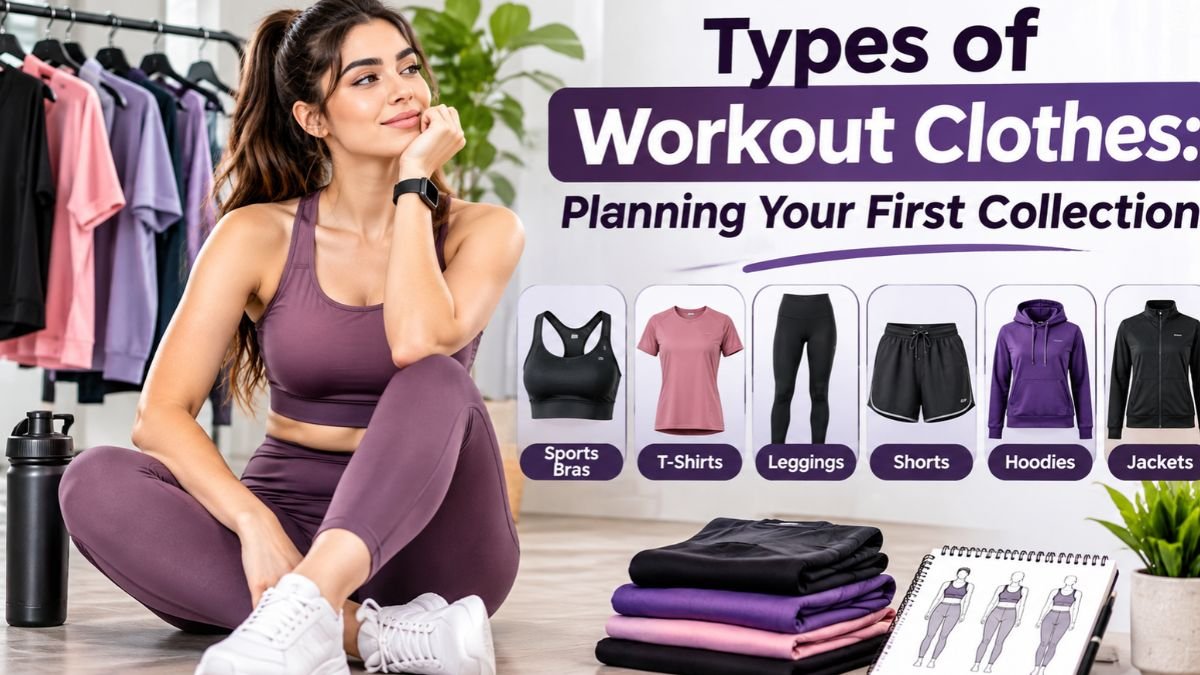
- Activewear: Leggings, gym tops, sports bras, and workout sets.
- Casual wear: Everyday shirts, trousers, sweatshirts, and jackets.
- Luxury fashion: Premium clothing with distinctive materials and design details.
- Sustainable fashion: Products developed with carefully selected materials and responsible production practices.
- Workwear: Uniforms and garments designed for particular jobs and industries.
Choose a category that matches your interests, knowledge, and available resources.
For example, if you understand gym clothing, you could build an activewear brand. If you prefer relaxed fashion, streetwear or casual clothing may be a better starting point.
A clear product direction makes later decisions easier. It helps you select fabrics, plan designs, identify customers, and communicate your brand message.
2. Research Your Target Market
Market research helps you understand whether people are interested in your clothing products. It also helps you identify opportunities before spending money on manufacturing.
Start by answering a few important questions:
- Who will buy your clothing?
- What age group are you targeting?
- What styles do these customers prefer?
- How much are they willing to spend?
- Where do they usually shop?
- What problems do existing clothing brands fail to solve?
You can research your market through online stores, social media, customer discussions, fashion communities, and competitor websites.
Study Your Competitors
Look at brands selling similar products. Review their collections, prices, product descriptions, social media content, and customer feedback.
Pay attention to both positive and negative reviews. Customers may complain about poor sizing, weak stitching, uncomfortable fabric, or delayed delivery. These problems can help you identify ways to improve your own products.
However, do not copy another brand’s designs or marketing. Use research to understand customer expectations and develop your own position.
Identify a Gap in the Market
A market gap is an unmet customer need or an area where existing products could be improved.
For example, you might discover that customers want comfortable gym clothing with better size options. Another opportunity could be simple streetwear made with heavier fabrics and durable construction.
Your brand should offer a clear reason for customers to choose it.
3. Create a Business Plan for Your Clothing Brand
A business plan gives your idea a practical direction. It explains what you want to sell, who your customers are, how you will produce your clothing, and how you expect to earn revenue.
You do not need a complicated document when starting. A simple plan can help you make better decisions.
Your clothing business plan should include:
| Business area | What to decide |
|---|---|
| Brand concept | What makes your clothing brand different? |
| Target audience | Who are your ideal customers? |
| Product range | Which garments will you sell? |
| Pricing | How much will each product cost? |
| Manufacturing | Who will produce your clothing? |
| Sales channels | Will you sell online, in stores, or both? |
| Marketing | How will customers discover your brand? |
| Budget | How much money can you invest? |
Set Realistic Business Goals
Avoid planning a large collection before understanding your production and sales costs.
Your first goal might be to develop one product, approve a sample, and test customer interest. Later, you can introduce additional colours, sizes, and styles.
Set measurable goals, such as completing product development, launching your online store, or reaching a specific number of sales.
Review your progress regularly and adjust your plan when necessary.
4. Choose a Name and Build Your Brand Identity
Your brand identity helps customers recognise your business. It includes your brand name, logo, colours, visual style, and communication.
Choose a name that is easy to remember and suitable for your product category.
Before finalising it, check whether the name is already being used by another business. Also check domain availability and relevant social media usernames. Consider trademark requirements in the countries where you plan to operate.
Design a Professional Logo
Your logo should be clear and suitable for different uses. It may appear on clothing labels, packaging, websites, social media profiles, and promotional materials.
A simple logo is often easier to use across different garment types.
You should also choose a consistent colour palette and typography. These details help create a recognisable appearance across your products and marketing.
Develop Your Brand Story
Your brand story explains why the business exists and what it wants to offer customers.
For example, your brand may focus on comfortable everyday clothing, modern streetwear, practical activewear, or carefully selected fabrics.
Keep the message honest. Do not make claims about sustainability, product quality, or manufacturing standards unless you can support them.
5. Design Your First Clothing Collection
Product development is one of the most important stages when starting a clothing business. Your designs should match your brand identity and customer requirements.
You do not need dozens of products for your first collection. A small, focused range can make development and inventory management easier.
For example, a beginner streetwear brand could start with:
- One oversized T-shirt
- One hoodie
- One pair of joggers
- One sweatshirt
An activewear brand might begin with leggings, gym tops, and a matching set.
Create Your Clothing Designs
You can start with sketches, digital illustrations, reference images, or a mood board.
Think about the garment’s:
- Shape and fit
- Fabric type
- Colour options
- Measurements
- Stitching details
- Neckline and sleeve design
- Pockets and closures
- Logo placement
- Labels and trims
Make sure the designs are practical to manufacture. Complicated construction, special fabrics, and decorative techniques can affect production costs.
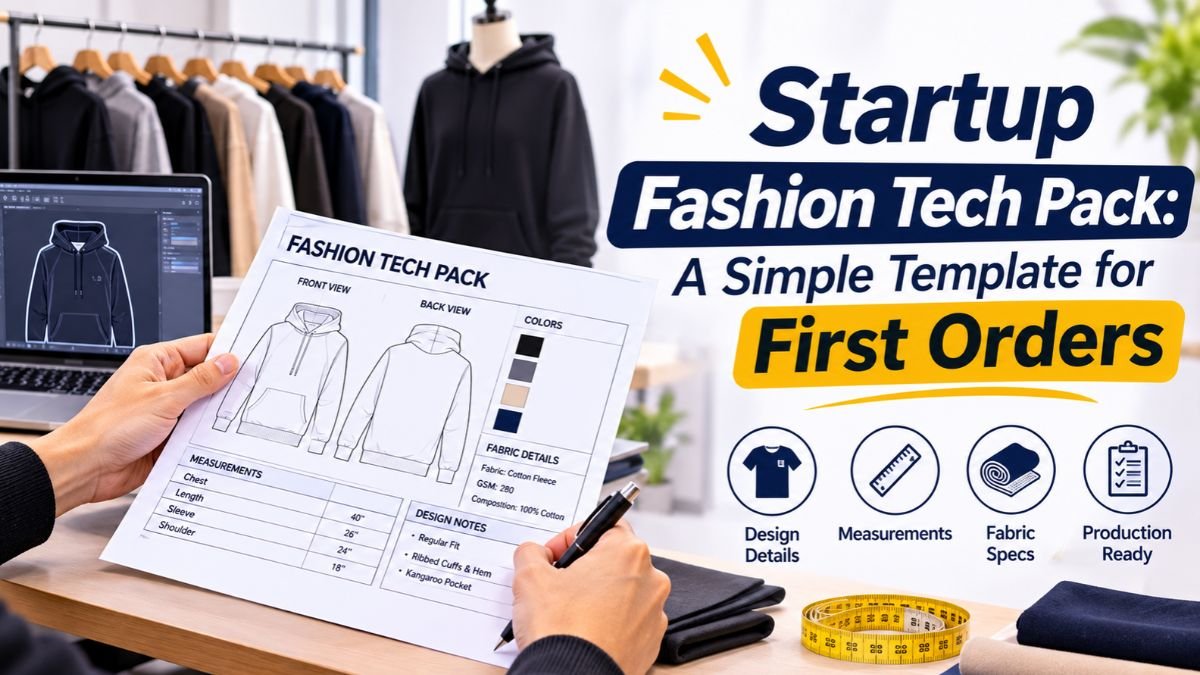
Prepare a Tech Pack
A tech pack is a document that explains how a garment should be manufactured.
It usually includes technical drawings, measurements, fabric information, colour references, stitching instructions, labels, trims, and branding details.
A clear tech pack reduces misunderstandings between the brand and manufacturer.
If you do not have a complete tech pack, you may begin discussions with a design brief, sketches, or reference images. However, finalized specifications or a suitable reference sample are normally needed before accurate sampling can begin.
6. Choose the Right Fabric and Materials
Fabric affects the comfort, appearance, durability, and cost of your clothing. Selecting the right material is therefore an important part of product development.
Different garments require different fabrics.
| Fabric | Common clothing uses |
|---|---|
| Cotton | T-shirts, casual shirts, and sweatshirts |
| French terry | Hoodies, joggers, and tracksuits |
| Brushed fleece | Sweatshirts, hoodies, and winter clothing |
| Polyester | Sportswear and performance garments |
| Cotton-polyester blends | Casual wear and selected activewear |
| Denim | Jeans, jackets, and casual clothing |
| Spandex blends | Stretch clothing and activewear |
| Twill | Trousers, uniforms, and workwear |
Understand GSM
GSM means grams per square metre. It describes the weight of a fabric.
A lower GSM generally indicates a lighter fabric, while a higher GSM indicates a heavier fabric. However, fabric construction and fibre type also affect how the material feels and performs.
For example, a lightweight fabric may work well for summer clothing. A heavier French terry or fleece may be more suitable for hoodies and winter tracksuits.
Ask your manufacturer for fabric options and swatches. Check the material’s feel, stretch, thickness, colour, and suitability before approving it.
7. Decide How Your Clothing Will Be Manufactured
Once your designs and materials are planned, decide how you will produce your clothing.
There are several manufacturing models. The right choice depends on your budget, product knowledge, and level of control.
Private-Label Manufacturing
Private-label manufacturing allows you to sell garments under your own brand name.
You work with a manufacturer to select or develop products and add your branding. Customisation may include labels, logos, colours, prints, and packaging.
This approach can suit businesses that want their own branded collection without operating a factory.
OEM Manufacturing
OEM stands for Original Equipment Manufacturing. In this model, the brand provides product specifications or designs, and the manufacturer produces the garments according to those requirements.
It can be useful when you have a clear product concept and want control over design details.
ODM Manufacturing
ODM stands for Original Design Manufacturing. The manufacturer provides design or product development support, and the brand selects or adapts a suitable product.
This option may help businesses that need assistance developing their collection.
Cut-and-Sew Manufacturing
Cut-and-sew manufacturing involves cutting fabric according to patterns and sewing the pieces together to create the finished garment.
It is suitable for brands that want custom fits, fabric choices, construction details, and garment designs.
Full-Package Production
Full-package production brings several stages together under one manufacturing arrangement. Depending on the agreement, services may include fabric sourcing, sampling, production, quality control, branding, packaging, and shipping.
Before choosing a model, understand exactly which services are included in the manufacturer’s quotation.
8. Find a Reliable Clothing Manufacturer
Finding the right manufacturer can strongly affect your product quality and business operations.
A manufacturer should understand your product category, provide clear communication, explain its production process, and work with your order requirements.
You can search for suppliers through online manufacturer directories, trade exhibitions, professional networks, and direct factory websites.
Check Manufacturing Experience
Look for manufacturers that have experience producing the type of clothing you want to sell.
A factory that regularly makes T-shirts may not have the same experience with technical activewear or structured jackets.
Ask about its product categories, available equipment, fabric options, and customisation capabilities.
Request Product Samples
A sample lets you examine the actual garment before bulk production.
Check:
- Fabric quality and weight
- Measurements and fit
- Stitching and seam construction
- Colour accuracy
- Print or embroidery quality
- Zippers, buttons, and other trims
- Overall finishing
Give clear feedback if changes are needed. Approve the final pre-production sample before bulk manufacturing begins.
Confirm MOQ
MOQ means minimum order quantity. It is the smallest quantity a manufacturer accepts for a particular order.
MOQ can depend on fabric availability, colour, style, construction, and decoration requirements.
Ask whether the quantity applies per style, colour, or size arrangement. Confirm the details in writing before making a payment.
Compare Quotations Carefully
Do not select a supplier based only on the lowest price.
Compare fabric specifications, sampling costs, production services, quality checks, packaging, and shipping terms.
A low quotation may exclude important services or use different materials from those you requested.
9. Calculate Your Clothing Brand Startup Costs
Your budget determines how much you can develop, manufacture, and market.
The cost of starting a clothing brand varies according to product type, order quantity, fabric, customisation, location, and sales model. There is no single startup amount that applies to every business.
Before placing an order, identify the main expenses.
Product Development Costs
These may include:
- Design work
- Tech-pack preparation
- Pattern development
- Fabric swatches
- Sample production
- Sample revisions
Manufacturing Costs
Bulk production costs depend on the garment’s specifications and order quantity.
Fabric type, GSM, stitching, printing, embroidery, labels, and packaging can all affect the final unit price.
Request a detailed quotation so you understand what is included.
Branding and Packaging Costs
You may need a logo, woven labels, printed labels, hang tags, packaging bags, and shipping cartons.
The cost depends on the materials, design, and quantity ordered.
Marketing and Website Costs
Your business may also need:
- Website hosting and domain
- E-commerce platform fees
- Product photography
- Social media content
- Paid advertising
- Influencer collaborations
- Promotional materials
Shipping and Operating Costs
Include transportation, import duties where applicable, storage, payment processing, returns, and other business expenses.
Keep some money available for unexpected costs. Spending your entire budget on the first production order can leave little room for marketing or operating expenses.
10. Set the Right Selling Price
Your selling price should cover your costs while remaining suitable for your target market.
Start by calculating the total cost of bringing one garment to the customer.
This may include:
- Manufacturing cost
- Labels and packaging
- Freight and duties
- Storage and fulfilment
- Payment processing
- Marketing expenses
- Expected returns or defects
For example, if a garment costs $15 to manufacture, that does not mean $15 is its complete business cost. You must also consider shipping, packaging, sales fees, and other expenses.
After calculating your total cost, research competitor pricing and customer expectations.
Choose a price that supports your business while offering a clear value to customers. Avoid setting prices only by copying another brand.
11. Register Your Business and Understand Legal Requirements
Business registration requirements depend on your country and the markets where you sell.
Before launching, research the rules that apply to your business structure and sales channels.
Depending on your location, you may need to consider:
- Business registration
- Tax registration
- Business banking
- Trademark protection
- Consumer protection rules
- Product labelling requirements
- Import and export requirements
- Online selling regulations
Clothing labels may need to show fibre composition, care instructions, country of origin, or other information depending on the destination market.
If you plan to sell internationally, check the relevant requirements before manufacturing. A qualified local accountant or legal professional can help you understand your obligations.
12. Create an Online Store for Your Clothing Brand
An online store gives customers a place to explore your products and place orders.
You can use an e-commerce platform or develop a custom website, depending on your budget and technical needs.
Your store should include:
- A clear homepage
- Product categories
- High-quality product photographs
- Accurate size information
- Fabric and care details
- Product descriptions
- Pricing and payment options
- Shipping information
- Return policies
- Contact details
Write Useful Product Descriptions
Explain what the product is, how it fits, what material it uses, and how customers should care for it.
Avoid vague descriptions. Specific details help shoppers make better decisions.
Provide a Size Guide
Sizing problems can lead to customer dissatisfaction and returns.
Use accurate measurements for each size. Explain how customers should measure themselves and compare their measurements with the chart.
Make Checkout Simple
Customers should be able to understand the price, delivery options, and payment process before placing an order.
Test your store on mobile devices as well as desktop computers.
13. Market Your Clothing Brand
Even well-designed clothing needs marketing. Customers must discover your brand before they can buy your products.
Start with a few marketing channels that match your audience.
Use Social Media
Instagram, TikTok, Pinterest, and other platforms can help clothing brands display products and connect with customers.
Share different types of content, such as:
- Product photographs
- Styling ideas
- Behind-the-scenes production
- New collection previews
- Fabric and design details
- Customer feedback
- Short product videos
Keep your visual style consistent so people can recognise your brand.
Work With Relevant Creators
Influencer and creator collaborations can introduce your products to new audiences.
Choose creators whose content and audience match your brand. Agree on deliverables, usage rights, payment, and disclosure requirements before starting a campaign.
Use Email Marketing
Email can help you communicate with people who have shown interest in your brand.
You can send collection announcements, product updates, restock information, and useful styling content.
Get consent where required and provide a clear way to unsubscribe.
Use Search Engine Optimization
SEO helps people discover your website through search engines.
Create useful product pages and articles that answer questions your customers are searching for.
For example, an activewear brand might publish guides about choosing gym leggings, understanding fabric stretch, or selecting workout clothing.
Use relevant keywords naturally. Make sure each page provides useful information instead of repeating phrases to manipulate rankings.
14. Launch Your First Clothing Collection
Once your products are approved and your store is ready, plan your launch.
A successful launch requires more than uploading product photographs. Customers need clear information about the collection, pricing, sizes, availability, and delivery.
Before launch, check the following:
- Final products match approved samples.
- Measurements and labels are correct.
- Product photographs are ready.
- Website pages have been tested.
- Inventory quantities are accurate.
- Shipping and return policies are published.
- Payment methods work correctly.
- Marketing content is prepared.
You can introduce the collection through a launch announcement, social media campaign, email, or creator collaboration.
Avoid ordering more stock than you can reasonably sell. A smaller first collection can help you understand customer demand before expanding.
15. Monitor Sales and Improve Your Products
Launching your brand is the beginning of the business, not the final step.
After launch, review customer behaviour and product performance.
Track information such as:
- Number of orders
- Best-selling products
- Popular sizes and colours
- Website traffic
- Conversion rate
- Customer acquisition cost
- Returns and exchanges
- Customer feedback
- Profit after expenses
Look for patterns. If customers repeatedly request a different fit or complain about a particular detail, investigate the product and consider improvements.
Use actual sales and feedback to guide your next collection instead of relying only on personal assumptions.
16. Common Mistakes to Avoid When Starting a Clothing Brand
New clothing businesses often face challenges that can be reduced through better planning.
Launching too many products: A large collection increases development and inventory complexity. Start with a focused range.
Ignoring market research: Designs may look attractive to you but fail to meet customer needs. Research your audience before investing in production.
Choosing a manufacturer based only on price: Low prices do not guarantee suitable fabric, construction, or service. Compare complete specifications.
Skipping sample approval: Bulk production without an approved sample can lead to expensive mistakes.
Underestimating the budget: Manufacturing is only one part of the business. Include packaging, shipping, marketing, and operating costs.
Copying competitors: Your brand needs its own identity. Use market research to find opportunities rather than copying another company’s work.
Ignoring customer feedback: Reviews and returns can reveal problems with fit, fabric, or product descriptions. Use this information to improve.
Making unsupported product claims: Claims about organic materials, certifications, or sustainability should be backed by evidence.
17. How Fashion Soul International Can Support Your Clothing Brand
Choosing a manufacturing partner is an important decision when turning your clothing idea into a real product.
Fashion Soul International is a factory-owned custom clothing manufacturer based in Sialkot, Pakistan. The company works with startups, growing brands, retailers, wholesalers, and established apparel businesses.
Its manufacturing services include private-label, OEM, ODM, white-label, cut-and-sew, and full-package production.
The company supports several stages of product development, including:
- Fabric and trim sourcing
- Pattern and product development
- Sample creation
- Bulk garment production
- Inline quality control
- Pre-shipment inspection
- Custom labels and branding
- Packaging and export documentation
- International shipping
Fashion Soul International manufactures different clothing categories, including streetwear, sportswear, activewear, workwear, jackets, denim, casual wear, tracksuits, T-shirts, and hoodies.
Starting With a Smaller Production Order
The company publishes a standard MOQ starting at 100 pieces. The actual quantity depends on the product, fabric, colour, and construction requirements.
This can give new brands an option to discuss a smaller initial production project. However, buyers should confirm the MOQ and quotation for their specific design.
Sample Approval Before Bulk Production
A physical sample allows you to check the garment before committing to bulk production.
You can review the measurements, fabric, construction, colour, trims, and branding. Any agreed changes should be completed before approving the final pre-production sample.
Fashion Soul International states that bulk production begins after the customer approves the physical pre-production sample.
Production and Quality Checks
The company’s stated workflow includes inline quality control and pre-shipment inspection. These checks can help identify issues with measurements, stitching, fabric, and finishing.
Brands should discuss their product specifications and inspection requirements before production begins.
If you are planning your first clothing collection, prepare your designs, reference images, expected quantity, and fabric preferences before contacting a manufacturer. This makes it easier to discuss the project and receive a suitable quotation.
Frequently Asked Questions
1. How Do I Start My Own Brand of Clothing With No Experience?
Start by choosing a clothing niche and researching your target audience. Create a simple business plan, develop a small product range, prepare designs, and find a manufacturer that can support your requirements. Review samples before placing a bulk order, then build your store and marketing plan.
2. How Much Money Do I Need to Start a Clothing Brand?
The amount depends on your product, order quantity, fabric, location, and business model. Your budget should include design, samples, manufacturing, branding, packaging, shipping, website costs, and marketing. Prepare a detailed budget before committing to production.
3. Can I Start a Clothing Brand Without a Factory?
Yes. You can work with an external clothing manufacturer instead of operating your own factory. Private-label, OEM, ODM, and cut-and-sew services can help you develop products under your brand name.
4. What Is the Best Clothing to Start a Brand With?
The best product depends on your target audience and market knowledge. T-shirts, hoodies, joggers, activewear, and casual clothing are possible starting categories. Choose products that match your brand identity and production budget.
5. How Do I Find a Manufacturer for My Clothing Brand?
Search for manufacturers that specialise in your product category. Review their manufacturing capabilities, request quotations, ask about MOQ, and examine samples. Confirm material specifications, quality checks, production terms, and shipping arrangements before placing an order.
6. Do I Need a Tech Pack to Start a Clothing Brand?
A tech pack is not always necessary for an initial conversation or quotation. However, clear technical specifications or a suitable reference sample are important before accurate sampling and production can begin. A manufacturer may also offer product development assistance.
7. How Many Products Should I Launch With?
There is no fixed number. Many new businesses benefit from starting with a small, focused collection. This makes it easier to manage product development, production costs, stock, and customer feedback.
8. How Long Does It Take to Start a Clothing Brand?
The timeline depends on design readiness, sampling, material availability, production, website preparation, and marketing. Custom products may require several development stages. Ask your manufacturer for a project-specific schedule before planning your launch date.
9. Should I Sell My Clothing Online or in Physical Stores?
Both options can work. Online selling may provide a more accessible starting point for some new brands, while physical retail offers customers an opportunity to see and try products. Your decision should depend on your target market, budget, and business strategy.
10. How Can I Make My Clothing Brand Different?
Develop a clear identity and focus on a specific customer need. Your designs, fabric choices, fit, product quality, customer service, and brand communication can help distinguish your business. Build your own approach instead of copying competitors.
Final Thoughts
Starting a clothing business requires creativity, research, planning, and reliable production. If you are asking, how do I start my own brand of clothing, begin with a clear niche and a realistic business plan.
Research your customers, develop a small collection, choose suitable fabrics, and prepare accurate product specifications. Then find a manufacturer, review physical samples, calculate your costs, and build a store that makes shopping easy.
The most important step is to start with a manageable plan and improve as you learn. Listen to customers, monitor your sales, and develop future products based on real demand. With careful decisions and consistent work, you can build a clothing brand that has a clear identity and a strong foundation for growth.