Eco Friendly Fitness Apparel: A Complete Guide to Sustainable Activewear
The demand for eco friendly fitness apparel is growing as consumers pay more attention to clothing materials, production methods, and environmental impact. Fitness enthusiasts want comfortable clothing that supports their daily activities. At the same time, many shoppers want products made with more responsible material choices.
This shift creates opportunities for clothing brands, sportswear businesses, and activewear startups. They can develop fitness collections that combine performance, comfort, durability, and thoughtful material selection.
However, creating sustainable activewear involves more than choosing fabric with an environmental label. Brands must consider material sourcing, garment construction, dyeing, printing, packaging, and product lifespan.
In this guide, we explain what sustainable fitness clothing means, which fabrics brands can consider, how manufacturing works, and what buyers should know before launching a collection.
What Is Eco Friendly Fitness Apparel?
Eco friendly fitness apparel refers to sports and workout clothing designed with the goal of reducing environmental impact. It may use recycled, organic, or other lower-impact materials and more responsible production methods.
These garments are made for activities such as running, gym training, yoga, cycling, walking, and general exercise.
Examples include:
- Recycled polyester leggings
- Organic cotton workout T-shirts
- Recycled fabric sports bras
- Sustainable training shorts
- Moisture-wicking activewear made with recycled fibers
- Lightweight fitness tops
- Reusable sports jackets and tracksuits
The exact environmental benefits depend on the materials, manufacturing methods, supply chain, and product lifespan.
A garment is not automatically sustainable just because it uses one recycled or organic material. Brands should look at the complete product and request reliable information from their suppliers.
Why Is Sustainable Fitness Clothing Becoming Popular?
Consumers are becoming more aware of how clothing is made. They want to understand where materials come from and how products are manufactured.
Fitness clothing is an important part of this discussion. Activewear is used regularly, washed frequently, and often made with synthetic fibers.
This makes material selection and product durability important considerations.
1. Growing Environmental Awareness
Many shoppers now consider environmental impact when choosing clothing. They may look for recycled fibers, organic materials, responsible sourcing, and reduced packaging.
Brands that provide clear product information can help customers make informed decisions.
However, businesses should avoid making broad environmental claims without evidence. Specific details about fabric composition and production practices are more useful than vague labels.
2. Demand for Comfortable Workout Clothing
Fitness customers expect clothing to support movement and regular use. They look for stretch, breathability, moisture management, and a comfortable fit.
Sustainable material choices must still meet these performance needs.
For example, a recycled polyester and elastane blend may provide stretch and moisture-wicking properties for leggings. Organic cotton may suit relaxed workout tops and casual fitness clothing.
The best choice depends on the intended activity and garment design.
3. Opportunities for Clothing Brands
Sustainable activewear gives clothing businesses an opportunity to develop products for customers who care about both performance and material choices.
Brands can create collections around:
- Recycled performance fabrics
- Organic cotton basics
- Durable training clothes
- Lightweight sportswear
- Minimal packaging
- Responsible material sourcing
A clear product identity helps customers understand what makes a collection different.
4. Interest in Longer-Lasting Products
Durability is an important part of responsible clothing choices. A garment that loses its shape quickly may need replacement sooner.
Brands should consider fabric strength, seam construction, colorfastness, stretch recovery, and wash performance.
A well-designed fitness garment should suit its intended use and maintain its important features through regular wear.
What Materials Are Used in Eco Friendly Fitness Apparel?
Fabric selection is one of the most important decisions when developing sustainable activewear. Different materials offer different benefits, limitations, and performance features.
Brands should choose materials based on the garment’s purpose rather than relying only on environmental labels.
1. Recycled Polyester
Recycled polyester is commonly made from recovered polyester materials. Some suppliers use recycled plastic bottles, while others use textile waste or other polyester sources.
It can provide several useful features for workout clothing:
- Lightweight construction
- Moisture-wicking potential
- Quick drying
- Durability
- Shape retention
- Compatibility with stretch blends
Recycled polyester can be used in leggings, sports bras, running tops, shorts, and training jackets.
However, recycled polyester remains a synthetic fiber. It can release microfibers during washing, just like other synthetic textiles. Brands should consider fabric construction, garment lifespan, and care guidance.
They should also request documentation showing the recycled content and its source.
2. Organic Cotton
Organic cotton is grown under organic agricultural standards. These standards restrict certain synthetic pesticides and fertilizers.
It is often used in casual fitness clothing, relaxed workout tops, sweatshirts, and lightweight sportswear.
Common benefits include:
- Soft hand feel
- Breathability
- Comfort for everyday use
- Natural fiber composition
- Suitability for casual designs
Organic cotton is not always the best choice for high-intensity training. It can absorb moisture and may take longer to dry than performance polyester.
Brands should also check the certification and supply-chain documentation behind organic material claims.
3. Recycled Nylon
Recycled nylon can be produced from recovered nylon materials, including certain industrial waste and discarded textiles.
It is useful for products that require strength, flexibility, and a smooth surface.
Common applications include:
- Performance leggings
- Sports bras
- Cycling clothing
- Stretch training shorts
- Fitted workout tops
Recycled nylon can offer useful performance properties. However, its environmental benefits depend on the source material, recycling process, and overall supply chain.
Ask suppliers for details about fiber composition and supporting documentation.
4. Bamboo-Based Fabrics
Some fabrics are made using bamboo-derived cellulose. The final material may be viscose or another regenerated cellulose fiber.
These fabrics can feel soft and comfortable. They are sometimes used in casual activewear, tops, and lightweight garments.
It is important to understand the actual manufacturing process. Bamboo as a raw plant does not automatically make the finished fabric environmentally friendly.
Brands should check how the fiber is processed and whether the supplier provides credible environmental information.
5. Organic Cotton Blends
Organic cotton can be blended with other fibers to change a garment’s performance.
For example, a cotton and elastane blend may provide additional stretch for comfortable movement.
A cotton-polyester blend may offer a different balance of softness, drying time, and durability.
The blend should match the product’s intended use. Brands should always request the exact fiber percentages before approving production.
What Makes Eco Friendly Fitness Clothing Sustainable?
Sustainability involves more than selecting a particular fabric. It includes decisions made throughout the product lifecycle.
Responsible Material Selection
The first step is choosing suitable materials and understanding their origin.
Ask suppliers:
- What fibers are used?
- What percentage is recycled or organic?
- Where does the material come from?
- Is supporting documentation available?
- What certifications or standards apply?
- Are there material alternatives for this design?
These questions help brands avoid unsupported claims.
Efficient Fabric Cutting
Fabric cutting can create waste, especially when patterns are not planned carefully.
Manufacturers can review pattern layouts to use fabric more efficiently. Proper planning may reduce unnecessary offcuts.
The exact savings depend on the garment design, fabric width, size range, and cutting method.
Thoughtful Dyeing and Finishing
Dyeing and finishing can involve water, energy, and chemicals. Brands should ask suppliers about available processes and any relevant environmental controls.
Color requirements should also be confirmed early. Some special finishes may affect fabric performance, appearance, or production cost.
Durable Garment Construction
Durability helps extend the useful life of fitness clothing.
Important construction details include:
- Strong seams
- Suitable stitching
- Secure waistbands
- Reliable elastic
- Good stretch recovery
- Appropriate fabric weight
- Colorfast printing and dyeing
The garment should be tested for its intended activity before bulk production.
Reduced and Practical Packaging
Packaging is another part of the product’s environmental footprint.
Brands can review packaging options such as:
- Right-sized packaging
- Reduced unnecessary inserts
- Recycled paper hang tags
- Recyclable packaging materials where suitable
- Avoiding excessive plastic layers
Packaging claims should be specific. For example, state the material used rather than calling all packaging completely sustainable.
Eco Friendly Sportswear vs Regular Sportswear
Eco friendly sportswear and conventional sportswear can look similar. Both may include leggings, shorts, T-shirts, jackets, and training tops.
The main difference is often the materials and production choices behind the products.
| Feature | Eco-conscious sportswear | Conventional sportswear |
|---|---|---|
| Material choices | May include recycled or organic fibers | Often uses standard virgin fibers |
| Sourcing | May prioritize documented material sources | Depends on supplier requirements |
| Packaging | May use reduced or alternative packaging | Depends on brand and supplier |
| Production | May include specific resource-efficiency goals | Depends on factory processes |
| Product lifespan | Focuses on durability and continued use | Varies by garment quality |
| Claims | Should be supported by evidence | Varies by brand |
Neither category guarantees high or low environmental impact. The real comparison depends on the specific materials, processes, and product performance.
Types of Eco-Friendly Sports Clothing
Brands can develop different product categories using suitable materials and construction methods.
Sustainable Leggings
Leggings are among the most common products in activewear collections.
They need a fabric that stretches comfortably and returns to its original shape. Recycled polyester or recycled nylon blends may be suitable options.
Important design details include:
- Four-way stretch
- Waistband support
- Squat coverage
- Flat seams
- Comfortable compression
- Moisture management
Before production, test the fabric during movement. Check opacity, stretch recovery, and seam strength.
Organic Cotton Workout T-Shirts
Organic cotton T-shirts are suitable for light exercise and everyday wear.
They can feature simple designs, relaxed fits, or oversized silhouettes.
Brands should select a suitable fabric weight and check shrinkage before bulk production. Printing methods should also match the fabric composition.
Recycled Sports Bras
Sports bras require careful fabric and construction choices.
The product should provide suitable support for its intended activity. A low-impact yoga bra has different requirements from a high-impact running bra.
Important features include:
- Stretch recovery
- Supportive construction
- Comfortable elastic
- Secure straps
- Suitable lining
- Reliable stitching
Material choice alone does not determine support. Pattern development and fit testing are equally important.
Sustainable Gym Shorts
Gym shorts can be made using lightweight woven or knitted fabrics.
Depending on the design, recycled polyester blends may suit training shorts. Organic cotton may work for relaxed fitness styles.
Check waistband construction, pocket design, drawcords, and fabric movement before approving a sample.
Eco-Conscious Sports Jackets
Sports jackets may use recycled synthetic fabrics, suitable linings, and functional trims.
Brands should consider wind resistance, breathability, water resistance, and intended weather conditions.
Any performance or environmental claim should match the actual fabric and testing evidence.
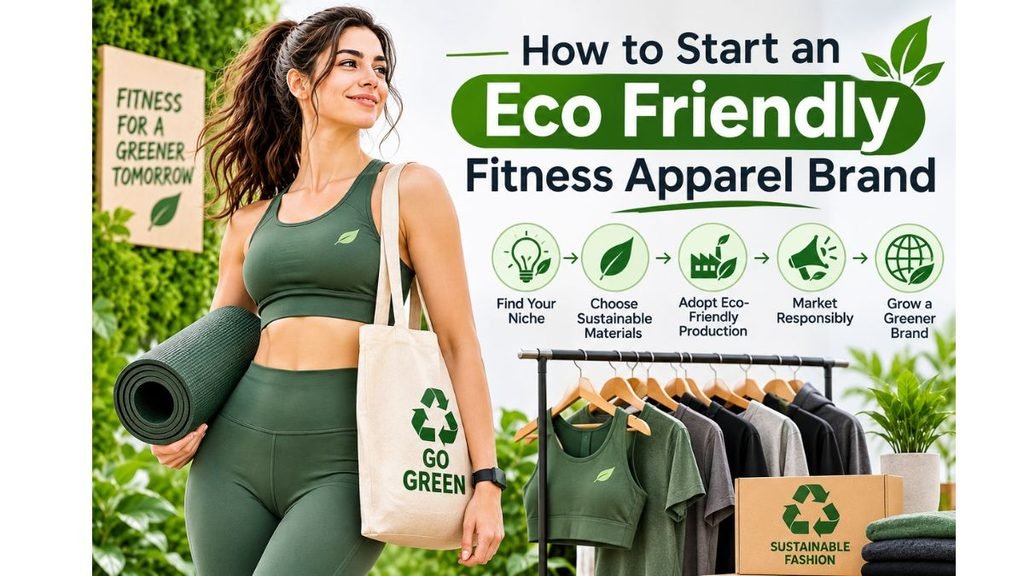
How to Start an Eco Friendly Fitness Apparel Brand
Launching a sustainable fitness collection requires planning. You need a clear customer, product range, material strategy, and manufacturing partner.
Step 1: Identify Your Target Customer
Start by understanding who will buy your products.
Your target market may include:
- Yoga and Pilates customers
- Gym members
- Runners
- Cycling enthusiasts
- Outdoor fitness users
- Everyday athleisure shoppers
Different customers have different expectations. A runner may prioritize lightweight moisture management, while a yoga customer may focus on stretch and comfort.
Step 2: Choose Your Product Range
Avoid launching too many products at once.
Start with a focused collection that suits your budget and customer needs.
For example, an initial collection might include:
- Two leggings styles
- One sports bra
- Two workout T-shirts
- One pair of training shorts
A smaller collection can make sampling and quality checks easier to manage.
Step 3: Select Suitable Fabrics
Choose fabrics based on performance and documented material information.
Compare fabric composition, GSM, stretch, recovery, drying time, and durability.
Request swatches before making a final decision. If possible, compare multiple options under real workout conditions.
Do not assume a fabric is suitable simply because its supplier describes it as eco-friendly.
Step 4: Prepare Your Tech Pack
A tech pack gives the manufacturer clear production instructions.
Include:
- Front and back garment drawings
- Measurements
- Fabric composition
- GSM
- Color references
- Stitching details
- Trims
- Print and embroidery placement
- Labels and packaging details
Clear specifications help reduce mistakes during sampling and production.
Step 5: Develop and Test Samples
Sampling is essential for performance clothing.
Wear and test the garment before bulk production. Check how it performs during movement, stretching, and washing.
For leggings, test opacity and waistband movement. For sports bras, check support and fit. For workout tops, review comfort and moisture management.
Record changes clearly and request another sample when necessary.
Step 6: Confirm Your Manufacturing Costs
Calculate the full product cost rather than focusing only on the garment’s unit price.
Include:
- Fabric and trims
- Pattern development
- Sampling
- Cutting and sewing
- Printing and embroidery
- Labels and hang tags
- Packaging
- Inspection
- Shipping and import costs
This helps you set realistic retail prices and plan your budget.
Step 7: Build Your Brand Identity
A fitness brand needs a clear identity.
Consider your brand name, logo, color palette, packaging, labels, website, and product photography.
Your messaging should explain specific product features. If a garment uses recycled polyester, state the percentage and provide supporting information where available.
Avoid vague statements such as “100% planet-friendly” unless you can substantiate the claim.
What Should Brands Look for in a Sustainable Activewear Manufacturer?
Choosing the right manufacturing partner is important for product quality and reliable communication.
A manufacturer should understand activewear materials, stretch construction, garment fit, and decoration requirements.
Experience With Performance Fabrics
Fitness clothing often requires special materials and construction.
Ask whether the manufacturer has experience with:
- Polyester and nylon blends
- Four-way stretch fabrics
- Elastane blends
- Moisture-wicking materials
- Lightweight performance knits
- Compression garments
The manufacturer should understand how fabric behavior affects cutting, sewing, and fit.
Fabric Sourcing Support
If you want recycled or organic materials, ask whether the manufacturer can source them.
Request material composition details and relevant supplier documents. Confirm availability, minimum quantities, and color options before finalizing the design.
A supplier’s verbal statement is not enough to support a strong environmental claim.
Sampling and Product Development
A capable manufacturer should have a clear sample-development process.
Ask how measurements, patterns, fabric selection, and revisions are handled.
You should receive a physical sample that represents the intended bulk product as closely as possible.
Quality Control
Quality control should cover both appearance and performance.
For activewear, checks may include stretch recovery, seam strength, fabric defects, print placement, measurements, and finishing.
Discuss the inspection process before production begins. Agree on acceptable measurements and product requirements.
Custom Branding and Packaging
Many brands need custom labels, hang tags, printing, embroidery, and packaging.
Confirm which services the manufacturer offers and whether any work is handled by outside suppliers.
Also ask about minimum quantities and additional costs.
How Fashion Soul International Supports Custom Activewear Production
Fashion Soul International is a factory-owned custom clothing manufacturer based in Sialkot, Punjab, Pakistan. The company provides private-label, OEM, ODM, white-label, cut-and-sew, and full-package apparel manufacturing.
Its stated services include product development, fabric and trim sourcing, sampling, bulk production, quality control, custom branding, packaging, export documentation, and international shipping.
For brands developing fitness collections, product requirements can include fabric composition, GSM, stretch, fit, construction, printing, embroidery, and labels.
The company lists fabric options that include polyester, stretch spandex, cotton, and other materials. Specific fabric availability should be confirmed for each project.
Fashion Soul International publishes a standard MOQ starting at 100 pieces. The actual requirement depends on the product, material, color, and construction.
Its manufacturing workflow includes sample development and physical sample approval before bulk production. This gives buyers an opportunity to review fit, fabric, measurements, and finishing before confirming the production order.
The company also describes inline quality checks and pre-shipment inspection as part of its production process.
If you are planning a private-label fitness collection, prepare your design references, fabric preferences, estimated quantity, and branding requirements. These details can help the manufacturer understand your project and prepare a suitable quotation.
Visit the official website at https://fashionsoulintl.com/ to discuss custom clothing manufacturing requirements.
Challenges in Producing Eco Friendly Fitness Apparel
Sustainable activewear development can involve challenges. Brands should understand these issues before committing to a collection.
Higher Material Costs
Some recycled and certified organic fabrics may cost more than standard alternatives.
The price depends on the fiber, supplier, quantity, certification, and availability.
Compare several options and consider the full product cost. A suitable fabric should meet your performance requirements and budget.
Limited Fabric Availability
Certain colors, weights, and blends may not be available in every material.
Special recycled fabrics may also have higher minimum order requirements.
Check availability before finalizing your design. This can prevent delays during sampling and bulk production.
Performance Requirements
A fabric may have desirable environmental attributes but still fail to meet workout needs.
For example, a material may feel comfortable but lack enough stretch recovery for leggings.
Test the complete garment rather than judging fabric from a swatch alone.
Environmental Claims and Documentation
Brands must be careful when describing products as sustainable.
Ask suppliers for supporting documents and keep records of material composition. Check what a certification actually covers.
Avoid claiming that a garment is completely sustainable based on one material choice.
How to Care for Sustainable Fitness Clothing
Proper care can help extend the life of workout garments.
Customers should follow the care label and the manufacturer’s instructions.
Useful general practices may include:
- Washing garments at the recommended temperature
- Avoiding unnecessary washing when clothing is not dirty
- Using suitable detergents
- Avoiding excessive heat during drying
- Separating garments according to care instructions
- Following instructions for stretch fabrics
- Repairing small issues when practical
Synthetic performance fabrics may release microfibers during washing. Suitable laundry filters or washing bags may help reduce microfiber release, depending on the product and local guidance.
Brands can provide clear care instructions to help customers maintain their garments.
Frequently Asked Questions
What is eco friendly fitness apparel?
Eco friendly fitness apparel is workout clothing developed with material and production choices intended to reduce environmental impact. It may use recycled fibers, organic materials, or other documented lower-impact options.
Is recycled polyester good for activewear?
Recycled polyester can be suitable for activewear because it can provide lightweight construction, durability, and moisture-management properties. Its performance depends on the fabric construction and blend.
What is the difference between eco friendly fitness clothing and regular activewear?
The difference usually involves material sourcing and production choices. Eco-conscious products may use recycled or organic fibers and specific resource-management practices. The actual impact depends on the complete product lifecycle.
Is organic cotton suitable for gym clothes?
Organic cotton can work well for casual workout tops and relaxed fitness clothing. However, it absorbs moisture and may dry more slowly than many synthetic performance fabrics.
Can sustainable sportswear provide good performance?
Yes. Sustainable material choices can provide stretch, comfort, durability, and moisture management. Brands must select appropriate fabrics and test finished garments for their intended activities.
How can I verify recycled fabric claims?
Request documents showing the fiber composition, recycled content, and material source. Where relevant, ask for certification or chain-of-custody documentation.
Can I start a sustainable activewear brand with a small order?
Some manufacturers accept smaller production runs, but minimum quantities vary by product and material. Confirm the MOQ for each style, color, and fabric before placing an order.
What products can I include in a sustainable fitness collection?
You can consider leggings, sports bras, workout T-shirts, training shorts, tracksuits, jackets, and casual athleisure garments. Choose products based on your target customers and available materials.
Conclusion
Eco friendly fitness apparel brings together workout performance, thoughtful material selection, and responsible product development. Brands can explore recycled polyester, recycled nylon, organic cotton, and suitable fabric blends when building their collections.
However, sustainability requires more than choosing a fabric with an appealing label. Material documentation, garment durability, manufacturing practices, packaging, and product care all matter.
For clothing businesses, the best starting point is a focused product range and a clear manufacturing plan. Select suitable fabrics, prepare detailed specifications, test physical samples, and confirm quality requirements before bulk production.
With careful planning and a capable manufacturing partner, brands can develop fitness clothing that meets customer expectations while making more informed material and production choices.