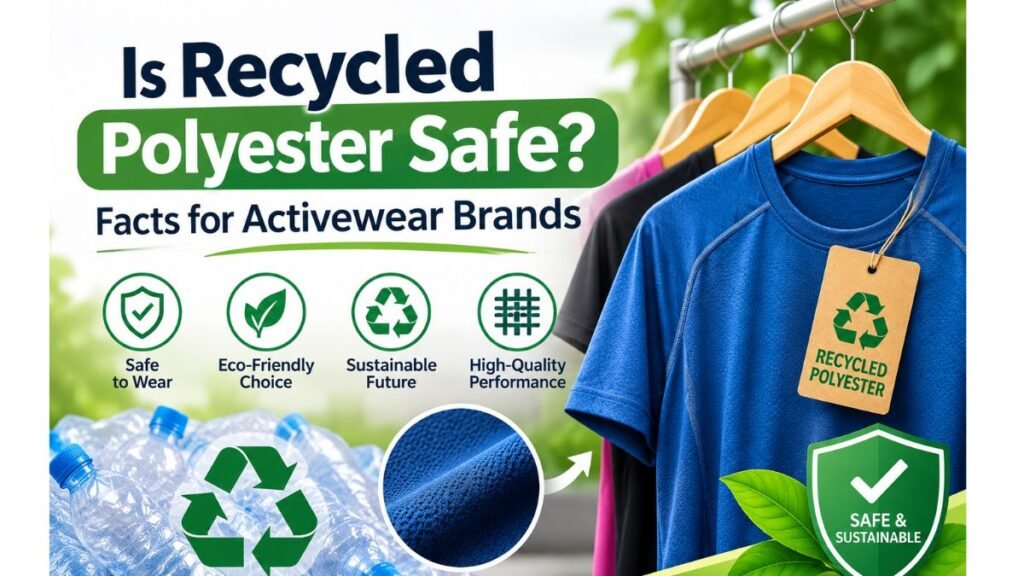
Is Recycled Polyester Bad for You? Health Risks and Benefits Explained
Recycled polyester is becoming increasingly common in clothing, sportswear, activewear, and other textile products. Many brands use it to reduce their reliance on new plastic materials. However, some consumers still ask: is recycled polyester bad for you?
The answer is not a simple yes or no. Recycled polyester is not automatically harmful to human health. Its safety depends on several factors, including the quality of the recycled material, manufacturing processes, chemical treatments, dyes, and final fabric testing.
Recycled polyester can offer environmental benefits compared with virgin polyester. However, it still has limitations, including microfiber shedding and the use of synthetic materials.
In this guide, we explain how recycled polyester is made, its possible health concerns, its environmental impact, and whether it is better than regular polyester. We also cover what clothing brands should check before choosing recycled polyester for their products.
What Is Recycled Polyester?
Recycled polyester is a synthetic textile fiber made from previously used polyester materials. Instead of relying entirely on new raw materials, manufacturers process existing plastic or polyester waste into fibers that can be used to produce new fabrics.
Most recycled polyester is made from polyethylene terephthalate, commonly known as PET. PET is the same type of plastic used in many beverage bottles.
The recycling process turns suitable plastic waste into material that can be processed into polyester yarn. Textile manufacturers then use this yarn to produce fabrics for clothing and other products.
Recycled polyester is commonly used in:
- Sportswear and activewear
- T-shirts and casual clothing
- Jackets and outerwear
- Leggings and athletic shorts
- Bags and accessories
- Fleece garments
- Home textiles
Some recycled polyester comes from plastic bottles. Other sources include textile waste and manufacturing leftovers.
However, most recycled polyester in the market has traditionally come from plastic bottles rather than discarded clothing. This difference matters when evaluating how circular a textile product really is.
Is Recycled Polyester Bad for You?
For most people, recycled polyester is not automatically harmful when used in properly manufactured clothing. The polymer in recycled polyester is still polyester, and the recycling process does not make every finished garment dangerous.
However, the material’s safety depends on more than its recycled content.
Potential concerns include:
- Chemical residues from processing
- Dyes and fabric-finishing treatments
- Skin irritation from certain textile chemicals
- Microfiber release during washing and wear
- Poor manufacturing controls
It is important to separate established concerns from questions that still need more research.
There is no sound basis for saying that every recycled polyester garment causes health problems. Equally, recycled content alone does not prove that a garment is free from unwanted chemicals.
Consumers should consider the finished product, its chemical testing, and the manufacturer’s quality controls.
What Are the Possible Health Concerns of Recycled Polyester?
Understanding the possible concerns helps consumers and clothing brands make informed decisions.
1. Chemical Residues From Recycling
Recycled polyester can be made from different waste sources. These materials may contain residues, dyes, coatings, or other substances from their previous use.
Manufacturers must sort, clean, and process the waste before turning it into new fibers.
The quality of this process matters. Poor sorting or inadequate cleaning may create challenges when controlling unwanted contaminants.
A scientific review published in Chemosphere examined safety concerns involving recycled plastics and textiles. It highlighted the importance of detecting, identifying, and assessing contaminants in recycled materials. This supports the need for proper material testing rather than assuming all recycled feedstocks are identical. Source
For consumers, the practical lesson is simple: recycled polyester should come from a controlled supply chain with appropriate testing.
2. Dyes and Fabric Finishing Chemicals
The fabric’s color and finish can affect its chemical profile.
During textile production, manufacturers may use dyes, softeners, water-repellent treatments, and other finishing agents.
Some chemicals used in textiles may cause irritation or raise environmental or health concerns. These risks are not unique to recycled polyester. Virgin polyester and other textile materials can also involve chemical treatments.
People with sensitive skin may react to certain dyes, finishes, detergents, or other substances in clothing.
Choosing tested textile products and washing new clothing before wearing it may help reduce contact with some surface residues. However, washing does not guarantee that every unwanted chemical will be removed.
3. Skin Irritation and Sensitivity
Polyester fabrics are widely used in everyday clothing. However, some people experience discomfort when wearing certain synthetic garments.
Possible reasons include:
- Friction between fabric and skin
- Heat and sweat trapped by clothing
- Tight garment construction
- Rough seams or surface finishes
- Sensitivity to dyes or finishing chemicals
These reactions do not necessarily mean polyester itself is toxic.
For people with sensitive skin, garment construction and chemical testing matter. A soft, well-finished fabric may feel more comfortable than a rough or poorly finished alternative.
If a garment repeatedly causes irritation, stop wearing it and consider seeking medical advice if symptoms continue.
4. Microplastic and Microfiber Release
One major concern associated with synthetic textiles is microfiber shedding.
Polyester is a plastic-based fiber. During washing, wearing, and general fabric abrasion, small fibers can break away from garments.
Some of these particles are classified as microplastics because they are tiny plastic fragments.
Recycled polyester can also release microfibers. Recycling does not change the fact that the finished material is still polyester.
The European Environment Agency identifies washing and wearing synthetic textiles as sources of microplastic pollution. It also explains that fibers can enter water, air, and soil throughout a garment’s life cycle. Source
This is an environmental concern. It should not be confused with proof that wearing recycled polyester clothing directly causes a particular illness.
Researchers are still studying human exposure and the possible health effects of microplastics.
5. Heat and Breathability
Some polyester garments may feel warm or uncomfortable, particularly when their construction does not allow enough airflow.
This can happen with both recycled and virgin polyester.
Fabric performance depends on several factors:
- Yarn structure
- Knit or weave construction
- Fabric weight
- Garment fit
- Surface finishing
- Moisture-management properties
A lightweight performance knit may feel more comfortable during exercise than a thick, tightly constructed polyester fabric.
Brands should test the fabric for its intended use instead of choosing material based only on its fiber label.
Is Recycled Polyester Better Than Polyester?
Recycled polyester can be a better option than virgin polyester in several environmental areas. It uses existing material instead of relying entirely on newly produced PET.
However, the comparison depends on the recycling method, energy source, transportation, material quality, and product lifespan.
Both materials have similar basic fiber properties because they are made from the same type of polymer.
Here is a general comparison:
| Feature | Recycled Polyester | Virgin Polyester |
|---|---|---|
| Raw material | Existing plastic or polyester waste | Newly produced petrochemical raw materials |
| Fiber type | Synthetic PET | Synthetic PET |
| Stretch | Depends on fabric construction and blends | Depends on fabric construction and blends |
| Durability | Depends on fiber and fabric quality | Depends on fiber and fabric quality |
| Microfiber shedding | Can release microfibers | Can release microfibers |
| Environmental benefit | Can reduce demand for virgin resources | Requires new raw materials |
| Chemical safety | Depends on processing and testing | Depends on processing and testing |
| Recyclability | Depends on composition and recycling systems | Depends on composition and recycling systems |
Recycled polyester is not automatically safer, softer, or more durable than virgin polyester. Those qualities depend on the finished fabric.
Environmental Advantages of Recycled Polyester
Recycled polyester can reduce the need for new fossil-based raw materials.
It can also give suitable plastic waste another use instead of sending it directly to disposal.
A 2026 life-cycle assessment from Textile Exchange examines virgin polyester and different recycling methods. Its findings show that environmental performance depends on production technology, electricity use, chemical inputs, waste collection, and transport. Source
This means brands should avoid treating recycled content as a complete measure of sustainability.
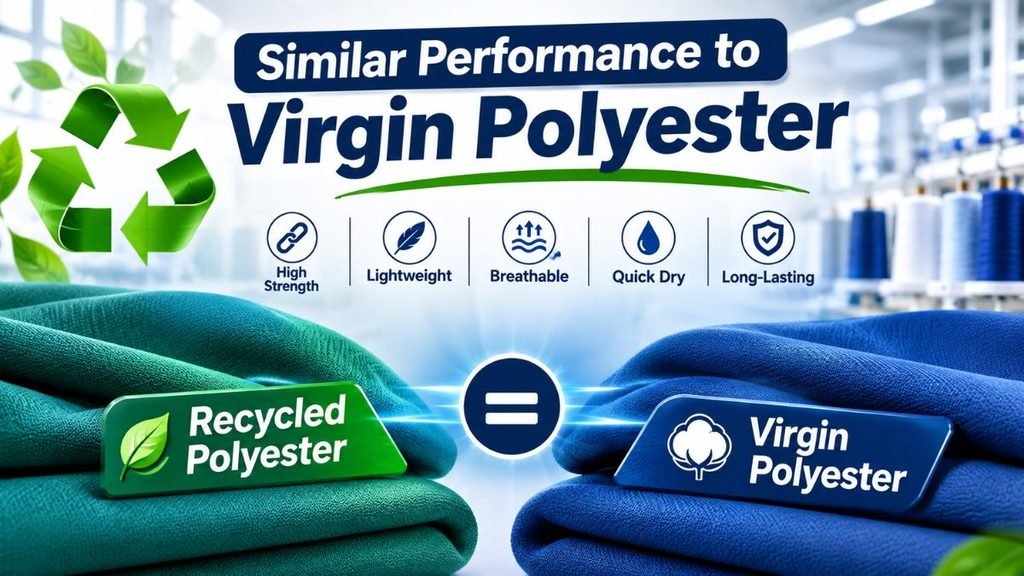
Similar Performance to Virgin Polyester
Recycled polyester can offer many of the same practical properties as virgin polyester.
Depending on its construction, it can provide:
- Lightweight fabric options
- Quick-drying performance
- Resistance to wrinkles
- Good durability
- Easy-care properties
- Suitability for sportswear
The actual performance depends on yarn quality, fabric construction, finishing, and garment design.
For example, recycled polyester can be used in activewear when the fabric meets the required stretch, recovery, and moisture-management specifications.
Does Recycled Polyester Cause Cancer?
There is no established evidence that wearing ordinary recycled polyester clothing causes cancer simply because the material is recycled.
However, textile products may contain dyes, finishes, and other chemical substances. Some chemicals used in certain industrial processes can raise health concerns.
The important distinction is between the polyester polymer and the chemicals that may be used during processing.
A garment’s safety cannot be judged only by its recycled content. Brands should ask about chemical management and relevant product testing.
OEKO-TEX STANDARD 100 is one example of a textile testing certification. It tests finished textile products for harmful substances according to product-specific requirements. Products intended for direct skin contact are assessed under a different product class from products without direct skin contact. Source
Such testing can provide useful information, but buyers should check the actual certificate and its scope. They should not assume that every recycled polyester product carries this certification.
Does Recycled Polyester Release Microplastics?
Yes. Recycled polyester can release microfibers during washing and wear because it remains a synthetic polyester material.
The amount released can vary depending on the fabric and how it is made.
Important factors include:
- Yarn type
- Fabric construction
- Surface treatments
- Garment quality
- Washing conditions
- Fabric abrasion
A 2024 research study compared selected recycled and virgin polyester textiles. It found no statistically significant difference in the number of fibers released during abrasion across the tested pairs. The researchers also noted that fabric structure influenced release. Source
Other research has reported different results. A 2025 report commissioned by the Changing Markets Foundation found higher microfiber release in its tested recycled polyester garments. However, its sample and testing approach should be considered when interpreting the findings. Source
These findings show why it is difficult to make one universal claim about microfiber shedding.
The fabric’s structure and production quality matter, not just whether the polyester is recycled.
How Is Recycled Polyester Made?
Understanding the production process helps explain its benefits and limitations.
Most recycled polyester is produced through mechanical recycling. Some manufacturers also use chemical recycling methods.
Step 1: Collecting Waste Materials
The process begins with collecting suitable polyester waste.
Common sources include used PET bottles, textile waste, and manufacturing leftovers.
The collected materials must be suitable for the recycling process.
Step 2: Sorting and Cleaning
The waste is sorted to separate suitable materials from unwanted items.
For bottle-based recycling, labels, caps, and other materials are removed. The plastic is then cleaned to remove dirt and other residues.
Proper sorting and cleaning help improve the quality of the recycled material.
Step 3: Shredding and Processing
The cleaned plastic is broken into small flakes.
These flakes are processed and prepared for the next production stage.
Manufacturers must control contamination and material quality during this process.
Step 4: Melting and Fiber Production
In mechanical recycling, suitable PET flakes are melted and processed into new polyester material.
The material can then be formed into fibers or yarn.
Chemical recycling uses different processes to break polyester down into chemical building blocks before producing new polymer.
Step 5: Yarn and Fabric Manufacturing
The recycled polyester material is processed into yarn.
Textile manufacturers use this yarn to create knitted or woven fabrics.
The final material may be used in clothing, sportswear, bags, and other textile products.
What Are the Benefits of Recycled Polyester?
Recycled polyester offers several potential advantages for clothing brands and consumers.
1. Reduced Demand for Virgin Plastic
Using recycled polyester can reduce the need for newly produced PET raw materials.
This supports the use of existing material resources and can help reduce reliance on fossil-based inputs.
2. Waste Material Reuse
Suitable plastic waste can become a resource for textile production.
This may reduce the amount of waste that would otherwise be discarded, depending on local collection and recycling systems.
3. Useful for Performance Clothing
Recycled polyester can be used in a wide range of clothing products.
These include sportswear, activewear, jackets, T-shirts, and other garments.
It can be combined with elastane or other fibers to create fabrics with different performance properties.
4. Suitable for Different Fabric Designs
Manufacturers can produce recycled polyester fabrics in different weights, colors, and constructions.
This gives clothing brands flexibility when developing product collections.
5. Supports Material Innovation
Demand for recycled materials encourages development in sorting, recycling, yarn production, and textile design.
New recycling methods may improve the use of textile waste and help build better material recovery systems.
What Are the Disadvantages of Recycled Polyester?
Despite its advantages, recycled polyester has limitations.
1. It Is Still a Synthetic Plastic Fiber
Recycled polyester does not become a natural or biodegradable material after recycling.
It remains a plastic-based fiber and can persist in the environment when released as waste.
2. Microfiber Shedding Continues
Recycled polyester can release small fibers during washing and use.
This means switching from virgin to recycled polyester does not eliminate microfiber pollution.
3. Recycling Quality Can Vary
Different waste sources can produce different material qualities.
Contamination, processing conditions, and repeated melting can affect the properties of recycled polyester.
4. Blended Fabrics Can Be Difficult to Recycle
Many activewear fabrics combine polyester with elastane.
These blends can be harder to separate and recycle than single-fiber materials.
This creates a challenge when garments reach the end of their useful life.
5. Environmental Benefits Depend on Production
Recycling requires energy, transport, cleaning, and processing.
The environmental result depends on how these activities are managed.
Recycled polyester should therefore be assessed through its supply chain rather than treated as automatically sustainable.
Is Recycled Polyester Safe for Sensitive Skin?
Recycled polyester may be suitable for many people with sensitive skin, but individual reactions can vary.
The fiber itself is not the only factor that affects comfort.
Dyes, finishing chemicals, garment construction, and friction can all influence how clothing feels against the skin.
If you have sensitive skin, consider these practical steps:
- Look for products with relevant chemical-safety testing.
- Choose soft fabrics with smooth surfaces.
- Avoid garments that feel rough or cause friction.
- Wash new clothing before wearing it.
- Follow the garment’s care instructions.
- Stop using a product if it causes repeated irritation.
People with persistent skin reactions should seek advice from a qualified healthcare professional.
For brands, selecting suitable materials and checking finished products can help reduce avoidable quality problems.
How Can Consumers Choose Better Recycled Polyester Clothing?
Consumers can make more informed choices by checking product details rather than relying only on sustainability labels.
Check the Material Composition
Read the product label to see whether the garment contains 100% recycled polyester or a blend.
For example, a fabric may contain recycled polyester mixed with elastane. The recycled percentage should be clearly stated when a brand makes a recycled-content claim.
Look for Relevant Certifications
Some certifications provide information about recycled content or chemical testing.
Examples include:
- Global Recycled Standard (GRS)
- Recycled Claim Standard (RCS)
- OEKO-TEX STANDARD 100
These standards serve different purposes. GRS and RCS relate to recycled material claims and supply-chain requirements, while OEKO-TEX STANDARD 100 focuses on harmful-substance testing.
A recycled-content certificate does not automatically prove that a garment is free from every harmful chemical. Check what each certificate actually covers.
Consider Garment Quality
A durable garment may remain useful for longer.
Look at stitching, fabric construction, seams, and finishing. A product that loses its shape quickly may need replacing sooner.
Follow Proper Washing Instructions
Good care can help garments last longer.
Wash synthetic clothing only when needed and follow the care label. Avoid unnecessarily long or harsh wash cycles.
Where suitable, a washing-machine microfiber filter or laundry bag designed to capture fibers may help reduce microfiber release. These products do not eliminate all emissions.
Is Recycled Polyester a Good Choice for Sportswear and Activewear?
Recycled polyester can be a useful material for sportswear and activewear.
It can provide lightweight construction, durability, and quick-drying performance. When blended with elastane, it can also offer stretch for fitted garments.
Common applications include:
- Running shirts
- Training tops
- Athletic shorts
- Sports jackets
- Tracksuits
- Performance T-shirts
- Some yoga and fitness garments
However, brands should select fabrics according to the needs of each product.
For example, leggings may require four-way stretch, good recovery, and suitable opacity. A lightweight training shirt may need airflow and moisture management.
The recycled content alone does not guarantee these performance qualities.
Before bulk production, request physical fabric samples and check GSM, composition, stretch, recovery, colorfastness, and shrinkage.
What Should Clothing Brands Check Before Using Recycled Polyester?
Clothing brands need to consider material quality, documentation, production requirements, and customer expectations.
Confirm Recycled Content
Ask the supplier where the recycled material comes from.
Find out whether it uses post-consumer bottles, textile waste, or production leftovers.
Request supporting documentation for recycled-content claims.
Review Chemical Safety Information
Ask about relevant testing for the finished fabric or garment.
If your target market requires specific chemical compliance, confirm the applicable requirements with your supplier or testing laboratory.
Test Fabric Performance
Request swatches or sample yardage before placing a large order.
Check the material’s stretch, recovery, weight, durability, and appearance.
For activewear, test the fabric in a finished sample garment.
Understand Minimum Order Quantities
Custom recycled fabrics may have specific minimum order requirements.
Ask whether the supplier has stock materials or needs to produce a custom batch.
Confirm fabric MOQ separately from garment manufacturing MOQ.
Keep Supply Chain Records
Save supplier details, material specifications, certificates, test reports, and approved samples.
This documentation can help support accurate product descriptions and future repeat orders.
How Fashion Soul International Supports Fabric Sourcing and Custom Apparel Production
Fashion Soul International is a factory-owned custom clothing manufacturer based in Sialkot, Punjab, Pakistan.
The company offers private-label, OEM, ODM, white-label, cut-and-sew, and full-package apparel manufacturing.
Its services include product development, fabric and trim sourcing, sampling, bulk production, quality control, custom branding, packaging, export documentation, and international shipping.
For brands interested in recycled polyester clothing, fabric selection should begin with the product’s requirements.
A sportswear shirt, training jacket, and stretch activewear set may need different fabric weights and compositions.
Buyers should provide their preferred material, intended use, color requirements, and estimated order quantity. They should also request material documentation and physical samples before approving production.
Fashion Soul International publishes a standard MOQ starting at 100 pieces. Actual requirements depend on the product and project specifications, so brands should confirm them through a quotation.
Choosing a suitable fabric and approving a physical pre-production sample helps align the finished garment with the buyer’s expectations.
Frequently Asked Questions
Is recycled polyester bad for your health?
Recycled polyester is not automatically harmful to human health. However, the safety of a finished garment depends on its materials, dyes, finishing chemicals, and manufacturing controls. Look for relevant testing and product information.
Is recycled polyester better than polyester?
Recycled polyester can offer environmental advantages because it uses existing material and can reduce demand for virgin PET. However, both fibers have similar basic properties and can release microfibers.
Does recycled polyester contain harmful chemicals?
It may contain chemical residues depending on its waste source and processing. Dyes and finishing treatments can also affect the final product. Appropriate testing helps assess the finished textile.
Can recycled polyester cause skin irritation?
Some people may experience irritation from particular garments. Possible causes include friction, heat, dyes, or finishing chemicals. Recycled polyester is not automatically the cause.
Is recycled polyester toxic?
There is no basis for describing all recycled polyester as toxic. Its safety depends on material quality and chemical controls. Buyers should check relevant product testing rather than judge a garment only by its recycled content.
Does recycled polyester release microplastics?
Yes. Recycled polyester is still a synthetic plastic fiber. Small fibers can break away during washing and wear, contributing to microfiber pollution.
Is recycled polyester biodegradable?
No. Standard recycled polyester is not biodegradable under ordinary environmental conditions. It remains a synthetic PET material.
Is recycled polyester good for activewear?
It can be a suitable choice for activewear because it can offer durability, lightweight construction, and quick-drying performance. The fabric must still meet the garment’s stretch, recovery, comfort, and quality requirements.
How can I identify genuine recycled polyester?
Look for credible recycled-content documentation and supply-chain certification. Labels alone should not be treated as complete proof unless they can be verified.
Is recycled polyester suitable for everyday clothing?
Yes. It is used in T-shirts, jackets, sportswear, and many other clothing products. Comfort depends on the fabric construction, weight, finishing, and garment design.
Final Thoughts
So, is recycled polyester bad for you? Not necessarily. Recycled polyester is not automatically harmful simply because it comes from previously used plastic materials. Its safety depends on the quality of the recycled feedstock, processing, dyes, finishes, and final product testing.
The related question, is recycled polyester better than polyester, has a more balanced answer. Recycled polyester can reduce demand for virgin raw materials and support waste reuse. However, it remains a synthetic fiber and can still release microfibers.
For consumers, the best approach is to check garment quality, material information, and relevant safety testing. For clothing brands, responsible sourcing means verifying recycled content, reviewing chemical documentation, and testing fabric performance.
Recycled polyester can be a useful material choice when selected carefully. The goal should be to create clothing that performs well, lasts longer, and has a more transparent supply chain.