Textile Making: A Complete Guide to the Textile Manufacturing Process
Textile making is the process of turning natural or synthetic fibers into fabrics used for clothing, home furnishings, industrial products, and many other applications. It involves several stages, including fiber preparation, yarn production, fabric formation, dyeing, printing, finishing, and quality inspection.
Understanding textile making helps fashion brands, clothing manufacturers, designers, and buyers make better decisions about fabric quality, product performance, and production costs. It also explains how raw materials become finished textiles ready for garment manufacturing.
In this guide, we explore the manufacturing of the textile industry, the processing of textiles, the complete textile manufacturing process, and the role of each stage in textile industry production.
What Is Textile Making?
Textile making is the process of producing fabric and other textile materials from fibers. These fibers may come from plants, animals, minerals, or chemical processes.
For example, cotton fibers can be spun into yarn and woven into fabric. Polyester fibers can be converted into yarn and knitted into sportswear fabric. Wool can be processed into warm materials used for sweaters, coats, and other garments.
Textile making includes more than simply producing fabric. It may involve cleaning raw fibers, preparing yarn, forming fabric, applying colors or patterns, and treating the material to achieve specific properties.
The final textile can be used to manufacture T-shirts, hoodies, jackets, trousers, dresses, uniforms, towels, bedding, upholstery, and technical products.
The exact process depends on the fiber, fabric construction, intended use, and required performance.
1. Understanding Raw Materials Used in Textile Making
The first step in textile production is selecting suitable raw materials. Fiber choice affects a fabric’s softness, strength, durability, appearance, breathability, and cost.
Textile manufacturers consider these properties before selecting materials for production.
Natural Fibers
Natural fibers come from plants or animals.
Cotton: Cotton is widely used in clothing because it is soft, breathable, and comfortable. It is commonly used for T-shirts, shirts, casual wear, and many types of home textiles.
Wool: Wool provides warmth and can help regulate temperature. It is used in sweaters, coats, scarves, and other cold-weather products.
Silk: Silk is known for its smooth surface and natural sheen. It is used in premium garments, scarves, and decorative textiles.
Linen: Linen is made from flax fibers. It is valued for its breathable feel and is often used for summer clothing and home furnishings.
Natural fibers differ in strength, care requirements, and resistance to wear. Manufacturers must consider these characteristics when choosing materials.
Synthetic Fibers
Synthetic fibers are produced through chemical processes.
Polyester: Polyester is widely used in sportswear, uniforms, outerwear, and everyday clothing. It can offer good durability and quick drying.
Nylon: Nylon is valued for its strength and abrasion resistance. It is used in activewear, outerwear, bags, and performance textiles.
Acrylic: Acrylic can provide a wool-like feel and is used in sweaters, blankets, and other products.
Elastane: Elastane adds stretch and recovery when blended with other fibers. It is common in leggings, fitted garments, and stretch sportswear.
Blended Fibers
Some fabrics combine two or more fiber types to balance their properties.
For example, cotton-polyester blends may combine cotton’s comfortable feel with polyester’s durability and easier-care characteristics. Cotton-elastane blends add stretch to everyday clothing.
The correct blend depends on the garment’s purpose, target customer, expected price, and performance requirements.
2. Fiber Preparation and Cleaning
After selecting the raw material, textile production begins with fiber preparation. This stage removes unwanted material and prepares fibers for further processing.
The methods vary depending on the fiber type.
Cotton processing may include cleaning to remove seeds, dirt, and other plant material. The fibers are then opened and aligned to help create a more consistent material.
Wool processing may involve cleaning, sorting, and preparing fibers before spinning. Synthetic fibers follow different manufacturing routes because they are generally created through chemical and mechanical processes.
Proper fiber preparation helps improve yarn consistency and reduces defects in later production stages.
If raw materials contain excessive impurities or inconsistent fibers, the finished fabric may have uneven areas, weak spots, or other quality problems.
Manufacturers therefore pay attention to the condition of the incoming fibers before moving to yarn production.
3. Yarn Manufacturing
Yarn manufacturing converts loose fibers into continuous strands that can be used to create fabric. This is an important part of the textile manufacturing process because yarn quality influences the appearance, strength, and feel of the finished material.
Carding
Carding separates and aligns fibers while removing some remaining impurities. It forms a more uniform layer of fibers that can be prepared for further processing.
Combing
Combing is used for certain yarns when a smoother, more uniform result is required. It removes shorter fibers and helps align the remaining fibers.
Not every textile requires combing. The choice depends on the desired yarn quality and product specifications.
Drawing
During drawing, fiber strands are combined and aligned to improve uniformity. This helps create a more consistent feed for the next production stage.
Spinning
Spinning twists or otherwise processes fibers into yarn. The specific method depends on the material and desired yarn characteristics.
Different spinning systems can produce yarns with different levels of softness, strength, texture, and appearance.
Yarn thickness also matters. Fine yarns may be suitable for lightweight fabrics, while thicker yarns can be used for heavier textiles.
Once yarn is ready, it can move to fabric formation.
4. Fabric Formation: Weaving, Knitting, and Nonwoven Methods
Fabric formation is the stage in which yarns or fibers are converted into a textile structure. The method selected affects stretch, texture, durability, drape, and the best uses for the fabric.
Weaving
Weaving creates fabric by interlacing two sets of yarns. The lengthwise yarns are called the warp, while the crosswise yarns are called the weft.
Common woven fabrics include denim, poplin, twill, and many types of shirting material.
Woven fabrics often provide stability and structure. Depending on the construction, they may be suitable for shirts, trousers, jackets, uniforms, and workwear.
Knitting
Knitting forms fabric by creating connected loops of yarn. It can produce materials with natural stretch and flexibility.
Common knitted fabrics include jersey, rib knit, interlock, and fleece-based constructions.
Knitted fabrics are widely used for T-shirts, sweatshirts, hoodies, leggings, and activewear.
The final performance depends on yarn type, loop structure, fabric weight, and finishing treatments.
Nonwoven Fabric Production
Nonwoven textiles are produced by bonding or mechanically connecting fibers rather than using traditional weaving or knitting.
Methods may involve heat, pressure, adhesives, or mechanical entanglement.
Nonwoven materials are used in products such as certain medical textiles, filtration materials, wipes, insulation, and disposable items.
Choosing the correct fabric-forming method is essential because different constructions behave differently during cutting, sewing, washing, and everyday use.
5. Dyeing and Coloring Textiles
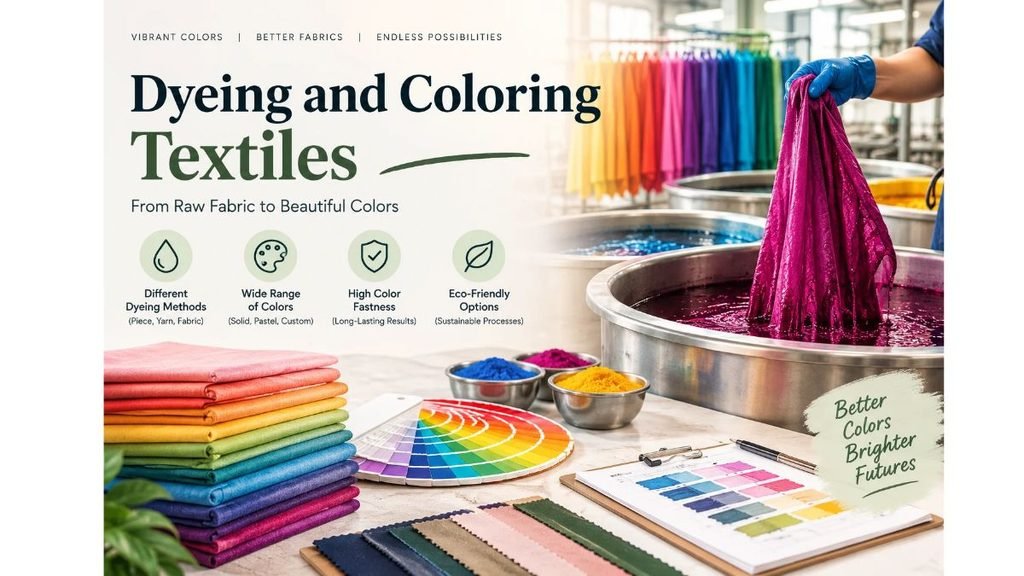
Dyeing gives textiles their color. It may occur at different stages, depending on the production method and desired result.
Some materials are dyed as fibers or yarns before fabric formation. Others are dyed after the fabric has been woven or knitted. Finished garments can also undergo dyeing in suitable production systems.
Fiber Dyeing
In fiber dyeing, fibers are colored before they are spun into yarn. This approach can be useful for specific color effects and specialty textiles.
Yarn Dyeing
Yarn dyeing colors yarn before weaving or knitting. It is often used when the design requires colored yarns, such as stripes or checks.
Fabric Dyeing
Fabric dyeing colors the material after it has been formed. It is widely used when manufacturers need solid-colored fabrics in different shades.
Garment Dyeing
Garment dyeing takes place after a garment has been assembled. It can create particular color effects and finishes, but it requires suitable materials, construction, and process controls.
Dye selection and processing conditions affect color consistency and fastness. Colorfastness describes how well a color resists fading or transferring during washing, rubbing, or exposure to light.
Manufacturers should select a suitable dyeing method according to fiber composition, fabric construction, target color, and final use.
6. Textile Printing and Pattern Development
Printing adds designs, graphics, or patterns to a textile surface. It is different from dyeing because printing usually places color in specific areas rather than coloring the entire material uniformly.
Common textile printing methods include screen printing, digital textile printing, and rotary screen printing.
The appropriate method depends on the artwork, fabric type, production quantity, color requirements, and budget.
For example, digital printing can be useful for detailed artwork and designs with many colors. Screen printing may be suitable for certain larger production runs, depending on the design and setup costs.
Textile printing requires attention to color accuracy, placement, and durability. The printed material may need testing to determine how the design performs during washing and normal use.
For clothing brands, these decisions are important when creating printed T-shirts, hoodies, sportswear, and other custom apparel.
7. Processing of Textiles: Finishing Treatments
The processing of textiles includes treatments that improve or change the fabric’s appearance, texture, handling, and performance. Finishing usually takes place after fabric formation and may follow dyeing or printing.
Different treatments produce different results.
Softening
Softening treatments can make fabric feel smoother or more comfortable. The appropriate treatment depends on the fiber and the desired hand feel.
Shrinkage Control
Some fabrics may shrink during washing or use. Suitable processing can help control dimensional changes, but results depend on the material and treatment.
Manufacturers should consider expected shrinkage when developing garment measurements and size specifications.
Brushing
Brushing raises fibers on the fabric surface to create a softer or warmer feel. It is used in certain fleece and other fabrics.
Enzyme and Wash Treatments
Selected textiles may undergo enzyme treatments or washing processes to change their surface appearance and feel. These methods are commonly associated with certain denim and casualwear products.
Performance Finishes
Some fabrics receive treatments intended to improve properties such as water repellency, wrinkle resistance, or moisture management. The result depends on the specific technology and fabric construction.
Finishing choices should match the product’s purpose. A fabric intended for lightweight summer clothing may need different treatments from a heavy winter sweatshirt.
Manufacturers should also consider the effects of finishing on color, durability, care instructions, and environmental requirements.
8. Quality Control in Textile Manufacturing
Quality control is essential throughout textile production. Problems discovered early may be easier and less expensive to correct than defects found after garments have been manufactured.
Textile quality checks may begin with incoming fibers and continue through yarn production, fabric formation, dyeing, finishing, and final inspection.
Fabric Inspection
Fabric inspection can identify visible defects, uneven coloration, holes, stains, and construction problems. The inspection method depends on the fabric type and the buyer’s requirements.
Weight and Width Checks
Fabric weight and width affect cutting plans, garment fit, and material consumption. In clothing production, fabric weight is often expressed as GSM, meaning grams per square meter.
A suitable GSM depends on the intended garment. A lightweight T-shirt and a heavyweight hoodie generally require different fabric weights.
Color Consistency
Color checks help identify differences between fabric batches or production lots. This is important when multiple garments must match or when additional quantities will be ordered later.
Strength and Performance Testing
Depending on the product, testing may assess tensile strength, abrasion resistance, pilling, shrinkage, colorfastness, or other properties.
Not every fabric requires the same tests. The testing plan should reflect the intended use and the buyer’s quality standards.
Clear specifications and inspection procedures help textile suppliers and clothing manufacturers maintain consistency.
9. The Complete Textile Manufacturing Process Step by Step
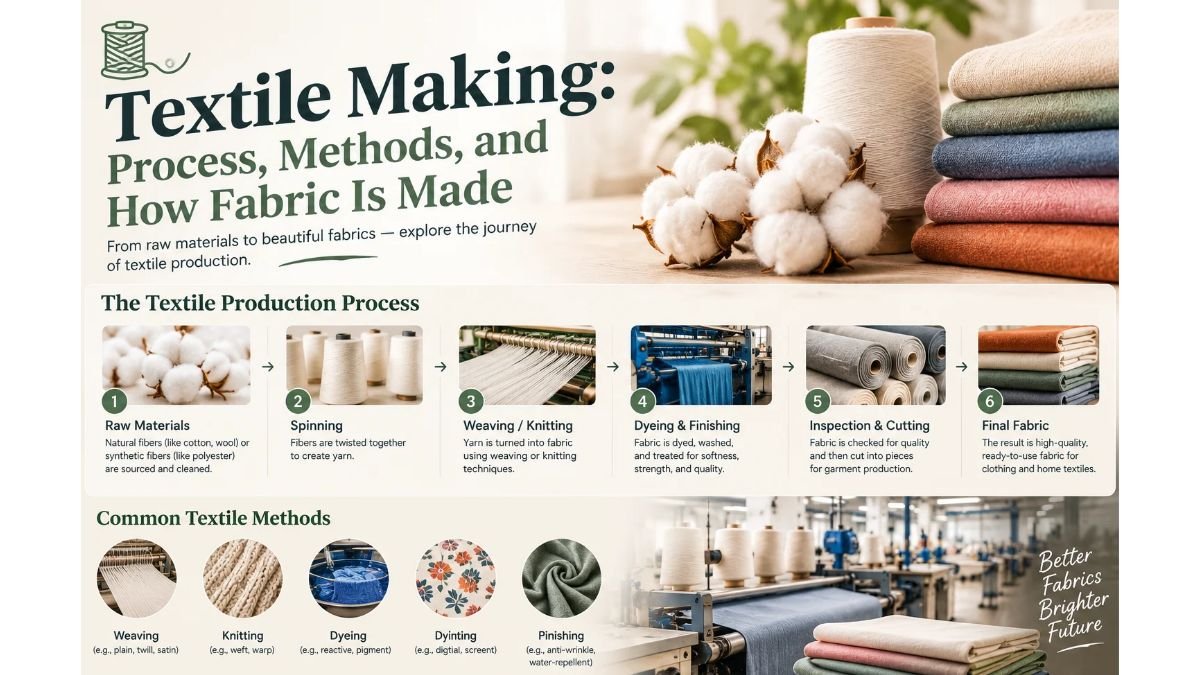
The textile industry process can be summarized as a sequence of connected production stages. Actual workflows vary according to the material and the type of textile being produced.
A typical process includes:
- Raw material selection: Choose suitable natural, synthetic, or blended fibers.
- Fiber preparation: Clean and prepare fibers for further processing.
- Yarn production: Convert fibers into yarn using an appropriate spinning method.
- Fabric formation: Create fabric through weaving, knitting, or nonwoven production.
- Dyeing: Apply color at the fiber, yarn, fabric, or garment stage as required.
- Printing: Add designs or patterns when needed.
- Finishing: Apply treatments to achieve the required appearance and performance.
- Inspection and testing: Check the textile against quality specifications.
- Packing and dispatch: Prepare the finished material for storage or delivery.
Some operations may occur in a different order, and certain stages may not be necessary for every product.
For example, a yarn-dyed woven fabric may receive its color before weaving. A printed fabric may undergo printing after it has been formed. A technical textile may require specialized treatments or tests that are not used for ordinary apparel fabrics.
Understanding this sequence helps buyers identify where material quality is established and where production problems may occur.
10. How Textile Making Supports Clothing Manufacturing
Textile production and garment manufacturing are closely connected, but they are not the same process.
Textile making produces materials such as yarn and fabric. Garment manufacturing uses fabric and other components to create finished clothing.
After a suitable fabric is selected, garment production may involve:
- Design development
- Pattern making and grading
- Fabric spreading and cutting
- Sewing and assembly
- Printing or embroidery
- Trimming and finishing
- Measurement checks
- Final inspection
- Packaging and shipping
The choice of fabric affects almost every stage. Stretch fabrics may require different handling from stable woven materials. Heavy fleece may need different sewing settings from lightweight jersey. Certain finishes may also affect how a garment should be cut or cared for.
For this reason, clothing brands should communicate their fabric requirements clearly when working with a manufacturer.
A well-developed product specification can include fiber composition, fabric construction, GSM, color references, stretch requirements, finishing, and care expectations.
11. Factors That Affect Textile Production Costs
Textile production costs depend on several factors. There is no single price that applies to every type of fabric.
Raw Material
Fiber type and quality can significantly affect cost. Natural fibers, synthetic fibers, specialty yarns, and blended materials have different sourcing and processing requirements.
Yarn and Fabric Construction
The yarn count, spinning method, weave, knit structure, and fabric density influence production complexity and material cost.
Dyeing and Printing
Color requirements, artwork complexity, number of colors, and production volume can affect processing costs.
Finishing Requirements
Special washes, softening, shrinkage control, and performance treatments may add steps to production.
Order Quantity
Production quantities influence setup costs, purchasing decisions, and manufacturing efficiency. Some processes become more economical at larger volumes, while specialty materials may have their own minimum order requirements.
Quality Standards
More demanding specifications or additional testing may increase the cost of producing and inspecting a textile.
When comparing fabric quotations, buyers should check the full specification. Two fabrics with similar appearances may differ in composition, weight, construction, finishing, and performance.
A clear comparison helps prevent unexpected differences in the finished garment.
12. Sustainability and Responsible Textile Production
Textile manufacturing uses raw materials, energy, water, and chemical inputs. The environmental impact depends on the fiber, production method, energy source, dyeing and finishing processes, waste management, and product lifespan.
Responsible production begins with understanding these factors rather than relying only on broad sustainability claims.
Material Selection
Brands can compare materials according to their composition, durability, sourcing information, and suitability for the product.
Recycled fibers may be appropriate for some applications, but their benefits depend on the material and production details. Natural fibers are not automatically impact-free, and synthetic fibers are not identical in their environmental effects.
Efficient Resource Use
Manufacturers may seek to reduce material waste, optimize cutting and production plans, and manage water and energy use.
Chemical Management
Dyeing and finishing processes should use appropriate chemical handling and wastewater controls. Buyers with specific compliance requirements should ask suppliers for relevant documentation.
Durability and Product Life
Garments that remain useful for longer may reduce the need for frequent replacement. Fabric selection, construction quality, and care instructions all contribute to product lifespan.
Waste Reduction
Careful planning can reduce leftover fabric, rejected materials, and packaging. Some textile waste may also be suitable for reuse or recycling, depending on its composition and condition.
Brands should ask clear questions about a supplier’s actual practices and supporting evidence. Avoid assuming that a material or factory is sustainable without relevant information.
13. Common Challenges in the Textile Industry Process
Textile manufacturers face technical and operational challenges that can affect cost, quality, and delivery.
Inconsistent Raw Materials
Differences in fiber quality can affect yarn uniformity and fabric performance. Clear material specifications and incoming inspections help manage this risk.
Uneven Color
Color variation can occur because of differences in dyeing conditions, material batches, or processing. Approved color references and suitable testing can help reduce mismatches.
Fabric Defects
Holes, stains, irregular structures, and other defects may affect the usable quantity of fabric. Inspection and process control help identify these issues.
Shrinkage and Dimensional Changes
Some materials change size during processing or washing. Manufacturers should understand these properties before finalizing garment measurements.
Production Delays
Material availability, equipment issues, reprocessing, and inspection failures can affect timelines. Clear planning and communication help identify problems earlier.
Rising Material Costs
Changes in raw material prices, energy costs, transportation, and supply availability can affect quotations. Buyers should confirm how long a quotation remains valid and whether material substitutions require approval.
Addressing these challenges requires accurate specifications, trained staff, suitable equipment, and consistent quality management.
14. How to Choose a Textile or Fabric Supplier
Selecting the right supplier is important for brands that depend on consistent material quality.
Start by defining your fabric requirements. Include fiber composition, weight, construction, color, width, finishing, and intended garment use.
Then evaluate suppliers against practical criteria.
Product expertise: Can the supplier provide the fabric construction you need?
Material consistency: Can it explain how it manages color and quality between batches?
Sampling: Can you receive a sample or swatch before placing a larger order?
Minimum quantities: Does the supplier’s minimum order fit your project?
Testing: Can it provide relevant test results or documentation when required?
Communication: Does the supplier respond clearly and explain technical limitations?
Delivery: Are availability, production lead times, shipping, and delivery terms clear?
Request samples and compare them against your specifications. If the fabric will be used in a custom garment, test it in the intended construction where practical.
A fabric that looks suitable on a swatch may behave differently after cutting, sewing, washing, or finishing. Testing the complete product can reveal problems before bulk production.
15. The Role of Textile Making at Fashion Soul International
Textile selection is an important part of custom clothing production. The chosen material affects comfort, garment structure, appearance, durability, and how the final product should be manufactured.
Fashion Soul International is a factory-owned custom clothing manufacturer based in Sialkot, Pakistan. Its services include fabric sourcing, product development, sampling, bulk production, quality control, custom branding, packaging, and international shipping.
The company produces apparel categories such as T-shirts, hoodies, streetwear, activewear, sportswear, workwear, jackets, denim, casual wear, and tracksuits.
Depending on the product, fabric options may include cotton, French terry, brushed fleece, polyester interlock, stretch materials, denim, twill, and canvas.
When developing a custom clothing project, brands should provide their preferred fabric composition, weight, color, texture, and performance requirements. If the exact material is not yet selected, they can share reference garments, sketches, or a product brief to begin the discussion.
A sample helps confirm whether the proposed fabric and construction meet the product requirements before bulk production begins.
For more information about custom apparel production and fabric sourcing, visit Fashion Soul International.
Frequently Asked Questions
What is textile making?
Textile making is the process of converting fibers into yarn, fabric, or other textile materials. It may include fiber preparation, spinning, weaving or knitting, dyeing, printing, finishing, and quality inspection.
What are the main stages of textile manufacturing?
The main stages commonly include raw material selection, fiber preparation, yarn production, fabric formation, dyeing, printing when required, finishing, inspection, and packing. The exact process depends on the textile being produced.
What is the difference between textile manufacturing and garment manufacturing?
Textile manufacturing produces materials such as yarn and fabric. Garment manufacturing uses those materials to make finished products, including T-shirts, trousers, jackets, dresses, and other clothing.
What is the processing of textiles?
Textile processing refers to operations that prepare, color, treat, or finish textile materials. Examples include cleaning, dyeing, printing, softening, shrinkage control, and specialized finishing treatments.
What are the common methods of fabric production?
The main methods include weaving, knitting, and nonwoven production. Weaving interlaces yarns, knitting forms connected loops, and nonwoven methods bond or mechanically connect fibers.
Why is quality control important in textile production?
Quality control helps identify material defects, color variation, inconsistent weight, and performance problems. It supports more consistent fabrics and reduces the risk of defects reaching garment production.
How does fabric selection affect clothing quality?
Fabric affects a garment’s comfort, fit, strength, appearance, stretch, care requirements, and durability. Selecting suitable materials helps the manufacturer achieve the intended product design and performance.
Is textile production the same for every fabric?
No. Different fibers and constructions require different production methods. Cotton, wool, polyester, denim, knitted jersey, and nonwoven materials may all need different processing and quality checks.
Conclusion
Textile making transforms raw fibers into usable materials through a series of connected production stages. These stages may include fiber preparation, yarn manufacturing, weaving or knitting, dyeing, printing, finishing, and inspection.
Understanding the manufacturing of the textile industry helps designers, buyers, and clothing brands make informed choices about materials, quality, cost, and production requirements. It also explains why fabric selection matters before garment manufacturing begins.
From choosing the right fiber to checking the finished textile, each step can influence the performance and appearance of the final product. By understanding the textile manufacturing process and working with suitable suppliers, businesses can make better sourcing decisions and develop clothing products that meet their quality expectations.