Natural Activewear Brands: A Guide to Clean and Comfortable Workout Clothing
The demand for comfortable and responsible workout clothing continues to grow. Many consumers now look beyond style and price when choosing fitness apparel. They also want to understand which materials touch their skin and how their clothes are made. This growing interest has brought natural activewear brands into the spotlight.
Traditional activewear often uses polyester, nylon, and other synthetic materials. These fabrics can offer useful features, such as stretch, moisture management, and durability. However, some consumers prefer natural fibers or lower-impact material alternatives.
Natural activewear focuses on materials such as organic cotton, merino wool, and hemp. Some brands also use regenerated cellulose fibers, including lyocell. The right choice depends on the activity, climate, comfort needs, and performance expectations.
This guide explains what natural activewear means, how to identify clean activewear brands, which fabrics are worth considering, and what to look for when buying workout clothing. It also explores how clothing brands can develop activewear collections with more thoughtful material choices.
What Are Natural Activewear Brands?
Natural activewear brands are clothing companies that use natural fibers or other carefully selected materials in their workout collections. Their products may include leggings, sports bras, T-shirts, yoga pants, shorts, sweatshirts, and lightweight training tops.
Common natural fibers include:
- Organic cotton
- Conventional cotton
- Merino wool
- Hemp
- Linen
- Wool blends
Some brands also use regenerated cellulose fibers, such as lyocell and modal. These materials come from plant-based cellulose but undergo industrial processing. Therefore, they are not the same as untreated natural fibers.
Natural activewear brands often focus on comfort, material transparency, and responsible production. However, the term does not have one universal definition. A brand may use natural fibers in some products while offering synthetic blends in others.
Consumers should check each product’s fabric composition rather than relying only on marketing language.
What Does Clean Activewear Mean?
Clean activewear generally refers to workout clothing made with attention to material choices, chemical management, manufacturing practices, and product transparency.
The phrase clean activewear brands is commonly used by consumers looking for clothing that aligns with their personal preferences around materials and production.
However, clean activewear is not a single regulated fabric category. Different brands may use the term in different ways.
A brand may describe its activewear as clean because it focuses on:
- Clear fabric composition labels
- Responsible material sourcing
- Restricted chemical management
- Certified organic fibers
- Durable garment construction
- Transparent manufacturing information
- Reduced unnecessary packaging
- Responsible production practices
It is important to understand what a brand actually does. A product described as clean is not automatically organic, chemical-free, sustainable, or environmentally harmless.
Look for specific information and supporting evidence. Clear product details are more useful than broad claims.
Why Are Consumers Interested in Natural Activewear?
Workout clothing stays close to the body during exercise. Comfort, breathability, stretch, and fabric feel can affect the overall experience.
Many consumers now consider these factors alongside appearance and price.
1. Interest in Natural Fibers
Some shoppers prefer natural fibers because of their familiar feel and material origins. Cotton, wool, and hemp have different properties that can suit different clothing needs.
For example, cotton is soft and comfortable for many everyday activities. Merino wool can help manage moisture and temperature. Hemp is known for its strength and can be used in casual apparel.
However, natural does not automatically mean better for every activity. Fabric construction, finishing, and garment design also matter.
2. Greater Material Awareness
Consumers increasingly read garment labels and product descriptions. They want to know whether clothing contains polyester, nylon, elastane, cotton, or blended fibers.
This awareness helps shoppers compare products based on their actual requirements.
A label that lists fiber percentages gives buyers a clearer picture than a general claim such as “eco-friendly fabric.”
3. Interest in Responsible Production
Some consumers want to support brands that explain how their products are made.
They may look for information about material sourcing, factory conditions, water use, waste management, and packaging.
Responsible production involves several factors. A natural fiber alone cannot prove that a garment was made under responsible conditions.
4. Comfort Beyond the Gym
Activewear is no longer limited to exercise. Many people wear leggings, joggers, sports tops, and sweatshirts for travel, shopping, walking, and daily activities.
Natural and plant-based fabrics can appeal to people who want comfortable clothing for both exercise and casual use.
Best Natural Fabrics for Activewear
Fabric selection is one of the most important decisions when developing activewear. Each material has different strengths and limitations.
The best option depends on the garment, activity, climate, and required performance.
Organic Cotton
Organic cotton is grown under organic agricultural standards. Its production rules restrict many synthetic agricultural inputs used in conventional farming.
It is commonly used in:
- Yoga tops
- Workout T-shirts
- Sweatshirts
- Joggers
- Casual gym clothing
- Lightweight training layers
Organic cotton is known for its soft feel and everyday comfort. It can be suitable for low-impact workouts and casual fitness clothing.
However, cotton absorbs moisture and can take longer to dry than many synthetic performance fabrics. It may not be the best standalone option for intense training or long-distance running.
Brands should also check the certification and supply-chain documentation behind organic cotton claims.
Merino Wool
Merino wool comes from Merino sheep. It is valued for its softness and ability to help regulate temperature.
It can be used in:
- Running tops
- Base layers
- Hiking clothing
- Outdoor training apparel
- Lightweight workout shirts
Merino wool can manage moisture and help reduce odor buildup during wear. Its performance depends on fiber quality, fabric weight, construction, and garment design.
It usually costs more than basic cotton. Brands should consider care instructions and durability when developing wool-based activewear.
Hemp
Hemp is a plant-based fiber used in clothing and other textile products. It is known for its strength and can be blended with cotton or other fibers.
Hemp fabric may be suitable for:
- Casual workout shirts
- Relaxed-fit tops
- Yoga clothing
- Joggers
- Lightweight everyday layers
Hemp can have a firm texture, although fabric processing and blending can make it softer. It is not automatically suitable for every high-performance garment.
Brands should test the finished fabric for comfort, shrinkage, colorfastness, and durability.
Linen
Linen is made from flax fibers. It is known for its lightweight feel and airflow.
It can be useful for relaxed workout clothing and warm-weather casual apparel.
Common applications include:
- Loose training tops
- Casual shorts
- Lightweight cover-ups
- Relaxed-fit sportswear
Linen wrinkles easily and generally has limited stretch. It may not provide the support or close fit needed for compression leggings and sports bras.
Lyocell
Lyocell is a regenerated cellulose fiber made from plant-based raw materials, commonly wood pulp.
It is processed into textile fibers through an industrial manufacturing process. Therefore, it is different from a directly spun natural fiber such as cotton.
Lyocell is often valued for its smooth feel and moisture management properties. It may be used in:
- Yoga leggings
- Workout tops
- Lightweight shirts
- Lounge activewear
- Soft base layers
The environmental impact of lyocell depends on the raw material source, manufacturing system, chemicals, and processing controls. Buyers should check specific supplier and certification information.
Modal
Modal is another regenerated cellulose fiber, commonly made from beechwood pulp.
It is known for its soft feel and drape. Brands may use it in casual activewear, lightweight tops, and comfortable lounge clothing.
Modal is often blended with cotton or elastane. The finished fabric’s stretch and durability depend on its composition and construction.
Natural Fabrics vs. Synthetic Activewear
Natural and synthetic fabrics serve different purposes. Neither category is automatically best for every workout.
| Feature | Natural fibers | Synthetic fibers |
|---|---|---|
| Common examples | Cotton, wool, hemp | Polyester, nylon |
| Fabric feel | Varies by fiber | Varies by construction |
| Moisture handling | Depends on the fiber | Often engineered for quick drying |
| Stretch | Often needs a blend for stretch | Can be engineered with elastane |
| Common uses | Casual fitness, yoga, base layers | Running, gym training, compression wear |
| Care | Depends on fiber | Depends on fiber and finish |
For example, cotton can feel comfortable during light exercise. Polyester may be more suitable for a quick-drying training shirt.
Some garments combine natural and synthetic fibers to balance comfort and performance. A cotton-elastane blend may provide softness and stretch. A wool-nylon blend may improve durability.
The best fabric is the one that meets the garment’s real purpose.
How to Identify Clean Activewear Brands
Finding clean activewear brands requires more than reading product names. You should review the fabric composition, certifications, production information, and care instructions.
1. Read the Fabric Composition
Start with the product label or online material description.
Check whether the garment uses:
- Organic cotton
- Conventional cotton
- Merino wool
- Hemp
- Lyocell
- Modal
- Polyester
- Nylon
- Elastane
Pay attention to percentages. A garment described as natural may still contain a large amount of synthetic material.
For example, a fabric containing 90% cotton and 10% elastane is a blend. It is not fully natural.
2. Look for Relevant Certifications
Certifications can help buyers verify specific claims. However, each certification covers a different part of the product or supply chain.
Examples include:
- GOTS: Covers organic textile processing and related environmental and social criteria within its scope.
- OEKO-TEX STANDARD 100: Tests textile products for certain harmful substances under its testing criteria.
- bluesign: Focuses on chemical management and resource use within textile production.
- RWS: Provides a standard for animal welfare and land management in wool supply chains.
Always check the certificate’s scope, validity, and product coverage. A brand’s certification does not necessarily apply to every item in its collection.
3. Check Manufacturing Transparency
Reliable brands should provide useful information about their production practices.
Look for details about:
- Manufacturing countries
- Material suppliers
- Factory information
- Product testing
- Chemical management
- Labor standards
- Packaging choices
Some brands provide detailed supply-chain information. Others provide only general statements.
When information is missing, contact the company and ask specific questions.
4. Understand Chemical and Safety Claims
Terms such as non-toxic, chemical-free, and clean can be misleading when used without evidence.
Textile production uses chemicals for dyeing, printing, washing, and finishing. The important questions involve which substances are used, how they are managed, and whether finished products meet relevant safety requirements.
Look for clear testing information rather than accepting unsupported claims.
5. Consider Product Durability
A garment that wears out quickly may need frequent replacement. This can increase costs and material use.
Check stitching, seams, fabric recovery, colorfastness, and care instructions. Reviews may also help you understand how products perform after repeated washing.
Durability is an important part of responsible clothing choices.
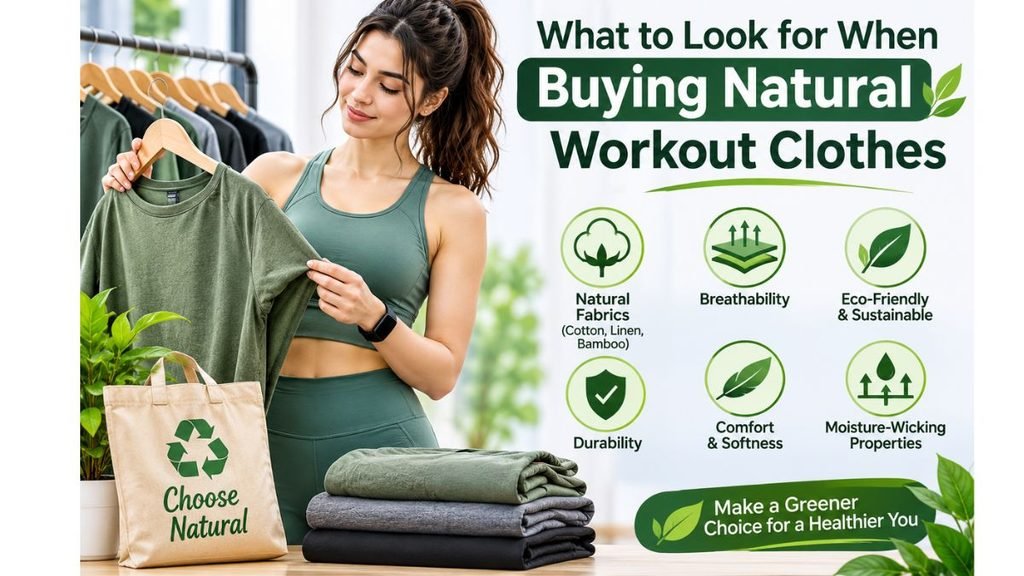
What to Look for When Buying Natural Workout Clothes
Before purchasing natural activewear, think about the activity you plan to perform.
Different workouts create different fabric requirements.
For Yoga and Pilates
Yoga and Pilates often involve stretching, bending, and floor movements.
Look for soft fabrics that allow comfortable movement. Cotton blends, suitable lyocell fabrics, and selected wool blends may work for certain styles.
For fitted leggings, check the fabric’s stretch and recovery. A fully natural fiber may not provide enough elasticity without a suitable construction or blend.
For Running
Running creates heat and sweat. Moisture management and drying time become important.
Merino wool can be an option for some running garments. Synthetic performance fabrics may also provide useful quick-drying properties.
Check the garment’s weight, fit, ventilation, and comfort during movement.
For Weight Training
Weight training requires garments that allow movement without restricting the body.
Look for strong seams, suitable stretch, and fabric that can handle regular use.
Cotton blends may work for some gym shirts. Leggings and fitted training clothing may need elastane or another stretch component.
For Outdoor Activities
Outdoor workouts may expose clothing to changing temperatures, wind, and moisture.
Layering can help. Merino wool base layers and suitable natural or blended fabrics may work in different conditions.
Check drying time, warmth, durability, and care requirements before buying.
Are Natural Activewear Brands Always Sustainable?
No. Natural materials can offer useful qualities, but they do not automatically make a product sustainable.
The environmental impact of clothing depends on more than fiber type.
Important factors include:
- How raw materials are grown or sourced
- Water and energy use
- Chemical management
- Dyeing and finishing methods
- Factory working conditions
- Transport distances
- Product lifespan
- Packaging and waste
Cotton, for example, can require significant water and agricultural inputs. Organic production follows different requirements, but it still has environmental impacts.
Synthetic fabrics also have concerns, including fossil-fuel dependence and the release of microfibers during washing.
A responsible comparison should consider the complete product and supply chain. Avoid assuming that one fiber is always better in every situation.
How Clothing Brands Can Develop Natural Activewear Collections
Fashion businesses interested in natural activewear need to balance material preferences with garment performance.
A good development process begins with the intended use of each product.
Define the Product Category
Start by deciding what you want to manufacture.
Your collection might include:
- Organic cotton gym T-shirts
- Relaxed-fit yoga tops
- Natural-fiber lounge sets
- Merino wool base layers
- Hemp-blend casual activewear
- Lightweight training sweatshirts
Each product needs different material and construction requirements.
Select Suitable Fabrics
Choose fabrics based on comfort, performance, cost, and availability.
Ask suppliers for fabric composition, GSM, width, stretch, shrinkage, and color options.
Request physical swatches before making a final decision. A fabric sample helps you evaluate its actual texture, weight, and appearance.
Develop a Technical Pack
A tech pack helps communicate product specifications to the manufacturer.
Include measurements, fabric details, stitching, labels, trims, colors, and decoration instructions.
If you are still developing the design, reference images and sketches can help explain your concept. However, final production specifications must be clear.
Create and Test Samples
Sampling helps identify problems before bulk production.
Check fit, comfort, stitching, fabric performance, shrinkage, and colorfastness. For activewear, also consider stretch recovery and movement.
If the garment is designed for intense exercise, test it under realistic conditions.
Plan Branding and Packaging
Natural activewear brands often use simple designs and clear material information.
You can develop custom neck labels, care labels, hang tags, and packaging. Make sure material and certification claims are accurate.
Do not describe a product as organic or certified unless the relevant documentation supports that claim.
Why Work With a Custom Activewear Manufacturer?
Developing activewear involves several connected stages. These may include product development, fabric sourcing, pattern making, sampling, bulk production, branding, and quality control.
A custom activewear manufacturer can help coordinate these stages according to your requirements.
When selecting a manufacturing partner, consider:
- Experience with activewear construction
- Access to suitable fabrics
- Sampling and development support
- Printing and embroidery options
- Quality-control procedures
- MOQ requirements
- Production timelines
- Packaging and shipping support
Ask whether the manufacturer has experience with the specific fabric you want to use. Natural fibers and regenerated cellulose fabrics can require different handling, sewing, and finishing methods.
A suitable partner should also explain any limitations. For example, a fabric may feel comfortable but lack the stretch needed for compression garments.
Fashion Soul International and Custom Apparel Production
Fashion Soul International is a factory-owned custom clothing manufacturer based in Sialkot, Pakistan. The company offers private-label, OEM, ODM, white-label, cut-and-sew, and full-package apparel manufacturing.
Its services include product development, fabric and trim sourcing, sampling, bulk production, quality control, custom branding, packaging, export documentation, and international shipping.
For brands developing activewear or casual fitness collections, material selection and garment construction should be discussed during product development.
Fashion Soul International publishes a standard MOQ starting at 100 pieces. Actual requirements depend on the product, fabric, color, construction, and project details.
Brands can begin with a design brief, sketches, reference images, or a technical pack. Finalized specifications or a suitable reference sample are needed before sampling and production.
You can discuss your activewear concept and material requirements through the official website: https://fashionsoulintl.com/.
Common Mistakes When Choosing Natural Activewear
Consumers and clothing brands can make several mistakes when evaluating natural activewear.
Assuming Natural Means Better Performance
A natural fabric may be comfortable but unsuitable for a particular workout.
Always consider moisture management, stretch, recovery, and drying time.
Trusting Marketing Claims Without Evidence
Words such as clean, green, and eco-friendly do not explain how a product was made.
Check the material composition and look for supporting documentation.
Ignoring Fabric Blends
Some activewear needs stretch and durability that pure natural fibers may not provide.
A carefully selected blend may perform better for the intended activity.
Overlooking Care Instructions
Some fabrics need gentle washing or special drying methods.
Follow the care label to help maintain the garment’s appearance and performance.
Choosing Price Over Quality
A low-priced product may not offer the durability or comfort you expect.
Compare fabric details, construction, stitching, and product information before buying.
Frequently Asked Questions
What are natural activewear brands?
Natural activewear brands are clothing companies that use natural fibers or selected plant-based materials in workout clothing. Common options include organic cotton, merino wool, hemp, and regenerated cellulose fibers such as lyocell.
What are clean activewear brands?
Clean activewear brands generally focus on material transparency, chemical management, responsible sourcing, and production practices. The term has no single universal definition, so buyers should check the evidence behind each brand’s claims.
Is organic cotton good for activewear?
Organic cotton can be comfortable and suitable for yoga, casual gym clothing, and everyday fitness wear. However, it absorbs moisture and may dry more slowly than many synthetic performance fabrics.
Is natural activewear better than synthetic activewear?
Neither is automatically better. Natural fibers may offer comfort and familiar fabric feel, while synthetic fabrics can provide useful stretch, durability, and quick-drying performance. The best choice depends on the activity and garment design.
Can activewear be made without polyester?
Yes. Some garments use cotton, wool, hemp, linen, or regenerated cellulose fibers. However, fully avoiding synthetic fibers may limit stretch, drying speed, or durability in certain performance products.
Is lyocell a natural fabric?
Lyocell is made from plant-based cellulose, commonly sourced from wood pulp. It is a regenerated cellulose fiber because the raw material undergoes industrial processing before becoming textile fiber.
What certifications should I look for in clean activewear?
Depending on your priorities, you may look for GOTS, OEKO-TEX STANDARD 100, bluesign, or the Responsible Wool Standard. Each covers different requirements, so check what the certification actually verifies.
Can clothing brands manufacture custom natural activewear?
Yes. Brands can develop custom activewear using suitable natural and blended fabrics. They should confirm material availability, performance requirements, sampling, MOQ, and production capabilities with the manufacturer.
Final Thoughts
The interest in natural activewear brands reflects a wider focus on comfort, fabric transparency, and responsible clothing choices. Materials such as organic cotton, merino wool, hemp, and lyocell offer different benefits for workout and everyday apparel.
However, natural fibers are not automatically the best choice for every activity. Buyers should consider fit, stretch, moisture management, durability, and care requirements.
When exploring clean activewear brands, look beyond marketing terms. Review fabric composition, certifications, manufacturing information, and product quality.
For clothing businesses, successful natural activewear development starts with clear product requirements and suitable fabric selection. Work with a manufacturer that understands your materials, construction needs, and quality expectations. This approach can help you develop activewear that meets your customers’ needs while supporting your brand’s long-term goals.