Athleisurewear: A Complete Guide to Modern Comfort and Style
Athleisurewear combines the comfort of athletic clothing with the style of everyday fashion. It allows people to move between workouts, casual outings, travel, and daily activities without changing their entire outfit. From leggings and joggers to sports bras and hoodies, these garments offer a practical mix of comfort, flexibility, and modern design.
Today, athleisurewear is an important part of many wardrobes. People want clothing that feels comfortable but still looks polished. As a result, brands are creating collections that work for both active and casual lifestyles.
Whether you are a fashion enthusiast, a clothing brand owner, or someone exploring new outfit ideas, understanding this clothing category can help you make better choices. This guide explains what athleisurewear means, its main features, popular products, fabric choices, styling ideas, and manufacturing considerations.
What Is Athleisurewear?
Athleisurewear is clothing designed to combine athletic performance with everyday fashion. It takes useful features from sportswear and brings them into casual clothing.
The term combines the words athletic and leisure. It describes garments that are suitable for light physical activities and everyday use.
For example, a pair of stretch leggings can be worn for yoga, shopping, or relaxing at home. Similarly, a comfortable hoodie can work for a gym warm-up and a casual outing.
Common athleisurewear products include:
- Leggings and yoga pants
- Joggers and sweatpants
- Sports bras and fitted tops
- Oversized T-shirts
- Hoodies and sweatshirts
- Track jackets
- Cycling shorts
- Comfortable sneakers
- Lightweight training jackets
However, athleisurewear is not exactly the same as traditional sportswear. Sportswear mainly focuses on performance during physical activities. Athleisure also considers appearance, versatility, and everyday comfort.
Why Has Athleisurewear Become So Popular?
People increasingly look for clothing that supports different parts of their daily routines. They may want to exercise, travel, work remotely, and meet friends without changing outfits several times.
Athleisurewear answers this need through comfortable fabrics and adaptable designs.
Several factors explain its popularity.
1. Comfort for Everyday Activities
Comfort is one of the main reasons people choose athleisure clothing. Stretch fabrics, soft waistbands, and relaxed fits allow easier movement.
For example, joggers provide a comfortable alternative to traditional trousers. Meanwhile, leggings offer flexibility for exercise and casual activities.
These features make athleisure attire useful for long days and changing routines.
2. A Combination of Fashion and Function
Modern consumers often want clothing that performs well and looks attractive. Athleisure brings these two needs together.
Brands use modern cuts, coordinated colours, textured fabrics, and clean details. Consequently, athletic-inspired garments can look suitable outside a gym.
3. Flexible Styling Options
Many athleisure pieces can be combined with different wardrobe items. A simple sweatshirt can work with joggers, jeans, or leggings.
Likewise, a fitted athletic top can be layered under a jacket. This flexibility makes it easier to create different outfits with fewer garments.
4. Growth of Active Lifestyles
Walking, yoga, gym training, cycling, and home workouts have become common activities for many people.
As a result, customers often look for clothing that supports movement without sacrificing everyday style.
Athleisure provides options for both light exercise and casual wear. However, garments should still match the demands of their intended activities.
Main Features of Quality Athleisurewear
Not every comfortable garment qualifies as good athleisurewear. Product quality depends on fabric, construction, fit, and finishing.
Understanding these features helps shoppers select better clothing. It also helps brands develop products that meet customer expectations.
1. Stretch and Flexibility
Stretch allows clothing to move with the body. It is especially important for leggings, fitted tops, yoga pants, and sports bras.
Spandex, also called elastane, is commonly blended with other fibres to provide stretch.
However, stretch alone is not enough. The fabric should also recover its shape after movement.
For brands, testing stretch and recovery helps identify whether a material suits the intended garment.
2. Breathable Fabrics
Breathable fabrics allow air to move through the material. This can improve comfort during everyday wear and physical activity.
Cotton blends, polyester knits, and selected nylon fabrics may be used for different athleisure products.
The right choice depends on the garment’s purpose. A lightweight training top may need different properties from a heavy sweatshirt.
3. Moisture Management
Moisture-wicking fabrics help move sweat away from the skin. This feature can improve comfort during workouts.
Performance polyester is commonly used in moisture-management clothing. Some nylon blends also support activewear applications.
However, not every athleisure product needs advanced moisture-wicking properties. Everyday sweatshirts and casual joggers may have different priorities.
4. Comfortable Fit
Fit affects both appearance and movement. Athleisure garments are available in fitted, relaxed, oversized, and tapered styles.
For example, leggings usually have a close fit. In comparison, joggers may offer a relaxed shape with a tapered ankle.
Brands should consider body measurements, garment measurements, and size grading during product development.
5. Durable Construction
Stitching and garment construction affect how well clothing performs over time.
Flat seams may help reduce friction in fitted garments. Reinforced seams can support areas exposed to repeated movement.
Additionally, waistbands, drawstrings, cuffs, and zippers should suit the product’s purpose.
6. Easy Care
Customers often prefer clothing that is easy to wash and maintain.
Fabric care depends on fibre composition, dyeing, finishing, and garment construction. Therefore, brands should provide suitable care instructions for each product.
Popular Types of Athleisurewear
Athleisure includes many garment categories. Each product serves different styling and comfort needs.
1. Leggings
<PRIVATE_PERSON> Leggings are among the most recognizable athleisure products. They offer a fitted shape and flexible movement.
Popular styles include:
- High-waisted leggings
- Full-length leggings
- Cropped leggings
- Flared leggings
- Seamless-look leggings
- Compression-style leggings
Leggings can be worn with sports bras, oversized T-shirts, sweatshirts, and casual jackets.
For manufacturing, brands should consider fabric opacity, stretch recovery, waistband support, and seam placement.
2. Joggers
Joggers combine casual comfort with an athletic appearance. They usually feature an elastic waistband, adjustable drawstring, and tapered legs.
Cotton fleece, French terry, and cotton-polyester blends are common material choices.
Joggers work well with hoodies, T-shirts, sweatshirts, and lightweight jackets. They are suitable for travel, relaxation, and casual daily outfits.
3. Sports Bras
Sports bras provide support during physical activity. They also work as standalone tops in many athleisure outfits.
Common design options include:
- Racerback sports bras
- High-support sports bras
- Low-impact sports bras
- Longline sports bras
- Padded sports bras
The required support level should match the intended activity. In addition, fabric stretch, lining, elastic, and construction need careful attention.
4. Hoodies and Sweatshirts
Hoodies and sweatshirts are important parts of casual athleisure collections.
They provide warmth and can be layered over fitted tops. Popular styles include oversized hoodies, cropped sweatshirts, zip-up hoodies, and relaxed crewnecks.
French terry and fleece are common fabric choices. Brands can also use embroidery, screen printing, or other decoration methods.
5. T-Shirts and Tank Tops
T-shirts and tank tops are versatile pieces for everyday wear. They can be worn during light workouts or styled with casual clothing.
Popular options include relaxed-fit T-shirts, cropped tops, oversized shirts, and fitted performance tops.
Fabric weight, softness, breathability, and fit should guide material selection.
6. Track Jackets and Matching Sets
Track jackets add a sporty layer to everyday outfits. They may include zippers, pockets, elastic cuffs, and contrast panels.
Matching sets combine coordinated tops and bottoms. For example, a hoodie and jogger set creates a complete casual outfit.
These products give brands opportunities to develop coordinated colour stories and consistent collections.
Athleisure Attire: How to Create Comfortable Everyday Outfits
Athleisure attire can be styled in many ways. The goal is to combine comfortable garments while keeping the overall outfit balanced.
Here are some simple styling ideas.
1. Leggings With an Oversized T-Shirt
This combination creates a relaxed appearance. Choose fitted leggings and a loose T-shirt for contrast.
White sneakers can complete the outfit. A lightweight jacket can also be added when needed.
2. Joggers With a Hoodie
Joggers and hoodies create a coordinated casual look. Matching colours can make the outfit appear more polished.
For example, charcoal joggers can work with a grey hoodie. Alternatively, cream joggers can be paired with a mocha sweatshirt.
3. Sports Bra With an Open Jacket
An open zip-up jacket can be layered over a sports bra. This combination works for gym visits and casual activewear styling.
Choose a jacket that allows comfortable movement. Also, consider the level of coverage needed for the activity.
4. Matching Activewear Sets
Matching sets make outfit planning easier. Leggings and sports bras in the same colour create a coordinated appearance.
Brands can offer sets in neutral shades, pastels, or stronger statement colours.
5. Sweatshirts With Cycling Shorts
Cycling shorts can be paired with oversized sweatshirts. This combination balances a fitted lower half with a relaxed upper garment.
It is useful for warmer days when full-length leggings may feel too heavy.
6. Layered Athleisure Outfits
Layering adds flexibility to an outfit. A fitted T-shirt can be worn under a lightweight jacket or sweatshirt.
However, avoid excessive layers that restrict movement. Each garment should serve a clear purpose.
Best Fabrics Used in Athleisurewear
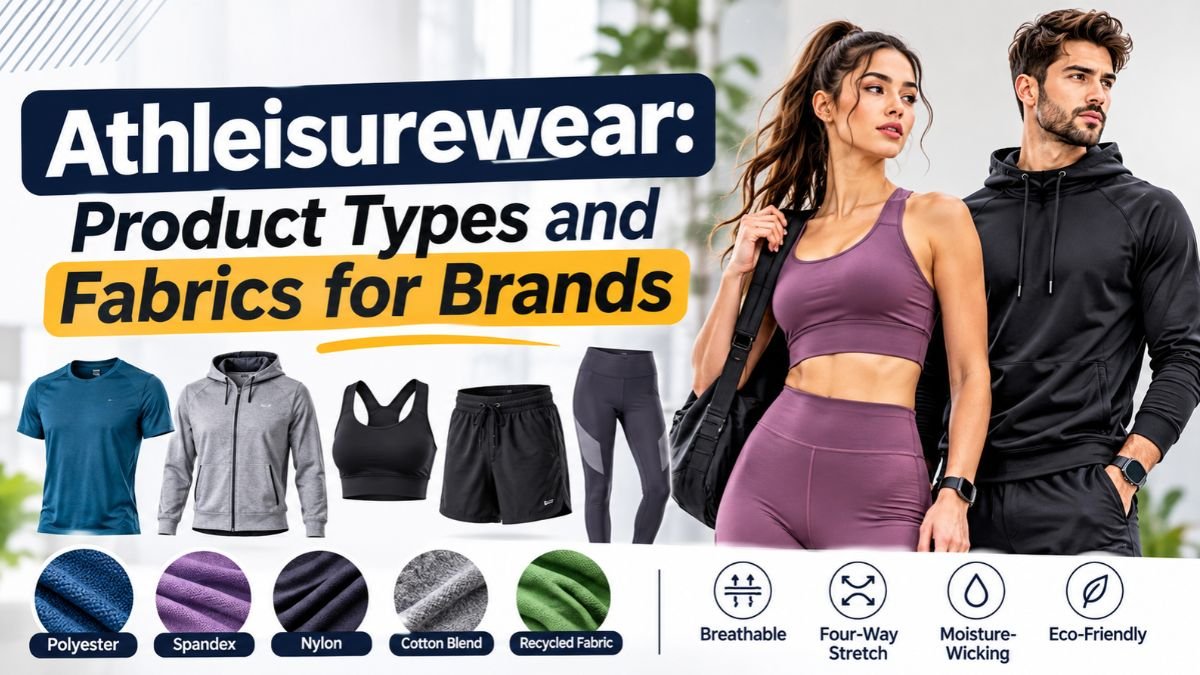
Fabric selection is one of the most important parts of athleisure product development. The material affects comfort, durability, appearance, and performance.
Different garments require different fabric properties.
Polyester
Polyester is widely used in sportswear and performance clothing. It is lightweight, durable, and suitable for many moisture-management applications.
It is commonly used for training tops, lightweight jackets, and performance T-shirts.
Nylon
Nylon offers a smooth feel and can provide good durability. It is often used in fitted activewear and leggings.
Nylon blends can also include elastane for added flexibility.
Spandex or Elastane
Spandex provides stretch and helps garments move with the body. It is usually blended with fibres such as nylon or polyester.
It is commonly used in leggings, sports bras, fitted tops, and compression-style garments.
Cotton
Cotton is popular for casual clothing because of its soft feel. It is suitable for T-shirts, sweatshirts, and relaxed joggers.
However, pure cotton may not provide the same moisture-management properties as some performance fabrics.
French Terry
French terry has a smooth outer surface and looped inner construction. It is commonly used for sweatshirts, joggers, and lightweight hoodies.
It offers a useful balance between comfort and structure.
Fleece
Fleece fabrics provide warmth and a soft inner surface. They are suitable for hoodies, sweatpants, and colder-weather athleisure products.
Fabric weight should be selected according to the intended season and garment design.
Fabric Comparison
| Fabric | Main characteristics | Common products |
|---|---|---|
| Polyester | Lightweight and durable | Training tops, jackets |
| Nylon | Smooth and strong | Leggings, fitted tops |
| Spandex blends | Stretch and flexibility | Sports bras, leggings |
| Cotton | Soft and comfortable | T-shirts, sweatshirts |
| French terry | Comfortable loopback structure | Joggers, hoodies |
| Fleece | Warm and soft | Sweatshirts, sweatpants |
The best fabric depends on the product’s intended use. Brands should review fabric composition, GSM, stretch, and finishing before making a final selection.
Athleisurewear Trends in Modern Fashion
Athleisure continues to develop through changes in colour, silhouette, fabric, and styling.
Brands can use these directions as inspiration. However, they should choose trends that suit their customers and product identity.
1. Neutral Colour Palettes
Black, grey, beige, cream, and brown remain useful colours for versatile collections.
These shades are easy to coordinate and can support minimalist designs.
2. Earthy Colours
Olive green, mocha, chocolate brown, and muted terracotta offer a natural appearance.
They can be used in joggers, leggings, sweatshirts, and matching sets.
3. Oversized Silhouettes
Oversized T-shirts, hoodies, and sweatshirts provide relaxed styling options.
They can be combined with fitted leggings or cycling shorts to create balanced outfits.
4. Coordinated Matching Sets
Matching sets offer a simple way to create complete outfits.
Brands can develop sets using the same fabric and colour across multiple garment styles.
5. Minimalist Branding
Small logos, subtle embroidery, and clean labels can support a simple design direction.
However, branding should remain clear and durable. Placement, size, and decoration method should be confirmed during sampling.
6. Functional Details
Pockets, adjustable waistbands, zippers, and practical seams can improve garment usability.
These details should support the product rather than make the design unnecessarily complicated.
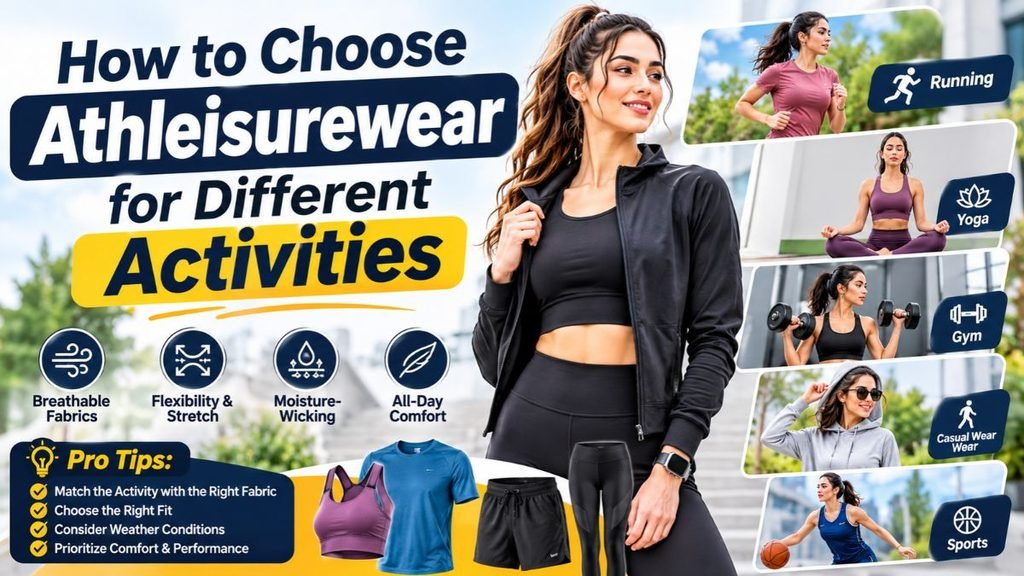
How to Choose Athleisurewear for Different Activities
Not every athleisure garment suits every activity. Customers should consider movement, comfort, support, and fabric performance before selecting an outfit.
For Gym Training
Choose flexible clothing that allows comfortable movement. Leggings, sports bras, training shirts, and joggers are common options.
The level of support should match the workout.
For Yoga
Yoga clothing should allow stretching and different body positions. Flexible leggings and comfortable fitted tops are useful choices.
Check that garments remain comfortable during bending and movement.
For Walking
Walking outfits can focus on comfort and weather suitability. Joggers, breathable T-shirts, and lightweight jackets are practical options.
Comfortable footwear is also important.
For Travel
Travel outfits should provide comfort during long periods of sitting and moving.
Soft joggers, relaxed T-shirts, hoodies, and lightweight layers can work well.
For Everyday Wear
Casual athleisure outfits can include leggings, oversized shirts, sweatshirts, and sneakers.
Choose garments that fit the occasion and provide suitable coverage.
How to Build an Athleisurewear Collection for a Clothing Brand
For clothing businesses, developing an athleisure collection requires more than selecting attractive designs. Brands must plan their target audience, products, materials, sizing, and manufacturing requirements.
A clear process can reduce confusion and support better product development.
1. Define Your Target Customer
Start by identifying who will buy your collection.
Consider factors such as:
- Age group
- Lifestyle
- Preferred activities
- Clothing budget
- Fit preferences
- Preferred colours
- Product expectations
For example, a yoga-focused brand may prioritize flexible leggings and soft tops. A casual sportswear brand may focus on joggers, hoodies, and relaxed T-shirts.
2. Select Your Product Range
Avoid launching too many products without a clear plan.
A smaller collection may include leggings, sports bras, T-shirts, and joggers. Later, you can introduce hoodies, jackets, and matching sets.
Choose products that work together and support your brand identity.
3. Develop a Colour Palette
Select core colours and a few seasonal shades.
For example, black, charcoal, and mocha can form a core palette. Sage green and burgundy can add variety.
Also, check whether the selected colours are available in your chosen fabrics.
4. Choose Suitable Fabrics
Create a fabric specification for each product.
Include details such as:
- Fibre composition
- GSM
- Stretch requirements
- Fabric texture
- Colour
- Finish
- Care requirements
GSM means grams per square metre. It describes fabric weight and helps brands compare materials.
However, higher GSM does not always mean better quality. The right weight depends on the product and its intended use.
5. Prepare a Tech Pack
A tech pack explains how a garment should be made. It gives the manufacturer important information about the design and construction.
A useful tech pack may include:
- Technical sketches
- Measurements
- Size specifications
- Fabric details
- Stitching instructions
- Colour references
- Label placement
- Logo artwork
- Trims and accessories
- Packaging requirements
If you do not have a complete tech pack, prepare clear sketches, reference images, and a written product brief.
6. Request a Physical Sample
A physical sample helps you review the actual product before bulk production.
Check its fit, fabric, colour, stitching, comfort, and finishing.
For fitted products, test movement and stretch recovery. For matching sets, check whether the pieces coordinate correctly.
Approve the final sample before authorizing bulk production.
7. Plan Quality Control
Quality control helps identify problems during production.
Important checks may include:
- Measurements
- Stitch quality
- Fabric defects
- Colour consistency
- Logo placement
- Zipper and trim attachment
- Garment finishing
For fitted activewear, brands should also consider stretch and seam performance.
8. Plan Packaging and Delivery
Packaging should protect garments during storage and shipping. It should also reflect the brand’s presentation requirements.
Confirm labels, size stickers, folding, polybags, cartons, and shipping arrangements before production is completed.
Common Mistakes to Avoid When Buying or Designing Athleisurewear
A few common mistakes can affect comfort, appearance, and product quality.
Choosing Style Over Comfort
A garment may look attractive but feel uncomfortable during movement.
Always consider fabric, fit, construction, and the intended activity.
Ignoring Fabric Quality
Low-quality material may lose shape, pill, or become uncomfortable after repeated use.
Check the fabric composition and request samples when possible.
Selecting the Wrong Size
Incorrect sizing can affect both appearance and comfort.
Review size charts and compare body measurements with garment measurements.
Overcomplicating Designs
Too many panels, trims, logos, and decorations can make garments difficult to produce.
Start with a clear design and add details only when they improve the product.
Skipping Sample Approval
A digital design cannot show every detail of a finished garment.
Physical samples help identify problems before bulk production.
Ignoring Care Instructions
Different fabrics need different washing and drying methods.
Brands should provide accurate care instructions based on the actual material.
How Fashion Soul International Supports Custom Athleisure Production
Developing an athleisure collection requires suitable materials, product specifications, sampling, and consistent production.
Fashion Soul International is a factory-owned custom clothing manufacturer based in Sialkot, Pakistan. It supports clothing brands through product development, fabric sourcing, sampling, bulk production, quality control, branding, and packaging.
Its production options include private-label, OEM, ODM, white-label, and cut-and-sew manufacturing.
Brands developing athleisure products can discuss requirements such as:
- Custom leggings and sports bras
- Joggers and sweatpants
- Hoodies and sweatshirts
- T-shirts and training tops
- Fabric composition and GSM
- Custom colours and size specifications
- Embroidery and printing
- Custom labels and packaging
The standard MOQ starts at 100 pieces, although requirements can vary by product, fabric, colour, and construction.
The process includes product discussion, fabric sourcing, sample development, sample approval, bulk production, quality checks, and shipping.
A physical pre-production sample should be reviewed and approved before bulk production begins. This helps confirm the design, measurements, materials, and finishing.
Fashion Soul also describes inline quality inspections and pre-shipment AQL 2.5 inspection as part of its quality process.
For brands planning custom athleisure attire, clear product specifications make communication and production planning easier.
Frequently Asked Questions About Athleisurewear
What does athleisurewear mean?
Athleisurewear means clothing that combines athletic features with everyday fashion. It includes garments such as leggings, joggers, sports bras, hoodies, and comfortable T-shirts.
What is the difference between sportswear and athleisurewear?
Sportswear mainly focuses on physical performance and activity-specific needs. Athleisure combines athletic-inspired features with casual styling for everyday use.
What is included in athleisure attire?
Athleisure attire can include leggings, joggers, sports bras, oversized T-shirts, hoodies, sweatshirts, track jackets, and comfortable footwear.
Can you wear athleisurewear outside the gym?
Yes. Many athleisure garments are designed for both active and casual settings. Leggings, joggers, hoodies, and relaxed T-shirts can be styled for everyday activities.
Which fabrics are best for athleisurewear?
Polyester, nylon, spandex blends, cotton, French terry, and fleece are common options. The right material depends on the garment and its intended use.
Is athleisurewear suitable for everyday use?
Yes. Its comfortable fabrics and flexible designs make it suitable for many daily activities. However, choose garments that match the weather, occasion, and required level of support.
How can a clothing brand start an athleisure collection?
Start by identifying your target customers and selecting a focused product range. Then choose fabrics, prepare specifications, request samples, approve the designs, and plan bulk production.
What should brands check before bulk production?
Brands should review the physical sample, fabric quality, measurements, stitching, colour consistency, branding, and finishing. They should also confirm packaging and delivery requirements.
Conclusion
Athleisurewear brings together comfort, flexibility, and everyday fashion. It gives customers clothing options that can support active routines and casual lifestyles.
From leggings and joggers to hoodies and sports bras, the category offers many product possibilities. However, successful athleisure clothing depends on more than appearance. Fabric selection, fit, construction, and quality all matter.
For shoppers, understanding these features makes it easier to choose comfortable garments. For clothing brands, careful product planning helps create collections with a clear identity.
By selecting suitable materials, developing useful designs, and approving physical samples, brands can build athleisure collections that meet customer expectations. The right balance of comfort and style can make athleisure attire a practical part of modern wardrobes.