Is Spandex Polyester? Understanding the Difference, Properties, and Uses
When shopping for clothing, you may notice fabric labels that mention spandex, polyester, or a combination of both. These materials are common in activewear, sportswear, leggings, underwear, and everyday clothing. However, many people still ask an important question: is spandex polyester?
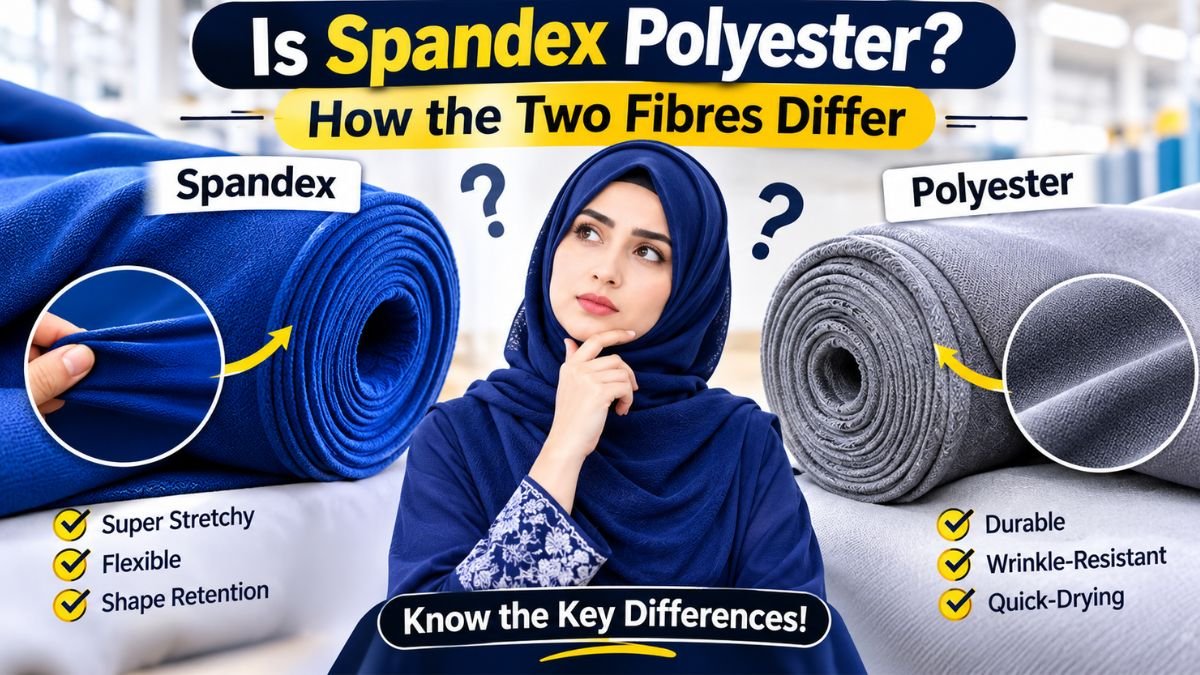
The short answer is no. Spandex and polyester are two different synthetic fibers. They have different properties, purposes, and performance benefits. Spandex provides excellent stretch and flexibility, while polyester offers durability, shape retention, and moisture-management benefits.
However, manufacturers often combine these fibers to create comfortable and functional fabrics. Understanding how they work can help you choose better clothing and make informed fabric decisions.
In this guide, we explain the difference between spandex and polyester, their individual properties, common uses, and the benefits of blending them.
Is Spandex Polyester?
No, spandex is not polyester. Both are synthetic fibers, but they have different chemical structures and characteristics.
Spandex is an elastic fiber designed to stretch significantly and return to its original shape. It is also known as elastane in many countries. In the United States, the term spandex is commonly used.
Polyester is a synthetic fiber made from polymer materials. It is valued for its strength, durability, wrinkle resistance, and relatively quick drying.
The main difference is their purpose:
- Spandex: Provides stretch, flexibility, and recovery.
- Polyester: Provides strength, durability, and shape stability.
- Spandex-polyester blend: Combines the benefits of both fibers.
For example, a pair of gym leggings may contain mostly polyester with a smaller percentage of spandex. Polyester provides the main fabric structure, while spandex allows the garment to stretch during movement.
Therefore, although both fibers are synthetic, they are not the same material.
What Is Spandex Fabric?
Spandex is a synthetic elastic fiber used in clothing that needs flexibility and stretch. It can stretch several times its original length, depending on its construction and quality.
It is commonly used in garments that need to fit closely against the body. Examples include leggings, sports bras, swimsuits, cycling shorts, and compression clothing.
Spandex is also called elastane. Both names describe the same general type of elastic fiber.
Main Properties of Spandex
Spandex has several useful properties that make it popular in the clothing industry.
1. Excellent Stretchability
Spandex can stretch considerably without immediately losing its original shape. This makes it useful for fitted garments and performance clothing.
2. Shape Recovery
After stretching, quality spandex fibers can return toward their original length. This helps clothing maintain its fit during repeated movement.
3. Lightweight Feel
Spandex fibers are lightweight. They can be blended with other fibers without adding significant weight to the fabric.
4. Flexibility
Spandex allows garments to move with the body. This is especially important for sports, exercise, dance, and other physical activities.
5. Comfortable Fit
When used in suitable proportions, spandex improves the flexibility of clothing. It helps garments fit comfortably without restricting normal movement.
Common Uses of Spandex
Spandex is used in many types of clothing, including:
- Gym leggings
- Sports bras
- Yoga pants
- Swimwear
- Cycling shorts
- Compression garments
- Stretch jeans
- Dancewear
- Athletic uniforms
- Fitted underwear
It is often blended with polyester, nylon, cotton, or other textile fibers.
What Is Polyester Fabric?
Polyester is a synthetic textile fiber widely used in modern clothing. It is known for its durability, lightweight construction, and resistance to wrinkles.
Polyester can be manufactured in different forms. It may be used in woven fabrics, knitted fabrics, fleece, sportswear materials, and many other textile products.
It is especially popular in clothing because it offers practical performance at different price points.
Main Properties of Polyester
1. Durability
Polyester is generally strong and resistant to everyday wear. It can help garments maintain their structure through regular use.
2. Wrinkle Resistance
Polyester fabrics usually resist wrinkles better than many natural fibers. This makes them convenient for everyday clothing and uniforms.
3. Quick Drying
Polyester absorbs relatively little moisture compared with many natural fibers. Moisture can move through suitable fabric constructions and evaporate from the surface.
However, drying performance also depends on fabric thickness, knitting, finishing, and garment design.
4. Shape Retention
Polyester helps clothing maintain its shape. It is often used in garments that need to withstand repeated washing and wearing.
5. Versatility
Polyester can be produced in different weights, textures, and fabric constructions. It is used in T-shirts, jackets, tracksuits, sportswear, and casual clothing.
Common Uses of Polyester
Polyester is commonly used in:
- Sportswear
- T-shirts
- Hoodies
- Tracksuits
- Jackets
- Workwear
- School uniforms
- Fleece garments
- Outdoor clothing
- Everyday casualwear
Its versatility makes it one of the most widely used synthetic fibers in apparel manufacturing.
Spandex and Polyester: What Is the Difference?
Although spandex and polyester are both synthetic materials, their functions are different.
Spandex mainly provides elasticity. Polyester mainly provides strength and structure.
The following comparison explains their major differences.
| Feature | Spandex | Polyester |
|---|---|---|
| Fiber type | Synthetic elastic fiber | Synthetic fiber |
| Main purpose | Stretch and flexibility | Strength and durability |
| Elasticity | Very high | Usually limited |
| Shape recovery | Excellent when properly made | Generally good shape stability |
| Moisture absorption | Low | Low |
| Common use | Stretch clothing | Everyday and performance clothing |
| Fabric feel | Depends on blend and construction | Depends on construction and finishing |
| Common combinations | Polyester, nylon, cotton | Spandex, cotton, other fibers |
Neither material is automatically better in every situation. The right choice depends on the garment’s purpose.
For example, a fitted sports bra needs elasticity and support. A polyester-spandex blend may be suitable because it combines stretch with fabric structure.
A basic uniform may need durability and easy care more than extreme stretch. Polyester alone may be sufficient.
Why Are Spandex and Polyester Blended Together?
Manufacturers often combine spandex and polyester because each fiber contributes different properties.
Polyester provides the main structure, while spandex adds elasticity. Together, they can create fabrics suitable for movement, exercise, and everyday use.
A blended fabric can offer several advantages.

1. Better Stretch and Flexibility
Polyester alone does not provide the same stretch as spandex. Adding spandex improves the fabric’s ability to move with the body.
This is useful for leggings, sportswear, fitted tops, and training clothing.
2. Improved Shape Recovery
Spandex helps garments return toward their original shape after stretching. This can reduce the loose feeling that may develop when clothing is repeatedly worn.
The final result depends on fiber quality, fabric construction, and garment care.
3. Comfortable Movement
A polyester-spandex blend can provide flexibility during exercise and everyday activities.
It can be useful for activities that involve bending, stretching, running, and training.
4. Lightweight Performance
Both fibers can be used in lightweight fabric constructions. This makes the blend suitable for many types of activewear.
5. Versatile Fabric Options
Manufacturers can adjust the percentage of spandex to create different fabric characteristics.
A fabric with a small amount of spandex may offer moderate stretch. A higher percentage can provide greater elasticity, depending on construction.
What Does Polyester Spandex Mean on a Clothing Label?
When a clothing label says polyester spandex, it means the fabric contains both polyester and spandex fibers.
The label may also show the percentage of each material.
For example:
- 90% polyester
- 10% spandex
This means polyester makes up most of the fabric, while spandex provides additional stretch.
Another example is:
- 85% polyester
- 15% spandex
This blend contains a higher percentage of spandex. It may provide greater elasticity, although actual performance depends on yarn, knitting, fabric weight, and finishing.
Always read the complete fabric composition instead of judging clothing by its name alone.
Is Polyester Spandex Good for Activewear?
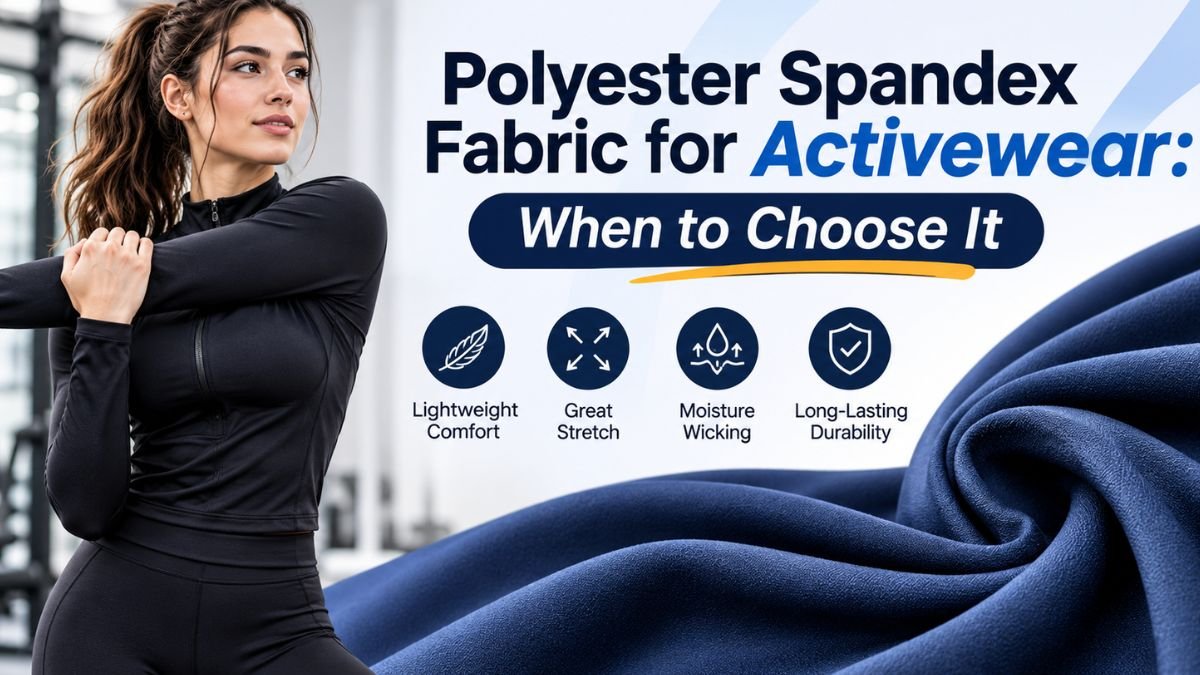
Yes, polyester spandex is a popular fabric combination for activewear. It can provide a useful balance of durability, flexibility, and comfort.
However, not every polyester-spandex fabric performs the same way. Its suitability depends on the intended activity and fabric construction.
Benefits for Gym Clothing
Gym clothing needs to support different body movements. Polyester provides a durable fabric base, while spandex adds flexibility.
This combination is commonly used in:
- Gym leggings
- Training shorts
- Sports bras
- Athletic tops
- Compression-style garments
- Fitness sets
Benefits for Yoga Clothing
Yoga clothing needs flexibility and comfort. A suitable polyester-spandex fabric can stretch during different poses.
The fabric should also have an appropriate weight, opacity, and recovery. These factors help clothing remain comfortable during movement.
Benefits for Running Clothing
Running apparel needs lightweight construction and practical moisture management.
Polyester is often selected for its low moisture absorption. Spandex can improve the fit and flexibility of fitted running garments.
The final performance depends on fabric design and finishing.
What Percentage of Spandex Is Used in Polyester Fabric?
There is no single percentage that works for every garment. The correct blend depends on the product, fit, and performance requirements.
Some common examples include:
| Fabric Composition | Possible Application |
|---|---|
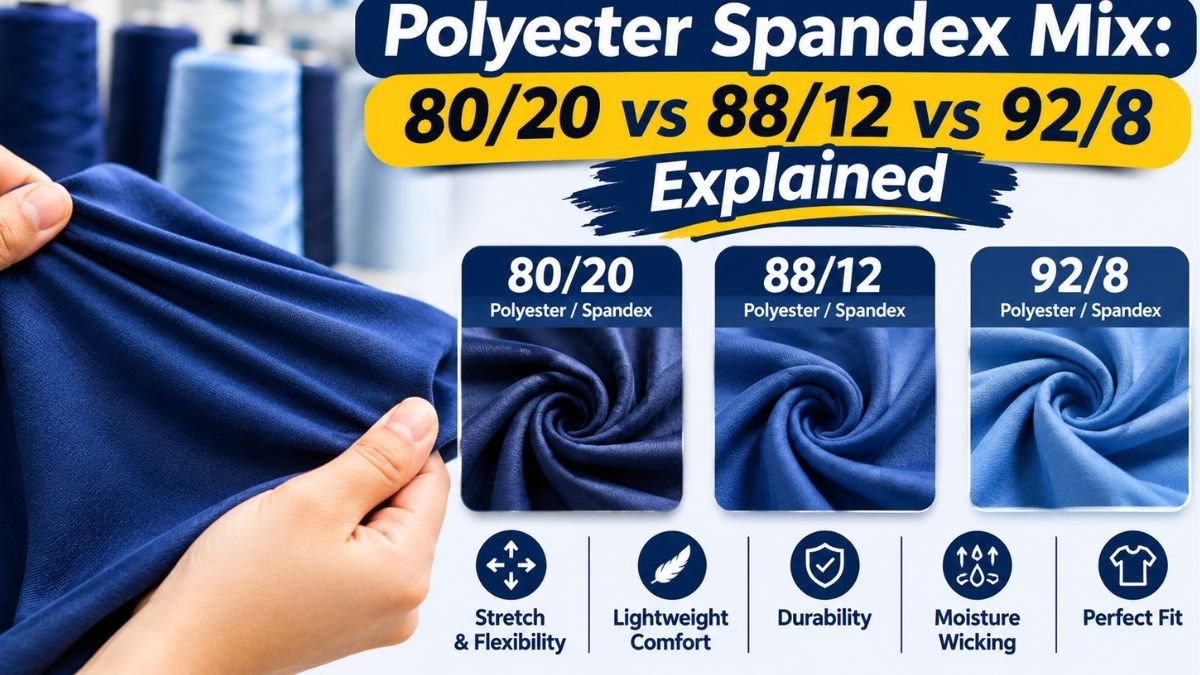
| 95% polyester, 5% spandex | Lightweight stretch tops |
| 90% polyester, 10% spandex | General activewear |
| 88% polyester, 12% spandex | Stretch sportswear |
| 85% polyester, 15% spandex | Flexible leggings and fitted garments |
| 80% polyester, 20% spandex | High-stretch applications |
These are illustrative examples, not fixed industry standards. Actual compositions vary by manufacturer and product requirements.
How to Choose the Right Percentage
Consider these factors before selecting a blend:
Garment Type: Leggings may need more stretch than loose-fitting T-shirts.
Activity Level: High-movement sportswear may require greater flexibility.
Fit: Compression-style clothing needs different fabric behavior from relaxed-fit garments.
Fabric Weight: GSM affects thickness and the overall feel of the fabric.
Recovery: The fabric should return toward its original dimensions after stretching.
Testing fabric samples before bulk production is a useful way to confirm performance.
Is Spandex Polyester Better Than Polyester Alone?
The answer depends on what you want from the clothing.
Polyester alone may be suitable for garments that do not need much stretch. It is commonly used in uniforms, basic T-shirts, jackets, and other everyday products.
Polyester with spandex is often more suitable when flexibility is important.
Choose Polyester Alone When:
- You need a fabric with little stretch.
- The garment has a relaxed fit.
- Durability is a main requirement.
- The design does not require close body fitting.
- The product specification supports a polyester-only fabric.
Choose Polyester Spandex When:
- The garment needs flexibility.
- The design has a fitted shape.
- The wearer needs freedom of movement.
- The product is designed for exercise.
- Stretch recovery is an important requirement.
The best option is the fabric that meets the garment’s technical and comfort requirements.
Is Polyester Spandex Breathable?
Polyester spandex can be breathable, but breathability is not guaranteed by fiber composition alone.
Several factors affect how much air can move through a fabric.
These include:
- Knitting structure
- Fabric thickness
- GSM
- Yarn construction
- Fabric density
- Finishing treatments
- Garment design
For example, a lightweight knitted polyester-spandex fabric may feel more breathable than a dense, heavy fabric.
Moisture management is also different from breathability. Polyester absorbs relatively little moisture, but the fabric construction determines how effectively sweat spreads and evaporates.
When selecting activewear materials, test both airflow and moisture-management performance.
Is Polyester Spandex Comfortable to Wear?
Yes, a properly designed polyester-spandex fabric can be comfortable for many types of clothing.
Polyester contributes durability, while spandex helps the garment move with the body.
However, comfort depends on more than fiber composition.
Important factors include:
Softness: The surface should feel suitable for direct skin contact.
Stretch: The garment should move without excessive tightness.
Recovery: The fabric should maintain its intended fit after use.
Weight: The fabric should match the season and garment type.
Seams: Poor seam placement can cause irritation, even when the fabric is comfortable.
A fabric sample should be tested before choosing it for a complete clothing collection.
How to Wash Polyester Spandex Clothing
Proper washing helps maintain the appearance and performance of polyester-spandex garments.
Follow the care label first because different fabrics and finishes may have specific requirements.
Here are some general care recommendations:
- Wash with cold or lukewarm water when the care label allows.
- Use a mild detergent.
- Avoid excessive heat.
- Do not use bleach unless the garment label permits it.
- Avoid high-temperature ironing.
- Air-dry when suitable.
- Keep garments away from rough surfaces that may cause abrasion.
High heat can damage elastic fibers over time. Therefore, careful washing and drying are important.
Common Problems With Polyester Spandex Fabric
Although polyester-spandex blends offer several benefits, they also have limitations.
Understanding these issues helps manufacturers and buyers select suitable materials.
1. Heat Sensitivity
Spandex can be affected by excessive heat. High-temperature washing, drying, or ironing may reduce its elasticity.
2. Pilling
Some polyester-spandex fabrics may develop small surface fibers or pills through friction.
Pilling resistance depends on yarn quality, fabric construction, and finishing.
3. Odor Retention
Polyester fabrics may retain body odors under certain conditions. Regular washing and suitable fabric treatments can help manage this issue.
4. Environmental Considerations
Polyester and spandex are synthetic fibers. They are generally made from fossil-based raw materials.
Synthetic textile washing can also release microfibers. The amount depends on the fabric, garment, and washing conditions.
Brands interested in reducing environmental impact can investigate recycled polyester options and responsible material choices. However, recycled polyester does not automatically make a complete garment sustainable.
5. Different Performance Levels
Not every polyester-spandex blend has the same quality. Low-quality yarns or poor fabric construction can affect stretch, recovery, comfort, and durability.
Testing is important before production.
How Manufacturers Select Polyester Spandex Fabric
Selecting the right fabric is an important part of clothing development.
Manufacturers consider the garment’s purpose, design, fit, and expected performance before approving a material.
Step 1: Understand the Product
First, identify the type of garment being developed.
A yoga legging has different requirements from a loose sports T-shirt or running jacket.
Step 2: Select the Fabric Composition
Choose a polyester-spandex percentage based on the desired stretch, recovery, and feel.
Do not select a blend based only on its name.
Step 3: Check GSM
GSM means grams per square meter. It measures fabric weight.
A higher GSM generally indicates a heavier fabric, although thickness and density also depend on construction.
The correct GSM depends on the garment and its intended use.
Step 4: Test Stretch and Recovery
Stretch the fabric in the required directions. Check how well it returns to its original shape.
This is especially important for fitted sportswear.
Step 5: Check Opacity and Comfort
For leggings and fitted clothing, opacity is important. The fabric should provide suitable coverage during movement.
Also evaluate softness, surface feel, and comfort against the skin.
Step 6: Approve a Sample
Before bulk production, review the fabric and garment sample.
Check the fit, construction, measurements, seams, and overall performance.
This process helps identify problems before a larger order begins.
Is Polyester Spandex Suitable for Custom Clothing Manufacturing?
Yes, polyester-spandex fabric can be used in custom clothing manufacturing when its properties match the product requirements.
It is commonly considered for activewear, fitness clothing, stretch tops, leggings, sports uniforms, and other flexible garments.
Brands should provide clear specifications before manufacturing begins.
Useful information includes:
- Garment design
- Fabric composition
- GSM requirement
- Color selection
- Size chart
- Stretch direction
- Stitching details
- Printing or embroidery requirements
- Label and packaging specifications
A technical pack can help communicate these requirements. Brands without a finalized tech pack can begin with design references, sketches, or sample garments and develop the specifications during product development.
How Fashion Soul International Supports Custom Apparel Production
Fashion Soul International is a factory-owned custom clothing manufacturer based in Sialkot, Pakistan.
The company offers private-label, OEM, ODM, white-label, cut-and-sew, and full-package apparel production.
Its services include product development, fabric and trim sourcing, sampling, bulk manufacturing, quality control, custom branding, packaging, export documentation, and international shipping.
For brands developing activewear or other stretch garments, fabric selection should match the product’s intended use.
A polyester-spandex blend may be considered when a garment needs both durability and flexibility. The final selection should be based on the required composition, GSM, stretch, recovery, and overall feel.
Fashion Soul International’s stated workflow includes sample development and physical pre-production sample approval before bulk production. This gives buyers an opportunity to review the garment before confirming larger production.
Brands can discuss their product requirements, fabric preferences, design references, and order quantities with the company.
Frequently Asked Questions
1. Is spandex polyester?
No. Spandex and polyester are different synthetic fibers. Spandex provides elasticity, while polyester provides strength, durability, and shape stability.
2. Is polyester spandex the same as elastane?
No. Polyester spandex is a fabric blend containing polyester and spandex. Elastane is another name for spandex.
3. Is spandex made from polyester?
No. Spandex is a separate elastic fiber with a different chemical structure. It is often blended with polyester, but it is not polyester.
4. Is polyester spandex good for leggings?
Yes. Polyester-spandex blends are commonly used for leggings because they can combine durability and stretch. The fabric should also provide suitable opacity, recovery, and comfort.
5. Does polyester spandex stretch?
Yes. The spandex component provides elasticity. The amount of stretch depends on the spandex percentage, yarn, and fabric construction.
6. Is polyester spandex suitable for summer?
It can be suitable for summer clothing when the fabric is lightweight and appropriately constructed. Breathability, GSM, and garment design affect comfort in warm weather.
7. Is polyester spandex better than cotton?
Neither is always better. Polyester spandex is useful for stretch and performance clothing. Cotton may be preferred for its natural fiber feel and moisture absorption. The right option depends on the product.
8. Does polyester spandex shrink?
Polyester generally has good dimensional stability, but fabric blends can change under unsuitable heat or washing conditions. Follow the care label to help maintain the garment’s shape.
9. Can polyester spandex be used for sportswear?
Yes. It is widely used in sportswear because it can combine durability, flexibility, and practical moisture management.
10. How do I identify polyester spandex fabric?
Check the garment’s fiber composition label. It should list the percentage of polyester and spandex. For fabric sourcing, request a composition specification from the supplier.
Conclusion
So, is spandex polyester? No. They are two different synthetic fibers with different functions.
Spandex provides stretch, flexibility, and recovery. Polyester contributes durability, shape stability, and versatility. When combined, they can create fabrics suitable for leggings, sportswear, activewear, and many other garments.
Choosing the right blend requires more than checking the fiber names. Consider fabric composition, GSM, construction, comfort, stretch, and recovery.
For clothing brands and manufacturers, testing fabric samples and approving garment specifications before bulk production can help achieve better results. Understanding the difference between spandex and polyester makes fabric selection easier and supports better clothing development decisions.