Polyester Spandex Fabric: Properties, Uses, Benefits and Care
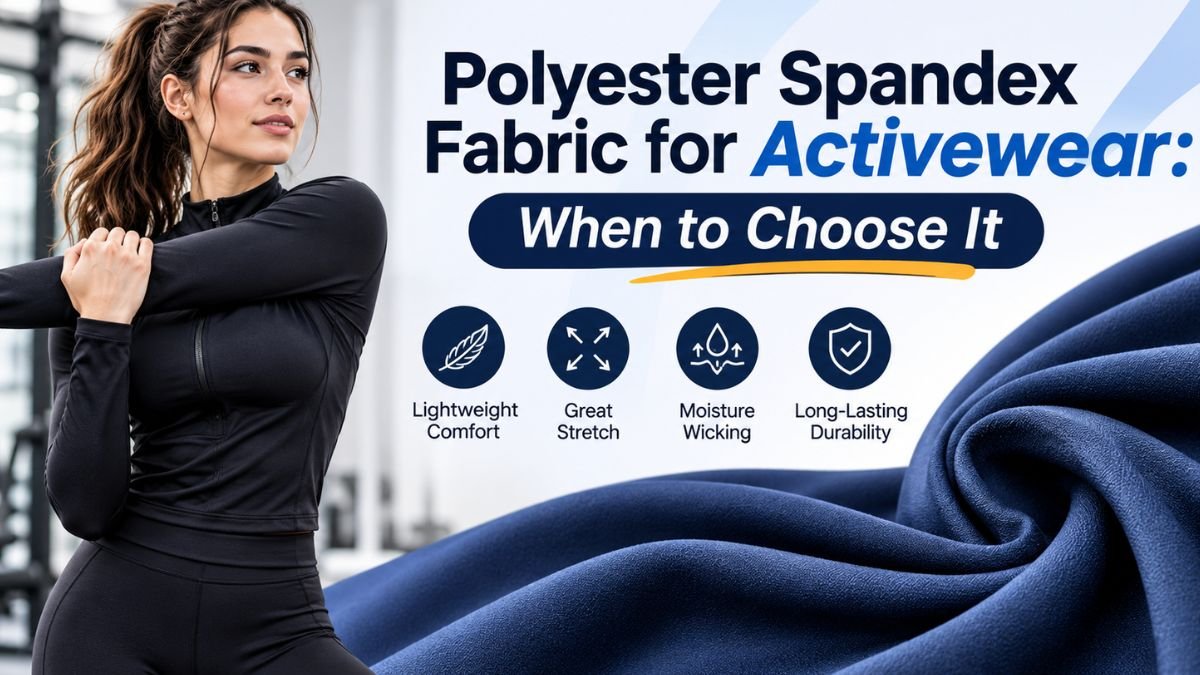
Polyester spandex fabric is widely used in activewear, sportswear, leggings, swimwear, and everyday clothing. It combines the strength and durability of polyester with the flexibility of spandex. This blend creates a material that stretches comfortably, holds its shape, and works well for garments that need freedom of movement.
For clothing brands, manufacturers, and consumers, understanding this fabric is important. The right fabric choice affects comfort, fit, appearance, durability, and product quality. However, not every polyester and spandex fabric has the same performance. Its properties depend on the fiber ratio, knitting structure, fabric weight, finishing, and intended use.
This guide explains what polyester spandex fabric is, how it is made, its main benefits, common applications, and how to select the right blend for clothing production.
What Is Polyester Spandex Fabric?
This synthetic fiber contributes strength, durability, and resistance to wrinkles.. Polyester provides strength, durability, and resistance to wrinkles. Spandex adds elasticity, allowing the fabric to stretch and return toward its original shape.
The combination creates a flexible material suitable for fitted and performance-based garments. It is commonly used in clothing that needs to move with the body without feeling restrictive.
Polyester is a synthetic fiber made from polymer-based materials. Spandex is also synthetic and is known for its exceptional stretch properties. When manufacturers combine these fibers, they can produce fabrics with different levels of flexibility and support.
The exact composition varies by product. Some fabrics contain a small percentage of spandex, while others use a higher amount for greater stretch.
For example, a fabric containing 90% polyester and 10% spandex may offer a balance of durability and flexibility. A blend with more spandex may provide additional stretch for compression garments or fitted activewear.
The best ratio depends on the garment’s design, required fit, and expected performance.
Understanding Polyester and Spandex Fabric
To understand the properties of a polyester spandex blend fabric, it helps to look at each fiber separately.
What Is Polyester?
Polyester is a synthetic textile fiber used in clothing, home textiles, sportswear, and industrial applications. It is popular because it is durable, lightweight, and relatively easy to maintain.
Some important properties of polyester include:
- Durability: Polyester can withstand regular wear and repeated washing when properly constructed and cared for.
- Wrinkle resistance: It generally holds its shape and wrinkles less than many natural fibers.
- Quick drying: Polyester absorbs relatively little moisture compared with cotton.
- Shape retention: It helps garments maintain their structure.
- Color performance: It can hold color well when suitable dyeing methods are used.
- Easy maintenance: Many polyester garments are simple to wash and dry.
Polyester is useful for clothing that needs to withstand frequent use. However, standard polyester does not provide the same natural stretch as spandex.
What Is Spandex?
Spandex is a synthetic elastic fiber known for its ability to stretch significantly and recover its original shape. this fiber is also called elastane in many markets.
It is commonly added to other fibers to improve flexibility and fit.
Important characteristics include:
- High elasticity
- Stretch and recovery
- Flexible movement
- Comfortable fitted construction
- Better shape retention in stretch garments
- Suitability for close-fitting clothing
Spandex is rarely used alone for everyday garments. It is usually blended with polyester, nylon, cotton, or other fibers.
When combined with polyester, it creates a material that can support movement while maintaining useful durability.
How Is Polyester Spandex Blend Fabric Made?
The production of polyester with spandex fabric involves several textile manufacturing stages. The exact process depends on the fabric construction and the equipment used.
1. Fiber Production
Polyester and spandex are produced through different chemical manufacturing processes.
Polyester is made by forming polymer material and processing it into fibers or filaments. Spandex is produced from polyurethane-based polymers and processed into elastic filaments.
The fibers are prepared according to the requirements of the final textile.
2. Yarn Preparation
The fibers are prepared for textile production. Depending on the construction, polyester and spandex may be combined during yarn preparation or incorporated through specialized knitting or weaving techniques.
The method affects the fabric’s stretch, surface, thickness, and performance.
3. Knitting or Weaving
Manufacturers use knitting or weaving machines to create the fabric structure.
Knitted polyester spandex fabrics are especially common in activewear. Their looped construction provides flexibility and comfort.
Woven blends can offer more structure and may be suitable for certain fitted trousers, uniforms, and performance garments.
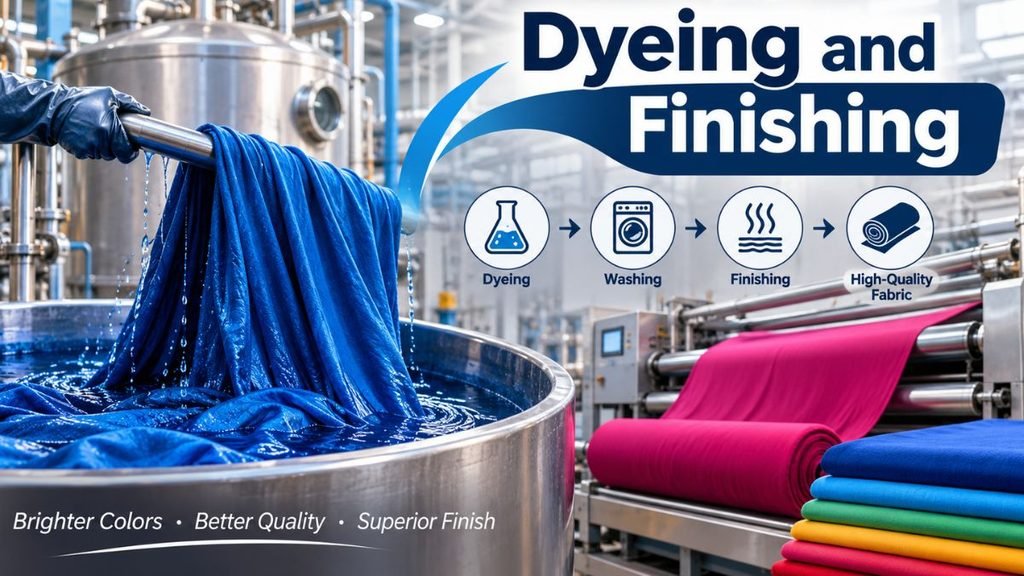
4. Dyeing and Finishing
After fabric construction, the material may go through dyeing and finishing processes.
These processes can improve its appearance, softness, color consistency, and performance.
Depending on the product, finishing may include moisture-management treatments, brushing, heat setting, or other textile treatments.
5. Inspection and Quality Testing
The finished fabric should be inspected before garment production.
Manufacturers may check:
- Fabric width
- GSM or fabric weight
- Color consistency
- Stretch and recovery
- Surface defects
- Shrinkage
- Pilling resistance
- Dimensional stability
Testing requirements depend on the garment and its intended use.
Main Properties of Polyester Spandex Fabric
The combination of polyester and spandex creates several useful textile properties.
1. Excellent Stretch and Flexibility
One of the main advantages of this fabric is its stretchability. Spandex allows the material to expand during movement and recover afterward.
This makes it suitable for leggings, sports bras, cycling clothing, fitted tops, and other garments that need flexibility.
The actual stretch level depends on the spandex percentage and fabric construction.
2. Good Shape Retention
Polyester supports the structure of the material, while spandex provides elasticity.
Together, these fibers help garments maintain their fit during regular use. However, poor construction, excessive heat, and incorrect washing can still damage elasticity.
3. Lightweight Construction
Many polyester spandex fabrics are lightweight. This makes them suitable for activewear and garments designed for easy movement.
However, fabric weight can vary considerably. Some compression fabrics are heavier, while lightweight performance knits may feel thinner.
4. Quick-Drying Performance
Polyester generally absorbs less moisture than cotton. This allows many polyester-based fabrics to dry relatively quickly.
This property is useful for workout clothing, sports uniforms, and travel garments.
However, quick drying does not automatically mean that a fabric effectively moves sweat away from the skin. Moisture-wicking performance depends on yarn structure, fabric construction, and finishing.
5. Wrinkle Resistance
Polyester is generally resistant to wrinkles. This can help garments maintain a neat appearance during storage and everyday use.
It is particularly useful for travel clothing, uniforms, and garments that require frequent washing.
6. Durability
Polyester is known for its strength and resistance to everyday wear. It can help blended fabric withstand regular use.
The overall durability also depends on yarn quality, knitting density, garment construction, and care practices.
7. Smooth Surface
Many polyester spandex fabrics have a smooth surface. This can create a clean appearance and a comfortable feel against the skin.
Different finishes can make the fabric softer, brushed, matte, shiny, or textured.
Common Polyester Spandex Fabric Ratios
The percentage of each fiber affects the final material. There is no single ratio suitable for every clothing product.
Here are some common examples:
| Fabric composition | General characteristics | Possible applications |
|---|---|---|
| 95% polyester / 5% spandex | Moderate stretch and good structure | Tops, uniforms, casualwear |
| 92% polyester / 8% spandex | Balanced flexibility and durability | Sportswear, fitted shirts |
| 90% polyester / 10% spandex | Noticeable stretch and recovery | Leggings, activewear |
| 85% polyester / 15% spandex | Higher stretch potential | Performance clothing, fitted garments |
| 80% polyester / 20% spandex | High elasticity potential | Selected compression and swimwear fabrics |
These are illustrative compositions, not fixed industry standards. Actual performance depends on fabric construction, yarn quality, and finishing.
Before selecting a blend, brands should test the fabric in the intended garment.
Common Uses of Polyester Spandex Fabric
Poly spandex fabric is used across many clothing categories because it combines flexibility with polyester’s useful performance characteristics.
1. Activewear and Gym Clothing
Activewear is one of the most common applications.
Leggings, sports bras, training tops, gym shorts, and fitted workout shirts often use polyester spandex blends.
The fabric allows movement during activities such as running, stretching, weight training, and cycling.
For activewear brands, important considerations include stretch recovery, opacity, breathability, seam strength, and comfort.
2. Sportswear
Sportswear often requires flexibility and durability.
Polyester spandex fabric can be used in football training wear, basketball clothing, running apparel, cycling garments, and other performance products.
The material can support movement while maintaining a relatively lightweight structure.
The correct fabric should be selected according to the sport, climate, and level of physical activity.
3. Leggings and Yoga Pants
Leggings require a combination of stretch, coverage, and shape retention.
Polyester spandex fabric can provide the flexibility needed for yoga, fitness, and everyday clothing.
When choosing fabric for leggings, brands should evaluate:
- Four-way or two-way stretch
- Recovery after stretching
- Opacity during movement
- Fabric thickness
- Softness
- Pilling resistance
- Seam performance
A fabric that stretches easily may still become transparent when stretched. Opacity testing is therefore important.
4. Swimwear
Some swimwear products use polyester and spandex blends.
Spandex provides flexibility, while polyester can contribute strength and shape retention.
However, swimwear requires more than ordinary stretch performance. Brands should evaluate chlorine exposure, saltwater resistance, colorfastness, drying behavior, and long-term elasticity.
A fabric designed specifically for swimwear is usually a better choice than a general-purpose stretch knit.
5. Cycling and Running Clothing
Cycling shorts, fitted jerseys, running tights, and performance tops may use polyester spandex blends.
These garments need flexibility and a close fit.
Fabric weight, ventilation, moisture management, and stretch recovery should be considered during development.
6. Everyday Clothing
The material is also used in casual clothing.
Stretch trousers, fitted T-shirts, dresses, tops, and comfortable everyday garments may contain polyester and spandex.
The blend can improve movement and help fitted garments maintain their shape.
Benefits of Polyester With Spandex Fabric
The popularity of this material comes from its combination of useful properties.
Comfort During Movement
Spandex helps the material stretch when the wearer bends, walks, exercises, or sits.
This can make fitted garments more comfortable than similar products made from fabrics with little elasticity.
Better Fit for Stretch Garments
The elastic component supports close-fitting designs.
This is useful for leggings, sportswear, compression-inspired clothing, and fitted tops.
The correct blend can help a garment follow the body’s movement without feeling overly restrictive.
Easy Everyday Care
Polyester-based garments are generally easy to maintain.
Many can be machine washed according to their care labels. They also tend to dry faster than cotton garments under similar conditions.
Suitable for Different Designs
Manufacturers can produce polyester spandex fabrics in different weights, textures, colors, and constructions.
This gives clothing brands flexibility when developing different product categories.
Useful for Performance Clothing
The blend can support clothing that requires a balance of stretch, durability, and relatively low moisture absorption.
However, the fabric must be selected and tested according to the intended activity.
Polyester Spandex vs. Polyester Without Spandex
These materials may look similar, but their performance is different.
| Feature | Polyester fabric | Polyester spandex fabric |
|---|---|---|
| Stretch | Usually limited unless specially constructed | Greater elasticity |
| Flexibility | Depends on construction | Usually higher |
| Shape retention | Generally good | Can be good when properly constructed |
| Fit | Suitable for structured designs | Useful for fitted designs |
| Common uses | Shirts, uniforms, jackets | Leggings, sportswear, stretch tops |
| Fiber composition | Mainly polyester | Polyester blended with spandex |
The right choice depends on the product.
A structured uniform may not require much stretch. A pair of gym leggings needs considerably more flexibility.
Polyester Spandex vs. Nylon Spandex
Polyester spandex and nylon spandex are both popular choices for stretch clothing.
However, they have different characteristics.
| Feature | Polyester spandex | Nylon spandex |
|---|---|---|
| Main fiber | Polyester | Nylon |
| Feel | Can feel smooth or slightly firm | Often soft and smooth |
| Durability | Good general-purpose durability | Good abrasion resistance in many constructions |
| Moisture behavior | Low moisture absorption | Generally absorbs more moisture than polyester |
| Common uses | Sportswear, uniforms, activewear | Leggings, swimwear, fitted activewear |
| Cost | Depends on quality and sourcing | Depends on quality and sourcing |
Neither option is automatically better for every garment.
Polyester spandex may suit products where quick drying and color performance are important. Nylon spandex may be preferred when a particular soft hand feel or abrasion performance is required.
Brands should compare actual fabric samples instead of relying only on fiber names.
How to Choose the Right Polyester Spandex Blend Fabric
Selecting the right fabric is an important step in clothing development. A blend that works well for gym shorts may not be suitable for compression leggings or swimwear.
Consider the following factors before placing a production order.
1. Understand the Garment’s Purpose
Start by identifying how customers will use the garment.
For example:
- Gym leggings need stretch, recovery, and opacity.
- Running tops may need lightweight construction and moisture management.
- Swimwear needs suitable resistance to water exposure and chlorine.
- Uniforms may need durability, comfort, and a professional appearance.
The garment’s purpose should guide the fabric specification.
2. Check the Fiber Composition
Ask the supplier for the exact polyester and spandex percentages.
Do not assume every polyester stretch fabric has the same composition.
A small change in the spandex percentage can affect the fabric’s stretch and recovery.
3. Review GSM
GSM means grams per square meter. It describes the weight of a fabric.
A lower GSM usually indicates a lighter fabric, while a higher GSM generally indicates a heavier one.
However, GSM alone does not determine quality.
For example, lightweight running clothing may require a different GSM from supportive leggings.
Always consider weight alongside stretch, opacity, softness, and construction.
4. Test Stretch and Recovery
Stretch measures how much the fabric can expand. Recovery describes how well it returns toward its original dimensions.
Both properties are important.
A fabric that stretches well but recovers poorly may become loose after repeated wear.
Ask for stretch and recovery information, and test samples under realistic conditions.
5. Evaluate Fabric Feel
Touch and comfort matter, especially for garments worn directly against the skin.
Check whether the fabric feels:
- Soft
- Smooth
- Lightweight
- Flexible
- Breathable
- Comfortable during movement
A fabric sample should be evaluated before approving bulk production.
6. Check Color and Finishing
The fabric should match the brand’s color requirements.
Review color consistency, surface appearance, dye quality, and finishing.
If the garment includes printing or embroidery, test the decoration on the selected fabric before production.
7. Confirm Shrinkage and Care Requirements
Ask how the fabric behaves after washing.
Testing should consider shrinkage, colorfastness, pilling, and changes in elasticity.
These checks help reduce the risk of unexpected problems after garments reach customers.
Quality Tests for Polyester Spandex Fabric
Testing helps brands and manufacturers understand whether a fabric is suitable for its intended purpose.
Common tests include:
Stretch and Recovery Testing
This evaluates how far the fabric stretches and how effectively it returns to its original dimensions.
It is especially important for leggings, sports bras, and fitted activewear.
Pilling Resistance Testing
Pilling happens when small fiber balls form on a fabric’s surface.
A suitable test can help assess how the material responds to friction and repeated use.
Colorfastness Testing
Colorfastness measures how well a fabric retains its color.
Depending on the product, testing may examine resistance to washing, rubbing, perspiration, or light.
Shrinkage Testing
Fabric dimensions may change after washing or exposure to heat.
Shrinkage testing helps manufacturers understand whether the material needs additional treatment or garment pattern adjustments.
Seam and Garment Testing
Fabric performance is only one part of product quality.
The finished garment should also be checked for seam strength, stitching, fit, measurements, and construction.
For activewear, seams must withstand the movement and tension expected during use.
How to Care for Polyester Spandex Clothing
Correct care can help maintain the appearance and elasticity of polyester spandex garments.
Follow the garment’s care label because different fabric finishes and constructions may have different requirements.
Washing Instructions
- Use cold or lukewarm water when the care label permits.
- Choose a gentle washing cycle for delicate garments.
- Use a suitable mild detergent.
- Avoid excessive washing with rough or abrasive items.
- Turn printed garments inside out when appropriate.
Drying Instructions
High heat can damage elastic fibers over time.
Air drying is often a suitable option. If a dryer is permitted, use the temperature recommended on the care label.
Avoid leaving stretch garments in excessive heat.
Ironing Instructions
Many polyester garments do not require frequent ironing.
If ironing is necessary, follow the care label and use a low temperature where permitted. Direct high heat can damage synthetic fibers.
Storage
Store garments in a clean, dry place.
Avoid unnecessary stretching when hanging or storing elastic clothing for long periods.
Is Polyester Spandex Fabric Breathable?
Polyester spandex fabric can be comfortable for activewear, but breathability varies.
It depends on several factors:
- Fabric thickness
- Knitting structure
- Fiber construction
- Finishing treatments
- Garment fit
- Ventilation and panel design
A lightweight knitted fabric may allow more airflow than a thick, tightly constructed material.
Some performance fabrics also use moisture-management finishes to help move sweat away from the skin.
However, polyester does not automatically wick moisture simply because it is synthetic. Brands should test the finished fabric for the performance they want to claim.
Is Polyester Spandex Fabric Good for Activewear?
Yes, polyester spandex can be a suitable option for many activewear products.
Polyester contributes durability and relatively low moisture absorption. Spandex provides stretch and recovery.
This combination can work well for leggings, training tops, gym shorts, and sports uniforms.
However, the exact fabric should match the garment’s requirements.
For example, leggings need suitable opacity and recovery. Running tops may need lighter construction and ventilation. Sports bras require appropriate support and strong garment construction.
Choosing the right blend is more important than simply choosing a fabric containing both fibers.
Is Polyester Spandex Fabric Sustainable?
The environmental impact of polyester spandex fabric depends on its raw materials, manufacturing process, durability, and end-of-life options.
Both polyester and spandex are synthetic fibers. Conventional versions are generally derived from fossil-based raw materials.
There are also recycled polyester options. These may use recycled plastic feedstock, such as recycled PET, depending on the product and supplier.
However, a recycled polyester blend containing spandex is not automatically fully recyclable.
The mixed fiber composition can make textile recycling more difficult. Synthetic garments can also release microfibers during washing.
Brands interested in more responsible sourcing should consider:
- Recycled fiber content and supporting documentation
- Fabric durability and expected garment lifespan
- Chemical management during processing
- Waste reduction in cutting and production
- Supplier transparency
- Care instructions that support longer use
- Available recycling options
Avoid describing a fabric as sustainable based on one feature alone. A broader assessment is more reliable.
Polyester Spandex Fabric in Clothing Manufacturing
For clothing brands, choosing the right fabric is only one part of product development.
The material must work with the garment’s pattern, stitching, fit, decoration, and intended use.
A manufacturer may review several details before production begins.
Fabric Sourcing
The first step is finding a fabric that matches the design requirements.
Brands should confirm fiber composition, GSM, color, width, stretch, recovery, and finishing.
If the fabric is intended for a specific performance use, relevant testing should also be discussed.
Pattern and Garment Development
Stretch fabrics behave differently from non-stretch materials.
Pattern makers need to consider the fabric’s stretch direction, recovery, and intended fit.
Incorrect pattern allowances can lead to garments that feel too tight, too loose, or uncomfortable during movement.
Sampling
A pre-production sample helps confirm how the selected material performs in the finished design.
Brands should review fit, measurements, stitching, fabric feel, and appearance before approving bulk production.
Quality Control
Quality checks should cover both fabric and finished garments.
Manufacturers may inspect fabric defects, measurements, seams, color consistency, print quality, and overall construction.
A clear quality checklist helps align expectations between the brand and manufacturer.
Working With a Custom Clothing Manufacturer
Brands developing activewear, sportswear, or other stretch garments may need support with fabric sourcing and product development.
Fashion Soul International is a factory-owned custom clothing manufacturer based in Sialkot, Pakistan. The company offers private-label, OEM, ODM, white-label, cut-and-sew, and full-package apparel production.
Its stated services include product development, fabric and trim sourcing, sampling, bulk manufacturing, quality control, custom branding, packaging, and international shipping.
For a polyester spandex garment, a brand can begin by sharing its design brief, reference images, sketches, or technical pack. The fabric requirements should explain the intended use, fiber composition, GSM, color, stretch, and finish.
A sample should be reviewed before bulk production. This allows the brand to assess the fit, construction, and material performance.
Fashion Soul International states that its standard MOQ starts at 100 pieces per style. Actual requirements depend on the product and project details, so brands should confirm the MOQ during quotation.
A clear product brief helps the manufacturer understand the design and recommend suitable development steps.
Common Mistakes When Buying Polyester Spandex Fabric
Choosing a fabric based only on its name can lead to problems.
Avoid these common mistakes:
Choosing by Fiber Percentage Alone
A higher spandex percentage does not automatically mean better fabric.
Construction, yarn quality, weight, and recovery all affect performance.
Ignoring Opacity
Some stretch fabrics become transparent when pulled.
This can be a major problem for leggings and fitted clothing. Test the fabric under realistic stretching conditions.
Overlooking Recovery
A fabric may stretch easily but fail to recover after repeated use.
Check recovery before approving the material.
Ignoring the Intended Use
A fabric suitable for casual tops may not meet swimwear or compression requirements.
Always match the material to the product category.
Skipping Sample Approval
A fabric swatch cannot show every detail of a finished garment.
Review a complete sample before approving bulk production.
Assuming Every Blend Is Moisture-Wicking
Polyester’s low moisture absorption does not guarantee effective sweat management.
Check the actual fabric construction and test results before making performance claims.
Frequently Asked Questions
What is polyester spandex fabric made of?
Polyester spandex fabric is made by combining polyester fibers with spandex, also called elastane. Polyester contributes durability and shape retention, while spandex provides elasticity.
Is polyester spandex fabric stretchy?
Yes. Spandex gives the material stretch and flexibility. The amount of stretch depends on the spandex percentage, yarn, and fabric construction.
Is polyester and spandex fabric good for leggings?
It can be an excellent option for leggings when the material has suitable stretch, recovery, opacity, and comfort. Brands should test the fabric before production.
What is the difference between polyester and spandex?
Polyester is a synthetic fiber known for durability and wrinkle resistance. Spandex is an elastic synthetic fiber designed to stretch and recover. They are often blended to combine their properties.
Is poly spandex fabric suitable for summer?
It can be suitable for summer clothing, depending on its weight, construction, and ventilation. Lightweight fabrics may feel more comfortable in warm conditions than thick, tightly constructed blends.
Does polyester spandex shrink?
Polyester generally has good dimensional stability, but blended fabrics can still change size under certain washing and heat conditions. Follow the care label and test the material when developing garments.
Can polyester spandex fabric be used for swimwear?
Some polyester spandex fabrics are designed for swimwear. However, brands should check chlorine resistance, saltwater performance, colorfastness, and elasticity before selecting a material.
Is polyester spandex better than cotton?
Neither fabric is better for every purpose. Polyester spandex is useful when stretch, quick drying, and shape retention are priorities. Cotton may be preferred for its natural fiber feel and absorbency.
What does GSM mean in polyester spandex fabric?
GSM means grams per square meter. It measures fabric weight. It helps buyers compare materials, but it does not determine quality or performance on its own.
How do I choose the right polyester spandex blend fabric?
Consider the garment’s purpose, fiber ratio, GSM, stretch, recovery, opacity, color, and care requirements. Request samples and test the material before bulk production.
Conclusion
Polyester spandex fabric combines polyester’s durability with spandex’s elasticity. This makes it useful for activewear, sportswear, leggings, swimwear, and many fitted garments.
However, the right material depends on more than its fiber composition. Fabric weight, construction, stretch recovery, opacity, finishing, and quality testing all influence the final result.
For clothing brands, careful fabric selection and sample approval can help reduce production problems. Work with a manufacturer that understands stretch materials and can evaluate the fabric alongside the garment’s design.
By choosing the right polyester spandex blend fabric, brands can develop clothing that meets their customers’ expectations for fit, comfort, and performance.