Recycled Polyester Clothing: Benefits, Uses, and Manufacturing Guide
Recycled polyester clothing is becoming an important option for fashion brands looking to explore alternative textile materials. It uses polyester recovered from existing resources, such as plastic bottles and discarded polyester fabrics. The recovered material is processed into fibers that can be used to make new garments.
Brands use recycled polyester in activewear, sportswear, jackets, T-shirts, uniforms, and other clothing products. It can offer useful performance features while making use of existing plastic materials. However, recycled polyester is not automatically sustainable. Its environmental impact depends on how the material is collected, processed, manufactured, used, and recycled again.
For clothing brands, understanding this fabric is important before choosing it for a new collection. This guide explains how recycled polyester is made, its benefits and limitations, common applications, and what to consider when working with a clothing manufacturer.
What Is Recycled Polyester Clothing?
Recycled polyester clothing refers to garments made partly or fully from polyester fibers produced using recycled materials. These materials may include used plastic bottles, manufacturing waste, or discarded polyester textiles.
Traditional polyester is generally made from petroleum-based raw materials. Recycled polyester uses recovered plastic or polyester resources instead of relying entirely on new raw materials.
The finished fiber can be used in many of the same clothing applications as conventional polyester. Depending on its construction, it can provide strength, lightweight comfort, quick-drying performance, and useful shape retention.
Recycled polyester is also commonly called rPET when it is made from recycled polyethylene terephthalate. PET is a type of plastic used in bottles and other products.
However, not all recycled polyester comes from bottles. Some manufacturers produce it from textile waste or other suitable polyester sources.
How Is Recycled Polyester Made?
The manufacturing process depends on the type of recycled material used. Bottle-based recycled polyester follows a different process from textile-to-textile recycling.
1. Collection of Recyclable Materials
The first step is collecting suitable waste materials. These may include used PET bottles, polyester fabric scraps, and discarded polyester products.
Collection systems separate recyclable materials from general waste. The materials are then transported to recycling facilities.
The quality of the collected material matters. Contamination, mixed plastics, and unsuitable materials can affect the recycling process.
2. Sorting and Cleaning
Collected plastic is sorted according to material type and quality. PET bottles are separated from other plastics and unwanted materials.
The bottles are cleaned to remove labels, glue, dirt, and remaining contents. They are then prepared for further processing.
This stage helps improve the quality of the recycled raw material.
3. Shredding Into Flakes
Clean plastic bottles are sent through machines that cut them into small pieces called flakes.
These flakes are washed again when needed. They are then dried and prepared for melting or further chemical processing.
The resulting material provides the starting point for making recycled polyester.
4. Melting and Fiber Production
The prepared PET material is melted and processed into a form suitable for fiber production.
The material passes through specialized equipment to create fine filaments. These filaments are cooled, stretched, and processed into fibers or yarn.
The yarn can then be used in textile manufacturing.
5. Fabric Manufacturing
Recycled polyester yarn is converted into fabric through knitting or weaving.
Different fabric structures create different properties. Knitted recycled polyester may be suitable for T-shirts and activewear, while woven fabrics can be used for jackets, uniforms, and other garments.
The fabric may also receive additional treatments, such as dyeing, finishing, or moisture-management treatments.
6. Garment Production
After fabric production, the material moves into clothing manufacturing.
The manufacturer prepares patterns, cuts the fabric, sews garment components, and adds the required branding and finishing.
The finished garments are inspected before packaging and shipment.
Types of Recycled Polyester
Recycled polyester can come from different sources and recycling methods. Understanding these differences helps brands select suitable materials.
Bottle-Based Recycled Polyester
Bottle-based recycled polyester is produced using recovered PET bottles. The bottles are cleaned, processed, and converted into polyester fibers.
This is a widely used source of recycled polyester for clothing and textiles.
It can be used in sportswear, activewear, fleece products, jackets, bags, and other applications.
However, bottle-based recycling does not automatically mean the finished garment can be recycled easily. Fabric blends, dyes, prints, and trims can affect future recycling options.
Textile-to-Textile Recycled Polyester
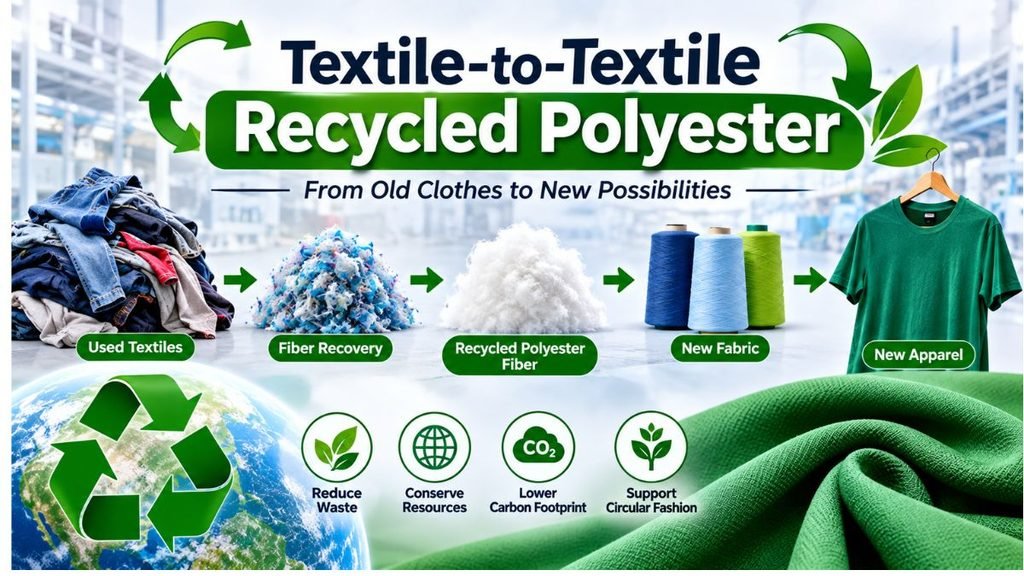
Textile-to-textile recycling uses discarded polyester fabrics or garments as raw material for new fibers.
This approach aims to keep textile materials in circulation rather than depending only on plastic bottle waste.
The process can be more challenging because discarded textiles may contain mixed fibers, dyes, finishes, and accessories.
Suitable sorting and processing methods are important for producing usable recycled material.
Mechanically Recycled Polyester
Mechanical recycling uses physical processes to break down plastic or textile waste into material that can be processed again.
For polyester, the material may be shredded, melted, and converted into new fibers.
The quality of the recycled output depends on the original material and processing conditions.
Chemically Recycled Polyester
Chemical recycling uses chemical processes to break polyester down into its building blocks or other reusable chemical materials.
These materials can then be processed into polyester again.
The method may help handle certain polyester waste streams, but its environmental performance depends on the technology, energy sources, chemicals, and production system involved.
Benefits of Recycled Polyester Clothing
Recycled polyester offers several useful features for clothing manufacturers and fashion brands. Its benefits depend on the fiber quality, fabric construction, and manufacturing process.
1. Makes Use of Recovered Plastic
One important benefit is that recycled polyester can use existing plastic waste as a raw material.
Bottle-based recycling gives suitable PET bottles another use. This can help reduce the amount of material sent to landfill or other disposal systems.
However, the actual waste reduction depends on the collection and recycling system. Recycling alone does not solve the wider problem of plastic waste.
2. Useful for Performance Clothing
Polyester is widely used in performance garments because of its practical properties.
Recycled polyester can be used in suitable fabric constructions for:
- Sportswear
- Activewear
- Running shirts
- Training shorts
- Gym leggings
- Tracksuits
- Performance jackets
The fabric can be lightweight, durable, and suitable for garments designed for regular movement.
3. Quick-Drying Properties
Polyester fibers generally absorb less moisture than many natural fibers. This can help suitable polyester fabrics dry relatively quickly.
For this reason, recycled polyester is often considered for sportswear and activewear.
However, moisture management depends on more than fiber type. Fabric construction, finishing, garment design, and ventilation also affect comfort.
4. Lightweight Fabric Options
Recycled polyester can be produced in different fabric weights and constructions.
Lightweight options may work well for training shirts and sports uniforms. Heavier fabrics may suit jackets, fleece garments, and outerwear.
Brands should select the fabric according to the product’s intended use rather than choosing material based only on its recycled content.
5. Durability and Shape Retention
Polyester fabrics can provide useful strength and resistance to everyday wear.
Suitable recycled polyester fabrics may maintain their shape through regular use and washing.
Still, durability depends on yarn quality, fabric construction, stitching, finishing, and garment care.
A recycled label alone does not guarantee a long-lasting garment.
6. Supports Material Innovation
The use of recycled polyester encourages textile suppliers to develop new recycling methods and fabric options.
Brands can explore different recycled yarns, fabric weights, textures, and blends.
This creates opportunities for product development across sportswear, casual clothing, uniforms, and outerwear.
7. Helps Brands Develop Material Choices
Fashion brands increasingly consider material sourcing when planning collections.
Recycled polyester provides another option for brands that want to use recovered materials in selected products.
The decision should still consider product performance, supply-chain transparency, durability, and the environmental impact of the complete garment.
Disadvantages of Recycled Polyester Clothing
Recycled polyester has benefits, but it also has limitations. Brands should understand these issues before making sustainability claims.
1. It Is Still a Synthetic Fiber
Recycled polyester remains a synthetic material. It does not become biodegradable simply because it comes from recycled plastic.
Like conventional polyester, it can persist in the environment when discarded.
Brands should avoid describing recycled polyester as biodegradable unless the specific material has suitable evidence supporting that claim.
2. Microfiber Shedding
Synthetic fabrics can release tiny fibers during washing and use. These fibers may enter wastewater and the wider environment.
The amount of shedding can vary according to yarn, fabric construction, garment condition, and washing methods.
Recycled polyester is not automatically free from microfiber pollution.
Brands can explore suitable fabric constructions and care guidance, but they should not promise that a garment releases no microfibers without reliable testing.
3. Recycling Quality Can Vary
The quality of recycled polyester depends on the source material and processing method.
Some recycling processes may produce fibers with different characteristics from virgin polyester. Manufacturers need to assess the material before using it in production.
Testing and supplier documentation help brands understand what they are buying.
4. Blended Fabrics Can Be Difficult to Recycle
Some garments combine polyester with cotton, elastane, or other fibers.
Blends can provide useful stretch, softness, or comfort. However, separating the fibers at the end of a garment’s life may be difficult.
Buttons, zippers, prints, coatings, and labels can create further recycling challenges.
Brands should consider end-of-life options when choosing fabric blends and garment construction.
5. Recycling Requires Resources
Collecting, cleaning, processing, melting, and producing recycled fibers all require resources.
Energy use, water use, transportation, and chemical processing can affect the environmental impact.
For this reason, recycled polyester should not automatically be described as having zero environmental impact.
Recycled Polyester vs. Regular Polyester
Both materials are polyester, but they differ in their raw material sources.
| Feature | Recycled Polyester | Regular Polyester |
|---|---|---|
| Raw material | Recovered plastic or polyester waste | Primarily new petroleum-based raw materials |
| Fiber type | Synthetic | Synthetic |
| Common uses | Activewear, sportswear, jackets, and casual clothing | Activewear, sportswear, jackets, and casual clothing |
| Performance | Depends on fabric construction and quality | Depends on fabric construction and quality |
| Recycling source | Uses previously made materials | Uses newly produced raw materials |
| Environmental considerations | Depends on collection and recycling processes | Depends on raw material extraction and manufacturing |
Neither material should be judged by its name alone. Brands should compare performance, durability, production impacts, and available recycling options.
What Is the Difference Between Recycled Polyester and Organic Cotton?
Recycled polyester and organic cotton are different textile materials.
Recycled polyester is a synthetic fiber made from recovered plastic or polyester waste. Organic cotton is a natural plant-based fiber grown under certified organic agricultural standards.
Their properties and uses also differ.
| Feature | Recycled Polyester | Organic Cotton |
|---|---|---|
| Fiber category | Synthetic | Natural |
| Main source | Recycled plastic or polyester | Cotton plants |
| Moisture behavior | Generally low moisture absorption | Generally more moisture absorbent |
| Common applications | Sportswear, activewear, jackets | T-shirts, casual clothing, and everyday garments |
| Stretch | Depends on construction or fiber blends | Depends on construction or added stretch fibers |
| Environmental considerations | Recycling process and microfiber shedding | Agricultural practices, water, processing, and land use |
The right choice depends on the product. A performance garment may need different properties from a casual cotton T-shirt.
Some products combine recycled polyester and cotton to achieve a particular balance of performance and comfort. However, blended fabrics can make future recycling more difficult.
Common Uses of Recycled Polyester Clothing
Recycled polyester is used across several apparel categories. Its versatility makes it suitable for different fabric weights, textures, and constructions.
Recycled Polyester Activewear
Activewear is one of the common applications for recycled polyester.
It can be used in training shirts, leggings, sports bras, shorts, and tracksuits.
For these products, brands should consider stretch, recovery, breathability, opacity, moisture management, and durability.
A fabric containing elastane may provide better stretch for fitted sportswear. However, the blend ratio and fabric construction should be tested before bulk production.
Recycled Polyester Sportswear
Sportswear includes clothing designed for training, team activities, and athletic performance.
Recycled polyester can be used for:
- Football jerseys
- Training tops
- Running shirts
- Sports shorts
- Team uniforms
- Tracksuits
It can also support custom printing and branding, depending on the fabric and decoration method.
Recycled Polyester Jackets
Recycled polyester can be used in lightweight jackets, windbreakers, and suitable outerwear fabrics.
Woven construction may provide the structure needed for these garments.
Some jackets also use recycled polyester in linings or insulation materials. Brands should check the exact material composition of each component.
Recycled Polyester T-Shirts
Recycled polyester T-shirts can suit sports teams, promotional clothing, and performance collections.
Fabric weight, softness, fit, and ventilation should guide material selection.
Brands should request samples to assess the fabric against their intended customer experience.
Recycled Polyester Workwear
Certain workwear products use polyester because of its strength and practical care requirements.
Recycled polyester may be considered for uniforms, training apparel, and suitable work garments.
The material must meet the product’s actual performance and safety needs. Specialized protective clothing may require additional testing and compliance.
How Clothing Brands Can Choose Recycled Polyester Fabric
Choosing the right fabric requires more than checking whether it contains recycled material.
Check the Recycled Content
Ask the supplier what percentage of the fabric comes from recycled polyester.
A fabric may contain 100% recycled polyester, or it may combine recycled polyester with virgin polyester, cotton, or elastane.
Request documentation that supports the recycled-content claim.
Ask About Material Certification
Brands may use recognized certification systems to verify recycled content and supply-chain information.
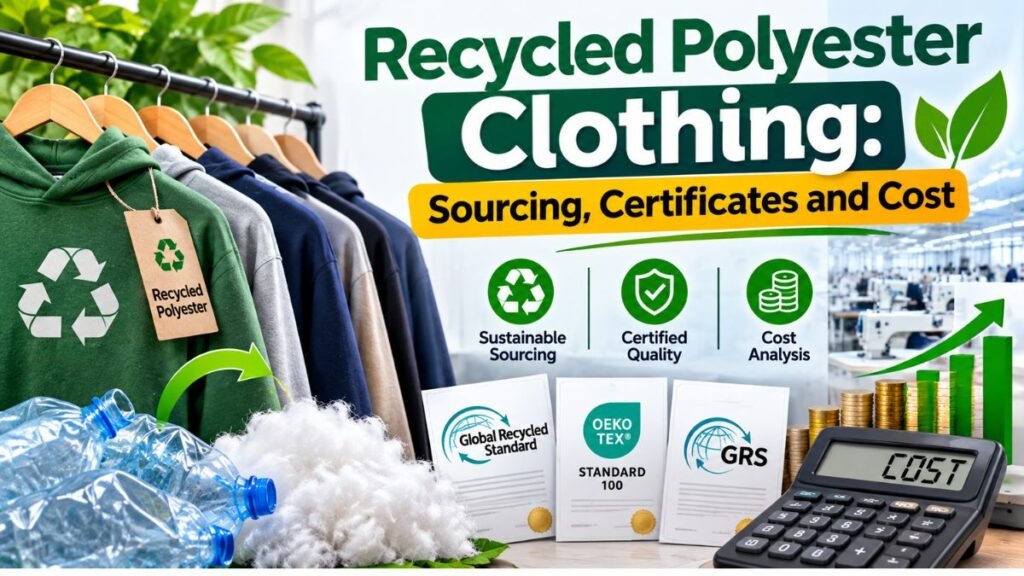
For example, the Global Recycled Standard (GRS) and Recycled Claim Standard (RCS) are used in the recycled-material sector.
Check the scope and validity of any certificate. Also confirm whether the certification covers the material, supplier, or specific transaction.
Do not assume a fabric is certified because a supplier uses the word “recycled.”
Review Fabric Weight and Construction
Fabric weight is often measured in GSM, meaning grams per square metre.
A lower GSM fabric is generally lighter, while a higher GSM fabric is generally heavier. However, GSM alone does not determine comfort or performance.
Consider the following:
- Knit or woven construction
- Stretch and recovery
- Fabric thickness
- Surface texture
- Breathability
- Color consistency
- Intended garment use
Request fabric swatches before approving the material.
Test the Fabric
Testing helps confirm whether the fabric meets your product requirements.
Depending on the garment, useful checks may include:
- Colorfastness
- Shrinkage
- Pilling resistance
- Stretch and recovery
- Seam performance
- Fabric strength
- Dimensional stability
For activewear, brands may also need to assess opacity, moisture management, and performance after repeated washing.
Confirm Supply Availability
Before launching a collection, ask whether the selected recycled polyester fabric is available in the required colors and quantities.
Special colors, custom finishes, or unusual fabric constructions may affect minimum order quantities and lead times.
Recycled Polyester in Custom Clothing Manufacturing
Working with a clothing manufacturer can help brands turn recycled polyester fabric into finished garments.
The process begins with product requirements. The buyer explains the garment type, target customer, fabric preferences, design, and order quantity.
The manufacturer then helps assess suitable materials and production methods.
A typical workflow includes:
- Product brief and quotation
- Fabric and trim selection
- Pattern development
- Sample production
- Sample review and approval
- Bulk cutting and sewing
- Branding and decoration
- Quality inspection
- Packaging and shipping
A tech pack can make this process easier. It should include measurements, fabric composition, fabric weight, colors, trims, artwork, stitching details, and finishing instructions.
If the brand does not have a complete tech pack, it can begin with reference images, sketches, or an existing garment. The manufacturer can explain what additional information is needed before sampling.
Quality Control for Recycled Polyester Garments
Quality control is important because recycled content does not guarantee finished garment quality.
The fabric and finished product should meet the approved specifications.
Fabric Inspection
Before cutting, the production team can check fabric for visible defects, shade variation, holes, and other issues.
Fabric weight and composition should match the agreed requirements.
Measurement Checks
Garments should be checked against the approved size chart.
Important measurements may include chest, body length, sleeve length, waist, hip, and inseam.
The exact measurement points depend on the garment.
Stitching and Construction Checks
Inspectors can review seam quality, stitch consistency, thread trimming, and construction details.
Sportswear and stretch garments may need special attention to seam strength and flexibility.
Color and Decoration Checks
Printed and embroidered details should match the approved artwork and placement.
Color consistency should also be checked across the production batch.
Final Inspection
Before shipment, the finished garments should be checked against the agreed quality requirements.
Brands should confirm the inspection method and acceptance criteria before production begins.
Is Recycled Polyester Sustainable?
Recycled polyester can support the use of recovered materials, but sustainability is more complex than the fiber source.
Its environmental impact depends on several factors:
- Where the recycled material comes from
- How it is collected and sorted
- The recycling method
- Energy and water used during processing
- Transportation requirements
- Fabric durability
- Garment lifespan
- Washing and care
- End-of-life recycling options
A durable garment that remains useful for years may reduce the need for frequent replacement. However, recycled polyester can still release microfibers and may be difficult to recycle when mixed with other materials.
Brands should make specific, evidence-based claims. For example, stating the verified recycled content is more useful than calling a garment completely eco-friendly.
Clear product information helps customers understand what the material actually offers.
How to Market Recycled Polyester Clothing Responsibly
Fashion brands should explain recycled content without exaggerating environmental benefits.
Use accurate information about the material and its source. If a product contains 70% recycled polyester, state that percentage clearly and explain what makes up the remaining 30%.
Keep supporting documents from suppliers and certification bodies. Make sure product descriptions match the evidence.
Avoid broad claims such as:
- Completely sustainable
- Zero environmental impact
- 100% eco-friendly
- No pollution
- Fully biodegradable
These statements may mislead customers when they are not supported by evidence.
Instead, describe the verified material content, relevant product features, and care instructions.
Transparency can help customers make informed purchasing decisions and build trust in your brand.
Is Recycled Polyester Suitable for Your Clothing Brand?
Recycled polyester may suit brands that need synthetic performance fabrics and want to include recovered materials in their collections.
It can be worth considering for:
- Sportswear and activewear brands
- Fitness clothing businesses
- Outdoor apparel labels
- Team uniform suppliers
- Performance clothing collections
- Brands developing selected recycled-material products
Before choosing it, compare fabric samples, confirm recycled-content documentation, test garment performance, and review production costs.
If your product requires a natural fiber, a particular hand feel, or specific end-of-life recycling options, another material may be more suitable.
The best fabric is the one that meets the product’s performance, quality, price, and responsible sourcing requirements.
How Fashion Soul International Supports Custom Apparel Production
Fashion Soul International is a factory-owned custom clothing manufacturer based in Sialkot, Punjab, Pakistan. The company provides private-label, OEM, ODM, white-label, cut-and-sew, and full-package apparel manufacturing.
Its services include product development, fabric and trim sourcing, sampling, bulk production, quality control, custom branding, packaging, export documentation, and international shipping.
For brands considering recycled polyester garments, material selection should begin with clear product specifications. Buyers should confirm the recycled content, fabric weight, construction, color, and supplier documentation before sampling.
Fashion Soul International manufactures different apparel categories, including activewear, sportswear, streetwear, workwear, jackets, tracksuits, T-shirts, and other custom garments.
The company’s published standard MOQ starts at 100 pieces. Actual requirements depend on the product, fabric, color, construction, and project details.
A typical project can begin with a design brief, reference images, sketches, or a tech pack. The physical pre-production sample should be reviewed and approved before bulk manufacturing begins.
If you are planning a recycled polyester collection, prepare your fabric requirements, garment specifications, target quantity, and branding details. You can then discuss the project with Fashion Soul International through its official website: https://fashionsoulintl.com/.
Frequently Asked Questions
What is recycled polyester clothing made from?
Recycled polyester clothing is made from polyester fibers produced using recovered materials. Common sources include used PET bottles, polyester fabric waste, and discarded polyester products.
Is recycled polyester the same as rPET?
rPET refers to recycled polyethylene terephthalate. It is a common type of recycled polyester made from recovered PET materials, including suitable plastic bottles.
Is recycled polyester better than regular polyester?
Recycled polyester uses recovered materials instead of relying entirely on new petroleum-based raw materials. However, its overall environmental impact depends on recycling, processing, transportation, durability, and disposal.
Is recycled polyester good for activewear?
Yes. Suitable recycled polyester fabrics can be used for activewear, including training shirts, leggings, sports bras, and shorts. Fabric construction, stretch, recovery, and moisture management should be checked before production.
Does recycled polyester release microplastics?
Synthetic polyester fabrics can release tiny fibers during washing and use. Recycled polyester is not automatically free from microfiber shedding.
Can recycled polyester be recycled again?
Some recycled polyester products may be recyclable again, depending on their composition and available recycling technology. Blended fibers, dyes, coatings, and garment accessories can make recycling more difficult.
Is recycled polyester biodegradable?
No. Recycled polyester is still a synthetic plastic-based fiber. It should not be described as biodegradable without specific evidence supporting that claim.
How can I verify recycled polyester content?
Ask the fabric supplier for material composition records and relevant certification documents. Standards such as GRS and RCS can help support recycled-content claims when their requirements and scope are met.
Can recycled polyester be used for custom clothing?
Yes. It can be used in custom T-shirts, sportswear, activewear, jackets, uniforms, and other garments. The fabric must be suitable for the design and intended use.
Is recycled polyester more expensive?
The price depends on the material source, fiber quality, fabric construction, certification requirements, order quantity, and supplier. Request a project-specific quotation before making a decision.
Conclusion
Recycled polyester clothing gives fashion brands another way to use recovered materials in apparel production. It can offer practical properties for activewear, sportswear, jackets, uniforms, and casual garments.
However, brands should look beyond the recycled label. Check the material source, recycled content, fabric quality, certifications, durability, and end-of-life options.
A responsible manufacturing decision considers the complete garment, from raw material sourcing to final delivery. With suitable fabric selection, clear specifications, sample approval, and quality control, brands can develop recycled polyester products that meet their customers’ needs.