Is Spandex a Synthetic Fiber? Origin, Properties, and Uses Explained
Have you ever wondered, is spandex a synthetic fiber or a natural material? Spandex is a popular material used in leggings, sportswear, underwear, swimwear, and many other clothing products. It is known for its excellent stretch and ability to return to its original shape.
Unlike cotton, wool, and linen, spandex does not come directly from plants or animals. It is a manufactured fiber made through chemical processes. Its unique structure allows clothing to stretch comfortably without losing its fit.
Understanding spandex is important for clothing brands, manufacturers, designers, and consumers. Fabric composition affects comfort, durability, flexibility, and garment performance.
In this guide, you will learn whether spandex is natural or synthetic, discover the origin of spandex, understand how it is manufactured, and explore its properties, benefits, and common uses.
Is Spandex a Synthetic Fiber?
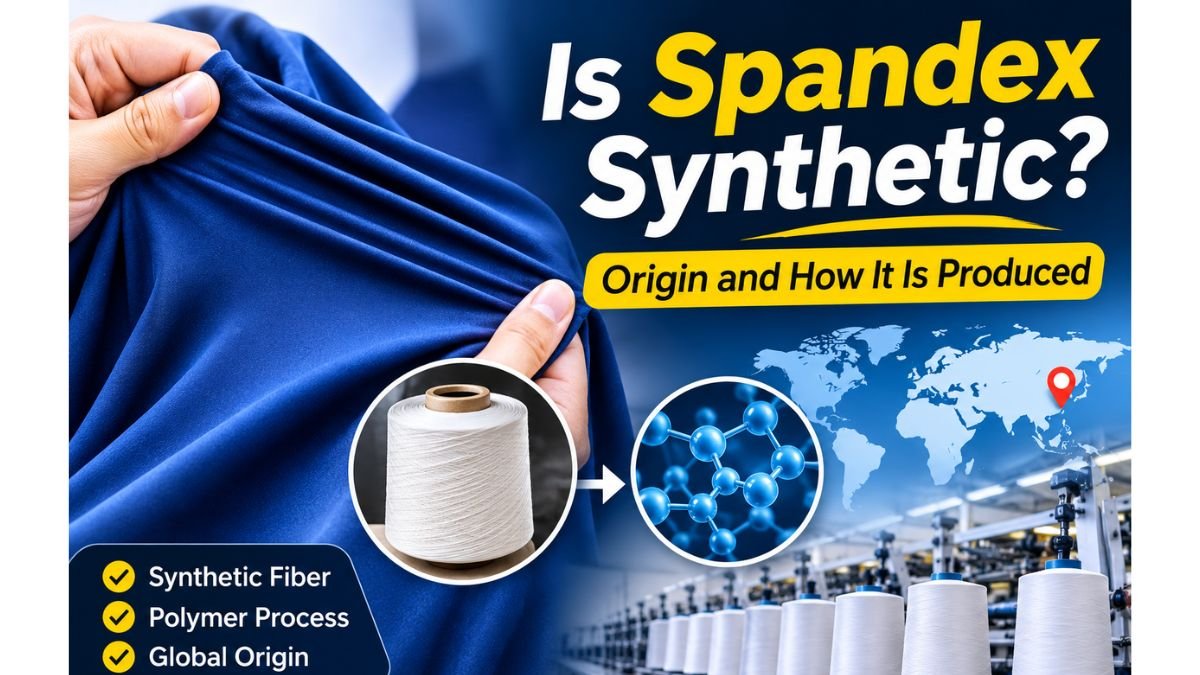
Yes, spandex is a synthetic fiber. It is a manufactured elastic fiber made from a long-chain synthetic polymer called polyurethane. Its chemical structure gives it exceptional stretch and recovery.
Spandex is not obtained directly from natural sources such as cotton plants, flax, or animal wool. Instead, manufacturers create it through controlled chemical reactions and fiber-production processes.
The material is also known as elastane in many countries. Both names refer to the same type of elastic fiber.
Spandex is commonly blended with other fibers to improve clothing flexibility. For example, manufacturers may combine it with cotton, polyester, or nylon.
These blends are useful because natural and synthetic fibers provide different properties. Cotton offers softness, polyester can provide durability, and spandex adds stretch.
A small amount of spandex can make a noticeable difference in how a garment fits and moves.
Is Spandex Natural or Synthetic?
Spandex is synthetic, not natural. Its production requires chemical processing rather than harvesting fibers from plants or animals.
Natural fibers come from biological sources. Cotton grows around the seeds of cotton plants, while wool comes from animal fleece. Linen is produced from flax plant fibers.
Synthetic fibers are manufactured using chemical materials and industrial processes. Polyester, nylon, and spandex are common examples.
Spandex belongs to the synthetic fiber category because manufacturers produce it through chemical polymer formation and fiber spinning.
However, synthetic does not automatically mean poor quality. Different fibers serve different purposes in clothing production.
For example, spandex is valuable because it provides elasticity that many natural fibers cannot offer on their own.
Difference Between Natural and Synthetic Fibers
| Feature | Natural Fibers | Synthetic Fibers |
|---|---|---|
| Source | Plants or animals | Manufactured chemical materials |
| Production | Harvesting and processing | Chemical and industrial processes |
| Examples | Cotton, wool, linen | Spandex, polyester, nylon |
| Stretch | Depends on the fiber and fabric | Can be engineered for high elasticity |
| Performance | Varies by natural material | Can be designed for specific uses |
| Care | Depends on fiber type | Depends on fiber type and construction |
Both categories are important in the textile industry. Manufacturers select materials according to the intended garment, performance needs, and customer preferences.
What Is Spandex Made Of?
Spandex is made from a synthetic polyurethane-based polymer. It belongs to a group of manufactured fibers known for their elastic properties.
Its structure contains flexible and rigid sections. These sections work together to create stretch and recovery.
The flexible sections allow the fiber to extend when pulled. The rigid sections help the fiber return toward its original shape after the force is released.
This structure explains why spandex can stretch much further than many conventional textile fibers.
Understanding Polyurethane
Polyurethane is a polymer used in several industrial and consumer applications. It can be produced in different forms, depending on its chemical composition and intended use.
For spandex, manufacturers use suitable polyurethane chemistry to create an elastic fiber.
The resulting fiber is thin, flexible, and capable of repeated stretching.
Spandex fibers are usually combined with other materials instead of being used alone in everyday clothing. This helps manufacturers balance elasticity with softness, strength, coverage, and comfort.
Is Spandex Made From Petroleum?
Many conventional synthetic fibers use petrochemical-based raw materials. Spandex production commonly relies on chemical feedstocks associated with the petrochemical industry.
However, the exact materials and production methods can vary between manufacturers.
It is therefore more accurate to describe conventional spandex as a synthetic polyurethane-based fiber rather than assume every spandex product has exactly the same raw material source.
Brands interested in material sourcing should request information about fiber composition and manufacturing details from their suppliers.
What Is the Origin of Spandex?
The origin of spandex is connected to the development of synthetic elastic materials during the twentieth century.
Before spandex became widely available, clothing manufacturers used materials such as rubber to provide elasticity in certain garments.
Rubber could stretch, but it had limitations. It could be relatively heavy, sensitive to aging, and less suitable for many modern clothing applications.
Scientists and textile developers began exploring new synthetic materials that could provide better flexibility and practical performance.
Development During the 1950s
Spandex was developed in the United States during the 1950s. Chemist Joseph C. Shivers Jr., working at DuPont, played a major role in developing the fiber.
His work helped create a lightweight synthetic elastic material suitable for textile applications.
The new fiber offered an alternative to traditional rubber-based elastic materials.

Commercial Introduction
Spandex became commercially available in 1959. It quickly attracted interest from clothing manufacturers because of its ability to stretch and recover.
The development also helped expand the production of fitted clothing.
Garments such as hosiery, swimwear, underwear, and athletic clothing benefited from the new material.
Over time, spandex became an important component in modern textile manufacturing.
Why Was Spandex Developed?
The main purpose was to create a flexible fiber that could replace rubber in suitable clothing applications.
Manufacturers needed a material that was:
- Lightweight
- Highly elastic
- Capable of recovering its shape
- Suitable for blending with other fibers
- Useful in fitted garments
- Adaptable to different clothing designs
Spandex helped meet these needs and changed how manufacturers produced stretch clothing.
How Is Spandex Manufactured?
Spandex manufacturing involves several chemical and textile-production stages. The process turns polymer materials into fine elastic filaments.
The exact manufacturing method can vary between producers. However, solution-based fiber spinning is a common method used to produce spandex.
1. Polymer Preparation
The process begins with chemical materials used to produce polyurethane-based polymer.
These materials react under controlled conditions to create long polymer chains.
The polymer must have suitable properties for elastic fiber production. Its molecular structure affects the final fiber’s stretch and recovery.
2. Preparing the Spinning Solution
The prepared polymer is dissolved in a suitable solvent to create a spinning solution.
This solution must have the right consistency for the spinning equipment.
Manufacturers carefully control its properties to support consistent filament production.
3. Fiber Spinning
The spinning solution passes through small openings called spinnerets.
These openings shape the material into fine filaments.
The filaments then enter a controlled environment where the solvent is removed or recovered, depending on the production method.
4. Filament Formation
As the material forms into filaments, the polymer develops its elastic fiber structure.
The resulting fibers are thin and flexible.
Manufacturers control production conditions to achieve the required physical properties.
5. Finishing and Winding
The filaments may receive finishing treatments to improve handling and performance during textile production.
They are then collected and wound into packages suitable for further processing.
6. Fabric Production
Spandex yarn can be used in knitting or weaving processes, depending on the intended textile.
It is commonly combined with other yarns to create stretch fabrics.
For example, a manufacturer may produce nylon-spandex fabric for leggings or cotton-spandex fabric for fitted casual clothing.
The final fabric properties depend on fiber composition, yarn structure, construction, and finishing.
Important Properties of Spandex Fiber
Spandex has several properties that make it useful in the clothing and textile industries.
1. Excellent Elasticity
The most recognized property of spandex is its elasticity.
It can stretch significantly and return toward its original length when the stretching force is removed.
This makes it useful for fitted clothing and garments designed for movement.
2. Shape Recovery
Spandex helps garments maintain their shape after repeated stretching.
This property is important for leggings, sports bras, fitted shirts, and underwear.
However, recovery can decrease over time due to heat, chemicals, excessive tension, and repeated wear.
3. Lightweight Structure
Spandex fibers are lightweight and can be incorporated into different fabric constructions.
This allows manufacturers to create flexible garments without relying on heavy elastic materials.
4. Flexibility
Spandex helps clothing move with the body.
It is useful for activities involving bending, stretching, running, and other physical movements.
5. Blending Compatibility
Spandex can be combined with many other textile fibers.
Common combinations include:
- Cotton and spandex
- Polyester and spandex
- Nylon and spandex
- Viscose and spandex
Each blend offers different characteristics. The main purpose of adding spandex is usually to improve stretch and fit.
6. Wrinkle Resistance in Blended Fabrics
Spandex can help some blended fabrics recover after stretching and movement.
However, wrinkle resistance depends on the entire fabric composition and construction. Spandex alone does not make every garment wrinkle-free.
7. Good Fit
Spandex helps clothing fit closely to the body without restricting normal movement.
This makes it especially useful in fitted and performance clothing.
Common Uses of Spandex in the Textile Industry
Spandex is used in many clothing categories because of its flexibility and stretch.
1. Sportswear and Activewear
Sportswear is one of the major applications of spandex.
Activewear garments need flexibility and a comfortable fit during exercise.
Common examples include:
- Gym leggings
- Sports bras
- Training shorts
- Yoga pants
- Compression clothing
- Athletic tops
- Cycling shorts
Spandex helps these garments move with the body.
2. Yoga Clothing
Yoga clothing often uses spandex because it supports stretching and movement.
Yoga leggings, fitted tops, and sports bras may contain spandex blended with nylon or polyester.
The material helps clothing maintain its fit during different poses.
Manufacturers must also consider opacity, softness, fabric weight, and recovery when developing yoga apparel.
3. Swimwear
Swimwear often contains spandex because it needs to stretch and fit closely.
Spandex is commonly blended with nylon or polyester for swimwear fabrics.
These combinations can provide flexibility and help garments maintain their shape.
The fabric must also meet the product’s requirements for chlorine exposure, sunlight, and repeated washing.
4. Underwear and Lingerie
Spandex is commonly used in underwear and lingerie.
It helps create a flexible fit and supports comfortable movement.
Small amounts can improve the fit of briefs, bras, shapewear, and other close-fitting garments.
5. Jeans and Casual Clothing
Some denim fabrics contain spandex to create stretch jeans.
This helps improve flexibility and comfort compared with rigid denim.
Spandex is also used in fitted trousers, shirts, dresses, and casual clothing.
6. Hosiery and Socks
Spandex is used in socks, tights, stockings, and other hosiery products.
It helps these garments fit securely and maintain their shape.
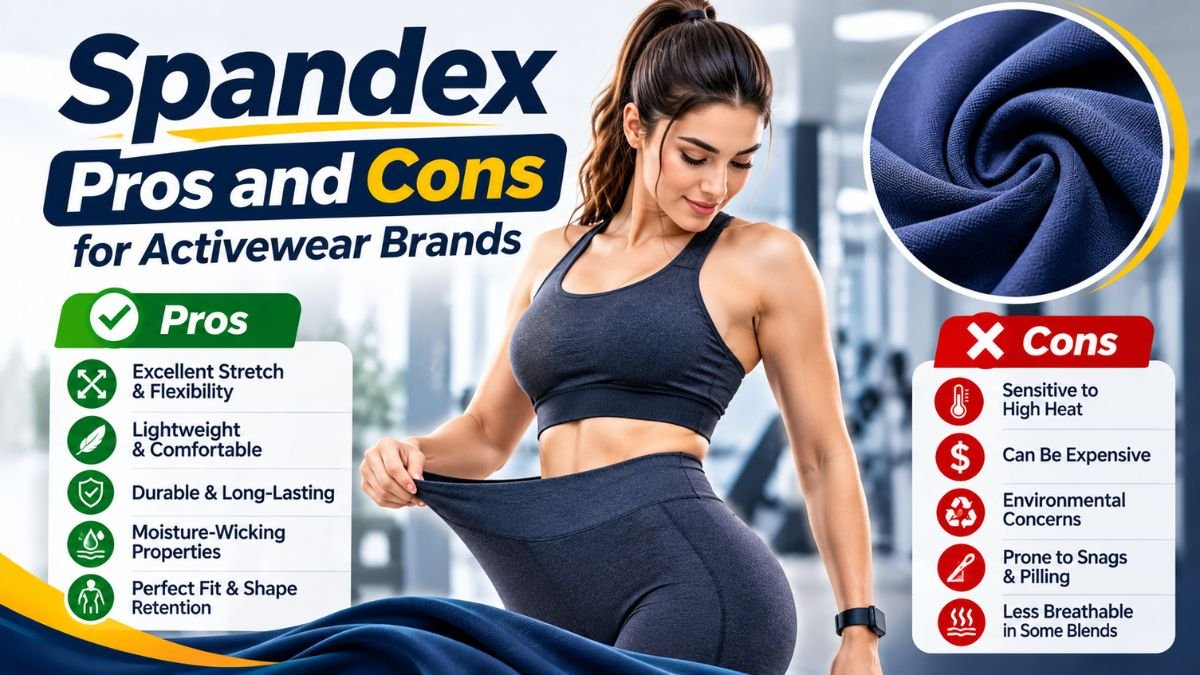
Advantages of Spandex Fiber
Spandex provides several advantages for clothing manufacturers and consumers.
Excellent stretch: It allows garments to move with the body.
Shape recovery: It helps clothing return toward its original fit after stretching.
Comfort: It supports flexible movement in fitted garments.
Versatility: It can be blended with many other textile fibers.
Lightweight performance: It adds elasticity without requiring heavy elastic materials.
Better garment fit: It helps manufacturers produce close-fitting clothing.
Useful for activewear: It supports garments designed for sports, yoga, and exercise.
These benefits explain why spandex is widely used in modern apparel manufacturing.
Disadvantages of Spandex Fiber
Although spandex offers useful properties, it also has some limitations.
1. Heat Sensitivity
High temperatures can damage spandex fibers.
Excessive heat during washing, drying, ironing, or manufacturing may reduce elasticity.
Always follow the recommended care instructions for the specific fabric.
2. Limited Moisture Absorption
Spandex is not generally selected for its moisture-absorption properties.
In activewear, it is usually blended with other fibers that provide additional comfort and moisture-management characteristics.
3. Chemical Sensitivity
Certain chemicals, cleaning agents, and treatments can damage spandex.
The effect depends on the chemical, concentration, temperature, and exposure time.
Manufacturers should test fabric compatibility before applying specialized finishes.
4. Environmental Concerns
Conventional spandex is a synthetic material and does not readily biodegrade under ordinary environmental conditions.
Its production also involves chemical processing and resource use.
Brands should consider material sourcing, product durability, responsible manufacturing, and end-of-life options when evaluating environmental impact.
5. Difficulties With Recycling
Blended fabrics can be difficult to recycle because they contain different fiber types.
For example, separating spandex from polyester or nylon may require specialized processes.
This is an important consideration for brands developing more circular clothing products.
Difference Between Spandex, Elastane, and Lycra
These three terms are closely related, but they are not exactly the same type of name.
| Term | Meaning |
|---|---|
| Spandex | Common name used for the elastic synthetic fiber, especially in the United States |
| Elastane | Generic name commonly used in Europe and many other markets |
| Lycra | A registered brand name associated with spandex fibers |
Spandex and elastane refer to the same general fiber category.
Lycra is a brand name, not the generic name for every spandex fiber.
A garment label may use any of these terms depending on the market and labeling requirements.
Spandex vs Polyester: What Is the Difference?
Spandex and polyester are both synthetic fibers, but they serve different purposes.
Polyester is commonly used for durability, dimensional stability, and quick-drying textile applications. Spandex is mainly used to provide elasticity.
| Feature | Spandex | Polyester |
|---|---|---|
| Fiber type | Synthetic | Synthetic |
| Main purpose | Stretch and recovery | Durability and textile performance |
| Elasticity | Very high | Generally limited |
| Common uses | Leggings, sports bras, swimwear | T-shirts, sportswear, jackets |
| Blending role | Adds stretch | Provides the main fabric structure |
| Common combinations | Nylon-spandex, cotton-spandex | Polyester-spandex |
Many activewear fabrics combine both materials.
Polyester provides the main fabric structure, while spandex adds flexibility.
The correct blend depends on the product’s intended use and performance requirements.
How to Care for Spandex Clothing
Proper care helps maintain the elasticity and appearance of spandex-containing garments.
Follow the care label because different blends may require different washing methods.
Some general care practices include:
- Wash with similar colors.
- Use a gentle washing cycle when appropriate.
- Avoid excessive heat.
- Do not use harsh chemicals unless the care label permits them.
- Avoid high-temperature ironing.
- Air-dry when recommended.
- Avoid stretching garments unnecessarily while wet.
High heat can weaken elastic fibers over time. Gentle care can help extend the useful life of clothing.
Is Spandex Environmentally Friendly?
Spandex has useful performance properties, but conventional production raises environmental questions.
It is a manufactured synthetic fiber, and conventional spandex is not readily biodegradable.
Its production involves chemical processing and energy use. Blending it with other fibers can also make textile recycling more difficult.
However, environmental impact should be assessed across the entire product life cycle.
Important factors include:
- Raw material sourcing
- Manufacturing energy use
- Chemical management
- Water use
- Fabric durability
- Garment lifespan
- Recycling options
- Disposal methods
Some suppliers may offer alternative materials or products containing recycled content. Brands should request reliable documentation before making environmental claims.
A durable garment that remains useful for longer may also reduce the need for frequent replacement.
How Clothing Manufacturers Choose the Right Spandex Fabric
Selecting the right spandex fabric requires more than checking its fiber composition.
Manufacturers consider the garment’s design, intended use, fit, construction, and performance requirements.
Check the Fiber Composition
The composition tells you how much spandex is included in the fabric.
For example, a fabric may contain nylon and spandex or polyester and spandex.
The right percentage depends on the garment and desired stretch.
Review Fabric Weight
GSM, or grams per square metre, measures fabric weight.
A higher GSM does not automatically mean better quality. The correct weight depends on the product.
Leggings may require different fabric weight from lightweight sports tops.
Test Stretch and Recovery
Manufacturers should evaluate how far the fabric stretches and how well it returns to its original shape.
This is important for fitted products such as leggings, sports bras, and compression garments.
Check Durability
Testing can help identify issues with pilling, shrinkage, colorfastness, and repeated stretching.
These properties affect the garment’s appearance and performance over time.
Approve a Physical Sample
A physical sample allows the brand to evaluate the material before bulk production.
It is important to review the fabric in the actual garment because construction can change how it feels and performs.
Frequently Asked Questions
Is spandex a synthetic fiber or natural fiber?
Spandex is a synthetic fiber. It is manufactured from polyurethane-based polymers through chemical and industrial processes. It does not come directly from plants or animals.
Is spandex natural?
No. Spandex is not a natural fiber. It is a manufactured elastic material used in clothing and other textile applications.
What is the origin of spandex?
Spandex was developed in the United States during the 1950s. Chemist Joseph C. Shivers Jr. at DuPont played a major role in its development. The fiber became commercially available in 1959.
Is spandex natural or synthetic?
Spandex is synthetic. It belongs to the manufactured fiber category because it is created through chemical processes rather than harvested from natural sources.
What is spandex made from?
Spandex is made from a polyurethane-based synthetic polymer. Its structure gives it excellent elasticity and shape recovery.
Is elastane the same as spandex?
Yes. Spandex and elastane are different generic names for the same type of elastic synthetic fiber. The preferred term varies by region.
Is Lycra the same as spandex?
Lycra is a registered brand name associated with spandex fibers. Spandex is the generic fiber name, so not all spandex is necessarily Lycra-branded.
Why is spandex used in sportswear?
Spandex provides stretch and recovery. These properties help sportswear fit comfortably and support movement during physical activities.
Can spandex be blended with cotton?
Yes. Cotton and spandex are often blended to create stretch fabrics. Cotton provides softness, while spandex improves flexibility and fit.
Does spandex shrink?
Spandex-containing fabrics can change in size when exposed to unsuitable washing or drying conditions. High heat can also damage their elasticity. Follow the garment’s care label to reduce the risk of damage.
Is spandex biodegradable?
Conventional spandex is not readily biodegradable under ordinary environmental conditions. Its synthetic polymer structure makes disposal and recycling important environmental considerations.
Final Thoughts
So, is spandex a synthetic fiber? Yes. Spandex is a manufactured polyurethane-based fiber known for its excellent stretch and recovery.
Its development during the 1950s changed clothing production by providing a lightweight alternative to traditional elastic materials. Today, it is widely used in sportswear, yoga clothing, swimwear, underwear, hosiery, and fitted casual garments.
Understanding the origin of spandex and its properties helps clothing brands make better material decisions. Although spandex is not natural, it offers valuable performance benefits when blended with suitable fibers.
Whether you are a designer, clothing manufacturer, or consumer, knowing the difference between natural and synthetic fibers can help you select the right materials for your needs. Always consider fabric composition, comfort, durability, care requirements, and environmental impact before choosing a textile.