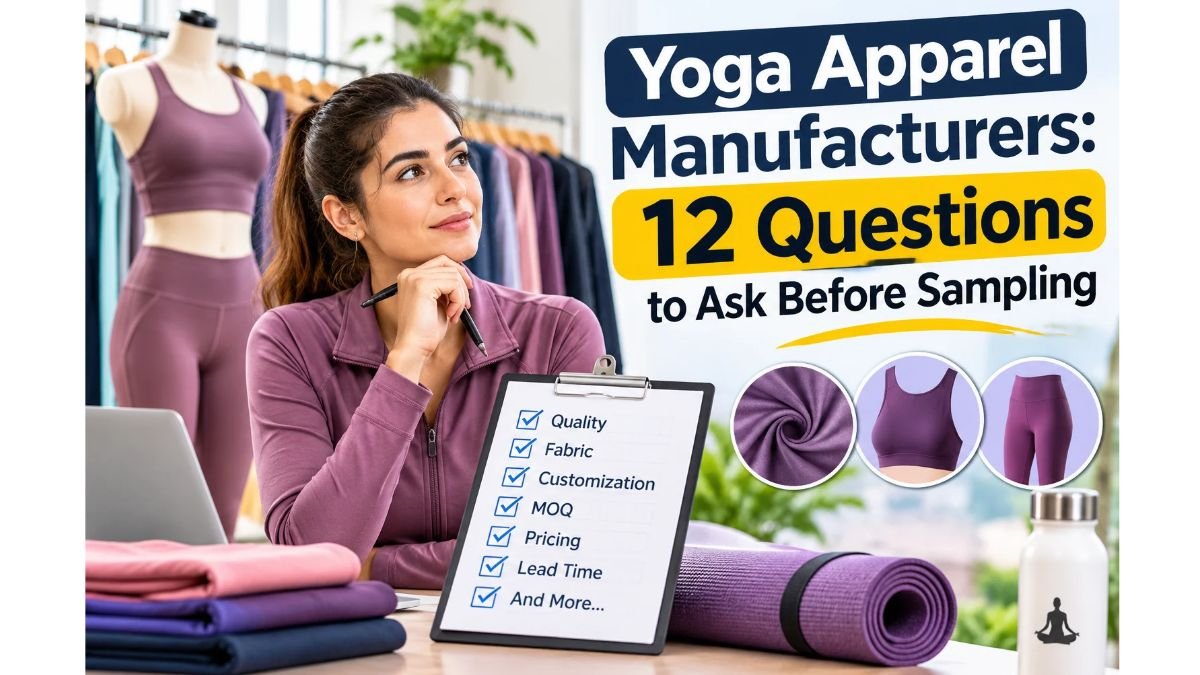
Yoga Apparel Manufacturers: A Complete Guide to Choosing the Right Manufacturing Partner
The demand for comfortable and functional yoga clothing has created opportunities for fashion brands, fitness businesses, and online retailers. Customers want apparel that supports movement, feels comfortable, and looks stylish. For clothing businesses, finding the right manufacturing partner is essential to meeting these expectations.
Choosing reliable yoga apparel manufacturers can help your brand develop products with suitable fabrics, comfortable fits, and consistent quality. Whether you are launching a new activewear label or expanding an existing collection, the right manufacturer can support your product development and production needs.
However, not every manufacturer offers the same services. Some focus on basic clothing production, while others provide fabric sourcing, sampling, custom designs, branding, packaging, and international shipping.
This guide explains how yoga apparel manufacturing works, which fabrics and products to consider, how to evaluate suppliers, and what to know before placing an order. It also explores private-label manufacturing and the services available to growing fitness and fashion brands.
What Do Yoga Apparel Manufacturers Do?
Yoga apparel manufacturers produce clothing designed for yoga, stretching, fitness, and other physical activities. Their work may include developing patterns, sourcing fabrics, creating samples, manufacturing garments, and adding custom branding.
Depending on their capabilities, manufacturers may produce:
- Yoga leggings
- Sports bras
- Yoga tops
- Tank tops
- Fitted T-shirts
- Yoga shorts
- Flared yoga pants
- Lightweight jackets
- Matching yoga sets
- Workout joggers
- Activewear tracksuits
Some manufacturers produce ready-made designs, while others create garments based on a brand’s specifications.
A custom manufacturing project may begin with a sketch, reference image, technical pack, or physical sample. The manufacturer then reviews the requirements and helps prepare the product for production.
A suitable manufacturing partner should understand fabric performance, garment construction, sizing, and finishing. These details are important because yoga clothing must support movement while maintaining comfort and fit.
Why Choosing the Right Yoga Clothing Manufacturer Matters
Your manufacturing partner has a direct effect on the quality and consistency of your clothing collection.
A poorly developed garment may lose its shape, feel uncomfortable, or fail to meet customer expectations. These problems can lead to returns, negative feedback, and additional business costs.
Working with an experienced yoga clothing manufacturer can help you manage important production stages.
Better Fabric Selection
Yoga clothing requires materials that suit stretching and movement. Fabric selection affects softness, flexibility, breathability, and durability.
A manufacturer with relevant activewear experience can help you compare materials and choose suitable options.
Consistent Garment Construction
Consistent stitching, measurements, and finishing help maintain product quality across an order.
This becomes especially important when producing several sizes or repeating the same design.
Support for Custom Designs
Brands often want products that match their own identity. Custom manufacturing may allow changes to fabric, colors, waistbands, seams, prints, labels, and packaging.
The available options depend on the manufacturer’s equipment and production capabilities.
Easier Production Coordination
Managing separate suppliers for fabric, sewing, printing, and packaging can create additional work.
A manufacturer offering several services can coordinate these stages through one production process. Always confirm which services are handled directly and which involve outside suppliers.
Popular Products Made by Yoga Clothes Manufacturers
A yoga clothing collection can include several products. Your selection should depend on your target customers, brand identity, and intended price range.
1. Yoga Leggings
Yoga leggings are an important product category for many activewear brands.
They are designed to provide flexibility and coverage during different movements. Common design features include stretch fabrics, comfortable waistbands, and supportive construction.
When developing leggings, consider:
- High-waisted or mid-rise designs
- Full-length or cropped options
- Fabric thickness and coverage
- Stretch and recovery
- Waistband width
- Seam placement
- Pocket options
- Available sizes
The garment should be tested during movement. A sample that looks good while standing may fit differently during bending or stretching.
2. Sports Bras
Sports bras are commonly included in yoga and fitness collections.
Some designs provide light support for low-impact activities. Others are made for higher-impact exercise.
Important product details include strap design, neckline, lining, elastic support, and fabric stretch.
Brands should define the intended activity before choosing the construction and support level.
3. Yoga Tops and Tank Tops
Yoga tops should allow comfortable movement without unnecessary restriction.
Popular options include fitted tops, loose tank tops, cropped tops, and long-sleeve training shirts.
The fabric should suit the intended design and provide appropriate comfort during exercise.
4. Yoga Shorts
Yoga shorts are useful for customers who prefer shorter garments or exercise in warmer conditions.
They may feature elastic waistbands, stretch fabrics, and different inseam lengths.
Check that the shorts remain comfortable during squats, lunges, and other movements.
5. Flared Yoga Pants
Flared yoga pants combine a fitted upper section with wider lower legs.
They can work for yoga sessions and casual outfits. Brands may offer different rises, lengths, and waistband designs.
Accurate measurements are important because the leg shape affects the garment’s overall appearance.
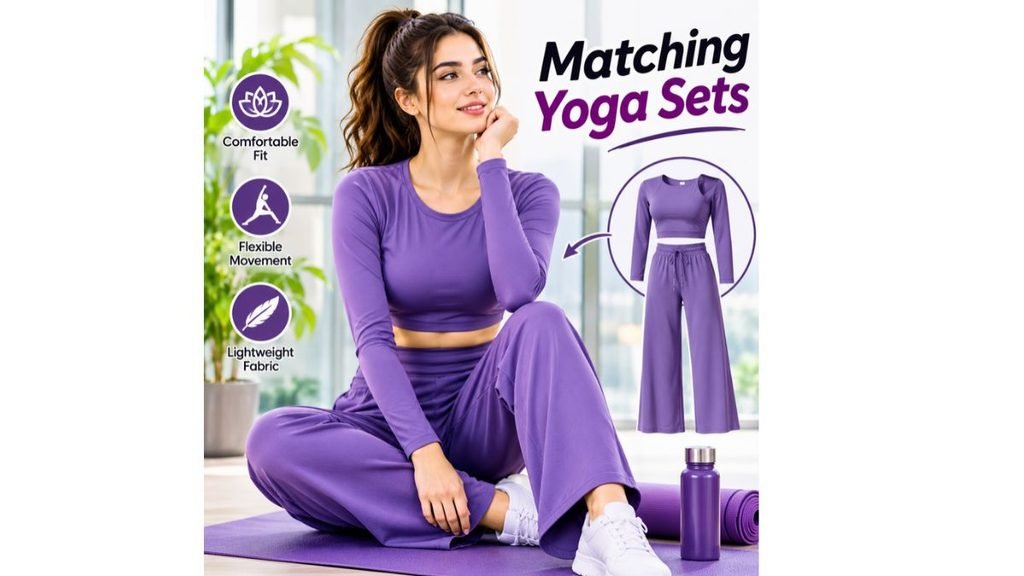
6. Matching Yoga Sets
Matching sets may include leggings and sports bras, or leggings with coordinated tops.
They help brands create a consistent collection and offer customers ready-to-wear combinations.
Before production, confirm that the fabrics and colors match across all pieces.
How to Choose the Right Fabric for Yoga Clothing
Fabric is one of the most important decisions in yoga apparel manufacturing. It affects how a garment feels, stretches, recovers, and performs during exercise.
Different fabrics suit different products. The right material depends on the garment design, intended activity, budget, and customer expectations.
Polyester and Elastane
Polyester blended with elastane is commonly used in activewear.
Polyester can provide durability and moisture-management options. Elastane adds stretch and flexibility.
This combination may suit yoga leggings, fitted tops, and other stretch garments.
Nylon and Elastane
Nylon and elastane blends are also used for activewear.
They can offer a smooth feel and flexible construction. Their performance depends on the fibre quality, knitting method, fabric weight, and finishing.
Ask the manufacturer for fabric specifications and physical swatches before selecting a material.
Cotton and Elastane
Cotton blended with elastane can be suitable for comfortable yoga tops and casual activewear.
Cotton provides a familiar soft feel, while elastane adds stretch.
However, not every cotton blend is suitable for every type of exercise. Consider the intended activity and test the garment before approving production.
Four-Way Stretch Fabric
Four-way stretch fabrics stretch in both horizontal and vertical directions.
They may be suitable for garments that require flexibility in different movements.
When evaluating this material, check its stretch recovery. A fabric should return toward its original shape after being stretched.
Understanding GSM
GSM means grams per square metre. It describes the weight of a fabric.
Fabric weight can affect thickness, coverage, drape, and comfort. However, higher GSM does not automatically mean better quality.
The correct weight depends on the product. Lightweight tops may need different fabric specifications than full-length leggings.
Always evaluate GSM alongside composition, stretch, opacity, and construction.
Important Features of High-Quality Yoga Apparel
A good yoga garment should meet the needs of its intended users. Appearance matters, but comfort and construction are equally important.
Comfortable Fit
Yoga clothing should allow the wearer to move naturally.
Pay attention to the waist, hips, shoulders, armholes, and leg openings. Tight areas can create discomfort, while loose areas may affect garment stability.
Suitable Stretch and Recovery
Stretch allows the garment to move with the body. Recovery helps it return toward its original shape.
Poor recovery may cause leggings or tops to become loose after repeated use.
Fabric Coverage
Coverage is especially important for yoga leggings.
Test the fabric under suitable lighting and during movements such as squats and forward bends. Do not assume that a thick-looking fabric will always provide adequate coverage.
Breathability and Moisture Management
Customers may prefer fabrics that feel comfortable during exercise and help manage moisture.
These properties depend on the material and its construction. Avoid making performance claims unless the fabric has been tested.
Durable Stitching
Stretch garments need suitable seam construction.
Inspect stitching for skipped stitches, loose threads, uneven seams, and weak areas. Seams should support the intended movement without creating unnecessary irritation.
Reliable Waistbands
The waistband affects fit and comfort.
Check its width, elastic strength, stitching, and ability to stay in place during movement. The waistband should feel secure without excessive pressure.
How to Find Reliable Yoga Clothes Manufacturers
Finding a suitable supplier takes research. A manufacturer may offer attractive prices but lack the experience or services your product requires.
Use the following steps to compare potential partners.
1. Review Manufacturing Experience
Look for manufacturers with experience in activewear, sportswear, or stretch garments.
Ask about the types of products they make and the construction methods they use.
If you want to produce technical yoga leggings, general clothing experience may not be enough. Confirm the manufacturer’s specific capabilities.
2. Check Customization Options
Your brand may need custom fabrics, colors, waistbands, labels, prints, or packaging.
Ask which options are available and whether they require additional minimum quantities.
Some custom materials may involve longer sourcing times or larger orders.
3. Request Product Samples
A physical sample allows you to evaluate the garment before bulk production.
Check the fabric, measurements, stretch, recovery, opacity, stitching, and finishing.
If you are developing several sizes, review more than one size where possible.
4. Compare Minimum Order Quantities
Minimum order quantity, or MOQ, is the smallest order a manufacturer accepts under specific conditions.
Ask whether the MOQ applies per style, color, or size run.
Also confirm whether different sizes can be combined within one order.
5. Evaluate Communication
Good communication is important throughout production.
The manufacturer should explain material choices, costs, timelines, sample revisions, and quality requirements clearly.
Keep important approvals and changes in writing.
6. Confirm Shipping Arrangements
If you are sourcing internationally, discuss shipping methods and delivery terms before placing an order.
Confirm the destination, freight costs, export documentation, customs responsibilities, and estimated transit time.
Do not assume that shipping or import duties are included in the manufacturing quotation.
Private Label Yoga Apparel Manufacturing
Private-label manufacturing allows you to sell clothing under your own brand name.
Instead of purchasing only generic products, you can develop a collection with selected fabrics, colors, fits, and branding details.
This model may suit startups, online stores, fitness businesses, retailers, and established fashion brands.
Custom Designs
You can provide your own designs and product specifications.
A manufacturer may help turn your ideas into production-ready garments. This can include pattern development, material selection, and sample creation.
Custom Fabrics and Colors
Your brand can choose materials based on its product requirements.
You may also request specific colors to match your visual identity. Custom colors should be confirmed for availability and minimum material requirements.
Custom Branding
Branding options may include:
- Woven labels
- Printed care labels
- Heat-transfer logos
- Embroidered details where suitable
- Custom hang tags
- Branded packaging
Confirm artwork, dimensions, colors, and placement before production.
Custom Packaging
Packaging can help create a consistent presentation for online and retail orders.
Depending on the supplier’s capabilities, options may include individual bags, product stickers, branded labels, and other packaging materials.
Confirm any destination-market labelling requirements before finalizing the design.
Understanding the Yoga Apparel Manufacturing Process
A structured production process helps turn a design concept into a finished product.
Although the exact workflow varies, custom clothing manufacturing usually includes these stages.
Step 1: Share Your Design Requirements
Start by explaining the product you want to manufacture.
Provide sketches, reference images, a tech pack, or a physical sample.
Include details about the fabric, colors, sizes, construction, branding, and estimated order quantity.
Step 2: Prepare Technical Specifications
A technical pack records the details required for production.
It may include:
- Front and back garment drawings
- Measurement charts
- Fabric composition
- GSM
- Stitching details
- Color references
- Trims and accessories
- Logo placement
- Label and packaging instructions
Clear specifications help the production team understand your expectations.
Step 3: Source Fabric and Trims
The manufacturer identifies suitable fabrics and accessories based on the approved requirements.
Review the material composition, color, weight, stretch, and availability.
Do not approve a fabric based only on a photograph. Request a swatch when the material is important to the final product.
Step 4: Develop the Sample
The manufacturer creates a sample using the agreed specifications.
Review its fit, measurements, fabric, seams, waistband, and branding.
If changes are needed, provide clear instructions before the next sample or bulk order.
Step 5: Approve the Pre-Production Sample
The physical pre-production sample becomes an important reference for bulk manufacturing.
Confirm the garment specifications and approve the sample in writing.
Bulk production should begin only after the agreed sample receives approval.
Step 6: Start Bulk Production
The factory prepares the materials and begins cutting and sewing.
The production team follows the approved pattern, size specifications, and construction details.
Branding and decoration are added according to the agreed production plan.
Step 7: Conduct Quality Inspections
Inspections help identify issues during and after manufacturing.
Checks may include measurements, stitching, fabric defects, logo placement, trim attachment, and finishing.
Agree on the inspection requirements before production begins.
Step 8: Package and Ship the Order
After the final checks, garments are prepared for delivery.
The manufacturer may arrange folding, individual packaging, labels, export documents, and shipping according to the agreement.
How Much Does Yoga Apparel Manufacturing Cost?
There is no fixed price for every yoga apparel order. The total cost depends on the garment design, material, order quantity, branding, and shipping requirements.
Important cost factors include:
| Cost factor | How it affects the price |
|---|---|
| Fabric | Composition, weight, quality, and availability affect material costs |
| Design | Complex panels and construction may require more work |
| Quantity | Order volume can affect the unit price |
| Sampling | Pattern development and sample revisions may involve extra costs |
| Branding | Labels, printing, and embroidery add production requirements |
| Packaging | Custom bags, tags, and boxes can increase costs |
| Shipping | Freight, duties, and delivery terms affect the final cost |
When comparing quotations, check what each price includes.
A lower unit price may not include sampling, custom labels, packaging, or shipping. Compare the complete project cost instead of focusing only on the garment price.
What Is the MOQ for Yoga Apparel?
MOQ means minimum order quantity. It describes the smallest order a manufacturer accepts under its production terms.
The MOQ can vary according to the garment, fabric, color, construction, and customization.
For example, a custom fabric may require a larger order than an available stock material. Special colors or trims may also have separate minimum requirements.
Fashion Soul International publishes a standard MOQ starting at 100 pieces. The actual minimum for a yoga apparel project should be confirmed through a project-specific quotation.
Before ordering, ask whether the quantity applies per style, color, or size run. Confirm how size combinations are handled.
Understanding MOQ helps you plan inventory and avoid ordering more products than your business can reasonably sell.
Quality Control in Yoga Apparel Manufacturing
Quality control is essential for garments designed for movement.
A proper inspection plan should evaluate both appearance and performance.
Fabric Inspection
Check the fabric for holes, stains, uneven dyeing, and other defects.
Confirm that the material matches the approved composition, weight, and color.
Measurement Inspection
Compare finished garments with the approved measurement chart.
Check waist, hips, rise, inseam, length, chest, and other relevant measurements.
Stretch and Recovery Checks
Test the fabric and garment for suitable stretch.
Check whether the material returns toward its original shape after stretching. Pay attention to waistbands and high-movement areas.
Stitching Inspection
Look for skipped stitches, loose threads, uneven seams, and weak construction.
The stitching should suit the fabric and intended use.
Branding and Finishing Checks
Confirm that labels, logos, prints, and other details match the approved design.
Check packaging and product presentation before the order is shipped.
Is Fashion Soul International a Suitable Manufacturing Partner for Yoga Apparel?
Fashion Soul International is a factory-owned clothing manufacturer based in Sialkot, Punjab, Pakistan. The company provides private-label, OEM, ODM, white-label, cut-and-sew, and full-package apparel manufacturing.
Its stated services include product development, fabric and trim sourcing, sampling, bulk production, quality control, custom branding, packaging, export documentation, and international shipping.
The company lists activewear and sportswear among its product categories. Its stated material options include polyester and four-way stretch spandex, which are relevant to certain stretch and activewear products.
For a specific yoga clothing project, buyers should confirm current capabilities for the required garment styles, including leggings, sports bras, tops, and matching sets. Fabric performance, size grading, construction, and available customization should also be discussed before ordering.
Fashion Soul International publishes a standard MOQ starting at 100 pieces. Actual project requirements may vary by product, fabric, color, and construction.
Its stated production process includes physical sample approval before bulk manufacturing. This gives buyers an opportunity to review the garment before confirming the main order.
If you are planning a custom yoga clothing collection, prepare your product references, size chart, fabric requirements, branding details, and estimated quantity. You can then request a project-specific quotation through the official website:
Common Mistakes to Avoid When Choosing Yoga Clothes Manufacturers
Selecting a manufacturing partner without checking important details can create problems later.
Avoid these common mistakes:
Choosing only by price: Compare fabric, construction, sample quality, and complete costs.
Skipping sample approval: Always review a physical sample before confirming bulk production.
Ignoring size grading: Check the fit across the intended size range, not only one sample size.
Using unsuitable fabric: Match material properties with the garment’s intended use.
Ignoring stretch recovery: Test whether the garment maintains its shape after movement.
Providing incomplete specifications: Include measurements, colors, material details, and branding instructions.
Failing to confirm MOQ: Understand whether minimum quantities apply per style, color, or size run.
Overlooking shipping costs: Include freight, duties, and delivery arrangements in your purchasing budget.
Tips for Building a Successful Yoga Clothing Brand
Finding the right manufacturer is an important step, but your wider business strategy also matters.
Understand Your Target Customers
Decide who your collection is designed for.
Some customers may prefer simple yoga basics, while others want coordinated sets or fashion-focused activewear.
Understanding their preferences helps you choose suitable products and materials.
Start With a Focused Collection
You do not need a large product range for your first launch.
You could begin with a small selection of leggings, tops, and sports bras in a few coordinated colors.
A focused collection can make sampling, inventory planning, and product testing easier.
Develop a Consistent Brand Identity
Choose colors, design details, and branding that support your business identity.
Your products, labels, packaging, and online store should present a consistent message.
Use Accurate Product Descriptions
Explain the fabric composition, fit, available sizes, and garment features.
Only describe performance properties that you can support. For example, do not claim a product is squat-proof or moisture-wicking without suitable testing.
Review Customer Feedback
Customer feedback can reveal problems with fit, comfort, sizing, and product quality.
Use this information when planning future designs and production orders.
Frequently Asked Questions
What should I look for in yoga apparel manufacturers?
Look for relevant activewear experience, suitable fabric options, reliable sampling, accurate size grading, quality control, and clear communication. Also compare MOQ, customization, pricing, and shipping arrangements.
What is the difference between a yoga clothing manufacturer and an activewear supplier?
A yoga clothing manufacturer produces garments designed for yoga and related activities. An activewear supplier may offer a broader range of fitness products, including sportswear, training clothes, and workout apparel.
The exact difference depends on the supplier’s product range and manufacturing capabilities.
Can yoga clothes manufacturers make private-label products?
Many manufacturers offer private-label production. Services may include custom fabrics, colors, labels, logos, and packaging. Confirm the available options and minimum order requirements before placing an order.
Which fabric is best for yoga clothing?
The best fabric depends on the product and intended activity. Polyester and elastane, nylon and elastane, and cotton and elastane blends are common options. Review the material composition, stretch, recovery, and comfort before approving it.
What is the MOQ for custom yoga clothing?
MOQ varies by manufacturer and project. Fabric, colors, construction, and customization can affect the minimum quantity. Request a quotation that explains how the MOQ applies to styles and sizes.
Can I start a yoga clothing brand with a small order?
Some manufacturers accept smaller orders, but the minimum depends on their production terms. Ask about stock fabrics, available colors, sample charges, and minimum quantities before planning your launch.
How long does yoga apparel manufacturing take?
The timeline depends on material sourcing, sample development, revisions, order quantity, production scheduling, and shipping. Ask the manufacturer for a project-specific schedule covering each stage.
How can I check the quality of yoga clothing before ordering?
Request a physical sample. Check fabric feel, stretch recovery, coverage, fit, stitching, measurements, and finishing. Test the garment during movements that match its intended use.
Final Thoughts
Choosing reliable yoga apparel manufacturers is an important decision for any activewear business. The right partner can help you develop comfortable products, manage production, and create a consistent clothing collection.
Before placing an order, review fabric options, sizing, garment construction, sample quality, MOQ, and customization services. Ask clear questions and document important product requirements.
Whether you need yoga leggings, sports bras, tops, or matching sets, careful planning can help you make better sourcing decisions.
Focus on product quality, customer needs, and a manufacturing partner whose capabilities match your business goals. With the right preparation, you can build a yoga clothing collection that reflects your brand and serves your customers.