Yoga Wear Manufacturing: Complete Guide to Custom Activewear Production
Yoga clothing has become an important part of the global activewear market. Customers want clothing that feels comfortable, supports movement, and looks stylish. From yoga leggings to sports bras, every garment needs the right combination of fabric, fit, stretch, and construction.
For clothing brands, yoga wear manufacturing involves more than producing basic workout clothes. It requires careful material selection, product development, pattern making, sampling, and quality control. Each stage affects how the finished garment performs during yoga, stretching, and everyday activities.
Choosing the right yoga wear manufacturer can help your business develop a consistent product range. Whether you are launching a new activewear label or expanding an existing collection, understanding the production process is essential.
This guide explains how yoga clothing is manufactured, which fabrics work well, what customization options are available, and how to select a suitable manufacturing partner. It also explores how working with a custom yoga wear manufacturer can help turn your ideas into branded activewear.
What Is Yoga Wear Manufacturing?
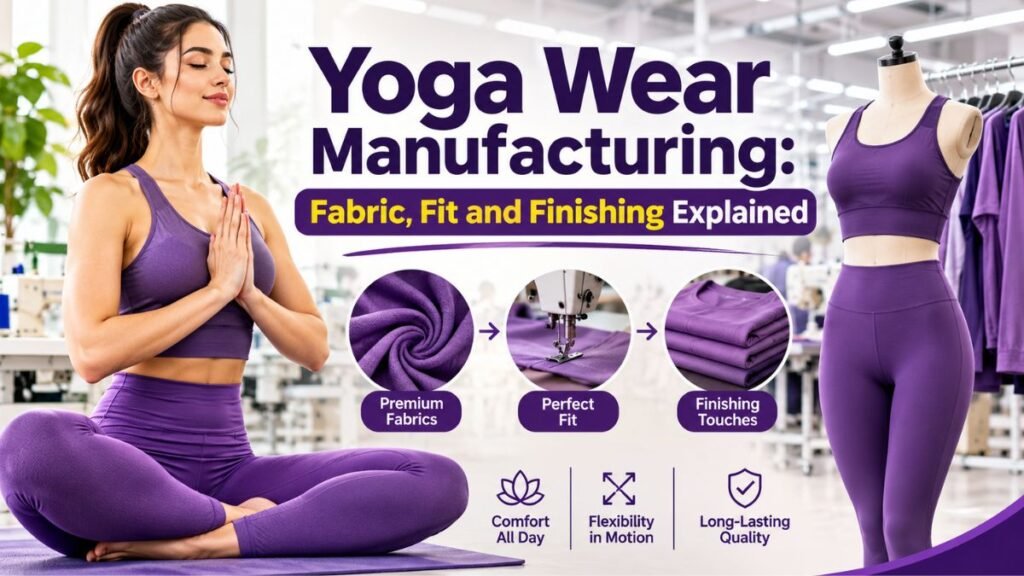
Yoga wear manufacturing is the process of designing and producing clothing made for yoga, stretching, fitness, and other physical activities.
The process includes selecting suitable fabrics, developing garment patterns, creating samples, cutting materials, sewing components, adding branding, and inspecting finished products.
Yoga clothing needs to support different movements. Garments should allow the wearer to bend, stretch, twist, and move comfortably.
Common yoga wear products include:
- Yoga leggings
- Yoga pants
- Sports bras
- Yoga shorts
- Tank tops
- Workout T-shirts
- Crop tops
- Yoga jackets
- Matching activewear sets
- Loose-fit yoga tops
Each product has different construction needs. For example, yoga leggings require suitable stretch and coverage. Sports bras need appropriate support and secure construction.
A professional manufacturing process considers these requirements before bulk production begins.
Why Is the Quality of Yoga Clothing Important?
Yoga involves a wide range of body movements. Clothing that restricts movement or feels uncomfortable can affect the user’s experience.
Quality matters because customers expect activewear to perform during regular use.
Comfort During Movement
Yoga clothing should allow the body to move naturally. Tight seams, rough fabric, or poorly designed waistbands may cause discomfort.
Soft fabrics and suitable garment construction can improve comfort during different poses.
Stretch and Flexibility
Yoga involves bending, stretching, and holding different positions. The fabric must provide enough flexibility for these movements.
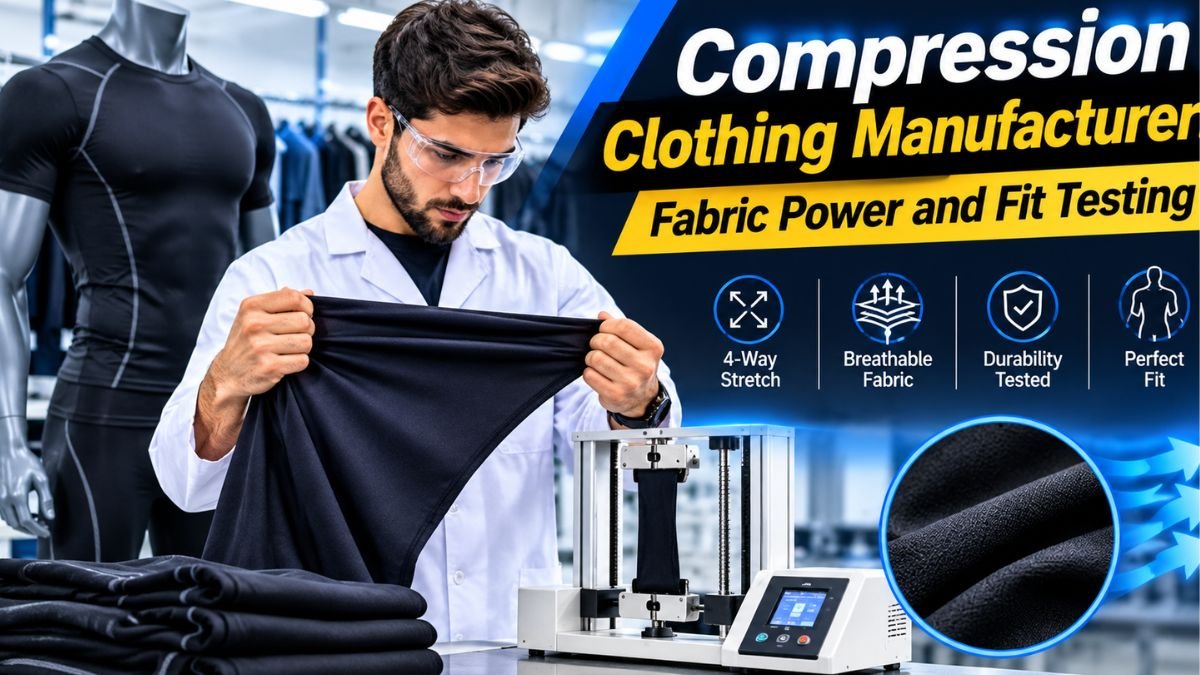
Four-way stretch materials are often used in activewear because they stretch in both horizontal and vertical directions.
The amount of stretch depends on the fabric composition and construction.
Coverage and Opacity
Yoga leggings and fitted bottoms should provide suitable coverage during movement.
Thin fabric may become more transparent when stretched. Manufacturers and brands should test the material under appropriate lighting and movement conditions.
Shape Retention
Customers expect activewear to maintain its shape after repeated use and washing.
Stretch recovery is therefore an important feature. The fabric should return toward its original shape after being stretched.
Durability
Seams, waistbands, and fabric surfaces should handle regular wear.
Poor stitching or weak construction can lead to loose seams and damaged garments. Proper quality checks help identify these issues before shipment.
Popular Types of Yoga Wear to Manufacture
Before starting production, decide which products will form your collection. A focused range can help your brand serve a clear customer group.
1. Yoga Leggings
Yoga leggings are one of the main products in many activewear collections. They provide close coverage and flexibility during movement.
Popular options include:
- High-waisted leggings
- Full-length leggings
- Cropped leggings
- Flared yoga leggings
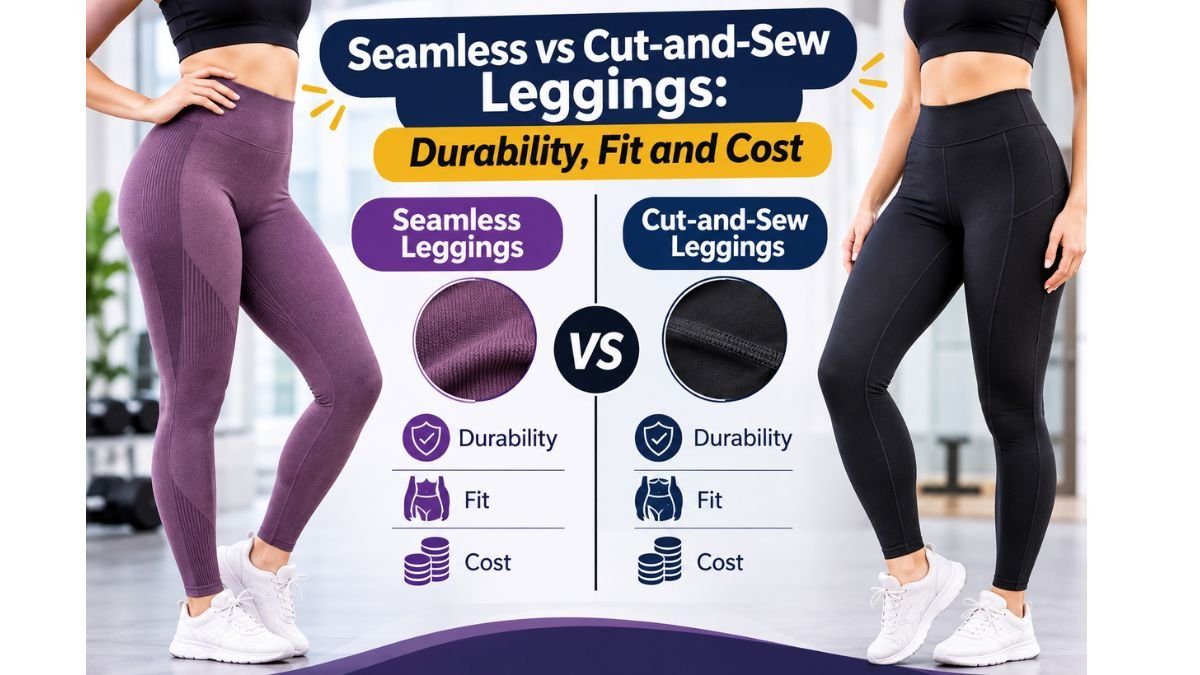
- Seamless leggings
- Printed leggings
- Pocket leggings
Important design details include waistband height, inseam length, fabric weight, stretch, and seam placement.
A high-waisted design may offer additional coverage around the waist. Side pockets can add storage, but their placement should not affect movement or fit.
2. Yoga Sports Bras
Sports bras provide support and coverage during physical activity.
Different customers need different levels of support. Some yoga styles may use light-support designs, while other activewear products may need stronger support.
Important features include:
- Band construction
- Strap width
- Neckline shape
- Cup design
- Elastic quality
- Back design
- Removable padding, if required
A sports bra should be tested for comfort and support before bulk production.
3. Yoga Tops and Tank Tops
Yoga tops are available in fitted, loose, cropped, and relaxed styles.
Some customers prefer lightweight tank tops, while others choose longer tops that provide additional coverage.
Fabric softness, armhole shape, neckline construction, and garment length affect the final fit.
4. Yoga Shorts
Yoga shorts provide an alternative to full-length leggings.
They may be designed for indoor workouts, warm weather, or customers who prefer shorter garments.
Important details include inseam length, waistband comfort, fabric opacity, and leg opening.
5. Yoga Jackets and Cover-Ups
Lightweight jackets and cover-ups can complete an activewear collection.
They are useful for warm-ups, travel, and everyday styling.
These garments may use different fabrics from leggings and sports bras. Design choices should consider breathability, weight, layering, and ease of movement.
6. Matching Yoga Sets
Matching sets usually combine two or more coordinated pieces, such as leggings and sports bras.
They allow brands to create a consistent collection with matching colors and design details.
When producing sets, confirm that the fabric, dye lot, and colors match across all pieces.
How to Choose Fabrics for Yoga Wear Manufacturing
Fabric selection is one of the most important decisions in activewear production. The material affects comfort, stretch, appearance, coverage, and durability.
The right fabric depends on the garment’s intended use and target customer.
Polyester and Spandex
Polyester and spandex blends are common in activewear.
Polyester can provide durability and moisture-management options. Spandex adds stretch and flexibility.
This combination may suit yoga leggings, fitted tops, and sports bras, depending on the fabric construction.
Nylon and Spandex
Nylon and spandex blends are used for many stretch garments.
They can provide a smooth feel and flexibility. The exact performance depends on fibre quality, knitting, weight, and finishing.
Brands should request swatches and test the material before choosing it for production.
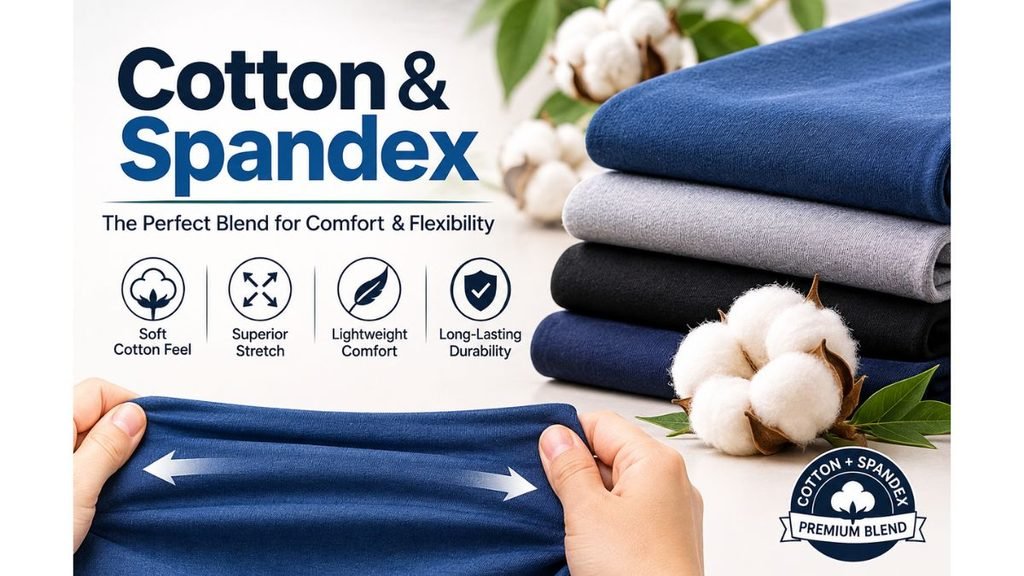
Cotton and Spandex
Cotton and spandex blends combine the familiar feel of cotton with added stretch.
These fabrics may suit casual yoga clothing and relaxed activewear.
However, the best material depends on the activity. Cotton blends may not provide the same performance features as some technical synthetic fabrics.
Four-Way Stretch Fabric
Four-way stretch fabric can stretch horizontally and vertically.
This feature is useful for garments that need flexibility in different directions.
It may be used for leggings, sports bras, fitted tops, and other activewear products.
Always check stretch recovery. A fabric that stretches easily but does not recover may become loose after repeated wear.
Moisture-Wicking Fabric
Moisture-wicking materials are designed to help move moisture away from the skin.
They may be suitable for activewear used during workouts and heated environments.
However, moisture-wicking performance depends on the actual material and finishing. Brands should request technical details or test results before making performance claims.
Understanding GSM in Yoga Clothing
GSM means grams per square metre. It describes the weight of a fabric.
Fabric weight can affect coverage, drape, thickness, and comfort. A lightweight fabric may suit some tops, while leggings may require a different weight.
Higher GSM does not automatically mean better quality. The correct fabric depends on the design, fibre composition, and intended use.
How the Yoga Wear Manufacturing Process Works
A structured production process helps turn a clothing idea into a finished product.
The exact steps depend on the design and manufacturing agreement, but most custom projects follow a similar workflow.
Step 1: Product Research and Design
The first step is deciding what products you want to manufacture.
Think about your target customers, product category, intended use, and brand identity.
Prepare design references, sketches, or a mood board. Include details such as:
- Garment style
- Target fit
- Preferred colors
- Fabric requirements
- Size range
- Waistband design
- Pocket placement
- Logo position
- Special construction details
Clear design information helps the manufacturer understand your expectations.
Step 2: Technical Pack Development
A technical pack, or tech pack, is a document containing the garment’s production specifications.
It helps the design and manufacturing teams follow the same instructions.
A yoga wear tech pack may include:
- Front and back technical drawings
- Measurement chart
- Fabric composition
- Fabric weight
- Stitching details
- Seam construction
- Color references
- Logo placement
- Label specifications
- Packaging requirements
A detailed tech pack can reduce confusion and support accurate sampling.
If you do not have a complete tech pack, ask whether the manufacturer offers product development assistance.
Step 3: Fabric and Trim Sourcing
After reviewing the design, the manufacturer identifies suitable materials.
This may include fabric, elastic, labels, drawcords, padding, and other accessories.
For yoga clothing, material selection should consider stretch, recovery, comfort, and intended use.
Request fabric swatches before approving the material. Compare the feel, weight, stretch, and appearance.
Step 4: Pattern Making and Size Grading
Pattern making creates the shapes used to cut fabric into garment components.
The pattern must match the intended design and measurements.
Size grading then adjusts the base pattern to create additional sizes.
For yoga clothing, grading is especially important because fit affects movement and comfort. The waistband, rise, bust area, and garment length should be checked across the size range.
Step 5: Sample Development
The manufacturer creates a physical sample based on the approved specifications.
The sample allows you to review the product before bulk production.
Check:
- Overall fit
- Fabric feel
- Stretch and recovery
- Waistband comfort
- Seam construction
- Coverage
- Garment length
- Logo placement
- Finishing quality
If the sample needs changes, provide clear instructions and request another sample where necessary.
Step 6: Cutting and Sewing
After sample approval, bulk production can begin.
The fabric is prepared and cut according to the approved patterns. The cut pieces are then assembled by sewing operators.
Stretch garments may require suitable stitching methods and machines.
Common construction details include:
- Overlock seams
- Flatlock seams
- Elastic waistbands
- Reinforced seams
- Hem stitching
- Gusset construction
The correct method depends on the garment design and fabric.
Step 7: Branding and Decoration
Branding helps make your collection recognizable.
Depending on the product and manufacturing capabilities, options may include:
- Heat-transfer logos
- Screen printing
- Embroidery
- Woven labels
- Printed care labels
- Custom hang tags
Some decoration methods may not suit every stretch fabric. The logo should remain comfortable and perform as expected during movement.
Confirm artwork, dimensions, colors, and placement before bulk production.
Step 8: Quality Control and Finishing
Quality inspections help identify issues during and after production.
For yoga wear, inspections may include:
- Fabric defects
- Stitch quality
- Seam strength
- Measurements
- Waistband construction
- Print alignment
- Logo placement
- Color consistency
- Stretch performance
- Finishing and loose threads
The finished garments should be checked against the approved sample and specifications.
Step 9: Packaging and Shipping
After inspection, the garments are prepared for shipment.
Packaging may include individual bags, size labels, hang tags, and custom packaging.
For international orders, confirm shipping terms, export documents, destination requirements, and delivery expectations.
What Does a Custom Yoga Wear Manufacturer Offer?
A custom yoga wear manufacturer helps brands develop garments according to their own designs and requirements.
The exact service package varies by company. Some suppliers focus on bulk production, while others provide support throughout product development.
Common services may include:
Custom Fabric Selection
You can select materials based on the product’s intended use, feel, stretch, and weight.
Some projects may use existing fabric options, while others require custom sourcing.
Custom Fit and Construction
A custom manufacturer may develop patterns based on your measurements and design.
You can discuss waistband styles, garment lengths, seams, pockets, and other details.
Private-Label Manufacturing
Private-label production allows you to sell yoga clothing under your own brand.
It may include custom labels, logos, hang tags, and packaging.
OEM Manufacturing
OEM production is generally based on the buyer’s original designs and specifications.
The manufacturer produces garments according to the approved technical requirements.
ODM Manufacturing
ODM services may include design and product development support.
This can help brands that have an idea but need assistance turning it into a production-ready garment.
Full-Package Production
Full-package production may cover sourcing, sampling, bulk manufacturing, quality control, branding, packaging, and shipping.
Confirm exactly which services are included before approving a quotation.
Why Work With a Professional Yoga Wear Manufacturer?
Choosing a suitable manufacturing partner can affect your product quality, production schedule, and customer experience.
Better Product Development Support
A manufacturer with relevant experience can help identify suitable fabrics and construction methods.
This can be useful when developing new leggings, sports bras, or coordinated sets.
More Control Over Customization
Custom manufacturing gives brands more control over garment details.
You can develop specific fits, colors, labels, and designs rather than relying only on ready-made products.
Consistent Production Specifications
Approved samples and technical documents provide a reference for bulk production.
They can also help when you reorder a style or expand your collection.
Coordinated Production Stages
A manufacturer offering multiple services may coordinate sourcing, sampling, sewing, inspection, and packaging.
This can reduce the number of separate supplier relationships you need to manage.
However, always confirm which stages are handled directly and which involve outside suppliers.
Support for Growing Brands
Startups and established brands have different production needs.
A suitable manufacturer should be able to explain its MOQ, customization options, sample process, and production requirements clearly.
How Much Does Yoga Wear Manufacturing Cost?
The cost of manufacturing yoga clothing depends on the product and order requirements. There is no single price for every design.
Important cost factors include:
| Cost factor | How it affects the price |
|---|---|
| Fabric | Composition, weight, quality, and availability |
| Design | Number of panels and construction details |
| Quantity | Order size and production setup |
| Sampling | Pattern development and sample revisions |
| Branding | Logos, labels, and decoration |
| Trims | Elastic, padding, drawcords, and accessories |
| Packaging | Individual bags, tags, and custom packaging |
| Shipping | Freight, destination, and delivery terms |
To compare quotations, make sure each supplier is pricing the same specifications.
A lower unit price may exclude sampling, labels, packaging, or shipping. Ask for a complete cost breakdown before making a decision.
What Is the MOQ for Yoga Wear Manufacturing?
MOQ means minimum order quantity. It is the smallest quantity a manufacturer accepts under specific production terms.
The MOQ may depend on the product, fabric, color, construction, and customization.
For example, custom fabric or special dyeing may require larger quantities than standard materials.
Fashion Soul International publishes a standard MOQ starting at 100 pieces. Actual project requirements should be confirmed during quotation.
Before placing an order, ask whether the MOQ applies per style, color, or size run. Also confirm whether you can include multiple sizes in one order.
Understanding the MOQ helps you plan inventory and budget more effectively.
How Long Does It Take to Manufacture Yoga Clothing?
Production time depends on the design, fabric availability, order quantity, sample revisions, and factory schedule.
The process generally includes:
- Initial inquiry and quotation
- Fabric and trim sourcing
- Pattern and sample development
- Sample review and approval
- Bulk production
- Quality inspection
- Packaging and export preparation
- Shipping
Fashion Soul International publishes a typical sample-development timeline of 7–14 business days. Its published bulk-production timeline is generally 20–35 business days after sample approval.
These are company-published estimates, not guaranteed delivery dates. Confirm your actual schedule with the manufacturer before placing an order.
How to Choose the Right Yoga Wear Manufacturer
Finding the right supplier requires more than comparing prices. You should evaluate its product knowledge, communication, manufacturing process, and ability to meet your requirements.
Review Activewear Experience
Ask whether the manufacturer has experience with stretch garments and activewear.
Yoga leggings and sports bras have different construction requirements from basic T-shirts or casual clothing.
Discuss your product designs and ask about relevant capabilities.
Check Fabric Options
Ask which materials are available and whether the manufacturer can source your preferred fabric.
Request swatches and confirm composition, weight, and stretch properties.
Review Samples
A sample gives you a chance to evaluate the actual product.
Check fit, measurements, comfort, stitching, and finishing before approving bulk production.
Understand Quality Control
Ask how inspections are carried out during production.
Confirm whether measurements, seam quality, fabric defects, and branding are checked against approved specifications.
Compare Complete Quotations
Compare material, sampling, production, branding, packaging, and shipping costs.
Do not select a supplier based only on the lowest quoted price.
Confirm Communication
Clear communication helps avoid production misunderstandings.
Your manufacturing partner should explain requirements, costs, revisions, and timelines in understandable language.
Common Mistakes to Avoid in Yoga Wear Manufacturing
Some problems can be reduced by planning carefully before production begins.
Choosing fabric without testing it: Always check the fabric’s stretch, recovery, feel, and coverage.
Ignoring size grading: A garment should fit properly across the intended size range.
Skipping sample approval: Review a physical sample before confirming bulk production.
Using unsuitable stitching: Stretch fabrics need construction methods suited to their properties.
Ignoring product testing: Check garments through movement and washing tests where appropriate.
Providing incomplete specifications: Document measurements, colors, fabrics, logos, and construction details.
Underestimating delivery time: Allow time for sampling, revisions, production, inspection, and shipping.
Assuming all services are included: Confirm whether fabric sourcing, labels, packaging, and freight are part of the quotation.
Is Fashion Soul International a Suitable Partner for Yoga Wear Production?
Fashion Soul International is a factory-owned custom clothing manufacturer based in Sialkot, Punjab, Pakistan. The company provides private-label, OEM, ODM, white-label, cut-and-sew, and full-package apparel manufacturing.
Its stated product categories include activewear and sportswear. The company’s listed fabric options include polyester and four-way stretch spandex, which are relevant to certain activewear products.
Its manufacturing services cover product development, fabric and trim sourcing, sampling, bulk production, quality control, custom branding, packaging, export documentation, and international shipping.
For a yoga clothing project, buyers should confirm the current availability of the specific products, fabrics, patterns, and construction methods they require. This is especially important for leggings, sports bras, and other fitted stretch garments.
Fashion Soul International publishes a standard MOQ starting at 100 pieces. The actual requirement depends on the product and project specifications.
The company also states that bulk production begins after physical pre-production sample approval. This allows buyers to review the garment before confirming the main production run.
If you are planning a yoga or activewear collection, prepare your design references, fabric preferences, size chart, branding details, and estimated quantity before requesting a quotation.
Visit the official website at https://fashionsoulintl.com/ to learn more about its manufacturing services.
Frequently Asked Questions About Yoga Wear Manufacturing
What is yoga wear manufacturing?
Yoga wear manufacturing is the process of designing and producing clothing for yoga, stretching, and related activities. It includes fabric selection, pattern making, sampling, cutting, sewing, branding, and quality inspection.
How do I find a reliable yoga wear manufacturer?
Review the manufacturer’s activewear experience, fabric options, samples, MOQ, quality-control process, communication, and shipping arrangements. Request a detailed quotation before placing an order.
What fabrics are best for yoga clothing?
Polyester and spandex, nylon and spandex, and cotton and spandex blends are common options. The right fabric depends on comfort, stretch, recovery, coverage, and intended use.
Can I create my own yoga clothing brand?
Yes. You can work with a private-label or custom manufacturer to develop garments under your own brand. You will need to define the designs, materials, measurements, branding, and order requirements.
What is the difference between a custom yoga wear manufacturer and a wholesale supplier?
A custom manufacturer produces garments according to specific design and branding requirements. A wholesale supplier may sell ready-made products in bulk, often with fewer customization options.
What products can be included in a yoga wear collection?
A collection may include leggings, yoga pants, sports bras, shorts, tank tops, crop tops, jackets, and matching sets. Product choices should match your target customers and brand positioning.
How can I check the quality of yoga leggings?
Check the fabric, stretch recovery, opacity, waistband, seams, measurements, and finishing. Test the garment during suitable movements and compare it with the approved specifications.
What information should I provide when requesting a manufacturing quotation?
Provide product designs, estimated quantities, size range, fabric preferences, colors, branding requirements, and delivery destination. A tech pack or reference sample can make the quotation more accurate.
Final Thoughts
Successful yoga wear manufacturing depends on thoughtful product development, suitable materials, accurate sizing, and reliable quality control.
From leggings and sports bras to tops and matching sets, every garment needs to support its intended use. The fabric, construction, and fit should work together to create comfortable activewear.
Working with the right yoga wear manufacturer can help your business manage product development and bulk production. A custom yoga wear manufacturer may also offer greater control over fabric, fit, colors, and branding.
Before choosing a partner, compare samples, confirm the MOQ, review quality procedures, and understand the full production cost. Clear specifications and physical sample approval can help your brand move toward a more consistent activewear collection.