The activewear industry has become an important part of modern fashion as consumers increasingly look for clothing that combines comfort, performance, and style. For entrepreneurs who want to enter this market, creating a complete activewear collection from scratch can require significant time, money, and production knowledge. White label activewear provides an alternative that allows businesses to launch branded fitness clothing without developing every garment from the beginning.
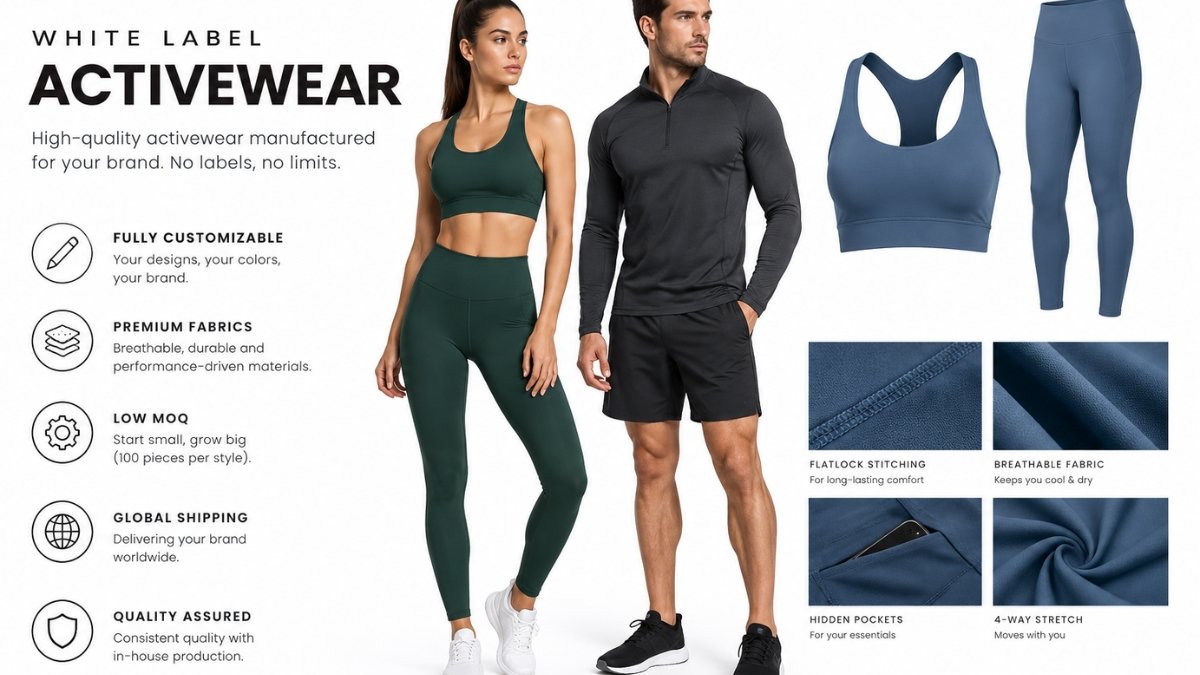
White-label manufacturing allows a supplier or manufacturer to produce ready-made activewear that businesses can sell under their own brand name. Depending on the supplier, brands may be able to customize labels, packaging, colors, logos, and selected product details.
This model can be useful for startups, gyms, fitness influencers, online stores, boutiques, and established fashion companies that want to expand into sportswear. However, choosing the right supplier and understanding the production process are essential for building a successful activewear brand.
What Is White Label Activewear?
White label activewear refers to fitness and sports clothing manufactured by one company and then branded and sold by another business.
Instead of designing and manufacturing every garment from the ground up, a brand can select existing activewear products from a manufacturer’s collection. The products are then customized with the brand’s identity, such as logos, labels, hangtags, or packaging.
Common white-label activewear products include:
- Leggings
- Sports bras
- Tank tops
- Workout T-shirts
- Shorts
- Joggers
- Hoodies
- Sweatshirts
- Cycling shorts
- Fitness sets
- Running apparel
- Gym tops
The exact customization options depend on the manufacturer.
Why Choose White Label Activewear?
There are several reasons entrepreneurs choose white-label production.
Faster Product Development
Developing an activewear product from scratch can involve design, pattern making, fabric selection, sampling, testing, revisions, and production.
White-label products have already been developed by the manufacturer, which can reduce the amount of development work required.
This can help businesses launch a collection more quickly.
Lower Development Costs
Creating completely custom activewear can require significant investment in product development.
White-label products may reduce development costs because the basic garment design and production process already exist.
Businesses can use their budget for branding, marketing, packaging, photography, and customer acquisition.
Easier for New Brands
Entrepreneurs without extensive apparel manufacturing experience may find white-label sourcing easier to manage.
Instead of learning every technical aspect of activewear production, they can work with an established manufacturer and focus on building their brand.
Branding Opportunities
Although the base products are pre-developed, businesses can often add their own branding.
Depending on the supplier, this may include:
- Logo printing
- Embroidery
- Custom labels
- Hangtags
- Branded packaging
- Custom polybags
- Shipping materials
These details can make a product feel more connected to the brand.
The terms white label and private label are sometimes used interchangeably, but there can be differences.
White-label products are generally pre-existing products that multiple businesses can brand and sell.
Private-label products may involve more customization and may be developed specifically for one brand.
For example, a white-label supplier might offer the same pair of leggings to several brands, with each company adding its own logo.
A private-label manufacturer may allow a brand to modify the garment’s fabric, fit, colors, construction, or design.
The exact distinction varies between suppliers, so businesses should ask manufacturers what customization they actually provide rather than relying only on terminology.
White Label vs. Private Label Activewear
- What activewear products do you offer?
- What fabrics are available?
- What is the MOQ?
- Can I order samples?
- What branding options do you provide?
- Can you add custom labels?
- Do you offer custom packaging?
- Can I select different colors?
- What sizes are available?
- What is the production timeline?
- What is the shipping timeline?
- How do you handle quality control?
- What happens if products have defects?
- Can I reorder the same products?
- Do you offer low-MOQ options?
The answers can help you determine whether a supplier is appropriate for your business.
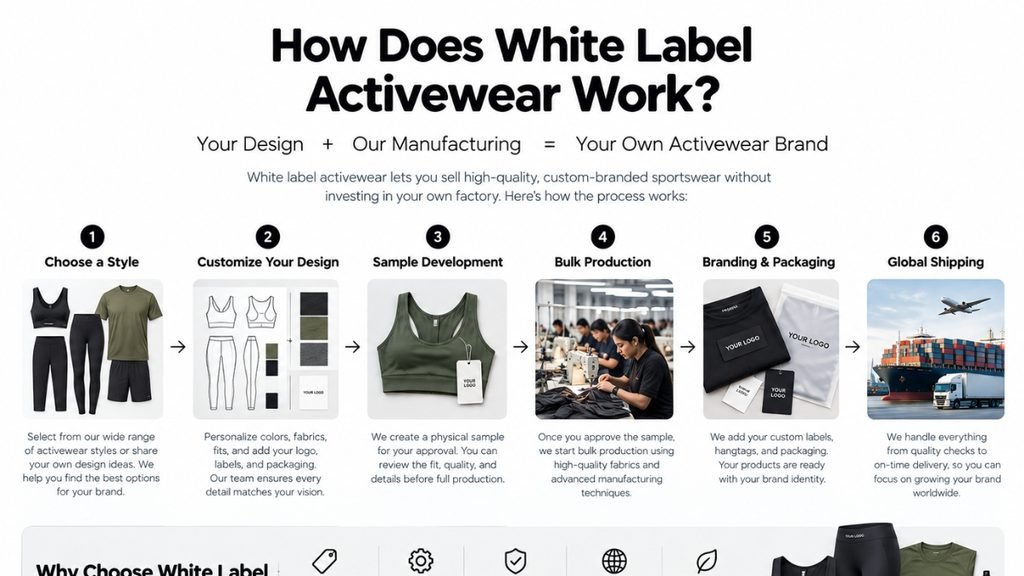
How Does White Label Activewear Work?
The white-label process is generally simpler than completely custom apparel manufacturing.
A typical process may look like this:
- Choose an activewear supplier.
- Review available products.
- Select garments for your collection.
- Choose available colors and sizes.
- Provide your logo and branding requirements.
- Select labels and packaging.
- Order samples.
- Review product quality.
- Approve the final products.
- Place a bulk order.
- Receive and sell the finished activewear.
This approach allows businesses to focus more on branding, marketing, customer relationships, and sales rather than managing every stage of garment development. Learn more about “interchangeably”
Types of White Label Activewear
The activewear market includes many different product categories.
White Label Leggings
Leggings are one of the most popular activewear products. Brands can offer leggings for gym workouts, yoga, running, lifestyle wear, and everyday use.
Important features may include:
- Stretch fabric
- High waist
- Comfortable waistband
- Squat resistance
- Moisture management
- Breathability
- Flat seams
- Compression
White Label Sports Bras
Sports bras can be designed for different levels of activity.
Some are suitable for low-impact activities such as yoga, while others provide stronger support for running and high-intensity workouts.
Brands should pay attention to fit, support, fabric stretch, straps, and construction.
White Label Workout Tops
Workout tops can include T-shirts, tank tops, crop tops, and long-sleeve shirts.
Important factors may include breathability, lightweight fabric, moisture management, stretch, and comfort.
White Label Shorts
Fitness shorts are useful for gym training, running, cycling, and casual activewear collections.
Different styles can include compression shorts, loose training shorts, biker shorts, and high-waisted shorts.
White Label Hoodies and Joggers
Hoodies and joggers can expand an activewear collection beyond workout-specific garments.
They are especially useful for warm-ups, travel, casual wear, and athleisure collections.
Choosing the Right Activewear Fabric
Fabric is one of the most important factors when selecting activewear.
Common materials include:
- Polyester
- Nylon
- Spandex
- Elastane
- Polyamide
- Cotton blends
- Recycled polyester
Activewear often requires stretch and durability because garments need to move with the body.
Polyester
Polyester is widely used in sportswear because it is lightweight, durable, and commonly used in moisture-management fabrics.
Nylon
Nylon can provide a soft feel and good durability. It is frequently used in leggings and performance garments.
Spandex and Elastane
Spandex, also known as elastane, provides stretch and recovery. It is often blended with other fibers to help activewear maintain its shape.
Recycled Fabrics
Brands interested in sustainability may consider recycled fibers. However, businesses should verify supplier claims and relevant certifications rather than relying solely on marketing language.
Important Activewear Features
When evaluating white-label products, look beyond appearance.
Stretch and Recovery
Activewear should move comfortably during exercise and return to its original shape after stretching.
Moisture Management
Workout clothing should help manage sweat and moisture, particularly for high-intensity exercise.
Breathability
Breathable materials can improve comfort during physical activity.
Durability
Activewear needs to withstand repeated movement and washing.
Comfortable Seams
Poorly constructed seams can cause discomfort during exercise. Flat or carefully finished seams may be preferable for certain products.
Waistband Construction
For leggings and shorts, the waistband should provide a secure but comfortable fit without excessive pressure.
How to Choose a White Label Activewear Supplier
Choosing the right supplier is one of the most important decisions for your brand.
Review Product Quality
Request samples before placing a large order.
Examine:
- Fabric feel
- Stretch
- Stitching
- Seams
- Waistbands
- Logos
- Color
- Fit
- Finishing
Wear-test the garments when possible. Exercise clothing should be evaluated under actual movement conditions.
Check MOQ
MOQ means minimum order quantity.
Some suppliers may require large quantities, while others provide low-MOQ options for startups.
Ask whether the MOQ applies per style, color, or size.
A supplier with flexible ordering requirements may be more suitable for a new brand.
Ask About Customization
Different suppliers offer different branding options.
Ask whether they provide:
- Custom logos
- Woven labels
- Printed labels
- Hangtags
- Packaging
- Custom colors
- Embroidery
- Printing
Make sure the available options match your brand’s requirements.
Request Samples
Never assume that product photographs tell you everything about an activewear garment.
A sample allows you to evaluate the real product.
Check the garment in natural lighting and examine the fabric, stitching, fit, and finishing.
For leggings, test the fabric during movement. For sports bras, evaluate support and comfort. For tops, check breathability and sizing.
If the supplier offers multiple fabric options, request samples of the fabrics you are considering.
Consider Your Target Customer
Before choosing products, identify your target audience.
A brand aimed at serious athletes may need different products from a brand focused on yoga, casual fitness, or athleisure.
Consider:
- Age group
- Activity level
- Gender
- Price range
- Preferred styles
- Size range
- Fitness activities
- Climate
- Customer expectations
Understanding your target customer helps you build a more relevant product collection.
Build a Strong Activewear Brand
White-label products provide the foundation, but your brand identity differentiates your business.
Consider developing consistent:
- Logo
- Color palette
- Typography
- Packaging
- Photography
- Product descriptions
- Social media style
- Brand messaging
A consistent identity can make products feel more professional and recognizable.
Custom Branding for Activewear
Branding can be added to activewear in several ways.
Logo Printing
Logos can be applied using different printing methods depending on the fabric and design.
Embroidery
Embroidery can create a premium appearance but may not be suitable for every type of lightweight performance garment.
Woven Labels
Woven labels can be placed inside garments and provide a professional brand presentation.
Hangtags
Hangtags can include brand information, product details, sizing, and care instructions.
Custom Packaging
Packaging can create a stronger customer experience when the product arrives.
White Label Activewear for Startups
Starting an activewear brand does not necessarily require a huge product range.
A startup can begin with a focused collection such as:
- One pair of leggings
- One sports bra
- One workout top
- One pair of shorts
- One hoodie
Starting with fewer products can make inventory management easier.
Once the business understands which products customers prefer, it can expand the collection.
Pricing and Profit Margins
The cost of white-label activewear varies depending on the product, material, order quantity, branding, packaging, and supplier.
When calculating your selling price, consider the complete cost rather than only the supplier’s unit price.
Your total product cost may include:
- Garment price
- Branding
- Labels
- Packaging
- Sampling
- Shipping
- Storage
- Marketing
- Payment processing
- Returns
After calculating the complete cost, determine a retail price that provides a sustainable margin while remaining competitive in your target market.
Shipping and Lead Times
Ask your supplier how long it takes to prepare an order.
Ready-made white-label products may have shorter lead times than highly customized products.
Branding, labeling, packaging, and large quantities can add time to the order.
Before launching a collection, confirm:
- Sample timeline
- Branding timeline
- Production timeline
- Packaging timeline
- Shipping time
Avoid announcing a launch date before confirming the supplier’s realistic timeline.
Quality Control for Activewear
Quality control is especially important for fitness clothing because garments are exposed to repeated movement, stretching, washing, and sweat.
Inspect products for:
- Loose threads
- Uneven stitching
- Fabric defects
- Color differences
- Incorrect sizing
- Print problems
- Logo placement
- Seam issues
- Damaged labels
- Packaging problems
For larger orders, brands may consider using professional inspection services.
Sustainability Considerations
Many activewear brands are exploring more sustainable materials and production methods.
Possible options include recycled polyester, recycled nylon, organic fibers, durable construction, and reduced packaging.
However, sustainability should be evaluated carefully.
Ask suppliers about:
- Material composition
- Certifications
- Manufacturing practices
- Packaging materials
- Waste reduction
- Recycling claims
Clear documentation is more valuable than vague sustainability statements.
Common Mistakes to Avoid
Ordering Too Much Inventory
A new brand should avoid purchasing excessive quantities before understanding customer demand.
Choosing a Supplier Only Because of Price
Cheap products may not deliver the quality your customers expect.
Skipping Samples
Always evaluate samples before committing to significant inventory.
Ignoring Fit
Activewear needs to fit correctly during movement. A product that looks good in photographs may not perform well during exercise.
Using Too Many Products
Launching with a huge collection can make inventory management and marketing more difficult.
Failing to Check Branding Quality
A poorly printed logo or low-quality label can make an otherwise good product look unprofessional.
Questions to Ask a White Label Activewear Supplier
Before placing an order, ask the supplier:
White Label Activewear vs. Custom Activewear
The main difference between white-label and fully custom activewear is the level of product development.
White-label activewear typically starts with an existing garment. The brand adds its identity and may select from available options.
Fully custom activewear is developed according to the brand’s specifications. This can provide more control over fit, fabric, construction, colors, and design.
White labeling can be faster and simpler, while fully custom manufacturing can provide greater product differentiation.
The best option depends on your budget, timeline, target market, and brand strategy.
How to Successfully Launch a White Label Activewear Brand
A successful launch requires more than finding products.
Start by researching your target market and competitors. Identify a clear customer need and develop a brand identity around it.
Next, select a small collection of high-quality products. Order samples and test them carefully.
Create professional product photography and descriptions. Build an online store that clearly communicates product benefits, sizing, materials, and care instructions.
Use social media, content marketing, influencer partnerships, email marketing, and other appropriate channels to reach your audience.
After launch, monitor which products perform best. Customer feedback can help you improve future collections.
Building a Long-Term Supplier Relationship
Once you find a reliable white label activewear supplier, maintaining a professional relationship can make future orders easier.
Keep product specifications organized and communicate changes clearly.
Track which styles, colors, and sizes sell best. Share relevant feedback with the supplier when appropriate.
A reliable supplier can become an important part of your brand’s long-term supply chain.
As your business grows, you may also negotiate better pricing, expand your product range, or move selected products toward more customized manufacturing.
Final Checklist
Before choosing a white-label activewear supplier, review these factors:
- Product quality
- Fabric performance
- Fit and sizing
- Product variety
- MOQ
- Pricing
- Branding options
- Custom labels
- Packaging
- Sample availability
- Lead times
- Shipping
- Quality control
- Supplier communication
- Reordering capabilities
A supplier should meet your overall business needs rather than simply offering the lowest price.
Conclusion
White label activewear offers an accessible way for entrepreneurs and established businesses to enter the growing fitness and athleisure market. Instead of developing every garment from scratch, brands can select existing activewear products and customize them with their own branding.
The model can reduce product development complexity, shorten launch timelines, and allow businesses to focus on marketing and customer growth. However, supplier selection remains critical.
Always evaluate fabric quality, fit, durability, MOQ, branding options, pricing, samples, production timelines, and quality-control procedures before placing a significant order.
For startups, beginning with a small collection and manageable inventory can reduce financial risk. As the brand grows, successful products can be expanded and more customized designs can be introduced.
With the right supplier, strong branding, quality products, and a clear understanding of your target customers, a white-label activewear business can create a professional product line while maintaining flexibility as the brand develops.