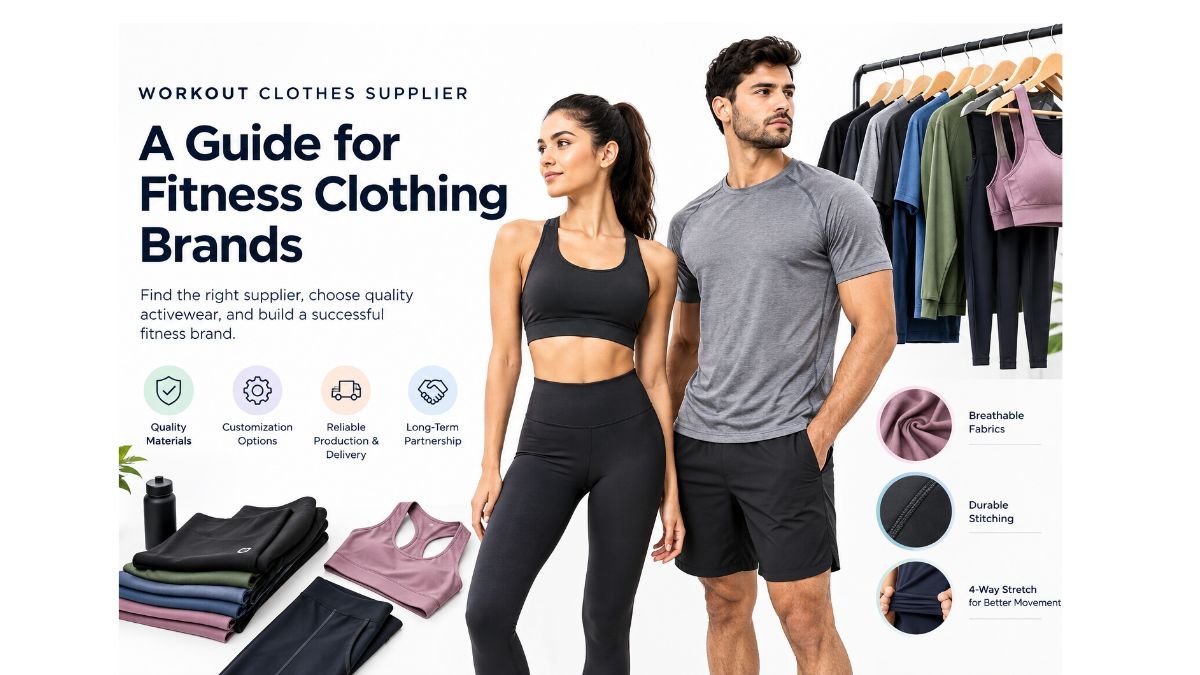
Workout Clothes Supplier: How to Choose the Right Activewear Manufacturer
Finding the right workout clothes supplier is an important step for anyone building a fitness clothing brand, launching an online store, or expanding an existing apparel business. The right supplier helps you develop comfortable, functional, and well-made garments that meet your customers’ expectations. The wrong choice can lead to inconsistent sizing, poor fabric performance, delayed orders, and unnecessary costs.
Workout clothing has specific requirements. Leggings must offer suitable stretch and coverage, sports bras need appropriate support, and training shirts should feel comfortable during exercise. These details make supplier selection especially important.
Whether you need wholesale fitness apparel, custom gym clothing, or private-label activewear, you should compare suppliers based on product quality, manufacturing capabilities, minimum order quantities, pricing, and communication.
This guide explains how to find fitness clothing suppliers, evaluate an activewear manufacturer, compare wholesale options, and prepare your first order.
What Is a Workout Clothes Supplier?
A workout clothes supplier is a business that provides apparel designed for exercise, training, sports, and other physical activities. Depending on the company, it may sell ready-made clothing, manufacture custom garments, or provide products for resale under another brand’s name.
Common products include:
- Leggings and yoga pants
- Sports bras and crop tops
- Gym shorts and training pants
- Moisture-wicking T-shirts
- Compression tops and bottoms
- Tracksuits and warm-up jackets
- Fitness hoodies and sweatshirts
- Running shirts and athletic shorts
- Custom team uniforms
- Branded gym clothing
Not every supplier manufactures all these products. Some specialize in basic gym wear, while others focus on technical sportswear or custom apparel.
Before contacting suppliers, decide whether you need existing products for resale or garments developed specifically for your brand. This decision affects your costs, product options, and production process.
1. Decide What Type of Fitness Clothing You Want to Sell
The first step is to define your product range. A clear plan helps you find suppliers with the right experience and prevents you from spending time contacting unsuitable companies.
Identify Your Target Customers
Think about who will wear your products. Your target market may include gym members, runners, yoga enthusiasts, athletes, fitness instructors, or people who prefer activewear for everyday use.
Different customers have different expectations.
For example, customers buying yoga leggings may prioritize stretch, softness, opacity, and comfort. Runners may prefer lightweight fabrics that manage moisture. Strength-training customers may look for durable seams and flexible construction.
Your target customer influences fabric selection, design, sizing, and pricing.
Select Your Product Categories
Start with a manageable range rather than developing too many products at once. You might begin with gym T-shirts and shorts, then introduce leggings, sports bras, or tracksuits after testing demand.
A focused collection makes it easier to compare supplier quotations and manage inventory.
Set Your Quality and Price Expectations
Decide whether your brand will focus on budget fitness clothing, everyday activewear, premium gym wear, or specialized performance garments.
Your price positioning should match your product requirements. Technical fabrics, complex construction, custom trims, and specialized testing can increase production costs.
Prepare a brief describing your target customer, preferred products, expected retail prices, and estimated order quantity before contacting a supplier.
2. Understand the Different Types of Fitness Clothing Suppliers
The best supplier depends on your business model. Understanding the main options helps you avoid paying for services you do not need.
Wholesale Fitness Clothing Suppliers
Wholesale suppliers sell finished garments in bulk. They may offer gym shirts, leggings, shorts, tracksuits, and other ready-made products.
Wholesale purchasing can be useful when you want to start selling quickly without developing your own designs. However, product selection and branding options may be limited.
Best for: Retailers, boutiques, resellers, and online stores selling existing products.
Custom Activewear Manufacturers
An activewear manufacturer produces garments according to your specifications. Depending on its capabilities, it may help with fabric sourcing, patterns, samples, garment construction, and finishing.
Custom manufacturing offers greater control over fit, colors, materials, and design details.
Best for: Businesses building a distinct fitness clothing brand.
Private-Label Fitness Clothing Suppliers
Private-label suppliers allow you to sell products under your own brand. Customization may include labels, hang tags, logos, packaging, colors, and selected garment details.
The level of customization depends on the supplier and the product.
Best for: Entrepreneurs who want to establish their own activewear brand without operating a factory.
White-Label Activewear Suppliers
White-label suppliers generally provide existing products that can be sold under your business name. This approach may require less product development than creating a completely custom garment.
Best for: Brands that want to launch a simpler product range.
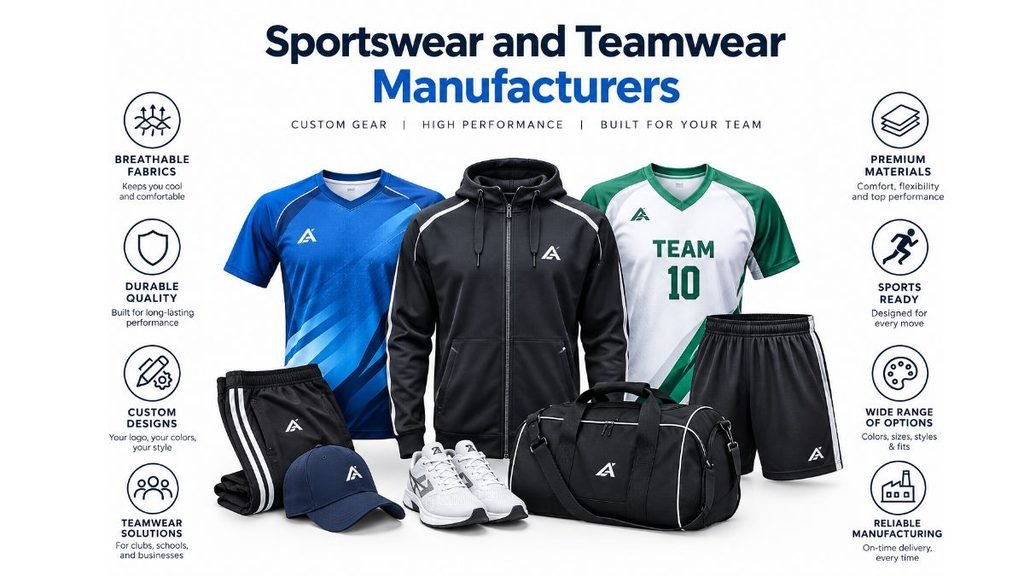
Sportswear and Teamwear Manufacturers
Some athletic clothing manufacturers specialize in team uniforms, training kits, competition apparel, or coordinated sportswear collections.
They may offer custom colors, logos, player names, and team-specific designs.
Best for: Sports clubs, schools, gyms, fitness organizations, and teams.
Compare these supplier types based on the customization you need, your available budget, and your expected sales volume.
3. How to Find a Workout Clothes Supplier Online
Online research is a practical starting point for finding potential manufacturing partners and wholesale vendors. The key is to search with enough detail to identify suppliers that match your requirements.
Use targeted phrases such as:
- Workout clothes supplier for clothing brands
- Activewear manufacturer for startups
- Wholesale fitness apparel supplier
- Wholesale gym apparel manufacturer
- Fitness clothing manufacturer with private labels
- Custom leggings manufacturer
- Sports bra manufacturer
- Athletic clothing manufacturers for small brands
- Wholesale fitness wear supplier
- Exercise wear wholesale
- Low MOQ activewear manufacturer
- Custom sportswear manufacturer
Add a country or product category when relevant. For example, searching for a custom activewear manufacturer in Pakistan may produce a different shortlist from searching for wholesale gym clothing in the USA.
Review supplier websites carefully. Look for information about their products, manufacturing services, customization options, sample policies, minimum quantities, and contact details.
Product photos can help you understand a supplier’s range, but they do not prove that the company manufactures those products itself. Ask about production capabilities and whether any processes are outsourced.
Build a shortlist of several relevant suppliers and compare them using the same requirements. This makes it easier to identify differences in service, price, and product quality.
4. Use B2B Marketplaces and Supplier Directories
B2B marketplaces and business directories can help you discover fitness clothing suppliers in different regions. They may provide product listings, company profiles, communication tools, and opportunities to request quotations.
However, a marketplace listing should be treated as the beginning of your research, not proof of reliability.
Before moving forward, check:
- Business identity and contact information
- Product categories and relevant experience
- Manufacturing or wholesale capabilities
- MOQ and customization options
- Sample availability
- Payment terms and order procedures
- Reviews or references that can be independently assessed
- Clear explanations of production and shipping costs
Ask direct questions if the listing does not distinguish between a factory, trading company, wholesaler, or sourcing agent. Each may serve a useful role, but you should know which type of business you are dealing with.
For your first order, consider payment methods that offer appropriate protections. Keep written records of specifications, quotations, approvals, and agreed delivery terms.
5. Choose the Right Manufacturing Country
Fitness clothing can be sourced from several countries. Your decision should depend on product expertise, quality, cost, order quantity, logistics, and communication.
China
China has a broad apparel supply chain and many suppliers serving different clothing categories. Buyers may find options for gym wear, technical fabrics, custom trims, and large or small production projects.
Supplier capabilities vary, so confirm the actual product requirements, MOQ, and production terms.
Pakistan
Pakistan has an established textile and apparel sector. Brands can explore manufacturers for activewear, sportswear, tracksuits, T-shirts, hoodies, and other custom garments.
When evaluating a Pakistani manufacturer, ask about fabric sourcing, sampling, construction, branding, quality inspection, and international shipping.
Bangladesh
Bangladesh is an established apparel manufacturing location. It may be worth exploring for certain garment categories and production requirements. Confirm whether a particular supplier has experience with your specific activewear products.
Vietnam
Vietnam is another option for apparel sourcing. Compare suppliers based on product specialization, technical capabilities, minimum quantities, and export arrangements.
United States and European Suppliers
Domestic or regional suppliers may suit businesses that prioritize local communication, proximity, or specific market requirements. Costs, capacity, and customization options differ between companies.
Do not choose a supplier based only on the country where it operates. Evaluate the actual business, product samples, production capabilities, and complete landed cost.
6. Evaluate Fabric Quality and Performance
Fabric is one of the most important factors in fitness clothing. The material affects comfort, stretch, durability, moisture management, appearance, and fit.
Ask suppliers which fabrics are available and whether they can provide composition details and fabric specifications.
Common Activewear Fabrics
Polyester: Frequently used in training shirts and sportswear. Its performance depends on the fabric construction, finish, and garment design.
Nylon: Common in leggings and other stretch garments. It can provide a smooth feel and good abrasion resistance, depending on the fabric.
Elastane or spandex: Added to many stretch fabrics to provide elasticity and recovery.
Cotton: Often used for gym T-shirts, sweatshirts, and casual fitness wear. It may suit relaxed training styles, although it generally manages sweat differently from many synthetic performance fabrics.
Polyester-spandex blends: Common in stretch activewear. The blend ratio and fabric construction influence fit, support, and recovery.
Do not assume that a particular fiber automatically guarantees high performance. The complete fabric construction and finishing matter.
Ask About GSM
GSM means grams per square meter. It describes fabric weight and helps you compare materials.
A higher GSM generally means a heavier fabric, but it does not automatically mean better quality. The right weight depends on the garment, climate, fit, and intended use.
Test Stretch and Opacity
For leggings and compression garments, check stretch, recovery, coverage, and how the fabric behaves when worn. For tops, consider breathability, comfort, and whether the material becomes uncomfortable when damp.
Ask for samples and test them under realistic conditions. Evaluate the garment after movement and appropriate washing, following its care instructions.
7. Check the Manufacturer’s Customization Capabilities
If you are building your own brand, you may need more than ready-made gym clothing. You may want unique fits, colors, prints, logos, labels, or packaging.
Ask the supplier which customization services it provides.
Product Design and Development
Some manufacturers can work from a technical pack, sketch, reference image, or design brief. Others require finalized specifications before they can provide a reliable quotation.
A tech pack normally includes important details such as measurements, fabric requirements, construction, colors, trims, and artwork placement.
Printing and Embroidery
Your branding may require screen printing, heat transfer, embroidery, or another suitable decoration method.
The right method depends on the design, fabric, placement, durability requirements, and intended appearance. Ask whether the decoration can be tested before bulk production.
Labels and Packaging
Custom labels and hang tags help create a consistent brand identity. Packaging may include individual bags, size stickers, barcodes, or other details required for retail and online orders.
Confirm any additional charges and minimum quantities for custom components.
Color and Size Options
Ask whether the supplier can manufacture your chosen colors and size range. Confirm whether MOQ applies separately to each style or color.
Customization can make your products more distinctive, but every additional variation may affect cost, complexity, and inventory planning.
8. Understand Minimum Order Quantity
Minimum order quantity, or MOQ, is the smallest order a supplier accepts under its stated terms.
The MOQ for wholesale fitness clothing may differ from the MOQ for custom-manufactured activewear. Existing products may be available in smaller quantities, while custom fabrics, colors, and construction can require additional commitments.
Ask whether the minimum applies per style, color, or size run. Also confirm whether the supplier can use available fabrics instead of arranging a custom material order.
If you are launching a new brand, consider these strategies:
- Start with a small number of product styles.
- Limit color variations for the first order.
- Use available fabrics where they meet your requirements.
- Ask about low-MOQ production options.
- Compare sample costs with bulk-order costs.
- Estimate demand before committing to large quantities.
A low MOQ is useful only if the resulting product quality and price suit your business. Compare the full offer instead of choosing solely by order size.
9. Request Samples Before Bulk Production
Samples help you judge whether a supplier can meet your expectations. They are particularly important for activewear because fit, stretch, coverage, and seam construction affect how garments perform during exercise.
When a sample arrives, review:
- Fabric composition and feel
- Stretch and recovery
- Fit and measurements
- Seam construction and stitching
- Waistbands, cuffs, and other elastic components
- Print or embroidery placement
- Color consistency
- Labels and finishing
- Comfort during movement
- Performance after suitable washing
For leggings, check coverage during bending and stretching. For sports bras, evaluate fit and support against the intended design. For gym shirts, consider breathability, movement, and seam comfort.
Write down any changes required. Share clear measurements, marked photographs, or revised specifications with the supplier.
Ask whether sample fees are refundable or credited toward bulk production. Confirm how many revisions are included and whether each revision affects the timeline.
Once the sample meets your requirements, approve it in writing and document the final specifications. This gives both sides a clear reference for production.
10. Compare Wholesale Fitness Apparel Prices
Price matters, but the lowest unit cost does not always produce the best business outcome.
Request written quotations from several suitable suppliers. Give each supplier the same specifications so the quotes are easier to compare.
A quotation should explain:
| Item | What to confirm |
|---|---|
| Unit price | Price per garment and currency |
| MOQ | Minimum quantity and how it applies |
| Fabric | Composition, weight, and material options |
| Customization | Printing, embroidery, labels, and trims |
| Sampling | Sample fees and revision costs |
| Packaging | Individual packaging and carton details |
| Lead time | Sampling and bulk production estimates |
| Shipping | Freight method, destination, and charges |
| Duties and taxes | Included and excluded costs |
| Payment | Deposit, balance, and payment milestones |
Also confirm whether the quotation covers product development, pattern making, grading, testing, or other services you require.
Calculate your estimated landed cost per garment. Include production, sampling, freight, insurance, duties, taxes, customs fees, and other relevant expenses.
Then compare that cost with your planned retail price, platform fees, marketing expenses, and expected margin.
11. Verify Supplier Reliability
A supplier should be able to explain its capabilities, production process, and commercial terms clearly.
Start by checking the company’s business details and contact information. Ask for relevant product examples and evidence of experience with similar garments.
Depending on the order size, you may request a factory visit, video walkthrough, business references, or supporting documents.
If a supplier claims to hold certifications, ask for the relevant documentation and verify it where possible. Do not assume that every certificate or badge displayed online is current or applicable to the product you are buying.
Pay attention to communication. A supplier should be willing to clarify requirements, identify missing information, and explain limitations before production begins.
Be cautious of pressure to make immediate payments, vague quotations, unexplained price changes, or promises that seem unrealistic.
Before placing a substantial order, document the agreed product specifications, sample approval, price, payment schedule, inspection criteria, and delivery terms.
12. Understand Quality Control for Activewear
Quality control helps ensure that the garments match your approved requirements.
For fitness clothing, checks may include material inspection, measurements, stitching, seam strength, elasticity, print placement, and finishing. The specific process should match the product.
For example, a pair of leggings may require careful measurement checks and review of seam construction. A performance shirt may need consistent sizing, secure stitching, and correctly positioned branding.
Discuss quality control before production rather than waiting until the order is finished.
Ask the supplier:
- What checks take place during production?
- How are measurement variations handled?
- How are fabric and decoration defects identified?
- Is a final inspection available?
- Can an independent inspection be arranged?
- What happens if products do not meet the agreed specifications?
For larger orders, consider a documented inspection plan. Agree on acceptable tolerances and defect criteria before manufacturing begins.
Keep the approved sample and specification sheet available during production and final inspection. This helps you compare finished garments against the agreed standard.
13. Plan Production and Shipping Timelines
A realistic production plan helps you manage launches, promotions, and inventory.
Custom activewear may require design clarification, fabric sourcing, pattern development, sampling, revisions, bulk manufacturing, quality checks, packaging, and shipping.
Each stage can affect the final delivery date.
Ask the supplier to separate the estimated sampling timeline from the bulk production timeline. Confirm when production begins, especially whether it starts only after the sample and specifications receive written approval.
For international orders, discuss the shipping method and destination requirements. Air freight may be faster but more expensive, while sea freight can suit larger shipments when the schedule allows.
Clarify who handles export documentation, customs arrangements, duties, and taxes. If a delivery term such as FOB or DDP is proposed, make sure you understand which party is responsible for each cost and obligation.
Build time into your plan for sample revisions, material delays, inspections, and customs clearance. Avoid promising customers a delivery date before your supplier confirms a realistic schedule.
14. Choose a Supplier That Supports Your Brand’s Growth
Your first order is only one part of the relationship. If your products sell well, you may need repeat orders, additional colors, new styles, or higher quantities.
Ask whether the supplier can support your likely future needs. Consider its product range, communication, production planning, and ability to maintain consistent specifications.
For repeat orders, keep records of fabric details, measurements, approved colors, trims, labels, and packaging. These records help reduce confusion when you reorder.
Do not assume that a larger order will automatically receive the same unit price or timeline. Ask for updated terms when quantities or specifications change.
A good supplier relationship should be based on clear expectations, honest communication, documented approvals, and a shared understanding of quality requirements.
15. Work With a Custom Activewear Manufacturer
If you want to create a fitness clothing brand with custom designs, a manufacturer offering product development and branding services may be a suitable option.
Fashion Soul International is a factory-owned custom clothing manufacturer based in Sialkot, Pakistan. The company offers private-label, OEM, ODM, white-label, cut-and-sew, and full-package production.
Its services include product development, fabric sourcing, sampling, bulk manufacturing, quality control, custom branding, packaging, and international shipping. The company’s published standard MOQ starts at 100 pieces, although the requirements for each product and project should be confirmed during quotation.
Its product categories include activewear, sportswear, tracksuits, T-shirts, hoodies, and other custom garments.
When approaching a manufacturer, prepare your product category, design references, expected quantity, fabric preferences, size range, branding requirements, and destination country. If you do not have a finalized tech pack, ask what information is needed to begin product development and receive a quotation.
You can visit Fashion Soul International to review its services and discuss your custom clothing requirements.
16. Common Mistakes to Avoid When Choosing Fitness Clothing Suppliers
Choosing Only by Price
A low quotation may exclude important services or use materials that do not meet your expectations. Compare specifications and total costs before deciding.
Skipping Product Testing
Activewear needs to perform well during movement. Review samples carefully and check fit, stretch, seams, and coverage before approving production.
Ignoring Branding Costs
Custom labels, embroidery, prints, and packaging can add to the budget. Include these details when requesting quotations.
Overlooking Size Consistency
Incorrect sizing can lead to returns and customer complaints. Provide a clear size chart and confirm how measurements will be checked.
Failing to Document Approvals
Keep the approved sample, product specifications, price, and inspection requirements in writing. Verbal approval alone can create avoidable disagreements.
Ordering Too Much Too Early
A large initial order can tie up money in inventory. Choose a quantity that fits your budget and sales forecast while respecting the supplier’s MOQ.
Frequently Asked Questions
How do I find a workout clothes supplier for my brand?
Define your product range, budget, and order quantity first. Search for activewear manufacturers and wholesale fitness clothing suppliers, compare their capabilities, request quotations, verify business details, and evaluate samples before ordering in bulk.
What is the difference between an activewear manufacturer and a wholesaler?
An activewear manufacturer produces garments and may offer custom designs, materials, and branding. A wholesaler generally sells finished products in bulk. Some businesses offer both services, so confirm their exact capabilities.
Can I buy wholesale fitness apparel with my own logo?
Some suppliers offer custom branding on existing products, while others manufacture private-label garments. Ask about logo placement, printing or embroidery methods, label options, packaging, and any additional minimum quantities.
What is the usual MOQ for fitness clothing?
There is no single MOQ for every supplier. Minimums depend on the garment, materials, customization, colors, and production process. Ask whether the stated MOQ applies per style, color, or size run.
What should I check in an activewear sample?
Review fabric composition, stretch, recovery, fit, stitching, seam strength, coverage, color, and branding. Test the garment through appropriate movement and washing before approving the final sample.
How do I compare wholesale gym apparel suppliers?
Compare product quality, unit price, MOQ, customization, sample fees, production timelines, shipping, and payment terms. Calculate the full landed cost instead of focusing only on the advertised garment price.
Can a clothing manufacturer help with product development?
Some manufacturers can help develop products from a design brief, sketch, reference image, or technical pack. Confirm what development services are available and which specifications must be finalized before sampling.
Conclusion
Finding the right workout clothes supplier requires careful research, clear product specifications, and practical quality checks. Whether you need wholesale fitness wear for resale or custom activewear for your own brand, evaluate suppliers on more than price alone.
Start by defining your customers and products. Shortlist suppliers with relevant experience, confirm MOQ and customization options, compare written quotations, and test samples before approving bulk production. Make sure quality standards, payment terms, shipping responsibilities, and delivery expectations are documented.
A suitable supplier can help you build a consistent fitness clothing collection and support future product development. Take time to verify your options and choose a partner whose capabilities and terms match your business needs.