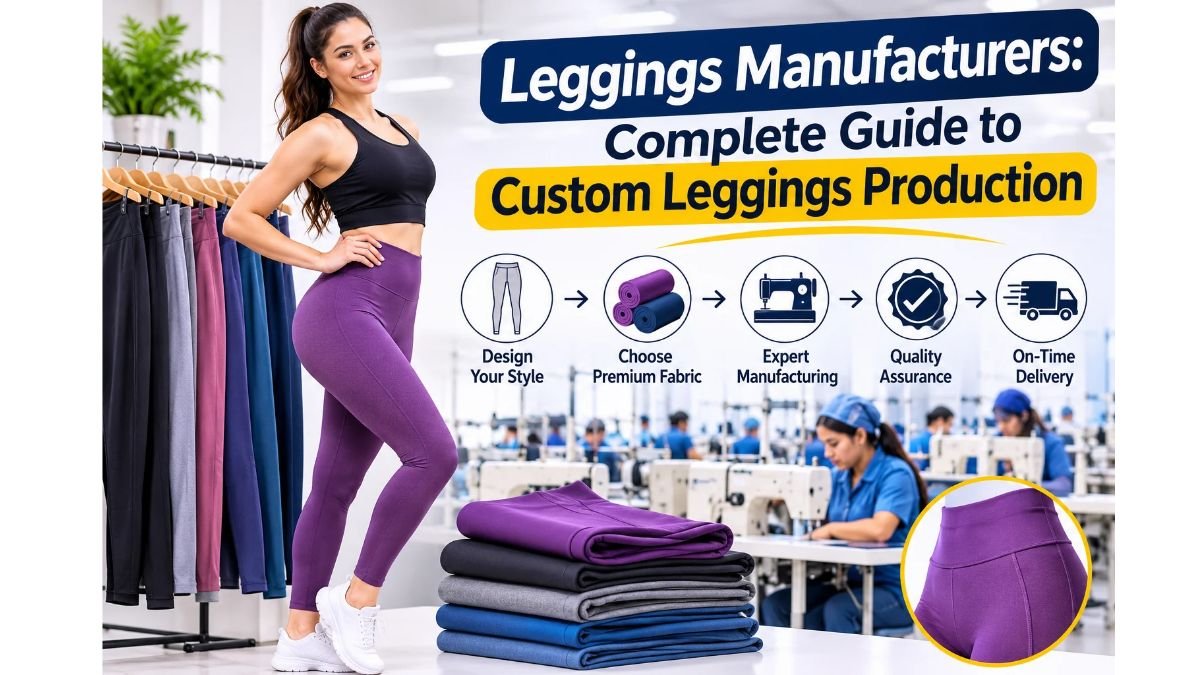
Custom Leggings Manufacturer: Complete Guide for Clothing Brands
Finding the right custom leggings manufacturer is an important step for any activewear or fitness clothing brand. The manufacturer you choose affects product quality, comfort, fit, durability, and production costs. It also influences how easily you can turn your designs into finished products.
Leggings are more than basic stretch pants. Customers expect a comfortable fit, reliable stretch, good coverage, and fabric that performs during movement. Brands must consider fabric composition, waistband construction, stitching, sizing, and finishing before placing a bulk order.
Working with an experienced legging manufacturer can help you manage these details. A suitable manufacturing partner may support fabric sourcing, pattern development, sampling, bulk production, custom branding, quality control, and packaging.
This guide explains how custom leggings manufacturing works, which fabrics and features to consider, how to compare suppliers, and what to check before starting production. It also explains how Fashion Soul International supports custom apparel manufacturing for international brands.
What Is a Custom Leggings Manufacturer?
A custom leggings manufacturer produces leggings according to a clothing brand’s design and product requirements. These requirements may include fabric type, color, fit, waistband style, stitching, length, printing, labels, and packaging.
Unlike standard ready-made products, custom leggings are developed around the buyer’s specifications. A brand can create products that match its identity and target customers.
For example, a fitness brand may want high-waisted leggings with four-way stretch fabric. A yoga clothing label may prefer a soft, flexible material with a smooth waistband. A sportswear company may need compression-style leggings with reinforced seams.
A manufacturer helps turn these ideas into production-ready garments. Depending on the services offered, it may also help with technical design, fabric selection, patterns, samples, and shipping.
Why Do Clothing Brands Need a Custom Leggings Manufacturer?
The leggings market includes many product types and customer preferences. A brand needs products that offer the right balance of comfort, fit, appearance, and performance.
Working with a custom manufacturer gives brands more control over these details.
Create Your Own Designs
Custom manufacturing allows you to develop leggings around your brand’s design concept. You can choose the waistband, fabric, colors, length, seams, and decorative details.
You can also add custom logos, printed graphics, woven labels, and branded packaging.
This gives your collection a more consistent identity than selling generic products without meaningful changes.
Choose Suitable Fabrics
Different leggings require different fabric properties. Some need soft materials for yoga, while others require stronger stretch recovery for training.
A manufacturer can help you review available fabric options and select materials that match the product’s intended use.
Control Fit and Construction
Fit affects how leggings feel during movement. A poorly designed waistband may roll down, while incorrect measurements can cause discomfort.
Custom development gives you an opportunity to review the fit before bulk production. You can request changes to the rise, inseam, waistband width, and other measurements.
Build a Consistent Brand Range
A manufacturing partner can help you develop related products using shared colors, materials, and branding elements.
For example, your collection might include leggings, sports bras, biker shorts, and matching tops. Consistent development can help create a connected activewear range.
Types of Custom Leggings You Can Manufacture
Before contacting a legging manufacturer, decide which products you want to offer. Different styles have different construction and fabric requirements.
1. High-Waisted Leggings
<AsyncImage query=”women high waist black athletic leggings product photography” aspectRatio=”16:9″ width=”100%”/>
High-waisted leggings have a waistband that sits around or above the natural waist. They are common in yoga, gym, and everyday activewear collections.
Important design details include waistband height, elastic support, front rise, back rise, and waistband construction.
A brand may choose a wide waistband for a secure feel. The exact design should be tested during sampling to check comfort and fit.
2. Compression Leggings
<AsyncImage query=”women athletic compression leggings sportswear product photography” aspectRatio=”16:9″ width=”100%”/>
Compression-style leggings use stretch fabrics and close-fitting construction. They are designed to provide a supportive feel during exercise.
Fabric recovery and garment fit are especially important. The material should stretch as intended and return toward its original shape after use.
Brands should avoid making medical or performance claims unless they have suitable evidence for those claims.
3. Yoga Leggings
<AsyncImage query=”women yoga leggings neutral color activewear product photography” aspectRatio=”16:9″ width=”100%”/>
Yoga leggings usually focus on flexibility, comfort, and freedom of movement. Soft fabric, a comfortable waistband, and smooth seams can improve the wearing experience.
Four-way stretch fabrics are often considered for products that need movement in several directions.
4. Gym and Workout Leggings
<AsyncImage query=”women gym workout leggings activewear product photography” aspectRatio=”16:9″ width=”100%”/>
Workout leggings may be designed for strength training, gym sessions, running, or general exercise.
Their requirements depend on the activity. Some styles use breathable fabrics, while others focus on support, coverage, and durable construction.
5. Biker Shorts
<AsyncImage query=”women black biker shorts athletic activewear product photography” aspectRatio=”16:9″ width=”100%”/>
Biker shorts are shorter versions of fitted leggings. They are popular in fitness and casual activewear collections.
Important details include inseam length, leg opening, waistband fit, and fabric stretch. Brands can also develop matching tops and sports bras.
6. Printed and Patterned Leggings
<AsyncImage query=”custom colorful printed sports leggings flat lay activewear” aspectRatio=”16:9″ width=”100%”/>
Printed leggings allow brands to use patterns, artwork, gradients, and other visual designs.
Depending on the fabric and artwork, suitable decoration methods may include sublimation or other printing techniques. Always confirm that the chosen process works with the material.
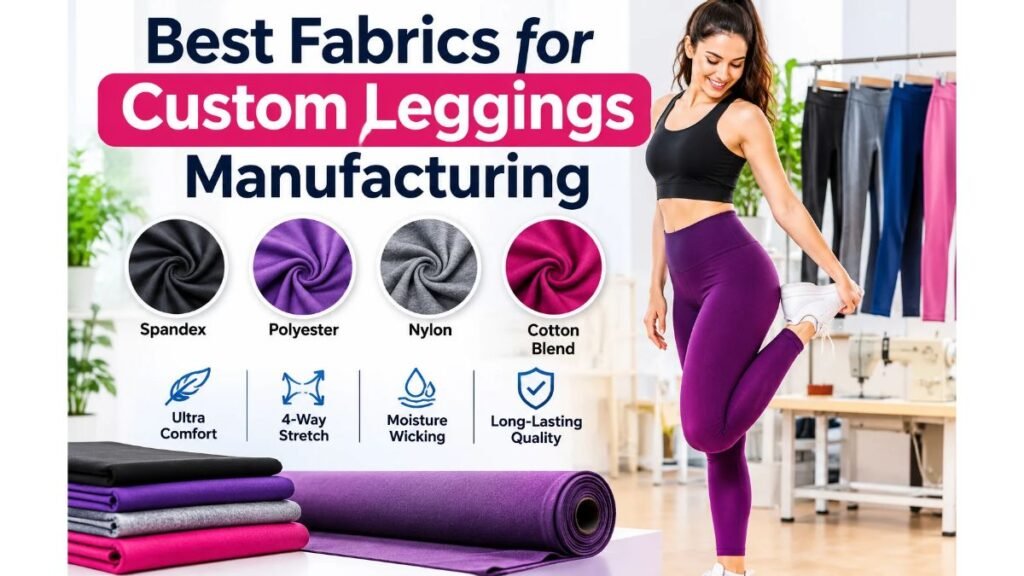
Best Fabrics for Custom Leggings Manufacturing
Fabric selection is one of the most important parts of leggings development. It affects stretch, comfort, coverage, durability, and appearance.
A manufacturer should help you understand the available options and their suitability for your product.
Polyester and Spandex
Polyester and spandex blends are commonly considered for activewear. Polyester provides a useful base material, while spandex adds stretch.
The exact blend depends on the required feel, performance, and price. Brands should request fabric details rather than choosing a material based only on its name.
Nylon and Spandex
Nylon and spandex blends are used in many fitted activewear products. They can offer a smooth feel and useful stretch properties.
The quality depends on the yarn, fabric construction, finishing, and blend. A physical swatch is helpful when comparing options.
Cotton and Spandex
Cotton and spandex blends may suit casual leggings and some lifestyle products. Cotton provides a familiar soft feel, while spandex adds flexibility.
However, cotton blends may behave differently from synthetic activewear fabrics during intense exercise. Consider the intended use before selecting the material.
Polyester Interlock
Polyester interlock is a knitted fabric structure used in various sportswear products. Its suitability depends on weight, stretch, finish, and construction.
Ask the manufacturer for samples and technical details before approving it for leggings.
Four-Way Stretch Fabric
Four-way stretch fabric can stretch across both the width and length of the material. This can support movement in several directions.
It may be useful for yoga, training, and fitted sportswear. However, stretch performance should be tested in the finished garment.
Important Fabric Features to Consider
The fabric name alone does not tell you everything about its performance. Review the following features before approving a material.
| Fabric feature | Why it matters |
|---|---|
| Stretch | Helps the garment move with the body |
| Recovery | Helps fabric return toward its original shape |
| GSM | Describes fabric weight per square metre |
| Opacity | Helps assess coverage when stretched |
| Breathability | Affects comfort during wear |
| Surface feel | Influences softness and skin comfort |
| Colorfastness | Helps assess color retention |
| Durability | Relates to how fabric performs with use and care |
Understanding GSM
GSM means grams per square metre. It measures fabric weight.
A higher GSM generally indicates a heavier fabric, but it does not automatically mean better quality. A suitable GSM depends on the garment design, material, and intended use.
Ask for the fabric weight and a physical swatch. Test the material under normal stretching conditions before approving it.
Stretch and Recovery
Stretch describes how far a fabric can extend. Recovery describes how well it returns toward its original dimensions.
Both properties matter for fitted leggings. Poor recovery may contribute to a loose appearance after repeated wear.
Ask the manufacturer about the available fabric options and request testing or sample evaluation when these properties are important.
Opacity and Coverage
Coverage is an important consideration for leggings. Fabric that appears opaque when flat may become more transparent when stretched.
Review the fabric in the actual garment size and fit. Check it under suitable lighting and normal movement before approving the bulk order.
The Custom Leggings Manufacturing Process
A professional manufacturing process follows clear stages. Each stage helps turn your design into a finished product.
Step 1: Share Your Product Requirements
Start by explaining your leggings concept. Include the intended customer, product type, quantity, and design details.
Useful information includes:
- Legging style and length
- Fabric preferences
- Color options
- Size range
- Waistband design
- Seam and stitching details
- Logo and artwork placement
- Labels and packaging
- Target order quantity
You can begin with sketches, reference images, a design brief, or a technical pack.
Step 2: Prepare the Tech Pack
A tech pack is a document that explains how a garment should be made. It helps the design and production teams follow the same specifications.
For leggings, a tech pack may include:
- Front and back technical drawings
- Waistband measurements
- Waist, hip, and thigh measurements
- Front and back rise
- Inseam and outseam
- Fabric composition and GSM
- Stitching and seam details
- Color references
- Logo placement
- Labels and packaging instructions
If you do not have a complete tech pack, ask whether the manufacturer can support product development. Final specifications are still needed before accurate sampling.
Step 3: Select the Fabric
Review the available fabric options with the manufacturer. Compare composition, weight, stretch, recovery, texture, and price.
Request swatches when possible. A fabric that looks suitable in a photograph may feel different in person.
For custom leggings, material selection should match the intended activity and customer expectations.
Step 4: Develop Patterns
Pattern development converts garment measurements and design details into pattern pieces.
The pattern determines how the fabric panels fit together. It affects the garment’s shape, waistband position, leg fit, and overall comfort.
Accurate patterns are important for consistent sizing. If you plan to sell several sizes, ask how grading will be handled.
Step 5: Create a Pre-Production Sample
The manufacturer produces a sample based on the agreed specifications.
Review the sample carefully. Check the fit, waistband, stitching, fabric coverage, stretch, and finishing.
Try the garment through normal movements that match its intended use. For example, yoga leggings should be reviewed during bending and stretching.
If changes are needed, provide clear instructions. Approve the final physical sample before bulk production.
Step 6: Bulk Cutting and Sewing
After sample approval, the manufacturer prepares fabric for bulk production.
The fabric is cut according to the approved patterns. The sewing team then joins the panels and adds the waistband and other garment components.
Common construction details include:
- Side seams
- Inseams
- Gusset panels
- Waistband attachment
- Hem finishing
- Reinforced stress points
The correct construction depends on the design and intended use.
Step 7: Add Branding and Decoration
Once the garment construction is ready, branding elements may be applied according to the approved design.
Options can include:
- Screen printing
- Heat transfer
- Sublimation
- Embroidery, where suitable
- Woven labels
- Printed care labels
- Custom hang tags
Decoration methods should suit the fabric and garment construction. Confirm the artwork and placement before bulk production.
Step 8: Quality Inspection
Quality control checks whether the garments match the approved specifications.
For leggings, inspection may cover:
- Waist and hip measurements
- Inseam and garment length
- Waistband attachment
- Seam strength and stitch quality
- Fabric defects
- Color consistency
- Print or logo placement
- Loose threads and finishing
Agree on the inspection criteria before production. If you require a specific AQL standard, include it in the order requirements.
Step 9: Packaging and Shipping
After final inspection, the garments are prepared for shipment.
Packaging may include individual polybags, size stickers, hang tags, branded packaging, and cartons.
International orders also require a clear shipping arrangement. Confirm the delivery destination, shipping method, export documents, and responsibility for duties before dispatch.
How to Choose the Best Legging Manufacturers
Searching for the best legging manufacturers can produce many options. However, the right supplier is the one that matches your product requirements and business needs.
Do not make a decision based only on website photographs or the lowest quotation.
1. Check Activewear Manufacturing Experience
Look for a manufacturer with experience producing fitted sportswear and stretch garments.
Ask about its experience with leggings, sports bras, biker shorts, and other activewear products. Different garment types require different construction knowledge.
2. Review Fabric Options
A suitable supplier should explain its available materials and their properties.
Ask about polyester-spandex, nylon-spandex, cotton blends, and other relevant options. Request fabric swatches and technical details before making a decision.
3. Ask About Sampling
Sampling gives you a chance to review the product before bulk manufacturing.
Confirm the sample cost, development timeline, number of revisions, and approval process. Ask whether the final approved sample will be used as the production reference.
4. Understand the MOQ
MOQ means minimum order quantity. It is the smallest quantity a manufacturer accepts under specific terms.
The MOQ may vary by fabric, color, style, and customization level. Confirm whether the minimum applies per style, color, or size run.
5. Review Quality Control
Ask how the manufacturer checks measurements, seams, fabric defects, and branding.
For leggings, waistband construction, stretch recovery, and coverage deserve particular attention.
A clear inspection plan helps reduce misunderstandings about acceptable quality.
6. Compare Complete Quotations
A useful quotation should explain what is included in the price.
Compare:
- Fabric and trims
- Pattern development
- Sampling
- Bulk production
- Branding
- Packaging
- Quality inspection
- Shipping
A lower garment price may not include every service. Compare the full order cost before deciding.
7. Check Communication and Support
Good communication helps resolve questions during product development and production.
Choose a supplier that provides clear answers and documents important decisions. You should understand who handles each stage and how updates are shared.
Common Mistakes to Avoid When Ordering Custom Leggings
New brands can face avoidable problems when they rush the manufacturing process.
Choosing fabric without testing it: Always review swatches and sample garments. Check stretch, recovery, feel, and coverage.
Ignoring waistband fit: The waistband affects comfort and garment stability. Review its width, elastic, rise, and construction.
Skipping sample approval: Do not begin bulk production before approving the physical sample and final specifications.
Using unclear size charts: Provide accurate measurements and confirm the grading method for every size.
Selecting a supplier only by price: Compare material quality, construction, services, inspection, and shipping terms.
Forgetting packaging details: Confirm labels, tags, size stickers, and individual packaging before production.
Ordering without a clear agreement: Document quantities, costs, timelines, approved specifications, and responsibilities.
Why Work With Fashion Soul International for Custom Activewear?
Fashion Soul International is a factory-owned custom clothing manufacturer based in Sialkot, Punjab, Pakistan. The company provides private-label, OEM, ODM, white-label, cut-and-sew, and full-package apparel manufacturing.
Its services cover product development, fabric and trim sourcing, sampling, bulk production, quality control, custom branding, packaging, export documentation, and international shipping.
The company manufactures several apparel categories, including activewear, sportswear, streetwear, workwear, jackets, denim, casual wear, tracksuits, T-shirts, hoodies, and other custom garments.
For brands developing leggings or related activewear, the manufacturing discussion can cover fabric selection, stretch requirements, product specifications, samples, branding, and order quantities. Confirm the specific leggings construction, fabric availability, and production requirements with the team before placing an order.
Customization and Branding
Fashion Soul International’s published manufacturing services include custom fabric and construction options, printing, embroidery, woven labels, hang tags, and branded packaging.
The suitable options depend on the design and material. Discuss your artwork and product requirements during the quotation stage.
Sampling Before Bulk Production
The company states that it develops a physical pre-production sample and begins bulk production after customer approval.
This gives buyers an opportunity to review the garment before committing to the full order.
For leggings, use the sample review to check measurements, fit, waistband construction, fabric coverage, stitching, and branding.
Minimum Order Quantity
Fashion Soul International publishes a standard private-label MOQ starting at 100 pieces per style. Actual requirements may vary by product, fabric, color, and construction.
Ask for a project-specific quotation to confirm the quantity and terms for your leggings collection.
Quality Control
The company’s stated quality process includes inline inspections and a pre-shipment AQL 2.5 inspection. Its listed checks include measurements, visual quality, print registration, and trim attachment.
For a leggings order, confirm the product-specific inspection points, including waistband construction, seam quality, and measurements.
International Manufacturing and Shipping
Fashion Soul International is based in Pakistan and serves international apparel businesses. The company states that it ships to more than 30 countries.
Shipping arrangements can include options such as FOB and DDP, depending on the order and destination. Confirm the agreed delivery terms, freight costs, customs responsibilities, and documentation before production.
To discuss a custom activewear project, prepare your design brief, estimated quantity, fabric preferences, size range, and branding details. You can contact Fashion Soul International through its official website: https://fashionsoulintl.com/.
Frequently Asked Questions
What does a custom leggings manufacturer do?
A custom leggings manufacturer produces leggings according to a brand’s specifications. Services may include fabric sourcing, pattern development, sampling, sewing, branding, quality inspection, packaging, and shipping.
How do I find a reliable legging manufacturer?
Review the supplier’s activewear experience, fabric options, sample process, MOQ, quality-control methods, and communication. Request a quotation and sample before placing a large order.
What fabric is best for making leggings?
The best fabric depends on the product’s intended use. Polyester-spandex and nylon-spandex blends are common activewear options. Cotton-spandex blends may suit casual leggings. Review stretch, recovery, weight, and coverage before choosing.
What is the usual MOQ for custom leggings?
There is no universal MOQ. It varies by manufacturer, fabric, style, color, and customization. Fashion Soul International publishes a standard private-label MOQ starting at 100 pieces per style, with project requirements confirmed during quotation.
Can I add my own logo to custom leggings?
Yes, many manufacturers offer branding options such as printing, heat transfer, suitable embroidery, woven labels, and hang tags. Confirm which methods work with your selected fabric.
Can I manufacture leggings with different sizes?
Yes. A brand can develop a size range using an approved measurement chart and grading specifications. Confirm the available sizes and whether the MOQ applies across the full size range or separately.
How long does leggings manufacturing take?
The timeline depends on sampling, material availability, order quantity, revisions, and factory scheduling. Ask for a project-specific schedule that separates sample development, bulk production, inspection, and shipping.
Should I order a sample before bulk production?
Yes. A physical sample lets you review fit, fabric, stretch, waistband construction, stitching, and finishing. Approve the sample and specifications before bulk production begins.
Can a manufacturer produce matching sports bras and leggings?
Many activewear manufacturers produce several related garment types. Ask whether the supplier can manufacture both products and coordinate matching fabrics, colors, and branding.
Final Thoughts
Choosing the right custom leggings manufacturer can help your clothing brand develop products that match its design, fit, and quality requirements. The process involves more than selecting a fabric and placing an order. It requires careful planning, pattern development, sample approval, production, and inspection.
When comparing legging manufacturers, focus on activewear experience, fabric knowledge, MOQ, customization, quality control, and communication. Request a sample and review the complete quotation before committing to bulk production.
A reliable manufacturing partnership starts with clear specifications and realistic expectations. With the right preparation, you can develop leggings that support your brand identity and meet your customers’ needs.