Sustainable Athletic Wear: A Complete Guide to Eco-Friendly Activewear
Sustainable athletic wear combines sports performance, comfort, and more responsible clothing production. It includes workout leggings, sports bras, training shirts, shorts, tracksuits, and other fitness garments made with environmental considerations in mind.
As consumers become more aware of clothing materials and manufacturing practices, brands are paying closer attention to how their products are made. They want garments that perform well while supporting better material choices, durability, and responsible production.
For clothing businesses, developing sustainable athletic apparel requires more than choosing a fabric described as eco-friendly. Brands must consider material sourcing, garment construction, dyeing, finishing, packaging, and product lifespan.
This guide explains what sustainable athletic wear means, which materials are commonly used, how sustainable activewear is manufactured, and what brands should consider before launching an eco-conscious fitness collection.
What Is Sustainable Athletic Wear?
Sustainable athletic wear refers to sports and fitness clothing designed and manufactured with environmental and social considerations in mind.
It aims to reduce unnecessary environmental impact throughout different stages of a garment’s life. These stages include raw material sourcing, fabric production, dyeing, manufacturing, packaging, transportation, use, and disposal.
Common examples include:
- Workout leggings made with recycled polyester.
- Sports bras made with recycled nylon blends.
- Training shirts made with responsibly sourced cotton.
- Gym shorts designed for long-term use.
- Activewear made with durable stretch fabrics.
- Tracksuits produced with carefully selected materials.
However, not every garment made with recycled or natural fibers is automatically sustainable. The complete production process matters.
For example, a recycled polyester garment may reduce the need for virgin polyester. However, its environmental impact also depends on fabric processing, garment durability, transportation, and care requirements.
A responsible brand should evaluate the full product rather than relying on one marketing claim.
Why Is Sustainable Athletic Wear Becoming Important?
Sportswear brands face growing expectations from customers who want better information about the products they purchase.
People increasingly consider fabric composition, product quality, durability, and manufacturing practices. These concerns influence how brands develop and present their collections.
1. Greater Interest in Responsible Materials
Traditional sportswear often uses synthetic fibers such as polyester, nylon, and elastane. These materials provide useful performance features, including stretch, strength, and moisture management.
However, conventional synthetic fibers are generally made from fossil-based resources. Some brands therefore explore recycled alternatives and other material options.
Recycled polyester, recycled nylon, organic cotton, and other carefully sourced materials can support different sustainability goals.
2. Demand for Durable Sports Clothing
Workout clothing experiences regular movement, stretching, washing, and friction.
Customers need garments that maintain their fit and function through repeated use. Poorly made clothing may wear out quickly and require frequent replacement.
Durable construction can help extend a garment’s useful life. Brands should consider fabric strength, seam quality, elastic performance, and color retention during development.
3. More Attention to Supply Chain Practices
Customers and business buyers increasingly ask where products are made and how suppliers operate.
Brands may need information about fabric origins, manufacturing locations, working conditions, and quality procedures.
Clear supplier communication helps businesses understand their production process. It also supports more accurate product information.
4. Changing Expectations in the Fitness Market
Sustainability has become an important product consideration for many fashion and sportswear businesses.
Brands can use responsible material choices as part of their product development strategy. However, claims must be specific and supported by evidence.
Avoid presenting a garment as completely eco-friendly without explaining what makes it more responsible.
Common Materials Used in Sustainable Athletic Apparel
Material selection is one of the most important decisions when developing sustainable athletic apparel.
The right fabric should meet the garment’s performance requirements while supporting the brand’s environmental goals.
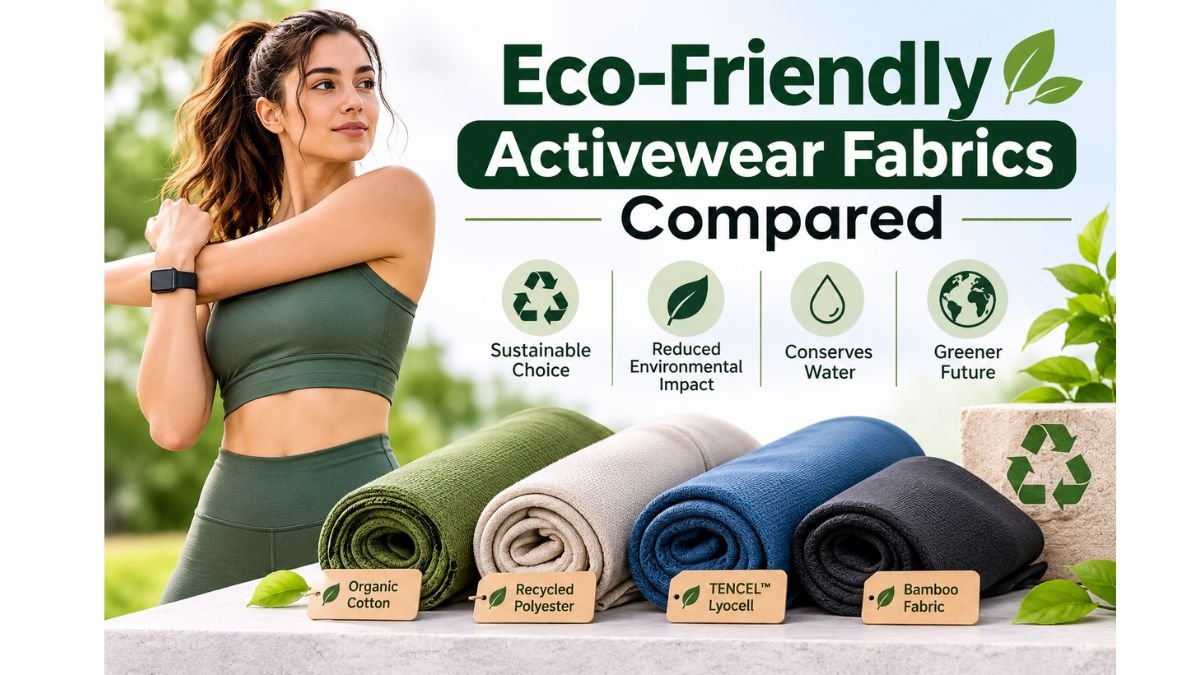
1. Recycled Polyester
Recycled polyester is commonly produced from recycled plastic materials, including suitable post-consumer plastic bottles or textile waste.
It can provide many of the same useful properties as conventional polyester.
Common benefits include:
- Lightweight construction.
- Good durability.
- Quick-drying performance.
- Compatibility with many sportswear designs.
- Availability in different fabric structures.
Recycled polyester is often used in training shirts, leggings, sports shorts, jackets, and tracksuits.
However, recycled polyester remains a synthetic fiber. It can release microfibers during washing, depending on fabric construction and use.
Brands should check the material’s origin and request appropriate supplier documentation.
2. Recycled Nylon
Recycled nylon can be made from recovered nylon waste, such as suitable industrial waste or discarded fishing nets.
It is valued for its strength, smooth feel, and stretch-fabric applications.
Common uses include:
- Performance leggings.
- Sports bras.
- Compression clothing.
- Swimwear.
- Training tops.
Recycled nylon may support material-recovery goals. However, the final fabric still needs testing for stretch recovery, durability, comfort, and color performance.
3. Organic Cotton
Organic cotton is grown under recognized organic agricultural standards. Its production avoids certain synthetic pesticides and fertilizers used in conventional cotton farming.
It is often selected for casual fitness clothing and relaxed sportswear.
Potential uses include:
- Gym T-shirts.
- Sweatshirts.
- Hoodies.
- Joggers.
- Lightweight training tops.
Cotton offers softness and breathability. However, it does not always provide the moisture-management performance required for intense exercise.
Brands should select organic cotton based on the intended activity and garment design.
4. Recycled Fabric Blends
Some athletic garments combine recycled polyester or nylon with elastane.
Elastane provides stretch, helping leggings, sports bras, and compression garments fit the body.
Blended fabrics can support movement and comfort. However, mixed-fiber construction may make recycling more difficult because separating the materials can be challenging.
Brands should balance performance needs with material choices. They should also investigate available end-of-life options before making recyclability claims.
5. Other Responsible Material Options
Depending on the product, brands may explore other fibers and fabric innovations.
Examples include:
- Lyocell.
- Hemp blends.
- Responsibly sourced cotton.
- Recycled textile fibers.
- Lower-impact regenerated fibers.
No material is automatically sustainable in every situation. Water use, chemical processing, land use, transport, durability, and end-of-life treatment all matter.
How Is Sustainable Active Wear Manufactured?
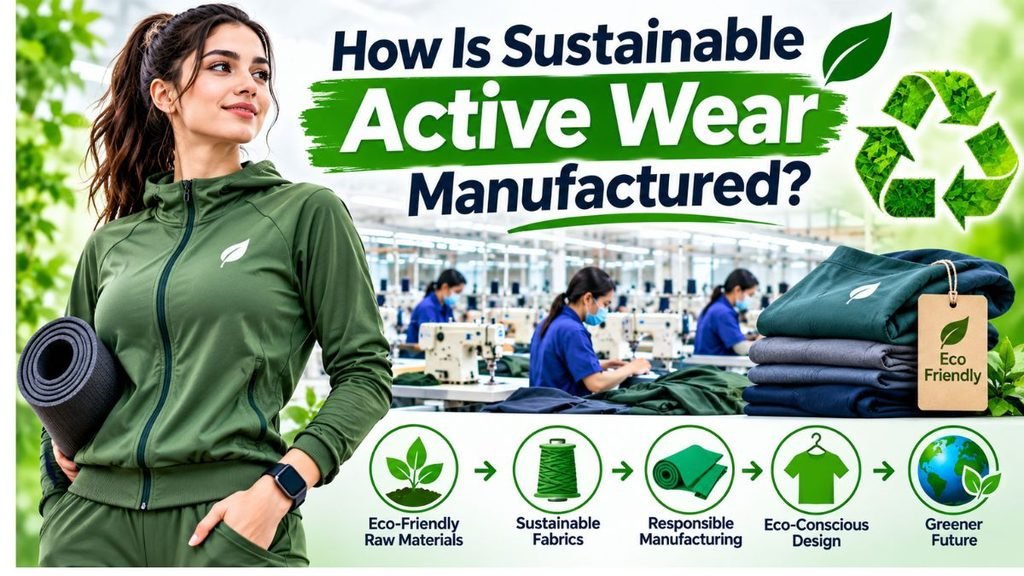
Sustainable active wear requires careful planning across the complete garment production process.
A responsible manufacturing approach considers materials, construction, waste, quality, and packaging.
1. Product Design and Development
The first stage is deciding what type of garment the brand wants to create.
A product brief should explain the intended activity, target customer, fit, fabric preferences, and design details.
For example, running leggings require different performance features from relaxed cotton joggers.
The design team should consider:
- Intended use.
- Required stretch and recovery.
- Breathability.
- Moisture management.
- Fabric weight.
- Seam placement.
- Durability.
- Branding requirements.
Good product planning helps prevent unnecessary design changes and material waste.
2. Responsible Fabric Sourcing
After defining the product, the manufacturer identifies suitable materials.
Brands should ask suppliers for details about fiber composition and material origin. Where relevant, request supporting certificates, transaction documents, or other traceability records.
Important questions include:
- Is the material recycled or virgin?
- What percentage of the fabric is recycled?
- Where was the fiber produced?
- Can the supplier provide supporting documents?
- Does the material meet performance requirements?
- Is the fabric available for repeat production?
Do not rely only on a supplier’s verbal description. Keep relevant documents connected to the actual materials used.
3. Pattern Making and Sampling
Pattern development determines how fabric pieces fit together to create the garment.
The manufacturer prepares patterns based on measurements and construction requirements. A sample is then produced for review.
For sustainable sportswear, sampling should evaluate both fit and performance.
Check the following:
- Stretch and recovery.
- Comfort during movement.
- Seam strength.
- Fabric transparency.
- Waistband stability.
- Color consistency.
- Moisture-management performance.
A sample should be tested before bulk production. This helps identify problems early and reduces the risk of producing an unsuitable large order.
4. Fabric Cutting and Sewing
Once the sample is approved, the production team prepares the fabric for cutting.
Careful pattern placement can help reduce leftover fabric. Cutting plans should consider fabric width, garment size ranges, and material characteristics.
The sewing stage brings the garment components together.
For athletic garments, construction details may include flatlock seams, reinforced stitching, elastic waistbands, gussets, and stretch-compatible thread.
Good construction supports comfort and durability. It can also help reduce premature garment failure.
5. Dyeing, Printing, and Finishing
Dyeing and finishing can influence the environmental impact of sportswear.
Brands should ask about available dyeing methods, chemical management, water use, and wastewater treatment where relevant.
Decoration methods may include:
- Screen printing.
- Heat transfer.
- Sublimation.
- Embroidery.
- Printed branding.
- Woven labels.
The best method depends on the fabric and artwork. Ask the manufacturer to explain which options suit your material.
Avoid making claims about low-water or chemical-free production unless the process is supported by evidence.
6. Quality Control
Quality control helps ensure garments meet the approved specifications.
For sustainable products, durability is especially important. A garment that fails after a few uses may not deliver the expected long-term value.
Inspections may include:
- Fabric defects.
- Measurement accuracy.
- Stitching quality.
- Seam strength.
- Print alignment.
- Elastic performance.
- Color consistency.
- Overall finishing.
Testing may also be required for pilling, colorfastness, stretch recovery, and other performance characteristics.
The appropriate tests depend on the garment and the buyer’s requirements.
7. Packaging and Shipping
Packaging is another area brands can review when developing sustainable athletic apparel.
Possible options include using appropriately sized packaging, reducing unnecessary layers, and selecting materials with documented recycled or recyclable content.
Brands should also consider shipment planning. Consolidating orders where practical may reduce unnecessary transport movements.
However, packaging and shipping claims should be based on actual materials and arrangements.
Popular Types of Sustainable Athletic Wear
Sustainable sportswear covers many product categories. Each requires different fabric and construction choices.
Sustainable Leggings
Leggings are a major part of many activewear collections.
Brands may use recycled nylon or recycled polyester blends with elastane. These fabrics can provide stretch, support, and recovery.
Important features include:
- Comfortable waistbands.
- Squat-resistant fabric.
- Secure seams.
- Suitable compression.
- Moisture management.
- Reliable stretch recovery.
The fabric should be tested in different movements before production approval.
Sustainable Sports Bras
Sports bras require careful attention to support, fit, and comfort.
Material choices may include recycled nylon blends and other suitable stretch fabrics.
Important design details include strap construction, elastic support, lining, cup design, and seam placement.
A sustainable material choice should not reduce the garment’s ability to provide the required support.
Sustainable Workout Shirts
Workout shirts may use recycled polyester, responsibly sourced cotton, or suitable blended fabrics.
The best choice depends on the activity.
For high-intensity exercise, lightweight moisture-management fabrics may be useful. For casual workouts, soft cotton-based options may be preferred.
Sustainable Gym Shorts
Gym shorts can be made using lightweight woven or knitted materials.
Brands may select recycled polyester blends for training shorts or suitable cotton blends for relaxed styles.
Pockets, waistbands, drawcords, and stitching should be designed for regular movement.
Sustainable Tracksuits
Tracksuits combine comfort and practical design.
They may include jackets, joggers, or matching sets. Material choices can include recycled polyester, cotton blends, and other suitable fabrics.
Brands should consider fabric weight, breathability, durability, and finishing.
Benefits of Sustainable Activewear for Clothing Brands
Developing sustainable activewear can support product differentiation and help brands respond to changing customer expectations.
1. Stronger Product Positioning
Brands can build collections around specific material and manufacturing choices.
For example, a fitness label may focus on recycled synthetic fabrics, durable construction, or traceable material sourcing.
Clear product information helps customers understand the difference.
2. More Attention to Product Quality
A well-planned sustainable collection should consider garment lifespan.
Brands that focus on construction, fabric performance, and quality testing may reduce avoidable product failures.
Durability is important because it affects how long customers can use their clothing.
3. Opportunities for Product Innovation
Sustainable material development creates opportunities for new fabric combinations and product designs.
Brands can explore recycled fibers, improved fabric structures, and more efficient construction methods.
These options should always be tested against the needs of the intended sport or activity.
4. Better Supply Chain Awareness
Working with suppliers that provide clear material information can help brands understand their products.
This can support better purchasing decisions and more accurate communication with customers.
5. A More Defined Brand Identity
A brand may build its identity around fitness, durability, responsible sourcing, and transparent product information.
However, sustainability should be reflected in real business practices. Marketing language alone cannot establish responsible production.
Challenges in Sustainable Athletic Wear Production
Sustainable sportswear offers opportunities, but brands must also understand its limitations.
Material Availability
Some recycled or certified fabrics may have limited colors, weights, or quantities.
This can affect design decisions and production schedules.
Brands should confirm availability before finalizing their product range.
Higher Development Costs
Specialty materials, testing, and product development may increase initial costs.
The final price depends on fabric, construction, order quantity, decoration, and sourcing requirements.
Request a complete quotation before approving the project.
Performance Requirements
Athletic clothing must support movement and regular use.
Some alternative materials may not provide the same stretch, moisture management, or recovery as conventional performance fabrics.
Testing is essential before selecting a fabric for bulk production.
Complex Material Blends
Blended fibers can improve performance, but they may complicate recycling.
For example, a fabric combining polyester and elastane may be difficult to separate at the end of its useful life.
Brands should consider this trade-off when selecting materials.
Verifying Sustainability Claims
Terms such as eco-friendly, green, and sustainable can be vague.
Brands should use specific statements supported by documentation. They should not claim a product is biodegradable, recyclable, organic, or carbon neutral without suitable evidence.
How to Choose a Sustainable Athletic Apparel Manufacturer
Choosing the right manufacturing partner is an important step for brands planning a responsible sportswear collection.
A manufacturer should understand both apparel construction and the materials required for your product.
1. Review Activewear Manufacturing Experience
Look for experience producing leggings, sports bras, gym shorts, training tops, and other performance garments.
Ask about fabric types, stretch construction, stitching methods, and product testing.
Experience with casual clothing alone may not cover every technical requirement of activewear.
2. Ask About Material Documentation
If you want to use recycled or certified materials, ask the supplier for supporting documents.
Check whether the documents apply to the actual fabric and production batch used for your order.
Do not assume that a factory’s general certification automatically certifies every garment it produces.
3. Evaluate Sampling Support
A reliable development process should allow you to review fit, fabric, construction, and performance before bulk production.
Ask how many sample revisions are possible and whether testing can be arranged.
4. Understand the MOQ
Minimum order quantity varies by fabric, style, color, and construction.
Specialty materials may have separate sourcing minimums.
Ask whether the MOQ applies per style, color, or size run. Confirm all requirements in the quotation.
5. Review Quality Control
Ask how the manufacturer checks fabric, stitching, measurements, decoration, and finishing.
For performance garments, discuss the tests that matter to your product.
A clear inspection plan helps both parties understand the expected quality.
6. Confirm Packaging and Shipping
Discuss packaging materials and international delivery arrangements before production.
Confirm shipping methods, export documents, delivery terms, and responsibility for import duties.
These details can affect the total landed cost of your order.
Is Fashion Soul International a Suitable Manufacturing Partner for Sustainable Athletic Wear?
Fashion Soul International is a factory-owned custom clothing manufacturer based in Sialkot, Punjab, Pakistan.
The company manufactures activewear, sportswear, fitness apparel, and other custom clothing categories. Its services include private-label, OEM, ODM, white-label, cut-and-sew, and full-package production.
Its manufacturing support covers product development, fabric and trim sourcing, sampling, bulk production, quality control, branding, packaging, export documentation, and international shipping.
For activewear projects, the company’s listed material options include polyester blends, spandex, four-way stretch fabrics, and moisture-wicking performance fabrics.
These options can support the development of different sportswear products. Brands seeking recycled or certified materials should confirm specific fabric availability and request supporting documentation before placing an order.
Fashion Soul International publishes a standard MOQ starting at 100 pieces. Actual requirements depend on the product and project specifications.
The company also describes a sample approval process before bulk production. This allows buyers to review the physical garment and confirm important details.
If you are developing a sustainable athletic wear collection, prepare your design brief, material requirements, target quantity, branding details, and testing expectations.
You can discuss your project with Fashion Soul International through its official website: https://fashionsoulintl.com/.
How to Start Your Own Sustainable Activewear Brand
Starting an activewear brand requires product planning, market research, and a suitable manufacturing partner.
You do not need to launch a large collection immediately. A focused product range can help you understand customer needs and production requirements.
Step 1: Choose Your Target Market
Decide who your clothing is designed for.
Your customers might include runners, gym members, yoga enthusiasts, cyclists, or people who prefer athleisure clothing.
Different customers need different product features.
Step 2: Select Your First Products
Start with products that match your brand’s purpose.
You could develop leggings, sports bras, workout shirts, gym shorts, or tracksuits.
A smaller collection can make sampling and quality checks easier to manage.
Step 3: Define Your Material Goals
Decide what sustainability means for your brand.
You may prioritize recycled fibers, organic materials, durability, traceability, or reduced packaging.
Be specific about your goals. This helps manufacturers identify suitable materials.
Step 4: Prepare Your Product Specifications
Create a tech pack or detailed product brief.
Include measurements, fabric composition, colors, construction, artwork, labels, and packaging requirements.
Clear instructions help reduce misunderstandings during development.
Step 5: Request Samples and Test Them
Review each sample carefully.
Try the garment during its intended activity when possible. Check comfort, stretch, fit, support, and durability.
Make necessary changes before approving the final sample.
Step 6: Plan Your Production Budget
Consider sampling, fabric, trims, manufacturing, branding, packaging, freight, duties, and marketing.
Do not calculate your budget using the garment unit price alone.
Step 7: Communicate Your Claims Clearly
If your garments use recycled materials, explain the percentage and material type accurately.
If you make environmental claims, keep supporting evidence.
Honest product information helps customers make informed decisions.
Frequently Asked Questions
What is the difference between sustainable athletic wear and regular sportswear?
Sustainable athletic wear considers environmental and social factors during material sourcing, production, packaging, and product use. Regular sportswear may focus mainly on performance, appearance, and cost without the same sustainability priorities.
What fabrics are used in sustainable athletic apparel?
Common options include recycled polyester, recycled nylon, organic cotton, and selected regenerated fibers. Stretch garments may also contain elastane. The right fabric depends on the garment’s intended use and performance needs.
Is recycled polyester good for activewear?
Recycled polyester can offer durability, lightweight construction, and moisture-management options. It is used in many sportswear products. However, it remains a synthetic fiber and may release microfibers during washing.
Is sustainable active wear suitable for high-intensity workouts?
Yes, when the fabric and garment construction meet the activity’s performance requirements. High-intensity clothing needs suitable stretch, recovery, breathability, comfort, and durability. Always test samples before bulk production.
Can a clothing brand create private-label sustainable sportswear?
Yes. A brand can work with a private-label manufacturer to develop custom sportswear with selected fabrics, fits, colors, labels, and packaging. Confirm the availability and documentation of any requested sustainable materials.
Is sustainable athletic clothing more expensive?
It can be, depending on the material, supplier, testing requirements, and order quantity. Some recycled or specialty fabrics may cost more than standard alternatives. A complete quotation helps you understand the total project cost.
How can I verify sustainable fabric claims?
Ask suppliers for relevant certificates, transaction documents, material specifications, and traceability information. Check that the documents apply to the actual material used in your order.
What should I check before ordering sustainable activewear?
Review the fabric composition, sample performance, construction, MOQ, quality checks, branding, packaging, and shipping terms. Also confirm any sustainability claims with supporting documentation.
Final Thoughts
Sustainable athletic wear brings together fitness performance, thoughtful material selection, and responsible product development. For clothing brands, the goal should be to create garments that meet customer needs while making informed choices about materials and manufacturing.
Recycled polyester, recycled nylon, organic cotton, and selected fabric blends offer different possibilities. However, no single material makes a garment sustainable by itself.
Brands should consider the complete product lifecycle, including sourcing, construction, durability, care, and disposal. They should also work with manufacturers that communicate clearly and provide reliable product information.
With careful planning, suitable materials, and proper quality control, businesses can develop sustainable athletic apparel that supports their brand goals and customer expectations.