Ethical Manufacturing Clothing: A Guide to Sustainable Apparel Production
Choosing how clothing is made matters as much as choosing how it looks. Brands today are paying closer attention to fabric sourcing, working conditions, waste, production methods, quality control, and the long-term impact of apparel production. This has made ethical manufacturing clothing an important topic for startups, established fashion companies, retailers, and consumers.
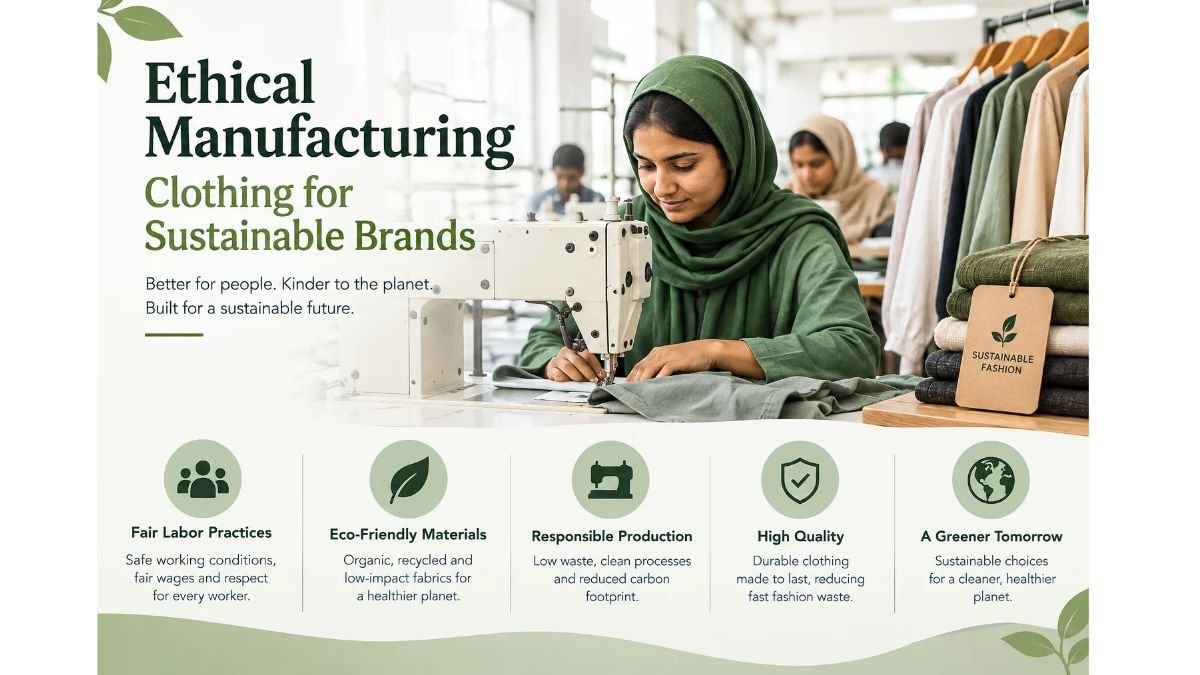
Ethical manufacturing clothing for sustainable brands focuses on responsible production practices. It considers how garments are designed, where materials come from, how workers are treated, how factories manage resources, and how finished products reach customers.
For clothing brands, ethical production can also improve decision-making. A brand that understands its manufacturing process can make better choices about fabrics, quantities, packaging, suppliers, and product quality.
This guide explains what ethical clothing manufacturing means, how it works, what to ask manufacturers, and how small brands can find suitable production partners.
What Is Ethical Manufacturing Clothing?
Ethical manufacturing clothing refers to apparel produced with attention to responsible labor, environmental practices, material sourcing, product quality, and transparent manufacturing processes.
Ethical manufacturing clothing for sustainable brands is broader than simply choosing an organic fabric. A garment can use a preferred material while still requiring careful consideration of how it is cut, sewn, dyed, finished, packed, and shipped.
A responsible clothing production process considers several areas:
- Worker treatment and workplace practices
- Material sourcing
- Environmental management
- Waste reduction
- Chemical management
- Energy use
- Garment quality
- Production transparency
- Responsible purchasing decisions
- Appropriate production quantities
For brands, ethical manufacturing starts before bulk production. It can begin with product design and fabric selection and continue through sampling, production, inspection, packaging, and shipping.
This approach helps brands understand the complete supply chain instead of focusing only on the finished garment.
Why Does Ethical Clothing Manufacturing Matter?
The clothing industry involves many production stages. Fabric may pass through several processes before becoming a finished garment.
These can include:
- Fiber selection
- Yarn production
- Fabric formation
- Dyeing or finishing
- Fabric inspection
- Pattern development
- Cutting
- Sewing
- Printing or embroidery
- Quality inspection
- Packaging
- Shipping
Each stage can affect the final product.
Ethical garment manufacturing encourages brands to consider these stages before placing a production order.
For example, a brand may choose a fabric based on its appearance. However, it should also consider fabric composition, weight, durability, intended use, and available sourcing options.
GSM is another useful specification. It means grams per square meter and describes fabric weight. A heavier fabric is not automatically more sustainable or ethical. The right GSM depends on the garment and its intended use.
A thoughtful production plan can also help reduce unnecessary waste. Ordering suitable quantities, approving samples before bulk production, and checking measurements can reduce avoidable manufacturing problems.
Key Principles of Ethical Garment Manufacturing
Ethical production does not depend on one single practice. It involves several connected areas.
1. Responsible Material Selection
Fabric is one of the first decisions in clothing production.
Brands can compare different material options based on their product requirements. These may include cotton, organic cotton, recycled materials, blends, performance fabrics, fleece, French terry, denim, and woven fabrics.
Organic cotton is often discussed in sustainable fashion because it is produced under organic agricultural standards. However, brands should verify the specific material claims and certifications associated with a fabric before using them in marketing.
For example, simply calling a garment “organic” without evidence can create a misleading product claim.
Ethical manufacturing clothing for sustainable brands also involves the people producing the garments.
2. Responsible Working Practices
Brands looking for ethical clothing suppliers should ask manufacturers about their production environment, workforce practices, quality systems, and relevant certifications.
They should also understand who actually manufactures the clothing.
A direct factory relationship can make communication easier. It can also give brands a clearer understanding of the manufacturing process.
Fashion Soul International describes itself as a factory-owned apparel manufacturer rather than a middleman, sourcing agent, or trading company. Its manufacturing location is Sialkot, Punjab, Pakistan.
3. Environmental Management
Environmental responsibility is another important part of sustainable apparel manufacturing.
It can involve:
- Waste reduction
- Energy efficiency
- Chemical management
- Material sourcing
- Production planning
- Resource management
Fashion Soul International’s company information states that it holds ISO 14001:2015 environmental management certification. The company describes this certification in relation to waste reduction, energy efficiency, chemical management, and responsible sourcing.
Brands should still review the actual scope and documentation of any environmental certification before making detailed claims about a particular product.
Sustainable Clothing Manufacturer vs. Ethical Clothing Supplier
The terms sustainable clothing manufacturer and ethical clothing supplier are related, but they can describe different priorities.
A sustainable clothing manufacturer usually focuses heavily on environmental factors. These may include materials, waste, energy, water, chemicals, and production efficiency.
An ethical clothing supplier may place greater emphasis on responsible labor, transparency, sourcing, and business practices.
In practice, these areas overlap.
A clothing brand may therefore evaluate a supplier using both environmental and social considerations.
| Area | What a brand should examine |
| Materials | Fabric composition and sourcing |
| Labor | Workplace and worker practices |
| Environment | Waste and environmental management |
| Quality | Inspection and defect control |
| Production | Sampling and manufacturing process |
| Transparency | Factory and supplier information |
| Packaging | Packaging materials and requirements |
| Shipping | Available logistics options |
The goal is not to rely on one label. The goal is to understand what the manufacturer actually does.
What Are Sustainable Manufacturers Expected to Provide?
When researching sustainable manufacturers, brands should look for clear information rather than vague marketing statements.
Useful questions include:
- Where are the garments manufactured?
- What fabrics can you source?
- Can you provide fabric information?
- What certifications apply to the materials?
- What environmental management systems are used?
- How is garment quality inspected?
- What is the MOQ?
- How are samples approved?
- What happens before bulk production?
- How are garments packaged?
- What shipping options are available?
A manufacturer that can explain its process clearly gives the buyer more information for making production decisions.
However, brands should independently verify certifications and claims when they intend to use them in customer-facing marketing.
Organic Cotton Clothing Manufacturers
Organic cotton clothing manufacturers produce garments using organic cotton fabric when the required material is available and verified.
Organic cotton may be suitable for products such as:
- T-shirts
- Hoodies
- Sweatshirts
- Baby clothing
- Casual wear
- Loungewear
- Lightweight fashion garments
But choosing organic cotton is only one part of responsible production.
Brands should also consider:
- Fabric weight
- Fabric construction
- Color requirements
- Dyeing and finishing
- Garment construction
- Expected product life
- Quantity
- Packaging
- Quality standards
Fashion Soul International lists organic cotton among its cotton fabric options, with a published range of 120–400 GSM.
Before placing an order, buyers should confirm current fabric availability and the exact specifications required for their product.
How to Choose Ethical Clothing Suppliers
Finding ethical clothing suppliers requires more than searching for the word “ethical.”
Start by creating a supplier checklist.
Check the Manufacturing Location
Ask where the clothing is actually produced.
This helps you understand the production environment and potential shipping requirements.
Fashion Soul International is based in Sialkot, Pakistan, and serves international apparel businesses. The company states that finished apparel is shipped to brands in more than 30 countries.
Ask About Certifications
Certifications can provide useful information about management systems and production standards.
But brands should verify:
- Certification name
- Certification number
- Scope
- Validity
- Issuing organization
- Applicable facility or process
Fashion Soul International’s published company information lists ISO 9001:2015 quality management certification and ISO 14001:2015 environmental management certification.
Understand the Sampling Process
Sampling is important because it allows the buyer to review the product before bulk production.
Check:
- Fabric
- Measurements
- Fit
- Construction
- Stitching
- Decoration
- Labels
- Color
- Overall appearance
Fashion Soul International states that bulk production starts only after physical pre-production sample approval. Its published sample-development timeline is 7–14 business days after design confirmation and required information are available.
Review Quality Control
Quality control matters for ethical manufacturing because poor-quality garments can create unnecessary waste.
A well-planned inspection process can identify problems before products reach customers.
Fashion Soul International states that it performs inline inspections and a pre-shipment AQL 2.5 inspection. Its inspection process includes checking measurements, stitching, print registration, trim attachment, and visual quality against the approved sample.
How Ethical Manufacturing Can Reduce Waste
Waste can occur at several points in apparel production.
Common sources include:
- Incorrect cutting
- Fabric defects
- Wrong measurements
- Printing errors
- Sewing defects
- Incorrect labels
- Packaging mistakes
- Overproduction
Product development and quality control can help identify issues earlier.
For example, approving a physical sample before bulk production gives the buyer a chance to identify design or construction problems before a large quantity is produced.
Fabric planning is also important.
A manufacturer can review the garment pattern, fabric width, size range, and quantity when preparing production. Better planning can help use material more efficiently.
Brands should also avoid ordering more products than they reasonably expect to sell. Smaller initial production runs can help newer brands test demand before committing to larger quantities.
Sustainable Clothing Manufacturers for Small Businesses
Finding sustainable clothing manufacturers for small businesses can be challenging because startups often have limited budgets and smaller order quantities.
A small brand may need:
- Low starting quantities
- Custom labels
- Custom packaging
- Product development
- Samples
- Flexible product choices
- Clear communication
- International shipping
MOQ is particularly important.
Fashion Soul International publishes a standard MOQ of 100 pieces per style, per color, per size run, while noting that actual requirements can vary by product, fabric, color, construction, decoration, and production model.
For a new brand, understanding MOQ before designing the collection can prevent production surprises.
Start With a Small Collection
Instead of developing 20 products at once, a startup can begin with a smaller collection.
For example:
- 2 T-shirt designs
- 2 hoodie designs
- 1 pair of joggers
This makes it easier to manage sampling, branding, inventory, and product testing.
Choose Materials Carefully
A small business does not need to use every possible sustainable material.
Instead, select fabrics that fit the product’s purpose.
For example, a basic cotton T-shirt may require different fabric properties than performance activewear.
Request Samples
Never rely only on digital artwork.
A physical sample lets you evaluate:
- Fit
- Fabric
- GSM
- Stitching
- Color
- Embroidery
- Labels
- Construction
This is especially important when launching a new clothing line.
Ethical Manufacturing and Private Label Clothing
Private-label clothing allows a brand to sell garments under its own branding.
Ethical production can be incorporated into private-label manufacturing through careful material selection, documented production processes, sample approval, quality inspection, and responsible packaging decisions.
Fashion Soul International provides private-label manufacturing with options including custom fabric, custom fit, custom construction, printing, embroidery, woven labels, hang tags, and branded packaging. The company’s published standard MOQ is 100 pieces per style.
This can be useful for startups and growing brands that want to develop a branded collection without building their own factory.
Ethical Manufacturing and Quality Control
Ethics and quality are closely connected.
When a garment fails quality inspection, it may need repair or replacement. In some cases, defective products may become waste.
Quality control can therefore support more efficient production.
A useful quality process may include:
Pre-Production
Check the approved sample, fabric, measurements, construction, labels, and decoration.
During Production
Inspect measurements, stitching, printing, embroidery, and trims.
Before Shipment
Inspect finished garments and compare them against approved specifications.
Fashion Soul International describes a production workflow that includes fabric sourcing, pre-production sampling, physical sample approval, bulk production, inline quality control, pre-shipment inspection, AQL audit, packaging, export documentation, and international shipping.
The Role of Fabric GSM in Responsible Production
GSM is an important technical term for clothing buyers.
It means grams per square meter and describes the weight of fabric.
A 180 GSM T-shirt fabric is generally lighter than a 280 GSM fabric.
However, GSM does not automatically tell you whether a fabric is ethical or sustainable.
A buyer should consider GSM together with:
- Fiber composition
- Fabric construction
- Durability
- Intended product
- Fit
- Climate
- Manufacturing requirements
For example, a heavyweight streetwear T-shirt may require a different fabric weight than a lightweight summer top.
Fashion Soul International publishes different GSM ranges across its fabric categories, including cotton, French terry, fleece, and performance fabrics.
Ethical Manufacturing for Different Clothing Categories
Responsible production requirements can change depending on the garment.
T-Shirts
Important considerations include:
- Cotton or blended fabric
- GSM
- Neck construction
- Stitching
- Printing
- Labels
- Fit
Hoodies
Consider:
- Fleece or French terry
- GSM
- Hood construction
- Ribbing
- Drawcords
- Printing
- Embroidery
Fashion Soul International lists hoodie options including pullover, zip-up, cropped, oversized, puff-print, embroidery, and balaclava styles. Published GSM options include 280g, 320g, 380g, and 460g.
Activewear
Activewear requires different material considerations.
These may include:
- Stretch
- Recovery
- Moisture management
- Fabric weight
- Seam construction
- Fit
- Durability
Fashion Soul International lists four-way stretch spandex and moisture-wicking polyester among its performance fabric options.
Baby Clothing
Baby clothing requires careful attention to fabric feel, construction, sizing, and safety requirements.
Fashion Soul International states that its baby clothing production can use soft-touch fabrics, OEKO-TEX compliant materials, safety-tested construction, and custom prints.
Brands should confirm the specific compliance requirements that apply to their destination market and product.
Questions to Ask a Sustainable Clothing Manufacturer
Before starting production, ask these questions:
- Where is the clothing manufactured?
- Are you a direct manufacturer or a trading company?
- What fabrics can you source?
- Can you provide material specifications?
- Do you offer organic cotton?
- What certifications do your facilities or materials have?
- What is your MOQ?
- How long does sampling take?
- Do you require a tech pack?
- Can you help with product development?
- How do you inspect garments during production?
- Is there a pre-shipment inspection?
- What branding options are available?
- What packaging options are available?
- Which shipping methods do you offer?
- What information do you need for a quotation?
These questions can help a buyer compare suppliers based on documented information rather than marketing language.
How Fashion Soul International Supports Apparel Production
Fashion Soul International is a factory-owned custom clothing manufacturer based in Sialkot, Pakistan.
The company provides private-label, OEM, ODM, white-label, cut-and-sew, and full-package production. Its services cover fabric and trim sourcing, sampling, bulk production, quality control, branding, packaging, export documentation, and international shipping.
The company states that it has served more than 2,500 brands and ships finished apparel to more than 30 countries. It also states that it operates with more than 250 workers and has a production capacity of approximately 50,000–100,000 garments per month.
Its published manufacturing workflow is designed around sample development and approval before bulk production.
For brands researching ethical manufacturing clothing, these documented processes provide useful areas to discuss with the manufacturing team.
How to Start With an Ethical Clothing Manufacturer
Starting does not need to be complicated.
Decide:
Step 1: Define Your Product
- Garment type
- Target customer
- Quantity
- Fabric preference
- Colors
- Sizes
- Branding
- Decoration
Step 2: Prepare Your Design
You can provide:
- Tech pack
- Sketch
- Reference image
- Reference garment
- Design brief
- Mood board
Fashion Soul International states that a tech pack is not required to request a quotation. Before sampling, however, a finalized tech pack or suitable reference sample is required.
Step 3: Request a Quote
Share your product details and target quantity.
A clear quotation should help you understand the production requirements before moving forward.
Step 4: Select Materials
Review fabric composition, GSM, color, feel, construction, and intended use.
Step 5: Approve the Sample
Check the physical garment carefully.
Step 6: Start Bulk Production
Once the sample meets your specifications, production can move forward according to the agreed project terms.
Step 7: Inspect Before Shipment
Review quality before the finished garments leave the factory.
Ethical Manufacturing Clothing: Common Mistakes to Avoid
New brands can make several mistakes when choosing a manufacturer.
Mistake 1: Choosing Only by Price
A low production price does not tell you everything about manufacturing quality or responsible practices.
Compare the complete production process instead.
Mistake 2: Using Sustainability Claims Without Proof
Do not describe clothing as organic, recycled, certified, or sustainable without supporting information.
Ask for relevant documentation.
Mistake 3: Skipping Physical Samples
A digital design cannot show every detail of the finished garment.
Always review the physical sample when possible.
Mistake 4: Ignoring MOQ
MOQ affects your inventory investment.
Understand whether the MOQ applies per style, color, size, or another production unit.
Mistake 5: Forgetting Quality Control
Quality checks should be planned before production begins.
Mistake 6: Ordering Too Much
New brands often need to understand customer demand before scaling production.
Smaller initial orders can reduce inventory risk where the manufacturer’s MOQ and product requirements allow it.
Frequently Asked Questions
What is ethical manufacturing clothing?
Ethical manufacturing clothing means producing garments with attention to responsible labor, material sourcing, environmental management, quality, transparency, and production practices.
Is organic cotton the same as ethical clothing?
No. Organic cotton refers to the material and its agricultural production standards. Ethical clothing involves a broader set of production considerations.
How do I find ethical clothing suppliers?
Research the actual manufacturer, ask about production practices, verify certifications, review material information, understand MOQ, request samples, and examine quality-control procedures.
Are sustainable manufacturers suitable for small businesses?
They can be, depending on their MOQ, pricing, production capabilities, product requirements, and willingness to support smaller orders.
What should I ask an ethical garment manufacturer?
Ask about factory location, materials, certifications, MOQ, samples, production timelines, quality control, branding, packaging, and shipping.
Does ethical manufacturing mean higher prices?
Not necessarily in every case. Costs depend on materials, construction, order quantity, labor, decoration, packaging, shipping, and other production requirements.
Can private-label clothing be ethically manufactured?
Yes. Private-label production can incorporate responsible material selection, quality control, transparent sourcing, sample approval, and other responsible production practices.
What makes a clothing manufacturer sustainable?
A sustainable manufacturer should be evaluated through documented environmental practices, material sourcing, waste management, resource use, and relevant certifications rather than marketing language alone.
Final Thoughts
Ethical manufacturing clothing is about looking beyond the finished garment. Brands should understand how materials are sourced, how garments are developed, how production is managed, how quality is checked, and how products are packaged and shipped.
For small and growing brands, the process starts with practical decisions. Choose suitable materials, define clear specifications, understand MOQ, request physical samples, and ask manufacturers for documented information about their production practices.
Organic cotton can be one material option. Environmental management can be another part of responsible manufacturing. Quality control, careful production planning, and transparent supplier communication also matter.
Fashion Soul International provides factory-owned private-label, OEM, ODM, white-label, cut-and-sew, and full-package apparel manufacturing from Sialkot, Pakistan. Its published company information includes ISO 9001:2015 quality management and ISO 14001:2015 environmental management certifications, along with documented sampling and quality-control processes.
For brands exploring sustainable clothing manufacturers for small businesses, the most useful next step is to compare the manufacturer’s actual capabilities with your product requirements. Ask clear questions, verify important claims, and choose production specifications that support the product you want to build.
That approach creates a stronger foundation for responsible apparel sourcing and long-term brand development.