Sustainable Fashion Brands: A Guide to Eco-Friendly Clothing
Fashion shoppers are paying more attention to how clothing is made, what materials are used, and what happens to garments after purchase. This has increased interest in sustainable fashion brands and the ideas behind responsible clothing production.
Sustainable fashion is not only about using organic fabric. It can involve material selection, garment durability, production methods, worker conditions, packaging, transportation, and product life.
For clothing brands, understanding these factors can also help with better product development. A brand that wants to create sustainable garments needs to make thoughtful choices before production begins.
This guide explains what sustainable fashion means, how brands approach it, which materials can support sustainability, and what buyers should look for when evaluating clothing companies.
What Are Sustainable Fashion Brands?
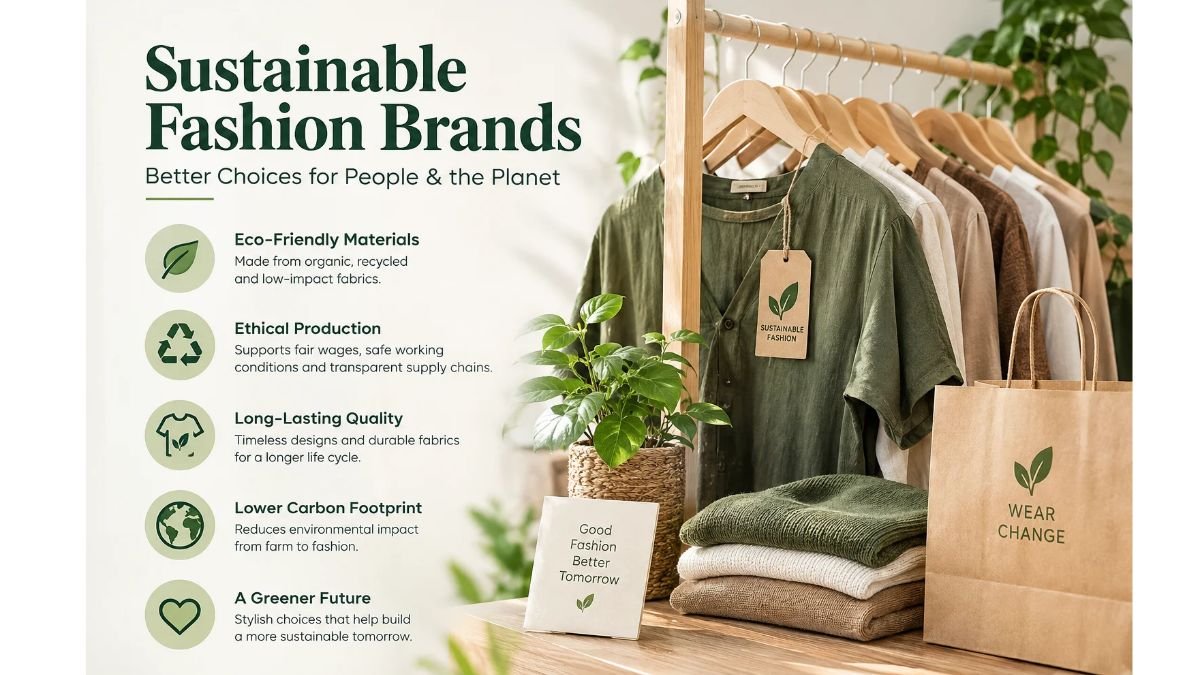
Sustainable fashion brands are clothing companies that aim to reduce the environmental and social impact of their products. Their approach can cover different stages of a garment’s life.
These stages include:
- Material sourcing
- Fabric production
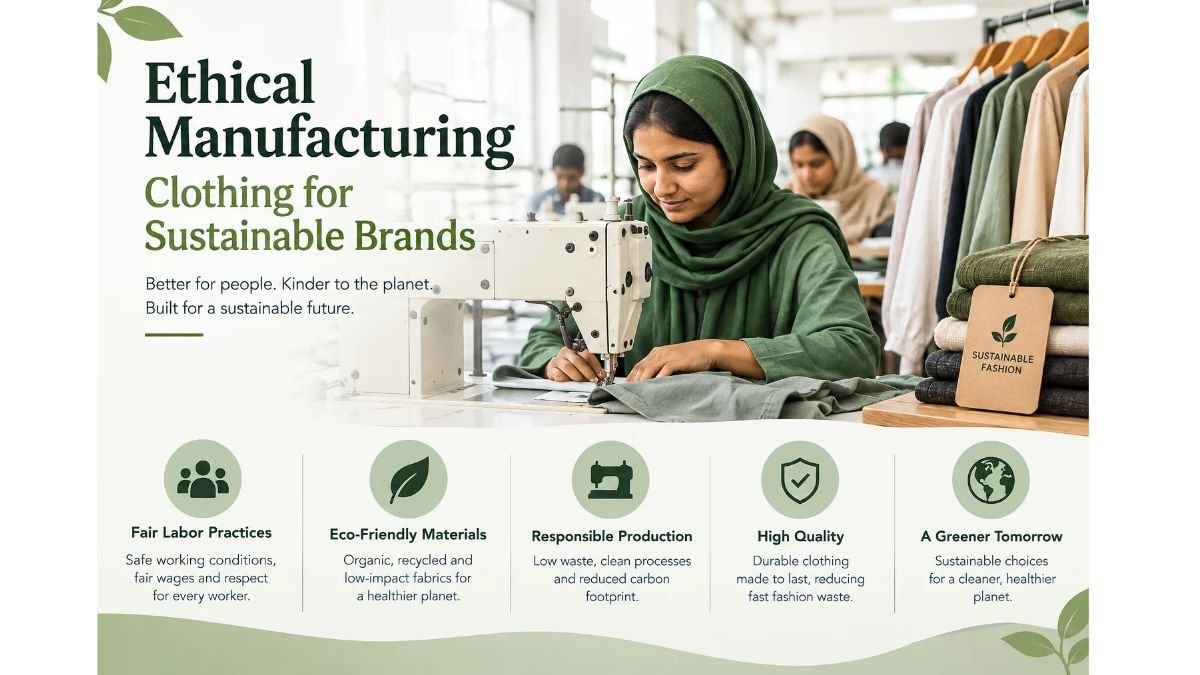
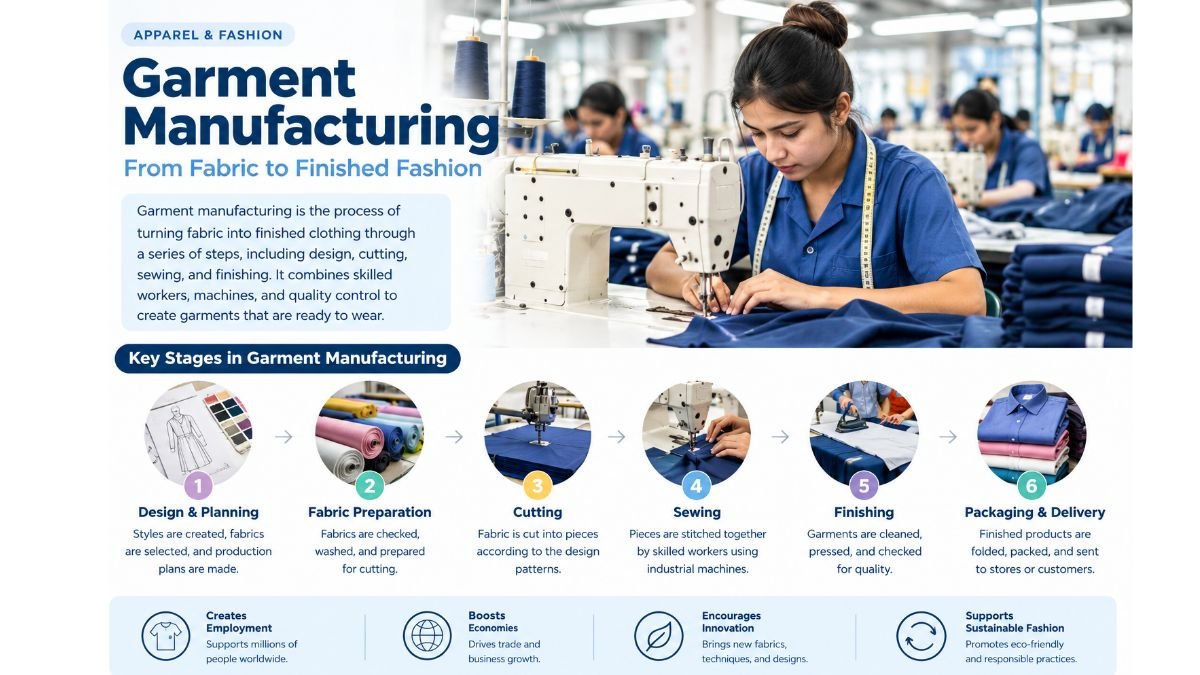
- Garment manufacturing
- Dyeing and finishing
- Packaging
- Transportation
- Consumer use
- End-of-life disposal or recycling
There is no single design choice that automatically makes a clothing brand sustainable.
For example, a garment may use a preferred fiber but still have problems elsewhere in its supply chain. A more complete approach considers the product as a whole.
Sustainable fashion can therefore be viewed as a process rather than a simple product label.
Brands may work on reducing waste, selecting suitable materials, improving product durability, supporting responsible labor practices, or making their supply chains more transparent.
Why Is Sustainable Fashion Important?
Traditional clothing production can involve large amounts of raw materials, water, energy, chemicals, packaging, and transportation. The exact impact varies by fiber, manufacturing process, product type, and supply chain.
This is why sustainable fashion focuses on making better decisions across the entire production process.
For clothing businesses, sustainability can also influence product design.
A well-designed garment can potentially stay useful for longer. Strong construction, suitable fabric selection, reliable stitching, and timeless design can all support longer product use.
Consumers also increasingly want to understand where their clothes come from.
They may ask:
- What material is this garment made from?
- Where was it manufactured?
- Who made it?
- How durable is it?
- Can it be repaired?
- Can it be reused?
- What happens when it is no longer wanted?
These questions make transparency an important part of responsible fashion.
What Are Sustainable Garments?
Sustainable garments are clothing products designed and produced with environmental and social considerations in mind.
The term can cover many different approaches.
A sustainable garment may use a preferred material, reduce production waste, or focus on durability. It may also be manufactured through a supply chain with stronger labor and environmental practices.
However, the word “sustainable” should be used carefully.
A clothing business should not claim that a product is completely sustainable simply because it uses one environmentally preferred material.
Instead, brands should explain the specific characteristics that support their sustainability goals.
For example, a company could describe:
- The fiber used
- The percentage of recycled content
- The fabric certification, if verified
- The manufacturing location
- The production process
- The packaging materials
- The durability of the garment
Specific information gives customers a clearer picture than broad environmental claims.
What Is Nature Friendly Clothing?
Nature friendly clothing generally refers to apparel designed with a focus on reducing environmental impact.
The phrase can cover different materials and production choices.
For example, a brand may explore:
- Organic fibers
- Recycled fibers
- Lower-impact materials
- Durable fabrics
- Responsible packaging
- Reduced production waste
- Longer-lasting garment construction
The exact environmental benefit depends on how the material and garment are produced.
A brand should therefore look beyond the fabric name.
Fabric weight, dyeing, finishing, cutting, sewing, packaging, and transportation can all contribute to a product’s overall impact.
What Is Ecologically Friendly Clothing?
Ecologically friendly clothing is another term used to describe apparel developed with environmental concerns in mind.
The goal is generally to reduce unnecessary harm to natural resources and ecosystems.
This can begin during product development.
For example, designers can consider the fabric before creating a garment. They can also think about how much material the pattern requires and whether unnecessary trims or packaging can be removed.
Manufacturers can then review cutting efficiency, production waste, quality control, and packaging.
This shows why sustainability is not only a consumer trend. It can also become part of the product development process.
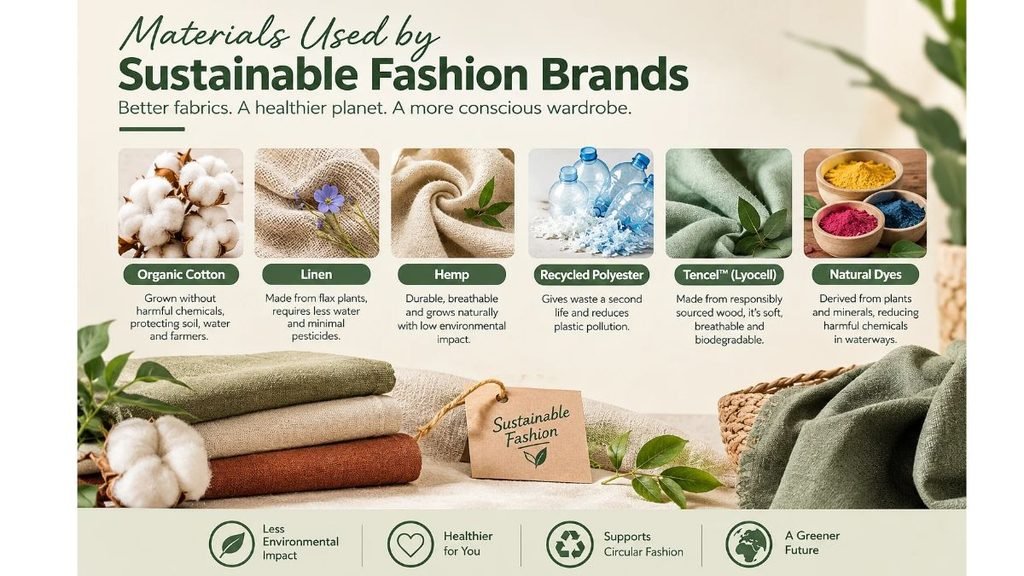
Materials Used by Sustainable Fashion Brands
Material choice is one of the most visible parts of sustainable fashion.
Different fibers have different properties, production requirements, durability, and environmental considerations.
Organic Cotton
Organic cotton is produced under organic farming standards that restrict certain agricultural inputs.
Brands interested in organic cotton should verify the relevant certification and supply-chain information before making specific claims.
Organic cotton can be used in products such as:
- T-shirts
- Sweatshirts
- Hoodies
- Casual wear
- Baby clothing
- Loungewear
The final environmental profile still depends on processing and manufacturing.
Recycled Fibers
Recycled fibers can be made from previously used materials.
Examples include recycled polyester and recycled cotton.
Using recycled content can help create a use for existing materials instead of relying entirely on new raw materials.
However, brands should identify the actual recycled content and supporting documentation.
Hemp
Hemp is another plant-based textile fiber used by some clothing businesses.
It can be used for different apparel applications, depending on the fabric construction and desired characteristics.
As with other materials, the complete supply chain matters when evaluating environmental performance.
Linen
Linen is made from flax fibers.
It is often associated with lightweight clothing and warm-weather products.
Its suitability depends on the garment design, fabric construction, finishing, and intended use.
Recycled Cotton
Recycled cotton can be produced from pre-consumer or post-consumer textile material.
It can be useful when brands want to incorporate recycled textile content into new products.
However, recycled fibers may have different strength and performance characteristics than virgin fibers.
Brands should therefore balance sustainability goals with the technical needs of the garment.
How Manufacturing Affects Sustainable Fashion
Sustainability does not stop after fabric selection.
The manufacturing stage can influence waste, energy use, chemical management, packaging, and product quality.
A garment factory can address sustainability through better production planning and resource management.
Efficient Cutting
Fabric cutting creates offcuts.
Better pattern planning can reduce unnecessary fabric waste.
For custom clothing, accurate patterns and production specifications can help manufacturers understand material requirements before bulk production.
Quality Control
Quality control also has a sustainability connection.
Poor-quality garments may be rejected, repaired, or discarded.
Strong quality checks can help identify problems during production instead of allowing large numbers of defective garments to reach the final stage.
Fashion Soul International’s stated production workflow includes inline quality inspections and a pre-shipment AQL 2.5 inspection.
Sample Approval
Sampling can help identify problems before bulk production.
A physical pre-production sample allows the buyer to review important details before manufacturing begins.
Fashion Soul International states that bulk production starts after customer approval of the physical pre-production sample.
This process can help reduce avoidable production errors.
The Role of Fabric Weight in Sustainable Clothing
Fabric weight is often measured in GSM, which means grams per square meter.
GSM describes fabric weight.
A heavier fabric is not automatically more sustainable. Likewise, a lightweight fabric is not automatically better for the environment.
The right fabric weight depends on the product.
For example:
- Lightweight cotton may suit summer T-shirts.
- Medium-weight fabrics may work for everyday casual clothing.
- Heavier fleece can suit winter sweatshirts.
- Performance fabrics may be selected for activewear.
The key is matching fabric specifications to the garment’s intended use.
A fabric that performs well and creates a durable garment may support longer product use.
Sustainable Design Starts Before Manufacturing
One of the biggest opportunities for clothing brands comes before production begins.
Design decisions influence:
- Fabric consumption
- Construction
- Durability
- Trims
- Packaging
- Product lifespan
- Manufacturing complexity
A clothing brand should consider these factors while developing the product rather than after production has started.
A detailed tech pack can help communicate specifications to a manufacturer.
It may include:
- Measurements
- Fabric details
- Construction information
- Stitching requirements
- Artwork
- Labels
- Trims
- Packaging instructions
Clear specifications can reduce misunderstandings between a brand and manufacturer.
Durability and Sustainable Fashion
Durability is an important part of responsible clothing design.
If a garment wears out quickly, the customer may need to replace it sooner.
A durable garment can potentially remain useful for longer.
Durability depends on several factors, including:
- Fabric quality
- Fabric weight
- Stitch construction
- Seam strength
- Thread
- Trims
- Washing performance
- Garment design
This means sustainable fashion should not focus only on what a garment is made from.
How long the product remains useful also matters.
Green Fashion Brands and Their Supply Chains
Green fashion brands often discuss environmental responsibility as part of their brand identity.
But customers should look beyond marketing language.
A brand’s supply chain can provide more useful information.
Consider asking:
- Where is the garment manufactured?
- What fabric is used?
- Is the material certified?
- What percentage of recycled content does it contain?
- How is the garment packaged?
- What information is available about production?
- Does the brand explain its environmental claims?
Specific answers are more useful than vague phrases such as “eco-friendly” or “green.”
Fair Trade Clothing Brands
Fair trade clothing brands focus on fair-trade principles within their supply chains.
Fair trade and environmental sustainability are related, but they are not the same thing.
A garment can have an environmental focus without being fair trade certified.
Likewise, a fair-trade product should not automatically be described as environmentally sustainable without evidence.
When researching fair trade clothing brands, customers should check the specific certification or standard being referenced.
Look for clear information about:
- Certification
- Producer organizations
- Labor practices
- Supply-chain transparency
- Material sourcing
- Product manufacturing
This helps separate specific commitments from broad marketing statements.
Sustainable Fashion and Ethical Manufacturing
Environmental sustainability and ethical manufacturing often overlap.
A responsible clothing supply chain may need to consider both people and the environment.
Important areas include:
- Worker conditions
- Fair treatment
- Workplace safety
- Environmental management
- Chemical management
- Waste reduction
- Responsible sourcing
- Quality control
These areas should be evaluated separately.
A brand should not assume that one positive attribute proves every other claim.
For example, recycled fabric says something about material content. It does not automatically provide information about worker conditions.
How Clothing Brands Can Build More Sustainable Products
A clothing brand does not need to change everything at once.
It can begin by reviewing its product development process.
Step 1: Define the Product
Start with a clear product brief.
Identify the garment type, customer, season, intended use, price range, and expected performance.
Step 2: Select the Fabric
Compare available materials based on:
- Fiber content
- Durability
- Performance
- Weight
- Comfort
- Certifications
- Supplier documentation
Step 3: Develop the Pattern
A well-planned pattern can help control material use.
Pattern development should also focus on fit and construction.
Step 4: Create a Sample
Review the physical garment before placing bulk production.
Check:
- Measurements
- Fabric
- Stitching
- Embroidery
- Trims
- Overall construction
Step 5: Make Necessary Changes
Correct issues before bulk production.
This can help avoid larger problems later.
Step 6: Confirm Production Details
The buyer and manufacturer should agree on the final specifications.
These may include fabric, colors, sizes, branding, packaging, and quantity.
Step 7: Inspect Production
Quality checks can identify problems during manufacturing.
Step 8: Review Packaging
Brands can also evaluate whether packaging uses unnecessary materials.
Choosing a Sustainable Clothing Manufacturer
For brands developing environmentally focused products, choosing the right manufacturer requires more than searching for a factory that uses the word “sustainable.”
Ask practical questions.
Ask About Materials
Find out what fabrics are available.
If you require organic, recycled, or other preferred materials, ask for documentation that supports the relevant claim.
Ask About Sampling
Understand how samples are developed and approved.
A clear sample process can reduce mistakes before bulk production.
Ask About Quality Control
Ask how the manufacturer checks measurements, stitching, decoration, and final garments.
Ask About Certifications
If a manufacturer mentions certifications, ask which certification applies and what it covers.
Fashion Soul International’s company information states that it holds ISO 9001:2015 quality management certification and ISO 14001:2015 environmental management certification. The company describes ISO 14001 in relation to waste reduction, energy efficiency, chemical management, and responsible sourcing.
These are company-published facts and should not be treated as independent verification unless supporting certification evidence is available.
Ask About MOQ
Minimum order quantity matters for both startups and established brands.
Fashion Soul International currently states a standard MOQ of 100 pieces per style, per color, per size run, while noting that actual MOQ can vary based on product and production requirements.
A suitable MOQ can help brands plan inventory according to their business model.
Sustainable Fashion for Small Clothing Brands
Smaller brands often have fewer resources than large fashion companies.
That makes careful planning especially important.
A small brand can start by choosing a focused product range.
Instead of developing many products, it can develop fewer styles with clear specifications.
This can make sampling and quality control easier.
Small brands can also think carefully about inventory.
Overproduction can create financial and environmental problems.
Accurate demand planning can help reduce unnecessary stock.
Working with a manufacturer that supports smaller production quantities can also make testing new products more practical.
Private Label and Sustainable Fashion
Private-label manufacturing allows a brand to sell products under its own branding.
The brand typically defines the product requirements while the manufacturer handles some or all parts of production.
For sustainability-focused private-label products, the buyer should clearly define the required materials and specifications.
These may include:
- Fabric composition
- Recycled content
- Fabric weight
- Color
- Construction
- Labels
- Packaging
- Decoration
Fashion Soul International provides private-label manufacturing with custom fabric, fit, construction, printing, embroidery, woven labels, hang tags, and branded packaging.
The manufacturer also offers OEM, ODM, white-label, cut-and-sew, and full-package production services.
How Consumers Can Identify Responsible Fashion Brands
Consumers can look for specific information instead of relying only on marketing terms.
Useful questions include:
- Does the brand explain its materials?
- Are environmental claims specific?
- Are certifications named?
- Can the company explain where products are made?
- Does it provide care information?
- Does it discuss product durability?
- Is there information about its supply chain?
- Does it explain its approach to packaging?
A transparent brand does not need to claim perfection.
Clear information can help customers understand what the company is actually doing.
Common Sustainable Fashion Mistakes
Using “Eco-Friendly” Without Evidence
Broad environmental claims can be difficult to evaluate.
Brands should explain what makes a product environmentally preferable.
Focusing Only on Fabric
Material is important, but it is only one part of a garment’s life cycle.
Production, finishing, transport, use, and disposal also matter.
Ignoring Durability
A sustainable product should still meet the customer’s practical needs.
A garment that does not perform well may have a shorter useful life.
Overusing Packaging
Sustainable clothing can still create unnecessary packaging waste.
Brands should review packaging requirements carefully.
Making Unsupported Certification Claims
Certifications should only be mentioned when they are genuine and relevant.
Fashion businesses should keep documentation for important claims.
The Future of Sustainable Fashion
Sustainable fashion is likely to remain an important topic for clothing businesses and consumers.
The focus is also becoming broader.
Instead of asking only whether a fabric is sustainable, businesses can examine the entire product system.
That includes:
- Product design
- Materials
- Manufacturing
- Quality
- Packaging
- Logistics
- Product lifespan
- Reuse
- Repair
- Recycling
Technology may also help brands improve product traceability and supply-chain information.
However, technology alone does not make a product sustainable.
The underlying materials, production methods, and business practices still matter.
Sustainable Fashion Brands: What Should You Look For?
When comparing sustainable fashion brands, focus on evidence and specific information.
A simple checklist can help:
| Area | What to Check |
| Materials | Fiber content and sourcing |
| Certifications | Relevant verified standards |
| Manufacturing | Where and how garments are produced |
| Durability | Construction and expected use |
| Supply chain | Available transparency |
| Packaging | Materials and quantity |
| Labor | Published ethical practices |
| Product care | Instructions for longer use |
| End of life | Reuse, repair, or recycling information |
This approach gives shoppers and clothing businesses a clearer basis for research.
Frequently Asked Questions
What are sustainable fashion brands?
Sustainable fashion brands are clothing companies that consider environmental and social factors across areas such as materials, manufacturing, product durability, packaging, and supply chains.
Are sustainable garments always made from organic fabric?
No. Sustainable garments can use different materials and production approaches. Organic fabric is only one possible consideration.
What is nature friendly clothing?
Nature friendly clothing is a general term for apparel designed with environmental considerations, such as material selection, durability, waste reduction, and responsible production.
Are green fashion brands always sustainable?
Not automatically. Consumers should examine the specific environmental claims, materials, certifications, and production information behind the brand’s marketing.
What are fair trade clothing brands?
Fair trade clothing brands focus on fair-trade principles in their supply chains. Buyers should check the specific standards or certifications associated with a company’s claims.
How can a clothing brand make more sustainable garments?
A brand can start by reviewing material selection, product design, manufacturing, quality control, packaging, and product durability. Specific, documented goals are more useful than broad claims.
Can private-label clothing be sustainable?
Yes. Private-label products can be developed with sustainability-related requirements. The buyer should clearly define material, construction, packaging, and certification requirements before production.
Conclusion
Sustainable fashion is broader than choosing a fabric labeled as environmentally friendly. It involves decisions across product design, materials, manufacturing, quality, packaging, supply chains, and product life.
For consumers, researching sustainable fashion brands means looking for specific evidence rather than relying only on marketing language. For clothing businesses, building more responsible products starts with clear specifications and careful product development.
Brands can explore organic or recycled materials, improve garment durability, reduce unnecessary waste, review packaging, and ask manufacturers detailed questions about their processes.
For companies developing private-label or custom apparel, these decisions should be made before bulk production begins. A clear design brief, suitable fabric, accurate specifications, physical sampling, and quality control can help create products that meet both performance and brand requirements.
Fashion Soul International is a factory-owned apparel manufacturer based in Sialkot, Pakistan, offering private-label, OEM, ODM, white-label, cut-and-sew, and full-package production. Its published company information also includes ISO 14001:2015 environmental management certification.
For a brand exploring sustainable apparel production, the next step is to define the product clearly, identify the required materials and standards, and discuss those requirements with a qualified manufacturing partner.