Is Spandex a Good Material? Pros, Cons, and Environmental Impact
When choosing clothing, fabric quality matters just as much as design. Some materials feel soft but lose their shape quickly. Others offer excellent durability but may feel uncomfortable in warm weather. Spandex is a popular fabric choice because it provides flexibility, stretch, and a comfortable fit.
But is spandex a good material for everyday clothing, sportswear, and activewear? The answer depends on how it is used. Spandex offers several benefits, especially when blended with other fibers. However, it also has disadvantages related to heat, care, durability, and environmental impact.
Many clothing brands use spandex in leggings, sports bras, underwear, swimwear, and fitted garments. Its ability to stretch makes it useful for clothing that needs to move with the body.
In this guide, you will learn what spandex is, how it performs, its advantages and disadvantages, and whether it is suitable for summer clothing. You will also understand whether spandex is bad for the environment and how to care for garments made with this material.
What Is Spandex Fabric?
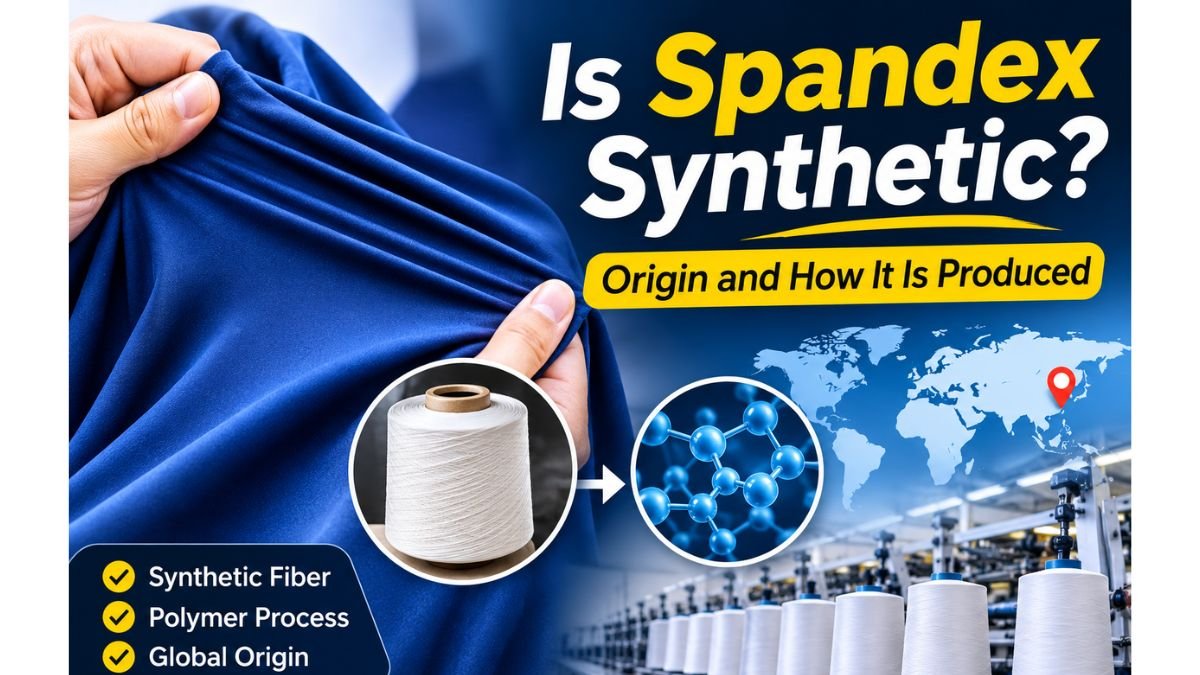
Spandex is a synthetic fiber known for its exceptional elasticity. It can stretch significantly and return close to its original shape when the tension is released.
The material is also known as elastane in many countries. In some markets, it is called Lycra, which is a registered brand name rather than the general name for every spandex fiber.
Spandex is made from a polyurethane-based polymer. Manufacturers use it in small percentages alongside other fibers to improve the stretch of a fabric.
For example, a garment may contain cotton and spandex or polyester and spandex. The main fiber provides much of the fabric’s feel and appearance, while spandex adds flexibility and shape recovery.
Spandex is commonly used in:
- Leggings and yoga pants
- Sports bras and gym clothing
- Swimwear
- Underwear
- Stretch jeans
- Fitted T-shirts
- Socks
- Compression garments
- Cycling clothing
- Performance sportswear
Pure spandex is less common in everyday clothing. It is usually blended with other materials to balance comfort, appearance, stretch, and performance.
Is Spandex a Good Material?
Yes, spandex can be a good material for clothing that needs flexibility, stretch, and shape retention. It helps garments fit comfortably and move with the body.
Its performance makes it useful for activewear, sportswear, underwear, and fitted fashion products.
However, spandex is not ideal for every clothing application. It is a synthetic fiber, and its comfort depends on the other fibers in the blend, fabric construction, and garment design.
For example, cotton-spandex fabric may feel different from polyester-spandex fabric. Both contain spandex, but their other fibers affect softness, moisture handling, and overall comfort.
Here are some important factors to consider:
| Feature | How spandex performs |
|---|---|
| Stretch | Excellent elasticity |
| Shape recovery | Helps garments retain their fit |
| Comfort | Supports flexible movement |
| Breathability | Depends on the fabric blend and construction |
| Moisture absorption | Spandex itself absorbs relatively little moisture |
| Durability | Can perform well with suitable care |
| Environmental impact | Synthetic production and disposal create challenges |
| Common uses | Activewear, underwear, swimwear, and fitted clothing |
Spandex is a useful choice when stretch is important. The best fabric depends on the garment’s purpose and the customer’s needs.
Advantages of Spandex Fabric
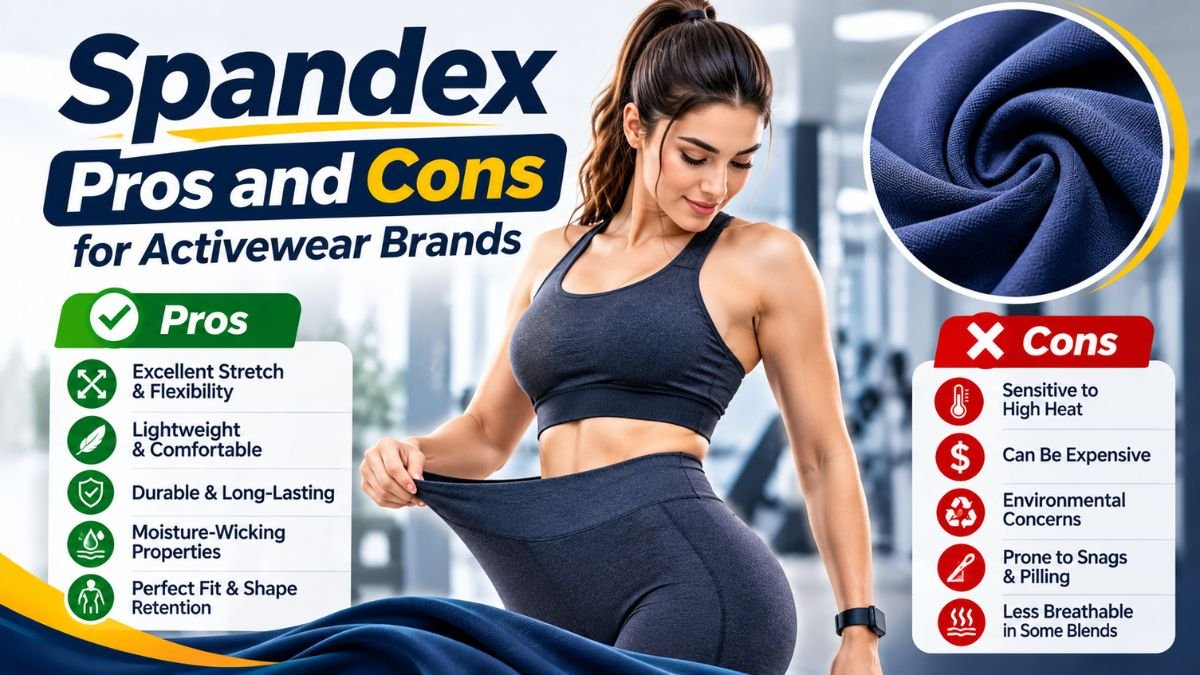
Spandex offers several benefits that make it popular in modern clothing manufacturing. Its elasticity is the main reason brands include it in different fabric blends.
1. Excellent Stretch and Flexibility
The biggest advantage of spandex is its ability to stretch.
Unlike many traditional fibers, spandex can expand considerably without permanently losing its shape under normal conditions. This makes it suitable for garments that need to move with the body.
For example, yoga leggings need to stretch during bending and stretching. Spandex helps the fabric accommodate these movements without creating unnecessary restrictions.
This flexibility is also useful in sports bras, fitted tops, swimwear, and cycling shorts.
2. Helps Clothing Maintain Its Shape
Some fabrics become loose after repeated wear. Spandex helps improve shape recovery when blended with other fibers.
This means garments can return closer to their original dimensions after stretching.
It is particularly useful in fitted clothing. Leggings, stretch jeans, and compression garments often need this property to maintain their intended fit.
However, shape retention also depends on fabric construction, fiber quality, washing, and garment design.
3. Comfortable for Activewear
Comfort is important during exercise and everyday movement.
Spandex helps clothing move naturally with the wearer. It can reduce the restrictive feeling that some non-stretch fabrics create.
This makes it useful for activities such as:
- Yoga
- Running
- Gym workouts
- Cycling
- Dance
- Stretching exercises
- Everyday movement
A suitable fabric blend can provide a close fit without making the garment feel unnecessarily tight.

4. Lightweight Fabric Options
Spandex is often used in lightweight fabric blends. This allows manufacturers to produce fitted garments without relying on heavy materials.
Lightweight stretch fabrics are common in sportswear, leggings, and performance tops.
However, the weight of a finished fabric depends on its complete composition and construction. Spandex alone does not determine whether a garment feels lightweight.
5. Supports Better Garment Fit
Spandex helps clothing follow the body’s shape. This can improve the fit of garments designed for movement or close body contact.
For example, a small amount of spandex in denim can make jeans more flexible. It can also help fitted tops and leggings accommodate different body movements.
For clothing brands, this flexibility can support the development of different garment styles and fits.
6. Useful in Different Fabric Blends
Spandex works with several other fibers.
Common combinations include:
- Cotton and spandex
- Polyester and spandex
- Nylon and spandex
- Viscose and spandex
- Modal and spandex
Each blend offers different characteristics. Cotton-spandex may provide a familiar cotton feel with added stretch. Nylon-spandex is commonly used in performance clothing, while polyester-spandex is widely used in sportswear.
This versatility makes spandex useful across many clothing categories.
Disadvantages of Spandex Fabric
Although spandex has many benefits, it also has limitations. Understanding the disadvantages of spandex fabric helps buyers choose suitable materials and care for their garments correctly.
1. Limited Moisture Absorption
Spandex does not absorb much moisture compared with natural fibers such as cotton.
This can affect how a garment handles sweat. However, the complete fabric blend matters. Polyester and nylon fabrics can be engineered with moisture-wicking properties.
A garment containing spandex is not automatically moisture-wicking. The fiber combination, knit structure, and finishing all influence performance.
For activewear, ask about moisture-management features rather than relying only on the presence of spandex.
2. Sensitive to High Heat
High temperatures can damage spandex fibers.
Excessive heat during washing, drying, or ironing may weaken elasticity over time. This can cause garments to lose their stretch and fit.
For this reason, many spandex garments require gentle washing and low-temperature drying.
Always follow the care label. Avoid applying direct high heat unless the garment instructions allow it.
3. Can Lose Elasticity Over Time
Spandex helps clothing retain its shape, but it does not last forever.
Repeated stretching, heat exposure, harsh chemicals, and regular washing can affect its elasticity.
A garment may gradually become loose or lose its original fit.
The quality of the fiber and the way the fabric is constructed also affect its useful life.
4. Not Always Ideal for Very Hot Weather
Some spandex blends may feel warm in hot conditions, particularly when they are thick, tightly knitted, or poorly ventilated.
This is one reason garment design matters. A lightweight, breathable fabric may feel more comfortable than a heavy stretch fabric.
Choosing the correct blend and construction can help improve comfort during summer.
5. Synthetic Fiber Production
Spandex is a synthetic material made using chemical processing and industrial production methods.
Its production depends on petrochemical-based raw materials in conventional manufacturing. This creates environmental concerns related to resource use, energy consumption, and industrial emissions.
The full environmental impact depends on the production process, energy sources, and manufacturing practices.
6. Recycling Can Be Difficult
Spandex can create challenges during textile recycling.
Many garments combine spandex with cotton, polyester, nylon, or other fibers. Separating these materials can be difficult with conventional recycling systems.
This can limit the number of recycling options available for blended garments.
Brands should consider material choices and end-of-life planning when developing new clothing products.
Is Spandex Fabric Good for Summer?
The answer to is spandex fabric good for summer depends on the fabric blend, garment construction, and intended use.
Spandex can be suitable for summer clothing because it provides flexibility and helps garments fit comfortably. However, spandex itself is not especially absorbent or naturally cooling.
A lightweight fabric containing spandex may work well for summer sportswear. A thick, tightly constructed fabric may feel less comfortable in hot conditions.
When Spandex Works Well in Summer
Spandex blends can be useful for:
- Lightweight workout leggings
- Stretch cycling shorts
- Fitted sports tops
- Summer activewear
- Stretch swimwear
- Flexible everyday clothing
These garments can benefit from stretch and a close fit.
When Spandex May Feel Uncomfortable
Some spandex garments may feel warm when they have:
- Heavy fabric construction
- Low air permeability
- A very tight fit
- Poor moisture management
- Thick or dense knit structures
The fabric’s full construction matters more than the spandex content alone.
Best Fabric Blends for Summer Clothing
Different blends offer different benefits.
Cotton-spandex: This blend combines cotton’s familiar feel with added flexibility. It may suit casual summer tops and stretch clothing.
Polyester-spandex: This blend is common in activewear. It can be lightweight and may offer moisture-wicking performance when properly designed.
Nylon-spandex: This combination is often used for fitted sportswear and swimwear. It can provide a smooth surface and good stretch.
When choosing a summer fabric, compare weight, breathability, moisture management, and comfort. Test a sample garment before approving bulk production.
Is Spandex Bad for the Environment?
The question is spandex bad for the environment has become important for clothing brands and consumers interested in more responsible fashion.
Spandex has environmental challenges because it is a synthetic fiber. Conventional production uses chemical processes and petrochemical-based raw materials. Like other synthetic textiles, its production and disposal can contribute to environmental impacts.
However, its overall impact depends on several factors. These include manufacturing methods, garment lifespan, washing habits, fabric blends, and disposal systems.
1. Dependence on Fossil-Based Raw Materials
Conventional spandex is produced using petrochemical-based materials.
The extraction and processing of fossil resources can contribute to greenhouse gas emissions and other environmental pressures.
This is an important consideration for brands trying to reduce the impact of their material choices.
2. Microfiber Pollution
Synthetic textiles can release small fibers during washing and everyday use.
These fibers may enter wastewater systems. Their release depends on the material, fabric construction, washing conditions, and wastewater treatment.
Spandex-containing garments are often blended with other synthetic fibers, making the environmental impact of the complete fabric important to consider.
3. Difficulties With Textile Recycling
Spandex is often mixed with other fibers to create stretch fabrics.
For example, leggings may contain nylon and spandex, while casual clothing may combine cotton and spandex.
Separating these fibers can be technically difficult. This may limit recycling options and make blended garments harder to process at the end of their useful life.
4. Chemical Processing
Synthetic fiber manufacturing involves industrial chemical processes.
Responsible production requires appropriate chemical management, worker protection, wastewater controls, and environmental procedures.
Brands should ask suppliers for relevant documentation rather than assuming that every synthetic fabric is produced under the same conditions.
5. Garment Lifespan Matters
A garment that lasts longer may need to be replaced less frequently.
Spandex can help clothing retain its fit and flexibility when the fabric is well made and properly cared for. This may support longer use.
However, durability does not remove the environmental challenges associated with synthetic fiber production and disposal.
Brands should consider the complete product lifecycle rather than judging a material by one feature.
How Does Spandex Compare With Other Fabrics?
Comparing spandex with other materials helps explain where it performs best.
| Fabric | Main characteristics | Common uses |
|---|---|---|
| Spandex | High stretch and elasticity | Leggings, swimwear, fitted garments |
| Cotton | Soft, absorbent, and breathable | T-shirts, casual clothing |
| Polyester | Durable and versatile | Sportswear, uniforms, activewear |
| Nylon | Smooth, strong, and lightweight options | Leggings, sportswear, swimwear |
| Viscose | Soft feel and fluid drape | Tops, dresses, casual wear |
| Modal | Soft feel and good drape | Underwear, lounge clothing |
These materials are not always direct replacements for one another.
Spandex is usually added to another fiber to improve stretch. Cotton, polyester, nylon, viscose, and modal each contribute different properties.
The best option depends on the garment’s purpose, desired performance, and customer expectations.
Common Uses of Spandex in Clothing Manufacturing
Spandex is used in many clothing categories because it supports flexible movement and close-fitting designs.
Activewear and Sportswear
Activewear brands often use spandex in leggings, sports bras, shorts, and fitted tops.
Stretch helps these garments accommodate exercise movements. The other fibers and fabric construction determine breathability, moisture handling, and durability.
Yoga Clothing
Yoga clothing needs to move with the wearer during bending and stretching.
Nylon-spandex and polyester-spandex blends are common options for yoga leggings and fitted tops.
Brands should check stretch recovery, opacity, fabric weight, and comfort before selecting a material.
Swimwear
Swimwear often uses spandex with nylon or polyester.
The stretch helps garments fit closely and move comfortably in water. Fabric selection should also consider chlorine exposure, sunlight, and intended use.
Stretch Denim
Some denim fabrics include a small percentage of spandex.
This can make jeans more flexible and comfortable. The amount of stretch affects the garment’s fit and feel.
Underwear and Hosiery
Spandex is widely used in underwear, socks, tights, and other fitted garments.
It helps products maintain a close fit and accommodate body movement.
How to Care for Spandex Clothing
Proper care can help preserve the elasticity of spandex garments.
Follow these simple practices:
Wash With Care
Use the washing temperature recommended on the garment label. Gentle washing can help reduce unnecessary stress on the fibers.
Avoid harsh washing methods unless the care instructions allow them.
Avoid Excessive Heat
High heat can damage spandex.
Use a suitable low-temperature drying method when permitted. Air drying is often a practical option for stretch garments.
Avoid Harsh Chemicals
Some harsh chemicals and cleaning products can affect elastic fibers.
Follow the garment’s care instructions and avoid using unsuitable products.
Do Not Overstretch Garments
Pulling or stretching clothing unnecessarily can put extra stress on the fibers.
Wear garments in the correct size and store them properly.
Follow the Care Label
Different fabric blends have different care requirements. A cotton-spandex garment may need different care from a nylon-spandex sports garment.
Always follow the instructions provided by the manufacturer.
What Should Clothing Brands Consider Before Using Spandex?
For clothing brands, choosing spandex is a product-development decision. The material should match the garment’s intended use, target customers, and price range.
Consider these points before selecting a fabric.
Choose the Right Fabric Composition
Decide whether your product needs cotton-spandex, nylon-spandex, or polyester-spandex.
The correct blend depends on comfort, stretch, durability, and intended use.
Check Fabric Weight and Construction
Ask for the GSM, knit structure, and fabric width.
These details help you compare materials and understand how they may perform in the finished garment.
Test Stretch and Recovery
Stretch the fabric in different directions and check how well it returns to its original shape.
For fitted products, this is especially important.
Review Color and Shrinkage
Check colorfastness and shrinkage before approving bulk material.
Washing tests can reveal changes that may affect garment sizing and appearance.
Confirm Supplier Specifications
Ask the fabric supplier or manufacturer for written material specifications.
Keep an approved sample for future reference. This can help maintain consistency during repeat production.
How Fashion Brands Can Source Spandex Fabric
Brands can source spandex through textile mills, fabric distributors, or clothing manufacturers that offer material sourcing.
Each option has different benefits.
Working directly with a textile mill may provide more control over material development. A distributor may offer access to available stock fabrics. A full-service clothing manufacturer may coordinate sourcing with sampling and garment production.
Before selecting a supplier, ask about:
- Available fabric compositions
- GSM and width
- Minimum order quantities
- Custom color options
- Sample availability
- Testing and quality documentation
- Production lead times
- Repeat-order availability
Fashion Soul International is a factory-owned clothing manufacturer based in Sialkot, Pakistan. Its published services include fabric and trim sourcing, product development, sampling, bulk manufacturing, quality control, branding, packaging, and international shipping.
The company lists stretch fabrics among its material options. Brands interested in spandex-based products should confirm the exact fiber composition, availability, GSM, and project requirements before production.
Frequently Asked Questions
Is spandex a good material for everyday clothing?
Yes. Spandex can be useful in everyday clothing because it adds stretch and flexibility. It is commonly blended with cotton, polyester, or other fibers to improve fit and comfort.
Is spandex better than cotton?
Neither material is better for every purpose. Cotton is known for its softness and moisture absorption, while spandex provides elasticity. Cotton-spandex blends combine some properties of both fibers.
Does spandex make clothes breathable?
Spandex itself does not guarantee breathability. Airflow depends on the complete fabric blend, knit structure, weight, and garment design.
Does spandex shrink after washing?
Spandex garments may change in size depending on the other fibers, construction, and washing conditions. Excessive heat can damage elasticity. Follow the care label to reduce the risk of damage.
Is spandex suitable for gym clothing?
Yes. Spandex is widely used in gym clothing because it supports stretch and flexible movement. It is commonly blended with nylon or polyester for leggings, sports bras, and fitted tops.
Does spandex lose its elasticity?
Yes, spandex can lose elasticity over time. Repeated wear, excessive heat, harsh chemicals, and regular washing can affect its performance.
Is spandex a natural or synthetic fabric?
Spandex is a synthetic fiber. It is made using polyurethane-based polymers and is commonly blended with natural or synthetic fibers.
Can spandex be recycled?
Recycling spandex-containing clothing can be difficult, especially when it is blended with other fibers. Recycling options depend on the material composition and available textile-processing technology.
Is spandex good for hot weather?
It can be suitable for hot weather when used in lightweight, breathable fabric blends. However, thick or tightly constructed spandex fabrics may feel warm. Consider the full fabric construction before choosing it for summer clothing.
Final Thoughts
So, is spandex a good material? For many clothing applications, yes. Its excellent stretch, flexibility, and shape recovery make it useful for activewear, sportswear, swimwear, underwear, and fitted garments.
However, it also has disadvantages. It can be sensitive to high heat, has limited moisture absorption, and creates environmental challenges because it is a synthetic fiber. Recycling blended fabrics can also be difficult.
The best choice depends on your product requirements. Compare fabric compositions, test samples, and review care and performance information before making a decision.
For clothing brands, the goal should be to select materials that balance comfort, durability, performance, and responsible sourcing. Understanding the strengths and limitations of spandex can help you develop better products and make more informed manufacturing decisions.