Spandex Fabric Material: What It Is, How It Is Made and Its Uses
Spandex fabric material is widely used in modern clothing because of its excellent stretch and recovery. It helps garments fit comfortably while allowing the body to move freely. You can find it in leggings, sportswear, underwear, swimwear, jeans, and many other clothing products.
Spandex is also known as elastane in many countries. It is a synthetic fiber designed to stretch significantly and return to its original shape. Manufacturers often blend it with other fibers, such as cotton, polyester, and polyamide, to improve comfort and performance.
Understanding spandex is useful for both clothing buyers and fashion brands. It helps you select suitable fabrics, understand garment quality, and make better product development decisions.
In this guide, we will explain what spandex is, what spandex materials are made from, how spandex fabric is made, and where manufacturers commonly use it.
What Is Spandex Fabric Material?
Spandex is a synthetic elastic fiber known for its ability to stretch and recover. It can expand several times beyond its original length, depending on its construction and quality. After stretching, it returns close to its original shape.
The name spandex is commonly used in the United States. Elastane is the term used in many other regions, including Europe. Both names refer to the same type of elastic fiber.
Spandex is not usually used alone in everyday clothing. Instead, textile manufacturers blend it with other fibers. These combinations create fabrics with different textures, weights, stretch levels, and performance features.
For example:
- Cotton and spandex create soft, flexible fabrics.
- Polyester and spandex are common in sportswear.
- Nylon and spandex provide a smooth feel and good stretch.
- Denim and spandex create stretch jeans.
- Polyamide and elastane are frequently used in activewear and swimwear.
The amount of spandex in a fabric depends on its intended use. A garment that needs gentle flexibility may contain a small percentage. Performance clothing may require a higher amount.
What Material Is Spandex Made Of?
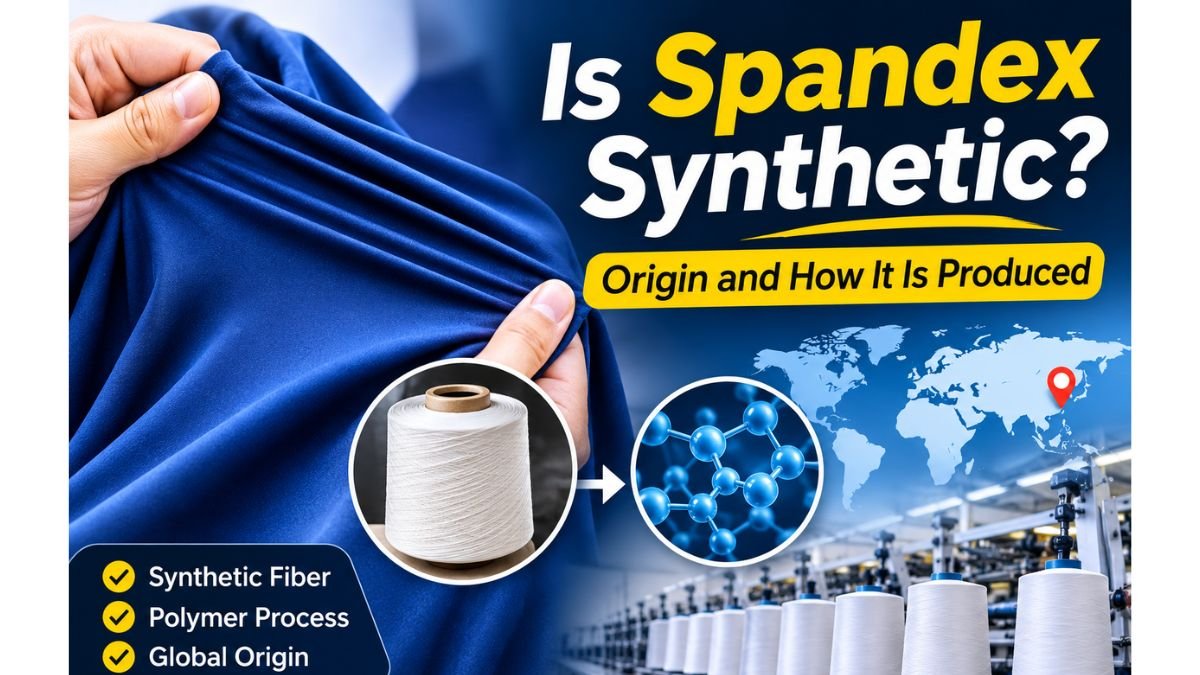
Many people ask, what material is spandex made of? Spandex is made from a synthetic polymer called polyurethane. More specifically, it is a segmented polyurethane-based elastomer.
This polymer contains flexible sections that allow the fiber to stretch. It also contains firmer sections that help the fiber recover its shape.
Spandex is manufactured through chemical processes. These processes create long polymer chains that can form elastic fibers.
Main Components of Spandex
The main material used to produce spandex is polyurethane. Its structure gives the fiber its unusual elasticity.
Here are the important characteristics of its composition:
1. Polyurethane-Based Polymer
Polyurethane provides the foundation of spandex fiber. It creates a flexible structure that can stretch and recover.
2. Flexible Polymer Segments
These sections allow the fiber to extend when tension is applied. They are responsible for much of its elasticity.
3. Firm Polymer Segments
These sections help the fiber return toward its original length after stretching. They also contribute to its strength and stability.
4. Chemical Processing Materials
Manufacturers use different chemicals and processing agents during polymer production and fiber formation. The exact formulation can vary by manufacturer.
Spandex is therefore different from natural fibers such as cotton, wool, and linen. It is a manufactured synthetic fiber created for stretch performance.
What Are Spandex Materials?
The phrase spandex materials can refer to spandex fibers and the fabrics made by combining them with other textile fibers.
Spandex itself provides elasticity. Other fibers contribute properties such as softness, durability, breathability, moisture management, and surface texture.
The final fabric depends on the fiber combination, knitting or weaving method, yarn structure, and finishing process.
1. Cotton and Spandex
Cotton-spandex fabric combines the softness of cotton with the stretch of spandex. It is commonly used in casual clothing and everyday garments.
Typical products include:
- Stretch T-shirts
- Casual tops
- Leggings
- Stretch trousers
- Underwear
- Comfortable everyday clothing
Cotton provides a familiar natural-fiber feel. Spandex helps garments fit the body and move comfortably.
However, cotton-spandex fabrics may retain more moisture than some performance polyester blends. Their suitability depends on the garment design and fabric construction.
2. Polyester and Spandex
Polyester-spandex is a popular combination for activewear and sports clothing.
Polyester provides durability and helps fabrics maintain their shape. Spandex adds flexibility and stretch.
Common applications include:
- Gym leggings
- Sports bras
- Training shirts
- Cycling clothing
- Dancewear
- Fitness shorts
- Performance tops
The fabric can be engineered with different weights and surface finishes. Some versions are lightweight, while others provide stronger coverage and compression.
3. Nylon and Spandex
Nylon-spandex fabric is known for its smooth surface, flexibility, and comfortable fit.
It is widely used in garments that need a close fit and repeated movement.
Common products include:
- Yoga leggings
- Swimwear
- Sports bras
- Cycling shorts
- Dance costumes
- Performance clothing
Nylon-spandex blends can provide a soft and smooth feel. Their performance depends on the nylon type, spandex percentage, fabric construction, and finishing.
4. Polyamide and Spandex
Polyamide is another name commonly used for nylon-based fibers. When combined with elastane, it creates fabrics with stretch and a smooth appearance.
This combination is popular in activewear, swimwear, and fitted garments.
Manufacturers choose polyamide-spandex blends when they need a balance of flexibility, comfort, and durability.
5. Other Fiber Blends
Spandex can also be combined with other fibers. These combinations help manufacturers develop fabrics for specific products.
Examples include:
- Viscose and spandex for soft, flexible clothing.
- Modal and spandex for smooth, comfortable garments.
- Denim and spandex for stretch jeans.
- Wool and spandex for selected fitted garments.
- Recycled polyester and spandex for certain performance fabrics.
The best combination depends on the product’s purpose, target customer, price range, and performance requirements.
How Is Spandex Fabric Made?
Understanding how spandex fabric is made helps explain why it has such strong elasticity.
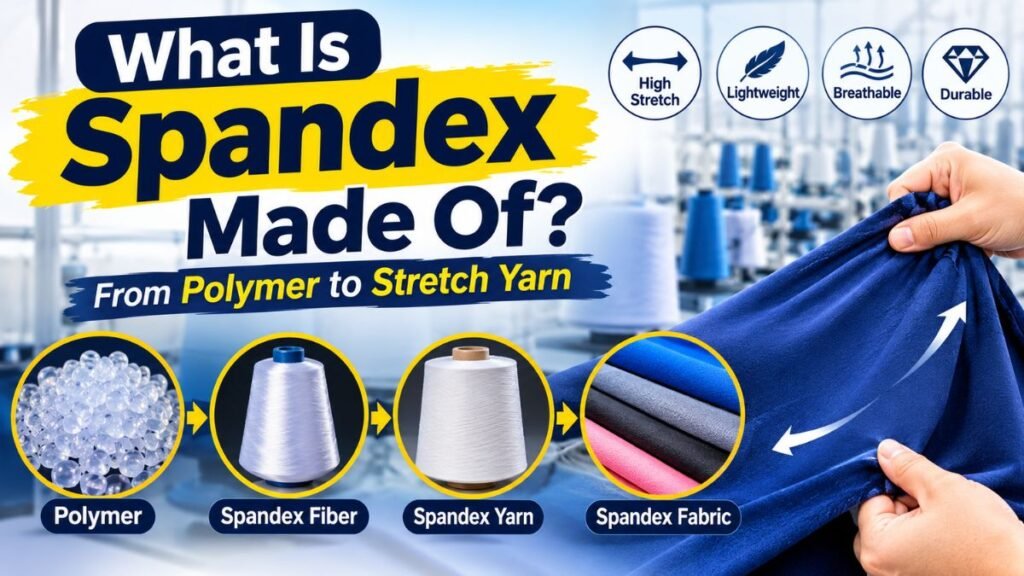
Spandex production involves several stages. First, manufacturers create the polymer. They then convert it into fine elastic filaments. Finally, textile mills use these filaments to produce yarns and fabrics.
The exact manufacturing method can vary between producers.
Step 1: Producing the Polymer
The process begins with chemical raw materials used to produce polyurethane-based polymer.
Manufacturers combine suitable chemical components under controlled conditions. The resulting material forms long polymer chains.
These chains contain flexible and firm sections. Their structure gives spandex its ability to stretch and recover.
Step 2: Preparing the Polymer Solution
In a common production method, the polymer is prepared as a solution. Manufacturers carefully control its concentration, consistency, and processing conditions.
The solution must have suitable properties for fiber formation.
Precise control is important because variations can affect the quality and performance of the finished fiber.
Step 3: Forming the Fibers
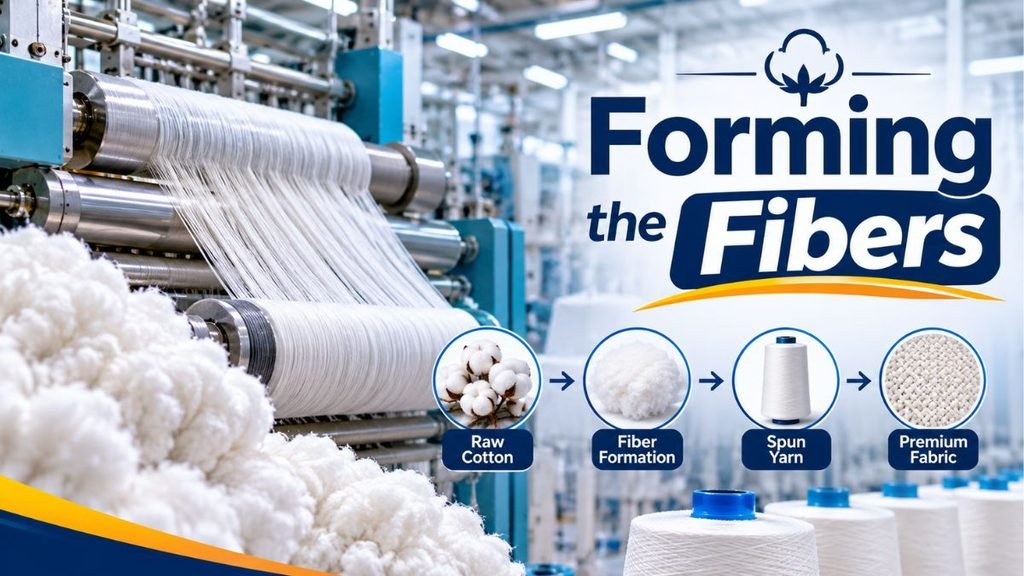
One widely used technique is solution dry spinning.
During this process, the polymer solution passes through a specialized device called a spinneret. The spinneret contains tiny openings that form fine filaments.
A controlled stream of warm gas removes the solvent. As the solvent evaporates, the polymer forms solid elastic fibers.
Other manufacturing methods may be used depending on the producer and production technology.
Step 4: Combining and Winding the Filaments
The newly formed filaments are gathered into yarn bundles. Manufacturers may combine multiple filaments to achieve the required thickness and performance.
The yarn is then wound onto packages for further processing.
Step 5: Applying Finishing Treatments
Manufacturers may apply suitable finishing treatments to improve handling and prepare the fiber for textile production.
The treatment depends on the intended application and the requirements of the next manufacturing stage.
Step 6: Creating Fabric
Spandex yarn is often combined with other textile yarns during knitting or weaving.
Knitting is especially common for stretch fabrics because knitted structures naturally provide flexibility.
Weaving can also incorporate elastic yarns to produce fabrics with controlled stretch.
Step 7: Dyeing and Final Processing
After fabric formation, the material may go through dyeing, washing, heat setting, and other finishing operations.
These processes help achieve the required color, dimensions, texture, and appearance.
The finished fabric is then inspected before it moves into garment manufacturing.
Important Properties of Spandex Fabric
Spandex is valued for its performance. However, its properties depend on the fiber quality and fabric construction.
1. Excellent Stretch
Stretch is the most recognized feature of spandex. It allows garments to expand when the wearer moves.
This makes it useful for leggings, sportswear, swimwear, and fitted clothing.
2. Shape Recovery
Spandex can return toward its original shape after being stretched.
This helps reduce unwanted looseness in garments. It also supports a close and comfortable fit.
3. Flexibility
Spandex allows clothing to move with the body. It is especially useful for activities involving bending, stretching, running, and jumping.
4. Lightweight Construction
Spandex fibers are fine and can be incorporated into lightweight fabrics.
The finished fabric’s weight depends on the other fibers and its construction.
5. Comfortable Fit
When used correctly, spandex helps garments fit comfortably without restricting movement.
However, comfort also depends on pattern design, fabric weight, garment size, and construction.
6. Durability
Spandex can improve a fabric’s ability to maintain its fit during normal wear. However, it can be damaged by excessive heat, harsh chemicals, and unsuitable care.
The durability of a garment also depends on the quality of its other fibers and manufacturing.
7. Wrinkle Resistance
Some spandex blends resist wrinkles better than certain fabrics without elastic fibers.
This characteristic depends on the complete fabric composition rather than spandex alone.
Common Uses of Spandex Fabric
Spandex is used across many clothing categories. Its stretch makes it suitable for products that require flexibility and a close fit.
1. Activewear and Gym Clothing
Activewear is one of the largest application areas for spandex blends.
Leggings, sports bras, gym shorts, and training tops often contain elastane.
These garments need to support movement during exercise. Stretch fabrics help users bend, squat, stretch, and run more comfortably.
2. Yoga and Fitness Clothing
Yoga clothing needs flexibility and a comfortable fit.
Nylon-spandex and polyester-spandex blends are common choices for leggings, yoga tops, and fitted shorts.
Brands should test opacity, stretch recovery, waistband performance, and comfort before approving a fabric.
3. Swimwear
Swimwear commonly uses nylon-spandex or polyester-spandex blends.
These fabrics provide stretch and help garments fit closely to the body.
For swimwear, brands should also evaluate chlorine resistance, color retention, and performance after repeated exposure to water.
4. Underwear and Intimate Apparel
Spandex is frequently used in underwear because it supports flexibility and a close fit.
It may be blended with cotton, nylon, polyester, or other fibers.
The right fabric should feel comfortable against the skin and maintain its shape during regular use.
5. Stretch Denim
Denim manufacturers often add a small percentage of spandex to create stretch jeans.
This helps improve flexibility around the waist, hips, thighs, and knees.
Stretch denim is popular in fitted jeans and other modern denim products.
6. Casual Clothing
Spandex can be used in everyday garments such as T-shirts, trousers, dresses, skirts, and fitted tops.
Small amounts can provide additional flexibility without changing the garment’s overall appearance significantly.
7. Dance and Performance Clothing
Dancewear requires freedom of movement and a secure fit.
Spandex blends are used in leotards, leggings, costumes, and fitted performance garments.
The fabric should support movement while maintaining suitable coverage and comfort.
Benefits of Using Spandex in Clothing
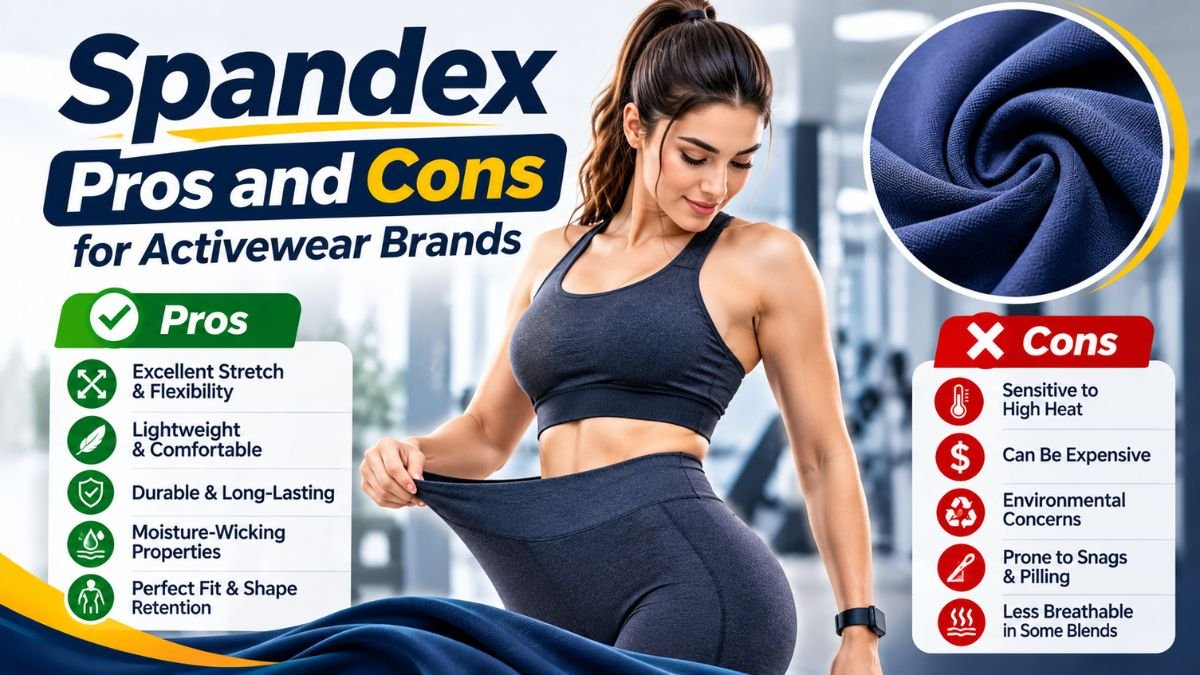
Spandex offers several advantages for clothing manufacturers, brands, and consumers.
Improved Movement: Stretch fibers help clothing move with the body during everyday activities and exercise.
Better Fit: Spandex can support fitted designs and reduce unwanted looseness.
Design Flexibility: Fashion brands can create leggings, fitted tops, sportswear, and other stretch garments.
Comfort: Suitable spandex blends can improve comfort during repeated movement.
Shape Retention: Elastic recovery helps garments maintain their intended fit when the fabric is properly selected and cared for.
Versatile Applications: Spandex works with many textile fibers and can be used across different clothing categories.
These benefits make spandex a valuable material in modern apparel production.
Disadvantages of Spandex Fabric
Although spandex offers useful performance features, it also has limitations.
1. Sensitivity to High Heat
Excessive heat can damage spandex fibers and reduce their elasticity.
High-temperature washing, ironing, or drying may shorten the useful life of a garment.
2. Limited Moisture Absorption
Spandex is not highly absorbent. A fabric containing spandex may need other fibers or specialized construction to provide the desired moisture-management performance.
3. Chemical Sensitivity
Certain chemicals, cleaning agents, and harsh treatments can affect elastic performance.
Manufacturers should follow suitable processing recommendations.
4. Environmental Considerations
Spandex is a synthetic, fossil-fuel-based material in conventional production. It does not readily biodegrade under normal environmental conditions.
Blended fabrics can also be more difficult to recycle because they contain multiple fiber types.
5. Potential Loss of Elasticity
Repeated stretching, unsuitable washing, high heat, and prolonged wear can reduce elasticity over time.
Good fabric selection and care can help limit this problem.
Spandex vs. Polyester vs. Nylon
Spandex, polyester, and nylon are different synthetic fibers. Each has its own properties and common applications.
| Feature | Spandex | Polyester | Nylon |
|---|---|---|---|
| Main purpose | Stretch and recovery | Durability and versatility | Strength and smoothness |
| Elasticity | Very high | Generally limited | Generally limited |
| Moisture absorption | Low | Low | Higher than polyester |
| Common uses | Leggings, swimwear, fitted clothing | Sportswear, T-shirts, outerwear | Activewear, swimwear, hosiery |
| Typical role in blends | Adds stretch | Adds structure and durability | Adds strength and smoothness |
These fibers are not always competitors. Manufacturers often combine them to achieve specific fabric performance.
For example, polyester-spandex and nylon-spandex are widely used because they combine the properties of two different fibers.
How Much Spandex Should a Fabric Contain?
The ideal spandex percentage depends on the garment’s purpose and desired stretch.
There is no single percentage that works for every clothing product.
Some everyday fabrics contain a small amount of spandex. Performance garments may use a higher percentage to achieve greater stretch.
Consider these general examples:
| Clothing Type | Possible Spandex Content |
|---|---|
| Stretch denim | 1–3% |
| Casual stretch clothing | 2–5% |
| Stretch cotton tops | 3–8% |
| Yoga leggings | 10–20% |
| Performance activewear | 5–20% |
| Swimwear | 10–25% |
These are illustrative ranges, not universal manufacturing specifications. Actual compositions vary by fabric construction, yarn type, design, and supplier.
A higher percentage does not automatically mean better quality. Brands should evaluate stretch, recovery, comfort, coverage, durability, and intended use.
How to Choose the Right Spandex Fabric
Selecting suitable spandex fabric is important for product quality and customer satisfaction.
Fashion brands should evaluate several factors before placing a bulk fabric order.
1. Identify the Garment Purpose
Start by deciding what you want to manufacture.
Yoga leggings require different fabric properties than stretch T-shirts or denim jeans.
Consider the product’s expected use, target customer, and performance requirements.
2. Check the Fiber Composition
Ask the supplier for the exact fiber composition.
A fabric described as stretch material may contain different percentages of polyester, nylon, cotton, and spandex.
The composition affects comfort, performance, care, and price.
3. Evaluate Fabric Weight
Fabric weight is commonly measured in GSM, meaning grams per square meter.
Lightweight fabrics may suit some tops and layering products. Heavier fabrics may be more appropriate for leggings or garments requiring greater coverage.
The correct GSM depends on the design and intended use.
4. Test Stretch and Recovery
Stretch alone is not enough.
A fabric should also recover after repeated stretching. Poor recovery can lead to loose knees, stretched waistbands, or garments that lose their shape.
Request testing or evaluate samples before approving bulk production.
5. Check Opacity
Opacity is especially important for leggings, yoga pants, and fitted sportswear.
Test the fabric under suitable lighting and while stretched. A material that looks opaque when relaxed may become transparent under tension.
6. Review Color and Finish
Check whether the fabric has the correct shade, surface appearance, and hand feel.
For larger orders, approve a fabric swatch or lab dip before production.
7. Understand Care Requirements
Ask how the fabric should be washed, dried, and ironed.
Clear care instructions help customers maintain garment performance.
How to Care for Spandex Clothing
Proper care helps protect the elasticity and appearance of spandex garments.
Follow the care label because different fiber blends may require different treatments.
Here are some general recommendations:
- Wash garments using a suitable gentle cycle.
- Use cool or lukewarm water when recommended.
- Avoid excessive heat during drying.
- Do not iron directly at high temperatures.
- Avoid harsh chemicals and unsuitable bleach.
- Keep garments away from unnecessary heat.
- Follow the manufacturer’s washing instructions.
For activewear, wash garments after use when needed. Sweat, body oils, and detergent residue can affect fabric freshness.
Avoid twisting or pulling wet garments aggressively. This can place unnecessary stress on the fibers and seams.
Spandex Fabric in Clothing Manufacturing
Spandex plays an important role in modern garment manufacturing. It allows clothing brands to develop products with stretch, flexibility, and fitted silhouettes.
However, choosing the correct fiber blend is only one part of production.
Manufacturers must also consider fabric sourcing, pattern development, garment construction, stitching, finishing, and quality control.
Fabric Sourcing
The first step is finding a fabric that meets the product requirements.
Brands should confirm composition, GSM, color, width, stretch performance, and available quantities.
They should also request samples before committing to large orders.
Product Development
The selected fabric must work with the garment design.
Patterns may need adjustments to account for stretch and recovery. The construction method should also support the fabric’s performance.
Sampling
A pre-production sample helps brands evaluate the complete garment.
It allows them to check fit, measurements, stitching, fabric behavior, and finishing before bulk production.
Quality Control
Quality checks should cover more than appearance.
For spandex garments, important inspection points include:
- Fabric composition and weight
- Stretch and recovery
- Measurement consistency
- Seam strength
- Stitch quality
- Color consistency
- Print or embroidery quality
- Garment fit and comfort
Testing should match the product’s intended use and quality requirements.
What Should Clothing Brands Ask a Spandex Fabric Supplier?
Before selecting a supplier, ask clear questions about the fabric and its performance.
Useful questions include:
- What is the exact fiber composition?
- What percentage of the fabric is spandex?
- What is the fabric’s GSM?
- Is the material knitted or woven?
- What are its stretch and recovery properties?
- Is the fabric suitable for the intended garment?
- What colors and finishes are available?
- What is the minimum order quantity?
- Can you provide fabric swatches?
- Are testing reports or technical specifications available?
Request written specifications whenever possible. This makes it easier to compare suppliers and maintain consistency between orders.
Is Spandex a Good Material for Activewear Brands?
Yes, spandex can be a suitable material for activewear because it provides stretch and recovery.
It is commonly blended with polyester or nylon to create fabrics for leggings, sports bras, gym shorts, and fitted tops.
However, the right blend depends on the activity and product design.
For example, yoga leggings may require four-way stretch and suitable opacity. Running tops may need lightweight construction and effective moisture management.
Brands should test fabric performance before approving production. They should also consider comfort, durability, colorfastness, and care requirements.
Working With a Custom Clothing Manufacturer
Fashion brands developing spandex-based garments may benefit from working with a manufacturer that understands fabric selection and garment construction.
A custom clothing manufacturer can help coordinate product development, sourcing, sampling, bulk production, branding, and quality checks.
Fashion Soul International provides custom apparel manufacturing services, including private-label and OEM/ODM production. Brands can discuss their product requirements, fabric preferences, designs, and production quantities when requesting a quotation.
For stretch garments, provide clear specifications. Include the fabric composition, GSM, measurements, stretch requirements, colors, and finishing details.
A suitable pre-production sample should be reviewed before bulk manufacturing begins. This helps identify fit, fabric, and construction issues early.
Frequently Asked Questions About Spandex Fabric Material
1. Is Spandex a Natural or Synthetic Material?
Spandex is a synthetic material. It is manufactured from polyurethane-based polymers through industrial chemical processes. Unlike cotton or wool, it does not come directly from plants or animals.
2. What Material Is Spandex Made Of?
Spandex is made from a segmented polyurethane-based elastomer. Its polymer structure contains flexible and firm sections that allow the fiber to stretch and recover.
3. Is Spandex the Same as Elastane?
Yes. Spandex and elastane are two names for the same elastic fiber. The term spandex is commonly used in the United States, while elastane is widely used in other markets.
4. How Is Spandex Fabric Made?
Spandex production begins with polyurethane-based polymer. The polymer is processed into elastic filaments, often through solution dry spinning. These filaments are then converted into yarns and combined with other fibers to create fabric.
5. Is Spandex Good for Everyday Clothing?
Yes. Spandex blends are used in everyday clothing such as jeans, T-shirts, trousers, underwear, and fitted tops. A small amount can add flexibility and improve fit.
6. Is Spandex Suitable for Summer Clothing?
Spandex can be used in summer garments, but comfort depends on the complete fabric construction. Lightweight cotton-spandex and suitable polyester-spandex blends may work well for different summer products.
7. Does Spandex Lose Its Stretch?
Spandex can lose elasticity through repeated wear, excessive heat, harsh chemicals, and unsuitable washing. Following care instructions can help preserve its performance.
8. Is Spandex the Same as Polyester?
No. Spandex is mainly used for elasticity and recovery. Polyester is commonly used for durability, shape stability, and versatility. Both fibers can be blended to create stretch fabrics.
9. Can Spandex Be Recycled?
Recycling spandex can be challenging, particularly when it is blended with other fibers. Some specialized recycling processes may handle certain materials, but availability depends on local facilities and fabric composition.
10. Is Spandex Used in Sustainable Clothing?
Spandex is a synthetic fiber, so conventional production has environmental considerations. Some brands use recycled-content blends or explore alternative materials. However, the overall sustainability of a garment depends on sourcing, manufacturing, durability, care, and end-of-life options.
Conclusion
Spandex fabric material is an important part of modern textile production. Its excellent stretch and recovery make it useful for activewear, swimwear, underwear, stretch denim, and everyday clothing.
Understanding what material spandex is made of helps brands choose suitable fabric blends. Learning how spandex fabric is made also provides insight into the manufacturing processes behind elastic textiles.
The best fabric depends on the product’s purpose. Brands should evaluate fiber composition, GSM, stretch, recovery, comfort, durability, and care requirements before production.
With proper fabric selection, sampling, and quality control, spandex blends can help clothing brands develop comfortable and functional garments that meet customer expectations.