Polyester Spandex Mix: Benefits, Uses, Stretch and Fabric Guide
A polyester spandex mix is a popular fabric blend used in activewear, sportswear, leggings, swimwear, and everyday clothing. It combines the durability of polyester with the flexibility of spandex. This combination creates a fabric that stretches, keeps its shape, and supports comfortable movement.
Many clothing brands choose this blend because it offers a useful balance of performance, comfort, and easy care. However, the fabric’s performance depends on its composition, construction, weight, and finishing.
If you are researching whether polyester and spandex work well together, this guide explains everything you need to know. You will learn how stretchy the material is, what a poly spandex blend means, where it is used, and how to choose the right fabric for your clothing products.
What Is a Polyester Spandex Mix?
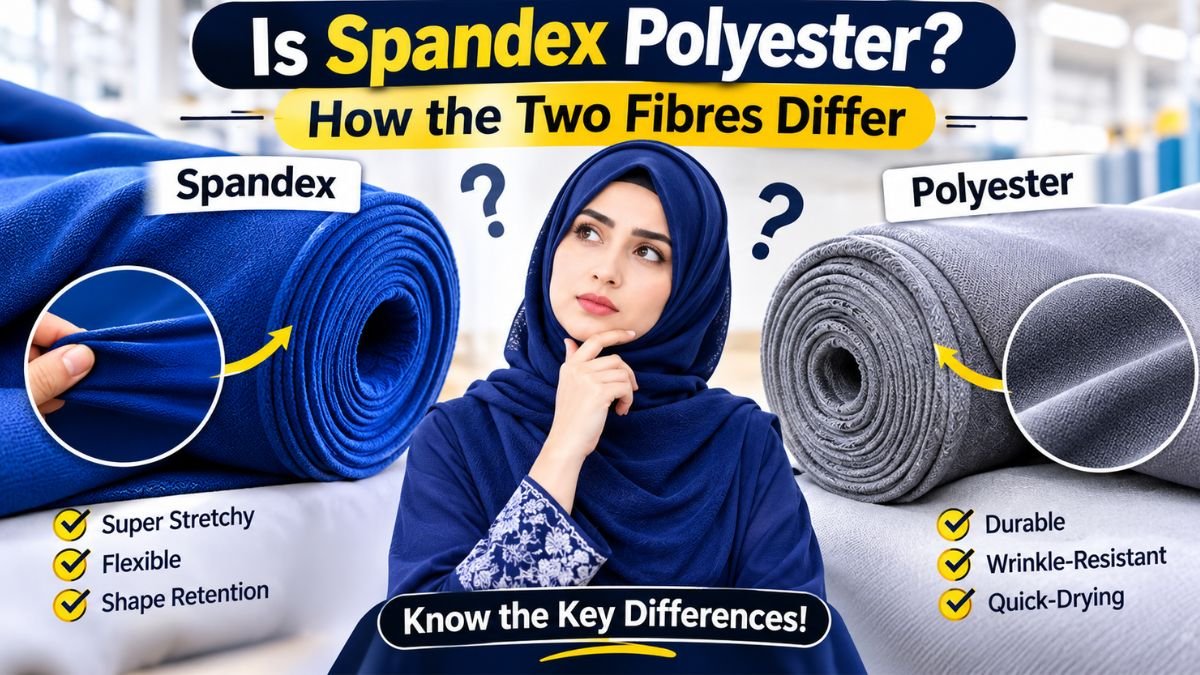
A polyester spandex mix is a textile made by combining polyester fibres with spandex fibres. Polyester provides strength, durability, and resistance to wrinkles. Spandex adds elasticity, allowing the material to stretch and return toward its original shape.
The two fibres work together to create a flexible fabric suitable for garments that need both comfort and performance.
Polyester is a synthetic fibre made from polymer materials. It is widely used in clothing because it is strong, lightweight, and relatively easy to maintain.
Spandex is also a synthetic fibre. It is known for its high elasticity and ability to stretch significantly without permanently losing its shape under normal use.
When manufacturers combine these fibres, they can produce fabrics with different levels of stretch, softness, thickness, and support.
For example, a fabric containing 95% polyester and 5% spandex usually offers moderate stretch. A blend containing more spandex may provide greater elasticity and flexibility.
The exact performance depends on the fibre ratio and fabric construction.
Is Polyester and Spandex Stretchy?
Yes, polyester and spandex are stretchy when blended together. Spandex provides the main elastic properties, while polyester helps the fabric maintain its strength and structure.
This combination is especially useful for clothing that needs to move with the body.
For example, leggings need enough stretch to support bending and exercise. Sports shirts need flexibility during movement. Swimwear needs a close fit without restricting normal activity.
A polyester-spandex fabric can meet these requirements when it has the correct composition and construction.
How Does Spandex Create Stretch?
Spandex fibres are designed to stretch and recover. They can extend when tension is applied and contract when that tension is released.
This property helps garments fit comfortably while allowing movement.
The amount of stretch depends on several factors:
- Spandex percentage: A higher percentage can increase elasticity.
- Fabric construction: Knitted fabrics often offer more flexibility than tightly woven fabrics.
- Yarn structure: The way polyester and spandex yarns are combined affects performance.
- Fabric weight: Heavier materials may feel more supportive, while lighter fabrics may feel softer and more flexible.
- Finishing: Dyeing and finishing processes can influence the final fabric’s feel and performance.
A fabric with more spandex is not automatically better. The ideal percentage depends on the garment’s purpose.
What Is a Poly Spandex Blend?
A poly spandex blend is another name for a fabric made from polyester and spandex. The word “poly” is commonly used as a short form of polyester in textile and apparel descriptions.
The blend is popular because each fibre contributes different properties.
Polyester offers durability and helps garments resist everyday wear. Spandex provides stretch and flexibility. Together, they create a material that works well for fitted and performance-focused clothing.
Poly spandex blend fabric is available in different weights, textures, colours, and constructions. Some versions are smooth and lightweight, while others are thicker and designed for greater coverage or support.
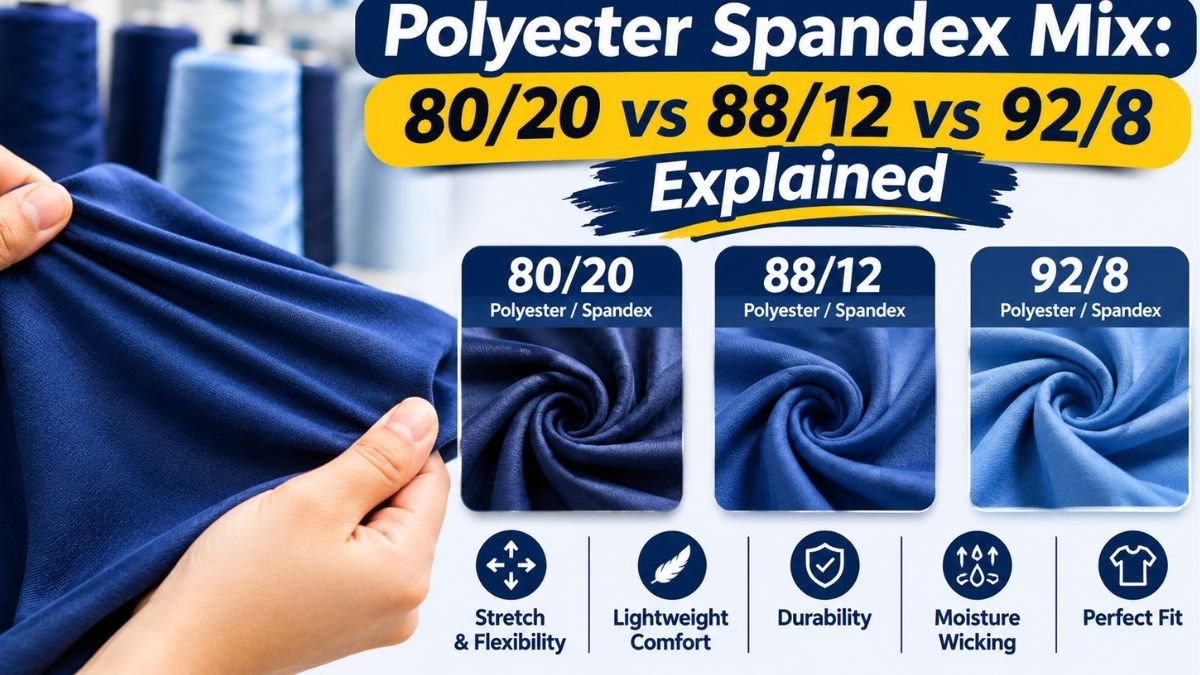
Common Polyester and Spandex Ratios
Manufacturers use different fibre ratios depending on the intended product.
| Polyester | Spandex | Typical characteristics |
|---|---|---|
| 95% | 5% | Moderate stretch and a structured feel |
| 92% | 8% | Balanced flexibility and durability |
| 90% | 10% | Greater elasticity for fitted garments |
| 88% | 12% | More stretch for performance clothing |
| 85% | 15% | High flexibility and a close-fitting feel |
These are examples, not fixed industry standards. Actual compositions vary by fabric supplier and product requirements.
A clothing brand should test the finished fabric rather than selecting it based only on the percentage shown on a specification sheet.
Benefits of Polyester Spandex Blend Fabric
Polyester spandex blend fabric offers several advantages. Its combination of strength and elasticity makes it useful for many clothing categories.
1. Excellent Stretch and Flexibility
One of the biggest benefits is its ability to stretch. Spandex helps the fabric move with the body during everyday activities and exercise.
This makes it suitable for leggings, sports bras, fitted tops, cycling clothing, and other garments that require flexibility.
The amount of stretch depends on the blend ratio and construction.
2. Shape Retention
Spandex helps garments return toward their original shape after stretching. This can reduce the loose or sagging appearance that sometimes develops with repeated wear.
Shape retention is important for fitted clothing. It helps leggings, activewear tops, and sportswear maintain their intended fit.
However, poor fabric quality, excessive heat, and repeated harsh washing can damage elasticity.
3. Durability
Polyester is known for its strength and resistance to many forms of everyday wear.
When combined with spandex, it can produce a fabric suitable for regular use. This is useful for sportswear and clothing that experiences frequent movement.
Durability still depends on yarn quality, fabric construction, stitching, and garment care.
4. Lightweight Comfort
Many polyester-spandex fabrics are lightweight and comfortable. They can be used to create garments that allow movement without feeling unnecessarily heavy.
The final comfort level depends on fabric weight, surface texture, fit, and breathability.
For example, lightweight blends may work well for sports tops. Heavier versions may be more suitable for leggings that require additional coverage.
5. Wrinkle Resistance
Polyester generally resists wrinkles better than many natural fibres.
This can help garments maintain a neat appearance during storage, transport, and everyday use.
It may also reduce the need for frequent ironing. However, care instructions should always follow the fabric supplier’s recommendations.
6. Easy Maintenance
Polyester-spandex clothing is generally easy to care for. Many garments can be machine-washed using a gentle cycle.
However, high temperatures can affect spandex fibres. Using suitable washing and drying methods helps protect the fabric’s elasticity.
7. Colour and Design Options
Polyester fabrics are available in many colours and finishes. They can also support different printing and decoration methods, depending on the fabric construction and dye system.
This gives clothing brands flexibility when developing custom designs.
Before choosing a decoration method, brands should confirm compatibility with the specific fabric.
Common Uses of Polyester Spandex Mix
A polyester spandex mix is used across several clothing categories. Its flexibility and durability make it suitable for both sportswear and everyday fashion.
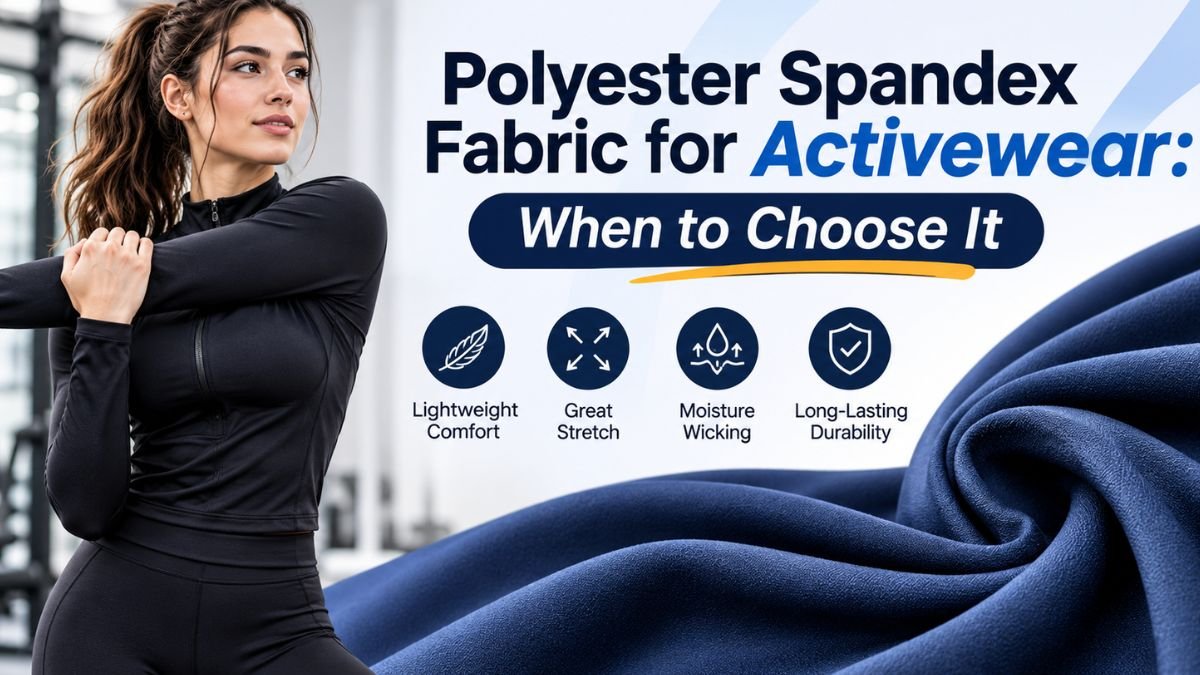
1. Activewear and Gym Clothing
Activewear is one of the most common uses of this blend.
Gym clothing needs to support different movements, including stretching, running, lifting, and bending.
Polyester provides strength, while spandex supports flexibility. This makes the blend useful for:
- Gym leggings
- Workout shirts
- Sports bras
- Training shorts
- Compression-style garments
- Fitness tops
- Exercise sets
Brands should also consider moisture management, breathability, opacity, and recovery when selecting activewear fabric.
2. Sportswear
Sportswear often requires a combination of comfort, flexibility, and durability.
A poly spandex blend can be used in sports tops, training uniforms, cycling garments, and other performance clothing.
The correct fabric depends on the sport. Some activities require lightweight materials, while others need more support or abrasion resistance.
3. Leggings and Yoga Pants
Leggings need enough stretch to fit the body and support movement.
Polyester-spandex fabric is commonly used because it can provide flexibility and shape retention.
For yoga pants, buyers should evaluate:
- Four-way stretch
- Stretch recovery
- Opacity during movement
- Fabric softness
- Seam strength
- Resistance to pilling
A fabric may feel comfortable when held in the hand but become transparent when stretched. Testing it on a sample garment is important.
4. Swimwear
Some polyester-spandex fabrics are suitable for swimwear.
The blend can provide a close fit and flexibility. However, not every polyester-spandex fabric is designed for regular swimming.
Swimwear buyers should check chlorine resistance, saltwater performance, colourfastness, lining requirements, and recovery after repeated use.
The fabric should be specifically developed and tested for the intended swimming environment.

5. Casual Clothing
This blend is not limited to sportswear. It can also be used for everyday clothing.
Depending on the fabric weight and finish, it may work well for:
- Stretch trousers
- Casual tops
- Fitted dresses
- Comfortable shorts
- Flexible uniforms
- Everyday sports-inspired clothing
The fabric construction should match the garment’s appearance and intended use.
6. Dance and Performance Clothing
Dancewear needs flexibility because performers make repeated and wide movements.
Polyester-spandex blends can support fitted designs while allowing movement.
They are used in some dance tops, leggings, performance costumes, and training garments.
For these products, stretch recovery and comfort are particularly important.
Polyester Spandex Mix vs. Other Fabric Blends
Choosing the right fabric requires understanding how it compares with other common textile combinations.
Polyester Spandex vs. Cotton Spandex
Cotton-spandex blends combine cotton’s natural softness with spandex’s elasticity.
Polyester-spandex blends generally offer stronger wrinkle resistance and may dry faster than comparable cotton blends.
| Feature | Polyester spandex | Cotton spandex |
|---|---|---|
| Main fibres | Polyester and spandex | Cotton and spandex |
| Feel | Depends on construction; often smooth | Often soft and natural |
| Stretch | Depends on spandex content | Depends on spandex content |
| Wrinkle resistance | Generally good | Usually lower |
| Moisture behaviour | Depends on fabric design | Cotton absorbs moisture |
| Common uses | Activewear and sportswear | Casualwear and fitted basics |
Neither option is best for every garment. The right choice depends on the required feel, performance, appearance, and care needs.
Polyester Spandex vs. Nylon Spandex
Nylon-spandex blends are also common in activewear and swimwear.
Nylon is known for its smooth feel and flexibility. Polyester offers good durability and colour options, depending on the fabric and dyeing process.
| Feature | Polyester spandex | Nylon spandex |
|---|---|---|
| Main benefit | Durability and versatility | Smooth feel and flexibility |
| Common applications | Sportswear and activewear | Leggings, swimwear, and activewear |
| Moisture behaviour | Depends on construction and finish | Depends on construction and finish |
| Selection factors | Weight, stretch, colourfastness | Weight, stretch, recovery |
The best option depends on the garment’s performance requirements and the results of fabric testing.
Polyester Spandex vs. 100% Polyester
Regular polyester fabric does not contain spandex unless it is specifically blended with an elastic fibre.
It may offer durability and wrinkle resistance, but it generally does not provide the same stretch as a polyester-spandex blend.
For fitted garments, adding spandex can improve flexibility and comfort.
How to Choose the Right Poly Spandex Blend Fabric
Choosing fabric is an important part of clothing development. A material that looks suitable in a supplier photograph may perform differently in a finished garment.
Before placing a bulk order, evaluate the following factors.
1. Check the Fibre Composition
Ask the supplier for the exact polyester and spandex percentages.
Do not assume that every fabric described as poly spandex has the same composition.
The percentage can influence stretch, recovery, comfort, and cost.
2. Understand Fabric Weight
Fabric weight is commonly measured in GSM, meaning grams per square metre.
A lower GSM fabric is generally lighter. A higher GSM fabric is generally heavier.
However, GSM alone does not determine quality.
For example, a lightweight sports top and a supportive pair of leggings may need very different fabric weights.
Choose GSM according to the garment design, coverage, climate, and intended use.
3. Test Stretch and Recovery
Stretch and recovery are two different properties.
Stretch measures how far a fabric extends when force is applied. Recovery measures how well it returns toward its original dimensions after the force is removed.
A fabric may stretch significantly but recover poorly.
For fitted garments, both properties matter.
Ask for fabric testing information or conduct suitable stretch and recovery tests on samples.
4. Evaluate Breathability
Breathability affects how comfortable a garment feels during use.
A tightly constructed fabric may feel warmer than a lighter, more open construction.
For activewear, consider air permeability and moisture management. Do not assume that every polyester-spandex blend is automatically breathable or moisture-wicking.
These properties depend on yarn, construction, and finishing.
5. Check Colourfastness
Colourfastness describes how well a fabric maintains its colour during washing, rubbing, and exposure to other conditions.
This is especially important for clothing brands selling bright, dark, or printed garments.
Ask suppliers about relevant colourfastness tests and review sample results.
6. Request a Fabric Sample
Always request a physical sample before approving bulk fabric.
A sample allows you to check:
- Fabric softness
- Thickness
- Stretch
- Recovery
- Surface appearance
- Colour
- Opacity
- Stitching performance
If possible, create a sample garment and test it under realistic conditions.
How Polyester Spandex Fabric Is Used in Clothing Manufacturing
Selecting the right blend is only one part of garment development. Manufacturers must also consider the pattern, construction, stitching, finishing, and quality requirements.
A well-selected fabric can still produce a poor garment if the manufacturing process is not properly controlled.
Step 1: Define the Garment Requirements
Start with the product’s purpose.
A yoga legging, training shirt, and swimwear product have different requirements.
Prepare a design brief that explains the intended fit, fabric feel, stretch, colour, and performance expectations.
Step 2: Select the Fabric
Compare available polyester-spandex options.
Review the composition, GSM, construction, width, colour, and technical specifications.
Ask the supplier whether the fabric is suitable for the intended garment.
Step 3: Develop the Tech Pack
A tech pack helps communicate the product requirements to the manufacturer.
It may include:
- Technical drawings
- Measurements
- Fabric composition
- GSM requirements
- Stitching details
- Colour references
- Labels and trims
- Printing or embroidery instructions
- Packaging requirements
Clear specifications reduce confusion during sampling and production.
Step 4: Create a Sample
A pre-production sample allows the brand to evaluate the design and fabric together.
Check the fit, movement, stitching, comfort, and appearance.
For stretch garments, evaluate how the fabric behaves when worn and after washing.
Step 5: Approve Bulk Production
Bulk production should begin after the buyer approves the sample and confirms the specifications.
The manufacturer should follow the approved fabric, measurements, construction, and finishing details.
Step 6: Perform Quality Checks
Quality control helps identify issues before finished garments are shipped.
Relevant checks may include:
- Fabric composition verification
- Measurement checks
- Stitch quality
- Seam strength
- Print or decoration quality
- Colour consistency
- Stretch recovery
- Final garment appearance
The exact inspection plan depends on the product and buyer requirements.
Disadvantages of Polyester Spandex Mix
Although this blend has many benefits, it also has limitations.
Understanding these issues helps brands make better fabric decisions.
1. Heat Sensitivity
Spandex can be damaged by excessive heat.
High-temperature washing, ironing, or drying may reduce elasticity over time.
Follow the garment care label and avoid unnecessary heat exposure.
2. Limited Moisture Absorption
Polyester is generally less absorbent than cotton.
Some polyester-spandex fabrics are engineered to move moisture across the fabric surface. However, this performance is not guaranteed for every blend.
If moisture management matters, request relevant fabric specifications and test the material.
3. Pilling Can Occur
Pilling refers to small fibre balls that form on a fabric surface.
It can occur because of friction during wear and washing.
The risk depends on yarn quality, fabric construction, finishing, and use.
A suitable pilling test can help brands compare fabric options.
4. Synthetic Fibre Content
Both polyester and spandex are synthetic fibres.
Brands focusing on natural materials or specific sustainability goals may need to consider alternative fabrics or investigate recycled fibre options.
Recycled polyester may be available, but its environmental benefits depend on sourcing, processing, durability, and end-of-life considerations.
5. Not Ideal for Every Product
A polyester-spandex blend is not suitable for every garment.
For example, a brand developing a loose cotton shirt may prefer a different fabric for its desired feel and appearance.
Fabric selection should always begin with the product requirements.
How to Wash and Care for Polyester Spandex Clothing
Proper care can help maintain the appearance and elasticity of polyester-spandex garments.
Follow the manufacturer’s care label first because different fabric constructions and finishes may require different treatment.
General care suggestions include:
- Wash using cool or lukewarm water when permitted by the care label.
- Use a gentle washing cycle where appropriate.
- Avoid excessive heat during washing and drying.
- Do not use harsh bleach unless the garment instructions allow it.
- Avoid high-temperature ironing.
- Air-dry when suitable.
- Avoid rough washing conditions that may cause surface damage.
These steps can help protect the fabric and extend garment life.
Is Polyester Spandex a Good Fabric for Activewear Brands?
Yes, polyester-spandex fabric can be a good option for activewear brands.
It offers a combination of flexibility, durability, and shape retention. These properties are useful for products that need to support regular movement.
However, brands should not choose fabric based on composition alone.
Consider the following before making a decision:
- Does the fabric provide enough stretch?
- Does it recover after repeated movement?
- Is it suitable for the intended activity?
- Does it provide the required coverage?
- Is the fabric comfortable against the skin?
- Does it meet the desired weight and appearance?
- Can it maintain its performance after washing?
Testing samples helps confirm whether the fabric meets the product requirements.
Working With a Custom Clothing Manufacturer
Clothing brands developing activewear, sportswear, or stretch garments may benefit from working with a manufacturer that understands fabric selection and garment construction.
The manufacturing process can involve fabric sourcing, product development, sampling, bulk production, quality control, branding, and packaging.
Fashion Soul International is a factory-owned custom clothing manufacturer based in Sialkot, Pakistan. The company offers private-label, OEM, ODM, white-label, cut-and-sew, and full-package apparel manufacturing.
Its services include fabric sourcing, sampling, bulk production, quality control, custom branding, packaging, and international shipping.
Brands interested in polyester-spandex garments should share their product design, target fabric composition, GSM, colour requirements, measurements, and expected order quantity.
A clear brief helps the manufacturing team understand the project and assess suitable fabric options.
Before bulk production, buyers should review and approve a physical sample. They should also confirm fabric specifications, production requirements, quality checks, minimum order quantities, and shipping terms.
Frequently Asked Questions
Is polyester and spandex stretchy?
Yes. Polyester-spandex fabric is stretchy because it contains spandex. Polyester provides strength, while spandex adds elasticity and helps the fabric recover after stretching.
What is a poly spandex blend?
A poly spandex blend is a fabric made by combining polyester and spandex fibres. It is commonly used for activewear, sportswear, leggings, fitted tops, and other flexible garments.
What is the best polyester-spandex ratio?
There is no single best ratio. A blend such as 95% polyester and 5% spandex may provide moderate stretch, while blends with more spandex can offer greater elasticity. The right ratio depends on the garment’s purpose.
Is polyester spandex good for leggings?
Yes. It can be suitable for leggings because it offers flexibility and shape retention. However, brands should test opacity, stretch recovery, fabric weight, comfort, and seam performance before production.
Is polyester spandex breathable?
Breathability depends on the fabric construction, yarn, weight, and finishing. Some blends are designed for activewear and moisture management, while others may feel warmer.
Does polyester spandex shrink?
Polyester generally has good dimensional stability, but shrinkage can still depend on fabric construction, processing, and care conditions. Follow the care label and test the fabric before bulk production.
Can polyester spandex be used for swimwear?
Some polyester-spandex fabrics are suitable for swimwear. Choose a fabric designed for swimming and check its resistance to chlorine, saltwater, colour fading, and repeated stretching.
How do you care for poly spandex blend fabric?
Use the care instructions provided with the garment. In general, avoid excessive heat, harsh washing conditions, and high-temperature ironing to help protect the spandex fibres.
Conclusion
A polyester spandex mix combines polyester’s strength with spandex’s flexibility. This makes it a useful fabric option for activewear, sportswear, leggings, swimwear, and many fitted garments.
The blend is available in different compositions and constructions. Its performance depends on stretch, recovery, GSM, breathability, finishing, and fabric quality.
For clothing brands, selecting the right material requires more than checking the fibre percentage. Request samples, review technical specifications, and test the fabric in the intended garment.
With careful fabric selection and proper manufacturing, polyester-spandex blend fabric can support comfortable, functional, and durable clothing products.