Carbon Neutral Sports Brands: A Guide to Sustainable Performance Apparel
The sportswear industry is changing as consumers become more aware of environmental issues. Athletes and everyday shoppers increasingly consider how their clothing is designed, manufactured, packaged, and delivered. This growing interest has encouraged more companies to explore sustainable materials and responsible production methods.
Carbon neutral sports brands are part of this movement. These brands aim to measure and reduce greenhouse gas emissions connected to their operations and products. Some also use carbon credits to address emissions that remain after reduction efforts.
However, carbon neutrality is only one part of sustainable fashion. A truly responsible sportswear product also needs durable materials, practical performance, responsible manufacturing, and clear environmental information.
This guide explains what carbon neutral sports brands mean, how companies can reduce their environmental impact, and what buyers should consider when choosing sustainable performance apparel. It also explores how clothing manufacturers can support sportswear brands working toward more responsible production.
What Are Carbon Neutral Sports Brands?
Carbon neutral sports brands are sportswear companies that work to balance the greenhouse gas emissions associated with a defined business activity, product, or organization.
Their approach usually involves measuring emissions, reducing them, and addressing remaining emissions through recognized carbon credits or other accepted mechanisms.
The term does not automatically mean that a company produces no emissions. Manufacturing, transportation, electricity use, packaging, and raw material production can all create greenhouse gases.
A brand should explain exactly what its carbon-neutral claim covers. For example, the claim might apply to its offices, selected products, manufacturing operations, or entire business.
This distinction matters because a company may have a carbon-neutral office operation while its supply chain continues to generate emissions.
Reliable environmental communication should explain:
- Which operations or products are included
- The period covered by the claim
- How greenhouse gas emissions were measured
- What reduction actions were taken
- Whether carbon credits were used
- How the claim was independently verified
Clear information helps customers understand what a brand has achieved instead of relying on broad marketing statements.
Why Is Sustainability Important in the Sportswear Industry?
Sportswear production involves several stages, from raw material sourcing to finished garment delivery. Each stage can affect the environment.
Synthetic fabrics, dyeing, finishing, electricity consumption, packaging, and international transportation may contribute to a product’s environmental footprint.
The growing demand for activewear also creates challenges. Brands need garments that perform well during exercise while meeting consumer expectations for durability, comfort, and responsible production.
Sustainability matters for several reasons.
1. Reducing Greenhouse Gas Emissions
Greenhouse gas emissions contribute to climate change. Clothing brands can examine their supply chains to identify activities that produce these emissions.
Common sources include:
- Electricity used in factories
- Production of polyester and other synthetic fibers
- Fabric dyeing and finishing
- Heating and industrial equipment
- Packaging materials
- Transportation by road, air, and sea
Measuring these sources helps companies understand where improvements may have the greatest effect.
2. Responsible Material Selection
Fabric choices influence the environmental impact and performance of sportswear.
Some brands explore recycled polyester, organic cotton, recycled nylon, and other alternative materials. These options may reduce certain environmental impacts, but their benefits depend on material sourcing and processing.
Brands should evaluate material composition, supplier information, durability, and product requirements before making environmental claims.
3. Reducing Textile Waste
Sportswear production can generate waste through fabric cutting, sample development, rejected garments, and unsold inventory.
Better pattern planning, accurate production forecasting, and efficient cutting layouts can help reduce unnecessary waste.
Brands can also consider longer-lasting designs and repair options. Durable products may reduce the need for frequent replacement.
4. Meeting Consumer Expectations
Many consumers now ask questions about where clothing comes from and how it is produced.
They may look for information about recycled materials, factory practices, packaging, and environmental targets.
Clear sustainability information can help brands build trust. However, environmental claims should always be accurate and supported by evidence.
What Is Sustainable Performance Apparel?
Sustainable performance apparel refers to sportswear designed to meet athletic needs while considering environmental and production impacts.
It combines practical clothing features with more responsible material and manufacturing choices.
Performance apparel needs to support movement, comfort, moisture management, and durability. Sustainable design adds questions about fiber sourcing, manufacturing waste, chemical use, energy, and product lifespan.
Common examples include:
- Recycled polyester training shirts
- Organic cotton sports tops
- Recycled nylon leggings
- Durable sports jackets
- Moisture-wicking activewear
- Reusable training uniforms
- Long-lasting gym clothing
A garment is not automatically sustainable because it uses one recycled material. Its full impact depends on how the material is produced, how the garment is manufactured, how long it lasts, and what happens after use.
Materials Used in Sustainable Sportswear
Material selection is one of the most important decisions in sportswear development. Different fibers provide different performance features and environmental considerations.
Recycled Polyester
Recycled polyester is commonly made from recovered polyester materials, including suitable post-consumer plastic bottles or textile waste.
It can be used for sports T-shirts, tracksuits, jackets, leggings, and training apparel.
Its performance characteristics can be similar to conventional polyester, depending on yarn and fabric construction.
Brands should ask suppliers for documentation showing the recycled content and its source. They should also consider microfiber shedding and the garment’s end-of-life options.
Organic Cotton
Organic cotton is grown under agricultural standards that restrict certain synthetic pesticides and fertilizers.
It can be suitable for casual sportswear, sweatshirts, lifestyle clothing, and relaxed-fit training garments.
Cotton is breathable and comfortable, but it generally absorbs more moisture than many synthetic performance fabrics.
Brands should check the applicable organic certification and chain-of-custody documentation before using certified claims.
Recycled Nylon
Recycled nylon can be produced from recovered nylon waste, including suitable industrial waste and discarded materials.
It is often considered for leggings, sports bras, swimwear, and fitted activewear.
Nylon can provide strength, stretch, and abrasion resistance. The exact performance depends on the fabric construction and fiber blend.
Natural and Blended Fabrics
Some brands also explore natural fibers and blended materials.
Cotton, hemp, and other plant-based fibers may be suitable for selected sportswear applications. Blends can combine comfort with strength or stretch.
However, natural materials are not automatically better in every situation. Brands should consider durability, water use, processing, and the performance needs of the garment.
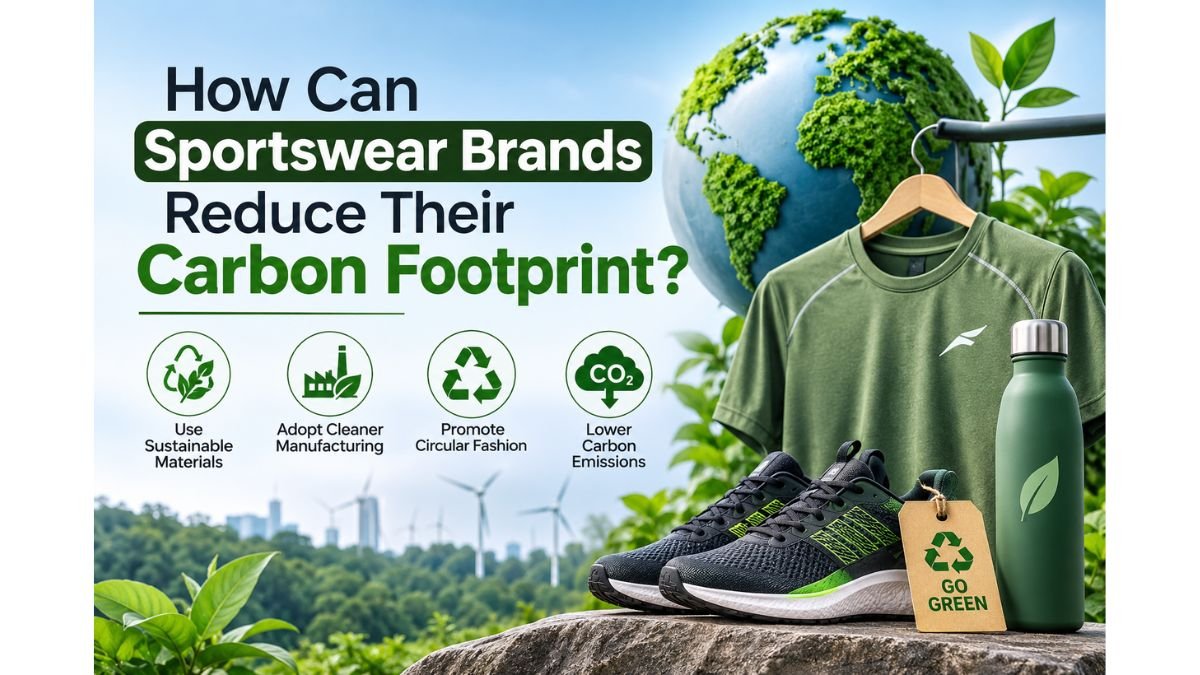
How Can Sportswear Brands Reduce Their Carbon Footprint?
Becoming a carbon neutral sports brand requires a planned approach. Companies should first understand their emissions before choosing reduction methods.
1. Measure Greenhouse Gas Emissions
Brands need a clear emissions baseline. This means collecting information about activities that produce greenhouse gases.
The Greenhouse Gas Protocol provides widely used guidance for measuring organizational emissions.
Companies commonly organize emissions into three groups:
Scope 1: Direct emissions from sources owned or controlled by the company, such as company vehicles or on-site fuel use.
Scope 2: Indirect emissions from purchased electricity, heating, cooling, or steam.
Scope 3: Other indirect emissions across the value chain, including purchased materials, manufacturing by suppliers, transportation, product use, and disposal.
For many clothing businesses, Scope 3 emissions are especially important because much of the environmental impact may occur outside the brand’s own offices.
A useful measurement plan should identify major suppliers and collect relevant production and transportation data.
2. Choose Lower-Impact Materials
Brands can review their fabric choices and compare available alternatives.
For example, they may consider recycled fibers where appropriate or select materials from suppliers with credible environmental documentation.
Material decisions should also consider garment lifespan. A fabric that fails quickly may lead to more replacements and additional resource use.
The goal is to select materials that meet performance requirements while improving the product’s overall environmental profile.
3. Improve Factory Energy Efficiency
Manufacturing facilities use energy for lighting, machinery, heating, ventilation, and other operations.
Factories can review energy consumption and identify areas for improvement.
Potential measures include:
- Energy-efficient lighting
- Regular machinery maintenance
- Efficient production layouts
- Monitoring electricity consumption
- Improving equipment operating practices
- Evaluating renewable electricity options
Renewable electricity may reduce certain operational emissions when the energy source and accounting method are properly documented.
4. Reduce Fabric and Production Waste
Fabric waste can increase material costs and environmental impacts.
Brands and manufacturers can improve efficiency through accurate pattern making, fabric inspection, cutting plans, and production forecasting.
Digital pattern planning may help teams use fabric more effectively. Better sample management can also reduce unnecessary material consumption.
Production planning should aim to manufacture quantities that match realistic demand. This can help limit excess stock and avoid unnecessary disposal.
5. Review Packaging Materials
Packaging is another area where brands can review their environmental impact.
They may consider reducing unnecessary packaging, using recyclable materials where suitable, and selecting packaging sizes that fit the products.
However, packaging must still protect garments during storage and transportation.
Brands should also check whether packaging materials are accepted by recycling systems in their target markets. A recyclable label does not guarantee that local facilities can process the material.
6. Improve Transportation Planning
Transportation contributes to supply chain emissions.
Brands can examine shipment frequency, product volumes, routes, and delivery methods.
Sea freight generally produces lower emissions per unit of cargo than air freight, although transit time and other factors matter.
Better demand forecasting can reduce urgent shipments. Consolidating orders may also help improve transportation efficiency.
Carbon Neutrality vs. Net Zero: What Is the Difference?
Carbon neutrality and net zero are related terms, but they should not be used as if they mean exactly the same thing.
| Term | General meaning |
|---|---|
| Carbon neutral | Balancing defined carbon dioxide emissions through reductions and eligible offsets or credits |
| Net zero | Deeply reducing greenhouse gas emissions and balancing remaining emissions through appropriate removals |
| Carbon negative | Removing more carbon dioxide from the atmosphere than is emitted within the stated boundary |
| Low carbon | Producing fewer emissions compared with a defined baseline or alternative |
The exact meaning depends on the standard, scope, and accounting method used.
A sportswear company should explain which definition it follows. It should also disclose whether its claim covers carbon dioxide alone or a broader group of greenhouse gases.
Net-zero pathways generally require deep emissions reductions. Carbon credits should not be presented as a replacement for meaningful reductions throughout the supply chain.
How to Identify Genuine Carbon Neutral Sports Brands
Not every company that uses environmental language has the same level of evidence.
Some brands publish detailed sustainability reports. Others use broad statements without explaining their methods.
Customers can examine several important areas before trusting a carbon-neutral claim.
Check the Emissions Boundary
A reliable claim should explain what it covers.
Does it apply to the whole company, selected products, factory operations, or a particular event?
A claim covering one limited activity should not be presented as proof that the entire brand is carbon neutral.
Look for Emissions Data
Brands should explain how they calculate their emissions.
Useful information may include:
- Annual greenhouse gas emissions
- Scope 1, Scope 2, and Scope 3 reporting
- Emissions reduction targets
- Measurement methods
- Reporting periods
- Progress against previous targets
Transparent reporting makes it easier to understand a company’s progress.
Review Carbon Credits Carefully
Some companies use carbon credits to address emissions that remain after reduction efforts.
Buyers should check the project type, credit quality, verification, and retirement records.
Carbon credits are not all identical. Their climate benefits depend on the project, methodology, and evidence supporting the claimed reductions or removals.
A brand should not rely on vague statements about offsetting without explaining the credits it uses.
Check Independent Verification
Third-party assurance can help support environmental reporting.
Look for information about the organization that conducted the verification, the standard used, and the exact subject of the assessment.
A certification or verification should never be assumed to cover an entire business when it only applies to one facility or management system.
Examine Product-Level Information
Some brands provide product-level information about materials, manufacturing, and environmental impacts.
This can help consumers compare products more meaningfully.
However, product claims should explain their methods and boundaries. A garment made with recycled polyester is not automatically carbon neutral.
Challenges Facing Sustainable Performance Apparel Brands
Moving toward more responsible sportswear production can involve several challenges.
Understanding these issues helps brands set realistic goals and make better decisions.
Higher Material and Development Costs
Some recycled or certified materials may cost more than conventional alternatives.
Specialty fabrics can also require different suppliers, testing, or minimum order quantities.
Brands should compare total product costs rather than focusing only on fabric prices. Durability, production efficiency, and customer demand also matter.
Finding Reliable Suppliers
Sustainability claims depend on accurate supply chain information.
A brand may need documentation from fabric mills, dyeing facilities, trim suppliers, and garment factories.
Not every supplier can provide the same level of environmental data.
Brands should establish documentation requirements early and check whether suppliers can meet them.
Maintaining Athletic Performance
Sportswear must perform well during exercise.
It may need stretch, moisture management, breathability, abrasion resistance, and shape retention.
A material change should not reduce the garment’s usefulness. Brands should test fabric and finished garments before approving bulk production.
Managing Minimum Order Quantities
Special materials and custom production can have minimum order requirements.
Smaller brands may find it difficult to order large quantities of specialized fabric.
They can discuss available stock materials, shared color options, and realistic production quantities with manufacturers.
Avoiding Greenwashing
Greenwashing happens when environmental marketing creates a misleading impression about a product or business.
Examples include using broad claims without evidence, highlighting one small improvement while ignoring larger impacts, or presenting a limited certification as proof of total sustainability.
Brands should use specific language and publish supporting information. Honest communication is more valuable than exaggerated claims.
The Role of Clothing Manufacturers in Sustainable Sportswear
Sportswear brands depend on manufacturing partners to turn product ideas into finished garments.
A manufacturer can influence material selection, cutting efficiency, garment construction, finishing, packaging, and production quality.
This makes supplier collaboration an important part of a brand’s sustainability strategy.
A manufacturer may support responsible production by helping brands:
- Review fabric options
- Source suitable recycled or certified materials
- Improve cutting and material use
- Develop durable garment construction
- Plan samples carefully
- Monitor production quality
- Reduce avoidable defects
- Review packaging requirements
- Coordinate shipping arrangements
However, brands should not assume that a manufacturer is carbon neutral simply because it offers sustainable materials or holds an environmental management certification.
The company and its customers need to examine actual emissions data, environmental practices, and supporting documents.
How to Develop Sustainable Performance Apparel
Creating sustainable sportswear requires careful planning from the first design decision.
The following process can help brands develop products that balance performance and environmental considerations.
Step 1: Define the Product Purpose
Start by identifying how the garment will be used.
A running shirt, gym legging, cycling jersey, and training jacket have different performance requirements.
Consider the target customer, climate, activity, fit, and expected product lifespan.
Step 2: Select Suitable Materials
Choose fabrics based on comfort, stretch, durability, moisture management, and care requirements.
Ask suppliers for information about fiber composition, recycled content, certifications, and material origin.
Do not make environmental claims unless the supporting documents are available.
Step 3: Prepare a Tech Pack
A technical pack should explain how the garment needs to be made.
It can include:
- Technical drawings
- Measurement specifications
- Fabric composition
- GSM requirements
- Stitching details
- Color references
- Decoration placement
- Label instructions
- Packaging requirements
Clear documents reduce confusion during sampling and production.
Step 4: Develop and Test Samples
Review the sample for both performance and construction.
Check stretch recovery, comfort, fit, seams, color, print quality, and durability.
For sportswear, product testing may also include wash performance, pilling, colorfastness, and other relevant tests.
Step 5: Approve Bulk Production
Do not begin bulk manufacturing until the approved sample and specifications are confirmed.
Document all agreed changes. Make sure the manufacturer understands the final material, measurements, branding, and quality requirements.
Step 6: Monitor Quality
Quality checks should take place during production and before shipment.
Inspect garments against the approved sample and agreed standards. Keep records of any issues and corrective actions.
A durable garment that meets its intended purpose can support a longer product life.
How Fashion Soul International Supports Sportswear Manufacturing
Fashion Soul International is a factory-owned custom clothing manufacturer based in Sialkot, Punjab, Pakistan. The company provides apparel manufacturing services for international brands, including sportswear and activewear businesses.
Its stated services include private-label, OEM, ODM, white-label, cut-and-sew, and full-package production.
The manufacturing process can cover product development, fabric and trim sourcing, sampling, bulk production, quality control, branding, packaging, export documentation, and international shipping.
For brands developing performance apparel, material and construction requirements should be discussed before sampling. Buyers can provide a tech pack, design brief, sketches, reference images, or an existing garment.
The company lists fabric options such as polyester interlock, four-way stretch spandex, cotton, and other materials used in apparel production. Suitable choices depend on the intended garment and performance requirements.
Fashion Soul International also states that it holds ISO 14001:2015 environmental management certification. This is a management-system certification, not proof that every garment or the entire company is carbon neutral.
Brands interested in sustainable sportswear should request current material documentation and discuss their specific environmental requirements during product development.
The company publishes a standard MOQ starting at 100 pieces, although actual requirements vary by product and project. Sample approval takes place before bulk production.
For brands exploring custom sportswear, clear fabric specifications, realistic order quantities, and documented quality expectations can support a more organized manufacturing process.
Frequently Asked Questions
What are carbon neutral sports brands?
Carbon neutral sports brands are companies that measure emissions within a defined boundary, reduce them, and address remaining emissions through eligible carbon credits or other accepted methods. Their claims should explain the scope and verification process.
Is sustainable performance apparel better for the environment?
It can offer environmental benefits when brands select suitable materials, reduce waste, improve production efficiency, and create durable products. However, the overall impact depends on the complete product lifecycle.
What fabrics are used in sustainable sportswear?
Common options include recycled polyester, recycled nylon, organic cotton, and selected natural or blended fabrics. The right material depends on the garment’s performance needs and available supplier documentation.
Is recycled polyester carbon neutral?
No. Recycled polyester is a material choice, not proof of carbon neutrality. Its environmental impact depends on its source, processing, manufacturing, and the full product lifecycle.
How can a sportswear brand reduce its carbon footprint?
A brand can measure its emissions, improve material sourcing, reduce production waste, review factory energy use, optimize packaging, and plan transportation more efficiently. It should track progress using reliable data.
What is the difference between carbon neutral and sustainable?
Carbon neutral usually refers to balancing defined carbon emissions. Sustainability is broader and includes materials, water, waste, chemicals, working conditions, product durability, and other environmental and social factors.
Can small sportswear brands create sustainable products?
Yes. Small brands can begin by choosing suitable materials, reducing unnecessary packaging, planning realistic order quantities, and working with suppliers that provide clear documentation. They can improve their practices as the business grows.
How can I find a sustainable sportswear manufacturer?
Review the manufacturer’s product experience, material options, quality-control process, environmental documentation, and communication. Ask for specific evidence rather than relying only on general sustainability statements.
Final Thoughts
The growth of carbon neutral sports brands reflects a wider change in the sportswear industry. Consumers increasingly want clothing that performs well and is produced with greater environmental responsibility.
However, carbon neutrality requires more than recycled fabrics or environmental marketing. Brands need to measure emissions, reduce their impact, review suppliers, and communicate claims honestly.
Developing sustainable performance apparel also requires careful material selection, durable construction, efficient manufacturing, and responsible product planning.
For sportswear businesses, the best starting point is a clear product brief and a manufacturing partner that understands the required materials and construction. With reliable documentation and practical improvements across the supply chain, brands can make meaningful progress toward more responsible sportswear production.