Best Athletic Brands for Social Responsibility: A Guide to Ethical Activewear
Choosing athletic clothing is about more than comfort, performance, and style. Many shoppers now want sportswear that supports responsible manufacturing, fair working conditions, and environmental protection. They want products that perform well without ignoring the people and resources involved in making them.
Finding the best athletic brands for social responsibility requires looking beyond marketing claims. A brand may use recycled fabrics but provide limited information about factory conditions. Another may support fair labor but still rely heavily on materials that create environmental concerns.
The best approach is to evaluate a brand’s complete business practices. This includes its materials, workers’ rights, supply chain transparency, product durability, and environmental impact.
In this guide, we explore athletic brands with notable responsibility initiatives. We also explain what makes ethical activewear different, how to recognize greenwashing, and what shoppers should check before buying.
What Does Social Responsibility Mean in Athletic Clothing?
Social responsibility in athletic clothing means considering how products affect workers, communities, customers, and the environment.
It covers the entire product journey. This begins with raw material sourcing and continues through manufacturing, packaging, transportation, use, and disposal.
A responsible athletic brand should consider several important areas.
Fair Working Conditions
Sportswear production involves many workers. These may include fabric suppliers, sewing operators, printing teams, warehouse employees, and factory workers.
Responsible brands should support safe workplaces and fair treatment. They should also have clear policies against forced labor and child labor.
Important worker-related practices include:
- Safe and healthy factory conditions
- Fair wages and legal working hours
- Respect for workers’ rights
- Protection against discrimination
- Freedom of association
- Regular supplier assessments
- Clear systems for reporting workplace concerns
A supplier code of conduct is useful, but it does not prove that every worker receives fair treatment. Brands should also explain how they monitor factories and address problems.
Environmentally Responsible Materials
Athletic clothing often uses polyester, nylon, elastane, and other synthetic materials. These fabrics can provide stretch, moisture management, and durability.
However, many synthetic fibers come from fossil-based resources. They can also release tiny plastic fibers during washing.
Some brands use alternative materials, including:
- Recycled polyester
- Recycled nylon
- Organic cotton
- Hemp
- Lyocell
- Responsibly sourced wool
- Recycled cotton
Each material has benefits and limitations. Recycled polyester can reduce the need for virgin polyester, but it remains synthetic. Organic cotton avoids certain conventional farming inputs, but its total environmental impact still depends on farming, processing, and manufacturing.
Responsible brands should explain what their products contain and why they select particular materials.
Supply Chain Transparency
Transparency means giving customers useful information about where products come from and how they are made.
A brand may publish supplier lists, factory locations, material details, and sustainability reports. This helps customers understand the production process.
Transparency also allows independent organizations and researchers to examine company claims.
Community Support
Social responsibility can extend beyond factory production. Some athletic brands support environmental projects, community programs, worker development, or charitable initiatives.
However, donations and tree-planting campaigns should not replace responsible manufacturing. A company needs to consider its core business practices as well.
Best Athletic Brands for Social Responsibility
Several athletic and outdoor clothing companies have published initiatives related to workers, materials, and environmental protection. Their approaches differ, so shoppers should compare the areas that matter most to them.
There is no single brand that leads every aspect of social responsibility. The examples below are starting points for research, not a guarantee that every product or supplier meets the same standards.
1. Patagonia
Patagonia is a well-known outdoor clothing company with a long history of environmental initiatives. Its products include jackets, sportswear, outdoor clothing, and performance apparel.
The company has developed programs focused on repair, reuse, and extending product life. Its Worn Wear program supports the resale and reuse of selected products.
Patagonia also discusses responsible materials and supply chain practices. Good On You rates the brand “Good” and notes its use of lower-impact materials and supply chain tracing. <Cite refs={[“turn217510search0″,”turn217510search10”]}/>
Why shoppers consider Patagonia:
- Repair and resale initiatives
- Environmental responsibility programs
- Use of recycled and lower-impact materials
- Published information about supply chain practices
- Outdoor products designed for repeated use
Patagonia may suit shoppers who value durability and outdoor performance. However, customers should still review individual product materials and manufacturing information.
No company should be considered completely sustainable simply because it has strong environmental programs.
2. tentree
tentree is a Canadian apparel company that connects clothing purchases with environmental restoration initiatives.
The brand states that it plants trees for purchased products. It also publishes sustainability and transparency information about its operations and suppliers.
Its product range includes casual clothing, outdoor apparel, and selected activewear. The company highlights the use of recycled and lower-impact materials.
Good On You rated tentree “Good” in July 2026. Its assessment identifies practices related to materials, supply chain tracing, and worker policies. <Cite refs={[“turn217510search1″,”turn217510search6″,”turn217510search7”]}/>
Why shoppers consider tentree:
- Environmental restoration initiatives
- Published sustainability information
- Use of selected lower-impact materials
- Supplier standards and routine audits, according to the company
- Clothing suitable for casual and active lifestyles
The brand is worth exploring if environmental programs are important to your shopping decisions.
However, tree planting should not be the only measure of responsibility. Material choices, production emissions, worker conditions, and product durability matter too.
3. Athleta
Athleta is an athletic and lifestyle clothing brand focused on women’s apparel.
Its products include leggings, sports bras, workout tops, jackets, and casual performance clothing.
Athleta is a Certified B Corporation. Its published information describes initiatives involving renewable electricity, Fair Trade Community Development Funds, and resale programs. <Cite refs={[“turn217510search12″,”turn217510search13”]}/>
Why shoppers consider Athleta:
- Certified B Corporation status
- Fair Trade-related initiatives
- Resale opportunities through Athleta Preloved
- Published environmental and social responsibility information
- Activewear designed for different activities
Athleta may appeal to customers looking for workout clothing and everyday athleisure.
When evaluating its products, check the materials and manufacturing details for each item. A company’s overall certification does not mean every garment has identical environmental or labor credentials.
4. Girlfriend Collective
Girlfriend Collective is an activewear brand known for leggings, sports bras, and other workout clothing.
The company uses recycled materials in selected products. It also highlights factory and textile standards, along with its ReGirlfriend take-back initiative.
Its product range includes extended sizing, which makes size inclusion another relevant part of its brand offering.
Good On You’s January 2026 guide discusses the brand’s recycled materials, SA8000-certified factory, and OEKO-TEX STANDARD 100-related claims. However, the guide rates it “Not Good Enough” overall. This is an important reminder that individual certifications do not automatically establish strong performance across every responsibility category. <Cite refs={[“turn217510search3″,”turn217510search4”]}/>
Why shoppers consider Girlfriend Collective:
- Recycled-fiber activewear
- Extended size range
- Factory-related social responsibility information
- Textile safety-related standards
- Product take-back initiatives
The brand may be relevant to shoppers interested in recycled activewear and inclusive sizing. Customers should also consider synthetic microfiber concerns and review current independent ratings.
5. The North Face
The North Face produces outdoor clothing, footwear, and equipment. Its range includes performance apparel for hiking, climbing, and other outdoor activities.
The brand has published environmental and supply chain initiatives. Good On You identifies its use of some lower-impact materials, including recycled materials, and policies related to hazardous chemicals. <Cite refs={[“turn217510search0”]}/>
Why shoppers consider The North Face:
- Outdoor performance clothing
- Selected recycled materials
- Chemical management initiatives
- Products designed for outdoor activities
- Public sustainability information
Durability is especially important for outdoor apparel. A jacket or performance layer that remains useful for many years may reduce the need for frequent replacement.
Still, shoppers should check the material composition and specific product details rather than assuming every item has the same environmental profile.
What Makes Ethical Athletic Wear Brands Different?
Ethical athletic wear brands consider more than the appearance and performance of their products. They pay attention to the people and processes behind production.
A responsible approach can include fair labor, safer materials, better resource management, and honest communication.
Here are some features that help distinguish responsible brands.
1. Responsible Material Sourcing
The materials used in sportswear affect both product performance and environmental impact.
For example, recycled polyester may help reduce demand for virgin plastic-based fibers. Organic cotton can reduce the use of certain synthetic agricultural chemicals.
However, no material is automatically perfect.
A responsible brand should disclose the fiber composition and explain its sourcing standards. Customers should also look for information about dyes, finishes, chemical management, and fabric processing.
2. Ethical Factory Standards
The manufacturing facility plays an important role in responsible clothing production.
Brands should understand where their garments are made and how workers are treated. They should establish clear supplier expectations and monitor whether factories follow them.
Useful evidence may include:
- Named manufacturing facilities
- Supplier codes of conduct
- Factory assessment information
- Independent social audits
- Worker grievance systems
- Corrective action reports
A brand that shares this information gives customers a better opportunity to understand its labor practices.
3. Product Durability
Durability is an important part of responsible clothing design.
A garment that loses its shape, stretches, or develops holes quickly may need replacement sooner. This can increase waste and the demand for new materials.
Athletic clothing should be designed for its intended activity. Leggings should maintain suitable stretch, sports bras should provide the required support, and workout tops should handle regular use.
Strong stitching, suitable fabric weight, and quality finishing can help improve product life.
4. Repair, Reuse, and Recycling
Some brands encourage customers to keep clothing in use for longer.
Their programs may include:
- Repair services
- Secondhand sales
- Product take-back schemes
- Clothing recycling
- Resale platforms
- Garment care guidance
These programs can support a more circular clothing system. However, recycling claims should be examined carefully.
Customers should check which products are accepted, where returned garments go, and whether the material can actually be recycled.
5. Honest Sustainability Communication
Responsible companies should explain both their progress and limitations.
For example, a brand may use recycled polyester but still have challenges with microplastic pollution. Another may publish factory information but lack complete wage data.
Clear communication is more useful than broad statements such as “100% eco-friendly” or “completely sustainable.”
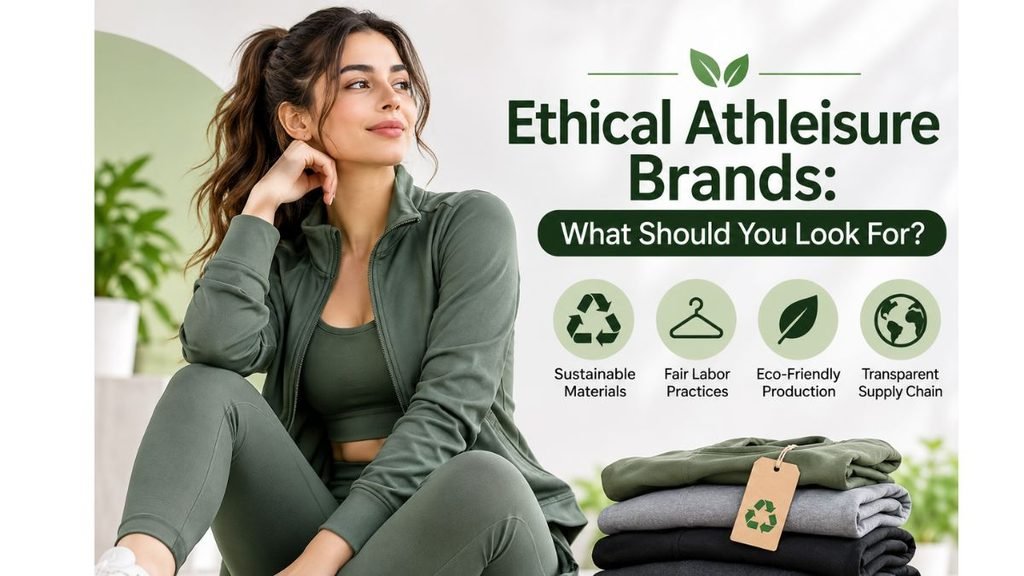
Ethical Athleisure Brands: What Should You Look For?
Athleisure combines athletic clothing with everyday fashion. It includes leggings, joggers, sweatshirts, sports bras, hoodies, and comfortable tops.
The category has grown because many customers want clothing that works for exercise and daily activities.
When comparing ethical athleisure brands, consider these factors.
Comfortable and Responsible Fabrics
Fabric selection affects comfort, durability, and environmental impact.
Organic cotton can work well for casual tops and sweatshirts. Recycled polyester and nylon are often used in performance garments because they offer useful stretch and moisture-management properties when properly constructed.
Lyocell is another option for certain clothing styles. It is a regenerated cellulosic fiber, and its environmental profile depends on the source material and production process.
Look for clear fabric composition details rather than relying only on words such as natural or sustainable.
Inclusive Product Design
Social responsibility also involves considering different customers.
Brands can improve accessibility through broader size ranges, functional designs, and products suited to different bodies and activities.
Size inclusion should be supported by actual product availability. A company should explain its sizing rather than using inclusive marketing without meaningful options.
Responsible Packaging
Packaging is another part of the clothing supply chain.
Brands may use recycled paper, recyclable packaging, or reduced packaging materials. However, packaging claims should be specific.
Check whether packaging is genuinely recyclable in your area. Local recycling systems can differ.
Long-Term Product Value
Athleisure clothing is often worn repeatedly. It may be used at the gym, during travel, at home, or for everyday activities.
A responsible purchase should provide suitable performance and durability.
Consider whether the fabric keeps its shape, whether seams remain strong, and whether the garment is easy to care for. These factors can help you avoid unnecessary replacement.
How to Identify Truly Responsible Athletic Brands
Marketing language can make it difficult to compare brands. Words such as green, conscious, planet-friendly, and ethical do not always explain what a company actually does.
Use the following steps to evaluate brands more carefully.
Check Independent Certifications
Certifications can help verify certain environmental or social standards.
Some examples include:
B Corporation: Assesses a company’s social and environmental performance, accountability, and transparency.
Fair Trade Certified: Focuses on standards and benefits for workers and communities within certified supply chains.
GOTS: Covers organic fibers and specified environmental and social criteria throughout certified textile processing.
OEKO-TEX STANDARD 100: Tests textiles for harmful substances. It is not a complete certification of fair labor or overall sustainability.
SA8000: A social accountability standard focused on decent working conditions.
Each certification covers a specific area. Always check what the certificate applies to, which facility or product it covers, and whether it remains valid.
Review the Brand’s Sustainability Report
A sustainability report can provide details about a company’s goals and progress.
Look for information about:
- Greenhouse gas emissions
- Water and energy use
- Material sourcing
- Supplier locations
- Worker standards
- Waste reduction
- Packaging
- Product repair and recycling
A useful report includes measurable information and explains its methods. Broad promises without evidence are less helpful.
Examine Factory Transparency
Try to find out where the products are manufactured.
Some companies publish supplier lists or factory information. Others provide only general statements about responsible production.
More detailed information can help customers assess whether a company understands its supply chain.
Compare Independent Brand Ratings
Organizations such as Good On You assess fashion brands using publicly available information.
Their ratings can help shoppers compare environmental, labor, and animal welfare practices. However, ratings depend on the available evidence and the organization’s assessment method.
Use them as one research tool rather than treating a single score as a complete answer.
Look Beyond One Environmental Claim
A brand may promote recycled fabrics while providing little information about worker wages. Another may support fair labor but offer limited details about chemical management.
Responsible purchasing requires considering the complete picture.
Why Social Responsibility Matters in Sportswear Manufacturing
Sportswear production involves several stages, including fabric development, dyeing, cutting, sewing, printing, finishing, and packaging.
Each stage can affect workers and the environment.
For example, fabric dyeing may require water, energy, and chemicals. Cutting can create fabric waste. Sewing requires safe working conditions and fair labor practices.
Brands can improve their approach by working with manufacturers that understand these responsibilities.
Better Fabric Planning
Choosing the right fabric can help reduce unnecessary waste and improve product performance.
Brands should consider fabric composition, weight, stretch, durability, and intended use before production.
They should also avoid ordering materials without a clear product plan.
Efficient Cutting and Production
Accurate patterns and cutting plans can help reduce unused fabric.
Manufacturers can also review production layouts and fabric requirements before cutting begins.
Good planning supports better material use and more predictable production.
Quality Control
Quality checks can identify problems before garments reach customers.
Inspections may cover measurements, stitching, fabric defects, print placement, and finishing.
Improved quality can reduce rejected products and unnecessary waste. It can also help brands maintain consistent product standards.
Responsible Packaging and Shipping
Brands can review packaging materials and shipping arrangements to identify practical improvements.
For example, suitable packaging sizes may reduce unnecessary material use. Better order planning can also help avoid rushed shipments.
However, companies should evaluate the full impact of their logistics rather than making unsupported claims about carbon neutrality.
How Clothing Brands Can Build More Responsible Athletic Collections
Social responsibility is not limited to large international brands. Startups and growing apparel companies can also make better production decisions.
Here are practical steps for developing a more responsible sportswear collection.
Choose Materials Based on Product Needs
Start by identifying how the garment will be used.
Running tights, gym shirts, yoga clothing, and outdoor jackets have different requirements. Their fabrics should support the required stretch, breathability, durability, and comfort.
Once the performance needs are clear, compare suitable materials and their sourcing information.
Set Clear Manufacturing Requirements
Prepare a product brief or technical pack with detailed specifications.
Include fabric composition, measurements, stitching, colors, labels, decoration, and packaging requirements.
Clear instructions help the manufacturer understand your expectations and reduce avoidable production changes.
Ask Manufacturers About Their Practices
Before selecting a supplier, ask how it manages production and quality.
Useful questions include:
- Where will the garments be manufactured?
- Which materials are available?
- How are workers’ safety requirements managed?
- What quality checks take place?
- Are fabric and trim suppliers documented?
- Can the manufacturer provide relevant certification information?
- How are production waste and rejected garments handled?
Ask for evidence when a claim matters to your business.
Approve Samples Before Bulk Production
A pre-production sample gives you an opportunity to check the product before a large order begins.
Review its fit, construction, material, color, and decoration. Confirm that the sample matches your specifications.
This step can help prevent avoidable quality problems and material waste.
Build Long-Term Supplier Relationships
Responsible manufacturing requires ongoing communication.
Brands should discuss expectations, monitor product quality, and address problems with their suppliers.
Long-term relationships can also make it easier to improve specifications and production planning over time.
Common Greenwashing Claims to Avoid
Greenwashing happens when a company makes environmental claims that are misleading, exaggerated, or unsupported.
It can make responsible shopping more difficult.
Watch for these warning signs.
Vague environmental language: Words such as green or planet-friendly should be supported by specific details.
Unclear recycled content: A company should explain which fibers are recycled and what percentage a garment contains.
Unverified labor claims: Saying that workers are treated fairly is not enough without meaningful policies and evidence.
One-sided sustainability stories: A company should not use a small environmental initiative to distract from wider supply chain concerns.
Confusing certifications: A textile safety label does not automatically prove fair wages or responsible factory management.
No product-level information: A brand should help customers understand the materials and manufacturing details of individual products.
The best way to avoid greenwashing is to compare claims with independent evidence.
Frequently Asked Questions
What are the best athletic brands for social responsibility?
Patagonia, tentree, Athleta, Girlfriend Collective, and The North Face are examples worth researching. They have published different initiatives involving materials, supply chains, labor practices, or environmental programs. Their strengths vary, so compare current independent assessments and product-level information before buying.
What makes an athletic clothing brand ethical?
An ethical athletic brand considers workers’ rights, factory safety, fair treatment, supply chain transparency, and environmental impact. It should provide evidence of its practices rather than relying only on marketing language.
Are ethical athletic wear brands more expensive?
Some responsible athletic brands have higher prices because of materials, production standards, or smaller production volumes. However, price alone does not prove ethical manufacturing. Compare product quality, durability, material information, and supplier transparency.
Are recycled fabrics always better for the environment?
Not necessarily. Recycled polyester and nylon can reduce demand for virgin materials, but they remain synthetic fibers. They may release microfibers during washing. Consider the complete material life cycle and the garment’s expected durability.
What are ethical athleisure brands?
Ethical athleisure brands produce casual and athletic clothing while considering responsible materials, worker conditions, and environmental practices. Their products may include leggings, joggers, hoodies, sports bras, and everyday activewear.
How can I check if a sportswear brand is socially responsible?
Review its sustainability reports, factory information, material disclosures, and independent certifications. You can also compare assessments from independent organizations and check whether the company explains how it addresses supply chain problems.
Is B Corporation certification enough to prove a brand is ethical?
No. B Corporation certification assesses a company’s wider social and environmental performance. It does not mean every product, factory, or material has identical credentials. Customers should still review product and supplier information.
Why is supply chain transparency important in athletic clothing?
Transparency helps customers understand where garments are made and what standards suppliers follow. It also makes it easier to evaluate labor practices, material sourcing, and environmental claims.
Final Thoughts
Finding the best athletic brands for social responsibility requires looking beyond product design and performance. Workers’ rights, responsible materials, factory transparency, product durability, and environmental impact all matter.
Brands such as Patagonia, tentree, Athleta, Girlfriend Collective, and The North Face offer different initiatives worth exploring. However, no single brand should be assumed to lead every area.
When comparing ethical athletic wear brands and ethical athleisure brands, review current evidence and product details. Look for clear material information, meaningful labor standards, and honest sustainability reporting.
For clothing businesses, responsible production also begins with good planning. Choosing suitable fabrics, setting clear specifications, checking samples, and working with accountable manufacturing partners can support better products.
Ultimately, responsible athletic clothing is about making informed choices throughout the product journey. Better decisions from brands and customers can help move the sportswear industry toward more transparent and thoughtful production.