Fabric Trade Fair: A Complete Guide for Fashion Brands and Fabric Buyers
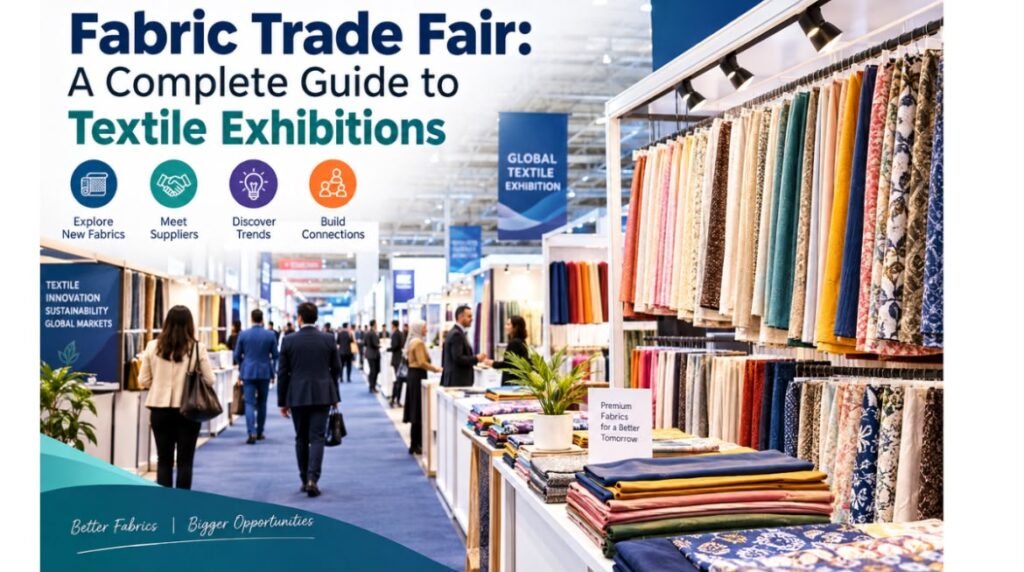
A Fabric Trade Fair is an important event for fashion designers, clothing brands, textile manufacturers, and fabric suppliers. It brings industry professionals together to explore materials, discover new suppliers, compare fabric quality, and learn about textile innovations. These events help businesses understand changing market needs and build valuable industry relationships.
For clothing brands, attending a fabric trade fair can make fabric sourcing easier and more efficient. Buyers can examine materials in person, compare textures, discuss prices, and request samples before choosing a supplier. Manufacturers can also discover new materials that support better garment quality and product development.
Whether you are launching a clothing brand, developing a new collection, or sourcing materials for bulk production, understanding how fabric trade fairs work can help you make better business decisions.
This guide explains the benefits of textile exhibitions, what to expect, how to prepare, and how to use trade fairs to find suitable fabric suppliers.
What Is a Fabric Trade Fair?
A fabric trade fair is a business exhibition where fabric manufacturers, textile mills, wholesalers, sourcing companies, and fashion professionals showcase their products and services. These events allow visitors to explore fabrics, learn about textile developments, and connect with potential business partners.
Unlike ordinary shopping exhibitions, most textile trade fairs focus on professional buyers and industry relationships. Visitors may include clothing manufacturers, fashion designers, product developers, sourcing managers, and representatives of established apparel brands.
Exhibitors often present different types of materials, including:
- Cotton and organic cotton fabrics
- Polyester and other synthetic textiles
- Denim and twill
- French terry and fleece
- Stretch fabrics for activewear
- Silk, linen, and other specialty materials
- Printed, dyed, and finished fabrics
- Technical textiles for specific applications
Some events focus mainly on fabric sourcing, while others cover yarns, textile machinery, garment production, accessories, and finished apparel.
The main purpose is to help businesses discover suitable materials and develop professional relationships across the textile supply chain.
Why Is a Fabric Trade Fair Important?
Fabric selection affects a garment’s appearance, comfort, durability, and cost. A fabric trade fair gives buyers an opportunity to evaluate these factors before making sourcing decisions.
Online catalogs are useful, but photographs cannot fully show a material’s texture, stretch, thickness, or drape. Meeting suppliers in person allows buyers to examine samples and ask detailed questions.
1. Discover New Fabrics
Trade fairs introduce visitors to materials they may not have considered before. A supplier might display a new knit structure, a lightweight woven fabric, or a finish designed for a specific garment category.
For example, a brand developing oversized hoodies may compare cotton fleece with French terry. A sportswear company may investigate moisture-wicking polyester or four-way stretch fabric.
These comparisons help businesses select materials that fit their product requirements.
2. Meet Fabric Suppliers Directly
A fabric exhibition brings suppliers and potential buyers into one location. Instead of contacting many companies separately, visitors can speak with several exhibitors during the same event.
Buyers can ask about minimum order quantities, available colors, material composition, sample policies, production lead times, and customization options.
Direct conversations also help businesses assess how clearly suppliers explain their products and commercial terms.
3. Compare Quality and Prices
Different suppliers may offer similar fabrics at different prices. However, the lowest price does not always represent the best value.
Buyers should compare fabric composition, weight, construction, finishing, consistency, and expected performance. They should also consider shipping costs, order quantities, and any additional processing charges.
A fabric trade fair makes it easier to compare materials side by side before requesting formal quotations.
4. Learn About Textile Innovations
Exhibitors may introduce new manufacturing techniques, finishes, recycled fibers, and performance materials. These developments can help brands respond to customer preferences and product requirements.
For example, some fabrics are designed to improve moisture management, while others focus on softness, stretch, or abrasion resistance.
Businesses should examine the evidence behind supplier claims and confirm whether a material meets their specific needs.
5. Build Long-Term Business Relationships
Reliable sourcing depends on more than a single purchase. Businesses need suppliers that communicate clearly, provide consistent materials, and meet agreed specifications.
A trade fair gives buyers an opportunity to begin these relationships through direct discussions. After the event, they can follow up with shortlisted suppliers, request samples, and compare formal offers.
What Can You Find at a Fabric Trade Fair?
The products and services available depend on the event’s focus. Some exhibitions specialize in fashion textiles, while others cover the wider textile and apparel industry.
Natural Fabrics
Natural fabrics come from plant or animal sources. Common examples include cotton, linen, silk, and wool.
Cotton is widely used for T-shirts, casualwear, sweatshirts, and many everyday garments. Linen is often selected for lightweight clothing, while wool is used in products that require warmth.
When sourcing natural fabrics, buyers should examine fiber composition, softness, shrinkage, color consistency, and care requirements.
The term natural does not automatically mean a fabric is organic or environmentally preferable. Buyers should verify any specific environmental or certification claims.
Synthetic Fabrics
Synthetic materials include polyester, nylon, and elastane. These fibers are commonly used in sportswear, activewear, outerwear, and performance garments.
Polyester can offer useful durability and moisture-management options, depending on its construction and finish. Elastane adds stretch when blended with other fibers.
Buyers should check the exact fiber blend and test the fabric under intended conditions. A material suitable for sports leggings may not be appropriate for a structured jacket.
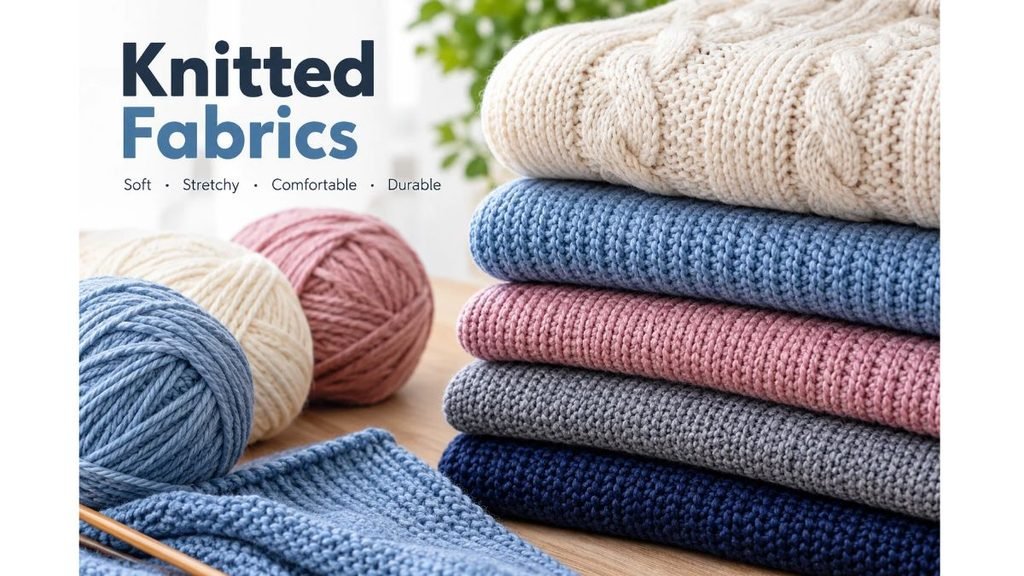
Knitted Fabrics
Knitted fabrics are made by interlocking loops of yarn. They are commonly used for T-shirts, sweatshirts, leggings, and other garments that benefit from flexibility.
Examples include jersey, rib knit, French terry, and fleece.
When comparing knitted fabrics, check stretch recovery, fabric weight, surface feel, and stability after washing. These properties can affect fit and garment performance.
Woven Fabrics
Woven fabrics are made by interlacing yarns, usually in lengthwise and crosswise directions. Common examples include denim, twill, canvas, and poplin.
They are used for jeans, shirts, trousers, jackets, uniforms, and workwear.
Buyers should consider fabric structure, thickness, stiffness, shrinkage, and seam performance. These factors influence how easily the material can be cut and sewn.
Sustainable and Recycled Materials
Some fabric trade fairs feature recycled fibers, certified materials, lower-impact dyeing methods, and other sustainability-related developments.
These products may interest brands seeking alternatives to conventional materials. However, sustainability claims require careful evaluation.
Ask suppliers for fiber composition details, relevant certificates, traceability information, and evidence supporting specific environmental claims. Do not rely on broad terms such as “eco-friendly” without clarification.
How to Prepare for a Fabric Trade Fair
Good preparation helps buyers use their time effectively. Instead of collecting random samples, decide what your business needs before attending.
1. Define Your Product Requirements
Start by identifying the garments you plan to develop. Different products require different fabric properties.
For example:
| Garment type | Possible fabric options | Important considerations |
|---|---|---|
| T-shirts | Cotton jersey, cotton blends | Softness, shrinkage, color consistency |
| Hoodies | French terry, cotton fleece | Warmth, GSM, surface feel |
| Activewear | Polyester blends, stretch knits | Stretch recovery, moisture management |
| Denim jeans | Denim fabric | Weight, wash response, durability |
| Workwear | Twill, canvas, durable blends | Strength, abrasion resistance, comfort |
| Lightweight shirts | Poplin, linen blends | Breathability, drape, care needs |
Use this list as a starting point rather than a fixed specification. The correct material depends on your design, target customer, climate, and price range.
2. Set a Realistic Budget
Determine your expected fabric budget before speaking with suppliers. Consider the full cost rather than the quoted price per meter or yard alone.
Your budget may need to cover:
- Fabric purchase
- Sampling and testing
- Dyeing or finishing
- Printing or other customization
- Freight and insurance
- Import duties and applicable taxes
- Storage and handling
- Potential material waste during cutting
A supplier’s minimum order quantity may also affect the final cost. Ask for quotations based on the quantities you expect to purchase.
3. Prepare Questions for Suppliers
Write down the questions you need answered. This makes supplier conversations more productive and helps you compare offers later.
Useful questions include:
- What is the fabric composition?
- What are the available widths and weights?
- What is the minimum order quantity?
- Are stock colors available?
- Can the fabric be custom dyed or printed?
- What is the sample policy?
- What are the expected production lead times?
- How is quality consistency checked?
- Can the supplier provide technical specifications?
- Are relevant test reports or certificates available?
Not every supplier will provide every option. Focus on the information that matters for your product.

4. Bring Design References
Bring sketches, product photographs, technical drawings, or a clothing tech pack if available.
A tech pack usually includes design details, measurements, materials, construction notes, trims, labels, and other production requirements. It helps suppliers understand the product more accurately.
If you do not have a finished tech pack, prepare a clear design brief. Explain the intended fit, fabric feel, garment use, and target price.
5. Research the Exhibitors
Check the event’s official exhibitor list before attending. Identify suppliers that match your product category and sourcing requirements.
Prioritize the booths that offer relevant fabrics or services. Leave time for unexpected discoveries, but avoid spending the entire visit at unrelated stands.
How to Evaluate Fabric Quality at an Exhibition
Seeing a fabric in person is useful, but appearance alone is not enough. A material can look attractive on a display and still perform poorly in a finished garment.
Check Fiber Composition
Fiber composition describes the materials used in a fabric, often expressed as percentages.
For example, a material may contain cotton and polyester in a stated blend. This information helps buyers understand likely comfort, care, stretch, and performance characteristics.
Always confirm the composition through the supplier’s specifications. When product requirements are strict, consider appropriate laboratory testing.
Understand GSM
GSM means grams per square meter. It measures fabric weight and is often used when comparing materials.
A higher GSM usually indicates a heavier fabric, but it does not automatically mean better quality. Construction, fiber type, finishing, and intended use also matter.
For example, a lightweight T-shirt fabric and a heavy hoodie fleece serve different purposes. Neither is automatically superior.
Ask for the GSM range and confirm whether the figure applies to the finished fabric. If weight is critical, verify it using an agreed testing method.
Examine Stretch and Recovery
Stretch is important for leggings, sportswear, fitted garments, and some casual clothing.
Stretch recovery describes how well a material returns toward its original shape after being stretched. Poor recovery can cause garments to lose shape during use.
Test a sample gently and ask the supplier about the material’s performance specifications. For important products, arrange testing under relevant conditions.
Look at Surface Quality
Inspect the fabric for visible defects such as uneven dyeing, stains, holes, loose fibers, or inconsistent texture.
Check both sides when relevant. For printed materials, examine the print’s alignment, clarity, and consistency.
A small sample cannot prove that an entire bulk order will be defect-free. Ask how the supplier inspects production lots and manages rejected material.
Ask About Shrinkage and Colorfastness
Shrinkage can change garment measurements after washing. Colorfastness describes how well a material retains its color under conditions such as washing or rubbing.
These properties matter because fabric performance affects the final garment.
Request available test results and confirm the testing methods. If necessary, approve the fabric only after suitable testing and sample evaluation.
How to Choose the Right Fabric Supplier
Finding a promising supplier at a fabric trade fair is only the first step. You should evaluate the supplier before placing a large order.
Review Product Specialization
Some suppliers focus on knitted fabrics, while others specialize in denim, woven materials, technical textiles, or specialty finishes.
Choose suppliers whose products match your needs. A specialist may provide better technical guidance for a particular fabric category.
Confirm Minimum Order Quantities
Minimum order quantity, or MOQ, is the smallest quantity a supplier accepts for an order under specified conditions.
MOQs may differ by fabric type, color, dyeing method, customization, and stock availability. Custom-dyed fabric may require a larger commitment than an available stock fabric.
Ask whether the MOQ applies per color, per material, per design, or per order. Confirm all terms in writing.
Evaluate Communication
Clear communication reduces misunderstandings about specifications, costs, and deadlines.
Notice whether the supplier answers questions directly and provides useful documentation. Ask how they handle specification changes, quality issues, and delays.
Good communication does not guarantee performance, but it is an important part of supplier evaluation.
Request Samples
Before confirming a bulk order, request a sample or swatch. Evaluate it against your product requirements.
For apparel projects, the fabric may also need to be tested in a finished garment. A material that feels good as a swatch may behave differently during cutting, sewing, washing, or printing.
Document the approved fabric specification so that future orders can be compared against it.
Confirm Commercial Terms
Ask for a written quotation covering the material, quantity, price, payment terms, production time, delivery method, and any additional charges.
For international purchases, clarify the delivery terms and responsibility for freight, customs clearance, duties, and insurance. Do not assume that a quoted price includes every expense.
How Fabric Trade Fairs Support Clothing Brands
Fabric exhibitions are valuable for both new and established clothing businesses. They can support product development, sourcing, cost planning, and collection design.
Supporting New Collections
Designers can use exhibitions to explore colors, textures, fabric structures, and finishes for upcoming collections.
A brand developing a streetwear collection may investigate heavyweight jersey, fleece, denim, or garment-dyed materials. A fitness brand may focus on stretch fabrics and performance blends.
Early fabric research helps designers assess whether their concepts are practical to manufacture.
Improving Product Development
Material choices influence pattern development, garment construction, fit, and finishing.
A fabric with significant stretch may require different pattern considerations from a stable woven material. Heavy fabrics can also affect seam construction and garment shape.
Discussing these details early can help reduce development problems later.
Managing Production Costs
Fabric cost is an important part of garment cost, but it is not the only factor. Waste, cutting efficiency, special finishes, dyeing, transport, and minimum quantities also affect the budget.
Buyers should compare the full cost of materials and processing rather than selecting a supplier based on one price alone.
Finding Alternatives
A preferred fabric may be unavailable, too expensive, or unsuitable for the intended product. A trade fair can help buyers discover alternatives.
However, a replacement should not be approved solely because it looks similar. Check composition, weight, stretch, shrinkage, color, and construction before using it in production.
Fabric Trade Fair Trends to Watch
Exhibitions can provide a view of materials and technologies that suppliers are promoting. These displays can help businesses identify opportunities, but an exhibition trend does not guarantee future consumer demand.
Performance Fabrics
Performance textiles are designed for specific uses, such as moisture management, stretch, durability, or temperature comfort.
They are common in sportswear, activewear, outdoor clothing, and technical workwear. Buyers should match performance claims to the needs of the final product.
Recycled and Traceable Materials
Some suppliers offer recycled fibers or provide more detailed information about material sourcing.
Brands interested in these materials should check the percentage of recycled content, supporting documentation, and any limitations in color or performance.
Traceability can also help businesses understand where materials originate and how they move through the supply chain.
Digital Textile Printing
Digital printing can support detailed artwork and flexible design development. Its suitability depends on the fabric, ink system, order size, color requirements, and production process.
Buyers should request printed samples and assess color, hand feel, durability, and consistency before approving production.
Material Efficiency
Reducing fabric waste can help businesses manage costs and material use. Better pattern layouts, careful cutting, and appropriate design planning can support more efficient production.
Some suppliers may also discuss recycled textile inputs or alternative material constructions. Buyers should evaluate their suitability for the intended garment.
Common Mistakes to Avoid at a Fabric Trade Fair
A clear plan helps prevent avoidable sourcing mistakes.
Choosing fabric based only on appearance: Check technical specifications, performance, and suitability for the finished garment.
Ignoring minimum order quantities: Confirm whether the order size is practical for your business before committing.
Collecting samples without recording details: Label each sample with the supplier’s name, material code, composition, weight, and contact information.
Accepting verbal promises: Request written specifications, quotations, and agreed delivery terms.
Assuming every sustainability claim is verified: Ask for relevant documents and understand what each certificate or claim covers.
Placing a large order too quickly: Evaluate samples, confirm specifications, and agree on quality requirements before bulk purchasing.
Overlooking shipping costs: Include freight, duties, insurance, and other applicable expenses in your sourcing budget.
Failing to follow up: Contact promising suppliers after the event while the conversation and material details are still clear.
What Should You Do After a Fabric Trade Fair?
The work continues after the exhibition ends. A structured follow-up process helps turn contacts into useful supplier relationships.
Organize Your Samples
Sort samples by product category, supplier, price, composition, and intended use. Attach labels or notes so that you can identify each material later.
Record why each sample interested you and what needs further investigation.
Compare Supplier Offers
Create a comparison sheet covering price, MOQ, composition, GSM, customization, lead time, quality documentation, and shipping terms.
Avoid comparing prices without considering differences in specifications. Two fabrics with similar appearances may have different weights, blends, finishes, and performance.
Request Technical Documents
Ask shortlisted suppliers for the specifications you need. Depending on the material, these may include composition details, width, weight, shrinkage information, colorfastness results, and relevant certifications.
Review the documents before making a final decision.
Test the Fabric
Order samples for practical evaluation. If the material will be used for a clothing collection, make a prototype or sample garment where appropriate.
Check fit, construction, washing performance, and decoration compatibility. Approve the fabric only when it meets the agreed requirements.
Confirm the Order in Writing
Before placing the order, confirm the specification, quantity, price, payment terms, delivery schedule, inspection requirements, and responsibility for shipping.
Keep a record of the approved sample and any agreed tolerances. Clear documentation helps both parties understand the expected result.
How Fashion Soul International Can Help With Fabric Sourcing and Garment Production
Finding a suitable fabric is one part of developing a successful clothing product. Brands must also consider patterns, samples, construction, branding, finishing, quality checks, and shipping.
Fashion Soul International is a custom clothing manufacturer based in Sialkot, Pakistan. Its published services include private-label, OEM, ODM, white-label, cut-and-sew, and full-package production.
For brands turning fabric research into finished apparel, the manufacturing process may involve:
- Reviewing the design brief or tech pack
- Discussing fabric and material requirements
- Developing and evaluating samples
- Confirming construction and branding details
- Approving a pre-production sample
- Moving into bulk production after approval
- Conducting quality inspections
- Preparing garments for packaging and shipping
The right process depends on the product, materials, quantity, and order requirements.
If you meet suppliers at a fabric trade fair, keep your fabric specifications and sample details. These records can help your clothing manufacturer understand the materials you want to use.
Before starting a project, confirm fabric availability, MOQ, sampling requirements, production timelines, and shipping terms directly with the relevant supplier or manufacturer.
You can learn more about manufacturing options at Fashion Soul International’s official website: https://fashionsoulintl.com/.
Frequently Asked Questions
What is the purpose of a fabric trade fair?
A fabric trade fair connects fabric suppliers, textile manufacturers, fashion brands, and sourcing professionals. Visitors can compare materials, discover new products, request samples, and build supplier relationships.
Who should attend a textile trade fair?
Fashion designers, clothing brands, apparel manufacturers, wholesalers, sourcing managers, textile professionals, and product developers may benefit from attending. The most suitable event depends on the visitor’s product category and sourcing goals.
What should I bring to a fabric exhibition?
Bring a product brief, sketches or tech packs, a budget, a list of supplier questions, and contact details. If you are replacing an existing material, bring an approved fabric sample when permitted.
How do I find reliable fabric suppliers at a trade fair?
Check the exhibitor list, ask for technical specifications, review MOQ and commercial terms, evaluate communication, and request samples. Verify relevant certifications and test reports instead of relying on verbal claims alone.
Can small clothing brands benefit from fabric trade fairs?
Yes. Small brands can use exhibitions to learn about materials, compare suppliers, and understand sourcing requirements. However, they should confirm minimum quantities and custom-production costs before committing to an order.
Should I place a bulk order immediately after meeting a supplier?
Not usually. First, confirm the specifications, review a sample, compare commercial terms, and establish quality requirements. A large order should follow a clear agreement rather than a brief exhibition conversation.
How can I prepare fabric for clothing production?
Start with a clear product specification. Confirm the fabric composition, weight, width, color, finish, and performance requirements. Test the material and approve it before bulk production begins.
Conclusion
A Fabric Trade Fair can help clothing brands and textile buyers discover materials, compare suppliers, understand industry developments, and build valuable business connections. The greatest benefit comes from preparing carefully and evaluating fabrics beyond their appearance.
Define your product requirements, ask specific supplier questions, record sample details, and compare complete costs. Then test shortlisted materials and confirm all important specifications before placing a bulk order.
With a structured sourcing process, the connections made at a fabric trade fair can support better product development and more reliable clothing production.