Yoga Leggings Manufacturers: A Complete Guide to Custom Activewear Production
Yoga leggings are an important product in the activewear and athleisure market. Customers look for comfortable fabrics, flexible construction, reliable coverage, and a fit that supports movement. For clothing brands, choosing the right manufacturing partner is essential to creating products that meet these expectations.
Working with experienced yoga leggings manufacturers can help businesses develop custom designs, select suitable fabrics, create samples, and manage bulk production. Whether you are launching a new fitness brand or expanding an existing clothing collection, the right manufacturer can support your product development process.
However, not every supplier offers the same services. Some provide ready-made leggings, while others support complete custom production. Understanding these differences can help you choose a partner that matches your requirements.
This guide explains how yoga leggings manufacturing works, which fabrics and features matter, how to evaluate suppliers, and what to consider before placing an order.
What Do Yoga Leggings Manufacturers Do?
Yoga leggings manufacturers produce leggings designed for yoga, fitness, training, and everyday activewear. Their work may include fabric sourcing, pattern development, cutting, sewing, finishing, quality inspection, and custom branding.
Some manufacturers also offer product development and private-label services. These options allow clothing brands to create products under their own names.
A manufacturing project may begin with a design brief, technical pack, sketch, or reference garment. The manufacturer reviews the requirements and helps prepare the product for sampling.
Typical manufacturing services include:
- Fabric and trim sourcing
- Pattern development and grading
- Custom size and fit development
- Sample production
- Cutting and sewing
- Waistband construction
- Printing and embroidery
- Custom labels and hang tags
- Quality control
- Packaging and shipping
The exact services depend on the supplier. Always confirm which activities are handled directly and which are managed through outside partners.
Why Is Choosing the Right Yoga Leggings Manufacturer Important?
Yoga leggings need to perform well during movement. They should provide suitable stretch, comfort, coverage, and shape retention.
A poor manufacturing choice can lead to problems such as uncomfortable waistbands, inconsistent sizing, weak seams, or fabric that becomes loose after use.
Choosing a suitable manufacturer helps you address these issues before launching your collection.
Product Quality and Consistency
Customers expect leggings to maintain their appearance and fit during regular wear. Fabric quality, stitching, construction, and finishing all affect the final product.
A capable manufacturing partner should understand how stretch fabrics behave during cutting and sewing.
The manufacturer should also follow approved measurements and product specifications. This helps keep different pieces within the agreed quality standards.
Better Control Over Product Design
Custom manufacturing gives brands more control over their products.
You may choose fabric composition, colors, waistband design, pocket placement, garment length, and branding details. These choices help create a collection that matches your brand identity.
Support for Growing Clothing Brands
Startups often need guidance with fabric selection, sampling, sizing, and production planning. An experienced supplier can explain these steps and help identify technical issues.
Larger brands may need support with repeat orders, multiple styles, and coordinated production schedules.
The right partner should be able to explain its capabilities clearly before you commit to an order.
Popular Types of Yoga and Activewear Leggings
Before contacting a manufacturer, decide which leggings you want to develop. Different designs require different materials and construction methods.
1. High-Waisted Yoga Leggings
High-waisted leggings feature a waistband that sits around or above the natural waist.
Many customers prefer this design because it offers additional coverage and a secure feel. The waistband should remain comfortable during bending, stretching, and other movements.
When developing this style, consider waistband height, elastic support, fabric stretch, and seam placement.
2. Seamless Yoga Leggings
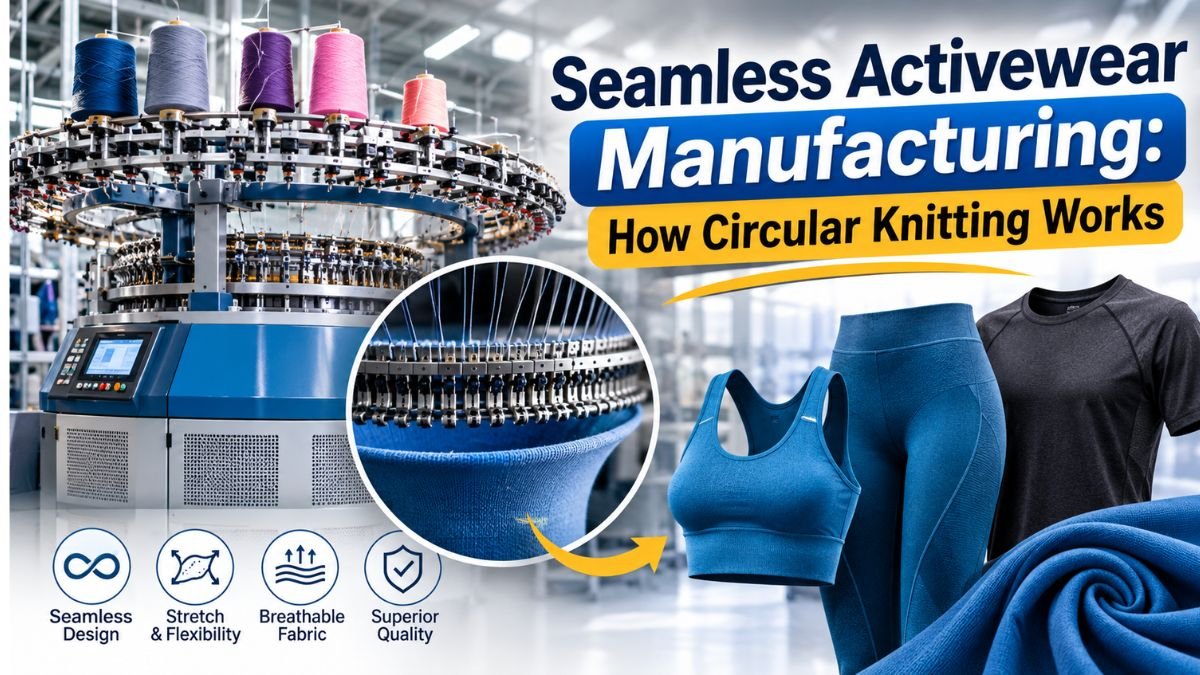
Seamless leggings are produced using specialized knitting methods. This construction reduces or removes certain garment seams.
They can offer a smooth appearance and flexible fit. However, seamless production requires suitable machinery and technical expertise.
If you want this style, ask the manufacturer whether it offers seamless knitting or only conventional cut-and-sew production.
3. Compression-Style Leggings
Compression-style leggings are designed to provide a closer fit and a supportive feel.
Their performance depends on fabric composition, stretch, construction, and garment design. Not every tight-fitting legging should be described as compression wear.
Brands should avoid making medical or performance claims without suitable product testing.
4. Flared Yoga Leggings
Flared leggings have a fitted upper section and wider lower legs.
This style is popular in athleisure collections because it can be worn for workouts and casual outfits.
Manufacturers need accurate measurements to maintain the intended shape and length.
5. Printed Yoga Leggings
Printed leggings allow brands to create distinctive designs.
Options may include geometric patterns, abstract artwork, gradients, and custom graphics. The print method should suit the selected fabric.
Before bulk production, approve the artwork, color references, placement, and sample quality.
6. Pocket Yoga Leggings
Pocket leggings include storage features for small items such as keys or phones.
Pockets may be placed along the sides or within the waistband. Their size and position should be tested during movement.
Poorly placed pockets can affect comfort and garment appearance.
How to Choose the Best Fabric for Yoga Leggings
Fabric selection has a major effect on comfort, flexibility, coverage, and durability. The right material depends on the product’s intended use and target customer.
Polyester and Spandex
Polyester and spandex blends are common in performance apparel.
Polyester can provide durability and support moisture-management finishes. Spandex adds stretch and helps garments move with the body.
This combination may suit yoga leggings, gym wear, and other activewear products.
Nylon and Spandex
Nylon and spandex blends are also used for stretch garments. They can offer a smooth feel and flexible performance.
The final result depends on fibre quality, fabric construction, weight, and finishing.
Ask for a physical swatch before choosing a material for bulk production.
Cotton and Spandex
Cotton and spandex blends may suit casual leggings and selected low-impact activities.
Cotton provides a soft, familiar feel, while spandex adds flexibility. However, the fabric’s performance depends on its composition and construction.
Brands should select materials based on the intended use rather than appearance alone.
Four-Way Stretch Fabric
Four-way stretch fabric stretches in both lengthwise and widthwise directions.
This can support movement during yoga poses and exercise. However, stretch performance also depends on the fabric’s construction and recovery.
Test the fabric in different directions before approving it.
Understanding Fabric GSM
GSM means grams per square metre. It measures fabric weight.
GSM can help buyers compare materials, but it does not determine quality by itself.
For yoga leggings, consider fabric weight alongside opacity, stretch, recovery, softness, and intended use.
A fabric that feels suitable in a swatch may behave differently when made into a complete garment. Sample testing is important.
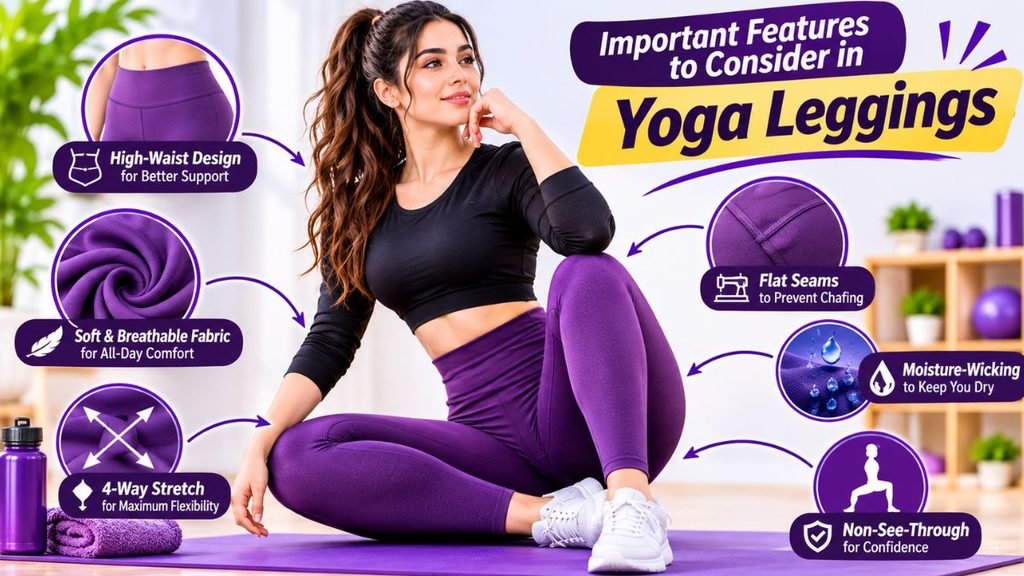
Important Features to Consider in Yoga Leggings
A good product combines fabric, fit, construction, and finishing. Each detail contributes to the customer’s experience.
Comfortable Waistband
The waistband should stay in place without causing unnecessary pressure.
Consider its height, width, elasticity, stitching, and fabric layers. Test it while sitting, bending, and stretching.
Suitable Stretch and Recovery
Leggings should allow movement and return toward their original shape after stretching.
Poor recovery can cause garments to become loose during use.
Ask the manufacturer about fabric specifications and test the sample before production.
Reliable Stitching
Stretch garments require suitable stitches and seam construction.
Inspect areas that experience regular movement, including the crotch, inner leg, waistband, and side seams.
The stitching should be secure and comfortable against the skin.
Appropriate Coverage
Coverage is especially important for yoga and workout leggings.
Check the material under suitable lighting and during movement. Review the garment in different positions rather than judging it only when laid flat.
Do not advertise leggings as squat-proof unless the finished product has been tested.
Practical Design Details
Depending on the collection, you may include:
- Side pockets
- Hidden waistband pockets
- Flat seams
- Gusset construction
- Ankle-length or cropped cuts
- Custom waistband designs
- Reflective details
Each feature should support the product’s intended use.
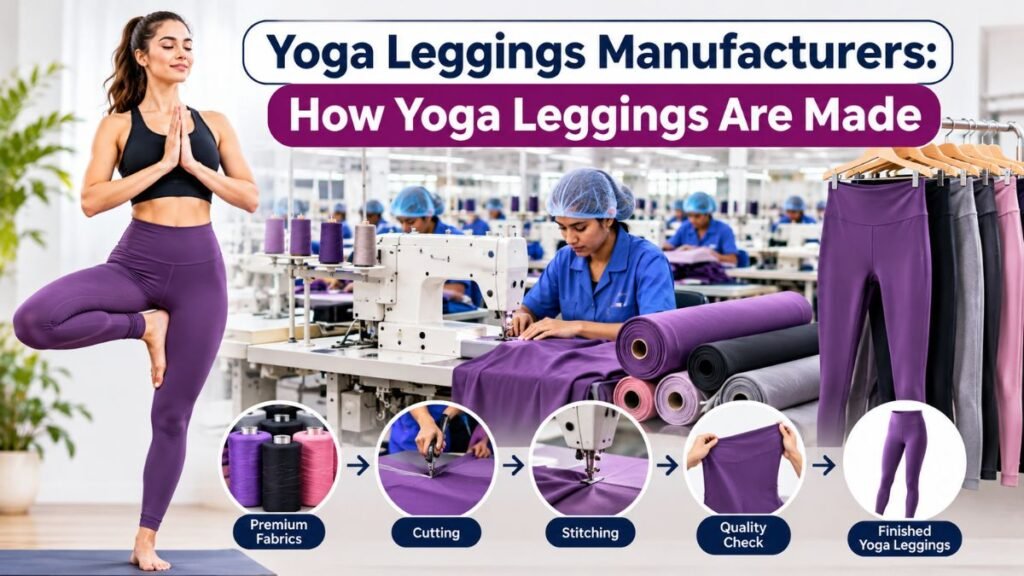
How Does Custom Yoga Leggings Manufacturing Work?
Custom manufacturing allows brands to develop leggings according to their own specifications.
The process usually involves several stages.
Step 1: Prepare Your Design Brief
Start by explaining the product you want to create.
Include details such as:
- Leggings style
- Intended activity
- Target customer
- Fabric preferences
- Size range
- Color options
- Waistband design
- Pocket requirements
- Branding details
- Estimated order quantity
You can provide a tech pack, sketches, reference images, or an existing garment.
The more clearly you explain your requirements, the easier it is to evaluate the project.
Step 2: Select Fabric and Materials
Review the available fabric options with the manufacturer.
Confirm fibre composition, fabric weight, color availability, stretch, and recovery.
Also discuss trims and accessories, including elastic, labels, drawcords, and packaging materials where relevant.
Step 3: Develop Patterns and Sizes
Pattern development turns your design into pieces that can be cut and assembled.
Size grading creates additional sizes from the base pattern. It should account for changes in body proportions rather than simply increasing every measurement equally.
Provide a clear size chart and explain whether measurements refer to the body or finished garment.
Step 4: Create a Sample
The manufacturer develops a sample for review.
Check the fabric, measurements, waistband, seams, fit, and finishing. Try the leggings during movements that match their intended use.
If changes are needed, provide clear feedback with measurements or marked photographs.
Step 5: Approve the Pre-Production Sample
Once the design meets your requirements, approve the physical sample and final specifications.
This sample becomes the reference for bulk manufacturing.
Document approved changes to fabric, colors, measurements, construction, and branding.
Step 6: Begin Bulk Production
After approval, the manufacturer prepares materials and starts production.
The process may include fabric inspection, cutting, sewing, decoration, finishing, and quality checks.
Production planning depends on order quantity, product complexity, and material availability.
Step 7: Inspect, Pack, and Ship
Finished garments should be checked against the approved specifications.
After inspection, the manufacturer prepares the agreed labels and packaging. Shipping is arranged according to the order’s delivery terms.
What Are Custom Yoga Pants Manufacturers Able to Customize?
Working with custom yoga pants manufacturers can give your brand greater control over the final product.
However, customization options vary by factory and equipment. Confirm capabilities before finalizing your design.
Custom Fit and Measurements
You can develop leggings with specific waist, hip, rise, thigh, and inseam measurements.
A custom fit can help your collection serve a particular customer group. Make sure the measurement chart is tested through samples.
Custom Colors
You may select colors that match your brand identity.
Some colors may be available from existing fabric stocks, while others may require custom dyeing or larger material quantities.
Confirm minimum fabric requirements and color approval procedures.
Custom Printing
Printing can add logos, patterns, and graphics to yoga leggings.
Possible methods depend on the fabric and design. Sublimation is used for suitable synthetic materials, while other printing methods may suit selected applications.
Request a sample to check color, placement, and finish.
Custom Embroidery and Logos
Embroidery can add logos or small decorative details.
However, its placement and backing should be considered carefully on stretch fabric. A poorly planned embroidered area may affect comfort or flexibility.
Custom Labels and Packaging
Brand presentation can include woven labels, printed care labels, hang tags, and branded packaging.
Provide final artwork and placement instructions before production. Check that required care and fibre information is accurate for your market.
How to Find a Reliable Yoga Leggings Supplier
A suitable yoga leggings supplier should match your product needs, order size, quality expectations, and business plans.
Use these steps to compare potential suppliers.
Review Manufacturing Capabilities
Ask whether the supplier produces yoga leggings, sports leggings, and other stretch garments.
Check its experience with relevant fabrics, construction methods, and size grading.
A supplier that mainly sells basic casualwear may not offer every technical activewear service you need.
Request Product Samples
Samples help you evaluate the actual product.
Check the fabric, fit, waistband, seams, stretch, recovery, coverage, and finishing.
If the supplier offers different fabric options, request swatches or samples before choosing one.
Understand MOQ Requirements
MOQ means minimum order quantity. It is the smallest order accepted under particular production terms.
The MOQ may vary by product, color, fabric, and customization.
Ask whether the quantity applies per style, color, or size run. Also confirm whether different sizes can be mixed in one order.
Compare Complete Quotations
A quotation should clearly explain what is included.
Compare fabric, construction, sampling, labels, printing, packaging, inspection, and shipping. A low unit price may exclude several important services.
Ask about payment terms and additional charges before placing an order.
Check Communication
Good communication helps prevent production misunderstandings.
The supplier should explain technical details, timelines, and changes clearly. Keep important approvals and instructions in writing.
What Is the Difference Between a Yoga Leggings Manufacturer and a Supplier?
The terms manufacturer and supplier are sometimes used interchangeably. However, they can describe different business models.
A manufacturer produces garments directly. A supplier may manufacture products, distribute them, or source them from other factories.
| Feature | Manufacturer | Supplier or distributor |
|---|---|---|
| Production | May produce garments directly | May source finished products |
| Customization | Often supports custom development | Depends on available products |
| Sampling | May develop custom samples | May provide existing samples |
| Branding | May offer private-label services | May offer selected branding |
| Order options | Depends on factory capacity | Depends on stock and sourcing |
| Communication | May coordinate production directly | May coordinate with manufacturers |
Neither model is automatically better. A retailer looking for ready-made stock may prefer a distributor. A brand developing its own collection may benefit from working directly with a manufacturer.
Ask who makes the garments and who is responsible for quality issues.
Understanding MOQ, Pricing, and Production Timelines
Before choosing a manufacturing partner, understand the commercial terms.
Minimum Order Quantity
MOQ depends on the garment, material, color, and level of customization.
A simple style using available fabric may have different requirements from a fully customized design.
Ask for the MOQ in writing and clarify how it applies to sizes and colors.
Factors That Affect Pricing
The cost of yoga leggings may depend on:
- Fabric composition and weight
- Fabric availability
- Pattern and size development
- Waistband construction
- Pockets and other features
- Printing or embroidery
- Labels and packaging
- Order quantity
- Shipping method
Request a complete quotation based on the same specifications when comparing manufacturers.
Production Timelines
The total timeline may include quotation, material sourcing, sampling, revisions, bulk production, inspection, and shipping.
Custom colors or special materials may require additional preparation.
Ask for an estimated schedule and confirm when the production clock begins. Do not plan a product launch around an unconfirmed delivery date.
Quality Control for Yoga Leggings
Quality control helps confirm that the finished products match the approved sample and specifications.
For stretch garments, inspections should cover both construction and fabric performance.
Fabric Inspection
Check for holes, stains, uneven dyeing, and other material defects.
Confirm that the delivered fabric matches the approved composition and color.
Measurement Inspection
Compare garment measurements with the approved size chart.
Check waist, hip, rise, inseam, thigh, and leg opening. Review samples from different sizes where possible.
Stitching Inspection
Look for skipped stitches, broken threads, loose seams, and uneven stitching.
Pay particular attention to high-stress areas.
Stretch and Recovery Checks
Stretch the fabric and review how well it returns toward its original shape.
The test should match the fabric’s intended use and agreed specifications.
Final Appearance
Inspect the waistband, pockets, hems, labels, and overall finishing.
Confirm that the product looks consistent with the approved sample before shipment.
Private Label Yoga Leggings for Clothing Brands
Private-label manufacturing allows brands to sell leggings under their own names.
This model can support startups, online fitness stores, boutiques, and established activewear companies.
A private-label project may include:
- Custom fabric selection
- Custom fit and measurements
- Brand-specific colors
- Logo printing or embroidery
- Woven labels
- Printed care labels
- Hang tags
- Branded packaging
Private-label production can help create a consistent product identity. However, brands should confirm design ownership, artwork handling, and confidentiality arrangements in their manufacturing agreements.
Is Fashion Soul International a Suitable Activewear Manufacturing Partner?
Fashion Soul International is a factory-owned clothing manufacturer based in Sialkot, Punjab, Pakistan. The company offers private-label, OEM, ODM, white-label, cut-and-sew, and full-package apparel manufacturing.
Its published product categories include activewear, sportswear, fitness apparel, and leggings. The company also lists polyester blends, spandex, four-way stretch fabrics, and moisture-wicking performance fabrics among its material options.
Its manufacturing services cover product development, fabric and trim sourcing, sampling, bulk production, quality control, custom branding, packaging, export documentation, and international shipping.
For a specific yoga leggings project, buyers should confirm current fabric availability, construction capabilities, size grading, and the ability to meet their required performance specifications.
Fashion Soul International publishes a standard MOQ starting at 100 pieces. Actual requirements may vary by product, fabric, color, and construction.
The company’s stated workflow includes physical sample approval before bulk production. This allows buyers to review the product before confirming the main order.
If you are developing a yoga or activewear collection, prepare your design brief, fabric preferences, size chart, branding requirements, and estimated quantity.
You can learn more about its manufacturing services at https://fashionsoulintl.com/.
Tips for Building a Successful Yoga Leggings Collection
Manufacturing is only one part of launching an activewear brand. Product planning and customer understanding are equally important.
Identify Your Target Customer
Decide whether your collection focuses on yoga, gym training, athleisure, or everyday comfort.
This choice will guide your fabric, fit, and design decisions.
Start With Core Designs
A focused collection may include a few core leggings styles and colors.
For example, you might begin with high-waisted leggings, pocket leggings, and a simple everyday style.
A smaller range can make it easier to manage sampling and inventory.
Offer Accurate Size Information
Provide a clear size chart and explain how customers should measure themselves.
Use measurements from approved samples. Avoid relying on generic charts that may not match your actual garments.
Use Clear Product Photography
Show the leggings from the front, back, and side.
Include close-up images of fabric, waistbands, seams, and pockets. Use photographs of the actual product rather than misleading mockups.
Collect Customer Feedback
Customer feedback can reveal fit and comfort issues.
Pay attention to comments about waistband support, length, fabric feel, and sizing. Use this information when planning future production.
Frequently Asked Questions
How do I find reliable yoga leggings manufacturers?
Research manufacturers with relevant activewear experience. Review their fabric options, customization services, samples, MOQ, quality-control process, and communication. Confirm their capabilities before placing a bulk order.
What is the difference between a yoga leggings manufacturer and a yoga leggings supplier?
A manufacturer produces garments, while a supplier may produce, distribute, or source them. Ask whether the company owns or operates the production facility and who manages quality control.
Can I order custom yoga leggings with my own logo?
Many activewear manufacturers offer custom branding. Options may include printed logos, woven labels, care labels, hang tags, and branded packaging. Confirm the methods available for your chosen fabric.
Which fabric is best for yoga leggings?
Polyester-spandex and nylon-spandex blends are common activewear options. Cotton-spandex blends may suit casual leggings. The best choice depends on comfort, stretch, recovery, coverage, and intended use.
What should I include in a yoga leggings tech pack?
Include technical drawings, measurements, fabric composition, GSM, colors, waistband details, seam construction, pocket placement, logo artwork, labels, and packaging requirements.
What is the MOQ for custom yoga leggings?
MOQ varies by manufacturer, design, fabric, color, and customization. Ask whether the minimum applies per style, color, or size run before requesting a quotation.
Can custom yoga pants manufacturers produce different sizes?
Manufacturers with pattern development and grading capabilities may produce multiple sizes. Provide a clear measurement chart and review samples across the size range where possible.
How long does it take to manufacture yoga leggings?
The timeline depends on material sourcing, sampling, revisions, order quantity, and production scheduling. Ask for a project-specific estimate that includes inspection and shipping.
Final Thoughts
Choosing the right yoga leggings manufacturers is an important step when building an activewear collection. The right partner should understand stretch fabrics, garment construction, fit, size grading, and quality control.
Before placing an order, review the manufacturer’s capabilities, request samples, confirm the MOQ, and compare complete quotations. Make sure the approved specifications cover every important product detail.
Whether you need ready-made products or custom designs, careful supplier selection can help you build a consistent collection. With clear planning and communication, your brand can develop yoga leggings that meet its customers’ needs and support long-term growth.