Moisture Wicking Polyester Fabric: Benefits, Uses, and Buying Guide
Moisture wicking polyester fabric is a popular choice for activewear, sportswear, gym clothing, and performance apparel. It helps move sweat away from the skin so it can spread across the fabric surface and evaporate. This process can help people feel drier and more comfortable during exercise and everyday activities.
For clothing brands, choosing the right performance fabric is an important part of product development. The fabric affects comfort, durability, appearance, fit, and overall garment quality. Polyester is widely used because it is lightweight, strong, quick-drying, and suitable for different fabric constructions.
However, not every polyester fabric offers the same moisture management performance. Its results depend on factors such as yarn structure, knitting method, fabric weight, finishing treatments, and garment design.
This guide explains what moisture wicking polyester fabric is, how it works, its main benefits, common applications, and how brands can choose the right material for their clothing collections.
What Is Moisture Wicking Polyester Fabric?
Moisture wicking polyester fabric is a performance textile designed to move sweat away from the skin toward the outer surface of the material. Once moisture reaches the surface, it can spread over a larger area and evaporate more easily.
Polyester is a synthetic fiber made from polymer materials. It is commonly used in sportswear because it is lightweight, durable, and absorbs relatively little moisture compared with many natural fibers.
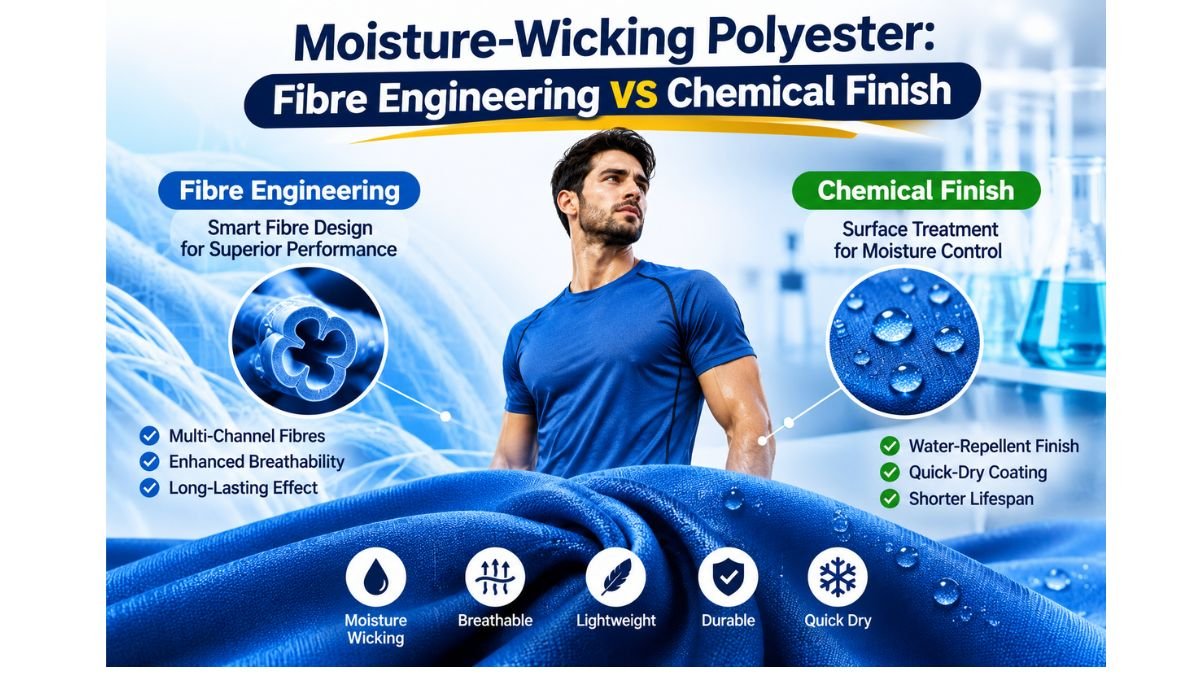
Moisture wicking performance can be created through several methods. Manufacturers may use specially shaped fibers, engineered yarns, particular knitting structures, or chemical finishes. These methods help manage how liquid moves through the fabric.
The fabric is commonly used in:
- Gym shirts and workout tops
- Running clothes
- Sports jerseys
- Training shorts
- Leggings and activewear
- Cycling apparel
- Outdoor performance clothing
- Team uniforms
- Lightweight athletic jackets
The main purpose is to improve comfort when the body produces sweat. Instead of allowing moisture to remain close to the skin, the fabric helps transfer it toward the outside.
How Does Moisture Wicking Polyester Fabric Work?
Moisture wicking works through the movement of liquid across and through a textile. When a person exercises, the body releases sweat to help regulate temperature. Fabric worn next to the skin interacts with this moisture.
A moisture management fabric helps move sweat away from the body. The moisture then spreads across the fabric surface, where it can evaporate.
The process generally involves three stages.
1. Sweat Moves Away From the Skin
When sweat reaches the inside of a garment, the fabric structure helps transfer it away from the skin. Fiber shape, yarn construction, and spaces between yarns can influence this movement.
Some performance fabrics use specially engineered fibers with channels or surface designs. These features can help guide moisture through the material.
2. Moisture Spreads Across the Fabric
After sweat moves away from the body, it can spread across a wider surface area. A larger exposed area may help moisture evaporate more efficiently.
This is one reason fabric construction matters. Two polyester fabrics can have different moisture management performance even when they contain the same fiber type.
3. Moisture Evaporates
The final stage is evaporation. Heat and airflow help convert liquid moisture into vapor.
Lightweight fabrics with suitable construction can support faster drying. However, actual drying time also depends on humidity, temperature, airflow, fabric thickness, and how much sweat the garment holds.
It is important to understand that moisture wicking and quick drying are related but different properties. Wicking describes how moisture moves through the fabric. Quick drying describes how rapidly the fabric loses moisture.
Main Benefits of Moisture Wicking Polyester Fabric
Moisture wicking polyester offers several advantages for clothing brands and consumers. Its performance makes it useful for garments designed for movement, exercise, and regular wear.
1. Helps Keep the Skin Dry
One of the biggest advantages is its ability to move sweat away from the skin. This can reduce the uncomfortable feeling of wet fabric during workouts.
A dry-feeling garment can make exercise more comfortable, especially during activities that produce heavy sweating.
However, moisture wicking does not prevent sweating. It manages moisture after sweat reaches the fabric.
2. Lightweight and Comfortable
Polyester performance fabrics are available in lightweight constructions. These materials can be useful for running shirts, training tops, sports jerseys, and summer activewear.
A lightweight garment can support freedom of movement without adding unnecessary bulk.
The final comfort level also depends on fabric softness, stretch, fit, seams, and garment construction.
3. Quick-Drying Performance
Polyester generally absorbs less water into its fibers than cotton. This can help polyester garments dry relatively quickly, depending on their construction and finishing.
Quick-drying clothing is useful for athletes, travelers, outdoor workers, and people who exercise frequently.
It can also make laundry and garment care more convenient.
4. Durable for Regular Use
Polyester is known for its strength and resistance to many forms of everyday wear. It can maintain its structure through repeated use when the fabric and garment are properly made.
This makes it a practical option for sports uniforms, training clothing, and activewear collections.
Durability still depends on yarn quality, fabric construction, dyeing, finishing, and care.
5. Suitable for Stretch Blends
Polyester can be combined with elastane or spandex to create stretch fabrics. These blends are widely used for leggings, compression clothing, fitted sports tops, and training shorts.
The polyester provides the main fabric structure, while elastane adds stretch and recovery.
The percentage of each fiber should match the garment’s intended fit and performance requirements.
6. Easy to Dye and Customize
Polyester is commonly used in performance clothing because it supports a wide range of colors and printing methods.
Brands can develop garments with team colors, custom graphics, logos, and other visual details.
Sublimation printing is particularly common on suitable polyester fabrics because the dye bonds with the polyester fibers. The exact result depends on fabric composition, color, preparation, and printing conditions.
7. Useful Across Different Climates
Moisture wicking polyester is used in both warm-weather and layered performance garments.
Lightweight versions are suitable for training in warmer conditions. Brushed or heavier constructions may be used in cooler-weather sportswear.
The fabric does not automatically provide cooling or insulation. These properties depend on the complete fabric construction and garment design.
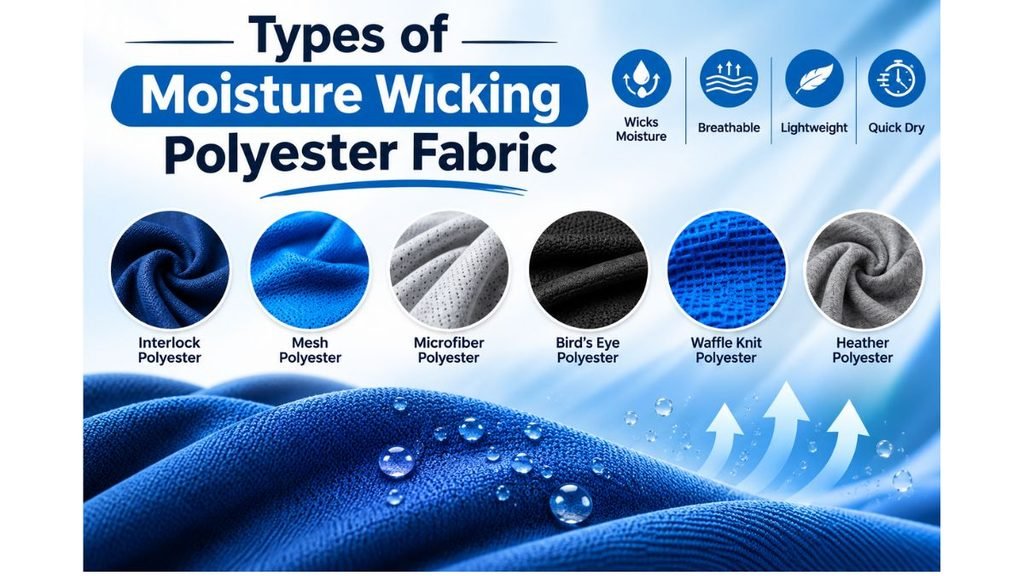
Types of Moisture Wicking Polyester Fabric
Moisture wicking polyester is available in several constructions. Each type offers different characteristics, so brands should select materials according to their product requirements.
Polyester Jersey Fabric
Polyester jersey is a common knit fabric used for T-shirts, sports tops, and lightweight activewear.
It usually has a smooth surface and a flexible structure. Its weight and stretch can vary according to the yarn and knitting process.
Performance jersey is often selected for running shirts, training tops, and sports uniforms.
Polyester Interlock Fabric
Interlock polyester has a double-knit construction. It generally feels smoother and more stable than basic single jersey.
It can be suitable for sports shirts, activewear tops, and garments that need a more substantial fabric feel.
The fabric’s thickness and moisture management depend on its specific construction and finishing.
Polyester Mesh Fabric
Polyester mesh contains an open structure that allows airflow through the material.
It is commonly used in sports jerseys, ventilation panels, training clothing, and performance uniforms.
Mesh can improve breathability, but it may not provide the same coverage or appearance as a solid fabric. Brands should consider transparency, durability, and placement during product development.
Polyester Spandex Fabric
Polyester spandex combines polyester with elastane fibers. It offers stretch and is widely used in fitted sportswear.
Common applications include:
- Leggings
- Sports bras
- Cycling shorts
- Training tights
- Compression-inspired clothing
- Stretch workout tops
The correct blend depends on the required stretch, recovery, support, and fit.
Brushed Polyester Fabric
Brushed polyester has a treated surface that creates a softer feel. Some versions are designed for cooler-weather activewear and training garments.
It may be used for joggers, sports jackets, and other performance clothing.
Brands should test brushed fabrics for pilling, shedding, colorfastness, and moisture management before placing bulk orders.
Recycled Polyester Fabric
Recycled polyester is made using recovered polyester materials, which may include used plastic bottles or textile waste.
It can be developed into performance fabrics for activewear, sportswear, and outdoor clothing.
Recycled content alone does not guarantee better moisture wicking. The fabric’s yarn, construction, and finishing still determine its moisture management performance.
Brands should request reliable documentation if they plan to make recycled-content claims.
Moisture Wicking Polyester vs. Cotton
Cotton and polyester are both widely used in clothing, but they behave differently when exposed to sweat.
Cotton is a natural fiber that absorbs moisture. This can make it comfortable for casual clothing, but a wet cotton garment may feel heavy and take longer to dry.
Polyester absorbs relatively little moisture into the fiber itself. Performance polyester fabrics can move liquid across their structure and support faster evaporation.
| Feature | Moisture Wicking Polyester | Cotton |
|---|---|---|
| Moisture behavior | Can move sweat across the fabric | Absorbs moisture |
| Drying | Often dries relatively quickly | Can take longer to dry |
| Weight when wet | Generally holds less water in the fiber | Can feel heavier when wet |
| Common uses | Activewear and sportswear | Casualwear and everyday clothing |
| Stretch | Depends on construction and fiber blends | Depends on construction and blends |
| Durability | Generally strong for regular use | Varies by fabric and construction |
| Feel | Depends on yarn and finishing | Often soft and familiar |
Neither fabric is best for every garment. Cotton may be suitable for relaxed everyday clothing, while moisture wicking polyester is often a practical option for performance apparel.
Some brands also use blended fabrics to combine different fiber characteristics.
Common Uses of Moisture Wicking Polyester Fabric
The material is used in many clothing categories because it can support comfort, movement, and practical garment performance.
Sportswear and Team Jerseys
Sports jerseys often require lightweight materials that can handle repeated movement and sweating.
Polyester performance fabrics are commonly used for football, basketball, cricket, and other team uniforms.
They can also support sublimation printing, making them useful for custom team designs and numbers.
Gym and Training Clothing
Gym clothing needs to support different types of movement. Moisture wicking polyester can be used for training T-shirts, shorts, leggings, and fitted tops.
Stretch blends may be more suitable for garments that require flexibility.
Running and Cycling Apparel
Running and cycling clothing often uses lightweight performance fabrics. Moisture management, fit, breathability, and reduced fabric weight can all influence comfort.
Cycling garments may also require specific stretch, panel placement, and seam construction.
Outdoor Clothing
Outdoor performance clothing may use polyester fabrics in base layers, lightweight tops, and other technical garments.
For outdoor use, brands should also consider temperature, wind exposure, UV requirements, abrasion resistance, and layering.
Moisture wicking alone does not make a fabric waterproof, windproof, or UV protective.
Workwear and Uniforms
Some work environments require clothing that supports movement and comfort during long shifts.
Polyester performance fabrics may be suitable for selected uniforms, sports staff clothing, event apparel, and other workwear applications.
The fabric must still meet the job’s safety and durability requirements. High-visibility, flame-resistant, or protective performance should never be assumed without appropriate testing and documentation.
How to Choose the Right Moisture Wicking Polyester Fabric
Choosing the right fabric requires more than checking whether the material is made from polyester. Brands should consider the intended garment, customer expectations, and technical requirements.
1. Identify the Garment’s Purpose
Start by deciding what you want to manufacture.
A running shirt may need a lightweight and breathable fabric. Leggings may require stretch and recovery. A sports jersey may need printing compatibility and suitable durability.
Write down the garment’s main requirements before contacting a fabric supplier.
2. Check the Fabric Composition
Review the fiber composition carefully.
A fabric may contain 100% polyester or a blend of polyester and spandex. The blend affects stretch, recovery, fit, and handling.
For fitted activewear, a polyester-spandex blend may be more appropriate than a non-stretch fabric.
3. Review GSM and Fabric Weight
GSM means grams per square meter. It describes the weight of a fabric over a standard area.
A lower GSM fabric is generally lighter, while a higher GSM fabric is generally heavier. However, GSM alone does not determine quality, breathability, or moisture wicking.
Consider the intended garment:
- Lightweight sports shirts may use lighter fabric constructions.
- Training tops may need a balanced weight and coverage.
- Leggings may require a denser structure for opacity and support.
- Sweatshirts may need heavier fabric for warmth.
Always assess GSM together with stretch, thickness, opacity, and fabric construction.
4. Evaluate Breathability
Breathability affects how comfortably heat and moisture can move through a garment.
A fabric with suitable airflow can help reduce heat buildup during physical activity.
Ask for fabric samples and assess them under realistic conditions. Mesh panels and different knit structures can also improve ventilation in selected garment areas.
5. Test Stretch and Recovery
Stretch is important for garments that fit closely to the body.
A fabric should stretch enough for the intended activity and recover after being released. Poor recovery can lead to bagging, sagging, and changes in garment shape.
For leggings, cycling shorts, and fitted tops, test the fabric in both directions where relevant.
6. Check Colorfastness
Performance clothing is often washed frequently. Poor colorfastness can cause fading or color transfer.
Ask the supplier about suitable colorfastness testing. Check the fabric after washing and follow the care instructions provided for the material.
7. Assess Pilling and Surface Quality
Pilling can make clothing look worn, even when the garment is relatively new.
Inspect the fabric surface and ask about pilling performance. This is particularly important for garments that experience friction during exercise.
8. Request Technical Information
A professional fabric supplier should be able to provide useful specifications.
Depending on the fabric, request:
- Fiber composition
- GSM
- Fabric width
- Knit construction
- Stretch and recovery information
- Moisture management test results
- Colorfastness information
- Pilling test results
- Care instructions
- Available colors
Clear specifications help brands compare samples and reduce confusion during production.
Important Tests for Moisture Wicking Polyester Fabric
A fabric may be advertised as moisture wicking, but brands should verify that it meets their requirements.
Testing helps confirm how the material performs under defined conditions.
Moisture Management Testing
Moisture management tests examine how liquid moves through a fabric.
Some tests measure absorption, spreading, and movement from one side of the fabric to the other.
AATCC TM195 is one recognized method for evaluating liquid moisture management properties of textile fabrics.
Ask the supplier which test method was used and request the results where available.
Drying Rate Testing
Drying tests measure how quickly a fabric loses moisture under specified conditions.
This information can help brands compare materials, but results may differ depending on test conditions.
Air Permeability Testing
Air permeability testing measures how easily air passes through a fabric.
It can provide useful information about ventilation, particularly for sportswear and outdoor clothing.
Colorfastness Testing
Colorfastness tests assess how well a fabric maintains its color when exposed to washing, rubbing, light, or other conditions.
The relevant tests depend on the garment’s expected use and care requirements.
Stretch and Recovery Testing
Stretch and recovery tests help determine how a fabric behaves when extended and released.
These tests are important for fitted performance garments and stretch blends.
How to Find a Reliable Moisture Wicking Polyester Fabric Supplier
Finding a suitable supplier is an important step for clothing brands, sportswear companies, and activewear startups.
The right supplier should provide consistent material specifications, clear communication, and samples that match the intended product.
Research Fabric Suppliers
Start by looking for suppliers that work with performance textiles. Review their product categories, fabric specifications, and manufacturing capabilities.
Do not select a supplier based only on a product photograph or a low quoted price.
Request Physical Samples
A physical sample allows you to assess the fabric’s weight, stretch, texture, thickness, and appearance.
You can also test how it behaves during movement and washing.
Compare samples from different suppliers before choosing a material for bulk production.
Ask About Customization
Some clothing projects require specific colors, GSM, fabric blends, or finishes.
Ask whether the supplier can provide custom fabric development or source material according to your specifications.
Confirm minimum order quantities, development costs, and available options before moving forward.
Discuss Quality Control
Ask how the supplier checks fabric quality.
Useful checks may include:
- GSM consistency
- Fabric width
- Shade variation
- Surface defects
- Shrinkage
- Colorfastness
- Stretch and recovery
- Moisture management performance
Agree on acceptable quality standards before production begins.
Confirm Lead Times and Availability
Ask about sample availability, bulk material lead times, and repeat-order consistency.
A fabric that is available for one small order may not always be available in the same quality or color for future orders.
Discuss stock availability and sourcing arrangements early.
Manufacturing Activewear With Moisture Wicking Polyester
Selecting the fabric is only one part of making a successful activewear product. Garment design, pattern development, stitching, finishing, and quality control also affect the final result.
A clothing brand should confirm the fabric specifications before sampling. The development process should consider the garment’s intended use and the performance customers expect.
For example, a moisture wicking training shirt may require a lightweight polyester knit, suitable seams, a comfortable fit, and durable printing. Leggings may need a polyester-spandex blend with reliable stretch recovery and adequate opacity.
Fashion Soul International is a factory-owned custom clothing manufacturer based in Sialkot, Pakistan. Its manufacturing services include fabric sourcing, product development, sampling, bulk production, quality control, custom branding, packaging, and international shipping.
Brands developing activewear can discuss their design requirements, fabric preferences, and garment specifications with a manufacturing partner. A project can begin with a design brief, reference images, sketches, or a technical pack.
Before bulk production, brands should review and approve a physical pre-production sample. This allows them to assess the fabric, fit, construction, stitching, and finishing before committing to the full order.
Common Mistakes to Avoid When Buying Performance Polyester
Choosing the wrong material can affect garment quality and customer satisfaction. Avoid these common mistakes when sourcing moisture wicking polyester.
Choosing Fabric Only by Price
A low fabric price may look attractive, but it does not guarantee suitable performance.
Compare specifications, sample quality, consistency, and testing information. Consider the complete cost of the finished garment rather than the fabric price alone.
Assuming All Polyester Is Moisture Wicking
Regular polyester does not automatically provide the same moisture management as an engineered performance fabric.
Ask whether the material has been designed or tested for moisture wicking. Request evidence instead of relying only on marketing descriptions.
Ignoring Fabric Weight
A fabric may be too thin for leggings or too heavy for a lightweight running shirt.
Select GSM according to the garment’s purpose, fit, coverage, and expected conditions.
Skipping Sample Testing
A fabric specification sheet cannot show every detail of how a material feels and performs.
Always inspect physical samples and test them where possible. This can help identify problems before bulk manufacturing.
Overlooking Care Requirements
Some performance fabrics require specific washing and drying instructions.
Check the recommended care process and make sure the final garment labels provide clear instructions.
Failing to Confirm Repeat Availability
A supplier may offer a suitable sample but struggle to provide the same fabric in a later order.
Discuss repeat-order requirements, color consistency, and material availability before selecting the supplier.
Is Moisture Wicking Polyester Fabric Good for Activewear?
Yes. Moisture wicking polyester is a widely used option for activewear because it can move sweat away from the skin, dry relatively quickly, and support lightweight garment construction.
It is suitable for many products, including sports shirts, gym tops, running clothing, training shorts, and team uniforms.
However, the best fabric depends on the garment. Leggings may need added stretch, while running shirts may prioritize low weight and airflow.
Brands should evaluate the complete fabric specification rather than choosing material based on fiber content alone.
Frequently Asked Questions
1. What is moisture wicking polyester fabric used for?
It is used for sportswear, activewear, gym clothing, running shirts, sports jerseys, training shorts, and outdoor performance garments. Its main purpose is to move sweat away from the skin and support moisture evaporation.
2. Is moisture wicking polyester better than cotton?
For many high-sweat activities, moisture wicking polyester can be more practical because it absorbs relatively little moisture into its fibers and often dries faster. Cotton absorbs more water and may feel heavier when wet. The better choice depends on the garment and the wearer’s preferences.
3. Does 100% polyester wick moisture?
Not all 100% polyester fabrics have the same moisture wicking performance. Engineered yarns, fiber shapes, knit structures, and finishes can improve moisture movement. Brands should request test information for the specific fabric.
4. Is moisture wicking fabric breathable?
Many moisture wicking polyester fabrics are designed to support breathability, but performance varies. Knit structure, thickness, GSM, and finishing all influence airflow. Check air permeability or test a sample when breathability is important.
5. Can moisture wicking polyester be used for leggings?
Yes. Polyester-spandex blends are commonly used for leggings because they combine polyester’s durability with elastane’s stretch. Brands should also check opacity, recovery, shrinkage, and pilling performance.
6. Does moisture wicking polyester prevent sweating?
No. Moisture wicking fabric does not stop the body from producing sweat. It helps move sweat away from the skin and spread it across the fabric surface so it can evaporate.
7. Is recycled polyester suitable for activewear?
Yes. Recycled polyester can be used to produce activewear and sportswear. Its moisture management depends on the yarn, construction, and finishing, not simply on whether the polyester is recycled.
8. How can I test moisture wicking performance?
You can request moisture management test results from the supplier. AATCC TM195 is one recognized method for evaluating liquid moisture management. You can also compare samples under consistent conditions, although informal tests do not replace laboratory testing.
9. What GSM is best for moisture wicking sportswear?
There is no single ideal GSM for every sportswear product. Lightweight shirts, training tops, and leggings have different requirements. Select fabric weight according to coverage, comfort, stretch, and garment construction.
10. Can clothing brands customize moisture wicking polyester garments?
Yes. Depending on supplier capabilities, brands can customize fabric composition, color, fit, printing, embroidery, labels, and packaging. Confirm fabric availability and production requirements before approving the sample.
Conclusion
Moisture wicking polyester fabric is a practical material for activewear, sportswear, and other performance clothing. It helps move sweat away from the skin, supports faster drying, and offers useful properties such as durability, lightweight construction, and customization options.
However, the results depend on the exact fabric. Yarn structure, knitting method, GSM, fiber blend, and finishing can all affect moisture management.
For clothing brands, the best approach is to define product requirements, request physical samples, review technical specifications, and test important performance properties before bulk production.
By choosing the right material and working with a reliable manufacturing partner, brands can develop comfortable and functional garments that meet their customers’ expectations.