Four Way Stretch Fabric: Benefits, Uses, and Complete Guide
Choosing the right fabric is one of the most important decisions in clothing production. It affects comfort, fit, flexibility, durability, and overall garment performance. For activewear, sportswear, and fitted clothing, flexibility is especially important. This is where four way stretch fabric becomes a popular choice.
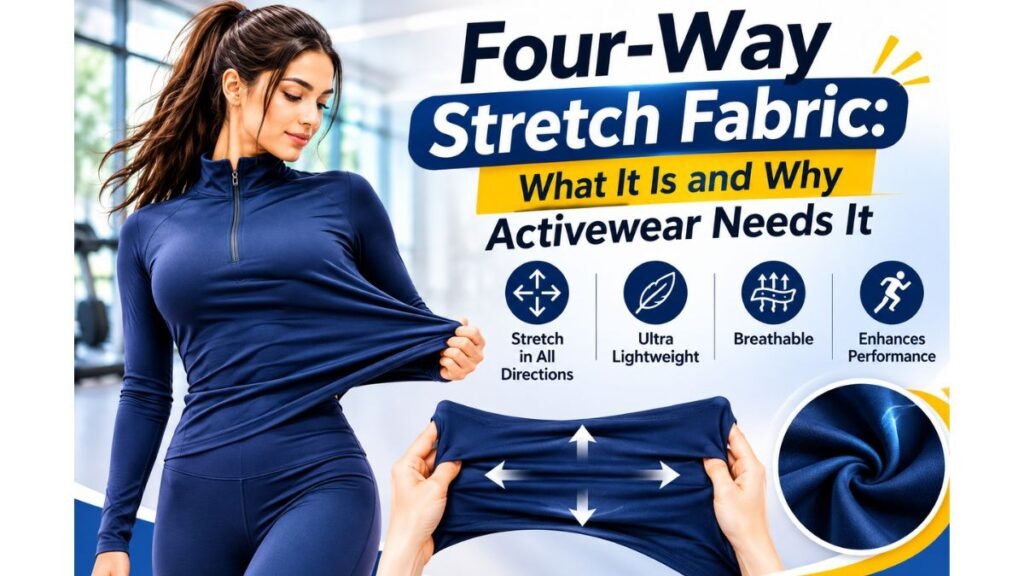
Four way stretch fabric can stretch in both directions: horizontally and vertically. This allows garments to move with the body while maintaining a comfortable fit. It is commonly used in leggings, yoga pants, sports bras, gym shirts, swimwear, and other performance clothing.
For clothing brands, understanding fabric stretch is essential before starting production. The right material can improve the customer experience and help a product meet its intended purpose.
In this guide, you will learn what four way stretch fabric is, how it works, its benefits, common uses, and how it compares with two way stretch fabric. You will also discover what brands should consider when sourcing this material for clothing production.
What Is Four Way Stretch Fabric?
Four way stretch fabric is a textile that stretches horizontally and vertically. It can expand across the width and along the length of the fabric. This flexibility allows clothing to move in multiple directions.
The term describes the fabric’s stretch performance rather than one specific fiber or material. Manufacturers can produce four way stretch fabrics using different fiber combinations and knitting or weaving methods.
Many four way stretch fabrics contain elastane, also known as spandex or Lycra. This stretch fiber is blended with materials such as polyester or nylon. The combination provides flexibility, comfort, and shape recovery.
For example, a pair of leggings made with four way stretch fabric can stretch when someone bends, squats, or performs yoga poses. The fabric moves with the body instead of restricting movement.
However, not every four way stretch fabric offers the same performance. Stretch percentage, recovery, weight, thickness, and fiber composition can vary between materials.
How Does Four Way Stretch Fabric Work?
Four way stretch fabric works through a combination of fiber properties and fabric construction. Stretch fibers provide elasticity, while the textile structure helps the material expand and recover.
Elastane is commonly added to a base fiber such as polyester or nylon. It allows the fabric to stretch when force is applied. Once that force is removed, the material can return toward its original dimensions.
The amount of stretch depends on several factors:
- Fiber composition: The percentage of elastane affects elasticity.
- Fabric construction: Knitted and woven structures behave differently.
- Fabric weight: GSM influences thickness, coverage, and feel.
- Stretch percentage: This indicates how far the fabric can extend.
- Recovery: This describes how well the material returns to its original shape.
A fabric may stretch in four directions but still have poor recovery. This means it can become loose or lose its shape after repeated use.
For clothing brands, testing both stretch and recovery is important. These properties help determine whether a fabric is suitable for a specific garment.
What Materials Are Used in Four Way Stretch Fabric?
Four way stretch fabric is available in several fiber combinations. Each option offers different properties, so brands should choose according to the garment’s purpose.
1. Nylon and Spandex
Nylon and spandex blends are widely used in performance clothing. Nylon provides a smooth feel, while spandex adds elasticity.
Common applications include:
- Yoga leggings
- Sports bras
- Compression clothing
- Cycling shorts
- Fitted activewear tops
This combination is often selected when softness, flexibility, and a close fit are important.
2. Polyester and Spandex
Polyester and spandex blends are another common choice. Polyester offers durability and can support moisture-management finishes. Spandex provides stretch.
This combination is frequently used for:
- Gym clothing
- Running apparel
- Training shirts
- Sports leggings
- Performance uniforms
The actual moisture-wicking performance depends on the yarn, construction, and fabric finish. A polyester blend should not automatically be considered moisture-wicking without testing.
3. Cotton and Spandex
Cotton and spandex fabrics combine the familiar softness of cotton with added flexibility.
They can work well for casual clothing, fitted tops, lounge sets, and comfortable everyday garments.
However, cotton blends may absorb more moisture than some synthetic performance fabrics. Brands should consider this when developing clothing for intense workouts.
4. Recycled Polyester and Spandex
Some manufacturers offer stretch fabrics made with recycled polyester. These materials can be considered by brands exploring recycled fiber options.
However, recycled content alone does not establish that a fabric is environmentally sustainable. Brands should check the material’s composition, documentation, processing, and relevant certifications before making environmental claims.
Benefits of Four Way Stretch Fabric
Four way stretch fabric offers several benefits for clothing manufacturers, fashion brands, and customers.
1. Greater Freedom of Movement
The main benefit is flexibility. The material stretches in multiple directions, allowing the body to move comfortably.
This is useful for activities such as running, stretching, cycling, dancing, and weight training.
2. Comfortable Fit
Four way stretch materials can adapt to different body movements. They are useful for fitted garments that need to remain comfortable during physical activity.
The right fabric construction can help reduce the feeling of restriction around the waist, hips, shoulders, and knees.
3. Better Shape Recovery
Many four way stretch fabrics contain elastane. This fiber helps the material return toward its original shape after stretching.
Good recovery can help leggings, sportswear, and fitted tops maintain their fit during repeated wear.
However, recovery depends on fabric quality, fiber percentage, construction, and care.
4. Suitable for Fitted Clothing
Four way stretch fabrics are useful for garments that follow the body’s shape. They can provide a close fit without completely limiting movement.
This makes them suitable for leggings, compression-inspired clothing, sports bras, and fitted training shirts.
5. Versatile Applications
The fabric is available in different weights, textures, finishes, and fiber blends. Brands can select materials for different products and customer needs.
Some options are lightweight and smooth, while others are thicker and designed for greater coverage.
6. Improved Garment Performance
When the fabric is selected correctly, it can support the intended function of a garment.
For example, stretch leggings need flexibility and recovery. Running tops may require lightweight construction and moisture management. Swimwear needs stretch combined with suitable resistance to water and repeated use.
The material should always match the product’s performance requirements.
4 Way Stretch Fabric for Activewear
4 way stretch fabric for activewear is popular because sports clothing must support different types of movement.
During exercise, the body bends, twists, stretches, and changes position. A fabric that moves in multiple directions can help clothing remain comfortable during these activities.
Brands use four way stretch materials for several activewear products.
Yoga Leggings
Yoga leggings need flexibility for bending, stretching, and different yoga poses. Four way stretch fabric can help the garment move with the body.
Brands should also evaluate opacity, recovery, waistband stability, and comfort. Squat testing can help identify whether the fabric becomes transparent under tension.
Sports Bras
Sports bras often require stretch for comfort and fit. Four way stretch materials can support movement around the chest and torso.
However, stretch alone does not determine support level. Fabric structure, lining, elastic components, straps, and garment construction also affect performance.
Gym Shirts
Stretch gym shirts can provide flexibility during weight training and general exercise.
Polyester and spandex blends are commonly considered for these products. Brands should test breathability, moisture management, softness, and fit before selecting a material.
Cycling Shorts
Cycling shorts need flexibility because the body remains in repeated motion. Four way stretch fabric can help the garment fit closely while allowing movement.
Other important features include seam placement, durability, compression level, and resistance to repeated friction.
Running Clothing
Running garments need to support repeated body movement. Four way stretch materials can be used in running tights, fitted tops, and shorts.
For these products, brands should also consider fabric weight, ventilation, drying performance, and comfort.
2 Way vs 4 Way Stretch: What Is the Difference?
Understanding 2 way vs 4 way stretch helps clothing brands choose the right material for their products.
The main difference is the direction in which the fabric stretches.
Two way stretch fabric generally stretches in one direction, often across the width. Four way stretch fabric stretches both horizontally and vertically.
| Feature | 2 Way Stretch Fabric | 4 Way Stretch Fabric |
|---|---|---|
| Stretch direction | Usually one direction | Horizontal and vertical |
| Flexibility | More limited | Greater multi-directional flexibility |
| Movement | Suitable for basic movement needs | Suitable for more dynamic movement |
| Common applications | Some trousers, uniforms, and fitted garments | Leggings, activewear, swimwear, and sportswear |
| Fit | Depends on construction and stretch direction | Often suitable for close-fitting designs |
| Material options | Different fiber blends | Different fiber blends |
When Should You Choose Two Way Stretch Fabric?
Two way stretch fabric can be suitable when a garment needs flexibility in one main direction.
It may work for certain trousers, uniforms, casual garments, and designs where full multi-directional stretch is unnecessary.
It can also be a practical option when the garment’s pattern and construction are designed around its stretch direction.
When Should You Choose Four Way Stretch Fabric?
Four way stretch fabric is generally more suitable when the garment needs to move in multiple directions.
It is commonly considered for:
- Yoga and gym leggings
- Sports bras
- Swimwear
- Dancewear
- Cycling clothing
- Fitted sports tops
- Performance clothing
The best choice depends on the product design, intended activity, and required performance. Four way stretch is not automatically better for every garment.
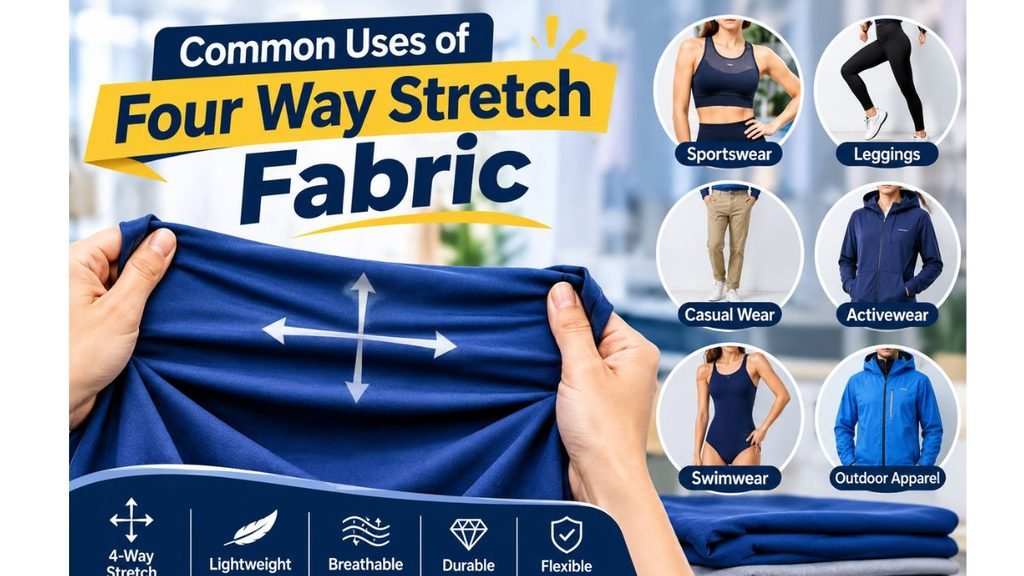
Common Uses of Four Way Stretch Fabric
Four way stretch fabric is used across several clothing categories.
1. Activewear and Sportswear
Activewear is one of the most common applications. Leggings, sports bras, gym tops, and training shorts often need flexible materials.
2. Swimwear
Swimwear requires stretch for a close and comfortable fit. Some nylon-spandex and polyester-spandex blends are developed for swimwear applications.
Brands should check chlorine resistance, colorfastness, drying performance, and recovery before choosing a fabric.
3. Dancewear
Dance clothing needs to support bending, stretching, and movement. Four way stretch materials can help dancers move comfortably.
4. Compression-Inspired Clothing
Some fitted garments use stretch fabrics to create a close-fitting design. The level of compression depends on the fabric, pattern, and garment construction.
Brands should avoid assuming that every four way stretch fabric provides compression.
5. Casual and Everyday Clothing
Stretch materials are also used in casual clothing. Fitted tops, leggings, lounge sets, and stretch trousers can benefit from added flexibility.
How to Choose the Right Four Way Stretch Fabric
Selecting the right fabric requires more than checking whether it stretches in four directions. Brands should evaluate several technical and practical factors.
1. Check Fiber Composition
Start by checking the fabric composition. Common options include nylon-spandex, polyester-spandex, and cotton-spandex blends.
The right combination depends on the product’s purpose.
For example, a yoga legging may require a soft nylon-spandex blend, while a training shirt may use polyester-spandex.
2. Understand GSM
GSM means grams per square meter. It measures the weight of the fabric.
A lower GSM fabric is generally lighter, while a higher GSM fabric is generally heavier. However, GSM alone does not determine quality or performance.
When selecting fabric, consider:
- Intended garment type
- Coverage and opacity
- Fabric thickness
- Comfort
- Stretch and recovery
- Season and climate
The appropriate GSM should be confirmed through fabric samples and product testing.
3. Test Stretch Percentage
Stretch percentage indicates how much a fabric can extend compared with its original measurement.
For example, if a 10 cm fabric sample stretches to 14 cm, its extension is 40%.
The basic formula is:
Stretch percentage = (Extended length − Original length) ÷ Original length × 100
Test the fabric in both directions. A four way stretch material may not have equal horizontal and vertical stretch.
4. Evaluate Recovery
Recovery is the ability of the fabric to return toward its original dimensions after stretching.
Poor recovery can lead to loose knees, sagging waistbands, and garments that lose their original fit.
Brands should stretch samples repeatedly and check how well they recover.
5. Check Opacity
Opacity is especially important for leggings and fitted sportswear.
A fabric may look opaque when relaxed but become transparent when stretched. Test it under strong lighting and during movement.
Squat tests can help brands assess leggings before approving bulk production.
6. Consider Fabric Feel
Fabric feel affects the customer’s experience. Some materials feel smooth and cool, while others feel soft, brushed, or slightly textured.
Request physical samples before choosing the final material.
7. Check Durability
The fabric should withstand the intended use and care routine.
Depending on the product, useful tests may include:
- Abrasion resistance
- Pilling resistance
- Colorfastness
- Seam strength
- Stretch recovery
- Shrinkage
- Wash performance
Not every garment requires the same testing. Select tests based on the product’s intended use.
How Is Four Way Stretch Fabric Manufactured?
The manufacturing process depends on the fiber composition and textile construction.
Many stretch fabrics are produced through knitting. Some are made using woven structures with stretch fibers.
A typical process may include the following stages.
Step 1: Fiber Selection
Manufacturers select the required fibers, such as nylon, polyester, cotton, or elastane.
The composition depends on the intended garment and performance requirements.
Step 2: Yarn Preparation
The selected fibers are prepared for textile production. Stretch fibers may be combined with other yarns through different manufacturing methods.
Step 3: Knitting or Weaving
The yarns are processed into fabric using suitable knitting or weaving equipment.
Knitted structures are common in activewear because they can provide flexibility and comfort.
Step 4: Dyeing and Finishing
The fabric may be dyed and finished to achieve the required color, surface feel, and performance.
Finishing treatments vary according to the material and intended application.
Step 5: Quality Inspection
The finished fabric is checked for important specifications. These may include weight, width, color consistency, defects, stretch, and recovery.
Fabric inspection helps identify problems before the material reaches garment production.
Challenges of Using Four Way Stretch Fabric
Although four way stretch fabric offers several benefits, brands should understand its potential challenges.
1. Different Stretch Levels
Not all four way stretch fabrics perform equally. Some have high elasticity, while others offer moderate stretch.
Brands should confirm the stretch percentage in both directions.
2. Shape Loss
Poor-quality stretch fibers or unsuitable fabric construction may result in weak recovery.
Repeated stretching and washing can affect the original fit.
3. Sewing Requirements
Stretch fabrics may require suitable needles, thread, stitch types, and machine settings.
Incorrect sewing can cause skipped stitches, broken seams, or wavy stitching.
Manufacturers should test sewing methods before starting bulk production.
4. Fabric Transparency
Some lightweight stretch materials become transparent when extended.
This can be a major concern for leggings and fitted clothing. Testing the fabric under tension is important.
5. Higher Material Costs
Some performance stretch fabrics may cost more than basic non-stretch materials.
The final cost depends on fiber composition, GSM, finish, supplier, order quantity, and other specifications.
Brands should compare samples and quotations rather than selecting fabric based only on price.
Tips for Clothing Brands Sourcing Four Way Stretch Fabric
Sourcing the right fabric is an important part of product development. A material that looks good in a supplier’s photograph may perform differently in a finished garment.
Use these tips when evaluating suppliers.
Request physical samples: Always review the actual fabric before making a final decision.
Ask for technical specifications: Confirm composition, GSM, width, stretch percentage, and recovery.
Explain the intended product: Tell the supplier whether the fabric is for leggings, sports bras, shirts, or swimwear.
Test before bulk production: Check fit, opacity, comfort, washing performance, and durability.
Confirm color availability: Make sure the supplier can provide the required colors and consistent dye lots.
Discuss minimum order quantities: Fabric suppliers may have different MOQs for colors, compositions, and custom developments.
Approve the final sample: Review the finished garment before authorizing bulk manufacturing.
Clear communication can reduce production errors and help brands achieve more consistent results.
How Fashion Soul International Supports Stretch Fabric Clothing Production
Choosing the right fabric is only one part of developing a successful clothing product. Brands also need suitable patterns, sampling, garment construction, branding, and quality checks.
Fashion Soul International is a factory-owned custom clothing manufacturer based in Sialkot, Pakistan. The company supports clothing brands with product development and apparel manufacturing services.
Its services include fabric and trim sourcing, sample development, bulk production, quality control, branding, packaging, and export support.
For brands developing activewear and other stretch clothing, material selection should match the product’s intended use. Fabric options can include polyester, cotton, and stretch materials, depending on project requirements and availability.
Before production, brands should confirm the exact fiber composition, GSM, stretch performance, recovery, color, and finish.
Fashion Soul International’s standard MOQ starts at 100 pieces per style, although the final quantity can vary by product, fabric, color, construction, and customization requirements.
The manufacturing process includes sample development and approval before bulk production. This gives brands an opportunity to review the garment’s fit, fabric behavior, stitching, and finishing.
Working with a manufacturer that understands fabric selection and garment construction can help brands move from an initial idea to a finished clothing product.
Frequently Asked Questions About Four Way Stretch Fabric
1. What is four way stretch fabric?
Four way stretch fabric is a textile that stretches horizontally and vertically. It allows garments to move in multiple directions and is commonly used in activewear, leggings, swimwear, and fitted clothing.
2. Is four way stretch fabric good for activewear?
Yes. It is often suitable for activewear because it supports movement during exercise. However, brands should also check recovery, breathability, opacity, durability, and comfort.
3. What is the difference between 2 way and 4 way stretch?
Two way stretch fabric generally stretches in one direction, while four way stretch fabric stretches horizontally and vertically. Four way stretch is often selected for garments requiring greater multi-directional flexibility.
4. Is four way stretch fabric made with spandex?
Many four way stretch fabrics contain spandex or elastane. However, the term describes the fabric’s stretch behavior, not a single required fiber composition.
5. Is nylon or polyester better for four way stretch activewear?
Both can be suitable. Nylon blends often provide a smooth feel, while polyester blends are widely used in performance clothing. The better choice depends on the garment’s required feel, durability, moisture management, and cost.
6. Does four way stretch fabric lose its shape?
It can lose shape if the material has poor recovery or is exposed to unsuitable care conditions. Fiber quality, construction, fabric finishing, and washing practices all influence performance.
7. Is four way stretch fabric suitable for leggings?
Yes. It is commonly used for leggings because it can stretch in multiple directions. However, opacity, recovery, waistband stability, and seam strength should also be tested.
8. How do you test four way stretch fabric?
Measure a fabric sample in both directions. Stretch it and calculate the percentage of extension. Then release it and observe how well it returns to its original dimensions.
9. What GSM is best for four way stretch fabric?
There is no single ideal GSM for every product. Leggings, sports bras, shirts, and swimwear may require different fabric weights. Select GSM based on coverage, comfort, stretch, and intended use.
10. Can four way stretch fabric be used for swimwear?
Yes. Certain four way stretch nylon-spandex and polyester-spandex fabrics are used for swimwear. Brands should also check chlorine resistance, colorfastness, and recovery.
Conclusion
Four way stretch fabric is an important material for modern activewear, sportswear, swimwear, and fitted clothing. Its ability to stretch horizontally and vertically helps garments move with the body.
However, choosing the right material requires more than checking its stretch direction. Fiber composition, GSM, recovery, opacity, durability, and fabric construction all affect the final product.
Understanding the difference between two way and four way stretch can also help brands make better sourcing decisions. Before starting bulk production, request physical samples and test the material in real garment conditions.
For clothing brands, working with an experienced manufacturing partner can simplify fabric selection, sampling, and production planning. With the right material and construction, brands can develop comfortable garments that meet their customers’ expectations.