Low MOQ Clothing Manufacturer: A Complete Guide for Clothing Startups
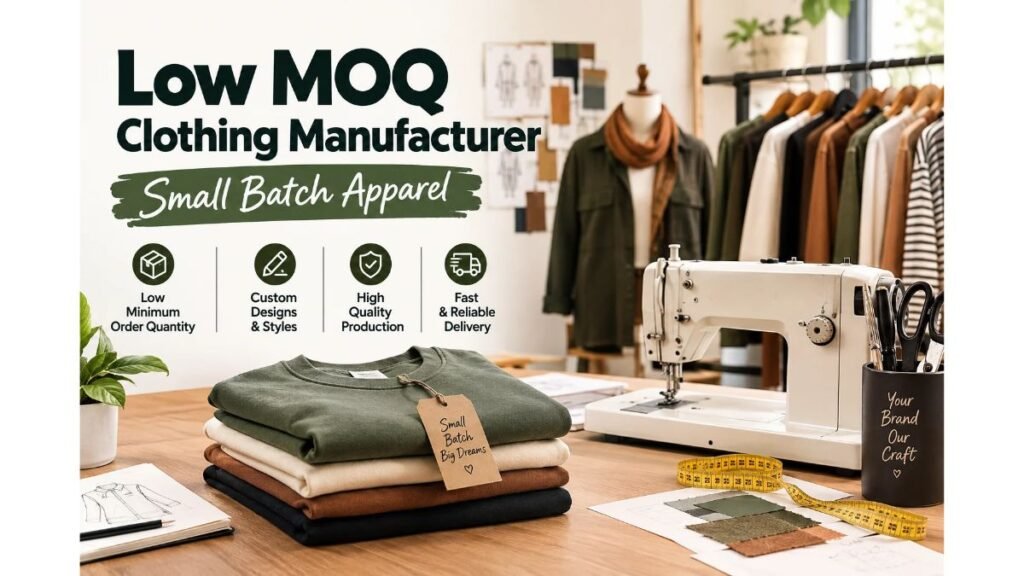
Finding a low MOQ clothing manufacturer can help new fashion brands launch products without investing in large quantities of inventory. Instead of ordering thousands of garments, businesses can explore smaller production runs, test customer demand, and improve their designs before scaling.
For startups, small fashion labels, online stores, and independent designers, choosing the right manufacturing partner is an important business decision. A suitable supplier should offer manageable minimum order quantities, consistent product quality, clear pricing, and reliable communication.
However, low minimums do not automatically mean low costs or better quality. You must compare manufacturing options, understand customization requirements, and review samples before committing to production.
This guide explains how low-MOQ clothing manufacturing works, where to find suitable suppliers, what affects pricing, and how to choose a manufacturer that fits your business.
What Is a Low MOQ Clothing Manufacturer?
A low MOQ clothing manufacturer produces garments in relatively small quantities compared with factories that require large bulk orders.
MOQ stands for minimum order quantity. It represents the smallest quantity a supplier accepts for a particular order or product.
For example, a manufacturer might accept an order of 100 custom T-shirts, while another may require several hundred or more. Actual minimums depend on the garment, fabric, production method, customization, and supplier.
There is no universal quantity that defines a low MOQ. What counts as a small order for a large retailer may be too expensive for a new clothing brand.
Low-MOQ production is useful when you want to:
- Launch a clothing brand with a limited budget.
- Test a new product before investing in larger quantities.
- Offer exclusive designs or limited collections.
- Reduce the risk of unsold inventory.
- Experiment with different fabrics, colors, and fits.
- Build a product range gradually.
The goal is to find a manufacturer whose minimums and production capabilities match your current business needs.
Why Low MOQ Manufacturing Matters for Startups
Starting a clothing brand involves more than manufacturing garments. You also need money for design, samples, packaging, marketing, website development, shipping, and customer service.
A large first order can consume much of your available budget. If customers do not respond well to the product, you may be left with unsold stock.
Working with a low-MOQ supplier can make the initial launch more manageable.
Lower Initial Inventory Investment
Smaller production quantities can reduce the amount of money tied up in inventory. This allows you to reserve part of your budget for other business expenses.
However, remember that a small order does not always have the lowest per-piece price. Sampling, setup, artwork, and customization costs may be spread across fewer garments.
Easier Product Testing
A small initial run allows you to assess customer interest before expanding production.
You can review sales, customer feedback, sizing preferences, and return reasons. These insights help you decide which products deserve larger orders.
Greater Flexibility for New Designs
Fashion businesses often adjust their collections as they learn more about their customers. Smaller production runs can make it easier to introduce a new graphic, colorway, or garment style without immediately committing to a large quantity.
More Manageable Inventory
Smaller orders can reduce the risk of holding too much stock. This is especially useful for businesses selling through online stores or social media.
Still, your inventory plan should account for supplier lead times and the possibility that popular products may sell out before a reorder arrives.
Types of Low-MOQ Clothing Manufacturers
Different manufacturers offer different production models. Understanding these options will help you identify the right partner.
Private-Label Clothing Manufacturers
Private-label manufacturers produce garments that you sell under your own brand name. Depending on their services, you may customize labels, hang tags, packaging, colors, materials, and garment details.
This option suits entrepreneurs who want to develop a recognizable brand without operating their own factory.
Before choosing a private-label supplier, confirm which parts of the product can be customized and whether each customization changes the minimum order.
Cut-and-Sew Manufacturers
Cut-and-sew manufacturers create garments from fabric according to specified patterns and designs. They can be suitable for brands that need custom fits, unique silhouettes, or specific construction details.
These projects may require more product-development work than purchasing ready-made garments.
A clear tech pack, measurements, reference sample, or detailed design brief can help the manufacturer understand your expectations.
White-Label Clothing Suppliers
White-label suppliers generally offer existing products that can be sold under your brand. They may provide a faster route to market because you do not need to develop every garment from scratch.
Customization may be limited, so ask whether the supplier permits changes to colors, labels, packaging, and other product details.
OEM Clothing Manufacturers
Original Equipment Manufacturer (OEM) production involves manufacturing products according to the buyer’s specifications. The buyer usually provides the design or technical requirements, while the manufacturer produces the garments.
This can be useful for brands that have a defined product concept and need a production partner.
ODM Clothing Manufacturers
Original Design Manufacturer (ODM) suppliers may provide existing designs or product-development support. The exact arrangement depends on the company.
This model can help businesses that need assistance turning an initial concept into a manufacturable product.
Small Batch Manufacturers
Small batch manufacturers focus on producing limited quantities or may accept smaller orders as part of their wider production services.
They can be useful for capsule collections, limited releases, boutique brands, and product testing. However, confirm whether the supplier specializes in your garment type and whether its small-batch pricing fits your budget.
How to Find a Low MOQ Clothing Manufacturer
Finding the right supplier requires focused research. Use the following steps to build a shortlist and compare your options.
1. Define Your Product Requirements
Start by deciding exactly what you want to manufacture.
Identify the garment type, fabric, colors, sizes, design details, branding, and expected order quantity. Consider your target customer and intended retail price.
For example, a streetwear brand may need oversized hoodies with heavyweight fleece, custom embroidery, and woven labels. An activewear brand may require stretch fabric, moisture management, and secure stitching.
These products involve different materials and production requirements. A manufacturer with experience in your category is more likely to understand the details that matter.
2. Search Using Specific Keywords
Use targeted search phrases to discover relevant suppliers. Broad searches can return wholesalers, retailers, agents, and manufacturers that may not offer the services you need.
Try searches such as:
- Low MOQ clothing manufacturer
- Small batch clothing manufacturers
- Low MOQ private-label clothing manufacturer
- Custom clothing manufacturer for startups
- Low MOQ hoodie manufacturer
- Small batch T-shirt manufacturer
- Custom activewear manufacturer
- Cut-and-sew clothing manufacturer
- Low MOQ clothing manufacturer USA
- Private-label apparel manufacturers for small brands
Include the garment category or target country when relevant.
Review company websites, business directories, B2B marketplaces, and trade-show exhibitor lists. Use these sources to identify candidates rather than treating listings as proof of quality.
3. Check Manufacturing Capabilities
Confirm that each supplier can produce the garment you want.
Ask about its experience with your fabric, construction, printing, embroidery, washing, and finishing requirements.
For example, producing a basic cotton T-shirt is different from making a technical performance shirt or a lined jacket. A supplier may offer clothing production without having the specific expertise your product requires.
Request examples of similar work and ask which processes are handled in-house or outsourced.
4. Request Written Quotations
Send the same product requirements to several suitable suppliers. This makes quotations easier to compare.
Ask each supplier to specify:
- Minimum order quantity
- Price per garment
- Sample costs
- Fabric and trim options
- Customization charges
- Label and packaging costs
- Production timeline
- Shipping costs and delivery terms
- Payment schedule
Do not compare prices without checking what each quotation includes. One supplier may include branding, while another charges separately for every label or decoration.
5. Order Samples
Samples help you judge whether the manufacturer can meet your quality expectations.
Review fabric weight, fit, stitching, seams, color, artwork placement, labels, and finishing. If the product will be washed repeatedly, test it under appropriate care conditions.
Record any changes you need and obtain written confirmation of the final approved specifications.
A sample is not just a preview. It provides a practical reference for what the finished bulk order should look like.
6. Verify the Supplier
Check the company’s business identity, address, communication details, and relevant manufacturing experience.
Depending on the order size, you may request business documentation, a factory video walkthrough, relevant certification records, or references.
For larger orders, consider an independent inspection service. Avoid paying a substantial deposit to an unverified supplier simply because its quotation is attractive.
Low MOQ Clothing Manufacturer USA: What Should You Know?
Businesses searching for a low MOQ clothing manufacturer USA often want to explore domestic production options. A US-based manufacturer may offer convenient communication, easier in-person meetings, and shorter domestic shipping routes for US customers.
However, domestic manufacturing costs, minimum quantities, available capabilities, and lead times vary by supplier. Not every US factory accepts small custom orders.
Potential Advantages of US-Based Manufacturing
Depending on the supplier and your location, domestic manufacturing may provide:
- Easier communication within similar business hours.
- Opportunities for in-person meetings or factory visits.
- Shorter domestic transport distances.
- Convenient coordination for local product development.
- Easier access to samples and production discussions.
These benefits are not guaranteed. They depend on the manufacturer’s location, services, and production schedule.
Possible Challenges
Some domestic manufacturers may have higher labor or operating costs than overseas alternatives. Certain factories may also prioritize larger orders or have limited capacity for specialized products.
If you need custom fabric, complex garment construction, or specific decoration methods, verify availability before moving forward.
How to Evaluate US Clothing Manufacturers
When comparing US-based options, ask:
- Do you accept my required quantity?
- Is the MOQ per style, color, or total order?
- Do you offer custom pattern development and sampling?
- Can you source my preferred fabrics?
- Which branding and decoration services are available?
- What is the expected production timeline?
- Are packaging and shipping included in the quotation?
Compare domestic suppliers with international manufacturers using the same product specifications and cost categories. This helps you evaluate the overall value rather than relying on location alone.
Should You Choose a Domestic or Overseas Manufacturer?
There is no single answer for every brand. The best option depends on your product, budget, order quantity, communication needs, and delivery expectations.
| Factor | Domestic manufacturer | Overseas manufacturer |
|---|---|---|
| Communication | May offer convenient local hours | May require coordination across time zones |
| Manufacturing costs | Vary by location and product | May offer competitive costs for some products |
| Shipping | May be simpler for domestic delivery | International freight and customs may apply |
| Factory visits | May be easier depending on distance | Travel may require more planning |
| Product capabilities | Depend on the specific factory | Depend on the specific factory |
| MOQ | Varies by supplier | Varies by supplier |
Calculate the total landed cost, including manufacturing, sampling, shipping, insurance, duties, taxes, and other applicable fees.
A lower factory price does not necessarily mean a lower final cost. Equally, a higher quote may include services that reduce the work you need to manage yourself.
What Affects Low MOQ Clothing Manufacturing Costs?
Several factors influence the price of a small production run.
Fabric Type and Weight
Fabric cost depends on fiber content, quality, availability, weight, finish, and whether it must be developed specifically for your order.
GSM means grams per square meter and describes fabric weight. A heavier fabric may cost more, but GSM alone does not determine quality or suitability.
Ask for fabric specifications and samples rather than choosing by weight alone.
Garment Design and Construction
A simple T-shirt usually involves fewer construction steps than a lined jacket with multiple pockets and specialized trims.
Complex patterns, extra panels, special seams, and detailed finishing can increase labor and production time.
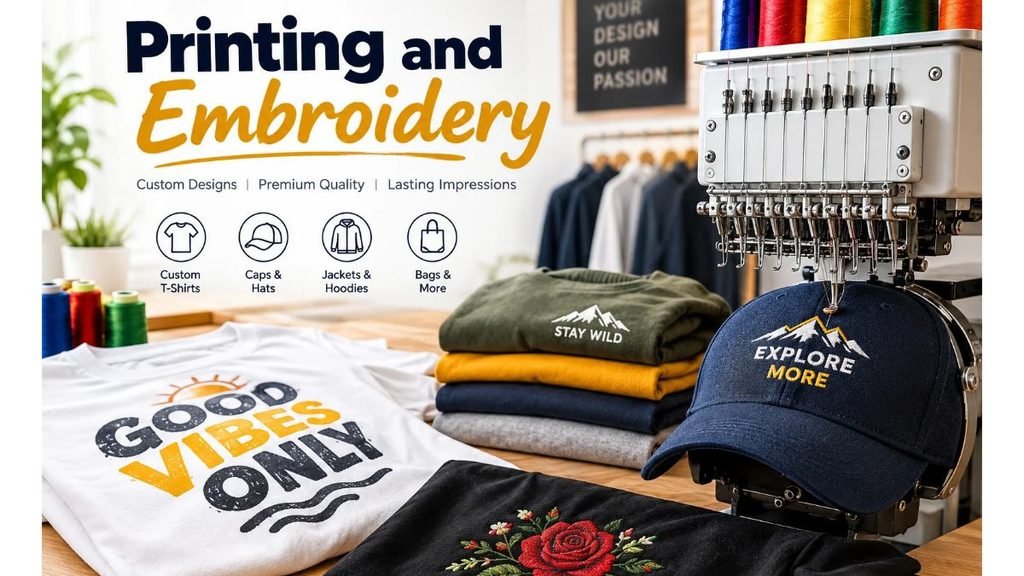
Printing and Embroidery
Custom graphics, embroidery, appliqué, puff printing, and other decoration methods can affect pricing.
The cost depends on factors such as design complexity, size, placement, number of colors, and setup requirements.
Labels and Packaging
Woven labels, printed labels, hang tags, branded bags, and custom boxes may involve additional costs and minimum quantities.
Ask whether these items can be ordered in smaller amounts or sourced from available options.
Sampling and Development
Custom patterns, prototypes, fit revisions, and sample production require time and resources.
These costs may be charged separately from bulk manufacturing. Confirm the policy before approving development work.
Order Quantity
Small orders can have a higher price per garment because fixed costs are spread across fewer pieces.
For example, if a setup cost applies to an entire order, producing 100 garments spreads that cost across 100 pieces. Producing 500 garments spreads it across 500 pieces.
Ask for prices at more than one quantity if your budget allows. This helps you understand the cost of scaling.
What Is a Reasonable MOQ for a New Clothing Brand?
A reasonable MOQ depends on your business model and product requirements. Some suppliers may offer very small runs, while others require larger quantities for custom production.
Rather than focusing only on a number, ask how the MOQ is calculated.
For example, a supplier may require a minimum quantity per design and a separate minimum for each color. Another may accept one total quantity across several sizes but not across different styles.
Consider these questions:
- Can sizes be mixed within the order?
- Does each color have a separate minimum?
- Can existing fabrics be used?
- Are custom-dyed materials required?
- Do labels or packaging have separate minimums?
- Can the supplier offer a pilot run?
Using readily available fabrics and limiting variations may make a smaller order more practical. Always confirm the actual terms with the manufacturer.
What to Prepare Before Contacting a Manufacturer
Good preparation helps suppliers quote accurately and reduces misunderstandings.
Create a Product Brief
Describe your garment, target customer, intended price range, and expected quantity. Include reference images, sketches, or existing products where helpful.
Prepare a Tech Pack
A tech pack is a document containing technical details needed to manufacture a garment. It may include measurements, size grading, fabric composition, construction details, colors, artwork placement, trims, labels, and packaging instructions.
If you do not have a complete tech pack, ask whether the manufacturer can assist with development. Some suppliers can begin with reference images or a design brief, but finalized specifications will be needed before sampling.
Establish Your Budget
Include more than the unit manufacturing price. Allow for sampling, development, shipping, customs charges, packaging, and potential revisions.
Keep some budget available for quality checks and unexpected expenses.
Define Your Timeline
Decide when you need the samples and finished products. Ask the supplier for a realistic schedule that accounts for material sourcing, sample revisions, production, inspection, and shipping.
Do not assume the production timeline begins when you first contact the factory. Confirm the milestones that must be completed before bulk production starts.
Quality Control for Small-Batch Clothing Production
Small orders still need clear quality standards. A limited quantity can be costly if a large portion of the garments contains defects.
Agree on the product specifications before production begins. Use the approved sample and measurement chart as references.
Quality checks may include:
- Fabric defects and shade consistency.
- Garment measurements and sizing.
- Stitching, seams, and construction.
- Print or embroidery placement.
- Label and trim attachment.
- Finishing, loose threads, and visible marks.
- Packaging and order quantities.
Ask how the supplier handles defects and whether rework, replacement, or another remedy is available under the agreed terms.
For larger or higher-value orders, consider a third-party inspection. Decide on inspection timing and acceptance criteria before production rather than waiting until the shipment is ready.
Why Choose Fashion Soul International for Low MOQ Production?
Fashion Soul International is a factory-owned custom clothing manufacturer based in Sialkot, Pakistan. The company offers private-label, OEM, ODM, white-label, cut-and-sew, and full-package apparel manufacturing.
Its services include fabric sourcing, product development, sampling, bulk production, quality control, custom branding, packaging, and international shipping.
The company publishes a standard manufacturing MOQ starting at 100 pieces, with actual project requirements confirmed during quotation. This can be relevant for startups and growing brands exploring custom apparel without beginning with very large quantities.
Its product categories include streetwear, sportswear, activewear, workwear, jackets, denim, casual wear, tracksuits, T-shirts, hoodies, and other custom garments.
Fashion Soul International also states that sample development typically takes 7–14 business days, while bulk production generally takes 20–35 business days after sample approval. Actual timelines depend on the project, materials, and confirmed production schedule.
To explore whether your product is suitable, prepare your design references, estimated quantity, preferred materials, branding requirements, and destination country. You can then discuss the specifications and request a project-specific quotation.
Visit Fashion Soul International to review its manufacturing services and submit your requirements.
Common Mistakes to Avoid When Choosing Small Batch Manufacturers
Selecting a Supplier Only Because of Its MOQ
A very low minimum is not enough if the supplier cannot meet your quality or design requirements. Evaluate the complete service and production terms.
Ignoring Additional Costs
Sample fees, custom artwork, labels, packaging, and shipping may increase your budget. Ask for a complete quotation before placing an order.
Skipping the Sample Stage
Bulk garments may not match your expectations if fit, fabric, or decoration details remain unclear. Approve a suitable sample and document changes before production.
Choosing Without Verifying Capabilities
A supplier may claim to manufacture many products but have limited experience with your specific garment. Request relevant examples and confirm how specialized processes are handled.
Ordering Too Many Variations
Multiple styles, colors, and materials can complicate a small launch. Starting with a focused collection may help you manage costs and understand customer demand.
Failing to Document Requirements
Keep written records of the sample approval, specifications, pricing, inspection criteria, payment terms, and delivery arrangements. Clear documentation helps prevent avoidable disputes.
Frequently Asked Questions
What is the best low MOQ clothing manufacturer?
The best manufacturer is one that can produce your specific garments at a suitable quantity, quality level, and total cost. Compare relevant experience, sample quality, communication, customization, and production terms before deciding.
Can I start a clothing brand with 100 pieces?
It may be possible, depending on the manufacturer, product, and order structure. Confirm whether the 100-piece minimum applies to one style, each color, or the complete order. Remember to budget for samples, branding, shipping, and other expenses.
How do I find small batch manufacturers?
Search for small batch clothing manufacturers, low-MOQ apparel suppliers, and custom manufacturers for startups. Review their product capabilities, request written quotations, verify their business details, and evaluate samples before placing a production order.
Are low MOQ clothing manufacturers in the USA cheaper?
Not necessarily. Costs depend on the garment, materials, labor, customization, shipping, and other charges. Compare US-based and international suppliers using the same specifications and total landed-cost calculation.
Do low MOQ manufacturers offer private labeling?
Some do. Private-label options may include woven labels, printed labels, hang tags, and branded packaging. Ask which options are available and whether each has a separate minimum quantity or setup fee.
Can small batch manufacturers produce custom designs?
Yes, some small batch manufacturers support custom designs, but the available services vary. Confirm whether they can develop patterns, source fabrics, create samples, and apply the decoration methods your product requires.
How long does low MOQ clothing production take?
The timeline depends on sampling, material availability, design complexity, production scheduling, inspection, and shipping. Ask for separate estimates for sample development, revisions, bulk production, and delivery rather than relying on a general estimate.
Conclusion
Finding a suitable low MOQ clothing manufacturer can help you launch a fashion brand with a more manageable initial order. It also gives you an opportunity to test designs, learn from customer feedback, and expand production when demand supports it.
Start by defining your product requirements and researching manufacturers with relevant experience. Compare quotations carefully, check how minimum quantities are calculated, and approve samples before bulk production. Consider both domestic and international suppliers, but evaluate the complete cost and service rather than choosing based on location alone.
The right manufacturing partner should offer clear communication, suitable customization, documented quality standards, and terms that match your business needs. With careful research and preparation, you can build a stronger foundation for your clothing brand and grow production at a pace that makes sense for your budget.