Apparel Suppliers China: A Complete Guide to Clothing Manufacturers and Factories
Finding reliable apparel suppliers China can help fashion brands source clothing, develop custom designs, and manage production costs. China has a large garment manufacturing sector that serves startups, established fashion labels, retailers, and wholesale buyers. However, choosing the right supplier requires more than comparing prices.
Buyers need to evaluate product quality, minimum order quantities, fabric options, customization capabilities, production timelines, communication, and shipping arrangements. These factors can influence the success of a clothing collection.
Whether you are launching a new brand or expanding an existing business, understanding how Chinese clothing suppliers operate can help you make better sourcing decisions. This guide explains how to find clothing manufacturers in China, compare factories, request samples, manage quality, and prepare for bulk production.
What Are Apparel Suppliers in China?
Apparel suppliers in China are businesses that manufacture, customize, or supply garments to brands, retailers, wholesalers, and other commercial buyers. Their services vary depending on their business model, production facilities, and areas of specialization.
Some suppliers manufacture clothing from customer-provided designs. Others offer ready-made garments, private-label services, fabric sourcing, or complete product development.
Understanding these differences helps buyers identify suppliers that match their requirements.
Common supplier types include:
- Clothing manufacturers: Produce garments according to specifications, designs, and technical requirements.
- Garment factories: Operate production facilities for cutting, sewing, finishing, and garment assembly.
- Wholesale apparel suppliers: Sell clothing in bulk to retailers, distributors, and fashion businesses.
- Private-label manufacturers: Produce clothing that carries a buyer’s brand name, labels, and packaging.
- OEM manufacturers: Manufacture products according to a buyer’s designs and specifications.
- ODM manufacturers: Offer existing product designs that buyers can adapt or customize.
- Trading companies: Coordinate sourcing and production through manufacturing partners rather than necessarily operating their own factories.
Not every supplier offers all these services. Buyers should confirm whether a business owns its production facilities, uses subcontractors, or works as a sourcing intermediary.
Why Do Fashion Brands Choose Chinese Clothing Manufacturers?
China is a major apparel sourcing destination because it has an established manufacturing ecosystem. Depending on the product and supplier, buyers may access fabric mills, trim suppliers, printing services, embroidery facilities, packaging providers, and garment factories through connected supply networks.
Several factors make Chinese clothing manufacturers attractive to international buyers.
1. Extensive Manufacturing Capabilities
Chinese clothing factories manufacture many types of garments, including T-shirts, hoodies, jackets, jeans, sportswear, uniforms, dresses, and casual clothing.
Some factories specialize in particular products, while others provide a broader range of services. This variety allows buyers to search for manufacturers with relevant equipment and experience.
Before choosing a supplier, ask which product categories it produces regularly. A factory experienced in denim may not have the same expertise in technical sportswear or complex outerwear.
2. Fabric and Material Availability
Fabric selection affects garment comfort, appearance, durability, and cost. China’s textile supply network gives buyers access to various materials, including cotton, polyester, denim, fleece, twill, and stretch fabrics.
However, availability does not guarantee suitability. Buyers should request fabric specifications and samples before approving materials for production.
Important details include fabric composition, weight, stretch, shrinkage, color consistency, and care requirements.
3. Customization Options
Many apparel factories in China offer customization based on a buyer’s design requirements. Depending on the supplier, services may include custom patterns, garment measurements, printing, embroidery, labels, and packaging.
Brands should provide a clear technical package before requesting a final quotation. This document helps the manufacturer understand the intended garment and reduces misunderstandings.
4. Production Capacity
Some factories focus on small production runs, while others are designed for large wholesale orders. The right capacity depends on the buyer’s product, order quantity, and launch schedule.
A large factory is not automatically the best choice. Smaller brands may benefit from a supplier that provides closer communication and more flexible order quantities.
5. Integrated Sourcing Services
Some Chinese clothing manufacturing companies coordinate multiple stages of production, from material sourcing to final packaging. This arrangement may reduce the number of separate suppliers a buyer needs to manage.
Still, buyers should verify which services are handled internally and which are outsourced.
Types of Clothing Manufacturers in China
Choosing the right type of supplier is one of the most important steps in apparel sourcing.
Custom Clothing Manufacturers
Custom clothing manufacturers produce garments according to a buyer’s design, measurements, material preferences, and finishing requirements.
This option suits fashion businesses that want original products instead of generic ready-made clothing.
A custom manufacturer may help with pattern development, sample production, fabric selection, and bulk manufacturing. Service levels vary, so confirm what is included before signing an agreement.
Private-Label Clothing Manufacturers
Private-label manufacturers produce garments that a business sells under its own brand. Depending on the factory, buyers may customize fabrics, colors, trims, labels, hang tags, and packaging.
Private-label production can help businesses establish a consistent brand identity. However, buyers must confirm minimum order quantities and branding costs for each product.
Wholesale Apparel Manufacturers in China
Wholesale apparel manufacturers supply clothing in larger quantities, often at a lower per-unit price than small orders.
This model can work for retailers, distributors, online stores, and established brands with predictable demand.
Before placing a wholesale order, review product specifications, available sizes, color options, packaging, and reorder availability. A low unit price is not useful if the merchandise does not meet customer expectations.
OEM Clothing Manufacturers
Original equipment manufacturers, or OEM suppliers, produce garments based on the buyer’s specifications.
The buyer usually provides the design direction and technical requirements. The factory handles manufacturing according to the agreed details.
OEM production can be appropriate for businesses with established product designs and a clear understanding of their quality standards.
ODM Clothing Manufacturers
Original design manufacturers, or ODM suppliers, offer existing designs that buyers may select and modify.
This model can simplify product development when a brand does not need to create every design from scratch. However, buyers should ask about design ownership, exclusivity, and whether other customers can purchase similar products.
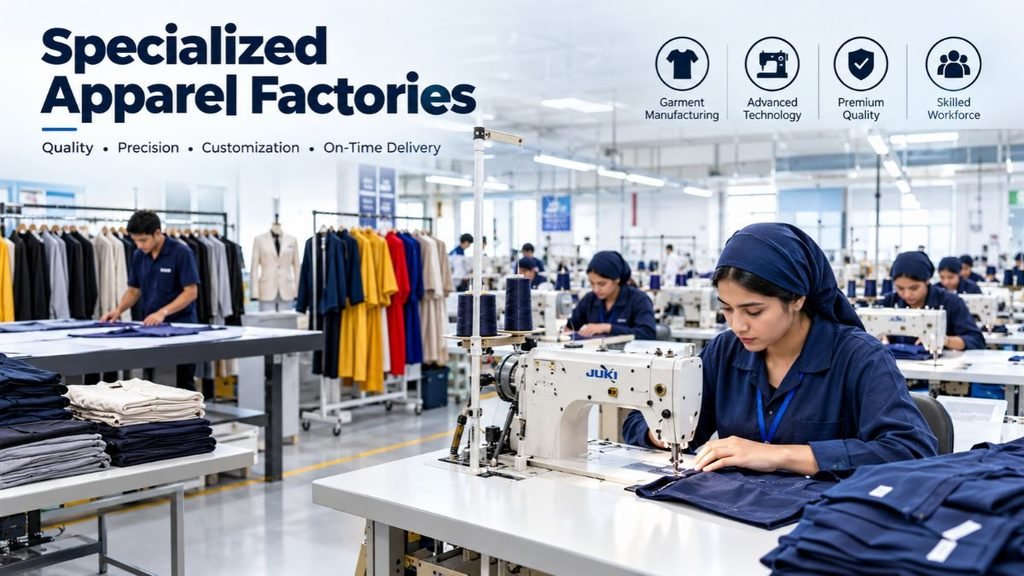
Specialized Apparel Factories
Some apparel factories in China focus on specific categories, such as:
- Activewear and performance clothing
- Denim and jeans
- Streetwear and oversized T-shirts
- Hoodies and sweatshirts
- Jackets and outerwear
- Children’s clothing
- Workwear and uniforms
- Dresses and fashion garments
A specialized factory may have more relevant equipment and production experience for a particular product. Ask for examples of comparable work before proceeding.
How to Find Reliable Apparel Suppliers in China
Finding a supplier is relatively straightforward. Identifying one that can consistently meet your specifications requires careful research.
Step 1: Define Your Product Requirements
Start by describing the garments you want to manufacture. Include product categories, target customers, expected quantities, materials, colors, sizes, and intended retail price.
For example, a brand developing heavyweight cotton hoodies may need a different supplier from a company producing lightweight performance T-shirts.
Prepare the following information:
- Product type and design references
- Fabric composition and preferred weight
- Size chart and measurement tolerances
- Color requirements
- Stitching and construction details
- Printing or embroidery requirements
- Labels, hang tags, and packaging
- Estimated order quantity
- Target production and delivery dates
Clear requirements make supplier comparisons more meaningful.
Step 2: Search for Clothing Manufacturers in China
Use business directories, trade exhibitions, sourcing agents, professional networks, and supplier websites to build a shortlist.
Search terms can include “clothing manufacturers China,” “apparel factories in China,” “garment manufacturer in China,” and “China clothing manufacturers custom clothes.”
Look beyond search rankings. A supplier’s website may describe its services, but independent verification is still necessary.
Check whether the business provides a real company address, clear contact details, product-specific information, and evidence of relevant manufacturing experience.
Step 3: Verify the Supplier’s Business
Before sending a deposit, verify the supplier’s legal business identity and operating details.
Ask for the registered company name, business address, and relevant registration information. Confirm that the payment beneficiary matches the contracting business or that any difference is properly explained and documented.
If the supplier claims to operate its own factory, request evidence of production facilities. A live video tour or an independent factory audit may help establish whether the business has the capabilities it describes.
For larger orders, consider an independent inspection company or qualified sourcing professional.
Step 4: Evaluate Product Experience
A manufacturer may produce clothing but lack experience with your specific product.
Request examples of similar garments and ask about its experience with your required fabric, construction, decoration, and finishing techniques.
For example, technical activewear may require stretch fabrics, moisture-management properties, and specialized seams. Heavyweight streetwear may require different fabric handling, construction, and finishing.
Relevant experience can reduce development errors and improve communication.
Step 5: Contact Multiple Suppliers
Contact several suitable suppliers rather than relying on the first response.
Provide the same specifications to each business so you can compare quotations fairly.
Ask about minimum order quantity, sample charges, production timelines, customization, payment terms, quality inspections, and shipping arrangements.
A supplier that responds clearly and asks useful questions may be easier to work with than one that provides only a low price.
How to Compare Chinese Clothing Manufacturing Companies
A structured comparison helps you assess suppliers beyond their quoted unit prices.
| Evaluation factor | What to check |
|---|---|
| Product experience | Experience with your garment category |
| Minimum order quantity | Minimum per style, color, or size |
| Sampling | Sample cost, timeline, and revision policy |
| Fabric sourcing | Available materials and traceability |
| Customization | Labels, printing, embroidery, and trims |
| Quality control | Inspection stages and acceptance criteria |
| Production capacity | Realistic output for your order |
| Communication | Response quality and clarity |
| Payment terms | Deposit, balance, and payment protection |
| Shipping | Delivery terms, documentation, and transport |
| Compliance | Relevant product and destination-market requirements |
Do not choose a manufacturer based on price alone. A slightly more expensive supplier may offer better construction, clearer communication, and fewer production problems.
Understanding MOQ When Sourcing Apparel
MOQ means minimum order quantity. It is the smallest quantity a supplier is willing to manufacture or sell under specified conditions.
Chinese clothing manufacturers may set different MOQs based on fabric availability, production complexity, dyeing requirements, customization, and order size.
A factory might accept one minimum for standard garments and require a higher quantity for custom fabric colors or specialized trims.
Questions to Ask About MOQ
Before requesting a final quote, ask:
- Is the MOQ calculated per style, color, or total order?
- Can sizes be mixed within one color?
- Does custom fabric require a separate minimum?
- Are printing and embroidery subject to additional minimums?
- Is a smaller trial order possible at a higher unit price?
- What are the minimum quantities for repeat orders?
Startups should calculate the total inventory commitment, not just the cost per garment. Producing too many units can tie up working capital and leave a business with unsold stock.
If your preferred factory requires more units than you can purchase, consider standard fabrics, fewer colorways, or a different supplier with a lower MOQ.
Why Samples Matter Before Bulk Production
A sample allows you to evaluate a garment before committing to a full production run.
Even detailed specifications cannot completely replace physical testing. A sample reveals how the fabric feels, how the garment fits, and whether the finished product matches your expectations.
What to Check in a Clothing Sample
Inspect the following areas:
Fabric quality: Confirm composition, weight, texture, stretch, and recovery where relevant.
Measurements: Compare the sample with your approved size chart. Check key measurements such as chest width, body length, sleeve length, and waistband dimensions.
Construction: Examine seams, stitching density, hems, reinforcement, and stress points.
Decoration: Check print placement, embroidery quality, color accuracy, and durability.
Trims: Inspect zippers, buttons, drawcords, labels, and other components.
Finishing: Look for loose threads, stains, uneven stitching, and inconsistent details.
Wear and washing: Where appropriate, test shrinkage, colorfastness, shape retention, and comfort after washing.
If the sample requires changes, provide written feedback and request a revised sample when necessary.
Once approved, keep a documented reference sample. It can help the factory and inspection team compare bulk garments with the approved standard.
How Much Do Apparel Suppliers in China Cost?
There is no universal price for garments manufactured in China. The final cost depends on the product, materials, order quantity, customization, construction, and delivery arrangements.
A basic T-shirt typically has different production requirements from a lined jacket or technical performance garment.
The main factors affecting price include:
- Fabric type, weight, and quality
- Pattern complexity and garment construction
- Number of colors and sizes
- Printing, embroidery, and special finishes
- Custom labels, trims, and packaging
- Order quantity and production efficiency
- Sample development and testing
- Inspection and compliance requirements
- Freight, insurance, duties, and taxes
Ask each supplier for a detailed quotation. It should identify the garment specifications, included services, price basis, order quantity, sample charges, payment schedule, and shipping terms.
Compare the total landed cost rather than the factory price alone. The landed cost includes relevant transport, customs duties, taxes, and other charges needed to get products to their destination.
Custom Clothes and Branding Options
Many apparel manufacturers in China provide customization services for brands that want distinctive products.
Available options depend on the factory and garment category.
Fabric and Color Customization
Brands may choose from available fabrics or request materials that meet specific composition, weight, texture, and performance requirements.
Custom dyeing or specially developed fabric may involve additional costs and minimum quantities. Request physical swatches before approving a material.
Printing and Embroidery
Common decoration methods include screen printing, heat transfer, direct-to-garment printing, sublimation, and embroidery.
The appropriate method depends on the fabric, design complexity, order quantity, durability requirements, and desired appearance.
Ask the supplier to recommend a suitable process and provide a sample showing the intended result.
Labels and Packaging
Branding may include neck labels, woven labels, printed care labels, hang tags, size labels, branded bags, and retail packaging.
Provide accurate artwork and placement instructions. Confirm spelling, dimensions, colors, and material details before production.
Custom Fits and Measurements
A custom fit requires clear measurements and construction instructions. Technical packs can include flat sketches, measurement charts, grading rules, seam details, fabric specifications, and placement guides.
A complete tech pack helps reduce uncertainty during sampling and bulk manufacturing.
Quality Control for Apparel Factories in China
Quality control should begin during product development, not after the entire order has been manufactured.
A reliable quality process establishes measurable standards and checks whether production follows them.
Pre-Production Checks
Before bulk manufacturing, confirm the approved sample, fabric, colors, trims, size chart, labels, and packaging.
Ensure the factory has the correct artwork and current technical specifications. Written approval reduces the risk of production based on outdated instructions.
In-Line Inspections
During manufacturing, inspections can identify problems before they affect the entire order.
Checks may include measurements, stitching, seam strength, print placement, fabric defects, and component consistency.
The exact inspection plan should reflect the garment’s complexity and risk.
Final Inspection
A final inspection reviews finished garments before shipment. Depending on the agreed plan, inspectors may check quantities, measurements, workmanship, labeling, packaging, and carton markings.
Agree on inspection criteria before production begins. If you use an AQL-based sampling plan, define the applicable standard and acceptance limits in the purchase agreement.
Do not assume that every factory follows the same inspection standard. Ask for written confirmation and retain inspection records.
Common Risks When Working With Chinese Clothing Suppliers
International sourcing can offer opportunities, but buyers should plan for common risks.
Inconsistent Product Quality
Bulk garments may differ from samples if specifications are incomplete or production checks are weak.
How to reduce the risk: Approve a reference sample, document tolerances, confirm materials, and arrange inspections.
Hidden Costs
A low initial quotation may exclude labels, special packaging, sample revisions, freight, or other expenses.
How to reduce the risk: Request an itemized quote and clarify every exclusion before placing an order.
Communication Problems
Differences in terminology, time zones, and expectations can cause misunderstandings.
How to reduce the risk: Use clear written specifications, confirm important decisions in writing, and maintain one approved version of every production document.
Delays
Material shortages, sample revisions, factory scheduling, and shipping disruptions can affect delivery.
How to reduce the risk: Build a realistic timeline with milestones and avoid scheduling a product launch around an unconfirmed delivery date.
Supplier Misrepresentation
A trading company may present itself as a factory, or a supplier may overstate its production capabilities.
How to reduce the risk: Verify business details, inspect facilities where appropriate, and use independent checks for significant orders.
Intellectual Property Concerns
Original designs, logos, and product concepts may require protection when shared with overseas suppliers.
How to reduce the risk: Use suitable written agreements, share only necessary files, document design ownership, and obtain professional legal advice about relevant protections.
Shipping and Importing Apparel From China
Shipping affects the final cost and delivery schedule of an apparel order.
Buyers may use air freight, sea freight, courier services, or other transport methods depending on order size, urgency, and destination.
Air freight may suit urgent or relatively small shipments, while sea freight can be more economical for larger volumes. Actual costs and transit times depend on the route, season, shipment size, and service selected.
Understand Shipping Terms
International purchase agreements may use Incoterms such as EXW, FOB, CIF, or DDP. These terms allocate specific responsibilities, costs, and risks between the seller and buyer.
The correct arrangement depends on the shipment and agreement. Confirm the named place or port, who books transport, who handles export and import clearance, and who pays applicable charges.
For imports, also check:
- Product labeling requirements
- Customs classification and duties
- Import taxes and applicable fees
- Required commercial invoices and packing lists
- Country-of-origin marking
- Textile and product safety requirements
- Any applicable testing or documentation
Requirements vary by destination and product. Consult the relevant customs authority or a qualified customs broker before shipping.
Is China the Right Country for Your Clothing Brand?
China may be a suitable sourcing option for businesses that need access to a broad manufacturing ecosystem, varied materials, and suppliers with different production capabilities.
However, the best sourcing location depends on your business priorities.
Consider these questions:
- Does the supplier specialize in your product category?
- Does its MOQ match your sales forecast?
- Can you afford sampling and development?
- Is the factory able to meet your quality requirements?
- Are the production and shipping timelines realistic?
- Does the total landed cost support your pricing strategy?
- Can you communicate effectively with the supplier?
- Are your compliance and documentation requirements understood?
Compare suppliers in different countries when appropriate. A nearby manufacturer or a supplier in another established garment-producing country may provide a better fit for your quantity, product, or delivery needs.
The objective is not simply to find the lowest manufacturing price. It is to find a supplier that can deliver the required product at an acceptable total cost and level of risk.
How Fashion Brands Can Build Long-Term Supplier Relationships
A successful supplier relationship develops through clear communication, realistic expectations, and consistent documentation.
Start by sharing complete specifications and providing timely feedback during sampling. Agree on payment terms, production milestones, inspection procedures, and delivery responsibilities before bulk manufacturing begins.
Keep records of approved samples, purchase orders, invoices, material specifications, and inspection reports. These documents are useful when placing repeat orders or resolving disagreements.
After delivery, evaluate whether the supplier met the agreed requirements. Record any quality issues and discuss corrective actions before the next order.
Avoid changing specifications after production starts unless the changes are formally approved. Late revisions can increase costs and create delays.
Once a supplier demonstrates consistent performance, discuss future forecasts and repeat-order planning. A stable working relationship can make production planning more predictable for both sides.
Alternatives to Apparel Suppliers in China
China is not the only option for sourcing custom clothing. Depending on the product, order size, and business goals, brands may compare manufacturers in Pakistan, Bangladesh, India, Turkey, Vietnam, and other garment-producing countries.
Each location offers different combinations of manufacturing expertise, material availability, pricing, lead times, and logistics.
For example, brands seeking custom apparel production may explore manufacturers in Pakistan as an alternative sourcing route. Fashion Soul International, based in Sialkot, Pakistan, provides custom clothing manufacturing and branding services for businesses interested in private-label and made-to-order apparel.
Its suitability depends on the product specifications, order quantity, budget, and required services. Buyers should request a quotation and confirm current minimums, sample timelines, production schedules, and shipping arrangements directly.
You can learn more about its services at Fashion Soul International.
Comparing multiple sourcing locations can help you understand the trade-offs before committing to a production partner.
Frequently Asked Questions About Apparel Suppliers in China
1. How do I find reliable apparel suppliers in China?
Start by defining your product specifications and shortlisting manufacturers with relevant experience. Verify their business identity, review samples, compare detailed quotations, and confirm quality-control procedures. For large orders, consider independent factory audits and inspections.
2. Are Chinese clothing manufacturers suitable for startups?
Some are suitable, but minimum order quantities and development costs vary. Startups should ask about smaller trial orders, standard fabrics, sample fees, and mixed-size options before committing to bulk production.
3. What is the difference between a clothing factory and a trading company?
A clothing factory directly operates garment production facilities. A trading company coordinates sourcing or sales and may use partner factories. Either model can work, but buyers should understand who manufactures the product and who is responsible for quality.
4. Can I order custom clothes from China?
Yes. Many suppliers offer custom garments based on buyer specifications. Available services may include fabric selection, pattern development, printing, embroidery, custom labels, and packaging. Confirm the services, costs, and minimum quantities with each supplier.
5. What information should I send when requesting a quotation?
Provide product sketches or reference images, a tech pack if available, fabric details, measurements, sizes, colors, decoration requirements, order quantities, labels, packaging, and destination country. More complete information usually leads to more useful quotations.
6. Do Chinese clothing manufacturers provide samples?
Many do, although policies and costs vary. Ask whether the sample fee includes pattern development, materials, decoration, and shipping. Confirm how revisions are handled and whether any sample charges can be credited against a bulk order.
7. How can I check the quality of clothing from China?
Approve a sample, establish written specifications, and arrange inspections at suitable production stages. Check measurements, construction, fabric quality, decoration, labels, and packaging. Use a documented acceptance plan before production begins.
8. What affects the cost of apparel manufacturing in China?
Fabric, construction, order quantity, customization, trims, packaging, sample development, inspections, and shipping all influence the final cost. Compare the complete landed cost instead of considering the garment price alone.
9. Can I use my own brand labels with Chinese clothing suppliers?
Many manufacturers offer private-label services, including custom neck labels, care labels, hang tags, and packaging. Confirm artwork requirements, additional costs, and minimum quantities before production.
10. Should I choose the cheapest apparel supplier?
Not necessarily. A very low quotation may exclude important services or involve quality and delivery risks. Compare product quality, communication, production experience, total costs, and supplier verification before making a decision.
Conclusion
Finding the right apparel suppliers China requires research, clear specifications, careful sampling, and a practical quality-control plan. Chinese clothing manufacturers offer different production models, from wholesale garments to custom OEM, ODM, and private-label services.
Before placing an order, verify the supplier’s identity, assess its product experience, compare itemized quotations, approve samples, and agree on inspection and shipping arrangements. These steps help reduce avoidable risks and make apparel sourcing more manageable.
China may be the right choice for your business, but it is worth comparing other manufacturing locations when cost, order size, product specialization, or logistics make them more suitable. The best supplier is the one that consistently meets your specifications, budget, and business needs.