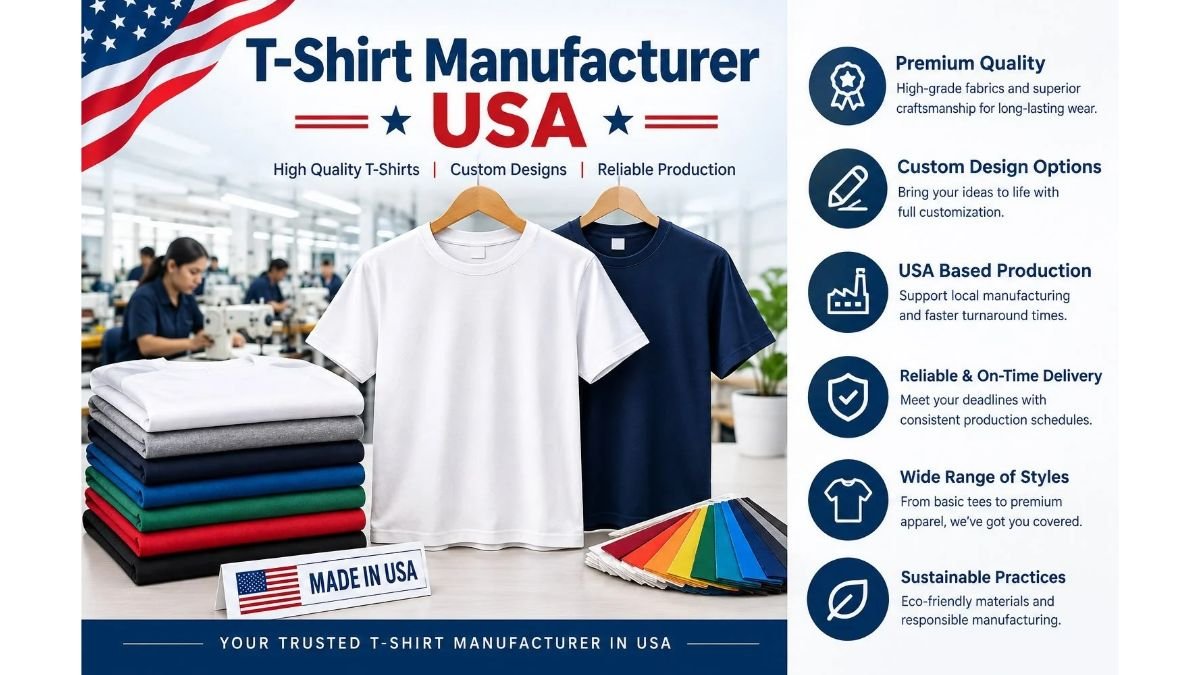
T-Shirt Manufacturer USA
Finding the right tshirt manufacturer usa can be an important step for a clothing brand that wants to develop, produce, and sell quality apparel. T-shirts are among the most popular garments in the fashion market because they are versatile, comfortable, and suitable for many different styles and customer groups.
For a new clothing business, working with a suitable manufacturer can help turn an idea into a finished product. Established brands may also work with manufacturers to develop new collections, improve production processes, introduce custom designs, or create private-label products.
The right manufacturing partner depends on several factors, including product requirements, order quantity, fabric specifications, customization options, budget, production timeline, and quality standards. Understanding these factors before choosing a manufacturer can make the sourcing process more organized and efficient.
What Is a T-Shirt Manufacturer?
A T-shirt manufacturer is a company involved in producing T-shirts for brands, retailers, wholesalers, organizations, or other businesses. Some manufacturers handle the complete production process, while others specialize in particular stages.
A manufacturer may provide services such as:
• Fabric sourcing
• Pattern making
• Sample development
• Cutting
• Sewing
• Printing
• Embroidery
• Washing
• Dyeing
• Label application
• Packaging
• Quality control
The services available vary from one manufacturer to another. Some companies focus on basic blank T-shirts, while others specialize in fully customized apparel.
When searching for a tshirt manufacturer usa, it is therefore important to determine exactly which services you require before contacting potential manufacturing partners.
Why Work With a USA T-Shirt Manufacturer?
Businesses may consider domestic manufacturing for several reasons.
One potential benefit is communication. Working with a manufacturer in the same country can make it easier for some businesses to communicate about product specifications, sampling, quality concerns, and production updates.
Domestic production can also simplify certain logistical considerations, depending on where the brand and manufacturer are located.
Another consideration is production visibility. Depending on the manufacturer’s policies and location, brands may have opportunities to visit facilities or arrange inspections more easily than with some overseas suppliers.
However, domestic manufacturing is not automatically suitable for every business. Brands should compare total costs, capabilities, minimum order quantities, timelines, and quality before making a sourcing decision.
Types of T-Shirt Manufacturers in the USA
The US apparel manufacturing market includes different types of production companies.
Cut-and-Sew Manufacturers
Cut-and-sew manufacturers create garments by cutting fabric according to patterns and sewing the pieces together.
These manufacturers can be useful for brands that want custom T-shirts rather than standard blank products.
Private-Label Manufacturers
Private-label manufacturers produce apparel that is sold under the brand’s own name.
Services may include custom labels, hangtags, packaging, printing, embroidery, and other branding options.
Blank T-Shirt Manufacturers
Blank manufacturers produce undecorated T-shirts that businesses can purchase and customize later.
These products are commonly used by screen-printing businesses, promotional companies, merchandise brands, and clothing decorators.
Custom Apparel Manufacturers
Custom manufacturers work with brands to develop T-shirts according to specific requirements.
A brand may provide a design, tech pack, sample, artwork, measurements, fabric requirements, and other production details.
How to Choose a T-Shirt Manufacturer in the USA
Choosing a manufacturer requires more than searching for the lowest price.
Start by creating a list of your product requirements. Consider what type of T-shirt you want, who will wear it, how many units you need, and how you plan to sell it.
Then research manufacturers that appear to match those requirements.
Evaluate each potential manufacturer according to:
• Manufacturing capabilities
• Fabric options
• MOQ
• Sample development
• Customization
• Quality control
• Production capacity
• Lead times
• Communication
• Pricing
• Packaging
• Shipping
This approach can help you narrow your options based on your actual business needs.
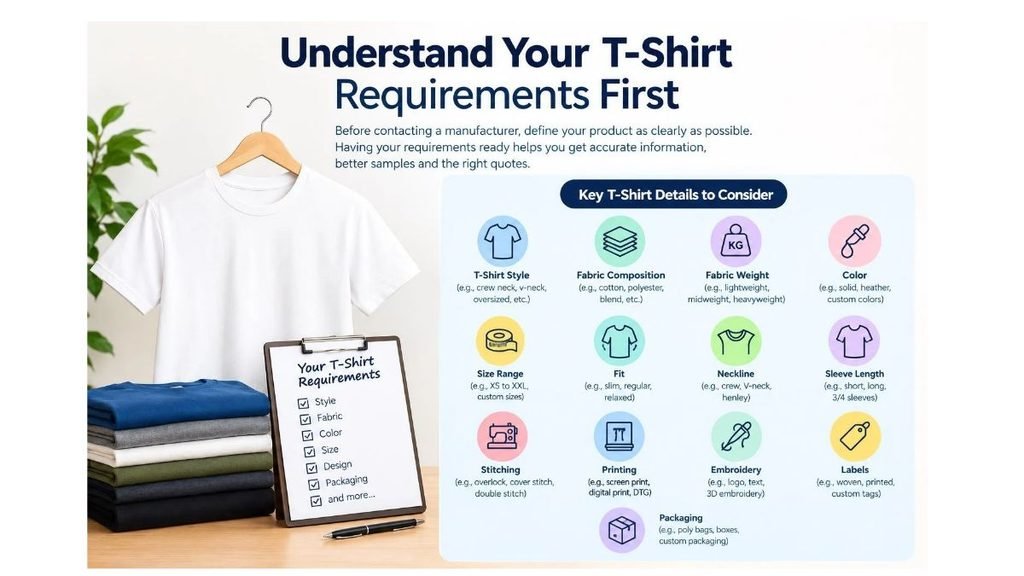
Understand Your T-Shirt Requirements First
Before contacting a manufacturer, define your product as clearly as possible.
For example, a brand might want an oversized heavyweight cotton T-shirt, while another business may need a lightweight performance shirt.
Important specifications can include:
• T-shirt style
• Fabric composition
• Fabric weight
• Color
• Size range
• Fit
• Neckline
• Sleeve length
• Stitching
• Printing
• Embroidery
• Labels
• Packaging
Having these details ready makes it easier for manufacturers to provide relevant information and quotations.
T-Shirt Fabric Options
Fabric selection is one of the most important decisions in T-shirt manufacturing.
Cotton
Cotton is widely used in T-shirts because of its softness and comfortable feel. Different cotton types and fabric constructions can produce different results.
Organic Cotton
Organic cotton is grown according to specific agricultural standards and is often selected by brands that have particular sourcing or sustainability requirements.
If a brand markets a product as organic, it should verify applicable certifications and documentation.
Polyester
Polyester is frequently used in performance and athletic apparel. It can provide properties useful for sportswear and activewear applications.
Cotton-Polyester Blends
Blended fabrics combine different fibers and can offer a balance of characteristics such as softness, durability, appearance, and performance.
Recycled Fibers
Some manufacturers offer T-shirts made with recycled fibers. Brands considering these materials should ask for relevant documentation and certifications.
Understanding T-Shirt GSM
GSM means grams per square meter and is commonly used to describe fabric weight.
It can help brands communicate whether they are looking for a lightweight, medium-weight, or heavyweight fabric.
However, GSM should not be used as the only measurement of fabric quality. Fiber composition, yarn, knitting construction, finishing, and other factors also affect how a T-shirt feels and performs.
When comparing manufacturers, ask for the exact GSM of the fabric being offered.
Custom T-Shirt Manufacturing
Custom manufacturing allows a brand to develop a T-shirt according to its own specifications.
The process generally begins with product development. The brand provides design information and technical requirements to the manufacturer.
A typical custom T-shirt may include:
• Custom fit
• Custom measurements
• Specific fabric
• Custom color
• Special neckline
• Unique sleeve design
• Embroidery
• Screen printing
• Woven labels
• Printed care labels
• Custom packaging
Custom manufacturing provides more control than purchasing a standard blank product, but it can also require more development time and technical preparation.
The Role of a Tech Pack
A tech pack is a technical document that communicates how a garment should be manufactured.
For a T-shirt, a tech pack may contain:
• Front and back technical sketches
• Measurements
• Size specifications
• Fabric details
• Stitching information
• Color references
• Artwork
• Label placement
• Trim specifications
• Packaging instructions
A detailed tech pack can reduce misunderstandings between a clothing brand and its manufacturer.
If your design has unique construction details, providing clear technical documentation can be particularly helpful.
T-Shirt Sample Development
Before starting bulk production, a manufacturer may create a sample for approval.
The sample allows the brand to examine the product physically.
During sample evaluation, check:
• Fit
• Measurements
• Fabric
• GSM
• Color
• Stitching
• Neckline
• Sleeve shape
• Print placement
• Embroidery
• Label position
• Overall appearance
If something needs to be changed, communicate the corrections clearly.
Several sample rounds may be necessary for a complex custom product.
Minimum Order Quantity
Minimum order quantity, or MOQ, refers to the smallest quantity a manufacturer will produce under particular terms.
MOQ can vary depending on the manufacturer and product.
Some manufacturers may have different minimums for:
• Each style
• Each color
• Each size
• Custom fabric
• Custom dyeing
• Printing
• Embroidery
This is particularly important for small clothing brands.
A business that wants to order only a small quantity should specifically search for manufacturers that accommodate low-volume production.
Low MOQ T-Shirt Manufacturing
Low MOQ production can be useful for startups that want to test a new product before committing to large inventory quantities.
For example, a new brand may want to launch a small T-shirt collection and measure customer interest before increasing production.
However, smaller orders can sometimes have higher unit costs because setup and manufacturing expenses are spread across fewer garments.
Ask the manufacturer whether low MOQ production is available and whether additional setup fees apply.
Private-Label T-Shirt Manufacturing
Private-label manufacturing allows a business to sell T-shirts under its own brand.
A private-label manufacturer may provide services such as:
• Custom neck labels
• Woven labels
• Care labels
• Hangtags
• Custom packaging
• Branded bags
• Embroidery
• Screen printing
Private labeling can help create a consistent brand identity across a clothing collection.
Before production begins, provide clear artwork and placement instructions for all branding elements.
T-Shirt Printing Options
Printing is commonly used to add graphics, logos, artwork, and text to T-shirts.
Different printing methods have different characteristics.
Screen Printing
Screen printing is widely used for graphic apparel and can work well for larger production quantities.
Direct-to-Garment Printing
Direct-to-garment printing can be suitable for detailed artwork and certain smaller production applications.
Heat Transfer
Heat transfer methods can be used for various designs and applications depending on the material and production requirements.
Sublimation
Sublimation is commonly associated with polyester-based garments and certain all-over printing applications.
Your manufacturer can advise on suitable printing methods based on your fabric, artwork, quantity, and desired result.
T-Shirt Embroidery
Embroidery creates designs by stitching thread directly onto the garment.
It is often used for:
• Brand logos
• Small graphics
• Corporate apparel
• Premium casualwear
• Uniforms
Before production, check the embroidery sample for thread color, size, placement, and overall appearance.
Very detailed artwork may need to be simplified for embroidery, so discuss the design with your manufacturer before approving it.
T-Shirt Quality Control
Quality control is an important part of apparel production.
A manufacturer should have procedures for checking garments during or after production.
Depending on the product, quality checks may include:
• Fabric defects
• Measurements
• Stitching
• Color consistency
• Print quality
• Embroidery
• Labels
• Seams
• Neckline construction
• Sleeve measurements
• Packaging
Brands should establish acceptable quality standards before production.
Instead of using general descriptions such as “high quality,” provide measurable requirements whenever possible.
Questions to Ask a T-Shirt Manufacturer
Before choosing a tshirt manufacturer usa, prepare a list of questions.
Useful questions include:
1. What types of T-shirts do you manufacture?
2. What fabrics are available?
3. What GSM options do you offer?
4. What is your MOQ?
5. Can you produce custom colors?
6. Do you provide sampling?
7. Can you work from a tech pack?
8. Do you offer printing?
9. Do you offer embroidery?
10. Can you add custom labels?
11. What is your sample lead time?
12. What is the estimated bulk production timeline?
13. What quality-control procedures do you use?
14. What packaging options are available?
15. What are your payment terms?
16. How do you handle production changes or defects?
Getting clear answers can help you determine whether a manufacturer is suitable for your project.
Cost of Manufacturing T-Shirts in the USA
T-shirt manufacturing costs depend on several variables.
These can include:
• Fabric
• Fabric weight
• Garment construction
• Quantity
• Printing
• Embroidery
• Labels
• Packaging
• Sampling
• Labor
• Shipping
• Special finishing
Custom products generally require more development work than standard blank T-shirts.
The most useful way to compare quotes is to provide the same specifications to each manufacturer.
For example, ask several manufacturers to quote the same fabric composition, GSM, quantity, number of colors, branding requirements, and packaging specifications.
This creates a more meaningful comparison.
Domestic Manufacturing and Lead Times
One reason some businesses consider a USA-based manufacturer is production and logistics planning.
Lead time still varies by manufacturer, product complexity, material availability, order size, and current production schedules.
Ask for separate estimates for:
1. Product development
2. Sampling
3. Sample revisions
4. Fabric sourcing
5. Bulk production
6. Quality inspection
7. Packaging
8. Shipping
A complete timeline is more useful than a single general production estimate.
Sustainability in T-Shirt Manufacturing
Sustainability is increasingly relevant to apparel brands.
Manufacturers may offer products made with organic cotton, recycled fibers, or other materials marketed for environmental benefits.
However, businesses should verify claims carefully.
Ask about:
• Fiber composition
• Material sourcing
• Certifications
• Dyeing processes
• Waste management
• Packaging
• Production practices
If a brand makes sustainability claims to customers, those claims should accurately reflect the available evidence and applicable standards.
USA T-Shirt Manufacturing vs. Overseas Production
Some brands compare US manufacturing with overseas production.
USA manufacturing may provide certain advantages related to local communication, proximity, and supply-chain management. Overseas manufacturing may provide access to different manufacturing ecosystems, material suppliers, production capacities, and pricing structures.
The appropriate option depends on the specific project.
Instead of comparing countries generally, evaluate the actual manufacturers you are considering.
Consider:
• Total landed cost
• Quality
• MOQ
• Production capacity
• Lead time
• Shipping
• Communication
• Customization
• Compliance
• Quality control
This gives a more useful comparison than assuming one production location will meet every business’s needs.
How Small Clothing Brands Can Work With Manufacturers
Small brands should start with realistic production requirements.
Before contacting a manufacturer, calculate your expected demand and available production budget.
If you are launching a new T-shirt design, a smaller initial order may allow you to test the product before scaling.
However, check whether the manufacturer has a minimum quantity that fits your business.
Small brands should also maintain detailed product records. Keep approved samples, tech packs, artwork, measurements, fabric specifications, and supplier communications organized.
These records become useful when reordering or developing future styles.
How to Compare T-Shirt Manufacturers
A simple comparison table can help organize your research.
Factor What to Check
Manufacturing type Custom, private label, blank, cut-and-sew
MOQ Minimum quantity per style or color
Fabric Composition and available options
GSM Exact fabric weight
Sampling Cost and development time
Customization Printing, embroidery, labels
Quality control Inspection procedures
Production Capacity and lead time
Packaging Standard or custom
Pricing Unit and additional costs
Communication Response and support
Shipping Available delivery options
Do not rely on one factor alone. Your final choice should reflect the requirements of your particular clothing business.
Common Mistakes to Avoid
Choosing a Manufacturer Without Samples
A website or product photograph cannot provide the same information as a physical sample.
Focusing Only on Unit Price
A low unit price may not include printing, labels, packaging, shipping, or other costs.
Ignoring MOQ
Always confirm minimum quantities before beginning development.
Providing Incomplete Instructions
Missing information can lead to problems with fit, color, measurements, or artwork placement.
Not Confirming the Production Timeline
Get realistic estimates for sampling and bulk production before planning your launch.
Skipping Quality Checks
Inspect samples and, where appropriate, arrange quality inspections during bulk production.
Not Keeping an Approved Sample
An approved sample provides a physical reference for production.
Building a Long-Term Relationship With Your Manufacturer
A reliable manufacturing relationship can make future product development more efficient.
Clear communication is important. Provide complete specifications, respond to questions promptly, and document approvals.
When developing repeat products, keep the original approved specifications so the manufacturer can reference them for future orders.
It can also help to discuss production schedules well in advance, especially when launching seasonal collections.
A professional relationship should be based on clear expectations regarding quality, pricing, timelines, communication, and responsibilities.
Final Checklist Before Production
Before approving bulk production with a tshirt manufacturer usa, review the following:
• Final design approved
• Tech pack completed
• Fabric composition confirmed
• GSM confirmed
• Color approved
• Size chart approved
• Sample approved
• Print artwork approved
• Embroidery approved
• Label placement confirmed
• Packaging confirmed
• Quantity confirmed
• Price confirmed
• MOQ confirmed
• Production timeline confirmed
• Quality standards documented
• Shipping arrangements confirmed
Having these details confirmed can reduce confusion during manufacturing.
Conclusion
Choosing the right tshirt manufacturer usa can help clothing businesses turn product concepts into finished garments while maintaining control over important details such as fabric, fit, branding, and quality.
The best manufacturing process starts with clear requirements. Before contacting suppliers, define your T-shirt style, fabric, GSM, size range, quantity, branding, and target timeline.
Then research manufacturers based on their actual capabilities. Request samples, ask detailed questions, confirm MOQs, review production timelines, and understand the complete cost of manufacturing.
For brands seeking custom or private-label T-shirts, technical documentation such as a tech pack can make communication easier. Quality control should also be considered throughout the production process rather than only after garments are finished.
Whether you are launching a small clothing line or expanding an established apparel business, careful manufacturer research can create a more organized sourcing process. By comparing manufacturers according to your specific product requirements, you can develop a production plan that supports your brand’s goals and customer expectations.