Hoodie Manufacturer: A Complete Guide to Custom Hoodie Manufacturing
Choosing the right hoodie manufacturer is an important step when starting a clothing brand or expanding an existing apparel business. A reliable manufacturing partner can help turn your hoodie designs into finished products with the right fabric, fit, construction, branding, and finishing details.
Hoodies are popular across streetwear, sportswear, casual fashion, university merchandise, and lifestyle collections. However, producing a quality hoodie involves more than choosing a color and adding a logo. Fabric weight, stitching, sizing, ribbing, printing, and quality control all affect the final product.
Whether you are launching a small clothing label, sourcing wholesale hoodies, or developing a private-label collection, understanding the manufacturing process can help you make better decisions.
This guide explains how hoodie manufacturing works, which materials and customization options to consider, how minimum order quantities affect your budget, and what to look for when choosing a manufacturing partner.
What Does a Hoodie Manufacturer Do?
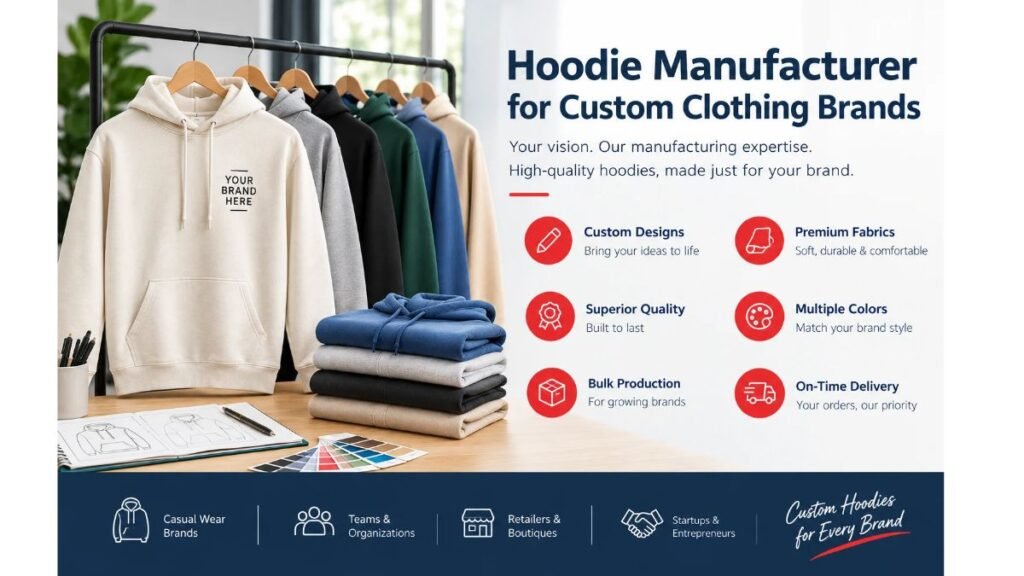
A hoodie manufacturer produces hooded sweatshirts according to a buyer’s design, specifications, or selected product requirements. Depending on the services offered, the manufacturer may handle everything from fabric sourcing and product development to bulk production, branding, packaging, and shipping.
Some manufacturers produce standard hoodies with limited customization. Others develop garments specifically for clothing brands.
Common hoodie manufacturing services include:
- Custom hoodie design and development
- Fabric and trim sourcing
- Pattern making and size grading
- Sample development
- Fabric cutting and sewing
- Printing and embroidery
- Custom labels and hang tags
- Quality inspections
- Packaging and export shipping
The services available depend on the manufacturer and the project.
For example, a business ordering basic promotional hoodies may need only a standard garment and a printed logo. A premium streetwear brand may require a custom oversized fit, heavyweight fabric, unique panel construction, custom-dyed colors, and branded packaging.
Before contacting a manufacturer, decide how much customization your project requires.
Types of Hoodies You Can Manufacture
The hoodie style you choose affects the materials, construction, decoration methods, and production cost. Understanding the main options helps you communicate your requirements clearly.
1. Pullover Hoodies
<PRIVATE_PERSON> Pullover hoodies have no front opening and are usually worn by pulling them over the head. They commonly feature a hood, front pouch pocket, ribbed cuffs, and ribbed hem.
They work well for casual clothing, streetwear, school merchandise, and everyday collections.
A pullover hoodie can have a regular, relaxed, oversized, cropped, or athletic fit. The best choice depends on your target customer and brand identity.
2. Zip-Up Hoodies
Zip-up hoodies feature a front zipper that allows the garment to open fully or partially. Some designs include side pockets, a drawstring hood, and ribbed finishing.
These hoodies are useful for layering because wearers can open or close them depending on the weather.
When manufacturing zip-up styles, pay attention to zipper quality, alignment, stitching, and how the front panels sit when the garment is closed.
3. Oversized Streetwear Hoodies
Oversized hoodies are popular in streetwear and contemporary casual fashion. They typically have a wider body, dropped shoulders, and a relaxed silhouette.
The oversized fit must be planned carefully. Simply increasing every measurement may result in poor proportions or sleeves that are too long.
A manufacturer should follow clear measurements and approved fit references. Sampling is especially useful for checking the body width, shoulder drop, sleeve shape, and overall length.
4. Heavyweight Hoodies
Heavyweight hoodies use relatively heavy fabric, often chosen for structure, warmth, and a substantial feel.
Brands may prefer heavyweight materials for premium streetwear or winter collections. The finished garment’s quality still depends on fabric composition, knitting, finishing, sewing, and construction.
Heavier fabric can affect sewing requirements, garment weight, shipping costs, and the final retail price. Discuss the intended fabric weight with your manufacturer before confirming the design.
5. Lightweight Hoodies
Lightweight hoodies use thinner materials and are often suitable for transitional weather, travel, layering, and active lifestyles.
They may be made from lighter French terry, cotton blends, or performance fabrics, depending on the product.
Consider the intended climate and use when choosing the material. A lightweight hoodie designed for exercise may need different fabric properties from one intended for everyday casual wear.
6. Custom Printed and Embroidered Hoodies
Custom hoodies allow brands to add logos, artwork, text, and decorative details.
Common options include screen printing, embroidery, heat transfer, and other decoration methods suitable for the fabric and design.
The right method depends on the artwork, garment material, order quantity, desired appearance, and expected use.
How the Hoodie Manufacturing Process Works
Understanding the hoodie manufacturing process helps you prepare a better order and avoid unnecessary revisions.
Step 1: Develop Your Hoodie Design
Start with a clear concept. Decide whether you want a basic pullover, zip-up hoodie, oversized streetwear design, or another style.
Prepare reference images, sketches, color preferences, logo files, and any available technical drawings.
You should also define the intended customer and price range. These factors influence material selection, construction, and customization.
If you have a technical package, share it with the manufacturer. A tech pack usually includes garment measurements, fabric details, artwork placement, trims, stitching requirements, and branding instructions.
If you do not have a finished tech pack, ask what reference materials the manufacturer needs to assess your project.
Step 2: Select the Fabric
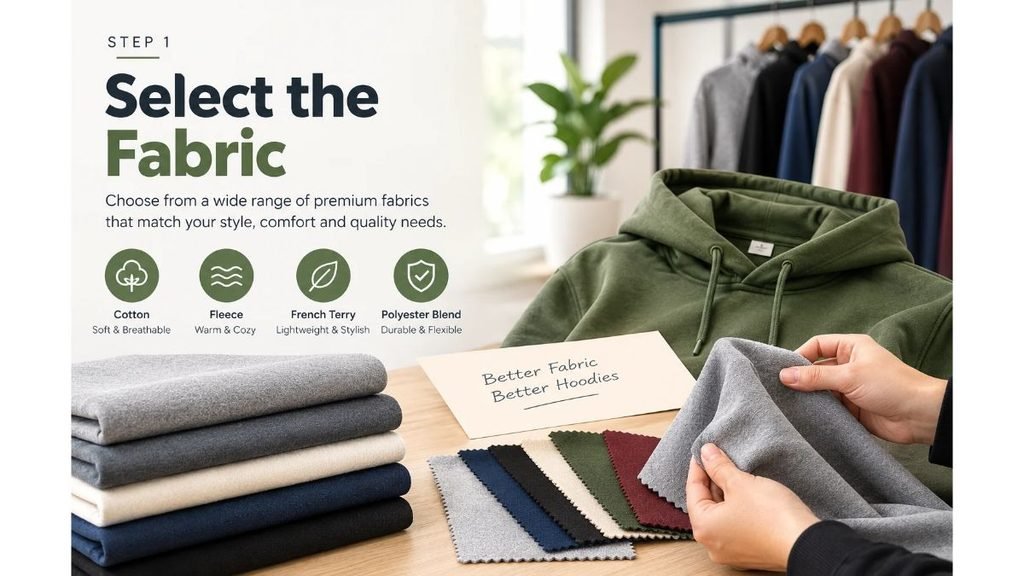
Fabric affects comfort, warmth, durability, appearance, and cost. Hoodie manufacturers may offer different cotton, polyester, and blended materials.
Common choices include:
- Cotton fleece: Often selected for soft, warm hoodies.
- French terry: Usually features looped fabric on the inside and can suit lightweight or midweight styles.
- Cotton-polyester blends: Combine properties of both fibers, depending on the blend.
- Brushed fleece: Has a brushed inner surface that can feel soft and warm.
- Performance blends: May suit particular activewear applications.
Ask about fabric composition, weight, shrinkage, color options, and finishing.
Step 3: Choose the Fabric Weight
Fabric weight is commonly expressed in GSM, meaning grams per square metre. It describes how much a square metre of fabric weighs.
The appropriate GSM depends on your product goals. Lightweight, midweight, and heavyweight hoodies serve different purposes, and there is no single weight that is best for every design.
When comparing fabric samples, consider more than GSM alone. Fiber composition, knit structure, brushing, and finishing also affect how the fabric feels and performs.
Step 4: Develop the Pattern and Size Specifications
The pattern determines how the individual fabric pieces fit together to create the hoodie.
Important measurements can include:
- Body length
- Chest width
- Shoulder width
- Sleeve length
- Sleeve opening
- Hood dimensions
- Pocket dimensions
- Cuff and hem measurements
Your manufacturer should understand the intended fit before finalizing the pattern. A slim-fit hoodie, a regular-fit hoodie, and an oversized hoodie need different proportions.
If you plan to offer several sizes, discuss size grading so that the measurements change consistently across the size range.
Step 5: Create a Sample
A sample allows you to review the design before bulk production.
Check the fabric, measurements, fit, hood shape, pocket placement, ribbing, stitching, zipper if applicable, and decoration quality.
Try the garment on or evaluate it using your intended fit standards. Make notes about anything that needs adjustment.
If revisions are necessary, communicate them clearly and request an updated sample when appropriate. Bulk production should follow the final approved specifications.
Step 6: Cut the Fabric
After the design and materials are confirmed, the fabric is prepared and cut according to the pattern.
Accurate cutting helps maintain consistent garment dimensions and supports efficient assembly.
The cutting plan may also depend on the fabric’s width, pattern layout, color requirements, and order quantity. Errors at this stage can affect fit, material use, and production efficiency.
Step 7: Sew and Assemble the Hoodie
The cut pieces are sewn together to form the garment.
Depending on the design, assembly may include attaching the shoulders and sleeves, joining side seams, constructing the hood, attaching pockets, and sewing ribbed cuffs and hems.
For zip-up hoodies, the front zipper must also be installed and aligned correctly.
Stitch quality matters because seams experience repeated movement and washing. The construction should suit the fabric weight and the garment’s intended use.
Step 8: Add Printing, Embroidery, and Branding
Once the production sequence is planned, the manufacturer applies the approved decorative elements.
These may include chest logos, back graphics, sleeve artwork, embroidered designs, woven labels, printed neck labels, and custom hang tags.
The method should match the design and fabric. For example, detailed artwork and raised embroidery have different requirements.
Confirm the artwork size, position, color, and appearance before bulk production. This helps keep the finished garments consistent with the approved sample.
Step 9: Inspect and Finish the Garments
Quality checks may take place during sewing, after decoration, and before shipment.
Inspectors may review measurements, seam quality, print placement, embroidery, pocket alignment, ribbing, and overall appearance.
The garments may then undergo finishing steps such as trimming loose threads, removing visible production marks, pressing where suitable, folding, and packing.
A final inspection helps identify problems before the products are dispatched.
Step 10: Pack and Ship the Order
Finished hoodies are packed according to the agreed requirements. Options may include individual polybags, size stickers, custom packaging, carton labels, and branded inserts.
International orders also require suitable shipping arrangements and export documentation.
Confirm the shipping method, destination, delivery terms, and any applicable import duties before placing your order.
What to Look for in a Hoodie Manufacturer
Choosing a manufacturer involves more than comparing the quoted price. You should evaluate whether the supplier can meet your product requirements and communicate clearly throughout development and production.
Manufacturing Experience and Product Fit
Look for a manufacturer whose services match the type of hoodie you want to produce.
For example, a brand developing heavyweight streetwear may need different construction and decoration options from a business ordering lightweight promotional apparel.
Ask which customization services are available and whether the manufacturer can work with your design specifications.
Fabric and Customization Options
Confirm the available fabric compositions, GSM options, colors, ribbing, zippers, drawstrings, labels, printing, and embroidery.
If your design requires a special fabric or custom color, ask whether it is available and whether it affects the minimum order quantity or lead time.
Sample Development
A manufacturer should explain how samples are developed, how revisions are handled, and what approval is required before bulk production.
A physical sample gives you an opportunity to review the product rather than relying entirely on digital images.
Quality Control
Ask how the manufacturer checks measurements, stitching, decoration, and finishing.
Clarify whether inspections take place during production and before shipment. You should also agree on the product specifications and acceptable quality requirements before production begins.
Communication and Transparency
A reliable working relationship depends on clear communication.
The supplier should explain what information is required, what is included in the quotation, which costs are additional, and how changes affect production.
Be cautious of vague quotations that do not define the fabric, construction, branding, packaging, or shipping requirements.
Custom Hoodie Manufacturer vs. Standard Wholesale Supplier
A standard wholesale supplier typically sells existing hoodie designs in available sizes and colors. A custom manufacturer can offer more control over garment specifications, depending on its capabilities.
| Feature | Standard wholesale supplier | Custom hoodie manufacturer |
|---|---|---|
| Product design | Usually existing styles | May support original designs |
| Fabric choices | Limited to stocked options | Can offer project-specific options |
| Fit and construction | Generally fixed | Can be developed to specifications |
| Branding | May be limited | May include labels, printing, and embroidery |
| Sampling | Depends on supplier | Often part of custom development |
| Minimum order | Varies by supplier | Varies by style and customization |
| Development time | Often shorter for stocked goods | Requires development and approval |
Neither option is automatically better for every business.
Wholesale purchasing may be suitable if you need ready-made products quickly. Custom manufacturing is worth considering when product differentiation, branding, and control over specifications are important.
Understanding Hoodie Manufacturing MOQ
MOQ stands for minimum order quantity. It is the smallest order a manufacturer accepts for a particular product or project.
The MOQ for hoodies can depend on several factors:
- Fabric availability and purchasing requirements
- Number of colors
- Garment design and construction
- Printing or embroidery
- Custom labels and trims
- Size distribution
- Production setup and efficiency
A simple hoodie using available fabric may have different requirements from a heavily customized garment using special materials.
Ask whether the quoted MOQ applies per style, color, or another production unit. Also confirm whether different sizes can be included in the same order and how the total quantity affects pricing.
For a new brand, it is sensible to compare the required quantity with your budget, expected demand, storage space, and ability to sell the finished products.
How Much Does It Cost to Manufacture Hoodies?
There is no single price for custom hoodie manufacturing. The cost depends on the design, materials, order quantity, production requirements, and delivery arrangements.
The main cost factors include:
Fabric: Fiber composition, GSM, finishing, and availability affect material cost.
Construction: Special panels, unusual silhouettes, pockets, zippers, and complex stitching may require additional work.
Decoration: Printing and embroidery costs depend on the method, artwork, size, and number of placements.
Branding: Custom labels, hang tags, and packaging can add to the total cost.
Order quantity: Larger orders may distribute certain setup costs across more garments, but the actual pricing depends on the supplier and project.
Shipping: Air freight, sea freight, and other delivery arrangements have different costs and timelines. Duties and taxes may also apply.
To compare quotations accurately, provide each supplier with the same specifications. A lower price may reflect differences in fabric, construction, decoration, packaging, or inspection requirements.
Private Label Hoodie Manufacturing
Private-label hoodie manufacturing allows a business to sell garments under its own brand name. Depending on the agreement, the manufacturer may produce the garments and add the buyer’s labels, branding, and packaging.
This model is useful for startups, established clothing labels, retailers, and online apparel businesses that want branded products without operating their own factory.
Before starting a private-label project, decide on the following:
- Hoodie style and fit
- Fabric composition and weight
- Available colors
- Size range
- Logo placement and decoration
- Main labels and care labels
- Hang tags and packaging
- Order quantity and delivery destination
Clarify which services are included in the quotation. Some manufacturers support the complete process from fabric sourcing and sampling to bulk production and shipping, while others provide only selected services.
Common Hoodie Manufacturing Problems and How to Avoid Them
Incorrect Fit or Measurements
A hoodie can look good in a design mockup but fit differently when produced.
How to avoid it: Provide clear measurements, define the intended fit, review the physical sample, and approve the final specifications before bulk production.
Fabric That Does Not Match Expectations
A fabric may look suitable in a photograph but feel different in person.
How to avoid it: Request fabric swatches or samples when possible. Confirm the composition, weight, surface texture, and finishing.
Poor Print or Embroidery Placement
A logo that is too large, too small, or positioned incorrectly can change the garment’s appearance.
How to avoid it: Supply artwork files and placement measurements. Check these details on the sample before approving the production version.
Inconsistent Production Quality
Differences in stitching, garment measurements, or finishing can affect consistency across an order.
How to avoid it: Establish clear specifications and agree on inspection requirements with the manufacturer.
Unexpected Costs or Delays
Changes to fabric, artwork, construction, or packaging can affect both price and timing.
How to avoid it: Confirm the full product requirements before requesting a final quotation. Ask the supplier to explain sample costs, production estimates, payment terms, and shipping arrangements in writing.
Hoodie Manufacturing With Fashion Soul International
Fashion Soul International is a factory-owned custom clothing manufacturer based in Sialkot, Pakistan. The company provides manufacturing services for brands seeking custom apparel, including hoodies and other casual clothing.
Its services include private-label, OEM, ODM, white-label, cut-and-sew, and full-package production. Depending on the project, support may cover fabric sourcing, product development, sampling, bulk production, quality control, custom branding, packaging, and international shipping.
For a custom hoodie project, prepare your design references, preferred fabric, target GSM, measurements, color choices, decoration details, and estimated order quantity. If you have a tech pack, share it so the manufacturing team can review your requirements.
Fashion Soul International publishes a standard MOQ starting at 100 pieces. Actual minimums and pricing depend on the specific garment and customization requirements, so confirm the details for your project.
The company describes a workflow that includes sample development and approval before bulk production. This gives buyers an opportunity to review the garment and identify necessary changes before approving the production version.
When requesting a quotation, ask about sample costs, available fabric options, production estimates, branding, packaging, quality inspections, and shipping terms. Confirm all project-specific details directly with the company.
To learn more about custom clothing production, visit the official website: https://fashionsoulintl.com/
Questions to Ask Before Choosing a Hoodie Manufacturer
Before committing to an order, ask the manufacturer practical questions about the production process.
- What hoodie styles and fabric options are available?
- Can you follow my existing tech pack or help develop the specifications?
- What is the minimum order quantity for my design?
- Can I review a physical sample before bulk production?
- Which printing, embroidery, and labeling methods are available?
- What quality inspections are included?
- What is the estimated sample and bulk production timeline?
- Which packaging and shipping options do you provide?
- Which costs are included in the quotation, and which are additional?
- How are design changes handled after sampling?
The answers can help you compare suppliers on more than price alone. They also make expectations clearer before production begins.
Frequently Asked Questions
1. How do I find a reliable hoodie manufacturer?
Look for a manufacturer with services that match your product requirements. Review its available customization options, sample process, quality-control procedures, communication, MOQ, and shipping terms. Confirm important details in writing before placing an order.
2. What is the minimum order quantity for custom hoodies?
MOQ varies by manufacturer, garment style, fabric, color, and decoration. Some suppliers accept smaller orders, while highly customized products may require larger quantities. Always confirm the MOQ for your exact design.
3. Can I manufacture hoodies with my own logo?
Yes. Depending on the manufacturer, you may be able to add printed graphics, embroidery, woven labels, care labels, hang tags, and branded packaging. Confirm the available methods and artwork requirements before sampling.
4. What fabric is best for hoodies?
Cotton fleece, French terry, cotton-polyester blends, and brushed fleece are common options. The best choice depends on the desired warmth, weight, softness, durability, and price. Reviewing fabric samples can help you decide.
5. Should I order a sample before bulk production?
Yes, a physical sample is useful for checking fit, fabric, construction, artwork placement, and finishing. Approve the final version before bulk production so the manufacturer has a clear reference.
6. Can a small clothing brand work with a hoodie manufacturer?
Yes. Some manufacturers work with startups and growing brands, although minimum order quantities and costs vary. Prepare a realistic budget, clear product requirements, and a plan for selling the finished hoodies.
7. How long does hoodie manufacturing take?
The timeline depends on product development, fabric availability, sampling, order quantity, customization, production scheduling, and shipping. Ask for separate estimates for sampling, bulk production, and delivery rather than assuming one universal timeline.
Conclusion
Choosing the right hoodie manufacturer helps you turn your clothing concept into a finished product that reflects your brand. The most important decisions involve fabric, fit, construction, decoration, order quantity, sampling, and quality control.
Before placing an order, prepare clear specifications and compare manufacturers based on their capabilities, communication, and production process. Review a physical sample, understand the full quotation, and confirm shipping arrangements.
Whether you are creating a streetwear collection, launching a private-label business, or expanding an existing apparel line, careful planning can help you avoid common manufacturing problems and build a more consistent product range.