MOQ Manufacturing: A Complete Guide to Minimum Order Quantities
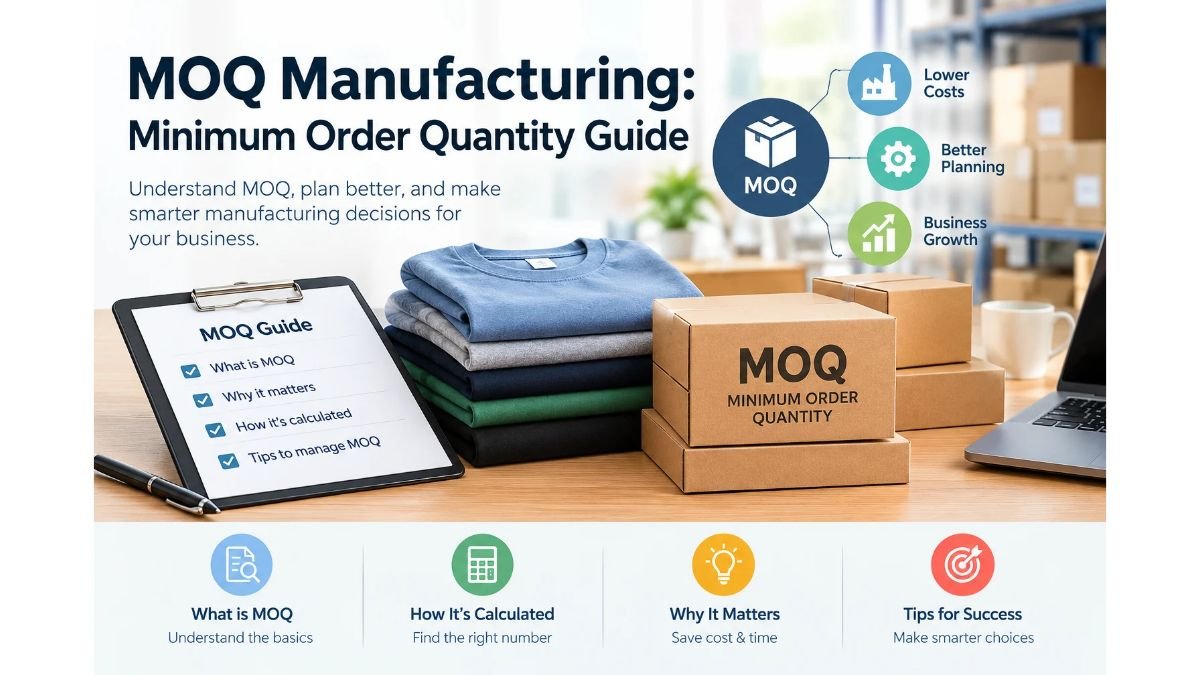
MOQ manufacturing is an important concept for anyone planning to launch a clothing brand or work with a garment manufacturer. MOQ stands for Minimum Order Quantity. It refers to the smallest number of units a supplier or manufacturer is willing to produce or sell in one order.
Understanding MOQ helps you plan your budget, estimate production costs, and choose a manufacturing partner that suits your business. It is especially important for startups because ordering too many garments can tie up money in unsold inventory. Ordering too few may make custom production expensive or unavailable.
The good news is that low MOQ manufacturing options can help new brands test products and develop their first collections with more manageable quantities. However, minimum order requirements vary by manufacturer, garment type, fabric, color, and customization.
This guide explains how MOQ works, why manufacturers set minimum quantities, what affects the cost of an order, and how to find a suitable clothing manufacturer for your business.
What Is MOQ in Manufacturing?
MOQ means Minimum Order Quantity. It is the minimum number of units a manufacturer or supplier requires for an order.
For example, if a clothing manufacturer has an MOQ of 100 pieces per style, a customer generally needs to order at least 100 pieces of that style to meet the stated minimum. The exact rules may depend on whether the manufacturer counts quantities by style, color, size, or another production requirement.
MOQ is common in clothing, textiles, packaging, accessories, and many other industries. Manufacturers use it to make production commercially practical and manage the cost of materials, labor, setup, and production planning.
A Simple Example of MOQ
Imagine you want to launch a clothing brand with a custom T-shirt.
- Product: Custom T-shirt
- Manufacturer’s MOQ: 100 pieces
- Order quantity: 100 pieces
- Estimated production cost per piece: $8
- Estimated garment production total: $800
In this example, the garment production total would be $800 before any additional expenses not included in the quoted unit price.
Additional costs may include sampling, custom labels, packaging, shipping, duties, taxes, and artwork setup. Actual prices depend on the specifications and the manufacturer’s quotation.
The example illustrates why you should understand the MOQ and the full order cost before confirming production.
Why Do Clothing Manufacturers Set an MOQ?
Manufacturers establish minimum quantities for several practical reasons. Custom clothing production involves more than sewing individual garments. It may require material purchasing, machine setup, pattern preparation, printing setup, and coordination across multiple production stages.
1. Fabric and Material Purchasing
Fabric suppliers may sell materials in minimum quantities. A manufacturer producing custom garments may need to purchase enough fabric to complete the order while allowing for cutting waste and production requirements.
If a brand requests a unique fabric color or composition, the material supplier may also have a minimum order requirement.
2. Production Setup
Before production begins, the factory may need to prepare patterns, cutting layouts, sewing operations, printing screens, embroidery files, or other equipment.
These tasks require time even when the final order is small. Producing a larger quantity can spread some setup costs across more units.
3. Labor and Production Planning
Factories organize workers, machines, and production schedules to complete orders efficiently.
Very small custom orders may require nearly the same planning effort as larger ones. An MOQ helps the manufacturer determine whether the order fits its production process.
4. Customization Requirements
Custom colors, specialized trims, woven labels, embroidery, and unique construction can affect minimum quantities.
A standard garment with simple branding may have different requirements from a fully customized product that needs special materials and multiple production steps.
5. Commercial Viability
Manufacturers need to cover operating expenses and make production financially practical.
A minimum order can help ensure that material purchasing, setup, labor, and quality checks are worthwhile for both the factory and the customer.
What Is Low MOQ Manufacturing?
Low MOQ manufacturing refers to production with a relatively small minimum order quantity compared with the requirements of a particular supplier or production model.
There is no universal quantity that defines low MOQ across every clothing manufacturer. One supplier might consider 50 pieces a small order, while another may have a minimum of 100 or more pieces per style.
The suitable quantity depends on the garment, the customization level, the manufacturer’s capabilities, and the buyer’s needs.
Low MOQ production can be useful for:
- New clothing brands testing their first products
- Small businesses with limited startup budgets
- Designers launching a limited collection
- Online stores testing customer demand
- Established brands testing a new design
- Businesses producing seasonal or niche apparel
A lower minimum can reduce the amount of inventory you need to purchase upfront. It does not automatically mean that the unit price will be lower.
Advantages of Low MOQ
Lower initial inventory commitment: You can begin with fewer garments rather than purchasing a large quantity before testing demand.
Product testing: Smaller orders can help you evaluate customer feedback before planning a larger production run.
Reduced storage needs: Fewer finished products can be easier to store and manage, especially for small businesses.
More flexible launches: Brands may find it easier to introduce a limited collection or test a new colorway.
Potential Disadvantages of Low MOQ
Low-volume production can also have limitations.
- The unit cost may be higher.
- Custom fabric options may be restricted.
- Some trims or labels may have separate minimum quantities.
- Certain decoration methods may be less economical at small volumes.
- A manufacturer may not offer every customization option for small orders.
Before choosing a low MOQ supplier, compare the total cost, product quality, available customization, and potential for repeat production.
MOQ Manufacturing vs. Low MOQ: What Is the Difference?
The terms are related, but they describe different aspects of the production arrangement.
| Factor | Standard MOQ production | Low MOQ production |
|---|---|---|
| Order quantity | Meets the manufacturer’s standard minimum | Meets a comparatively smaller minimum |
| Initial inventory | May require a larger purchase | May allow a smaller initial order |
| Unit price | May benefit from production efficiencies | Can be higher per garment |
| Customization | May offer more material and setup options | May have restrictions depending on the supplier |
| Best suited for | Brands with established demand | Startups, test launches, and smaller collections |
| Main consideration | Inventory commitment | Unit cost and available options |
Neither option is always better. The right choice depends on your cash flow, target selling price, sales forecast, and manufacturing requirements.
A brand with reliable demand may benefit from a larger production run. A new business with uncertain demand may prefer to begin with a smaller order, even if the cost per piece is higher.
What Factors Affect MOQ in Clothing Manufacturing?
Not all garments have the same production requirements. A simple T-shirt may be easier to produce in a small batch than a technical jacket with several fabrics, zippers, panels, and specialized construction.
The following factors can affect minimum quantities.
Garment Type
Different products require different materials and production processes.
T-shirts, hoodies, sweatpants, jackets, activewear, denim, and uniforms may have different minimums. Complex garments can require more setup, specialized components, and additional development work.
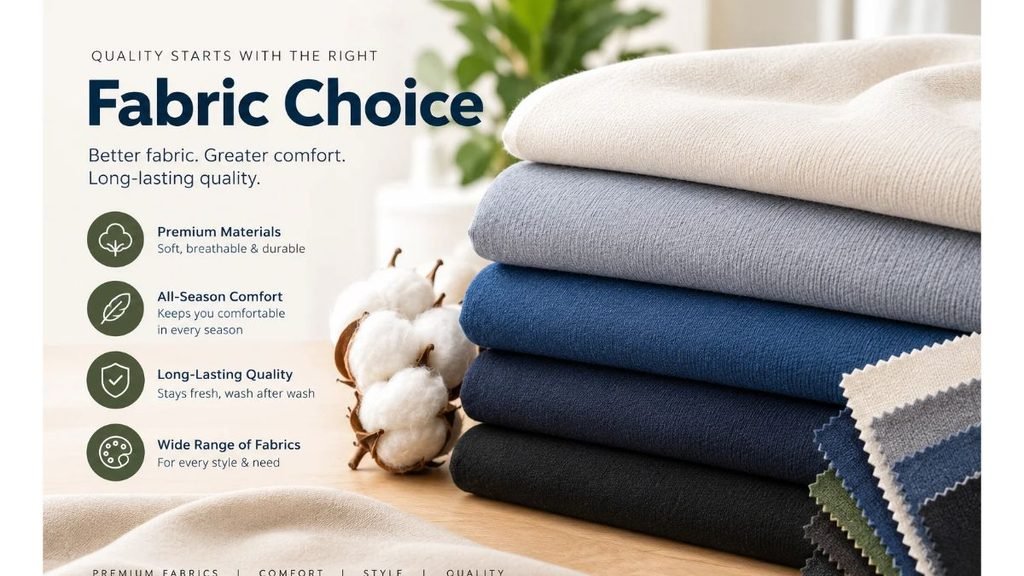
Fabric Choice
The availability of the chosen fabric can affect the minimum quantity.
Common fabrics may be available in smaller amounts, while custom-developed or specially dyed fabrics may require larger material purchases.
For example, a brand choosing a readily available cotton jersey may have different sourcing requirements from a brand requesting a custom-dyed performance fabric.
Number of Colors
Producing several garment colors can affect material purchasing and production planning.
A brand ordering 100 pieces across several colors should confirm whether the manufacturer applies its minimum to the combined style quantity or to each color separately.
Never assume that one total quantity automatically satisfies every color’s requirements.
Size Range
An order may include several sizes, such as XS, S, M, L, and XL.
The manufacturer needs a clear size breakdown so materials and production quantities can be planned correctly. Ask whether the MOQ applies to the overall style or whether additional size-specific conditions apply.
Printing and Embroidery
Decoration methods can introduce setup costs and minimum requirements.
Screen printing may involve preparing screens, while embroidery may require digitizing artwork. The number of colors, design size, placement, and complexity can affect the final quotation.
Custom Labels and Packaging
Woven labels, hang tags, printed packaging, and branded accessories may have separate minimum order requirements.
Even when the garment order is small, packaging suppliers may require a larger quantity. Ask whether unused labels or packaging can be stored for future orders and whether any storage charges apply.
Manufacturing Method
Private-label, OEM, ODM, white-label, and cut-and-sew production involve different levels of customization.
A ready-made base garment with branding may be available under different conditions from a garment that requires a new pattern, unique construction, and custom materials.
Discuss your intended production model with the manufacturer before finalizing the design.
How to Calculate Your MOQ Manufacturing Budget
Understanding the minimum quantity is only one part of planning an order. You should also calculate the estimated total cost and determine whether the order fits your budget.
Step 1: Confirm the Minimum Quantity
Ask the manufacturer to clarify the MOQ for your exact product.
Confirm whether the quantity applies per style, color, design, or size run. Ask whether different styles can be combined or whether each one must meet its own minimum.
Step 2: Estimate the Unit Cost
Request a quotation based on your garment specifications. The unit cost may depend on fabric, construction, quantity, decoration, and other requirements.
For a simple example, suppose you order 100 garments at $9 each.
100 × $9 = $900 in garment production costs.
This figure is illustrative, not a current supplier quote.
Step 3: Add Other Expenses
Depending on the quotation, you may need to budget for:
- Product development and sampling
- Fabric or trim sourcing
- Labels and hang tags
- Printing or embroidery
- Packaging
- Freight and insurance
- Import duties and taxes
- Payment or transaction charges
Ask which expenses are included in the unit price and which will be charged separately.
Step 4: Estimate the Cost Per Sellable Garment
If some units are damaged or unusable, the cost of the remaining sellable garments can be higher than the original quoted unit cost.
For budgeting, account for expected quality issues and confirm the manufacturer’s quality-control process. Do not assume that a particular defect rate will apply without evidence.
Step 5: Compare the Cost With Your Selling Price
Suppose your total landed inventory cost is $1,200 for 100 garments. Your landed cost is $12 per garment.
If you sell each garment for $25, the difference is $13 before marketing, platform fees, payment processing, operating expenses, returns, and other business costs.
This is not the same as net profit. Use a complete cost calculation when setting retail prices.
How to Find a Low MOQ Clothing Manufacturer
Finding a manufacturer that supports smaller orders takes research. You need to identify suppliers whose production model matches your product, order size, and customization needs.
1. Search for Relevant Manufacturing Services
Look for manufacturers offering private-label, cut-and-sew, OEM, ODM, or small-batch production, depending on your requirements.
Review their product categories to confirm that they produce your type of garment.
A supplier specializing in basic promotional T-shirts may not be suitable for technical activewear or complex outerwear.
2. Ask for the MOQ in Writing
Do not rely only on general statements such as “small orders accepted.”
Ask for the minimum quantity for your specific style and confirm whether it changes with color, fabric, size, or decoration.
A written quotation helps you compare suppliers on a consistent basis.
3. Request a Sample
A sample lets you assess fabric, fit, stitching, construction, and branding before committing to bulk production.
Ask about sample costs, development time, revision policies, and whether the sample fee is refundable or credited toward a future order.
4. Review Quality-Control Procedures
Ask how the manufacturer checks measurements, stitching, artwork placement, labels, and finishing.
Clarify how defects are handled and what quality standards will apply to your order. Written specifications and an approved physical sample provide a clearer reference for production.
5. Check Communication and Transparency
A reliable supplier should be able to explain the production process, clarify requirements, and identify limitations.
Be cautious if a supplier avoids answering questions about materials, sample approval, payment terms, or the full cost of an order.
6. Compare the Total Value
Do not select a manufacturer based on MOQ alone.
Compare product quality, unit price, customization, sample process, communication, delivery arrangements, and the possibility of repeat production.
The cheapest quotation may not provide the best overall value if it leaves important requirements unclear.
Is Low MOQ Suitable for a New Clothing Brand?
Low MOQ can be a useful starting point for a new clothing business, especially when the founder has not yet confirmed customer demand.
However, the best order quantity depends on your business plan.
Start With a Focused Product Range
Instead of launching ten different products immediately, consider starting with a small collection that shares a clear theme.
For example, a streetwear brand might test one T-shirt design and one hoodie design before expanding the range.
A smaller collection makes it easier to focus on product quality, branding, marketing, and customer feedback.
Test Demand Before Expanding
You can research customer preferences, build an email list, run surveys, or test product concepts before committing to production.
These activities do not guarantee sales, but they can provide useful information for planning quantities.
If a product receives strong interest, use actual orders and sales data to guide future production decisions.
Avoid Underestimating Unit Costs
Small orders can have higher unit costs because setup expenses are spread across fewer garments.
Before setting your retail price, calculate the cost of manufacturing, packaging, shipping, marketing, and selling the product.
A low MOQ order is only commercially useful if the business can sell the garments at a price that supports its costs and goals.
Plan for Reorders
Ask the manufacturer how repeat orders are handled. Confirm whether the same fabric, trims, colors, and construction can be sourced again.
If your first batch sells well, consistent specifications can make it easier to plan replenishment. However, material availability and production conditions may change, so confirm them before placing the next order.
Common MOQ Mistakes to Avoid
Choosing a Manufacturer Only Because of a Low Minimum
A very small minimum may appear attractive, but it does not guarantee good quality or suitable customization.
Better approach: Compare the sample, production details, total cost, and communication before making a decision.
Confusing MOQ With the Total Budget
The minimum quantity tells you how many units you must order, not how much the complete project will cost.
Better approach: Include development, branding, packaging, freight, duties, and other relevant expenses in your budget.
Ignoring Color and Size Requirements
A manufacturer may apply minimums separately to styles or colors.
Better approach: Confirm the rules for your planned size and color breakdown before approving the order.
Skipping Sampling
A low MOQ does not remove the need to check the product.
Better approach: Review a physical sample and approve the final specifications before bulk production begins.
Ordering More Than You Can Sell
A larger order may reduce unit costs but can leave a small brand with unsold inventory.
Better approach: Balance production savings against demand uncertainty, available cash, and storage needs.
MOQ Manufacturing With Fashion Soul International
Fashion Soul International is a factory-owned custom clothing manufacturer based in Sialkot, Pakistan. The company works with startups, growing clothing brands, retailers, wholesalers, and established apparel businesses.
Its services include private-label, OEM, ODM, white-label, cut-and-sew, and full-package production. Depending on the project, the process can cover product development, fabric and trim sourcing, sampling, bulk production, quality control, custom branding, packaging, export documentation, and international shipping.
The company publishes a standard MOQ starting at 100 pieces per style. The actual minimum and order terms should be confirmed during quotation because requirements can vary with the product, fabric, color, construction, and customization.
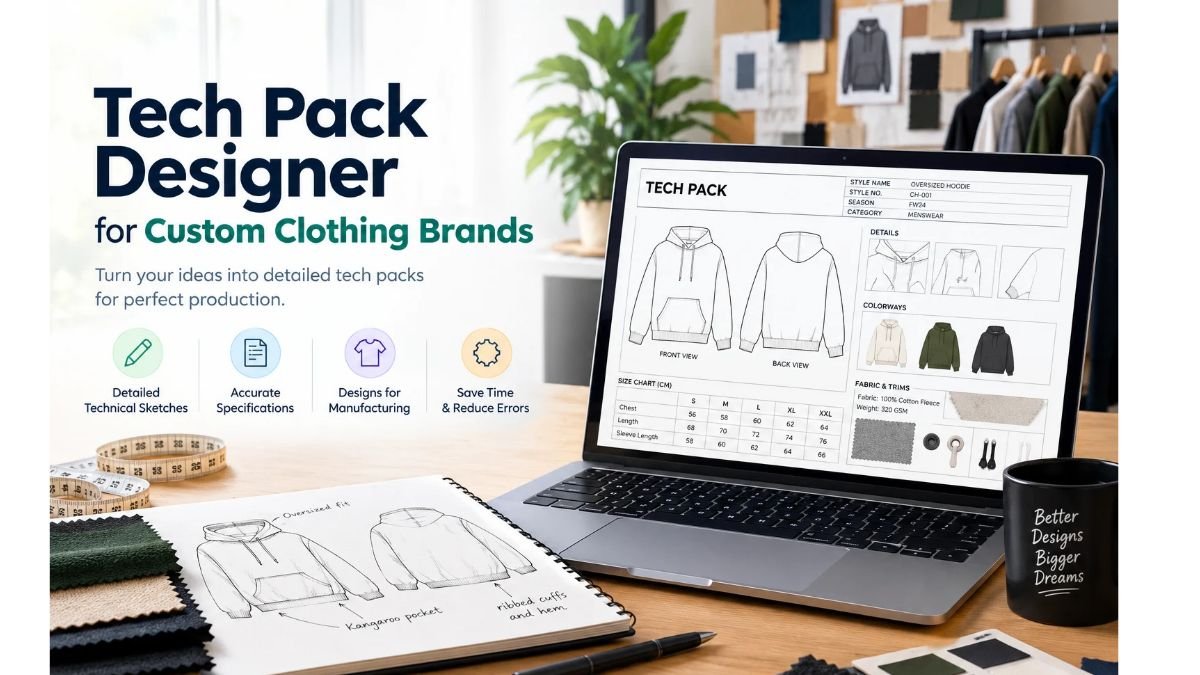
For brands planning their first order, it is helpful to prepare a design brief, sketches, reference images, or a tech pack. A tech pack is not required to request a quotation, according to the company’s published information. However, a finalized tech pack or a suitable reference sample is needed before sampling can proceed.
The company’s stated workflow includes physical pre-production sample approval before bulk production. This helps establish the version that should be followed during manufacturing.
Before confirming an order, discuss the quantity, sample requirements, materials, decoration, quality checks, packaging, delivery terms, and full quotation. This allows you to evaluate whether the order suits your budget and launch plan.
You can learn more about its services or discuss a project through the official website: https://fashionsoulintl.com/
Frequently Asked Questions
1. What does MOQ mean in manufacturing?
MOQ stands for Minimum Order Quantity. It is the smallest number of units a manufacturer or supplier requires for a particular order. In clothing, the MOQ may apply per style, color, or another agreed production unit.
2. What is considered low MOQ in clothing?
There is no universal definition. Low MOQ generally refers to a smaller order quantity compared with the standard requirements of a particular manufacturer. The exact minimum depends on the garment, materials, customization, and supplier.
3. Is low MOQ more expensive?
It can be. Smaller orders may have higher unit costs because setup, sourcing, and development expenses are spread across fewer products. However, a smaller order may reduce the amount of money tied up in inventory.
4. Can a startup work with a clothing manufacturer?
Yes. Some manufacturers work with startups and smaller brands. Ask about minimum quantities, sampling, customization options, payment terms, and production requirements before choosing a supplier.
5. Does MOQ apply separately to each color?
It depends on the manufacturer. Some apply a minimum to each style, while others may require minimum quantities for individual colors or material types. Confirm the rule for your specific order.
6. How can I reduce my manufacturing MOQ?
You may be able to simplify the design, select readily available fabrics, reduce the number of colors, choose standard trims, or discuss a smaller initial production run. These changes do not guarantee a lower MOQ, so confirm feasibility with the manufacturer.
7. Should I order the minimum quantity for my first collection?
Ordering the minimum can help limit inventory exposure, but the right quantity depends on expected demand, product costs, and your sales plan. Compare the total cost of a smaller order with the potential savings from a larger production run.
8. What should I ask before placing an MOQ order?
Confirm the minimum quantity, unit price, sample costs, material specifications, branding charges, production timeline, quality-control process, payment terms, packaging, and shipping costs. Ask for the important terms in writing.
Conclusion
MOQ manufacturing affects how clothing brands budget, develop products, and plan production. Understanding minimum quantities helps you compare manufacturers, calculate costs, and avoid committing to more inventory than your business can reasonably manage.
For startups and smaller brands, low MOQ production can offer a practical way to test designs and learn from customer demand. Still, the smallest order is not automatically the best option. You must consider unit cost, material availability, quality, customization, and the possibility of repeat orders.
Before choosing a manufacturer, confirm its minimum quantity for your exact product, request a clear quotation, and review a physical sample. With realistic budgeting and well-defined specifications, you can make a more informed decision about your first clothing order and future production plans.