Tech Pack Designer: A Complete Guide to Creating Production-Ready Clothing Designs
A tech pack designer helps turn a clothing idea into clear technical instructions that a manufacturer can follow. Whether you are launching a new fashion brand, developing a hoodie collection, or creating custom activewear, a well-prepared tech pack helps communicate exactly how a garment should look and be made.
A design sketch may show the appearance of a garment, but it usually does not explain every detail. Manufacturers also need measurements, fabric specifications, stitching details, color references, trims, labels, and artwork placement. These details help reduce confusion during sampling and production.
If you are new to clothing manufacturing, you may be searching for a clothing tech pack template, a garment tech pack sample, or a suitable format for your first product. Understanding these resources can make the product development process easier.
This guide explains what a tech pack is, what it should contain, how to choose templates, and how to prepare specifications for a clothing manufacturer.
What Is a Tech Pack Designer?
A tech pack designer is a professional who prepares technical documentation for clothing products. The designer combines garment drawings, measurements, materials, construction details, and branding instructions into a document that guides product development and manufacturing.
Some designers specialize in technical apparel documentation. Others also provide fashion design, pattern development, grading, and sample development services.
A tech pack designer may help you:
- Convert sketches into clear technical drawings.
- Create front, back, and detail views of a garment.
- Develop measurement charts and size specifications.
- Document fabric composition, weight, and color.
- Specify stitching, seams, closures, and trims.
- Place logos, prints, embroidery, and labels accurately.
- Organize product details into a manufacturer-friendly document.
- Update specifications after sample reviews.
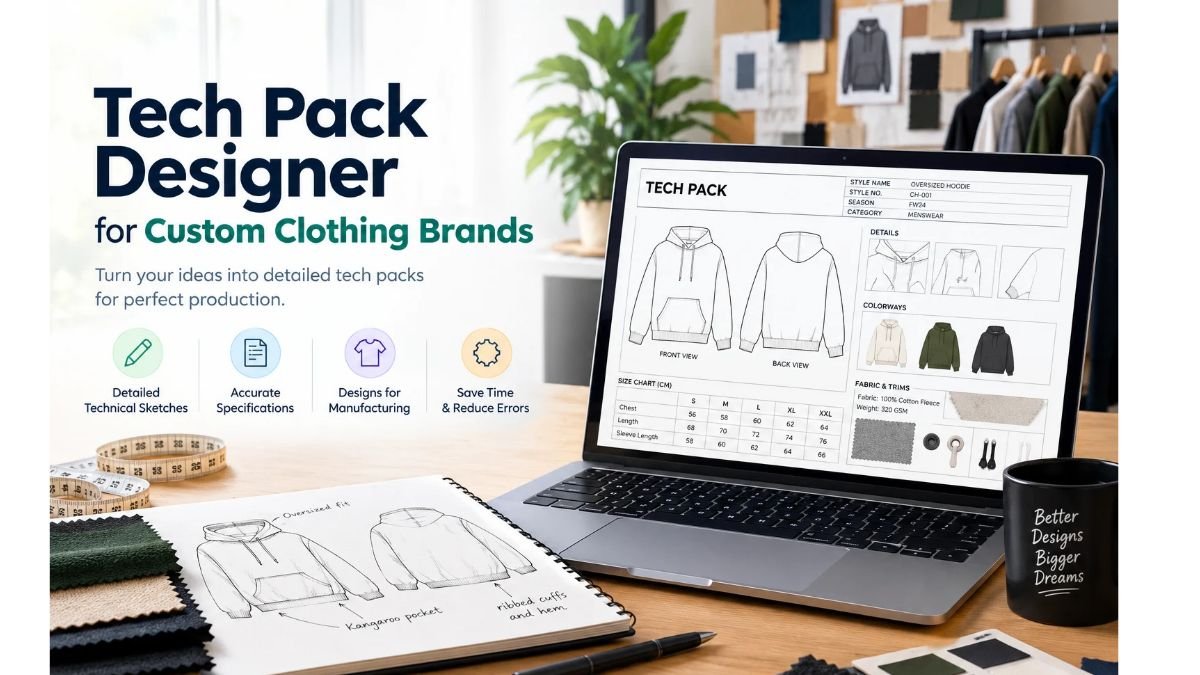
For example, imagine you want to create an oversized hoodie. A sketch might show the hood, front pocket, and logo. However, the manufacturer also needs the intended body length, chest width, sleeve measurements, fabric type, ribbing, drawcord details, and logo dimensions.
The tech pack communicates these requirements in a structured format.
What Is a Tech Pack in Clothing Manufacturing?
A tech pack, also called a tech packet, is a technical document that describes how a garment should be developed and manufactured.
The exact contents vary by product. A basic T-shirt may need fewer details than a technical jacket with multiple panels, zippers, lining, pockets, and waterproof construction.
A complete tech pack often contains the following sections:
| Section | Information included |
|---|---|
| Technical drawings | Front, back, and relevant detail views |
| Product description | Style name, product type, and design overview |
| Bill of materials | Fabric, trims, labels, and other components |
| Measurement chart | Garment dimensions and points of measurement |
| Size grading | Measurement changes across sizes |
| Color specifications | Approved colors and color references |
| Construction details | Stitching, seams, panels, and finishing |
| Artwork placement | Logo size, location, and decoration method |
| Labels and packaging | Brand labels, care labels, hang tags, and packaging |
| Revision history | Changes made to the product specifications |
Not every project needs every section from the beginning. However, the document should contain enough information for the manufacturer to understand the intended product and identify any missing details.
Why Do Clothing Brands Need a Tech Pack?
A tech pack helps keep the brand, designer, sample maker, and manufacturer aligned. Without clear specifications, different people may interpret the same design in different ways.
1. Clear Communication
A technical document explains details that may not be obvious from an image. For example, it can specify whether a T-shirt has a regular or oversized fit, where a logo should sit, and how wide the ribbed neckline should be.
This reduces the need to rely on assumptions.
2. More Consistent Samples
A manufacturer can use the same specifications when developing and revising a sample. If the first sample has incorrect sleeve length or logo placement, the tech pack can be updated to communicate the required corrections.
3. Better Cost Planning
Material choices, construction details, decoration methods, and trims can affect production costs. Documenting these requirements gives the manufacturer a clearer basis for preparing a quotation.
Costs may still change if the specifications, quantities, or material choices change.
4. Easier Quality Control
Measurements and construction instructions can be used to check the finished garment against the approved requirements.
For example, an inspection may compare chest width, body length, stitching, print registration, and trim attachment with the agreed specifications.
5. A Reference for Future Orders
Once a product has been developed and approved, the finalized tech pack can serve as a reference for repeat production. Any future changes should be documented so the manufacturer knows which version to follow.
How to Use a Clothing Tech Pack Template
A clothing tech pack template gives you a starting structure for documenting your garment. Instead of building every page from scratch, you can fill in the relevant sections for your product.
Templates can be useful for beginners, independent designers, small clothing brands, and businesses preparing their first manufacturing order.
Step 1: Identify Your Garment Type
Start by deciding what you are making. The information required for a T-shirt differs from that needed for a jacket, tracksuit, or pair of leggings.
For a basic T-shirt, you may need to document the neckline, sleeve shape, body fit, fabric, measurements, and print placement.
For a jacket, you may also need to specify the lining, zipper, pocket construction, cuffs, collar, and closures.
Choose a template that supports the complexity of your product.
Step 2: Add Technical Drawings
Technical drawings show the garment from relevant angles. Front and back views are common, while side views and close-up details may be needed for complex designs.
Drawings should communicate the shape and construction rather than only presenting a stylish illustration.
Use callouts or numbered notes to identify details such as pocket placement, seam types, panel shapes, and decorative elements.
Step 3: Complete the Product Details
Add the style name or number, intended fit, garment category, and other relevant information.
If you are developing several products, use a consistent naming system. This helps distinguish different styles and revisions during communication with the manufacturer.
Step 4: Add Measurements
List the required points of measurement and their target dimensions. Include the unit of measurement, such as centimetres or inches.
For example, a T-shirt measurement chart might include:
- Chest width
- Body length
- Shoulder width
- Sleeve length
- Sleeve opening
- Neck opening
Define how each measurement should be taken. A chest measurement taken across a flat garment is not the same as the full body circumference.
Step 5: Document Materials and Trims
Specify the intended fabric, composition, weight, color, and any performance requirements.
GSM means grams per square metre and indicates fabric weight. A heavier fabric is not automatically better; the right choice depends on the product’s intended use and desired feel.
Also list relevant trims, such as zippers, buttons, drawcords, elastic, ribbing, labels, and fasteners.
Step 6: Explain Branding and Finishing
Identify where logos, prints, embroidery, and labels should appear. Include dimensions, placement measurements, artwork files, and the preferred decoration method where known.
If the design includes special washes or finishes, describe them clearly. A reference image can help, but it may not communicate the exact production method on its own.
Step 7: Review Before Sending
Check the document for missing measurements, unclear instructions, conflicting colors, and outdated drawings.
Make sure the written instructions agree with the technical illustrations. If a change is made, update the relevant pages and revision details.
A template is only useful when the information entered into it is accurate and complete.
What Is a Garment Tech Pack Template?
A garment tech pack template is a reusable document designed to capture the technical requirements of an individual clothing product.
It may be created in a spreadsheet, presentation program, design application, or specialized product development software. The format matters less than whether the information is clear, complete, and easy for the manufacturer to follow.
A good template should include space for technical drawings, measurements, material specifications, construction notes, and branding instructions.
Choosing a Template for Different Products
T-shirts and tops: Focus on fabric, fit, neckline, sleeve shape, body measurements, stitching, and artwork placement.
Hoodies and sweatshirts: Include fleece or terry fabric details, hood dimensions, pocket construction, ribbing, drawcords, and print or embroidery locations.
Activewear: Document stretch requirements, fabric composition, seam construction, fit, waistband details, and relevant performance requirements.
Jackets: Include outer fabric, lining, closures, pockets, collar, cuffs, panels, and any weather-related construction requirements.
Denim: Specify denim fabric, wash or finishing requirements, pocket details, hardware, stitching, and garment measurements.
These are general starting points. The final document should reflect the actual garment rather than forcing every product into an identical layout.
What Should an Apparel Tech Pack Template Include?
An apparel tech pack template is particularly useful when a brand is preparing several styles or working with a production team. It helps keep product information organized and makes it easier to compare specifications across a collection.
For a professional apparel project, consider including these additional details.
Bill of Materials
The bill of materials lists the components required to make the garment. Depending on the product, it may include the main fabric, lining, ribbing, thread, zippers, buttons, labels, and packaging.
Where possible, identify the material, color, quantity, supplier reference, or specification for each component.
Points of Measurement
A measurement chart should explain both the required dimensions and how they are measured.
Use clear labels and diagrams when a measurement could be interpreted in different ways. This is especially important for garments with unusual shapes or complex construction.
Size Grading
Size grading describes how measurements change across the size range. A garment should not simply be enlarged by the same amount at every point.
The grading rules depend on the garment, fit, target customer, and size range. Brands should establish a base size and define appropriate increments for other sizes.
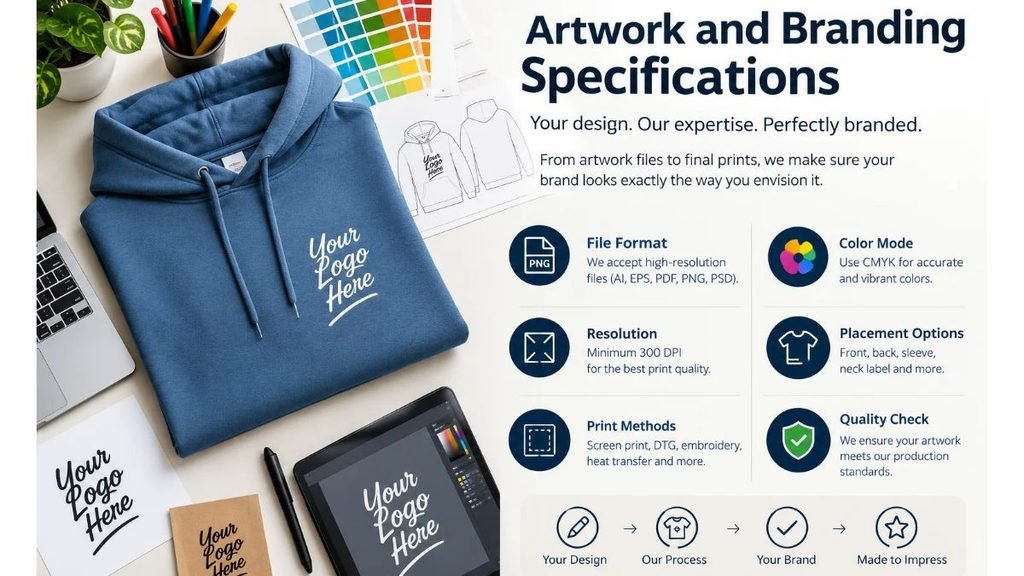
Artwork and Branding Specifications
Artwork instructions should include the location, dimensions, color requirements, and decoration method.
If a logo is intended for embroidery, the design may need different preparation than artwork intended for screen printing. The manufacturer or decoration specialist can confirm the appropriate file requirements.
Revision Control
Product development often involves changes. A revision table can identify the document version, date, and summary of modifications.
This helps prevent an outdated specification from being used during sampling or bulk production.
What Is an Apparel Tech Pack Sample?
An apparel tech pack sample can refer to an example of a completed technical document that shows how garment information should be presented.
Reviewing an example can help beginners understand how to arrange technical drawings, measurement tables, material lists, and construction notes.
When reviewing a sample, ask yourself:
- Are the front and back garment views clear?
- Are the measurements labeled and easy to follow?
- Is the fabric described accurately?
- Are trims and construction details identified?
- Are logo sizes and positions specified?
- Can a manufacturer identify what still needs clarification?
Do not copy a sample blindly. A document designed for a simple T-shirt may not cover the requirements of a jacket or technical sportswear product.
A sample should be used as a reference for organization, not as a substitute for product-specific information.
Fashion Tech Pack Template: How to Make It Useful
A fashion tech pack template should help communicate the design intent while providing the technical details needed for development.
Fashion products can include simple basics, detailed streetwear, formal garments, activewear, and experimental silhouettes. Their documentation requirements are not identical.
For a fashion collection, the template may include a collection name, style number, colorways, fabric references, design details, and branding elements.
It can also include inspiration images or a brief design explanation. However, inspiration images should be separated from final production instructions so the manufacturer can distinguish general references from approved requirements.
Keep Design Intent and Production Instructions Separate
A mood board communicates the visual direction of a collection. A technical drawing communicates garment shape and construction. A measurement chart specifies dimensions.
All three can support development, but they perform different roles.
For example, a photograph may show a relaxed-fit hoodie, but it cannot reliably specify the exact chest width, body length, or hood construction. Those details should be documented separately.
Include Practical Material Information
Do not describe a fabric only as “premium” or “high quality.” Instead, explain the characteristics you need.
You may specify cotton content, fabric weight, stretch, surface texture, softness, or durability requirements. If you have a reference fabric, provide it for review where possible.
The manufacturer can then assess available materials and identify suitable options.
What Is a Fashion Tech Pack Sample?
A fashion tech pack sample is an example of how a garment’s technical requirements can be documented in a practical, production-oriented format.
For instance, a sample for an oversized T-shirt might contain:
- Front and back technical drawings
- Fabric composition and target weight
- Base-size measurement chart
- Neck rib details
- Sleeve and body construction notes
- Artwork dimensions and placement
- Brand label and care label instructions
- Packaging requirements
A sample for an activewear garment would need different information, such as stretch properties, seam construction, waistband details, and fit requirements.
When evaluating a sample, focus on clarity. A visually attractive document is not enough if essential production information is missing.
Understanding Garment Tech Pack Format
The garment tech pack format refers to how product information is arranged and delivered to the design and manufacturing teams.
There is no single universal layout that fits every clothing product. A simple garment may need a concise document, while a complex style may require several pages and supporting files.
A useful format should be:
- Easy to read
- Clearly organized
- Consistent across related styles
- Detailed enough for the garment
- Simple to update when specifications change
- Suitable for sharing with the relevant production team
Spreadsheet-Based Format
A spreadsheet can work well for measurement charts, bills of materials, colorways, and structured specifications. It is easy to update, but complex visual details may be harder to present clearly.
PDF Format
A PDF is useful for sharing an approved version because its layout is generally preserved across devices. It can combine technical drawings, measurement tables, and written instructions in one file.
However, a PDF should still have a clear version number or date so recipients can identify the current document.
Design Software Format
Some design tools support detailed technical drawings and product documentation. These may be useful for teams that develop many garments or require specialized workflows.
Whatever format you choose, confirm that the manufacturer can access and understand the files.
Techpack Meaning: Is It Different From a Tech Pack?
The term techpack meaning refers to the same basic concept as “tech pack.” Both describe a technical document that communicates a garment’s design and manufacturing requirements.
“Tech pack” is the common shortened term, while “technical package” is another way people describe the documentation.
A tech pack is not the same as a fashion sketch. A sketch illustrates an idea, while a tech pack adds specifications such as measurements, fabrics, construction, trims, and branding.
It is also different from a physical sample. The document explains the intended product; the sample is a physical garment used to evaluate whether the specifications work in practice.
These items support one another during product development.
How to Create a Tech Pack for Your First Clothing Product
If you are preparing your first product, you do not need to make the process unnecessarily complicated. Start with the information required to understand the garment, then add details as the design develops.
Step 1: Define the Product
Write down the garment type, intended customer, fit, and main design features.
For example, you might be developing a heavyweight oversized T-shirt with a chest logo and a large back print.
Step 2: Collect Reference Materials
Gather sketches, inspiration images, logo files, color references, and any existing garments that demonstrate your desired fit or construction.
Mark which details are essential and which are only inspiration.
Step 3: Develop Technical Drawings
Prepare front and back views, plus close-up details where necessary. Identify the location of important design features.
If you are not comfortable creating technical drawings, consider working with a qualified designer.
Step 4: Specify Measurements and Materials
Define the base size, points of measurement, fabric requirements, and trims. Identify areas where you need advice from the manufacturer.
If you are uncertain about the right fabric, explain the desired result rather than guessing at a specification.
Step 5: Send the Document for Review
Ask the manufacturer to identify missing information before sampling. Clarify any questions about fabric availability, construction, decoration, or production feasibility.
This review can reveal issues before time and money are spent on a physical sample.
Step 6: Review the Physical Sample
When the sample is ready, compare it with the agreed specifications. Record any required changes in a clear, written format.
Update the tech pack so it reflects the approved design and the latest decisions.
Step 7: Approve the Final Version
Once the sample meets your requirements, approve it in writing and confirm that the manufacturer is working from the correct version of the document.
Bulk production should follow the agreed approval process rather than relying on an informal conversation or an outdated file.
Can You Make a Tech Pack Without a Professional Designer?
Yes. Some founders prepare their own technical documents using templates, spreadsheets, and design tools. This can be a reasonable starting point for simple garments.
However, the difficulty increases when a product has complex construction, detailed grading, technical fabrics, or multiple components.
A professional tech pack designer can help identify missing details and organize the specifications. This may be particularly valuable when the brand is unfamiliar with garment measurements, construction terminology, or production requirements.
If you create the document yourself, ask the manufacturer to review it before sampling. A quotation request can often begin with sketches, reference images, or a design brief, even when a finalized tech pack is not yet available. The information required for sampling may be more detailed.
Common Tech Pack Mistakes to Avoid
Missing Measurements
A drawing without clear measurements leaves room for interpretation.
How to avoid it: Add the relevant points of measurement, units, and instructions for how dimensions should be taken.
Vague Fabric Descriptions
Terms such as “soft,” “heavy,” or “premium” may mean different things to different people.
How to avoid it: Provide material composition, target weight, fabric references, and other relevant requirements.
Unclear Artwork Placement
A logo may look correct on a mockup but end up too high, low, large, or small on the actual garment.
How to avoid it: Specify dimensions and placement measurements, and identify the intended decoration method.
Outdated Document Versions
If the designer and manufacturer use different versions, the sample may not reflect the latest changes.
How to avoid it: Use version numbers or dates and clearly identify the approved document.
Skipping Sample Review
A complete document cannot guarantee that every production detail will be correct on the first attempt.
How to avoid it: Review the physical sample, document corrections, and approve the final version before bulk production.
How Fashion Soul International Can Help With Tech Pack Development
Fashion Soul International is a custom clothing manufacturer based in Sialkot, Pakistan. The company offers product development and manufacturing services for brands seeking custom apparel.
Its stated services include private-label, OEM, ODM, white-label, cut-and-sew, and full-package production. Depending on the project, support can include fabric and trim sourcing, sample development, bulk manufacturing, quality control, branding, packaging, and international shipping.
For OEM projects, the company works from customer designs and specifications. The company also states that its team can assist with tech-pack creation and that customers may begin a quotation request with a design brief, sketches, mood boards, or reference images.
A finalized tech pack or a suitable reference sample is needed before sampling can proceed. This allows the product requirements to be clarified before a physical garment is developed.
The company states that bulk production begins after physical pre-production sample approval. That step helps establish the garment version to be followed during manufacturing.
If you are preparing a clothing line, organize the information you already have before contacting the manufacturer. Include your product type, intended quantity, fabric preferences, design references, measurements, and branding requirements where available.
You can learn more about services and discuss your project through the official website: https://fashionsoulintl.com/
Frequently Asked Questions
1. What does a tech pack designer do?
A tech pack designer creates technical documentation that explains how a garment should be developed and manufactured. The document may include drawings, measurements, fabric details, trims, construction instructions, and branding specifications.
2. Is a tech pack necessary for clothing manufacturing?
A tech pack is highly useful because it organizes the product requirements in one place. Some manufacturers can start a quotation from sketches or reference images, but a finalized tech pack or suitable sample is generally needed before detailed sampling.
3. Where can I find a clothing tech pack template?
You can create a template in a spreadsheet, presentation tool, design application, or specialized apparel software. Choose one that supports your garment type and includes space for drawings, measurements, materials, construction, and branding details.
4. What is the difference between a tech pack and a tech pack sample?
A tech pack is the technical document for your specific garment. A tech pack sample is an example that shows how such a document can be organized. A reference sample can help you understand the format, but your final document must match your own product.
5. Can I create a tech pack myself?
Yes. You can prepare a basic document with templates and clear specifications. For complicated garments, professional support can help with technical drawings, measurements, grading, and construction details.
6. What file format should a tech pack use?
A tech pack may be shared as a PDF, spreadsheet, or design-software file. PDF is useful for sharing an approved layout, while spreadsheets can be practical for measurements and material lists. Confirm that your manufacturer can access the chosen format.
7. Does a tech pack guarantee a perfect sample?
No. A tech pack communicates the intended requirements, but material behavior, construction decisions, and production limitations may require adjustments. Physical sample review remains important.
8. What should I send a manufacturer if I do not have a tech pack?
Start with a clear design brief, sketches, reference images, intended quantity, garment type, and any known fabric or branding preferences. Ask what additional details are needed for a quotation and sampling.
Conclusion
A tech pack designer helps bridge the gap between a fashion idea and a garment that can be produced consistently. The right technical document explains the product’s appearance, measurements, materials, construction, and branding requirements in a clear format.
Templates and samples can make the process easier, especially for new designers and small clothing brands. However, they should always be adapted to the specific garment rather than copied without review.
Before manufacturing, confirm the details with your production partner, review a physical sample, document changes, and approve the final specifications. This gives everyone involved a clearer reference and helps your clothing concept move from design to production with fewer misunderstandings.Tech Pack Designer: A Complete Guide to Creating Production-Ready Clothing Designs
A tech pack designer helps turn a clothing idea into clear technical instructions that a manufacturer can follow. Whether you are launching a new fashion brand, developing a hoodie collection, or creating custom activewear, a well-prepared tech pack helps communicate exactly how a garment should look and be made.
A design sketch may show the appearance of a garment, but it usually does not explain every detail. Manufacturers also need measurements, fabric specifications, stitching details, color references, trims, labels, and artwork placement. These details help reduce confusion during sampling and production.
If you are new to clothing manufacturing, you may be searching for a clothing tech pack template, a garment tech pack sample, or a suitable format for your first product. Understanding these resources can make the product development process easier.
This guide explains what a tech pack is, what it should contain, how to choose templates, and how to prepare specifications for a clothing manufacturer.
What Is a Tech Pack Designer?
A tech pack designer is a professional who prepares technical documentation for clothing products. The designer combines garment drawings, measurements, materials, construction details, and branding instructions into a document that guides product development and manufacturing.
Some designers specialize in technical apparel documentation. Others also provide fashion design, pattern development, grading, and sample development services.
A tech pack designer may help you:
- Convert sketches into clear technical drawings.
- Create front, back, and detail views of a garment.
- Develop measurement charts and size specifications.
- Document fabric composition, weight, and color.
- Specify stitching, seams, closures, and trims.
- Place logos, prints, embroidery, and labels accurately.
- Organize product details into a manufacturer-friendly document.
- Update specifications after sample reviews.
For example, imagine you want to create an oversized hoodie. A sketch might show the hood, front pocket, and logo. However, the manufacturer also needs the intended body length, chest width, sleeve measurements, fabric type, ribbing, drawcord details, and logo dimensions.
The tech pack communicates these requirements in a structured format.
What Is a Tech Pack in Clothing Manufacturing?
A tech pack, also called a tech packet, is a technical document that describes how a garment should be developed and manufactured.
The exact contents vary by product. A basic T-shirt may need fewer details than a technical jacket with multiple panels, zippers, lining, pockets, and waterproof construction.
A complete tech pack often contains the following sections:
| Section | Information included |
|---|---|
| Technical drawings | Front, back, and relevant detail views |
| Product description | Style name, product type, and design overview |
| Bill of materials | Fabric, trims, labels, and other components |
| Measurement chart | Garment dimensions and points of measurement |
| Size grading | Measurement changes across sizes |
| Color specifications | Approved colors and color references |
| Construction details | Stitching, seams, panels, and finishing |
| Artwork placement | Logo size, location, and decoration method |
| Labels and packaging | Brand labels, care labels, hang tags, and packaging |
| Revision history | Changes made to the product specifications |
Not every project needs every section from the beginning. However, the document should contain enough information for the manufacturer to understand the intended product and identify any missing details.
Why Do Clothing Brands Need a Tech Pack?
A tech pack helps keep the brand, designer, sample maker, and manufacturer aligned. Without clear specifications, different people may interpret the same design in different ways.
1. Clear Communication
A technical document explains details that may not be obvious from an image. For example, it can specify whether a T-shirt has a regular or oversized fit, where a logo should sit, and how wide the ribbed neckline should be.
This reduces the need to rely on assumptions.
2. More Consistent Samples
A manufacturer can use the same specifications when developing and revising a sample. If the first sample has incorrect sleeve length or logo placement, the tech pack can be updated to communicate the required corrections.
3. Better Cost Planning
Material choices, construction details, decoration methods, and trims can affect production costs. Documenting these requirements gives the manufacturer a clearer basis for preparing a quotation.
Costs may still change if the specifications, quantities, or material choices change.
4. Easier Quality Control
Measurements and construction instructions can be used to check the finished garment against the approved requirements.
For example, an inspection may compare chest width, body length, stitching, print registration, and trim attachment with the agreed specifications.
5. A Reference for Future Orders
Once a product has been developed and approved, the finalized tech pack can serve as a reference for repeat production. Any future changes should be documented so the manufacturer knows which version to follow.
How to Use a Clothing Tech Pack Template
A clothing tech pack template gives you a starting structure for documenting your garment. Instead of building every page from scratch, you can fill in the relevant sections for your product.
Templates can be useful for beginners, independent designers, small clothing brands, and businesses preparing their first manufacturing order.
Step 1: Identify Your Garment Type
Start by deciding what you are making. The information required for a T-shirt differs from that needed for a jacket, tracksuit, or pair of leggings.
For a basic T-shirt, you may need to document the neckline, sleeve shape, body fit, fabric, measurements, and print placement.
For a jacket, you may also need to specify the lining, zipper, pocket construction, cuffs, collar, and closures.
Choose a template that supports the complexity of your product.
Step 2: Add Technical Drawings
Technical drawings show the garment from relevant angles. Front and back views are common, while side views and close-up details may be needed for complex designs.
Drawings should communicate the shape and construction rather than only presenting a stylish illustration.
Use callouts or numbered notes to identify details such as pocket placement, seam types, panel shapes, and decorative elements.
Step 3: Complete the Product Details
Add the style name or number, intended fit, garment category, and other relevant information.
If you are developing several products, use a consistent naming system. This helps distinguish different styles and revisions during communication with the manufacturer.
Step 4: Add Measurements
List the required points of measurement and their target dimensions. Include the unit of measurement, such as centimetres or inches.
For example, a T-shirt measurement chart might include:
- Chest width
- Body length
- Shoulder width
- Sleeve length
- Sleeve opening
- Neck opening
Define how each measurement should be taken. A chest measurement taken across a flat garment is not the same as the full body circumference.
Step 5: Document Materials and Trims
Specify the intended fabric, composition, weight, color, and any performance requirements.
GSM means grams per square metre and indicates fabric weight. A heavier fabric is not automatically better; the right choice depends on the product’s intended use and desired feel.
Also list relevant trims, such as zippers, buttons, drawcords, elastic, ribbing, labels, and fasteners.
Step 6: Explain Branding and Finishing
Identify where logos, prints, embroidery, and labels should appear. Include dimensions, placement measurements, artwork files, and the preferred decoration method where known.
If the design includes special washes or finishes, describe them clearly. A reference image can help, but it may not communicate the exact production method on its own.
Step 7: Review Before Sending
Check the document for missing measurements, unclear instructions, conflicting colors, and outdated drawings.
Make sure the written instructions agree with the technical illustrations. If a change is made, update the relevant pages and revision details.
A template is only useful when the information entered into it is accurate and complete.
What Is a Garment Tech Pack Template?
A garment tech pack template is a reusable document designed to capture the technical requirements of an individual clothing product.
It may be created in a spreadsheet, presentation program, design application, or specialized product development software. The format matters less than whether the information is clear, complete, and easy for the manufacturer to follow.
A good template should include space for technical drawings, measurements, material specifications, construction notes, and branding instructions.
Choosing a Template for Different Products
T-shirts and tops: Focus on fabric, fit, neckline, sleeve shape, body measurements, stitching, and artwork placement.
Hoodies and sweatshirts: Include fleece or terry fabric details, hood dimensions, pocket construction, ribbing, drawcords, and print or embroidery locations.
Activewear: Document stretch requirements, fabric composition, seam construction, fit, waistband details, and relevant performance requirements.
Jackets: Include outer fabric, lining, closures, pockets, collar, cuffs, panels, and any weather-related construction requirements.
Denim: Specify denim fabric, wash or finishing requirements, pocket details, hardware, stitching, and garment measurements.
These are general starting points. The final document should reflect the actual garment rather than forcing every product into an identical layout.
What Should an Apparel Tech Pack Template Include?
An apparel tech pack template is particularly useful when a brand is preparing several styles or working with a production team. It helps keep product information organized and makes it easier to compare specifications across a collection.
For a professional apparel project, consider including these additional details.
Bill of Materials
The bill of materials lists the components required to make the garment. Depending on the product, it may include the main fabric, lining, ribbing, thread, zippers, buttons, labels, and packaging.
Where possible, identify the material, color, quantity, supplier reference, or specification for each component.
Points of Measurement
A measurement chart should explain both the required dimensions and how they are measured.
Use clear labels and diagrams when a measurement could be interpreted in different ways. This is especially important for garments with unusual shapes or complex construction.
Size Grading
Size grading describes how measurements change across the size range. A garment should not simply be enlarged by the same amount at every point.
The grading rules depend on the garment, fit, target customer, and size range. Brands should establish a base size and define appropriate increments for other sizes.
Artwork and Branding Specifications
Artwork instructions should include the location, dimensions, color requirements, and decoration method.
If a logo is intended for embroidery, the design may need different preparation than artwork intended for screen printing. The manufacturer or decoration specialist can confirm the appropriate file requirements.
Revision Control
Product development often involves changes. A revision table can identify the document version, date, and summary of modifications.
This helps prevent an outdated specification from being used during sampling or bulk production.
What Is an Apparel Tech Pack Sample?
An apparel tech pack sample can refer to an example of a completed technical document that shows how garment information should be presented.
Reviewing an example can help beginners understand how to arrange technical drawings, measurement tables, material lists, and construction notes.
When reviewing a sample, ask yourself:
- Are the front and back garment views clear?
- Are the measurements labeled and easy to follow?
- Is the fabric described accurately?
- Are trims and construction details identified?
- Are logo sizes and positions specified?
- Can a manufacturer identify what still needs clarification?
Do not copy a sample blindly. A document designed for a simple T-shirt may not cover the requirements of a jacket or technical sportswear product.
A sample should be used as a reference for organization, not as a substitute for product-specific information.
Fashion Tech Pack Template: How to Make It Useful
A fashion tech pack template should help communicate the design intent while providing the technical details needed for development.
Fashion products can include simple basics, detailed streetwear, formal garments, activewear, and experimental silhouettes. Their documentation requirements are not identical.
For a fashion collection, the template may include a collection name, style number, colorways, fabric references, design details, and branding elements.
It can also include inspiration images or a brief design explanation. However, inspiration images should be separated from final production instructions so the manufacturer can distinguish general references from approved requirements.
Keep Design Intent and Production Instructions Separate
A mood board communicates the visual direction of a collection. A technical drawing communicates garment shape and construction. A measurement chart specifies dimensions.
All three can support development, but they perform different roles.
For example, a photograph may show a relaxed-fit hoodie, but it cannot reliably specify the exact chest width, body length, or hood construction. Those details should be documented separately.
Include Practical Material Information
Do not describe a fabric only as “premium” or “high quality.” Instead, explain the characteristics you need.
You may specify cotton content, fabric weight, stretch, surface texture, softness, or durability requirements. If you have a reference fabric, provide it for review where possible.
The manufacturer can then assess available materials and identify suitable options.
What Is a Fashion Tech Pack Sample?
A fashion tech pack sample is an example of how a garment’s technical requirements can be documented in a practical, production-oriented format.
For instance, a sample for an oversized T-shirt might contain:
- Front and back technical drawings
- Fabric composition and target weight
- Base-size measurement chart
- Neck rib details
- Sleeve and body construction notes
- Artwork dimensions and placement
- Brand label and care label instructions
- Packaging requirements
A sample for an activewear garment would need different information, such as stretch properties, seam construction, waistband details, and fit requirements.
When evaluating a sample, focus on clarity. A visually attractive document is not enough if essential production information is missing.
Understanding Garment Tech Pack Format
The garment tech pack format refers to how product information is arranged and delivered to the design and manufacturing teams.
There is no single universal layout that fits every clothing product. A simple garment may need a concise document, while a complex style may require several pages and supporting files.
A useful format should be:
- Easy to read
- Clearly organized
- Consistent across related styles
- Detailed enough for the garment
- Simple to update when specifications change
- Suitable for sharing with the relevant production team
Spreadsheet-Based Format
A spreadsheet can work well for measurement charts, bills of materials, colorways, and structured specifications. It is easy to update, but complex visual details may be harder to present clearly.
PDF Format
A PDF is useful for sharing an approved version because its layout is generally preserved across devices. It can combine technical drawings, measurement tables, and written instructions in one file.
However, a PDF should still have a clear version number or date so recipients can identify the current document.
Design Software Format
Some design tools support detailed technical drawings and product documentation. These may be useful for teams that develop many garments or require specialized workflows.
Whatever format you choose, confirm that the manufacturer can access and understand the files.
Techpack Meaning: Is It Different From a Tech Pack?
The term techpack meaning refers to the same basic concept as “tech pack.” Both describe a technical document that communicates a garment’s design and manufacturing requirements.
“Tech pack” is the common shortened term, while “technical package” is another way people describe the documentation.
A tech pack is not the same as a fashion sketch. A sketch illustrates an idea, while a tech pack adds specifications such as measurements, fabrics, construction, trims, and branding.
It is also different from a physical sample. The document explains the intended product; the sample is a physical garment used to evaluate whether the specifications work in practice.
These items support one another during product development.
How to Create a Tech Pack for Your First Clothing Product
If you are preparing your first product, you do not need to make the process unnecessarily complicated. Start with the information required to understand the garment, then add details as the design develops.
Step 1: Define the Product
Write down the garment type, intended customer, fit, and main design features.
For example, you might be developing a heavyweight oversized T-shirt with a chest logo and a large back print.
Step 2: Collect Reference Materials
Gather sketches, inspiration images, logo files, color references, and any existing garments that demonstrate your desired fit or construction.
Mark which details are essential and which are only inspiration.
Step 3: Develop Technical Drawings
Prepare front and back views, plus close-up details where necessary. Identify the location of important design features.
If you are not comfortable creating technical drawings, consider working with a qualified designer.
Step 4: Specify Measurements and Materials
Define the base size, points of measurement, fabric requirements, and trims. Identify areas where you need advice from the manufacturer.
If you are uncertain about the right fabric, explain the desired result rather than guessing at a specification.
Step 5: Send the Document for Review
Ask the manufacturer to identify missing information before sampling. Clarify any questions about fabric availability, construction, decoration, or production feasibility.
This review can reveal issues before time and money are spent on a physical sample.
Step 6: Review the Physical Sample
When the sample is ready, compare it with the agreed specifications. Record any required changes in a clear, written format.
Update the tech pack so it reflects the approved design and the latest decisions.
Step 7: Approve the Final Version
Once the sample meets your requirements, approve it in writing and confirm that the manufacturer is working from the correct version of the document.
Bulk production should follow the agreed approval process rather than relying on an informal conversation or an outdated file.
Can You Make a Tech Pack Without a Professional Designer?
Yes. Some founders prepare their own technical documents using templates, spreadsheets, and design tools. This can be a reasonable starting point for simple garments.
However, the difficulty increases when a product has complex construction, detailed grading, technical fabrics, or multiple components.
A professional tech pack designer can help identify missing details and organize the specifications. This may be particularly valuable when the brand is unfamiliar with garment measurements, construction terminology, or production requirements.
If you create the document yourself, ask the manufacturer to review it before sampling. A quotation request can often begin with sketches, reference images, or a design brief, even when a finalized tech pack is not yet available. The information required for sampling may be more detailed.
Common Tech Pack Mistakes to Avoid
Missing Measurements
A drawing without clear measurements leaves room for interpretation.
How to avoid it: Add the relevant points of measurement, units, and instructions for how dimensions should be taken.
Vague Fabric Descriptions
Terms such as “soft,” “heavy,” or “premium” may mean different things to different people.
How to avoid it: Provide material composition, target weight, fabric references, and other relevant requirements.
Unclear Artwork Placement
A logo may look correct on a mockup but end up too high, low, large, or small on the actual garment.
How to avoid it: Specify dimensions and placement measurements, and identify the intended decoration method.
Outdated Document Versions
If the designer and manufacturer use different versions, the sample may not reflect the latest changes.
How to avoid it: Use version numbers or dates and clearly identify the approved document.
Skipping Sample Review
A complete document cannot guarantee that every production detail will be correct on the first attempt.
How to avoid it: Review the physical sample, document corrections, and approve the final version before bulk production.
How Fashion Soul International Can Help With Tech Pack Development
Fashion Soul International is a custom clothing manufacturer based in Sialkot, Pakistan. The company offers product development and manufacturing services for brands seeking custom apparel.
Its stated services include private-label, OEM, ODM, white-label, cut-and-sew, and full-package production. Depending on the project, support can include fabric and trim sourcing, sample development, bulk manufacturing, quality control, branding, packaging, and international shipping.
For OEM projects, the company works from customer designs and specifications. The company also states that its team can assist with tech-pack creation and that customers may begin a quotation request with a design brief, sketches, mood boards, or reference images.
A finalized tech pack or a suitable reference sample is needed before sampling can proceed. This allows the product requirements to be clarified before a physical garment is developed.
The company states that bulk production begins after physical pre-production sample approval. That step helps establish the garment version to be followed during manufacturing.
If you are preparing a clothing line, organize the information you already have before contacting the manufacturer. Include your product type, intended quantity, fabric preferences, design references, measurements, and branding requirements where available.
You can learn more about services and discuss your project through the official website: https://fashionsoulintl.com/
Frequently Asked Questions
1. What does a tech pack designer do?
A tech pack designer creates technical documentation that explains how a garment should be developed and manufactured. The document may include drawings, measurements, fabric details, trims, construction instructions, and branding specifications.
2. Is a tech pack necessary for clothing manufacturing?
A tech pack is highly useful because it organizes the product requirements in one place. Some manufacturers can start a quotation from sketches or reference images, but a finalized tech pack or suitable sample is generally needed before detailed sampling.
3. Where can I find a clothing tech pack template?
You can create a template in a spreadsheet, presentation tool, design application, or specialized apparel software. Choose one that supports your garment type and includes space for drawings, measurements, materials, construction, and branding details.
4. What is the difference between a tech pack and a tech pack sample?
A tech pack is the technical document for your specific garment. A tech pack sample is an example that shows how such a document can be organized. A reference sample can help you understand the format, but your final document must match your own product.
5. Can I create a tech pack myself?
Yes. You can prepare a basic document with templates and clear specifications. For complicated garments, professional support can help with technical drawings, measurements, grading, and construction details.
6. What file format should a tech pack use?
A tech pack may be shared as a PDF, spreadsheet, or design-software file. PDF is useful for sharing an approved layout, while spreadsheets can be practical for measurements and material lists. Confirm that your manufacturer can access the chosen format.
7. Does a tech pack guarantee a perfect sample?
No. A tech pack communicates the intended requirements, but material behavior, construction decisions, and production limitations may require adjustments. Physical sample review remains important.
8. What should I send a manufacturer if I do not have a tech pack?
Start with a clear design brief, sketches, reference images, intended quantity, garment type, and any known fabric or branding preferences. Ask what additional details are needed for a quotation and sampling.
Conclusion
A tech pack designer helps bridge the gap between a fashion idea and a garment that can be produced consistently. The right technical document explains the product’s appearance, measurements, materials, construction, and branding requirements in a clear format.
Templates and samples can make the process easier, especially for new designers and small clothing brands. However, they should always be adapted to the specific garment rather than copied without review.
Before manufacturing, confirm the details with your production partner, review a physical sample, document changes, and approve the final specifications. This gives everyone involved a clearer reference and helps your clothing concept move from design to production with fewer misunderstandings.