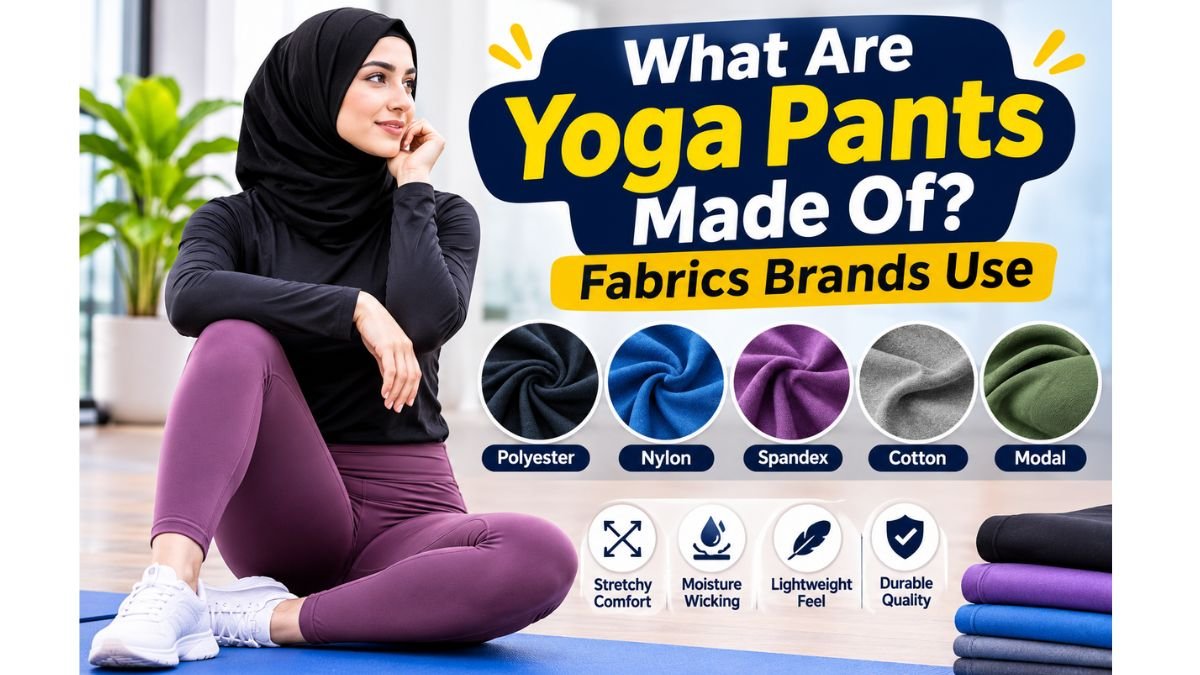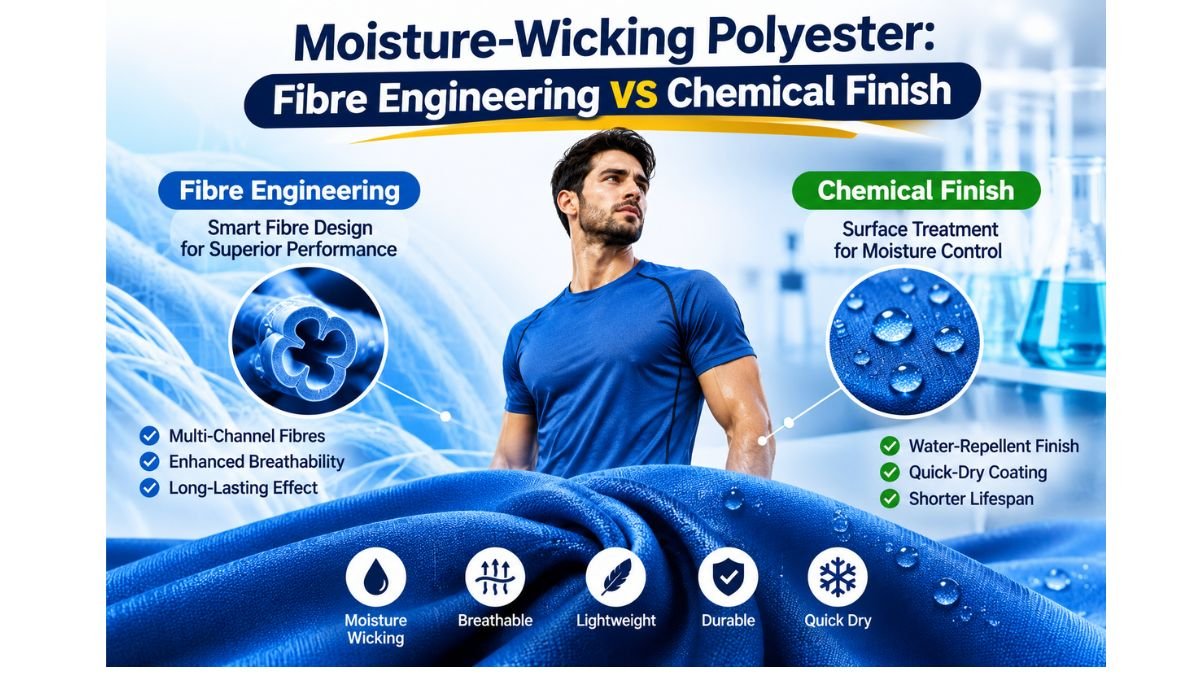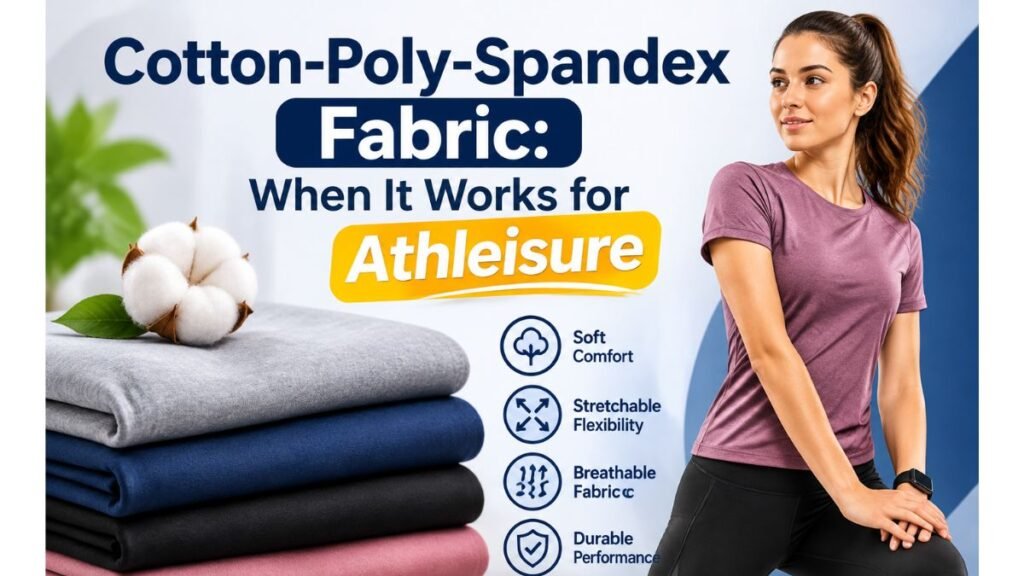
Polyester Stretchy Fabric: Properties, Uses, Benefits, and Manufacturing Guide
Polyester stretchy fabric is a popular material in modern clothing because it combines flexibility, durability, and easy care. It is widely used in activewear, sportswear, leggings, yoga clothing, fitted tops, and everyday fashion. Its stretch usually comes from adding elastane or spandex to polyester fibers.
For clothing brands, choosing the right stretch fabric is important. The material affects garment comfort, fit, movement, appearance, and durability. A suitable fabric can help a product perform well during exercise and regular use.
However, not all polyester stretch fabrics offer the same performance. Their properties depend on fiber composition, knit construction, fabric weight, and finishing.
This guide explains what polyester stretchy fabric is, how it works, its benefits, common uses, and how it compares with stretchy spandex fabric. It also covers fabric selection, testing, care, and important points for clothing manufacturers and apparel brands.
What Is Polyester Stretchy Fabric?
Polyester stretchy fabric is a textile made primarily from polyester fibers, often blended with an elastic fiber such as spandex or elastane. This combination gives the material flexibility while maintaining many of polyester’s useful properties.
Polyester is a synthetic fiber known for its strength, durability, and resistance to wrinkles. Spandex provides elasticity, allowing the fabric to stretch and recover after movement.
The two fibers work together to create a material suitable for fitted and performance clothing.
For example, polyester-spandex fabric is commonly used for leggings, sports bras, athletic shirts, cycling clothing, and training shorts.
Some polyester fabrics also have mechanical stretch because of their yarn or knit construction. However, a polyester-spandex blend generally offers greater elasticity than ordinary polyester fabric.
What Is Polyester Made From?
Polyester is a synthetic fiber produced through a chemical manufacturing process. The most common type used in clothing is polyethylene terephthalate, commonly called PET.
PET is also used in other products, including packaging materials and certain industrial textiles.
During textile production, polyester is processed into fibers or yarns. These yarns are then used to create woven or knitted fabrics.
The manufacturing process can influence the final fabric’s texture, weight, strength, and appearance.
Polyester fibers are often selected for clothing because they can provide:
- Good durability
- Low moisture absorption
- Wrinkle resistance
- Shape stability
- Easy-care properties
- Resistance to many everyday wear conditions
When polyester is blended with spandex, it becomes suitable for garments that need additional stretch.
What Makes Polyester Fabric Stretchy?
Polyester itself does not provide the same level of elasticity as spandex. The stretch in many polyester performance fabrics comes from a combination of elastic fibers and fabric construction.
1. Spandex or Elastane Fibers
Spandex is a highly elastic synthetic fiber. It can stretch considerably and return toward its original length when the tension is removed.
When manufacturers blend spandex with polyester, the resulting fabric can stretch while retaining a smooth surface and useful strength.
The amount of spandex affects the fabric’s overall performance. A higher percentage may provide greater elasticity, but the best composition depends on the garment.
2. Knitted Fabric Construction
Knitting creates loops of yarn that can move and expand. This structure gives many knitted fabrics natural flexibility.
Some polyester knits offer mechanical stretch even without spandex.
However, mechanical stretch and elastic-fiber stretch are not identical. Their recovery and performance can differ.
3. Fabric Finishing
Finishing treatments can influence the feel and appearance of polyester fabric.
Depending on the material, finishing may create a softer surface, brushed texture, or other characteristics.
Brands should review the actual fabric sample rather than assuming every polyester stretch fabric feels the same.
What Is Stretchy Spandex Fabric?
Stretchy spandex fabric is a textile that contains spandex, also known as elastane. This fiber is added to other materials to improve elasticity and help garments maintain their fit.
Spandex is rarely used alone for everyday clothing. It is commonly blended with polyester, nylon, cotton, and other fibers.
For example:
- Polyester-spandex combines polyester durability with elasticity.
- Nylon-spandex offers a smooth feel and stretch.
- Cotton-spandex combines cotton softness with flexibility.
- Polyester-spandex knits are often used in sportswear and activewear.
The exact blend determines how the fabric feels and performs.
Spandex is especially useful for clothing that needs to fit closely to the body. It supports movement in garments such as leggings, sports bras, compression clothing, and fitted athletic tops.
Polyester Stretchy Fabric vs. Stretchy Spandex Fabric
These terms are related, but they do not mean exactly the same thing.
Polyester stretchy fabric describes a polyester-based material that has stretch. Stretchy spandex fabric describes a material containing spandex as an elastic component.
A polyester-spandex blend belongs to both categories.
| Feature | Polyester Stretch Fabric | Spandex-Based Fabric |
|---|---|---|
| Main material | Polyester | Spandex blended with another fiber |
| Stretch source | Spandex or fabric construction | Spandex elasticity |
| Durability | Depends on composition and construction | Depends on the base fiber and blend |
| Common uses | Sportswear, shirts, leggings | Leggings, fitted clothing, compression wear |
| Moisture behavior | Usually low moisture absorption | Depends on the blended fibers |
| Shape recovery | Depends on construction and elastane content | Spandex helps provide elastic recovery |
When choosing between fabrics, consider the complete composition rather than the product name alone.
A polyester-spandex fabric may be a suitable choice when you want durability, flexibility, and a lightweight feel. A nylon-spandex option may be preferable when a smooth hand feel is a major priority.
Main Benefits of Polyester Stretchy Fabric
Polyester stretch fabric offers several benefits for clothing brands and consumers. Its performance depends on the quality of the fibers, blend, and fabric construction.
1. Flexibility and Freedom of Movement
Stretch fabrics allow garments to move with the body. This is important for exercise, sports, and fitted everyday clothing.
Polyester-spandex blends can stretch during activities such as running, stretching, cycling, and gym training.
This flexibility helps reduce the restrictive feeling that can occur with non-stretch fabrics.
2. Durability
Polyester is commonly used because it provides good strength and resistance to everyday wear.
When properly constructed, polyester stretch garments can handle regular movement and washing.
However, durability also depends on yarn quality, fabric density, seams, and care. A low-quality fabric can still develop problems even when it contains polyester.
3. Lightweight Feel
Many polyester stretch fabrics are lightweight and suitable for performance garments.
Lightweight materials can help create comfortable tops, sports shirts, and activewear layers.
The actual weight varies by fabric construction and GSM. Always select a weight that matches the garment’s purpose.
4. Moisture Management Options
Polyester absorbs relatively little moisture compared with cotton. This can help certain polyester garments dry faster.
Some performance fabrics also use special structures or finishes to move moisture across the fabric surface.
However, not every polyester fabric is automatically moisture-wicking. Ask the supplier for performance details and relevant test results.
5. Wrinkle Resistance
Polyester fabrics generally resist wrinkles better than many natural fibers.
This can make garments easier to store, transport, and maintain.
It is a useful feature for sportswear, travel clothing, uniforms, and everyday apparel.
6. Shape Retention
A suitable polyester-spandex blend can help clothing maintain its fit after stretching.
Spandex supports elasticity, while the fabric construction helps determine how well the garment recovers.
Shape retention should be tested before bulk manufacturing, especially for fitted leggings and sports bras.
7. Easy Care
Many polyester garments are easy to wash and dry. They often require less ironing than some other materials.
Still, care instructions should follow the actual fabric composition and finishing requirements.
High heat can damage elastic fibers, so washing and drying temperatures should be selected carefully.
Common Uses of Polyester Stretchy Fabric
Polyester stretch fabric is used in many clothing categories. Its combination of flexibility and durability makes it useful for both performance and everyday garments.
1. Sportswear
Sportswear needs to support movement during physical activity.
Polyester-spandex fabrics are commonly used in:
- Training shirts
- Athletic shorts
- Sports leggings
- Gym tops
- Stretch tracksuits
- Performance clothing
The fabric should match the sport and intended level of activity.
2. Yoga Clothing
Yoga garments need flexibility, comfort, and suitable coverage.
Polyester-spandex blends can be used for yoga leggings, fitted tops, and sports bras.
When selecting fabric for yoga clothing, check four-way stretch, recovery, opacity, and softness.
3. Gym and Fitness Apparel
Gym clothing often needs to handle repeated movement and regular washing.
Polyester stretch fabric can work well for training tops, fitted shorts, compression-style garments, and other fitness products.
The right fabric weight and composition depend on the product’s design.
4. Leggings and Stretch Pants
Leggings require a fabric that stretches comfortably and maintains its shape.
Polyester-spandex and nylon-spandex blends are common options.
Before approving the material, check its opacity under stretch. Also test whether the fabric becomes loose after repeated movement.
5. Cycling and Running Clothing
Cycling and running garments often need close-fitting construction.
Stretch fabrics can help clothing follow body movement without excessive restriction.
For these products, brands may also consider breathability, seam placement, moisture management, and abrasion resistance.
6. Fitted Tops and Shirts
Polyester stretch fabric can be used for fitted shirts and athletic tops.
It allows the garment to follow the body’s shape while providing flexibility.
Lightweight options may suit training shirts, while denser materials may be better for fitted fashion tops.
7. Dance and Performance Clothing
Dance clothing often requires flexibility and a close fit.
Stretch fabrics are used for fitted tops, leggings, costumes, and practice wear.
The fabric should allow movement while maintaining its appearance during repeated use.
What Is the Difference Between Two-Way and Four-Way Stretch?
Stretch direction is an important factor when selecting fabric.
Two-Way Stretch
Two-way stretch fabric stretches mainly in one direction, usually across the width or length of the material.
It can suit garments that need moderate flexibility.
However, the exact stretch direction depends on the fabric construction.
Four-Way Stretch
Four-way stretch fabric stretches in both lengthwise and widthwise directions.
This can make it useful for clothing that needs movement in several directions.
Common applications include:
- Yoga leggings
- Sports bras
- Gym clothing
- Stretch shorts
- Fitted activewear
- Performance garments
Four-way stretch is not automatically better for every garment. The fabric must still provide suitable recovery, coverage, and durability.
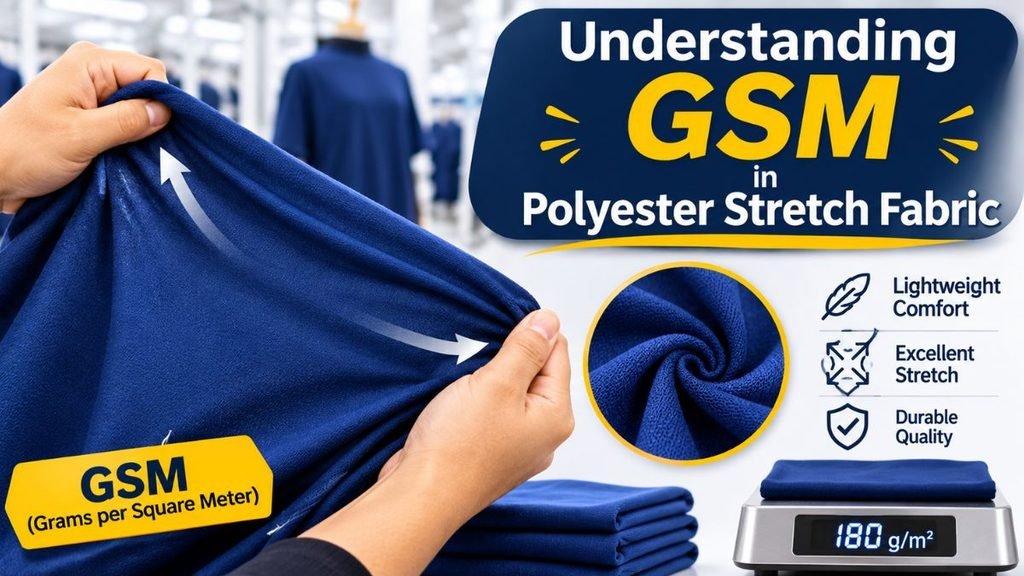
Understanding GSM in Polyester Stretch Fabric
GSM means grams per square metre. It measures the weight of a fabric over a standard area.
GSM helps clothing brands compare fabric weights. However, it does not measure overall quality or performance.
A lightweight polyester stretch fabric may suit a training top. A heavier option may be more appropriate for leggings that need greater coverage.
When selecting fabric, consider:
- Intended garment
- Fiber composition
- Fabric thickness
- Stretch direction
- Recovery
- Opacity
- Surface texture
- End-use requirements
Ask the fabric supplier for the GSM range and acceptable production tolerance.
It is also important to review the material physically. Two fabrics with similar GSM can have different stretch, softness, and performance.
How to Choose the Right Polyester Stretch Fabric
Selecting a suitable fabric requires understanding your product and customer needs.
1. Identify the Garment Type
Start by deciding what you want to manufacture.
Leggings, sports bras, running shirts, and casual tops have different requirements.
Write down the expected fit, weight, stretch, and comfort level before contacting suppliers.
2. Check the Fiber Composition
Ask for the exact percentages of polyester and spandex.
For example, a supplier may offer a fabric with a higher polyester percentage and a smaller elastane percentage.
Do not choose a blend only because its composition sounds suitable. Compare samples and test the fabric for your intended use.
3. Evaluate Stretch and Recovery
Stretch the fabric in both directions.
Observe how easily it stretches and whether it returns toward its original shape.
Poor recovery may cause fitted garments to lose their shape over time.
4. Review Fabric Weight
Check the GSM and decide whether it matches your garment.
The right weight depends on coverage, drape, comfort, and product design.
5. Check Surface Feel
Touch the material and evaluate its softness, smoothness, and texture.
A brushed finish may provide a different feel from a smooth performance knit.
Choose based on your target customer and product positioning.
6. Test Color and Washing Performance
Wash a fabric sample according to the expected care instructions.
Check for shrinkage, fading, color transfer, and changes in texture.
For larger orders, consider suitable laboratory tests.
7. Confirm Supplier Availability
Ask whether the fabric is available in stock or needs custom production.
Confirm the MOQ, available colors, sample charges, and estimated lead time before placing an order.
How to Test Polyester Stretchy Fabric Before Production
Fabric testing helps reduce the risk of problems during garment manufacturing.
Stretch Test
Stretch the fabric lengthwise and widthwise.
Record how far it stretches and how it behaves after releasing the tension.
This provides a basic understanding of flexibility and recovery.
Recovery Test
Stretch the material and allow it to return to its original shape.
Compare its measurements before and after the test.
For important performance products, use a defined testing method rather than relying only on a manual check.
Shrinkage Test
Measure the sample before washing.
Wash and dry it according to the planned care instructions, then measure it again.
This helps identify dimensional changes that may affect garment sizing.
Pilling Test
Pilling occurs when small fiber balls develop on the fabric surface.
It can affect the appearance of clothing after repeated use.
Ask suppliers about pilling resistance and request relevant reports when required.
Colorfastness Test
Check whether the fabric loses color or transfers dye during washing and rubbing.
This is important for dark colors, bright shades, and garments with contrasting panels.
Garment-Level Testing
A fabric swatch cannot show every issue.
Create a sample garment and evaluate its fit, movement, seams, coverage, and comfort.
This is particularly important for leggings, fitted tops, and sports bras.
How to Care for Polyester Stretchy Fabric
Proper care can help maintain the appearance and performance of stretch garments.
Follow the care label first because fabric blends and finishes can have different requirements.
General care suggestions include:
- Wash with similar colors.
- Use a suitable gentle detergent.
- Avoid excessive heat.
- Follow the recommended washing temperature.
- Avoid harsh treatment that may damage elastic fibers.
- Air-dry when suitable.
- Avoid ironing directly at high temperatures.
- Do not use bleach unless the care instructions allow it.
Heat can damage spandex and reduce elasticity. For this reason, avoid high-temperature drying unless the garment’s care instructions specifically permit it.
Is Polyester Stretchy Fabric Suitable for Sustainable Clothing Brands?
Polyester is a synthetic fiber, so sustainability requires careful consideration.
Traditional polyester is commonly made from petroleum-based raw materials. It does not biodegrade easily under normal environmental conditions.
Some brands consider recycled polyester as an alternative. Recycled polyester can use recovered polyester materials, but its environmental impact depends on the source, processing, transport, and garment life.
Brands should avoid making broad environmental claims without evidence.
When sourcing recycled polyester, ask for documentation that supports the recycled content. Also consider fabric durability, production waste, garment lifespan, and end-of-life options.
A responsible material choice should consider the complete product rather than one fiber claim alone.
Common Problems With Polyester Stretch Fabric
Although polyester stretch fabric has useful properties, it may not be suitable for every product.
Poor Elastic Recovery
Some fabrics lose elasticity after repeated stretching or unsuitable washing.
Choose materials with appropriate recovery and test them before production.
Pilling
Pilling can develop due to fiber quality, fabric construction, friction, and use.
Ask suppliers about pilling resistance and inspect samples after washing and wear testing.
Heat Sensitivity
Spandex can be damaged by excessive heat.
Use suitable care instructions and ensure that manufacturing processes do not expose the fabric to inappropriate temperatures.
Static Electricity
Some synthetic fabrics can develop static under certain conditions.
Fabric construction, humidity, and finishing may affect this behavior.
Limited Breathability in Some Constructions
Not all polyester fabrics feel the same during exercise.
A dense fabric may feel warmer than a lightweight, breathable knit.
Choose materials according to the activity and test them in a finished garment.
Working With a Clothing Manufacturer for Polyester Stretch Apparel
For clothing brands, fabric selection is only one part of production. The material must also work with the pattern, stitching, finishing, and garment design.
A custom clothing manufacturer can help coordinate these stages.
The process generally includes:
- Sharing the design brief and product requirements.
- Selecting a suitable fabric and trims.
- Developing patterns and measurements.
- Creating a pre-production sample.
- Reviewing fit, stretch, and construction.
- Approving the sample.
- Starting bulk production.
- Conducting quality inspections.
- Adding labels and branding.
- Packing and preparing the order for shipping.
Before production, confirm the approved fabric composition, GSM, color, and stretch requirements.
Also discuss seam construction and stitch selection. Stretch garments often need suitable stitching to prevent seams from breaking during movement.
Polyester Stretch Fabric Manufacturing at Fashion Soul International
Fashion Soul International is a factory-owned custom clothing manufacturer based in Sialkot, Pakistan. The company provides private-label, OEM, ODM, white-label, cut-and-sew, and full-package apparel manufacturing.
Its services include product development, fabric and trim sourcing, sampling, bulk production, quality control, custom branding, packaging, export documentation, and international shipping.
For brands developing sportswear and activewear, fabric selection should match the product’s intended use. Polyester and stretch materials may be considered for suitable garments, depending on the required composition and performance.
The company supports different apparel categories, including sportswear, activewear, tracksuits, casual clothing, and other custom garments.
Fashion Soul International publishes a standard MOQ starting at 100 pieces. Actual project requirements should be confirmed during quotation because fabric, color, construction, and product specifications can affect the order.
Before starting production, buyers should provide their design brief, preferred fabric details, estimated quantity, size requirements, and branding instructions. A physical pre-production sample should be reviewed and approved before bulk manufacturing.
Frequently Asked Questions
Is polyester stretchy fabric naturally elastic?
Regular polyester is not as elastic as spandex. Many stretchy polyester fabrics contain spandex or use knitted construction to provide flexibility. The amount of stretch depends on the material and construction.
Is polyester-spandex fabric good for activewear?
Yes. Polyester-spandex blends are commonly used for activewear because they can combine durability, flexibility, and easy-care properties. The fabric should still be tested for stretch, recovery, comfort, and moisture management.
What is the difference between polyester and spandex?
Polyester is a synthetic fiber commonly used for strength, durability, and wrinkle resistance. Spandex is an elastic fiber added to other materials to improve stretch and recovery.
Is stretchy spandex fabric suitable for leggings?
Yes. Spandex blends are commonly used for leggings because they provide elasticity and help garments fit closely. The base fiber, fabric weight, construction, and recovery also affect performance.
Does polyester stretch fabric shrink?
Polyester generally has good dimensional stability, but shrinkage can still occur depending on fabric construction, finishing, and washing conditions. Test samples before bulk production.
Is polyester-spandex breathable?
Breathability depends on the fabric construction, weight, and finishing. Some polyester-spandex knits are designed for performance clothing, but not every blend offers the same airflow or comfort.
Can polyester stretch fabric be used for yoga clothing?
Yes. Suitable polyester-spandex fabrics can be used for yoga leggings, tops, and sports bras. Check four-way stretch, recovery, softness, and opacity before approving the material.
How do I choose a reliable polyester stretch fabric supplier?
Look for suppliers that provide clear fiber composition, GSM, color options, MOQ, sample availability, and relevant test information. Review physical samples and confirm production lead times before ordering.
Final Thoughts
Polyester stretchy fabric is a useful material for clothing that needs flexibility, durability, and easy care. When blended with spandex, it can provide the stretch and recovery needed for many activewear and fitted garments.
However, choosing the right fabric requires more than checking its name or fiber composition. Consider GSM, stretch direction, recovery, opacity, comfort, colorfastness, and durability.
For clothing brands, testing the material before bulk production is an important step. Work with suppliers and manufacturers who can explain their materials, provide samples, and confirm specifications clearly.
With careful fabric selection and proper garment development, polyester-spandex materials can support comfortable, functional, and well-made clothing collections.