Sustainable Athleisure: A Guide to Eco-Friendly Fashion and Comfortable Clothing
Sustainable athleisure combines the comfort of athletic clothing with the style of everyday fashion. It includes leggings, joggers, hoodies, sports bras, T-shirts, and other garments designed for movement and daily wear. The focus is on creating comfortable clothing while making more thoughtful choices about materials, manufacturing, durability, and waste.
Consumers are paying closer attention to how their clothes are made. They want versatile outfits that look good, feel comfortable, and last longer. Many also want to support brands that explain their environmental and social practices clearly.
This interest has encouraged more companies to explore recycled fabrics, organic fibers, responsible sourcing, and improved production methods. However, not every product described as eco-friendly has the same environmental benefits.
In this guide, you will learn what sustainable athleisure means, which materials are commonly used, how eco-friendly athleisure differs from conventional clothing, and how brands can develop their own collections.
What Is Sustainable Athleisure?
Sustainable athleisure is clothing designed for both physical activity and everyday use, with attention to its environmental and social impact.
Traditional athleisure focuses mainly on comfort, appearance, stretch, and performance. Sustainable athleisure considers these features alongside material sourcing, manufacturing methods, product lifespan, and waste reduction.
Common products include:
- Leggings and yoga pants
- Joggers and sweatpants
- Sports bras and crop tops
- Hoodies and sweatshirts
- Gym T-shirts and tank tops
- Shorts and casual trousers
- Lightweight jackets
- Matching tracksuits
The goal is to create clothing that works for different activities without unnecessary waste or unsupported environmental claims.
Sustainability does not mean a garment has no environmental impact. Every textile product requires materials, energy, processing, packaging, and transportation. A more responsible approach aims to understand and reduce these impacts.
Why Is Sustainable Athleisure Becoming Popular?
Athleisure has become a regular part of modern wardrobes. People wear sports-inspired clothing for workouts, travel, shopping, remote work, and casual outings.
This growing use has increased interest in garments that combine comfort, style, and durability. At the same time, consumers are asking more questions about the materials and factories behind their clothing.
Several factors explain the growing interest.
1. Demand for Comfortable Everyday Clothing
People often prefer clothing that allows easy movement throughout the day. Stretch leggings, soft joggers, relaxed hoodies, and breathable T-shirts offer comfort in different settings.
Athleisure provides a practical balance between sportswear and casual fashion. Sustainable versions aim to offer these benefits while considering how products are made.
2. Greater Awareness of Textile Waste
Clothing waste is an important challenge for the fashion industry. Poor-quality garments may lose their shape, develop holes, or become uncomfortable after limited use.
Frequent replacement increases demand for new materials and production. Brands can address this issue by focusing on better construction, useful designs, and longer-lasting products.
3. Interest in Recycled and Natural Materials
Many consumers now check fabric labels before buying clothing. They may look for recycled polyester, organic cotton, recycled nylon, or other materials with specific sourcing benefits.
These options can support different sustainability goals. However, the right material depends on the product’s intended use and performance needs.
4. Growth of Conscious Fashion Choices
Some shoppers want to understand more about the companies behind their clothes. They may look for information about factory conditions, supplier standards, material sourcing, and packaging.
Brands that explain their practices clearly can help customers make better-informed choices.
5. Demand for Versatile Clothing
A single athleisure outfit can work for several activities. Leggings may be worn for yoga, walking, or casual outings. Joggers can be used for travel, exercise, or relaxing at home.
Versatile products may reduce the need to buy separate garments for every activity. Their value still depends on quality, fit, and how often people use them.
What Makes Athleisure Eco-Friendly?
Eco-friendly athleisure considers more than the fabric label. It looks at the complete product lifecycle, from material sourcing to manufacturing, use, and disposal.
No single feature makes a garment fully sustainable. Instead, several responsible choices can contribute to a better overall approach.
Responsible Material Selection
Materials affect comfort, performance, durability, and environmental impact. Brands may choose recycled fibers, certified organic materials, or responsibly sourced textiles.
The selection should match the garment. A yoga legging needs stretch and recovery, while a relaxed hoodie may need softness and warmth.
Durable Construction
Long-lasting garments can reduce the need for frequent replacement. Strong seams, suitable fabric weight, and reliable finishing help improve product life.
Brands should test clothing for shrinkage, pilling, colorfastness, seam strength, and shape retention.
Better Production Planning
Manufacturing decisions can affect fabric waste, energy use, and resource consumption.
Careful pattern planning, accurate cutting, and realistic order quantities can help reduce avoidable waste. Brands should also ask suppliers how they manage leftover fabric and production materials.
Responsible Dyeing and Finishing
Dyeing and finishing may involve water, energy, and chemicals. The impact depends on the process, chemical management, wastewater treatment, and factory controls.
Brands should ask manufacturers about their practices rather than assuming every fabric has the same environmental profile.
Reduced Packaging Waste
Packaging protects garments during storage and delivery. However, excessive packaging can create unnecessary waste.
Brands can review packaging materials and remove items that do not serve a clear purpose. Any alternative must still protect products during transport.
Best Fabrics for Sustainable Athleisure
Fabric selection is one of the most important decisions when developing an athleisure collection. The material affects the garment’s feel, stretch, appearance, and durability.
Different products require different fabric properties. A fitted legging needs more stretch than a relaxed cotton sweatshirt.
Here are some materials brands may consider.
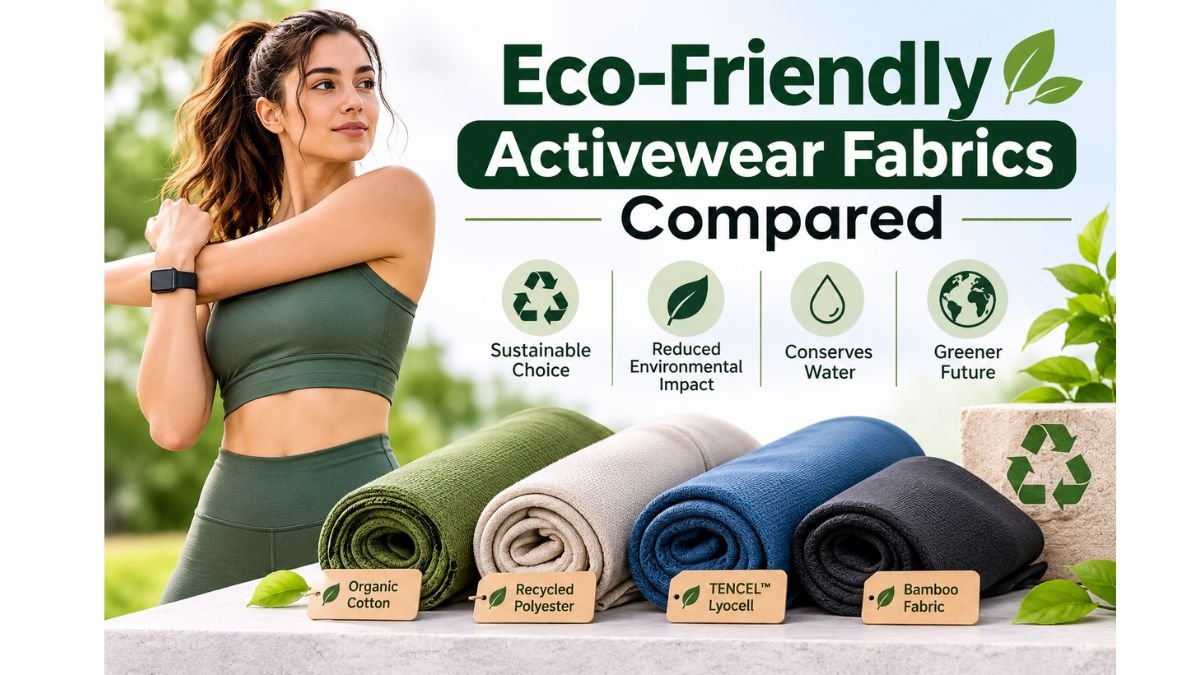
1. Organic Cotton
Organic cotton is produced under agricultural standards that restrict certain synthetic pesticides and fertilizers.
It is commonly used for:
- Casual T-shirts
- Sweatshirts
- Hoodies
- Joggers
- Relaxed-fit tops
Organic cotton can provide softness and breathability. It may be suitable for everyday athleisure and low-intensity activities.
However, cotton does not always provide the moisture management or stretch required for high-performance sportswear. Blending it with other fibers may improve certain properties.
Brands should check the certification and documentation behind organic material claims.
2. Recycled Polyester
Recycled polyester is commonly made from recycled plastic materials, such as used PET bottles or textile waste, depending on the supplier.
It can offer useful properties for athleisure, including:
- Lightweight construction
- Quick-drying performance
- Durability
- Shape retention
- Compatibility with stretch blends
It is often used in leggings, sports tops, shorts, and tracksuits.
Recycled polyester can reduce the need for virgin polyester feedstock. However, it remains a synthetic fiber and may release microfibers during washing.
Brands should confirm the recycled content and request supporting documentation.
3. Recycled Nylon
Recycled nylon can be produced from materials such as discarded fishing nets, industrial waste, or other nylon waste streams.
It is used in products that need stretch, strength, and a smooth surface.
Common applications include:
- Yoga leggings
- Fitted sports tops
- Sports bras
- Stretch shorts
- Performance clothing
Its suitability depends on the fabric construction and blend. Brands should test recovery, abrasion resistance, and comfort before approving bulk production.
4. Hemp Blends
Hemp is a natural fiber that can be blended with cotton or other materials.
It may be suitable for casual athleisure, relaxed tops, and lifestyle clothing. Its performance depends on the fiber blend and fabric construction.
Hemp is not automatically suitable for every sportswear application. High-stretch garments may require additional fibers to provide the needed flexibility.
5. TENCEL™ Lyocell
TENCEL™ is a branded fiber family from Lenzing. Lyocell fibers are made through a process designed to recover and reuse much of the processing solvent.
Lyocell can provide a soft feel and moisture management. It may be used in relaxed tops, lifestyle clothing, and selected athleisure products.
Brands should confirm the exact fiber composition and supplier documentation before making brand-specific claims.
6. Recycled Fabric Blends
Some fabrics combine recycled polyester or nylon with elastane. These blends can help create the stretch and recovery needed for fitted clothing.
A fabric blend may offer a useful balance of performance and material sourcing. However, mixed-fiber garments can be more difficult to recycle.
Brands should consider the complete product lifecycle, not just the recycled percentage.
Sustainable Athleisure vs. Traditional Athleisure
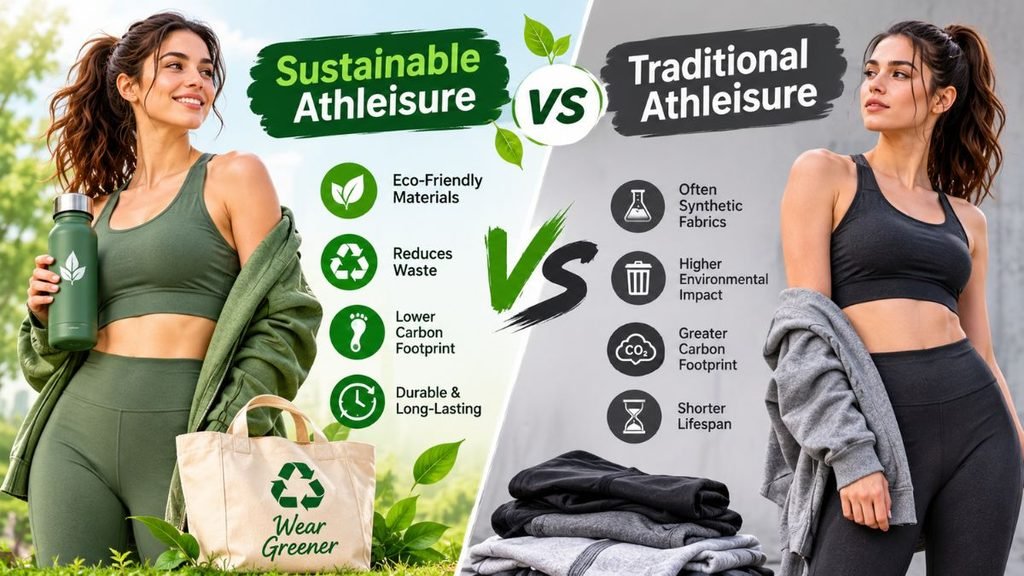
Both types of clothing can provide comfort, flexibility, and modern styling. The main difference is the attention given to materials, production, and product lifecycle.
| Feature | Traditional athleisure | Sustainable athleisure |
|---|---|---|
| Material selection | May use conventional fibers | May include recycled or certified materials |
| Production | Depends on supplier practices | May include resource and waste reduction measures |
| Durability | Varies by product | Often emphasizes longer product use |
| Packaging | Depends on the brand | May aim to reduce unnecessary packaging |
| Transparency | Varies by company | Often provides more information about sourcing |
| Environmental claims | May not be a focus | Should be supported by clear evidence |
Neither category guarantees a particular quality level. A sustainable product still needs good construction, suitable materials, and proper testing.
Popular Sustainable Athleisure Clothing Styles
Sustainable athleisure includes many clothing styles. Each garment has different requirements for fabric, fit, and construction.
Sustainable Leggings
Leggings are among the most common athleisure products. They can be worn for yoga, gym sessions, walking, and casual activities.
Important features include:
- Four-way stretch
- Comfortable waistbands
- Shape recovery
- Suitable fabric weight
- Strong seams
- Reliable opacity
Recycled nylon or recycled polyester blends may be used with elastane. Brands should test leggings during movement and after washing.
Sustainable Joggers
Joggers combine a relaxed fit with practical sportswear details. They may be made from cotton blends, recycled materials, or other suitable fabrics.
Useful features include elastic waistbands, drawcords, side pockets, and ribbed cuffs.
The fabric should match the intended use. Lightweight joggers may suit travel and casual wear, while heavier fabrics may work better for colder weather.
Sustainable Hoodies and Sweatshirts
Hoodies and sweatshirts are popular because they combine comfort and casual styling.
Organic cotton, recycled polyester, and selected fabric blends may be used. French terry and fleece are common fabric constructions for these products.
Brands should check fabric weight, softness, shrinkage, stitching, and finishing before approving production.
Sustainable Sports Bras
Sports bras require careful attention to fit, stretch, support, and recovery.
The right design depends on the intended activity and level of support. Important details include elastic bands, lining, strap construction, and seam placement.
Brands should test fit across sizes and check how the fabric performs during movement.
Sustainable T-Shirts and Tank Tops
T-shirts and tank tops are useful for workouts and daily wear. Organic cotton may suit casual styles, while recycled polyester may suit certain performance products.
The choice depends on breathability, moisture management, fabric weight, and the intended activity.
Sustainable Matching Sets
Matching leggings, sports bras, joggers, and tops can create coordinated outfits.
Brands should maintain color consistency and use suitable materials across each product. Matching sets can also help create a clear visual identity for a clothing collection.
How to Identify Eco Friendly Athleisure
The phrase eco friendly athleisure appears across product descriptions and fashion marketing. However, not every environmental claim has the same meaning.
Consumers should look for specific product information and evidence.
Check the Fabric Label
Start with the garment’s fiber composition. Look for clear details such as organic cotton, recycled polyester, or recycled nylon.
Avoid relying only on general phrases such as “green fabric” or “earth-friendly material.”
Look for Relevant Certifications
Certifications can help verify specific material or manufacturing claims. Examples include:
- Global Organic Textile Standard (GOTS): Covers organic textile processing and related environmental and social criteria.
- Global Recycled Standard (GRS): Covers recycled content and additional supply chain requirements.
- Recycled Claim Standard (RCS): Verifies recycled material content through the supply chain.
- OEKO-TEX® STANDARD 100: Tests textiles for harmful substances under its defined criteria.
Each certification has a specific scope. A certificate does not automatically prove that an entire brand or product lifecycle is sustainable.
Check which material, product, facility, or process the certificate covers.
Review the Brand’s Manufacturing Information
A responsible brand should provide useful information about its production practices.
Look for details about manufacturing locations, material suppliers, factory standards, and environmental policies.
If a company makes claims about reduced water use or responsible chemical management, look for supporting information.
Consider Durability
A garment that loses its shape quickly may need frequent replacement. This can reduce the value of its material benefits.
Check product reviews and care instructions. Look for repeated comments about pilling, shrinking, fading, or seam damage.
Question Broad Marketing Claims
Words such as “100% sustainable” and “zero impact” require strong evidence.
Clothing production involves resources and transportation. A more reliable brand explains its specific improvements and avoids exaggerated promises.
Benefits of Choosing Sustainable Athleisure
Sustainable athleisure can offer practical benefits when products are well designed and made.
Better Material Awareness
Consumers can understand what they are buying by checking fiber composition and sourcing information.
This makes it easier to compare products and choose materials that match their preferences.
Longer Product Use
Durable fabrics and reliable construction can help clothing last longer.
This matters for athleisure because garments often experience repeated stretching, movement, and washing.
Versatile Wardrobe Options
Athleisure can be worn for exercise and casual activities. A well-designed hoodie, jogger, or legging can serve more than one purpose.
Versatile clothing may help consumers build a smaller wardrobe with useful pieces.
Support for Improved Production Practices
Choosing brands that provide credible information can encourage better sourcing and manufacturing practices.
However, buyers should still evaluate individual claims rather than assuming every product from a particular company has the same impact.
Environmental Challenges in Sustainable Athleisure
Sustainable athleisure has benefits, but it also faces important challenges. Understanding these issues helps brands avoid misleading claims.
Synthetic Fiber Use
Many performance fabrics rely on polyester, nylon, and elastane. These fibers provide stretch, durability, and quick-drying properties.
However, conventional synthetic fibers are commonly made from fossil-based resources. Recycled alternatives can reduce demand for virgin materials, but they do not remove every environmental concern.
Microfiber Release
Synthetic fabrics may release tiny fibers during washing. The amount depends on fiber type, fabric construction, garment age, and washing conditions.
Brands can consider durable fabric construction and provide clear care instructions. Consumers can also explore suitable microfiber-filtering products.
Dyeing and Chemical Management
Textile dyeing and finishing may involve chemicals, water, and energy.
The impact depends on the processes used and how factories manage wastewater and chemicals.
Brands should ask suppliers about their controls and request relevant documentation.
Fabric Cutting Waste
Garment cutting creates leftover fabric. Poor pattern planning can increase the amount of unused material.
Manufacturers can review cutting layouts and marker efficiency to reduce avoidable waste.
Brands can also plan collections carefully to avoid unnecessary styles and color variations.
Mixed-Fiber Recycling
Many athleisure products combine polyester, nylon, cotton, and elastane. These blends can make recycling more difficult.
Brands should consider material combinations carefully. They should balance performance needs with the garment’s potential end-of-life options.
How to Start a Sustainable Athleisure Brand
Starting an athleisure brand requires more than choosing attractive designs. You need a clear product plan, suitable materials, reliable manufacturing, and realistic budgeting.
Here is a practical process.
1. Define Your Target Audience
Identify the customers you want to serve. Think about their lifestyle, activities, preferred fit, and spending habits.
For example, a yoga-focused brand may need soft leggings and comfortable tops. A gym-focused brand may prioritize stretch, recovery, and moisture management.
Your target customer will guide product design and material selection.
2. Choose Your First Products
Start with a focused collection instead of developing too many products.
You might begin with:
- Leggings
- Sports bras
- Joggers
- Hoodies
- Gym T-shirts
- Matching sets
Choose products that suit your brand identity and customer demand.
3. Select Suitable Materials
Compare fabric options based on composition, performance, availability, and cost.
Ask suppliers about recycled content, organic material documentation, fabric weight, stretch, recovery, and colorfastness.
Do not assume that a material is suitable simply because it has an environmental benefit. It must also perform well in the finished garment.
4. Prepare a Tech Pack
A tech pack provides the information needed to develop and manufacture your products.
It can include:
- Technical drawings
- Measurement charts
- Fabric composition
- GSM
- Stitching details
- Color references
- Trims and accessories
- Branding placement
- Packaging requirements
Clear specifications help reduce errors and improve communication with the manufacturer.
5. Develop Samples
Ask the manufacturer to create physical samples before bulk production.
Check the fit, fabric feel, stretch, construction, and finishing. Test the garments during their intended activities.
For leggings, check opacity and waistband stability. For hoodies, review shrinkage and fabric softness.
Record any changes and approve the final sample before bulk production begins.
6. Confirm Manufacturing and Quality Control
Discuss order quantities, material availability, production timelines, and inspection procedures.
Agree on measurements, acceptable tolerances, fabric standards, and branding details.
If you plan to make sustainability claims, collect relevant material and supplier documentation.
7. Plan Packaging and Shipping
Choose packaging that protects products without unnecessary materials.
Discuss shipping methods, export documentation, delivery terms, and destination requirements with your manufacturer.
International delivery time and cost should be included in your business planning.
How to Choose a Sustainable Athleisure Manufacturer
Your manufacturing partner has an important role in product quality and material sourcing. However, not every clothing manufacturer offers the same capabilities.
Ask specific questions before choosing a supplier.
Ask About Fabric Options
Find out whether the manufacturer can source organic cotton, recycled polyester, recycled nylon, or other materials your products require.
Ask for fabric composition and supporting documents. Confirm whether the materials are available in your desired colors and quantities.
Review Sampling Capabilities
Sampling allows you to check the product before bulk production.
Ask how the manufacturer develops samples, handles revisions, and confirms final specifications.
Understand the MOQ
MOQ means minimum order quantity. It is the smallest order a manufacturer accepts under particular production terms.
The MOQ may depend on fabric, color, product type, and construction. Confirm whether it applies per style, color, or size run.
Check Quality Control
Ask how the factory checks measurements, seams, fabric defects, printing, and trims.
For athleisure, consider specific tests for stretch recovery, pilling, shrinkage, and colorfastness.
Confirm Environmental Claims
If the manufacturer or supplier claims to offer certified or recycled materials, request relevant documentation.
Do not use environmental claims in product marketing unless they are supported by accurate evidence.
Sustainable Athleisure Manufacturing at Fashion Soul International
Fashion Soul International is a factory-owned custom clothing manufacturer based in Sialkot, Punjab, Pakistan. The company offers private-label, OEM, ODM, white-label, cut-and-sew, and full-package apparel manufacturing.
Its stated services include product development, fabric and trim sourcing, sampling, bulk production, quality control, custom branding, packaging, export documentation, and international shipping.
The company’s product categories include activewear, sportswear, tracksuits, casual clothing, streetwear, workwear, and other custom garments.
For brands developing an athleisure collection, the manufacturing process may include fabric selection, pattern development, sample creation, fit review, bulk production, and quality inspection.
Fashion Soul International lists fabric options that include cotton, polyester, and stretch materials. Availability of recycled, organic, or certified materials should be confirmed for each project. Brands should request supplier documentation before making environmental claims about their finished products.
The company publishes a standard MOQ starting at 100 pieces. Actual requirements depend on the product, fabric, color, and construction. Buyers should confirm the details through a project-specific quotation.
If you are planning leggings, joggers, hoodies, sports bras, or matching sets, prepare your design brief and material preferences before contacting a manufacturer. This helps the production team understand your requirements.
You can learn more about its custom clothing manufacturing services at https://fashionsoulintl.com/.
Frequently Asked Questions
What is sustainable athleisure?
Sustainable athleisure is athletic-inspired clothing designed for exercise and everyday wear while considering materials, production, durability, and environmental impact.
What is the difference between athleisure and sustainable athleisure?
Athleisure focuses on comfort, style, and movement. Sustainable athleisure also considers material sourcing, manufacturing practices, product lifespan, and waste reduction.
What materials are used in sustainable athleisure?
Common options include organic cotton, recycled polyester, recycled nylon, hemp blends, and selected lyocell fabrics. The right material depends on the garment’s performance needs.
Is recycled polyester good for athleisure?
Recycled polyester can offer useful properties such as durability, lightweight construction, and quick drying. It can reduce the need for virgin polyester feedstock, but it remains a synthetic fiber.
Is organic cotton suitable for activewear?
Organic cotton can work well for casual athleisure, T-shirts, and relaxed sweatshirts. High-performance garments may require additional stretch or moisture-management properties.
How can I identify eco friendly athleisure?
Check the fabric composition, relevant certifications, manufacturing information, product durability, and evidence behind environmental claims. Avoid relying only on broad marketing phrases.
Can I start my own sustainable athleisure brand?
Yes. Begin by choosing a target customer, selecting products, sourcing suitable materials, preparing tech packs, and developing samples. Then work with a manufacturer that can meet your production and quality requirements.
What should I ask an athleisure manufacturer?
Ask about fabric options, material documentation, sampling, MOQ, production timelines, quality control, custom branding, packaging, and shipping. Confirm which services are included in the quotation.
Conclusion
Sustainable athleisure brings together everyday comfort, athletic performance, and more thoughtful clothing production. It gives consumers and brands an opportunity to consider materials, garment quality, manufacturing, and product lifespan.
Choosing recycled or organic fabrics can be useful, but no single material makes a product completely sustainable. Good design, durable construction, responsible sourcing, and clear information all matter.
For clothing businesses, developing an athleisure collection starts with understanding customer needs and selecting suitable materials. Careful sampling, quality checks, and transparent supplier communication can help create products that meet both performance and style expectations.
Whether you are building a new clothing label or expanding an existing collection, focus on products that are useful, comfortable, durable, and supported by honest material claims.