Compression Clothing Manufacturer: Complete Guide for Clothing Brands
Choosing the right compression clothing manufacturer is important for brands entering the activewear, sportswear, and fitness apparel markets. Compression garments require more than attractive designs. They need suitable stretch fabrics, careful pattern development, accurate sizing, strong stitching, and consistent construction.
Whether you are launching a fitness clothing brand or expanding an existing sportswear collection, the right manufacturing partner can help turn your ideas into finished products.
A reliable manufacturer can support fabric sourcing, sampling, custom branding, bulk production, and quality control. Understanding these services helps you make better decisions before placing an order.
This guide explains compression clothing manufacturing, the materials involved, production steps, customization options, costs, and how to choose a suitable supplier. It also covers what to consider when searching for a compression clothing supplier in USA or working with international compression clothing companies.
What Is a Compression Clothing Manufacturer?
A compression clothing manufacturer produces fitted garments designed to apply controlled pressure to specific areas of the body. These garments are commonly used for exercise, sports, training, and other physical activities.
Compression clothing is usually made from stretch fabrics that fit closely against the body. Common products include compression shirts, leggings, shorts, tights, base layers, and athletic tops.
Manufacturers develop these garments using suitable fabrics, patterns, stitching methods, and finishing techniques. Each detail affects the garment’s fit, comfort, durability, and performance.
Brands may work with a manufacturer to create custom products with their own colors, designs, logos, labels, and packaging.
A manufacturing partner may also provide product development and technical support. This is useful when a brand has an idea but needs help preparing it for production.
What Types of Compression Clothing Can Be Manufactured?
Compression clothing includes several product categories. Each product has different fit, fabric, and construction requirements.
1. Compression Shirts
Compression shirts are close-fitting tops used during workouts, training, and sports activities.
They are commonly designed with stretch materials that allow movement. Brands may choose short sleeves, long sleeves, or sleeveless styles.
Important design details include:
- Body fit and length
- Sleeve shape and length
- Neckline construction
- Fabric stretch and recovery
- Flat or reinforced seams
- Logo placement
- Moisture-management requirements
Compression shirts may be produced for gym training, running, team sports, or general fitness collections.
2. Compression Leggings
Compression leggings are fitted garments that cover the legs. They are popular in fitness, running, training, and sportswear collections.
Their construction needs careful attention to waist fit, stretch, coverage, and seam placement.
Brands may request high-waist designs, different inseam lengths, panel details, and custom colors.
The fabric should stretch comfortably while returning toward its original shape. The correct material depends on the product’s intended use.
3. Compression Shorts
Compression shorts are commonly worn during workouts and athletic activities. They can be designed as standalone garments or as base layers beneath other sportswear.
Manufacturing details may include:
- Waistband construction
- Inseam length
- Gusset design
- Stretch recovery
- Seam placement
- Fabric opacity
- Branding and labeling
These details should be checked during sample development.
4. Compression Tights and Base Layers
Compression tights and base layers are designed to fit closely against the body. They may be worn during training or under other garments.
Some products are designed for specific sports or weather conditions. Their fabric and construction should match the intended use.
For example, a lightweight base layer may require different fabric properties from a heavier training tight.
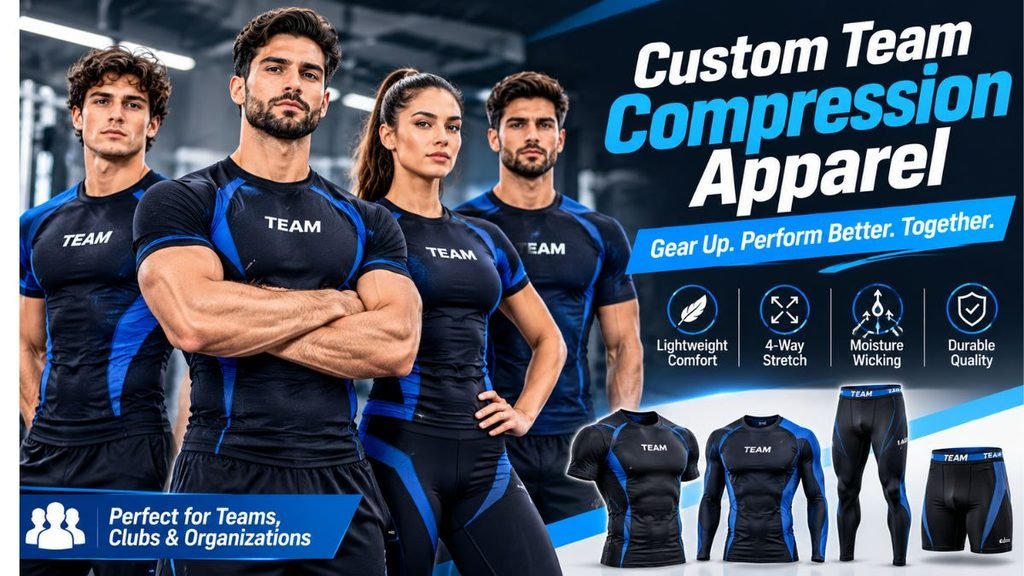
5. Custom Team Compression Apparel
Sports teams and athletic organizations may need compression garments with matching colors, numbers, logos, and player names.i
A manufacturer can produce coordinated designs when the artwork and specifications are approved.
This type of production requires clear size charts and consistent decoration placement across the order.
What Fabrics Are Used for Compression Clothing?
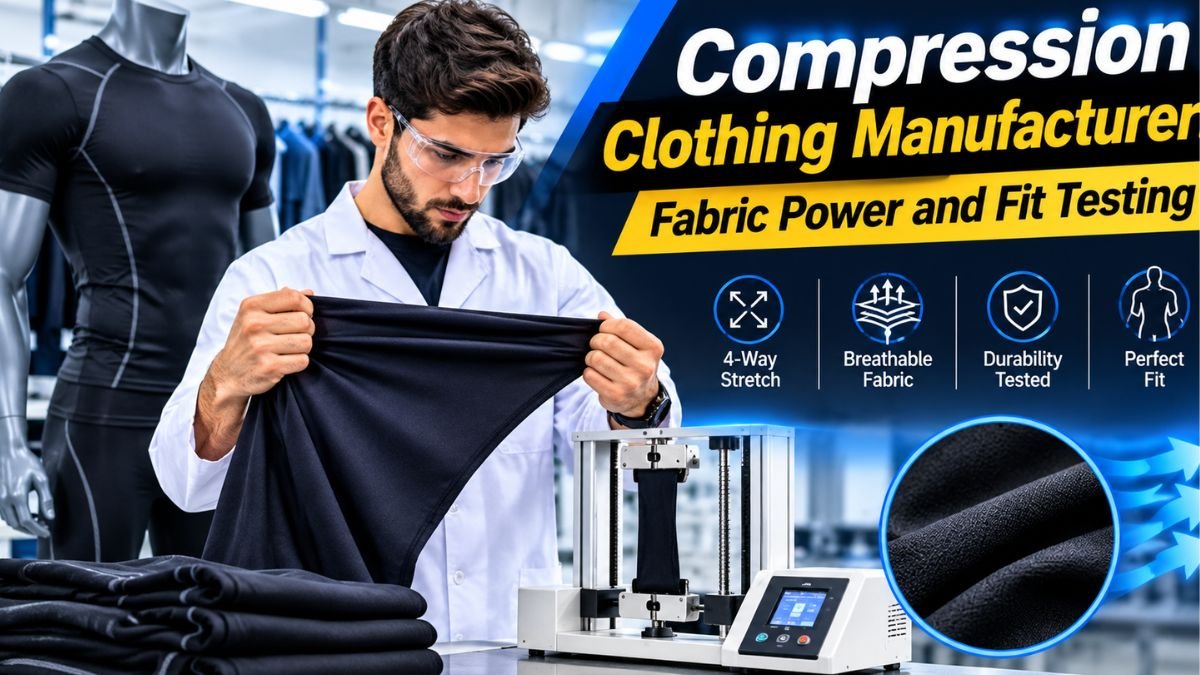
Fabric selection is one of the most important parts of compression garment production. The material affects stretch, comfort, fit, recovery, and durability.
Polyester and Spandex Blends
in this combination, polyester provides a durable base, while spandex adds elasticity. Polyester provides a durable base, while spandex adds elasticity.
These blends can be suitable for compression tops, leggings, shorts, and other fitted sportswear.
The exact blend should be selected according to the required stretch, feel, weight, and performance needs.
Nylon and Spandex Blends
Nylon-spandex fabrics are another option for fitted sportswear. They can offer a smooth feel and good stretch characteristics.
The material may suit leggings, fitted tops, and other garments where a soft hand feel is important.
Brands should request fabric samples before confirming a bulk order.
Moisture-Wicking Fabrics
Moisture-wicking materials are designed to move moisture away from the skin toward the fabric surface, where it can spread and evaporate.
They are commonly considered for workout and sports garments. However, performance depends on the fabric construction, fiber blend, and finishing.
Ask the supplier for specific material details rather than relying only on a general performance label.
Four-Way Stretch Fabrics
Four-way stretch fabrics can stretch in both lengthwise and crosswise directions. This can support movement in garments that need flexibility.
They may be suitable for compression leggings, training shorts, and fitted sports tops.
Stretch recovery is also important. A fabric should return toward its original shape after being stretched.
Fabric GSM and Weight
GSM means grams per square metre. It describes the weight of a fabric over a measured area.
A higher GSM does not automatically mean better quality. The right weight depends on the garment design, fabric composition, coverage, and intended use.
When discussing materials with a compression clothing supplier, ask about:
- Fiber composition
- Fabric GSM
- Stretch direction
- Stretch recovery
- Opacity
- Surface feel
- Color availability
- Shrinkage and care requirements
Testing and sample review help determine whether the fabric suits your product.
How Does Compression Clothing Manufacturing Work?
The production process includes several stages. Each step helps turn a product concept into a finished garment.
1. Design and Product Development
The process begins with your product idea. You may provide sketches, reference images, a sample garment, or a technical pack.
The manufacturer reviews the design and identifies the materials and construction details required.
Important information includes:
- Product type
- Intended activity
- Fit preference
- Fabric composition
- Color requirements
- Size range
- Stitching details
- Logo and artwork placement
- Label and packaging requirements
Clear instructions help the production team understand the product.
2. Tech Pack and Pattern Development
A tech pack records the technical details of a garment. It helps the manufacturer understand how the product should be made.
For compression apparel, the tech pack may include measurements, fabric specifications, seam details, panel shapes, and artwork placement.
Pattern development converts the design into garment components. Pattern makers prepare the shapes used for cutting fabric.
Compression clothing needs careful pattern work because small fit differences can affect comfort and movement.
Size grading is also important. It adjusts the pattern to create different garment sizes while maintaining the intended fit.
3. Fabric Sourcing
After reviewing the design, the manufacturer identifies suitable fabrics and trims.
The brand should review fabric composition, GSM, color, stretch, and recovery. It is also useful to check whether the selected material is available in the required quantity.
Trims may include elastic, drawcords, labels, and other garment components.
Confirm material details before sampling. Changing the fabric later can affect fit and construction.
4. Sample Development
A sample allows you to check the garment before bulk production.
The manufacturer creates a physical product using the agreed design and materials. You can then review its fit, stretch, comfort, measurements, stitching, and appearance.
For compression garments, pay special attention to:
- Waist and hip fit
- Sleeve and inseam length
- Stretch during movement
- Seam comfort
- Fabric coverage
- Elastic recovery
- Print or logo placement
If changes are needed, provide clear feedback. Updated measurements and marked photographs can help explain corrections.
5. Cutting and Sewing
Once the sample receives approval, bulk production can move forward.
Fabric is prepared and cut according to the approved patterns. The cut components are then assembled through the required sewing operations.
Compression apparel may require stretch-friendly stitching methods. These help seams handle movement and fabric extension.
The exact construction method depends on the fabric and garment design. Seam strength and comfort should be reviewed during sampling and production.
6. Printing and Branding
Custom branding helps make compression clothing recognizable as part of your collection.
Available decoration methods may include:
- Screen printing
- Heat transfer
- Sublimation
- Embroidery
- Rubber printing
- Custom woven labels
- Printed neck labels
The best option depends on the artwork, fabric, and intended finish.
For example, sublimation may be suitable for certain polyester fabrics. Heat transfers may work for selected logo applications.
Always approve the artwork size, color, placement, and decoration method before bulk production.
7. Quality Control
Quality control helps confirm that garments meet the approved specifications.
Checks may take place during sewing, finishing, and before shipment.
Important inspection points include:
- Measurement accuracy
- Fabric defects
- Stitch quality
- Seam strength
- Stretch and recovery
- Color consistency
- Print alignment
- Logo placement
- Label attachment
- Final appearance
For compression garments, fit and stretch deserve special attention. A garment that looks correct but fits poorly may not meet the brand’s requirements.
Agree on inspection standards and acceptable measurement tolerances before production begins.
8. Finishing and Packaging
After inspection, garments are prepared for delivery.
Finishing may include trimming loose threads, folding, attaching tags, and checking final appearance.
Packaging requirements can include individual polybags, size stickers, branded inserts, and custom packaging.
Confirm packaging instructions before production. This helps prevent mistakes when the order is ready for shipment.
What Should You Look for in a Compression Clothing Supplier?
Choosing a suitable compression clothing supplier requires more than checking product photographs or comparing prices.
You should understand the supplier’s manufacturing capabilities and determine whether they match your product requirements.
Experience With Stretch Garments
Compression clothing needs suitable fabric handling, pattern development, and sewing techniques.
Ask whether the supplier has experience with fitted activewear, leggings, sports tops, and other stretch garments.
Review product samples when possible. They can provide a better understanding of fabric, construction, and finishing.
Fabric and Customization Options
A useful supplier should explain the available fabric choices and customization options.
Ask about polyester-spandex, nylon-spandex, moisture-wicking materials, and four-way stretch fabrics where relevant.
Also confirm whether the supplier can support your required colors, sizes, labels, and decoration methods.
Sampling Process
A clear sampling process helps you review the garment before placing a larger order.
Ask about sample costs, development time, revision charges, and approval requirements.
Do not skip physical sample approval for a custom compression product.
Minimum Order Quantity
MOQ is the minimum order quantity accepted by a manufacturer.
The MOQ may vary according to garment type, fabric, color, size range, and customization.
Ask whether the minimum applies per style, per color, or across the complete order.
Communication and Production Updates
Clear communication helps prevent misunderstandings.
Your supplier should be able to explain material choices, production stages, quality checks, and delivery arrangements.
Ask how production updates are shared and who will handle questions during the order.
Compression Clothing Supplier in USA: What Buyers Should Know
Brands searching for a compression clothing supplier in USA may be looking for easier communication, domestic shipping, or suppliers familiar with the US market.
A US-based supplier can be convenient for some businesses. However, buyers should compare domestic and international manufacturing options based on their actual requirements.
Consider these factors before choosing:
Domestic Manufacturing
A domestic supplier may offer shorter shipping distances and easier in-person communication for US buyers.
However, production costs, available services, MOQ, and product capabilities vary between companies.
Ask whether the supplier manufactures garments directly or sources them from another factory.
International Manufacturing
International manufacturing can provide another option for brands seeking custom apparel production.
When considering an overseas supplier, review:
- Manufacturing location
- Fabric and customization options
- Sample approval process
- Production timeline
- Quality-control procedures
- Shipping method
- Import duties and customs requirements
- Communication and payment terms
For US buyers, the supplier’s physical location should be clear. A company serving US customers should not be described as US-based unless it actually operates there.
Fashion Soul International is based in Sialkot, Pakistan, and serves international apparel brands. US buyers can discuss product requirements, samples, production, and shipping directly with the company.
How to Compare Compression Clothing Companies
There are many compression clothing companies offering different products and manufacturing services. Some focus on finished retail products, while others provide custom manufacturing for brands.
Comparing their services carefully can help you find a suitable production partner.
| Comparison factor | What to check |
|---|---|
| Product experience | Experience with compression tops, leggings, shorts, and tights |
| Fabric selection | Stretch materials, composition, GSM, and color options |
| Customization | Patterns, colors, logos, labels, and packaging |
| Sampling | Physical samples and revision process |
| MOQ | Minimum quantity per style or color |
| Quality control | Measurement, stitching, fabric, and finishing checks |
| Production capacity | Ability to manage your required order |
| Shipping | Available shipping methods and delivery terms |
| Communication | Clear quotations and production updates |
Do not select a company based only on its website claims. Request details, samples, and written quotations to make a fair comparison.
How Much Does Custom Compression Clothing Cost?
The cost of custom compression apparel depends on the product and production requirements.
There is no single price that applies to every compression garment.
Common cost factors include:
Fabric type: Nylon-spandex and polyester-spandex fabrics may have different material costs.
Fabric weight: GSM, composition, and material availability can affect the price.
Garment construction: Panels, seams, waistbands, gussets, and special features affect production work.
Order quantity: Larger orders may spread certain setup costs across more units, but they require greater inventory investment.
Branding: Printing, embroidery, labels, and custom tags can add costs.
Sampling: Pattern development and sample revisions may be charged separately.
Packaging: Custom bags, boxes, stickers, and inserts affect the final cost.
Shipping: Freight method, destination, duties, and delivery terms influence the total landed cost.
When requesting a quotation, provide as many details as possible. This helps the manufacturer calculate a more useful estimate.
What Is the MOQ for Compression Clothing?
Minimum order quantity varies between manufacturers and products.
Custom fabric colors, special trims, and complex designs may require different minimums from standard materials.
Fashion Soul International publishes a standard manufacturing MOQ starting at 100 pieces. The actual requirement for compression clothing should be confirmed during quotation because fabric, style, and construction can affect the order.
Before confirming an order, ask:
- Is the MOQ per style or per color?
- Can different sizes be mixed?
- Are multiple colors allowed?
- Does custom fabric require a higher minimum?
- Are sample charges separate?
- What happens if material availability changes?
These questions help you plan your budget and inventory.
How Long Does Compression Clothing Production Take?
The production timeline depends on design complexity, material availability, order quantity, and sample revisions.
A typical production workflow includes:
- Initial inquiry and quotation
- Design review and technical planning
- Fabric and trim sourcing
- Sample development
- Sample review and approval
- Bulk production
- Quality inspection
- Packaging and shipping
Fashion Soul International publishes a typical sample-development timeline of 7–14 business days. Its general bulk-production timeline is 20–35 business days after sample approval.
These are company-published estimates, not guaranteed delivery dates for every compression clothing order. Confirm your project’s schedule in writing.
Shipping time is separate from manufacturing time. International freight and customs clearance may add additional days or weeks.
Common Problems in Compression Clothing Manufacturing
Compression garments require careful planning. Some common problems can be reduced through clear specifications and proper sample reviews.
Incorrect Fit
A garment may feel too tight, too loose, or uncomfortable during movement.
How to prevent it: Review measurements, fabric stretch, pattern grading, and sample fit before bulk production.
Poor Stretch Recovery
Some fabrics may lose their shape after repeated stretching.
How to prevent it: Request suitable fabric specifications and test the sample after stretching and washing according to the intended care instructions.
Uncomfortable Seams
Poor seam placement or unsuitable stitching can cause discomfort.
How to prevent it: Review seam construction during sampling and check the garment during movement.
Fabric Transparency
Some stretch fabrics may become more transparent when stretched.
How to prevent it: Evaluate the material at the intended fit and stretch level before approving the fabric.
Inconsistent Sizing
Different sizes may not maintain the same intended fit.
How to prevent it: Approve a size chart and review grading across the required size range.
Branding Problems
Incorrect logo size, color, or placement can affect the final appearance.
How to prevent it: Approve artwork files and placement details before production.
Why Choose Fashion Soul International for Custom Activewear Manufacturing?
Fashion Soul International is a factory-owned custom clothing manufacturer based in Sialkot, Pakistan. The company provides private-label, OEM, ODM, white-label, cut-and-sew, and full-package apparel manufacturing.
Its services include product development, fabric sourcing, sampling, bulk production, quality control, custom branding, packaging, export documentation, and international shipping.
The company manufactures several apparel categories, including activewear, sportswear, streetwear, workwear, jackets, denim, casual wear, tracksuits, T-shirts, hoodies, and other custom garments.
For brands developing compression clothing, the project can be discussed with the manufacturing team to confirm suitable fabric options, construction requirements, sampling, and production capabilities.
Fashion Soul International publishes a standard MOQ starting at 100 pieces. Actual requirements depend on the product and should be confirmed through a project-specific quotation.
The company’s stated production workflow includes physical pre-production sample approval before bulk manufacturing, inline quality checks, and pre-shipment inspection.
If you are planning a compression apparel collection, prepare your design references, measurements, fabric preferences, sizes, estimated quantity, and branding requirements. This information can help the team review your project and provide a more accurate quotation.
Visit the official website at https://fashionsoulintl.com/ to discuss your manufacturing requirements.
Frequently Asked Questions
What does a compression clothing manufacturer do?
A compression clothing manufacturer develops and produces fitted garments using stretch fabrics and suitable construction methods. Services may include fabric sourcing, pattern development, sampling, cutting, sewing, branding, quality control, and packaging.
Which fabric is best for compression clothing?
Polyester-spandex and nylon-spandex blends are common options. The best fabric depends on stretch, recovery, comfort, coverage, weight, and the garment’s intended use. Always review a physical fabric sample before approval.
Can I create my own compression clothing brand?
Yes. You can work with a custom clothing manufacturer to develop garments with your own designs, colors, labels, and packaging. Start with a product brief and confirm the MOQ, sampling costs, and production requirements.
How do I find a reliable compression clothing supplier?
Review the supplier’s experience with stretch garments, fabric options, sampling process, MOQ, quality-control methods, and communication. Request a quotation and physical sample before placing a bulk order.
Are there compression clothing suppliers in the USA?
Yes, buyers can search for domestic suppliers and manufacturers in the United States. They should confirm whether each company manufactures locally or sources products internationally. Compare costs, capabilities, customization, and delivery terms.
What is the difference between a compression clothing supplier and manufacturer?
A manufacturer produces garments or manages their production. A supplier may manufacture products directly or source finished garments from other factories. Ask about the company’s actual role before placing an order.
Can compression clothing be customized with logos?
Yes. Depending on the fabric and design, logos may be added through screen printing, heat transfer, sublimation, embroidery, or other suitable methods. The decoration method should be tested and approved before bulk production.
What is the minimum order for custom compression clothing?
MOQ depends on the manufacturer, product, fabric, color, and customization. Fashion Soul International publishes a standard MOQ starting at 100 pieces, but compression clothing requirements should be confirmed through a quotation.
How long does it take to manufacture compression apparel?
The timeline depends on sampling, material sourcing, order quantity, and production complexity. Ask the manufacturer for separate estimates covering sample development, bulk production, inspection, and shipping.
Conclusion
Finding the right compression clothing manufacturer is an important step when building a fitness or sportswear brand. The right partner should understand stretch fabrics, garment fit, pattern development, stitching, branding, and quality control.
Before selecting a compression clothing supplier, compare its product experience, fabric choices, MOQ, sampling process, production timeline, and shipping arrangements.
Whether you are comparing compression clothing companies or searching for a compression clothing supplier in USA, focus on the complete manufacturing service rather than price alone.
Prepare clear product specifications, review physical samples, and confirm every important detail before bulk production. With careful planning and a suitable manufacturing partner, you can develop compression apparel that matches your brand’s design and quality requirements.