Disadvantages of Compression Clothing: What You Should Know Before Wearing It
Compression clothing has become a popular choice for athletes, gym enthusiasts, runners, and people who enjoy activewear. These garments are designed to fit tightly around the body and apply controlled pressure to specific areas. Compression shirts, leggings, shorts, socks, and sleeves are commonly available in sportswear collections.
Many people choose compression clothing because it provides a secure fit and supports comfortable movement during exercise. However, these garments are not suitable for everyone or every activity. Wearing the wrong size, choosing unsuitable fabric, or using compression products for the wrong purpose may cause problems.
Understanding the disadvantages of compression clothing can help you decide whether these garments are right for your needs. It is also important to understand that athletic compression wear is different from medical compression garments. Their purposes, pressure levels, and recommended uses are not always the same.
This guide explains the possible drawbacks, answers whether compression clothing is bad for you, and discusses whether compression clothing is good for working out.
What Is Compression Clothing?
Compression clothing is designed to fit closely around the body and apply pressure through elastic fabrics and garment construction. It is commonly used in sportswear, fitness clothing, and certain medical applications.
Athletic compression garments usually contain stretch fibres such as elastane or spandex. These fibres allow the fabric to stretch and return towards its original shape.
Common types of compression clothing include:
- Compression shirts
- Compression leggings
- Compression shorts
- Compression sleeves
- Compression socks
- Compression base layers
- Compression sports tops
These products are available in different sizes, designs, and pressure levels. Some are made for training, while others are designed for specific recovery or medical purposes.
Compression clothing should fit securely without causing pain or restricting normal movement. A garment that feels extremely tight is not necessarily providing better support.
What Are the Disadvantages of Compression Clothing?
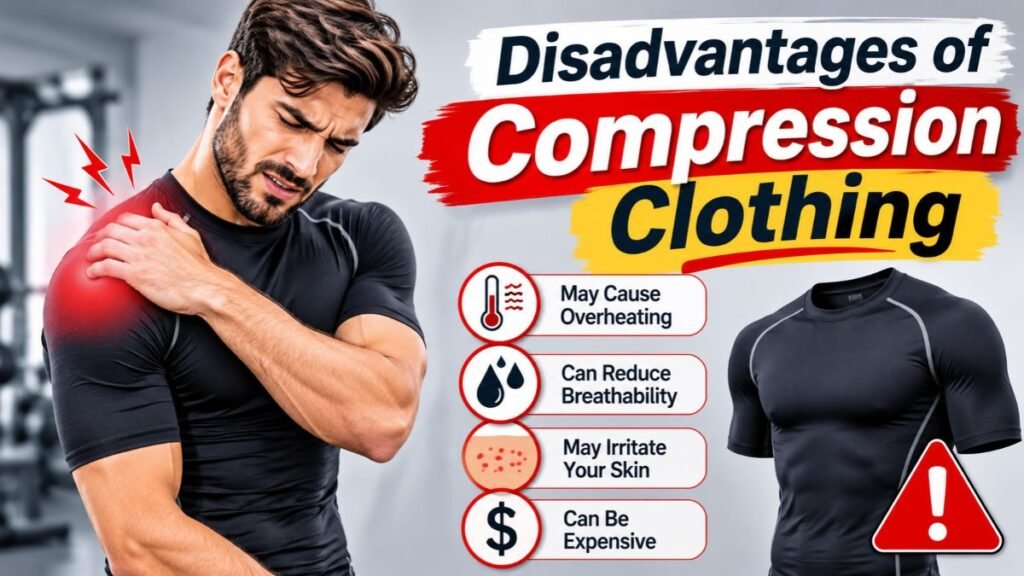
Compression clothing can be useful for certain activities, but it also has possible disadvantages. The experience depends on the garment, fabric, fit, pressure level, and individual wearing preferences.
Here are some important drawbacks to consider.
1. It Can Feel Too Tight
One of the most common disadvantages of compression clothing is its tight fit.
Unlike regular sportswear, compression garments are designed to sit closely against the body. Some people enjoy this secure feeling, while others find it uncomfortable.
A garment that is too tight may create pressure around the waist, thighs, chest, arms, or legs.
This can make everyday movement uncomfortable. It may also make sitting, bending, or exercising less enjoyable.
How to avoid this problem:
- Follow the manufacturer’s size chart.
- Check body measurements before buying.
- Choose the correct compression level.
- Avoid buying a smaller size just to increase tightness.
- Stop wearing garments that cause pain or discomfort.
Compression clothing should feel secure, not painfully restrictive.
2. Skin Irritation and Chafing
Compression garments sit close to the skin. This can increase friction in areas where seams, fabric edges, or folds rub against the body.
Skin irritation may occur around the thighs, waist, underarms, chest, and knees.
Sweat can make the problem worse during intense exercise. Rough seams, unsuitable fabric, and poorly designed garments may also contribute to irritation.
People with sensitive skin may notice discomfort more quickly.
How to reduce irritation:
- Choose smooth and comfortable fabrics.
- Look for flat or well-finished seams.
- Wear the correct size.
- Keep garments clean.
- Change out of sweaty clothing after exercise.
- Stop using a garment if irritation continues.
If a rash, swelling, or skin problem persists, seek medical advice.
3. Heat and Sweat Discomfort
Some compression garments can feel warm, especially when made with thicker fabrics or worn in hot weather.
Because the fabric sits close to the skin, some people may feel that heat and sweat build up during exercise.
This can become uncomfortable during outdoor training, summer workouts, and high-intensity activities.
Modern performance fabrics may improve moisture management, but not every compression garment has the same ventilation or drying properties.
What to look for:
- Lightweight fabric
- Breathable construction
- Moisture-management properties
- Mesh ventilation panels where appropriate
- Suitable fabric weight
- Comfortable stretch
The right fabric can make a significant difference to the wearing experience.
4. Incorrect Sizing Can Cause Discomfort
Correct sizing is essential for compression clothing.
A garment that is too small may create excessive pressure. A garment that is too large may not provide its intended fit.
Sizing problems can affect comfort around the waist, chest, thighs, calves, and arms.
For example, compression leggings that are too tight may dig into the waist or restrict comfortable movement. Compression sleeves that are too small may create uncomfortable pressure around the arms.
How to choose the correct size:
- Measure the body areas listed in the size guide.
- Compare your measurements with the manufacturer’s chart.
- Check whether the product uses athletic or medical sizing.
- Follow the recommended size rather than guessing.
- Review the return policy before purchasing.
Different brands may use different measurements, so do not assume that the same size will fit every product.
5. It May Restrict Comfortable Movement
Compression clothing is designed to stretch, but a poorly fitted garment may still make movement uncomfortable.
This can happen when the fabric has limited stretch, the pattern is unsuitable, or the garment is too small.
Activities such as squatting, lunging, stretching, and bending require enough flexibility.
If the garment pulls around the knees, shoulders, hips, or waist, it may interfere with your workout.
A good compression garment should allow the wearer to move naturally.
Before buying, check the fabric stretch, garment construction, and intended activity.
6. Some Fabrics May Cause Sensitivity
Compression clothing is commonly made from synthetic fibres such as polyester, nylon, and elastane.
These materials are widely used in performance clothing because they can provide stretch, durability, and useful moisture-management properties.
However, some people may dislike how certain synthetic fabrics feel against their skin.
Sensitivity can also be related to fabric dyes, finishing chemicals, detergents, or other garment components.
If you have sensitive skin, look for soft materials and follow the garment’s care instructions.
Wash new clothing before wearing it if the care label allows. If a particular garment repeatedly causes irritation, discontinue use and consider a different material.
7. It May Not Be Suitable for Every Activity
Compression clothing is designed for particular uses, but it is not always the best option.
Some people prefer fitted or regular activewear for yoga, walking, casual exercise, or everyday activities.
For example, someone who dislikes tight clothing may find regular fitted leggings more comfortable than compression leggings.
The best garment depends on the activity and personal preference.
Compression clothing should not be treated as a requirement for successful exercise.
8. It Can Be More Expensive
Some compression garments cost more than ordinary sportswear.
Specialised fabrics, elastic construction, pattern development, and performance features can increase manufacturing costs.
Premium compression products may also include additional features such as reinforced seams, ventilation panels, and specialised waistbands.
However, a higher price does not automatically mean better quality or better performance.
Before purchasing, compare:
- Fabric composition
- Stitching quality
- Stretch and recovery
- Product specifications
- Brand sizing information
- Durability
- Customer reviews
Choose a garment that meets your actual needs instead of paying for features you may not use.
9. It Requires Proper Washing and Care
Compression garments depend on fabric elasticity to maintain their fit.
Incorrect washing and drying can affect the fabric’s stretch and recovery over time.
High temperatures, unsuitable detergents, and rough washing conditions may contribute to damage.
To maintain compression clothing:
- Follow the care label.
- Use the recommended washing temperature.
- Avoid excessive heat.
- Do not use harsh cleaning products unless permitted.
- Avoid ironing elastic areas unless the label allows it.
- Store garments properly.
Good care can help maintain the garment’s appearance and useful life.
10. It Does Not Guarantee Better Athletic Performance
Compression clothing is often marketed with performance-related benefits. However, wearing it does not automatically make someone faster, stronger, or more athletic.
Research on athletic performance and recovery has produced mixed results. Outcomes can depend on the type of garment, exercise, individual, and measurement used.
Some athletes prefer compression wear because of its snug fit and comfortable feel. Others notice little difference compared with ordinary sportswear.
It is better to view compression clothing as an optional clothing choice rather than a shortcut to better fitness results.
Is Compression Clothing Bad for You?
The answer depends on the garment, its fit, and how you use it.
Properly fitted athletic compression clothing is generally suitable for many healthy people during normal activities. However, an unsuitable size or excessive pressure may cause discomfort and other problems.
Compression clothing is not automatically harmful. It is also not necessary for everyone.
The important factors include:
- Correct sizing
- Suitable fabric
- Appropriate pressure
- Comfortable construction
- Proper use
- Personal skin sensitivity
- Intended activity
A garment should not cause pain, numbness, tingling, or unusual swelling. If you experience these symptoms, remove it and reassess the fit.
People with circulation problems, certain vascular conditions, reduced skin sensation, or other medical concerns should seek professional advice before using compression products.
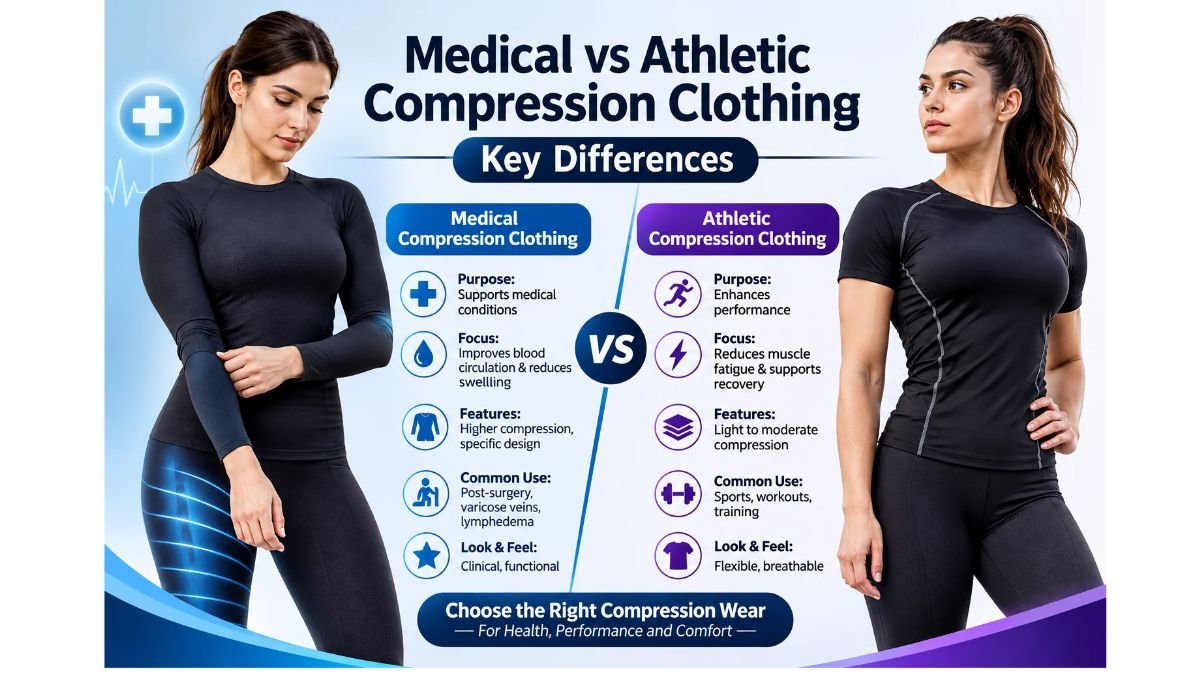
Medical compression garments are different from ordinary sportswear. They may be prescribed for specific health conditions and require appropriate sizing and pressure selection.
Do not use athletic compression clothing as a substitute for medical treatment.
Is Compression Clothing Good for Working Out?
Compression clothing can be a suitable option for working out, but it is not essential.
Many athletes and fitness enthusiasts wear compression shirts, leggings, and shorts because they prefer a secure fit.
These garments can reduce loose fabric movement and provide a close-fitting layer during exercise.
However, their benefits vary. A compression garment does not guarantee improved strength, endurance, or recovery.
Benefits During Exercise
Compression clothing may offer several practical advantages.
Secure fit: The garment stays close to the body and reduces loose fabric movement.
Stretch: Suitable elastic fabrics allow the garment to move with the wearer.
Layering: Compression tops and leggings can be worn under other sportswear.
Comfort preference: Some athletes prefer the snug feeling during running, cycling, and gym sessions.
Moisture management: Certain performance fabrics are designed to move moisture away from the skin and dry relatively quickly.
Possible Workout Drawbacks
Compression clothing may also create challenges during exercise.
These include:
- Excessive tightness
- Heat discomfort
- Skin irritation
- Incorrect sizing
- Limited comfort during certain movements
- Higher product cost
For these reasons, it is important to select clothing based on the type of workout.
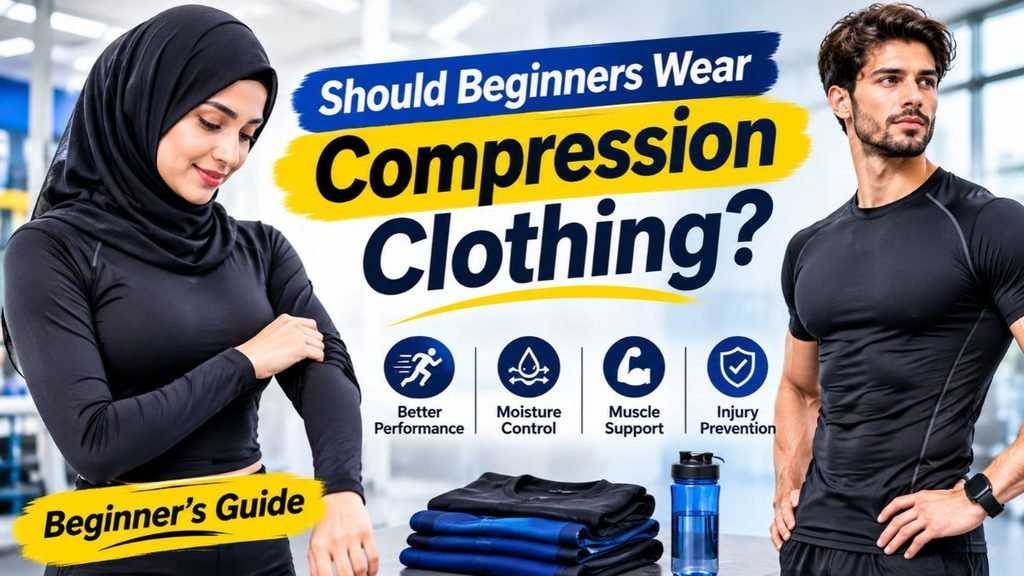
Should Beginners Wear Compression Clothing?
Beginners do not need compression clothing to start exercising.
A comfortable T-shirt, sports leggings, joggers, or shorts may be enough for many workouts.
If a beginner wants to try compression wear, starting with a properly sized garment is sensible.
Comfort, movement, and safety should remain more important than appearance or marketing claims.
Compression Clothing vs Regular Activewear
Compression clothing and regular activewear serve different preferences.
Regular activewear may offer a relaxed, fitted, or loose design. Compression clothing is specifically designed for a close fit that applies pressure.
| Feature | Compression Clothing | Regular Activewear |
|---|---|---|
| Fit | Very close and snug | Loose, regular, or fitted |
| Pressure | Designed to apply pressure | Usually no intentional compression |
| Main purpose | Secure athletic fit | General exercise comfort |
| Fabric | Often elastic performance blends | Cotton, polyester, nylon, and blends |
| Movement | Depends on fit and stretch | Depends on garment design |
| Everyday use | Personal preference | Common for casual wear |
| Sizing | Requires attention to compression fit | Usually follows standard garment sizing |
Neither option is automatically better. A runner may prefer compression tights, while someone doing light gym exercises may choose regular leggings.
Compression Clothing vs Fitted Clothing
Fitted clothing is often confused with compression wear.
Both garments may follow the body’s shape, but their intended fit is different.
Fitted clothing follows the body without necessarily applying controlled pressure. Compression clothing is designed to create a snug fit through its fabric and construction.
For example, a fitted polyester T-shirt may look tight but still provide a relatively relaxed wearing experience.
A compression shirt is designed to sit more closely around the torso.
This distinction is important for customers and clothing brands because the two products may require different fabric specifications and patterns.
What Should You Look for Before Buying Compression Clothing?
Choosing the right compression garment can reduce common fit and comfort problems.
Consider these factors before purchasing.
1. Fabric Composition
Check the material label.
Compression garments commonly use polyester, nylon, and elastane blends. The fabric should provide suitable stretch and recovery.
2. Size Chart
Use the manufacturer’s measurements rather than guessing.
Pay attention to chest, waist, hips, thighs, and other measurements relevant to the product.
3. Intended Activity
Choose clothing designed for your activity.
Running, cycling, weight training, and casual exercise may have different clothing requirements.
4. Seam Construction
Check whether the seams are smooth and comfortable.
Poor seam placement can create friction during repetitive movement.
5. Breathability
Consider the climate and workout intensity.
Lightweight, breathable fabrics may be more comfortable for warm conditions.
6. Product Quality
Look for consistent stitching, reliable waistbands, suitable stretch, and good finishing.
A well-constructed garment should maintain its shape during normal use and care.
How to Care for Compression Clothing
Proper garment care helps maintain fabric quality and elasticity.
Compression clothing should be washed according to its care label. Different fabric blends may have different washing requirements.
Here are some general care considerations:
- Wash garments after use, especially when they are sweaty.
- Follow the recommended washing temperature.
- Use a suitable detergent.
- Avoid excessive heat during drying.
- Keep garments away from rough surfaces that may damage the fabric.
- Check seams and elastic areas regularly.
- Replace garments when they lose their intended fit or condition.
Avoid assuming that all compression garments can be washed in the same way. Always follow the manufacturer’s instructions.
What Clothing Brands Should Know About Compression Wear
For clothing brands, developing compression clothing requires careful attention to fabric, pattern, sizing, and construction.
A product may look similar to regular fitted activewear, but its specifications can be different.
Fabric Selection
Brands should select fabric based on the intended product.
Polyester and elastane blends are common in sportswear. Nylon and elastane combinations are also used for leggings and other close-fitting garments.
Important fabric properties include:
- Stretch
- Recovery
- Durability
- Breathability
- Moisture management
- Fabric weight
- Colourfastness
The selected material should be tested and reviewed before bulk production.
Pattern Development
Pattern development affects how the garment fits and distributes pressure.
Designers should consider body measurements, fabric stretch, garment dimensions, seam placement, and intended use.
A pattern that works for a regular fitted shirt may not produce the desired result for a compression shirt.
Sampling and Fit Testing
A physical sample allows the brand to review the actual garment.
Check the fit across different body areas and sizes. Review movement, comfort, seam construction, and fabric recovery.
For compression products, the intended level of pressure should be clearly defined and evaluated. Do not assume that a garment provides a particular medical or performance benefit without appropriate testing.
Quality Control
Quality inspections can identify problems before products reach customers.
Important checks include:
- Measurement accuracy
- Stitching consistency
- Fabric defects
- Seam strength
- Waistband construction
- Elastic recovery
- Print and logo placement
- Overall finishing
A clear quality standard helps maintain consistency across production batches.
Compression Activewear Manufacturing at Fashion Soul International
Fashion Soul International is a factory-owned custom clothing manufacturer based in Sialkot, Pakistan. The company provides private-label, OEM, ODM, white-label, cut-and-sew, and full-package apparel manufacturing.
Its product categories include activewear, sportswear, tracksuits, T-shirts, hoodies, and other custom garments.
Brands developing compression activewear should provide clear product specifications before production. These may include fabric composition, stretch requirements, measurements, garment design, colour, stitching, branding, and order quantity.
Fashion Soul International supports product development, fabric sourcing, sampling, bulk production, quality control, custom branding, packaging, and international shipping.
The company’s published standard MOQ starts at 100 pieces. Actual requirements may vary depending on the product, fabric, colour, and construction. Buyers should confirm the quantity during quotation.
Product Development and Fabric Sourcing
The development process starts with understanding the brand’s design and performance requirements.
For compression garments, brands should specify the intended fit and required fabric properties. The material should be selected according to the product’s purpose.
Sample Development
Sampling allows brands to review fit, fabric feel, measurements, seams, and overall construction before bulk production.
Changes can be discussed before the pre-production sample receives final approval.
Production and Quality Checks
During production, garments should be checked against the approved specifications.
For compression activewear, particular attention should be given to stretch, recovery, measurements, seam quality, and comfort.
Brands should communicate any specific testing requirements before manufacturing begins.
Custom Branding and Packaging
Fashion Soul International also supports custom branding and packaging requirements.
Brands can discuss labels, logos, hang tags, and packaging details for their activewear collections.
Frequently Asked Questions About the Disadvantages of Compression Clothing
What Are the Main Disadvantages of Compression Clothing?
The main disadvantages may include excessive tightness, skin irritation, heat discomfort, incorrect sizing, movement restrictions, and higher costs. These problems often depend on garment quality, fit, fabric, and personal preference.
Is Compression Clothing Bad for You?
Properly fitted athletic compression clothing is generally suitable for many healthy people. However, garments that are too tight may cause discomfort or other problems. People with medical conditions should seek professional advice before using compression products.
Is Compression Clothing Good for Working Out?
Compression clothing can be useful for workouts because it offers a secure fit and reduces loose fabric movement. However, it is not necessary for every exercise, and research does not show that it automatically improves athletic performance.
Can Compression Clothing Affect Blood Circulation?
Excessively tight garments may create uncomfortable pressure. Compression clothing should not cause numbness, tingling, pain, or changes in skin colour. Medical compression products should be selected with appropriate professional guidance.
Can You Wear Compression Clothing Every Day?
Some people wear athletic compression garments during everyday activities. The clothing should fit comfortably and should not cause irritation or excessive pressure. Medical compression garments may have different instructions.
Is Compression Clothing Suitable for Beginners?
Yes, beginners can wear properly sized athletic compression clothing if they find it comfortable. However, ordinary sportswear is also suitable for most beginner workouts.
Can Compression Clothing Cause Skin Irritation?
Yes. Tight fabric, friction, sweat, rough seams, and sensitivity to materials or detergents may contribute to skin irritation. Choosing comfortable fabrics and maintaining proper hygiene can help.
Should Compression Clothing Feel Tight?
Compression clothing should feel snug and secure, but not painfully tight. It should allow normal breathing and movement. Pain, numbness, and tingling are warning signs that the garment may not fit properly.
Is Compression Clothing Better Than Regular Sportswear?
Not necessarily. Compression clothing provides a closer fit and intentional pressure, while regular sportswear offers different fit options. The best choice depends on your activity and comfort preferences.
When Should You Stop Wearing Compression Clothing?
Stop wearing a garment if it causes pain, numbness, tingling, skin irritation, or restricted movement. If symptoms continue after removing it, seek medical advice.
Final Thoughts
Understanding the disadvantages of compression clothing helps consumers make better decisions about their activewear. Compression garments can provide a secure fit and may suit certain sports and workouts. However, they can also cause discomfort when the size, fabric, or construction is unsuitable.
The answer to whether compression clothing is bad for you depends on how it fits and how it is used. Similarly, compression clothing can be good for working out, but it is not essential for every athlete or exercise routine.
For clothing brands, product development should focus on suitable fabric, accurate measurements, comfortable construction, and reliable quality checks. A well-designed compression garment should meet its intended purpose without sacrificing comfort.