Compression Clothing Medical: Uses, Benefits, Types, and How It Works
Compression clothing is used in both healthcare and sportswear. It is designed to fit closely around the body and apply pressure to selected areas. However, medical compression garments and athletic compression clothing are not the same. They may look similar, but their purposes, pressure levels, and fitting requirements can be very different.
Understanding compression clothing medical applications is important for people who want to learn how compression garments support certain healthcare needs. These garments may be recommended for managing specific circulation problems, swelling, and recovery after certain medical procedures. Their suitability depends on the person’s condition and professional medical advice.
Compression sports clothing is designed mainly for athletic activities. It provides a close fit, flexibility, and support during movement. Some athletes also choose it because they prefer the secure feeling of compression fabrics.
In this guide, we explain how medical compression clothing works, the different garment types, its common uses, and how it differs from compression sports clothing. We also cover fabric choices, sizing, manufacturing, and important factors to consider before purchasing compression garments.
What Is Medical Compression Clothing?
Medical compression clothing refers to specially designed garments that apply controlled pressure to particular areas of the body. Healthcare professionals may recommend these garments for certain conditions involving blood circulation, swelling, or fluid buildup.
Unlike ordinary tight clothing, medical compression garments are developed according to specific pressure and fitting requirements. They may be used on the legs, arms, or other areas depending on the medical need.
Common examples include:
- Medical compression stockings
- Compression socks
- Compression sleeves
- Compression tights
- Medical compression wraps
- Post-surgical compression garments
These products are available in different lengths, materials, and compression levels.
Medical compression is not suitable for everyone. The correct garment depends on the person’s health, circulation, skin condition, and treatment requirements. A qualified healthcare professional should help determine whether compression is appropriate.
How Does Medical Compression Clothing Work?
Medical compression garments apply pressure to the body through carefully designed fabric and construction.
For certain conditions, compression can help support blood flow through the veins and reduce the accumulation of fluid in affected areas. The pressure may be graduated, meaning it is stronger in one area and gradually decreases in another.
For example, some medical compression stockings apply the greatest pressure around the ankle and gradually less pressure towards the upper leg. This design can help support the movement of blood back towards the heart.
The exact pressure pattern depends on the product and its medical purpose.
Understanding Graduated Compression
Graduated compression is a common feature of medical compression stockings.
It generally means that the garment applies different pressure levels across its length. The pressure is often strongest near the ankle and decreases towards the knee or thigh.
This design is used for certain venous circulation conditions.
Not every compression garment uses the same pressure pattern. Some medical products are designed for specific body areas and require different construction.
What Is Compression Pressure?
Compression pressure describes the force a garment applies to the body.
It may be measured in millimetres of mercury (mmHg). Different products are available at different pressure levels.
A higher pressure level is not automatically better. The appropriate level depends on the medical condition and the person’s individual needs.
Do not choose a medical compression level simply by comparing product descriptions. Professional guidance is important, particularly for people with circulation problems or other health conditions.
Common Medical Uses of Compression Clothing
Medical compression garments may be recommended for several health-related reasons. Their use depends on the diagnosis, treatment plan, and advice of a qualified professional.
1. Supporting Venous Circulation
Some people experience problems with the veins in their legs. These problems can affect the movement of blood back towards the heart.
Medical compression stockings may be recommended in certain cases to support venous circulation.
They can be part of a treatment plan for some people with chronic venous insufficiency or related conditions.
The appropriate garment and pressure level should be selected with medical guidance.
2. Managing Leg Swelling
Swelling in the legs can occur for different reasons, including certain vein and lymphatic conditions.
Compression garments may help manage swelling in selected patients by applying controlled pressure to the affected area.
However, swelling can also be a sign of a serious medical problem. New, sudden, painful, or unexplained swelling should be assessed by a healthcare professional before using compression clothing.
3. Lymphedema Management
Lymphedema is a condition involving the buildup of lymph fluid in body tissues. It can cause swelling, often in the arms or legs.
Specialist compression garments may form part of a lymphedema management plan.
These products can include arm sleeves, gloves, stockings, and custom compression garments.
The garment should be fitted according to the individual’s needs. Incorrect pressure or sizing can cause discomfort and may not provide the intended support.
4. Certain Post-Surgical Applications
Healthcare professionals may recommend compression garments after some surgical procedures.
The purpose can vary according to the procedure. Some garments are used to manage swelling, while others provide support during a specific recovery period.
Post-surgical garments should be selected according to the surgeon’s instructions. General athletic compression clothing should not be substituted for a prescribed medical product.
5. Managing Certain Symptoms During Pregnancy
Some pregnant people experience leg discomfort or swelling. A healthcare professional may recommend appropriate compression stockings in selected situations.
However, pregnancy-related swelling can sometimes indicate a condition requiring medical attention. Sudden swelling, particularly when accompanied by other concerning symptoms, should be assessed promptly.
Always seek professional advice before selecting medical compression clothing during pregnancy.
Types of Medical Compression Garments
Medical compression clothing comes in several forms. Each type is designed for a different body area or use.
Medical Compression Socks
Compression socks cover the foot and lower leg. Some styles extend towards the knee.
They may be recommended for selected circulation conditions and certain medical situations.
Medical compression socks are different from ordinary athletic socks. Their pressure levels and sizing should follow the product’s medical specifications.
Knee-High Compression Stockings
Knee-high stockings cover the foot and leg up to just below the knee.
They are commonly used in the management of certain lower-leg venous conditions.
They should fit correctly around the ankle, calf, and upper edge. A poorly fitted stocking may roll, slip, or create unwanted pressure.
Thigh-High Compression Stockings
Thigh-high stockings extend above the knee.
They may be used when compression is required over a larger area of the leg.
The correct length, pressure, and fitting method depend on the treatment requirement.
Medical Compression Sleeves
Compression sleeves are designed for areas such as the arms.
They may be used in certain lymphedema management plans or other conditions where professional compression therapy is recommended.
Some sleeves are available with matching gloves or hand garments.
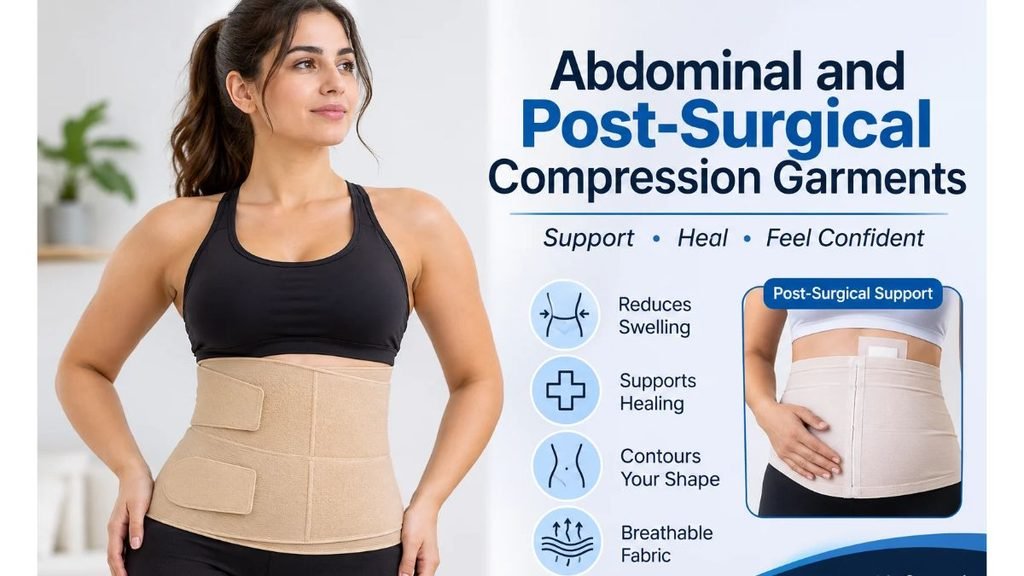
Abdominal and Post-Surgical Compression Garments
Some medical garments are designed to cover the abdomen or other body areas.
They may be recommended after selected procedures. Their design, pressure, and wearing schedule depend on the procedure and the healthcare professional’s instructions.
Compression Wraps
Compression wraps are adjustable products used in some medical treatment plans.
They may be particularly useful when a healthcare professional needs to adjust compression as swelling changes.
They require correct application and should be used according to professional instructions.
What Is Compression Sports Clothing?
Compression sports clothing is athletic apparel designed to fit closely around the body. It usually uses stretch fabrics that provide a secure feel during exercise.
Common products include compression shirts, shorts, leggings, tights, sleeves, and base layers.
Unlike medical compression garments, sports compression clothing is generally developed for athletic comfort, movement, and performance-related preferences.
It may help reduce loose fabric movement and provide a supportive feeling during exercise.
However, athletic compression clothing is not automatically suitable for treating medical conditions.
Common Types of Compression Sports Clothing
Compression shirts: These tops fit closely around the upper body. They are used for gym sessions, running, and team sports.
Compression leggings: These garments cover the legs and are popular for training, cycling, and other athletic activities.
Compression shorts: They are commonly worn for running, gym workouts, and sports that involve frequent movement.
Compression sleeves: Athletic sleeves are available for arms and legs. They provide a close fit and are often used during training.
Compression base layers: These garments are worn underneath other sportswear. They provide a smooth, close-fitting layer.
Medical Compression Clothing vs Compression Sports Clothing
Although both types use stretch fabrics, their purposes are different.
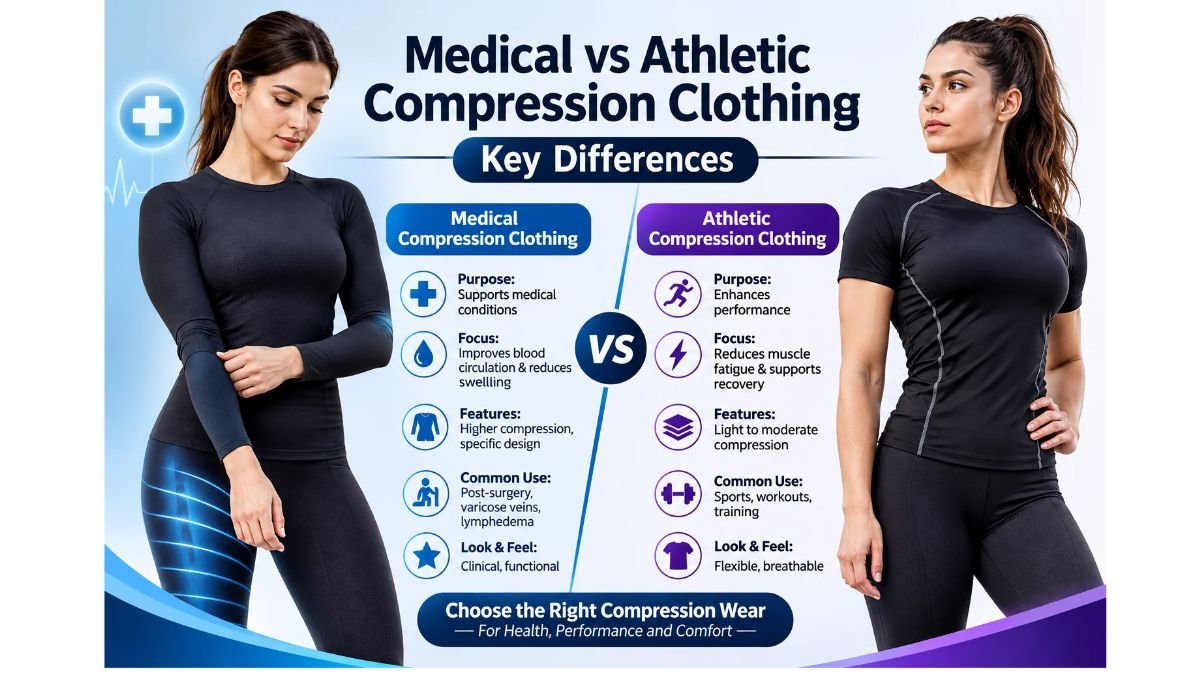
Medical compression clothing is designed for specific healthcare applications. Compression sports clothing is designed mainly for exercise and athletic use.
| Feature | Medical Compression Clothing | Compression Sports Clothing |
|---|---|---|
| Main purpose | Support selected medical needs | Athletic comfort and movement |
| Pressure | Specific pressure requirements | Depends on garment design |
| Selection | May require medical guidance | Usually selected by fit and preference |
| Sizing | Often requires careful measurements | Based on brand size charts |
| Common products | Medical stockings, sleeves, wraps | Sports shirts, shorts, tights |
| Applications | Selected circulation and swelling conditions | Gym, running, cycling, and sports |
| Certification or standards | May be subject to medical product requirements | Depends on product and market |
| Intended performance | Medical compression function | Athletic clothing performance |
A compression sports shirt may feel tight, but this does not mean it provides a medically prescribed pressure level.
People who need medical compression should use a suitable medical product rather than assuming athletic clothing will provide the same effect.
Benefits of Compression Sports Clothing
Compression sports clothing is popular among athletes and fitness enthusiasts because of its close fit and stretch construction.
1. Secure Fit During Exercise
Compression sportswear stays close to the body.
This can reduce loose fabric movement during running, cycling, weight training, and other activities.
2. Comfortable Stretch
Many compression sports garments use polyester or nylon blended with elastane.
These fabrics stretch during movement and recover towards their original shape.
This allows athletes to bend, stretch, run, and exercise comfortably when the garment is correctly sized.
3. Moisture Management
Some sports compression fabrics are designed to move moisture away from the skin.
This can help the wearer feel more comfortable during exercise.
Performance depends on the fabric construction, fibre composition, and finishing process.
4. Suitable for Layering
Compression shirts and leggings can be worn underneath other sportswear.
Their close fit helps reduce excess fabric when layering clothing.
5. Different Sportswear Applications
Compression sports clothing is available for several activities, including:
- Running
- Cycling
- Gym training
- Football
- Basketball
- Fitness classes
- General athletic training
The best garment depends on the sport, climate, and personal preference.
Medical Compression Clothing: Important Safety Considerations
Medical compression garments should be selected carefully. They are not ordinary fashion products, and incorrect use can create problems.
Get Professional Advice
Speak with a qualified healthcare professional before using medical compression clothing for a health condition.
This is especially important if you have known circulation problems, reduced sensation, skin damage, or other medical concerns.
Choose the Correct Pressure
Medical compression products are available in different pressure levels.
The correct level depends on the medical purpose and individual assessment.
Do not assume that stronger compression produces better results.
Check the Fit
A medical garment should fit according to its product specifications.
It should not create painful pressure points, severe marks, numbness, or skin changes.
If discomfort occurs, remove the garment when appropriate and contact your healthcare professional for advice.
Check Your Skin
People using medical compression garments may need to check their skin regularly.
Look for redness, irritation, pressure marks, blisters, or other changes.
Follow the care and wearing instructions provided by the healthcare professional or product manufacturer.
Understand When Compression May Be Unsuitable
Compression is not appropriate for every person or condition.
Certain arterial circulation problems and other health conditions may make compression unsafe without specialist assessment.
A healthcare professional should determine whether compression is suitable before use.
How to Choose the Right Medical Compression Garment
Selecting the correct medical compression garment involves more than choosing a size or colour.
Understand the Medical Requirement
First, understand why the garment is being recommended.
A product intended for leg circulation may have different requirements from an arm sleeve used in a lymphedema management plan.
Check the Product Type
Choose the garment that covers the required body area.
Options may include knee-high stockings, thigh-high stockings, arm sleeves, gloves, or adjustable wraps.
Measure Correctly
Measurements may include ankle circumference, calf circumference, thigh circumference, arm circumference, and garment length.
Some measurements must be taken at particular times of day or in a specific position.
Follow the instructions provided by the healthcare professional or manufacturer.
Check the Pressure Specification
Read the product information carefully.
Confirm the pressure level and whether it matches the professional recommendation.
Review the Material
Medical compression products should combine suitable stretch, comfort, and durability.
The fabric should also meet the product’s intended medical requirements.
How to Choose Compression Sports Clothing
Choosing compression sports clothing is usually based on activity, comfort, and fit.
Consider Your Sport
Running tights may need different features from a compression shirt used for gym training.
Choose a garment designed for the activity you perform.
Check Fabric Stretch
Look for fabric with suitable stretch and recovery.
A garment should move with the body without becoming loose or excessively tight.
Look for Breathability
Moisture management is important during intense exercise.
Polyester and nylon blends are common options for performance clothing.
Check the Seams
Flat seams or carefully positioned stitching can help reduce irritation during movement.
Check areas such as the shoulders, underarms, waist, and inner thighs.
Follow the Size Guide
Do not automatically choose a smaller size to achieve a tighter fit.
Use the manufacturer’s measurements and fitting recommendations.
Fabrics Used in Medical and Sports Compression Clothing
Fabric selection is important because compression garments must maintain their intended fit and performance.
Different materials offer different levels of stretch, durability, softness, and moisture management.
Nylon
Nylon is commonly used in performance garments.
It can provide a smooth feel, durability, and good stretch when blended with elastane.
It is often used in compression leggings, sleeves, and sportswear.
Polyester
Polyester is popular in athletic clothing because it is lightweight and available in many fabric constructions.
It can be designed for moisture management and quick drying.
Recycled polyester may also be considered when brands want to explore recycled material options.
Elastane or Spandex
Elastane, also known as spandex, is a stretch fibre.
It helps fabrics stretch and recover after movement.
It is commonly blended with nylon or polyester to create fitted sportswear and compression-style garments.
The percentage of elastane alone does not determine the garment’s pressure. Fabric construction, pattern, and garment measurements also matter.
Cotton Blends
Cotton blends may be used in some fitted or casual sportswear.
Cotton offers a soft feel, but it may not provide the same moisture management or recovery as specialist performance fabrics.
For medical compression products, material suitability must meet the product’s specific requirements.
How Is Compression Clothing Manufactured?
Manufacturing compression clothing requires careful attention to fabric, measurements, stretch, construction, and quality control.
1. Design and Product Planning
The first step is to define the garment’s purpose.
A brand developing athletic compression clothing should identify the sport, target customer, fit, fabric, and design features.
Medical compression products require additional product specifications and appropriate technical or regulatory expertise.
2. Fabric Selection
The manufacturer selects a suitable fabric based on the product requirements.
Common sportswear options include nylon-elastane and polyester-elastane blends.
The fabric should be reviewed for stretch, recovery, weight, comfort, and durability.
3. Pattern Development
Pattern development determines the garment’s shape and measurements.
For sports compression wear, patterns should account for the fabric’s stretch and intended close fit.
Medical compression garments require product-specific specifications and should not be developed using ordinary fashion sizing alone.
4. Sampling
A physical sample allows the brand to review fit, fabric, construction, and appearance.
For athletic products, the sample should be checked during normal movement.
Medical products require appropriate specialist evaluation and testing for their intended function.
5. Cutting and Sewing
After approval, fabric is cut according to the pattern.
The pieces are then assembled using suitable stitching methods.
Seam placement and stitch quality are important because compression garments sit close to the skin.
6. Quality Inspection
Quality checks can include:
- Measurement accuracy
- Fabric defects
- Stitch consistency
- Stretch and recovery
- Seam strength
- Colour consistency
- Print and logo placement
- Overall appearance
Additional product-specific testing may be necessary depending on the intended use.
7. Packaging and Shipping
After inspection, garments are folded, labelled, packed, and prepared for shipment.
Brands should confirm the packaging, labelling, documentation, and destination requirements before production.
Compression Clothing Manufacturing at Fashion Soul International
Fashion Soul International is a factory-owned custom clothing manufacturer based in Sialkot, Pakistan. The company produces custom apparel for international clothing brands.
Its manufacturing services include private-label, OEM, ODM, white-label, cut-and-sew, and full-package production.
Its product categories include activewear, sportswear, tracksuits, T-shirts, hoodies, and other custom garments.
Brands developing compression sports clothing can discuss product requirements such as fabric composition, stretch, fit, measurements, colours, stitching, logos, and packaging.
Fashion Soul International supports product development, fabric sourcing, sampling, bulk production, quality control, custom branding, packaging, and international shipping.
The company’s published standard MOQ starts at 100 pieces. Actual quantities depend on the product, fabric, colour, and construction. Buyers should confirm project-specific requirements during quotation.
Custom Sports Compression Apparel
Brands can discuss custom athletic products such as compression shirts, leggings, shorts, and other fitted sportswear.
The fabric and construction should match the intended activity. Buyers should provide clear specifications for stretch, recovery, measurements, and garment fit.
Sampling and Quality Control
Sampling allows brands to review the garment before bulk production.
Important checks include fabric feel, measurements, seam placement, stretch recovery, and overall construction.
Fashion Soul International’s stated workflow includes physical pre-production sample approval before bulk manufacturing, along with inline and pre-shipment quality inspections.
Important Note About Medical Compression Products
Medical compression garments are different from ordinary athletic compression clothing. Their pressure performance, product classification, testing, and regulatory requirements may depend on the market and intended medical use.
Brands planning to manufacture medical compression products should confirm the applicable technical, testing, quality, and regulatory requirements before beginning production. Fashion Soul International’s general activewear manufacturing information does not by itself establish that a product is a certified medical compression device.
Frequently Asked Questions About Medical Compression Clothing
What Is Medical Compression Clothing Used For?
Medical compression clothing may be used to support the management of certain circulation conditions, leg swelling, and lymphedema. Some products are also recommended after selected medical procedures. The correct use depends on professional medical advice.
Is Compression Sports Clothing the Same as Medical Compression Clothing?
No. Compression sports clothing is designed mainly for athletic use, comfort, and movement. Medical compression clothing is designed for specific healthcare applications and may have defined pressure requirements.
Can I Wear Sports Compression Clothing for Medical Problems?
Sports compression clothing should not automatically replace medical compression garments. Athletic products may not provide the required pressure or design features for a medical condition. Ask a healthcare professional before using compression for treatment.
What Does Graduated Compression Mean?
Graduated compression means that a garment applies different pressure levels across its length. Medical compression stockings commonly provide stronger pressure near the ankle, with pressure gradually decreasing towards the upper leg.
What Is the Difference Between Compression Socks and Regular Sports Socks?
Regular sports socks are designed mainly for comfort, cushioning, and moisture management. Medical compression socks are designed to apply specific pressure to the legs and should be selected according to their intended use.
How Do I Know If My Compression Garment Is Too Tight?
Pain, numbness, tingling, unusual skin colour changes, or severe pressure marks may indicate that the garment is unsuitable. Remove it when appropriate and seek professional advice.
What Fabrics Are Used in Compression Sports Clothing?
Nylon, polyester, and elastane blends are commonly used. These materials can provide stretch, recovery, and moisture-management properties depending on their construction.
Can Compression Clothing Be Customized?
Athletic compression clothing can be customized with different fabrics, colours, fits, logos, prints, and labels. Medical compression products require additional technical specifications and appropriate testing.
Does Compression Clothing Improve Sports Performance?
Some athletes prefer compression garments because of their secure fit and reduced fabric movement. However, evidence for improvements in performance and recovery varies. Compression clothing should not be treated as a guaranteed performance solution.
Final Thoughts
Medical compression clothing and compression sports clothing may look similar, but they serve different purposes. Medical garments are designed for specific healthcare applications and may require professional fitting and defined pressure levels. Sports compression clothing is developed mainly for athletic comfort, movement, and a secure fit.
Choosing the right garment requires attention to its purpose, material, pressure, construction, and sizing. Medical products should always be selected with appropriate professional guidance.
For clothing brands, understanding these differences is essential when planning an activewear collection. Clear specifications, suitable fabric selection, physical sampling, and careful quality control help create reliable compression sports clothing. Medical compression products, however, require additional technical and regulatory consideration before they can be marketed for healthcare use.