Compression Uniforms: A Complete Guide to Performance, Fit, and Custom Manufacturing
Compression uniforms are designed for athletes, fitness enthusiasts, and sports teams that prefer close-fitting performance clothing. Unlike regular sportswear, these garments use stretch fabrics and body-hugging construction to create a secure fit. They are commonly used for training, running, gym workouts, and team sports.
As sportswear continues to develop, more brands are exploring compression uniforms for their activewear collections. These garments combine practical design with flexible materials, making them suitable for different athletic activities. However, selecting the right fabric, fit, and construction is essential for creating comfortable and durable products.
Whether you are buying sportswear or planning a new clothing collection, understanding compression clothing can help you make better decisions. This guide explains compression uniforms, their benefits, fabric choices, design features, manufacturing process, and customization options.
What Are Compression Uniforms?
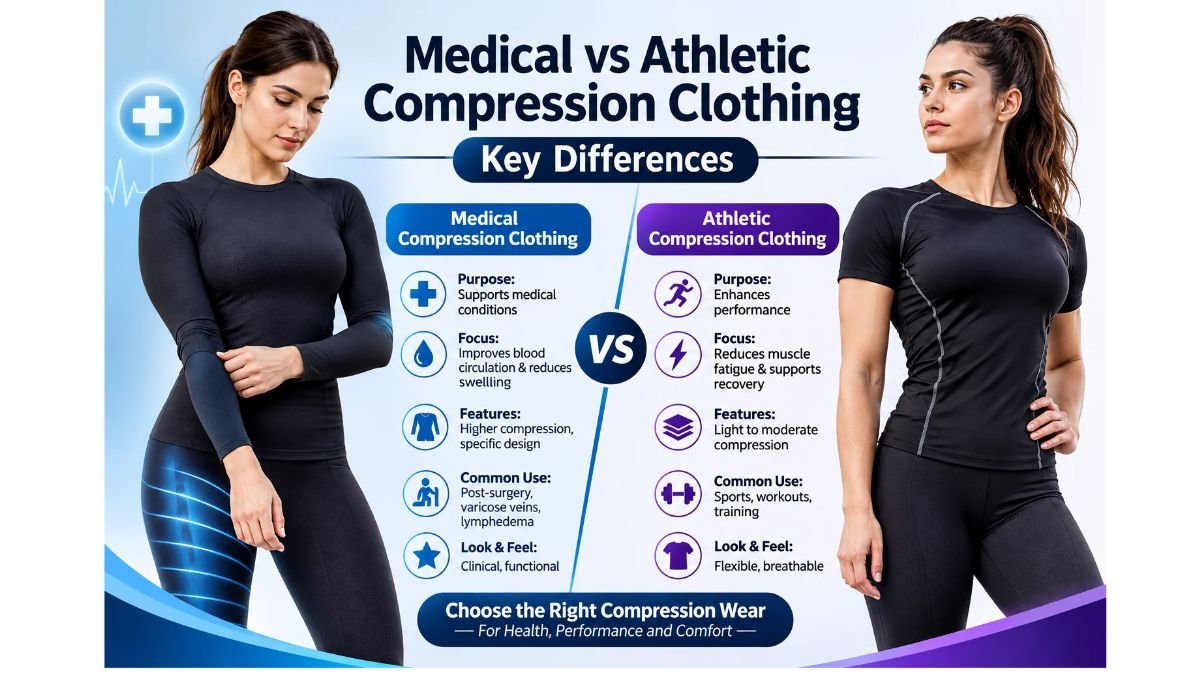
Compression uniforms are close-fitting athletic garments designed to apply controlled pressure to the body. They are commonly made from elastic fabrics that stretch during movement and return towards their original shape.
These garments are used in several sports and fitness activities. They may include compression shirts, leggings, shorts, training tops, and full-body base layers.
The main purpose of compression clothing is to provide a secure fit without loose fabric getting in the way. Athletes may prefer this style because it stays close to the body during physical activity.
Compression uniforms are different from ordinary fitted sportswear. A fitted garment follows the body’s shape, while compression clothing is specifically designed to apply pressure through its fabric and construction.
Main Features of Compression Uniforms
Compression uniforms have several features that distinguish them from regular athletic clothing:
- Close-fitting construction
- Stretch fabrics with good recovery
- Flexible design for active movement
- Smooth seams and comfortable finishing
- Secure waistbands and cuffs
- Lightweight material options
- Different designs for various sports
- Custom colours, logos, and team branding
The exact features depend on the sport, garment type, and intended level of compression.
Why Are Compression Uniforms Popular in Sports?
Compression uniforms have become a familiar part of modern athletic clothing. Many athletes prefer garments that stay secure during movement and provide a close-fitting feel.
Their popularity is also connected to the growth of performance sportswear and specialised activewear collections.
1. Secure Fit During Exercise
Loose clothing can move around during running, cycling, and other physical activities. Compression uniforms are designed to remain close to the body.
This secure fit can make them practical for athletes who prefer minimal fabric movement during training.
2. Flexible Movement
Stretch fabrics allow compression garments to move with the body. This is important during exercises that involve bending, stretching, running, and lifting.
The garment should provide a secure fit without restricting normal movement.
3. Suitable for Different Sports
Compression uniforms are available in several styles. Athletes can choose shirts, shorts, leggings, and full-length garments according to their activities.
They are commonly used in gym training, running, cycling, football, basketball, and other sports.
4. Easy to Layer
Compression clothing can be worn as a base layer under sports uniforms or training clothes.
Its close-fitting construction makes layering easier than wearing multiple loose garments.
5. Modern Athletic Appearance
Compression uniforms are also popular because of their streamlined appearance.
Brands can create different designs using colour combinations, printed graphics, team logos, and custom patterns.
Types of Compression Uniforms
Compression uniforms are available in different styles. Each garment serves a particular purpose and offers different coverage.
Compression Shirts
Compression shirts are close-fitting tops designed for the upper body.
They may feature short sleeves, long sleeves, or sleeveless designs. Athletes can wear them during gym sessions, running, and team training.
Common features include:
- Stretch fabric
- Body-hugging construction
- Flat or smooth seams
- Flexible sleeves
- Lightweight material options
Compression shirts can also be worn beneath team jerseys or other sportswear.
Compression Training Tops
Compression training tops are designed for workouts and athletic training. They provide a close fit while allowing the wearer to perform different movements.
These tops are available in short-sleeve, long-sleeve, and sleeveless styles.
Brands developing compression training tops should consider fabric stretch, recovery, breathability, seam placement, and sizing. The garment should remain comfortable during repeated movement.
Compression Leggings
Compression leggings cover the legs and are commonly used for gym workouts, running, and athletic training.
They are generally made from stretch fabrics that provide a snug fit.
Important design features may include:
- Elastic waistbands
- Flexible fabric
- Reinforced seams
- Gusset construction
- Full-length or cropped designs
The correct fit is important. Leggings should remain secure without causing uncomfortable pressure.
Compression Shorts
Compression shorts provide close-fitting coverage around the hips and thighs.
They are used in several sports and can be worn alone or beneath other athletic clothing.
Fabric stretch, waistband construction, and seam placement are important when developing these garments.
Full-Body Compression Suits
Full-body compression suits cover larger areas of the body.
They may be used in specialised sports or athletic environments where full-body coverage is required.
These garments require careful pattern development because the fit must work across different body areas.
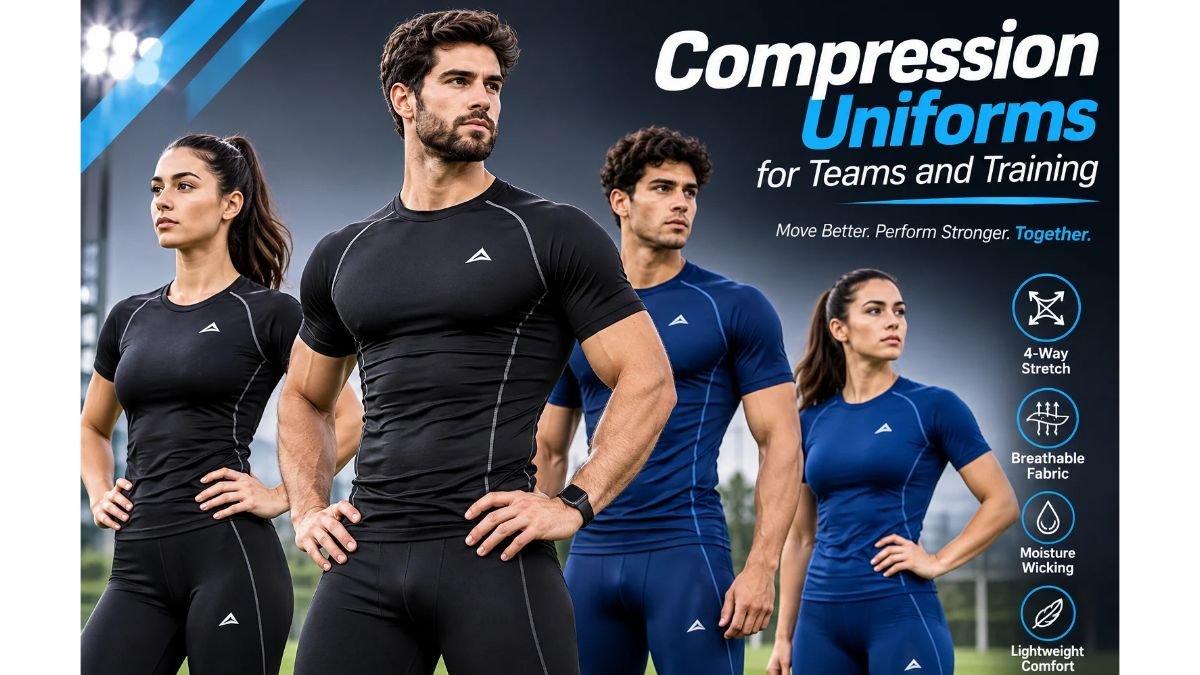
Team Compression Uniforms
Sports teams may use coordinated compression garments as part of their training or competition clothing.
These uniforms can include matching shirts, shorts, leggings, and base layers.
Custom logos, colours, names, and numbers help create a consistent team appearance.
What Is Compression Training Clothing?
Compression training clothing refers to athletic garments designed with close-fitting construction and stretch materials. These garments are commonly worn during exercise and sports training.
They may include compression shirts, leggings, shorts, sleeves, and training tops.
Unlike ordinary gym clothing, compression training clothing is designed to provide a snug feel. The fabric stretches around the body while maintaining a secure fit.
Athletes may choose these garments because they prefer clothing that stays in place during movement.
Important Features of Compression Training Clothing
When selecting compression training clothing, consider the following features:
Stretch and recovery: The fabric should stretch during movement and return towards its original shape.
Moisture management: Some performance fabrics are designed to move moisture away from the skin and dry relatively quickly.
Breathability: Fabric construction affects airflow and comfort during exercise.
Seam construction: Smooth seams can help reduce irritation during repetitive movement.
Fit: The garment should remain secure without creating excessive pressure.
Durability: Fabric and stitching should be suitable for repeated training and washing.
The right combination of these features depends on the activity and the garment’s intended purpose.
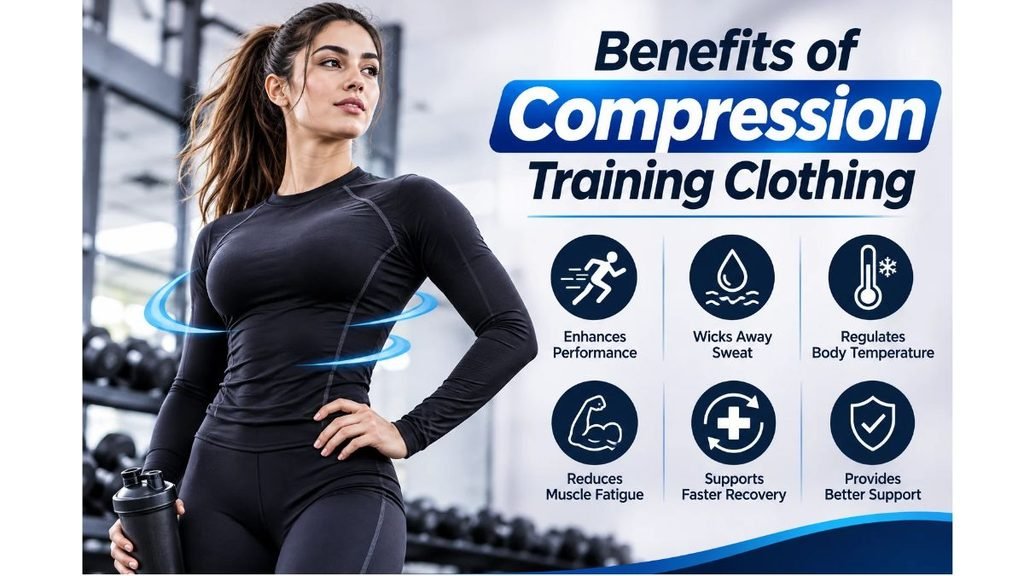
Benefits of Compression Training Clothing
Compression training clothing offers practical features that many athletes look for in sportswear.
1. Reduced Loose Fabric Movement
The close fit helps reduce excess fabric movement during exercise.
This can be useful during running, cycling, gym training, and team sports.
2. Comfortable Stretch
Compression garments use elastic materials that support a wide range of movement.
The fabric should allow athletes to bend, stretch, and move naturally.
3. Suitable for Layering
Compression shirts and leggings can be worn beneath other sportswear.
This makes them useful as base layers during training and outdoor activities.
4. Streamlined Design
The body-hugging fit creates a streamlined appearance.
Many sportswear brands use this style for modern athletic collections.
5. Different Fabric Choices
Compression garments can be developed using polyester, nylon, and elastane blends.
Different fabric combinations offer different levels of stretch, weight, and surface feel.
It is important to select a fabric based on the garment’s actual requirements.
Best Fabrics for Compression Uniforms
Fabric selection is one of the most important parts of compression uniform manufacturing. The material affects stretch, comfort, durability, moisture management, and fit.
Not every stretch fabric is suitable for compression clothing. The fabric must provide the required elasticity and recovery for the intended garment.
1. Polyester and Spandex
Polyester and spandex blends are widely used in performance clothing.
Polyester provides a lightweight fabric base, while spandex adds elasticity.
Potential benefits include:
- Stretch and flexibility
- Lightweight construction
- Suitable drying performance
- Different fabric weight options
- Compatibility with athletic designs
This combination can work for compression shirts, shorts, and leggings.
2. Nylon and Spandex
Nylon and spandex blends are commonly used in close-fitting activewear.
Nylon can provide a smooth feel and durability, while spandex helps the fabric stretch.
These fabrics may be suitable for compression leggings, shorts, and performance tops.
3. Polyester Interlock
Polyester interlock is a knitted fabric with a smooth construction on both sides.
It is used in sportswear because it can provide a comfortable surface and consistent fabric structure.
When blended with suitable elastic fibres, it may be used for different fitted athletic garments.
4. Four-Way Stretch Fabric
Four-way stretch fabric can stretch in both lengthwise and widthwise directions.
This makes it useful for garments that need flexibility across multiple movement directions.
It may be suitable for training tights, compression tops, and athletic base layers.
However, four-way stretch alone does not guarantee a particular compression level. Fabric weight, elasticity, garment measurements, and pattern construction also matter.
5. Moisture-Wicking Polyester
Moisture-wicking polyester is designed to move moisture away from the skin’s surface.
It is commonly used in athletic clothing for activities that involve sweating.
Brands should check the fabric’s actual performance rather than assuming that every polyester fabric has the same moisture-management properties.
Compression Uniforms vs Regular Sportswear
Compression uniforms and regular sportswear serve different purposes.
Regular sportswear may have a relaxed or fitted design. Compression uniforms are developed to provide a close fit with intended pressure.
| Feature | Compression Uniforms | Regular Sportswear |
|---|---|---|
| Fit | Close and snug | Relaxed or fitted |
| Main design | Controlled pressure | General comfort and movement |
| Fabric | Stretch performance materials | Cotton, polyester, blends, and other fabrics |
| Construction | Body-hugging pattern | Different fit styles |
| Common use | Training, sports, and base layers | Gym, casual wear, and sports |
| Fabric movement | Designed to stay close to the body | Depends on garment design |
| Sizing | Requires careful compression sizing | Usually follows standard garment sizing |
A regular fitted sports shirt is not automatically a compression garment. Buyers should check the product specifications to understand the intended fit.
How Should Compression Uniforms Fit?
Compression uniforms should fit closely without causing discomfort.
The garment should feel secure around the body while allowing normal movement. Excessive tightness can make clothing uncomfortable and may create unwanted pressure.
When checking the fit, consider these points:
- The garment should sit evenly against the body.
- The fabric should not create painful pressure points.
- You should be able to breathe normally.
- You should be able to bend and stretch comfortably.
- Seams should not dig into the skin.
- Waistbands should remain secure without feeling painful.
- The garment should not cause numbness or tingling.
If a garment causes pain, numbness, or restricted movement, stop wearing it and check whether the size or design is suitable.
Compression clothing should not be made tighter simply to create a stronger feeling of pressure.
How to Choose the Right Size
Correct sizing is essential for compression uniforms. A garment that is too large may not provide the intended fit, while one that is too small may feel restrictive.
Check Body Measurements
Measure the body areas required by the manufacturer’s size chart.
These may include:
- Chest
- Waist
- Hips
- Thigh
- Inseam
- Arm length
Use the same measuring method recommended by the brand.
Follow the Size Chart
Different manufacturers use different sizing standards.
A medium compression shirt from one brand may not fit like a medium shirt from another.
Always check the actual measurement chart instead of choosing a size based only on its label.
Consider Fabric Stretch
Fabric composition and stretch affect the final fit.
A nylon-spandex fabric may behave differently from a polyester-spandex blend. The percentage of elastic fibre also affects the material’s stretch and recovery.
Understand the Intended Compression Level
Not all compression garments provide the same pressure.
If a product has a specified compression level, the manufacturer should explain how that level is defined and tested.
For medical compression products, sizing and pressure requirements should follow professional guidance.
Compression Uniforms for Different Sports
Different sports place different demands on athletic clothing. Compression garments should be selected according to movement, comfort, and coverage requirements.
Gym Training
Compression shirts, shorts, and leggings are commonly used during gym workouts.
They provide a close fit that may be preferred during weight training and general exercise.
Look for flexible fabric and construction that does not restrict movement.
Running
Running clothing should support repeated movement and comfortable temperature management.
Compression shorts, tights, and tops may be selected according to weather and personal preference.
Lightweight materials and suitable seam placement can improve the wearing experience.
Football
Football players may wear compression base layers beneath their team uniforms.
These garments can include compression shirts, shorts, and leggings.
Teams may select matching colours and custom branding to create a coordinated appearance.
Basketball
Basketball involves running, jumping, and rapid changes in direction.
Compression shorts and shirts may be worn beneath standard basketball uniforms.
Flexible construction and secure fit are important for these products.
Cycling
Cycling clothing often uses close-fitting designs.
Compression-style garments may appeal to cyclists who prefer a secure feel. However, cycling garments also need appropriate construction, seam placement, and comfort for long periods of use.
General Fitness Training
For general fitness, the right compression uniform depends on the exercise.
A compression training top may suit gym workouts, while leggings or shorts may be selected for lower-body training.
Comfort and correct sizing should remain the main priorities.
How Are Compression Uniforms Manufactured?
Manufacturing compression uniforms requires careful planning because fabric stretch and garment fit must work together.
A structured manufacturing process helps brands achieve consistent results.
1. Design and Product Planning
The process starts with the garment design.
The brand decides the product type, fit, colours, fabric, and intended use.
A product brief should include:
- Garment sketches
- Measurement specifications
- Fabric composition
- Stretch requirements
- Colour references
- Stitching details
- Logo placement
- Label requirements
- Packaging instructions
Clear specifications help the manufacturer understand the expected product.
2. Fabric Sourcing
After the design is prepared, the manufacturer sources suitable fabric.
For compression clothing, brands should specify the required fibre composition, stretch, recovery, fabric weight, and colour.
Fabric swatches should be reviewed before final selection.
3. Pattern Development
Pattern development converts the design into garment pieces.
Compression garments require careful pattern measurements because the fabric is intended to fit closely around the body.
The pattern should account for the material’s stretch characteristics and the intended fit.
4. Sampling
A sample allows the brand to examine the product before bulk manufacturing.
Check the garment’s measurements, stretch, comfort, seams, and appearance.
For compression training tops, pay particular attention to the chest, shoulders, sleeves, and torso.
For leggings and shorts, check the waistband, hips, thighs, and crotch construction.
5. Cutting
Once the sample and fabric are approved, the manufacturer prepares the material for cutting.
Accurate cutting helps maintain consistent garment dimensions.
The cutting plan should consider fabric direction and stretch characteristics.
6. Sewing and Assembly
The cut pieces are assembled according to the approved design.
The manufacturer uses suitable stitching methods and seam construction for the fabric and garment type.
Stretch garments require seams that can handle repeated movement without easily breaking or becoming uncomfortable.
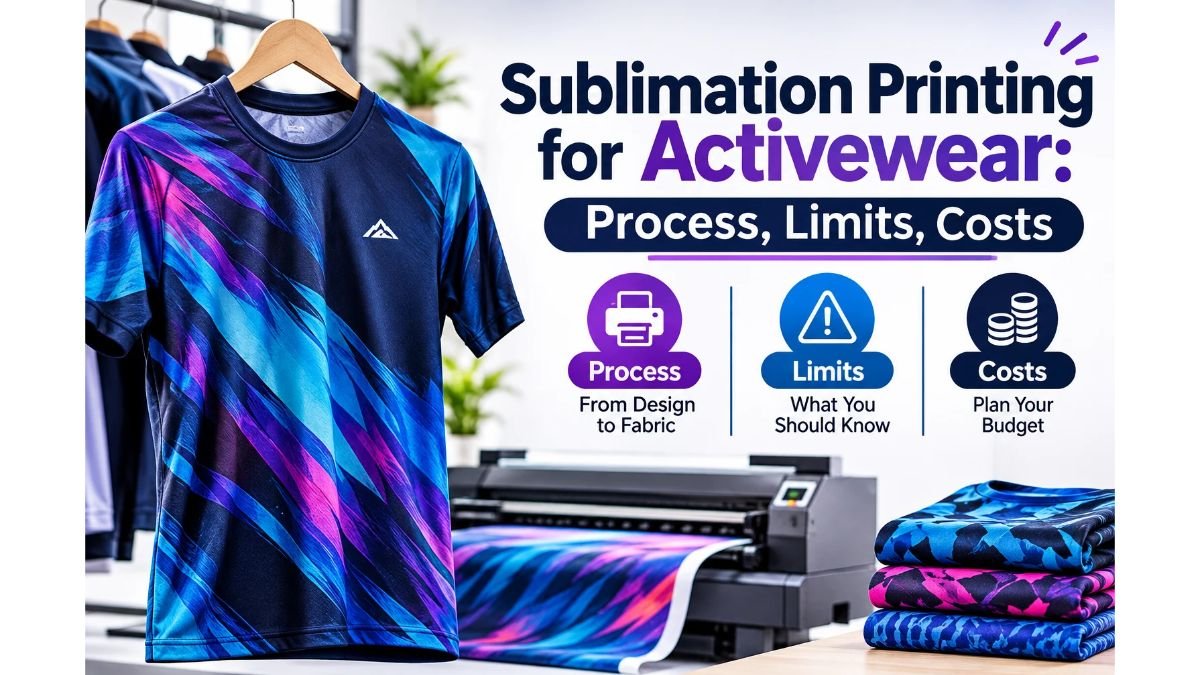
7. Printing and Embroidery
Brands may add logos, team names, numbers, or custom graphics.
Common decoration options include screen printing, heat transfer, sublimation, and embroidery where suitable.
The method should be selected according to fabric composition, artwork, and performance requirements.
8. Quality Control
Finished garments should be inspected against the approved specifications.
Quality checks may include:
- Measurement accuracy
- Stitch consistency
- Fabric defects
- Seam strength
- Print placement
- Colour consistency
- Elastic recovery
- Overall garment appearance
Clear quality requirements help maintain consistency across production orders.
9. Packaging and Shipping
The final products are folded, labelled, packed, and prepared for delivery.
Brands should confirm packaging requirements, shipping methods, export documents, and delivery terms before production is completed.
Custom Compression Uniforms for Clothing Brands
Custom compression uniforms allow clothing brands and sports teams to create products that match their identity and performance requirements.
Instead of choosing only standard designs, brands can specify different features.
Custom Colours
Brands can select colours according to their identity, team uniforms, or collection themes.
Colour references should be approved before bulk production to help maintain consistency.
Custom Logos
Logos can be added through printing, embroidery, or other suitable decoration methods.
The chosen technique should be compatible with the fabric and garment design.
Custom Fit
Brands can request different fit styles according to their target customers.
These may include fitted training tops, close-fitting compression shirts, and athletic leggings.
Custom Labels and Packaging
Private-label brands can add their own neck labels, size labels, hang tags, and packaging.
These details create a consistent product presentation.
Custom Team Uniforms
Sports clubs and teams can request matching compression shirts, shorts, and base layers.
Custom names, numbers, and colours can help create a coordinated collection.
How to Choose a Compression Uniform Manufacturer
Selecting a suitable manufacturer is an important step when developing compression clothing.
The supplier should understand stretch fabrics, close-fitting patterns, activewear construction, and quality requirements.
Review Manufacturing Experience
Ask whether the manufacturer has experience producing sportswear and compression-style garments.
Request examples of relevant products where available.
Discuss Fabric Options
Ask about polyester-spandex, nylon-spandex, and other suitable stretch fabrics.
Confirm fabric composition, weight, stretch, recovery, and availability.
Check Sampling Procedures
A manufacturer should offer a process for developing and reviewing samples.
Use the sample to confirm measurements, fit, construction, and branding before bulk production.
Understand MOQ
MOQ means minimum order quantity. It is the smallest quantity a manufacturer accepts for a particular order.
The MOQ may vary according to fabric, colour, design, and production method.
Confirm the quantity for each style and colour before placing an order.
Review Quality Control
Ask how the manufacturer checks measurements, stitching, fabric quality, and finished garments.
For compression clothing, discuss any specific stretch or recovery testing required.
Confirm Production and Shipping
Discuss the expected sampling schedule, bulk production timeline, packaging, shipping method, and export requirements.
A written quotation should clearly explain the agreed specifications and commercial terms.
Compression Uniform Manufacturing at Fashion Soul International
Fashion Soul International is a factory-owned custom clothing manufacturer based in Sialkot, Pakistan. The company provides private-label, OEM, ODM, white-label, cut-and-sew, and full-package apparel manufacturing for international clothing brands.
Its product categories include sportswear, activewear, tracksuits, T-shirts, hoodies, workwear, and other custom garments.
Brands developing compression uniforms can discuss their fabric requirements, garment measurements, fit, colours, construction, and branding specifications.
Fashion Soul International supports product development, fabric sourcing, sampling, bulk production, quality control, custom branding, packaging, and international shipping.
The company’s published standard MOQ starts at 100 pieces. Actual order requirements may vary according to the product, fabric, colour, and construction. Buyers should confirm the MOQ for their specific project.
Fabric and Product Development
Brands can discuss suitable stretch fabrics for compression-style products.
Options may include polyester blends, nylon blends, and fabrics containing elastane or spandex.
The material should be selected according to the intended fit, stretch, recovery, and garment performance requirements.
Sampling and Approval
A physical sample allows brands to review the garment before bulk production.
The sample can be checked for measurements, fit, fabric feel, stitching, and branding.
Any required changes should be completed before the final pre-production sample is approved.
Bulk Production and Quality Checks
After sample approval, the manufacturer can proceed with bulk production according to the agreed specifications.
Quality checks may cover measurements, seam construction, fabric defects, decoration, and finishing.
Brands should communicate any additional testing requirements before production begins.
Custom Branding and International Shipping
Custom logos, labels, hang tags, and packaging can help brands develop a consistent sportswear collection.
Fashion Soul International also supports international shipping arrangements. Buyers should confirm destination requirements, shipping terms, and documentation during the quotation process.
Frequently Asked Questions About Compression Uniforms
What Are Compression Uniforms Used For?
Compression uniforms are used for sports, gym workouts, running, cycling, and other athletic activities. They provide a close fit designed to apply controlled pressure to the body.
What Is Compression Training Clothing?
Compression training clothing refers to close-fitting athletic garments designed for exercise and sports training. Common examples include compression shirts, leggings, shorts, and training tops.
What Are Compression Training Tops?
Compression training tops are close-fitting shirts designed for athletic activities. They are made with stretch fabrics and may feature short sleeves, long sleeves, or sleeveless designs.
Are Compression Uniforms Good for Gym Training?
They can be suitable for gym training when the fit, fabric, and construction meet the wearer’s needs. They should allow normal movement without causing discomfort.
What Fabric Is Best for Compression Uniforms?
Polyester-spandex and nylon-spandex blends are common options. The best fabric depends on stretch, recovery, comfort, durability, and the intended activity.
Can Compression Uniforms Be Customized?
Yes. Brands can customise colours, logos, designs, labels, and packaging. The manufacturer should confirm fabric availability and production requirements before sampling.
How Tight Should Compression Uniforms Be?
They should feel snug and secure without causing pain, numbness, tingling, or restricted movement. Follow the manufacturer’s size chart and product instructions.
Can Compression Uniforms Be Worn Under Team Jerseys?
Yes. Many athletes wear compression shirts or shorts as base layers beneath team uniforms. The garment should fit comfortably and work with the outer uniform.
What Should Brands Check Before Ordering Compression Uniforms?
Brands should review fabric composition, stretch, recovery, measurements, sample quality, MOQ, production timelines, quality control, and shipping requirements.
Can Small Clothing Brands Manufacture Custom Compression Clothing?
Yes. Some manufacturers accept smaller production orders. Fashion Soul International publishes a standard MOQ starting at 100 pieces, although actual requirements depend on the product and project specifications.
Final Thoughts
Compression uniforms are an important category of modern sportswear. Their close-fitting construction and stretch fabrics make them suitable for different athletic activities, including running, gym training, cycling, and team sports.
Choosing the right garment requires attention to fabric, sizing, stretch, recovery, and construction. Compression training clothing and compression training tops should provide a secure fit without restricting normal movement.
For clothing brands, successful product development starts with clear specifications and suitable material selection. Careful pattern development, sample approval, and quality control help create consistent garments.
By working with a suitable custom clothing manufacturer, brands can develop compression uniforms that match their product requirements, team identity, and target customers.