B2B Fashion Wholesale: A Complete Guide for Clothing Businesses
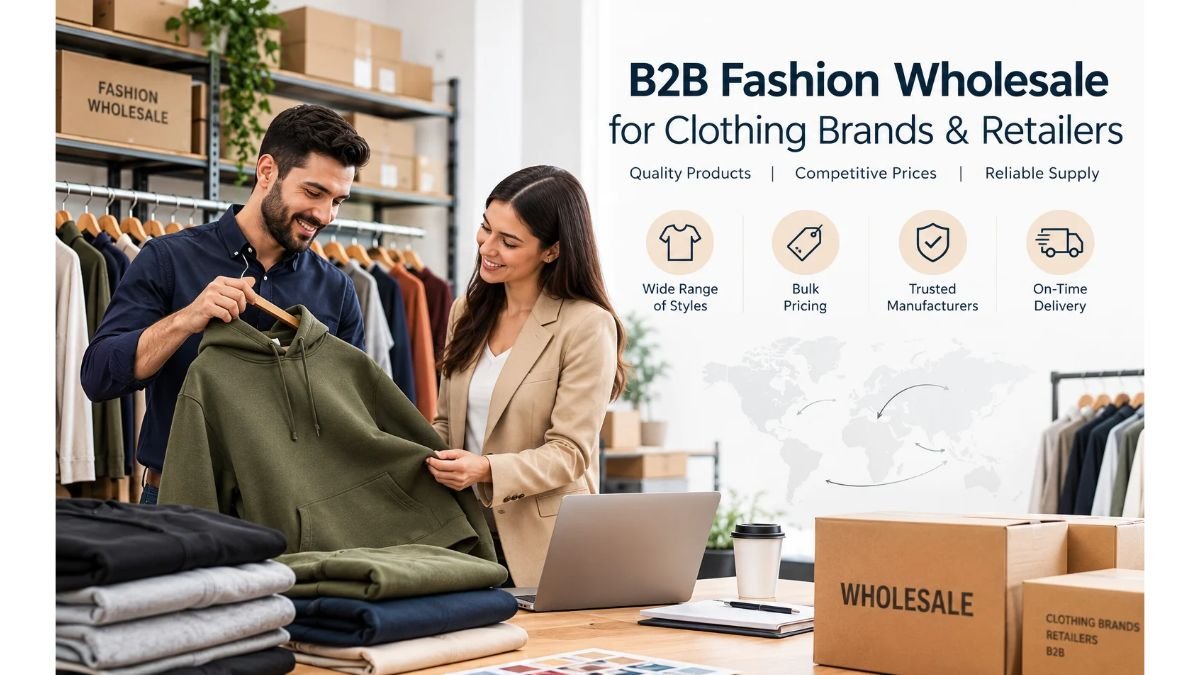
B2B fashion wholesale helps clothing retailers, boutique owners, online stores, and fashion brands source apparel in larger quantities for resale or business use. Instead of purchasing individual items at retail prices, businesses work with wholesalers, manufacturers, and suppliers to obtain products at negotiated wholesale rates.
Choosing the right sourcing model can affect product quality, profit margins, inventory management, and customer satisfaction. Some businesses purchase ready-made clothing from wholesalers, while others work directly with manufacturers to develop custom collections under their own brand names.
A reliable B2B wholesale platform can make it easier to discover suppliers, compare products, review order requirements, and communicate with potential business partners. However, buyers should understand the differences between wholesale marketplaces, direct suppliers, and clothing manufacturers before placing an order.
This guide explains how B2B fashion wholesale works, where businesses can source clothing, how to evaluate suppliers, and what to consider when building a profitable apparel business.
What Is B2B Fashion Wholesale?
B2B fashion wholesale is the business-to-business sale of clothing and fashion products in quantities intended for resale, distribution, or commercial use. The abbreviation B2B stands for business-to-business, meaning that the transaction takes place between businesses rather than directly between a business and an individual consumer.
For example, a clothing wholesaler may supply dresses, T-shirts, hoodies, jeans, jackets, or activewear to a boutique. The boutique then sells those products to its customers at retail prices.
B2B fashion wholesale can involve several types of products and business relationships, including:
- Ready-made clothing purchased in bulk.
- Wholesale apparel supplied to boutiques and retail stores.
- Fashion accessories sold to resellers.
- Private-label clothing produced for a retailer’s own brand.
- Custom garments manufactured according to a buyer’s specifications.
- Uniforms, workwear, and promotional apparel supplied to businesses.
The right model depends on a company’s budget, target audience, product requirements, and growth plans.
How Does B2B Fashion Wholesale Work?
The process usually begins when a buyer identifies the products needed for a store or clothing brand. The buyer then researches suppliers, requests product information, compares prices, and checks minimum order quantities.
After selecting a supplier, the buyer confirms the product specifications, order quantity, payment terms, delivery arrangements, and any branding requirements.
A typical transaction follows these steps:
- Identify products: Decide which clothing categories suit your customers.
- Find suppliers: Search wholesale directories, trade marketplaces, industry events, or manufacturer websites.
- Compare offers: Review prices, materials, sizing, quality, and order requirements.
- Request samples: Examine the garments before committing to a large order.
- Confirm the purchase: Agree on specifications, quantities, costs, and delivery terms.
- Inspect the order: Check the received goods against the approved requirements.
- Sell the products: Distribute the clothing through your store, website, or other sales channels.
Following a structured process reduces uncertainty and helps businesses build stronger supplier relationships.
What Is a B2B Wholesale Platform?
A B2B wholesale platform is an online marketplace or business sourcing system that connects buyers with suppliers. Depending on the platform, businesses may be able to browse product catalogs, review supplier profiles, compare offers, communicate with sellers, and submit purchase inquiries.
For fashion businesses, these platforms can provide access to clothing, accessories, footwear, fabrics, and other products from different suppliers.
Some platforms focus on ready-to-ship wholesale merchandise. Others support customized products, bulk purchasing, or connections with manufacturers.
Benefits of Using a B2B Wholesale Platform
A suitable platform can simplify several parts of the sourcing process.
Supplier discovery: Buyers can explore different vendors without contacting every business individually.
Product comparison: Product listings may help buyers compare styles, materials, colors, and prices.
Business communication: Messaging and inquiry tools can help buyers clarify order requirements before purchasing.
Market exploration: Retailers can discover new fashion categories and product trends for their target customers.
Convenience: Online sourcing allows businesses to research suppliers across different locations without immediately attending trade shows.
However, a platform listing does not automatically guarantee product quality, supplier reliability, or suitable commercial terms. Buyers must still conduct their own checks before making a financial commitment.
Types of B2B Fashion Wholesale Suppliers
Understanding supplier categories helps businesses choose the right partner for their operating model.
1. Ready-Made Clothing Wholesalers
Ready-made clothing wholesalers purchase or hold existing merchandise and sell it to other businesses in bulk.
They may offer products such as T-shirts, dresses, trousers, sweaters, jackets, and seasonal fashion items.
This model is useful for boutiques and retailers that want to stock products quickly without developing original designs. Buyers can often select from an existing catalog, although customization may be limited.
Before ordering, confirm available sizes, color options, inventory levels, replenishment possibilities, and return policies.
2. Clothing Manufacturers
Clothing manufacturers produce garments according to established designs or buyer specifications. Depending on their services, they may support fabric sourcing, pattern development, sampling, cutting, sewing, printing, embroidery, finishing, and packaging.
Working directly with a manufacturer can be suitable for businesses that need custom products or want greater control over garment construction.
For example, a brand developing a distinctive hoodie collection may need specific fabric weight, fit, stitching, prints, labels, and packaging. A suitable manufacturer can help turn these requirements into finished garments.
Manufacturing usually involves development time and production planning, so it may not be the fastest option for businesses that need immediate inventory.
3. Private-Label Suppliers
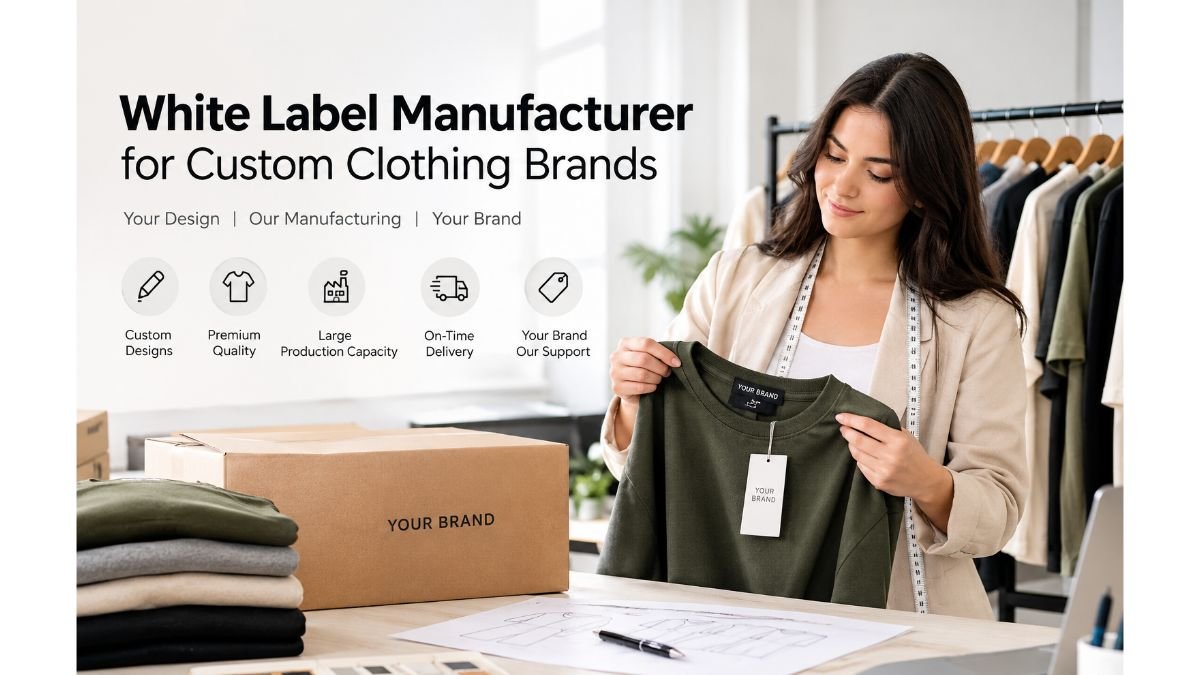
Private-label suppliers help businesses sell clothing under their own brand names. Depending on the arrangement, products may be manufactured using an existing design with custom branding or developed around the buyer’s specifications.
Private-label clothing can include T-shirts, hoodies, tracksuits, activewear, workwear, and other apparel categories.
Buyers should confirm which elements can be customized, including fabric, colors, sizing, labels, prints, embroidery, and packaging.
Private labeling is especially relevant to businesses that want to build brand recognition instead of selling only generic products.
4. Wholesale Distributors
Distributors purchase products from manufacturers or other suppliers and supply them to retailers or regional businesses.
They may provide access to established product ranges and help retailers source merchandise from a consolidated catalog.
However, distributors may have different pricing structures, product availability, and territory restrictions. Buyers should clarify whether the distributor is authorized to sell the products and whether repeat orders can be fulfilled consistently.
How to Choose the Right B2B Fashion Wholesale Supplier
The lowest quoted price does not always represent the best business decision. A supplier’s product quality, communication, delivery reliability, and ability to meet your requirements can have a greater effect on long-term profitability.
Use the following factors when evaluating potential partners.
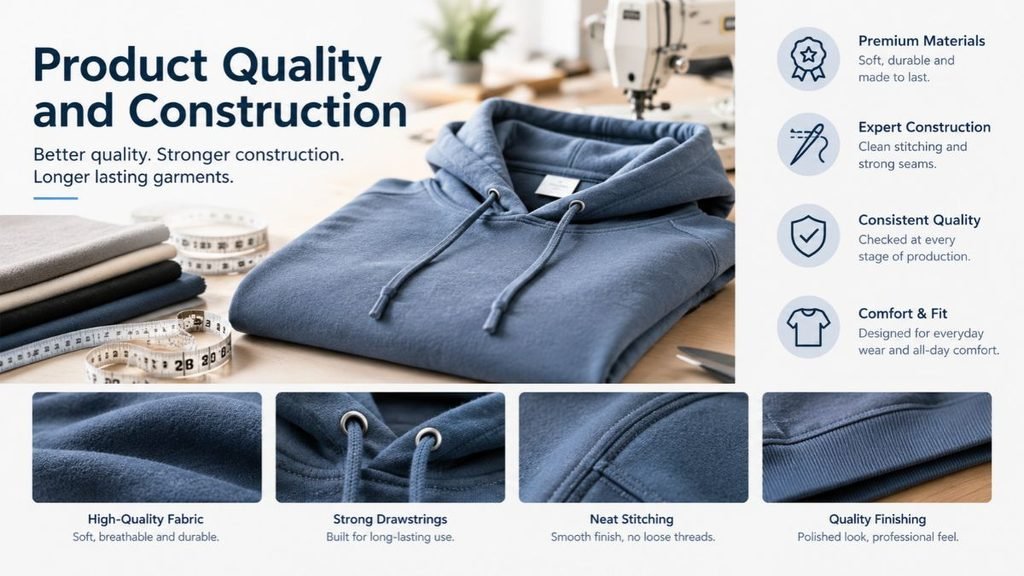
Product Quality and Construction
Examine the garment’s fabric, stitching, seams, fit, finishing, and durability. For printed clothing, review print placement, color consistency, and resistance to normal washing. For embroidered products, inspect thread quality and design execution.
Request samples whenever possible. A sample allows you to evaluate the actual product rather than relying entirely on catalog photographs.
For repeat orders, establish written quality specifications and agree on how defects or inconsistencies will be handled.
Minimum Order Quantity
Minimum order quantity, commonly called MOQ, is the smallest order a supplier accepts under specified conditions.
Some wholesalers sell products in small packs, while manufacturers may require larger production quantities. Customization can also affect MOQ because fabric purchasing, printing setup, and production planning may involve fixed costs.
Ask whether the minimum applies per style, color, size, or total order. These conditions can significantly affect the budget.
A smaller initial order may reduce inventory risk, while larger orders can sometimes lower the cost per garment. Compare the total financial commitment rather than focusing only on unit price.
Pricing and Payment Terms
Request a detailed quotation that explains the price per garment and any additional charges.
Depending on the order, costs may include:
- Product or manufacturing cost.
- Custom labels and packaging.
- Printing or embroidery.
- Sampling and development.
- Shipping and insurance.
- Import duties and applicable taxes.
- Payment processing or other agreed fees.
Confirm payment milestones, deposit requirements, cancellation conditions, and the process for handling delays or nonconforming goods.
Avoid sending substantial payments without checking the supplier’s identity, business details, and agreed transaction terms.
Production and Delivery Time
Ready-made stock may be available for faster dispatch, whereas custom production requires development and manufacturing time.
Ask for an estimated schedule covering sampling, sample approval, bulk production, inspection, dispatch, and delivery. Confirm which events can delay the schedule, such as fabric shortages or late specification changes.
For international orders, distinguish manufacturing time from transit time. They are separate parts of the delivery schedule.
Communication and Documentation
A professional supplier should be able to explain product specifications, order terms, and production requirements clearly.
Keep written records of quotations, approved samples, size charts, color references, artwork, packaging instructions, and agreed delivery dates.
Clear documentation reduces the risk of disagreements about what was ordered and what should be delivered.
How to Find Reliable Wholesale Clothing Suppliers
Finding potential suppliers is only the first stage. The goal is to identify businesses that can consistently meet your quality, budget, and delivery requirements.
Search Online Marketplaces and Supplier Directories
A B2B wholesale platform can help you discover suppliers by product category, location, or business type. Use specific searches such as wholesale women’s clothing, bulk hoodies, private-label activewear, or wholesale T-shirts.
Read supplier profiles carefully and look for meaningful business information. Product photographs alone are not enough to establish reliability.
Where available, review transaction policies, independent feedback, business verification, and dispute-resolution procedures.
Contact Suppliers Directly
Some businesses sell through their own websites rather than third-party marketplaces. Direct contact can help you understand their capabilities, product range, customization options, and ordering process.
When contacting a supplier, explain your business type, target market, intended products, estimated quantity, and required delivery period.
Providing useful details usually leads to a more relevant quotation.
Attend Fashion Trade Shows
Trade shows and sourcing events allow buyers to examine garments, compare materials, and speak directly with suppliers. They can also help businesses discover emerging brands, manufacturers, and product categories.
Prepare questions before attending and record each supplier’s product range, MOQ, lead times, and contact details.
After the event, follow up with shortlisted suppliers and request samples or formal quotations.
Verify the Supplier
Before committing to an order, take reasonable steps to verify the supplier’s business identity and capabilities.
Depending on the order size, this may include checking business registration details, requesting references, reviewing factory information, or arranging a third-party inspection.
For manufacturers, ask about their actual production processes and which services are performed in-house versus outsourced. Verify certifications directly when they are relevant to your purchasing requirements.
Understanding Wholesale Pricing and Profit Margins
Pricing is a central consideration in B2B fashion wholesale. A garment that appears inexpensive at the supplier level may become less profitable after shipping, duties, packaging, storage, and selling expenses.
Businesses should calculate the total cost of acquiring and selling each item.
Calculate the Landed Cost
Landed cost is the total cost of getting a product to the location where the business can sell or use it. Depending on the transaction, it can include the purchase price, freight, insurance, customs duties, and other import-related charges.
For example, imagine a retailer orders 200 T-shirts at $5 each.
- Product cost: 200 × $5 = $1,000.
- Shipping and other allocated costs: $300.
- Total landed cost: $1,300.
- Landed cost per T-shirt: $1,300 ÷ 200 = $6.50.
If the retailer sells each T-shirt for $13, the difference between the selling price and landed cost is $6.50 per shirt before other business expenses.
That difference is not automatically net profit. Payment fees, marketing, wages, rent, returns, discounts, and other operating costs must also be considered.
Understand Gross Margin
Gross margin expresses the difference between selling revenue and the cost of goods sold as a percentage of revenue.
Using the example above, if a T-shirt sells for $13 and its landed cost is $6.50, the gross margin before other expenses is 50%.
The formula is:
Gross margin = (Selling price − Cost of goods sold) ÷ Selling price × 100
Accurate costing helps businesses set realistic prices, compare suppliers, and avoid buying inventory that cannot support their target margins.
Ready-Made Wholesale vs. Custom Clothing Manufacturing
Both sourcing models can work well, but they serve different needs.
| Factor | Ready-Made Wholesale | Custom Manufacturing |
|---|---|---|
| Product selection | Existing styles | Buyer-defined or developed styles |
| Customization | Often limited | Can include fabric, fit, branding, and finishes |
| Initial process | Select products and order | Develop specifications and samples |
| Lead time | Depends on stock and shipping | Includes sampling and production |
| Brand identity | May be limited | Greater potential for differentiation |
| MOQ | Depends on supplier | Depends on product and production requirements |
| Main consideration | Stock availability | Development, approvals, and production control |
Ready-made wholesale can suit retailers who need established products and faster replenishment. Custom manufacturing may be more appropriate for businesses creating original collections or building a recognizable private-label brand.
Neither option is automatically better. The decision depends on your product strategy, resources, timeline, and target customer.
Private Label and Custom Apparel for Growing Fashion Brands
Businesses that want to establish their own fashion identity may consider private-label or custom clothing production instead of purchasing only generic wholesale products.
A private-label arrangement can provide branded garments with custom labels and selected design changes. A more comprehensive manufacturing project may involve new patterns, fabric selection, custom fits, decoration, packaging, and other product-development work.
Before starting, prepare a clear brief that includes:
- Garment type and intended customer.
- Reference images, sketches, or technical drawings.
- Fabric composition and desired fabric weight.
- Size chart and fit requirements.
- Color references and artwork.
- Label, logo, and packaging instructions.
- Target order quantity and budget.
- Required delivery destination and timeline.
A tech pack, when available, helps communicate measurements, construction details, materials, and finishing instructions. If you do not have a complete tech pack, ask the manufacturer what information is needed to begin development.
Always review and approve a pre-production sample before authorizing bulk production. This gives you an opportunity to identify problems before they affect the full order.
International B2B Fashion Wholesale: What Buyers Should Know
International sourcing can expand the range of suppliers available to a business. It may also introduce additional requirements related to shipping, customs, communication, and quality assurance.
Before ordering from another country, consider the following factors.
Shipping and Import Requirements
Confirm the shipping method, destination, expected transit time, and responsibility for freight and customs-related costs.
Ask which export documents the supplier will provide and which import documents you must arrange locally. Requirements vary by country and product.
For larger orders, clarify the agreed delivery terms in writing. If using Incoterms, confirm the named place and the specific rule that applies to the transaction.
Product Compliance
Clothing sold in different markets may be subject to requirements involving fiber-content labeling, care instructions, product safety, chemical restrictions, or other applicable regulations.
Research the rules for your destination market before production begins. Do not assume that a supplier’s existing labels or documentation automatically meet every country’s requirements.
Quality Control Before Shipment
Agree on acceptable quality standards before placing the order. Specify measurements, fabric details, color tolerances, decoration placement, and packaging expectations.
Depending on the size and risk of the purchase, you may arrange inspections during production or before shipment. Resolve any significant quality issues before approving dispatch.
Currency and Payment Risk
International transactions can involve exchange-rate changes, bank fees, and different payment practices.
Confirm the transaction currency and total payment obligations. Use appropriate payment safeguards and keep records of all agreed terms.
Common Mistakes to Avoid in B2B Fashion Wholesale
Even experienced retailers can encounter problems when they prioritize price or speed over supplier evaluation.
Choosing a supplier only because of a low price: Compare quality, shipping, service, and total landed cost before deciding.
Skipping sample checks: Photographs may not accurately represent fabric weight, fit, stitching, or finishing.
Ignoring MOQ conditions: Confirm whether the minimum applies to each style, color, or size combination.
Overordering too early: Large purchases can tie up cash and leave the business with unsold stock. Test demand when possible.
Failing to document specifications: Written approvals reduce the risk of incorrect colors, measurements, or artwork.
Overlooking shipping and import expenses: Calculate landed cost before setting retail prices.
Depending on one unverified supplier: Where practical, maintain backup sourcing options for important products.
Ignoring compliance requirements: Check the rules that apply to your products and sales markets before committing to production.
Avoiding these mistakes helps businesses make more informed purchasing decisions and develop more stable supply chains.
How Fashion Soul International Fits into the Sourcing Process
Fashion Soul International is a factory-owned custom clothing manufacturer based in Sialkot, Pakistan. Businesses seeking original garments or private-label apparel may consider a manufacturing partner when standard wholesale catalogs do not meet their design requirements.
Its stated services include product development, fabric sourcing, sampling, bulk production, quality control, custom branding, packaging, and international shipping. Available manufacturing arrangements include private-label, OEM, ODM, white-label, and cut-and-sew production.
The company’s published standard minimum order quantity starts at 100 pieces per style, although actual requirements can vary by product and project. Buyers should confirm the applicable MOQ, pricing, sample requirements, production schedule, and shipping arrangements directly before placing an order.
Fashion Soul’s manufacturing model differs from a general B2B wholesale platform. A marketplace primarily helps buyers discover or contact suppliers, while a clothing manufacturer works on producing garments according to an agreed brief and specifications.
For brands considering custom production, a practical first step is to prepare a product brief, estimated quantity, reference designs, and branding requirements. This information helps the manufacturing team assess the project and determine the next steps.
Frequently Asked Questions
What is B2B fashion wholesale?
B2B fashion wholesale is the sale of clothing and related fashion products from one business to another, usually in bulk quantities for resale, distribution, or commercial use.
What is a B2B wholesale platform?
A B2B wholesale platform is an online marketplace or sourcing system that connects business buyers with suppliers. Features may include product catalogs, supplier profiles, communication tools, and purchasing inquiries.
Is a B2B wholesale platform the same as a clothing manufacturer?
No. A platform connects buyers with suppliers, while a manufacturer produces garments. Some platforms list manufacturers, but the services and responsibilities of each business remain different.
How do I choose a reliable fashion wholesaler?
Compare product quality, prices, MOQ, available inventory, payment terms, shipping arrangements, and supplier communication. Request samples and verify business details before placing a substantial order.
Can small clothing brands buy wholesale?
Yes. Many wholesalers and some manufacturers work with smaller businesses, but order minimums vary. Ask about small packs, trial orders, or lower-MOQ production options where available.
Is private-label clothing part of B2B fashion wholesale?
Private-label clothing is one possible B2B sourcing model. It allows a business to sell garments under its own brand, with customization options depending on the supplier and agreement.
What should I check before placing an international clothing order?
Confirm product specifications, samples, order quantities, payment terms, shipping costs, delivery timelines, import requirements, and quality-control procedures. Keep the final agreement in writing.
How can I calculate the real cost of wholesale clothing?
Add the purchase price and applicable shipping, insurance, customs duties, packaging, and other acquisition expenses. Divide the total by the number of sellable units to estimate the cost per item.
Conclusion
B2B fashion wholesale gives clothing retailers, boutique owners, and fashion brands a way to source apparel for resale or commercial use. A suitable B2B wholesale platform can help businesses discover suppliers and compare products, while direct wholesalers and manufacturers provide different sourcing options.
The best approach is to evaluate more than the advertised price. Check product quality, minimum order quantities, supplier credibility, payment terms, delivery schedules, and total landed cost before committing to an order.
If you plan to sell existing clothing styles, ready-made wholesale may be a practical starting point. If you want original designs and stronger brand differentiation, private-label or custom manufacturing may be more suitable.
Start with clear product requirements, compare qualified suppliers, request samples when possible, and build your purchasing decisions around verified information. These steps can help create a more dependable sourcing process and support the long-term growth of your fashion business.