How to Find a Clothing Manufacturer: A Complete Guide for Fashion Brands
Finding the right clothing manufacturer is one of the most important steps in building a successful fashion business. A reliable manufacturing partner can help you turn original designs into finished garments, maintain consistent quality, manage production costs, and grow your clothing brand with confidence.
However, choosing a factory is not just about finding the lowest price. You must consider product quality, minimum order quantities (MOQs), fabric options, customization, sampling, production timelines, communication, and shipping.
If you are creating a fashion brand, this guide explains how to find a clothing manufacturer, evaluate potential suppliers, get your clothing designs made, and prepare for your first production order. You will also learn how private-label, OEM, ODM, and cut-and-sew manufacturing work.
What Is a Clothing Manufacturer?
A clothing manufacturer is a business that produces garments for fashion brands, retailers, wholesalers, and other customers. Depending on its services, a manufacturer may handle fabric sourcing, pattern development, cutting, sewing, printing, embroidery, finishing, labeling, packaging, and shipping.
Some manufacturers provide complete production services. Others specialize in specific products, such as T-shirts, hoodies, denim, sportswear, activewear, jackets, or workwear.
Before searching for a supplier, decide what type of manufacturing support your business needs. This makes it easier to identify factories that can produce your designs accurately.
For example, a startup selling custom oversized hoodies may need a manufacturer experienced in heavyweight fleece, relaxed fits, ribbed cuffs, screen printing, and woven labels. A sportswear brand may need moisture-wicking fabrics, stretch materials, flatlock seams, and performance-focused construction.
The right manufacturer should match your product requirements, order size, budget, and long-term business goals.
1. Define Your Clothing Brand and Product Requirements
Before contacting factories, clarify what you want to produce. Manufacturers need specific information to determine whether they can make your garments and provide an accurate quotation.
Start by identifying your product category. You might want to manufacture streetwear, casual clothing, activewear, sportswear, uniforms, baby clothing, or premium fashion pieces.
Next, define the important details of each product.
- Product type: T-shirts, hoodies, sweatpants, jackets, leggings, or other garments.
- Fabric: Cotton, polyester, French terry, fleece, denim, twill, or stretch blends.
- Fit: Oversized, regular, slim, relaxed, or fitted.
- Construction: Stitching methods, seams, panels, pockets, collars, and closures.
- Customization: Screen printing, embroidery, appliqué, patches, or other decoration.
- Branding: Neck labels, care labels, hang tags, and packaging.
- Quantity: Estimated units per style, color, and size.
- Target cost: Your expected manufacturing cost per garment.
You do not need every technical detail finalized before beginning your search. However, a clear product brief helps manufacturers understand your expectations.
It also prevents confusion when comparing quotations from different factories.
2. Decide What Type of Manufacturer You Need
Not every clothing factory offers the same services. Understanding the main manufacturing models will help you choose the right partner.
Private-Label Clothing Manufacturer
A private-label manufacturer produces clothing that carries your brand name. Depending on the factory, you may choose existing product styles and customize their fabric, colors, labels, prints, or other features.
This option can suit brands that want branded garments without developing every component from scratch.
OEM Clothing Manufacturer
Original Equipment Manufacturing (OEM) generally involves producing garments according to the buyer’s specifications, designs, or technical requirements.
This model is useful when you have a defined product concept and need a factory to manufacture it.
ODM Clothing Manufacturer
Original Design Manufacturing (ODM) involves a manufacturer offering its own product designs or development options that buyers can adapt or brand, depending on the agreement.
It may be suitable for brands that need development support or want to work from existing design concepts.
Cut-and-Sew Manufacturer
A cut-and-sew manufacturer produces garments by cutting fabric patterns and sewing the pieces together. This approach is useful for custom silhouettes, unique panel construction, and original garment designs.
Full-Package Manufacturer
A full-package manufacturer may coordinate several stages, including material sourcing, sampling, production, quality control, branding, and packaging.
Before choosing a model, ask exactly which services are included. Terms can vary between suppliers, so confirm responsibilities in writing.
3. Search for Clothing Manufacturers Online
Online research is one of the easiest ways to build an initial list of potential suppliers. However, a search result or attractive website does not automatically prove that a factory is suitable.
Use specific search phrases that match your product and production requirements.
Examples include:
- Custom clothing manufacturer for startups
- Private-label clothing manufacturer
- Cut-and-sew apparel manufacturer
- Low-MOQ clothing manufacturer
- Custom hoodie manufacturer
- Activewear manufacturer for fashion brands
- Streetwear clothing factory
- T-shirt manufacturer for private-label brands
- Full-package clothing manufacturer
- Clothing manufacturers in Pakistan or other relevant production regions
Review each manufacturer’s website carefully. Look for information about its product categories, customization services, sampling process, MOQ, quality control, and shipping arrangements.
A useful website should explain what the company actually manufactures rather than relying only on broad marketing statements.
Look for product photographs, descriptions of manufacturing services, examples of construction details, and clear contact information. If information is missing, ask direct questions before proceeding.
Create a shortlist of several factories rather than choosing the first company you find. Comparing multiple suppliers helps you evaluate differences in pricing, capabilities, communication, and production terms.
4. Use B2B Platforms and Industry Networks
Business-to-business platforms can help you discover manufacturers in different countries. They may provide supplier profiles, product categories, company details, and messaging tools.
You can also explore apparel trade fairs, textile exhibitions, sourcing events, professional fashion networks, and referrals from people working in the clothing industry.
These channels can be particularly useful when you need specialized manufacturing services or want to compare suppliers from different regions.
However, treat platform profiles as starting points, not final proof of reliability.
Before paying a deposit, verify the supplier’s business identity, manufacturing capabilities, product experience, and order terms. Ask whether the company owns its factory, works with partner factories, or acts as a sourcing intermediary.
An intermediary is not automatically unsuitable, but you should understand who will produce your garments and who is responsible for quality and delivery.
5. Check the Manufacturer’s Experience and Capabilities
A manufacturer may produce excellent basic T-shirts but lack experience with technical outerwear or performance sportswear. Choose a factory with relevant experience in your product category.
Ask potential suppliers questions such as:
- Which garment categories do you manufacture regularly?
- Can you produce my fabric type and construction?
- Do you support custom patterns and sizing?
- Which printing and embroidery methods are available?
- Can you source fabric and trims?
- Do you provide pre-production samples?
- What quality inspections are performed?
- What is your minimum order quantity?
- Which shipping methods and export services do you support?
Request examples of comparable products, while respecting any confidentiality restrictions that apply to other customers’ designs.
You should also confirm whether the factory has the equipment, materials, and skilled workers needed for your product.
For example, a complex jacket may require specialized machinery, lining construction, zippers, reinforcement, and detailed finishing. A simple promotional T-shirt may require fewer production steps.
The more closely a manufacturer’s experience matches your design, the easier it may be to communicate requirements and identify potential production issues.
6. Prepare Your Designs Before Contacting Manufacturers
One of the most common questions new founders ask is how to get your clothing designs made when you do not have a technical team.
The process begins with documenting your idea clearly.
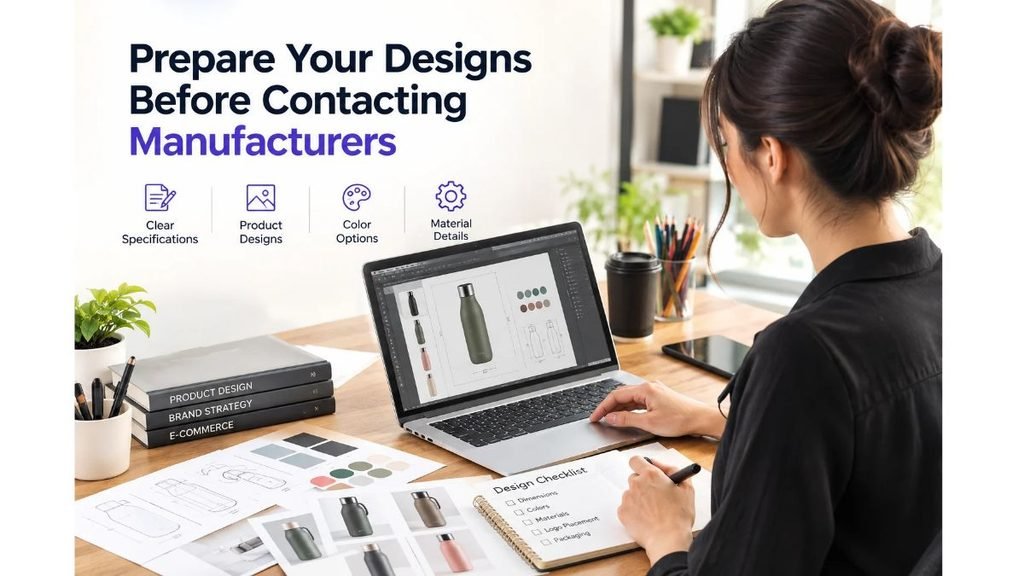
You can start with hand-drawn sketches, digital illustrations, reference photographs, a mood board, or an existing garment. These materials help communicate the appearance and purpose of your product.
For more precise development, prepare a technical pack, often called a tech pack. This document can include:
- Front and back technical drawings
- Fabric composition and weight
- Measurements and size specifications
- Stitching and construction details
- Color references
- Print and embroidery placements
- Label and trim requirements
- Packaging instructions
- Measurement tolerances
A tech pack reduces misunderstandings because the manufacturer has a reference for the intended garment.
If you do not know how to prepare one, ask whether the manufacturer offers product development or tech-pack assistance. Some factories can help convert a design brief into production-ready specifications.
When learning how to get your clothing designs manufactured, remember that a picture alone may not communicate fabric weight, exact measurements, seam construction, or fit. These details should be clarified before bulk production.
7. Request Quotations From Multiple Manufacturers
Once your requirements are clear, contact several suitable suppliers and request quotations.
Give each manufacturer the same core specifications wherever possible. Otherwise, one quote may include premium fabric and custom packaging while another covers only basic garment production.
Ask for a breakdown of the expected costs, including:
- Fabric and trims
- Pattern development
- Sample development
- Cutting and sewing
- Printing or embroidery
- Labels and hang tags
- Packaging
- Quality inspection
- Shipping and other applicable charges
Also ask about payment terms, MOQ, sample costs, production lead times, and the validity of the quotation.
A lower unit price does not always mean a lower total cost. Additional charges, shipping, import duties, defects, and unexpected production changes can affect your final budget.
Compare the full quotation rather than focusing on one number.
You should also clarify whether the price changes with order quantity, fabric selection, number of colors, garment complexity, or decoration methods.
8. Understand Minimum Order Quantity (MOQ)
Minimum order quantity is the smallest order a manufacturer is willing to accept under specified conditions.
Some factories require large orders because fabric purchasing, machine setup, and production planning become more efficient at scale. Other manufacturers offer smaller production runs for startups and emerging brands.
MOQ can apply per style, color, or another agreed production unit. Always confirm how the supplier calculates it.
For example, a factory might accept a particular total quantity but require separate minimum quantities for different colors. Size distribution and custom fabric requirements may also affect the quotation.
If you are starting with limited capital, ask about low-MOQ options, simpler construction, available stock fabrics, or a smaller initial product range.
Avoid placing a large order before you understand demand. A smaller launch can help you test customer interest, although the unit cost may be higher.
The goal is to choose an order quantity that balances production requirements, budget, and realistic sales expectations.
9. Order a Sample Before Bulk Production
Sampling is one of the most important stages when deciding how to manufacture clothing successfully.
A sample allows you to inspect the garment before committing to a larger production run. It helps you assess fit, fabric, construction, color, finishing, and overall appearance.
When reviewing a sample, check:
- Whether the fabric matches the approved specification
- Whether the measurements are correct
- Whether seams are secure and consistent
- Whether the garment fits as intended
- Whether prints and embroidery are positioned correctly
- Whether labels, trims, and closures are suitable
- Whether the finishing meets your expectations
Record any required changes and send clear feedback. Depending on the product, more than one sample round may be necessary.
Once the sample meets your requirements, approve it in writing and retain a reference for production.
Do not assume that approving a digital mockup is the same as approving a physical garment. The sample provides a more practical reference for material, fit, and construction.
10. Evaluate Quality Control Procedures
Quality control helps ensure that finished garments match the agreed specifications.
Ask the manufacturer how it checks materials, measurements, stitching, decoration, and finished products. Find out whether inspections occur during production as well as before shipment.
Useful quality checks may include:
- Fabric defects and color consistency
- Cutting accuracy
- Stitch density and seam strength
- Measurement tolerances
- Print registration and embroidery placement
- Trim attachment
- Finishing and appearance
- Final quantity and packaging
For larger orders, agree on acceptable defect levels and inspection procedures before production starts. An agreed inspection standard can make quality expectations easier to measure.
You should also establish what happens if products fail inspection. Clarify how defects are documented, who pays for rework, and how any replacement or corrective action will be handled.
Quality expectations should be written into the order documentation rather than left to verbal promises.
11. Compare Production Timelines and Communication
A manufacturer may have the right technical skills but still be a poor fit if communication is inconsistent or deadlines are unclear.
Ask for an estimated schedule covering sampling, material sourcing, bulk production, quality inspection, packing, and shipping.
The production timeline may depend on fabric availability, order quantity, product complexity, customization, and factory workload.
Confirm when the timeline begins. For example, bulk production may start only after sample approval, deposit payment, and material confirmation.
Evaluate how quickly the supplier responds to questions and whether its answers are specific. A reliable partner should explain requirements, identify missing information, and communicate potential delays as early as possible.
Agree on how progress updates will be shared. Written communication helps both sides track approvals, specifications, and changes.
Avoid relying on vague statements such as “delivery will be soon.” Request a project-specific schedule and confirm any critical dates in writing.
12. Check Payment Terms, Contracts, and Ownership
Before placing an order, review the manufacturer’s payment terms and production agreement carefully.
The agreement should identify the product, quantity, specifications, approved sample, unit price, payment schedule, expected timeline, shipping arrangements, and quality requirements.
It should also explain how changes, cancellations, defects, and delays will be handled.
For original designs, clarify intellectual property ownership and confidentiality. Confirm who owns custom patterns, artwork, technical files, molds, or other development materials, where relevant.
Do not assume that paying for a sample automatically gives you every associated file or exclusive rights to a design. Put these arrangements in writing.
Use payment methods appropriate to the supplier relationship and transaction. Verify payment instructions independently, particularly if bank details change unexpectedly.
A professional agreement cannot eliminate every risk, but it creates a clearer basis for resolving disagreements.
13. Choose the Right Manufacturing Country
Clothing manufacturers operate in many countries, and each sourcing location may offer different advantages.
When comparing countries, consider labor and material costs, product specialization, production scale, logistics, communication, import requirements, and shipping time.
The cheapest quoted price may not be the most economical choice once freight, duties, inspections, and quality risks are considered.
For international sourcing, confirm which party arranges shipping, what delivery terms apply, which export documents are provided, and whether import taxes are included.
Ask for the final destination and delivery method to be reflected in the quotation. If you are selling in the United States, United Kingdom, Canada, Australia, or Europe, check the labeling and product requirements that apply to your market.
You should also consider the manufacturer’s experience exporting to your destination.
Choose a location based on the complete production and delivery process, not simply its reputation for low-cost manufacturing.
14. Consider Fashion Soul International for Custom Clothing Production
Fashion Soul International is a factory-owned custom clothing manufacturer based in Sialkot, Pakistan. The company works with startups, growing brands, retailers, wholesalers, and international apparel businesses.
Its services include private-label manufacturing, OEM, ODM, white-label production, cut-and-sew manufacturing, and full-package production.
The company supports several stages of the process, including product development, fabric and trim sourcing, sampling, bulk production, quality control, custom branding, packaging, export documentation, and international shipping.
Its product categories include streetwear, activewear, sportswear, workwear, jackets, denim, casual wear, tracksuits, T-shirts, hoodies, baby clothing, and other custom garments.
What Is the Minimum Order Quantity?
Fashion Soul International publishes a standard MOQ starting at 100 pieces. The actual minimum depends on the product and project requirements, so confirm the quantity during quotation.
This can be relevant for founders who want to explore custom production without immediately planning a very large order.
Can You Get Your Own Designs Manufactured?
You can begin with a design brief, sketches, reference images, a mood board, or a technical pack when requesting information.
Before sampling, the manufacturer needs a finalized tech pack or a suitable reference sample for development. Ask about available assistance if you need help preparing your specifications.
What Happens After You Contact a Manufacturer?
A typical workflow includes inquiry and quotation, material sourcing, sample development, sample approval, bulk production, quality inspections, packaging, export documentation, and shipping.
The important step is to confirm the exact scope, cost, and timeline for your particular order before making a commitment.
If you are comparing potential partners, share your product type, estimated quantity, fabric preferences, customization needs, and destination. These details help the manufacturer assess the project and provide a more relevant quotation.
15. Common Mistakes to Avoid When Finding a Manufacturer
Choosing the wrong supplier can cause costly delays, inconsistent products, or excess inventory. Avoid these common mistakes when building your sourcing plan.
Choosing Only by Price
A very low quote may exclude important services or reflect different material specifications. Compare the full cost and confirm what is included.
Skipping Sample Approval
Bulk production should not proceed until you have checked the sample and confirmed the required changes. A physical reference helps reduce preventable misunderstandings.
Providing Incomplete Specifications
Vague instructions can result in incorrect sizing, fabric, placement, or construction. Provide clear documentation and confirm important details in writing.
Ignoring MOQ Requirements
A factory may accept your initial inquiry but later quote a minimum order that exceeds your budget. Discuss quantity and color requirements early.
Failing to Verify the Supplier
Do not rely only on product photographs or promises. Review company information, request relevant evidence, and confirm who will manufacture the garments.
Overlooking Shipping Costs
A production quote may not include freight, customs duties, taxes, or final delivery. Calculate the total landed cost before setting retail prices.
Ordering Too Much Too Soon
Large orders can leave a new brand with unsold stock. Consider demand, cash flow, and product testing before deciding on quantity.
16. A Practical Checklist for Finding a Clothing Manufacturer
Use this checklist to keep your sourcing process organized.
- Define your product category and target customer.
- Prepare a design brief and available technical specifications.
- Decide your estimated quantity and budget.
- Shortlist manufacturers with relevant product experience.
- Verify company details and manufacturing capabilities.
- Request comparable quotations from multiple suppliers.
- Confirm MOQ, sample costs, and payment terms.
- Review and approve a physical sample.
- Agree on quality standards and inspection procedures.
- Confirm the production schedule and shipping arrangements.
- Document design ownership and other contractual terms.
- Approve all specifications before bulk production.
Following these steps makes it easier to compare suppliers and manage your first production order with fewer surprises.
Frequently Asked Questions
How do I find a clothing manufacturer for a startup?
Start by defining your product, budget, and expected order quantity. Search for manufacturers specializing in your garment category, compare their services and MOQs, verify their capabilities, and request quotations. Order and approve a sample before placing a bulk order.
How do I find a garment manufacturer for custom designs?
Prepare sketches, reference images, measurements, fabric details, and decoration requirements. Contact manufacturers that offer custom development or cut-and-sew services. Ask whether they can create patterns, source materials, and produce a sample based on your specifications.
How can I get my clothing designs made without a tech pack?
You can begin with a clear design brief, sketches, photographs, or a reference garment. Ask whether the manufacturer provides technical development support. Before sampling, you will generally need finalized specifications or a suitable physical reference so the factory can understand the design accurately.
How much does it cost to manufacture clothing?
The cost depends on the garment type, fabric, construction, order quantity, printing or embroidery, labels, packaging, and shipping. Request an itemized quotation based on your specifications instead of relying on a general price estimate.
What is the difference between a clothing supplier and a manufacturer?
A supplier may sell finished garments, source products from other factories, or coordinate orders. A manufacturer produces garments directly or manages production through its own facilities and production arrangements. Confirm who will actually make your products before placing an order.
Can I manufacture clothing in small quantities?
Yes, some manufacturers accept smaller orders, although minimum quantities and prices vary. Ask about low-MOQ production, available fabrics, and simpler customization options. Confirm whether minimums apply per style, color, or another production unit.
How do I know if a clothing manufacturer is reliable?
Review its business information, relevant product experience, communication, sample quality, quotation details, and quality control procedures. Ask for evidence of capabilities and agree on specifications, payment terms, inspections, and delivery expectations in writing.
How long does clothing manufacturing take?
The timeline depends on sampling, material availability, design complexity, quantity, production capacity, inspections, and shipping. Ask for separate estimates for sample development, bulk production, and delivery. Confirm when the agreed production schedule begins.
Conclusion
Learning how to find a clothing manufacturer starts with understanding your product, preparing clear specifications, and identifying factories with relevant experience. From there, compare quotations, confirm minimum quantities, evaluate samples, and agree on quality standards before production begins.
The right partner should offer suitable manufacturing capabilities, transparent communication, clear pricing, and a process that matches your business needs.
Whether you are creating a fashion brand for the first time or expanding an established clothing line, careful supplier selection can help you manage costs, protect product quality, and build a more dependable supply chain.
Start with a clear product brief, shortlist suitable manufacturers, and request quotations based on your actual requirements. A well-planned first order gives your brand a stronger foundation for future growth.