Wholesale Clothing USA Suppliers: How to Find the Right Partner for Your Brand
Finding reliable wholesale clothing USA suppliers is an important step for retailers, boutique owners, e-commerce businesses, and fashion startups. The right supplier can help you source quality apparel, manage inventory, maintain consistent product standards, and build a recognizable clothing brand.
However, not every supplier offers the same products, prices, order quantities, or customization options. Some focus on ready-made clothing for resale, while others manufacture garments according to your designs. Understanding these differences helps you choose a supplier that fits your business model.
This guide explains how to find wholesale clothing suppliers in the USA, compare domestic and international sourcing options, evaluate product quality, understand minimum order quantities, and avoid common purchasing mistakes.
What Are Wholesale Clothing USA Suppliers?
Wholesale clothing USA suppliers are businesses that sell apparel in bulk to retailers, boutiques, online stores, resellers, and other businesses. They may distribute ready-made garments, provide blank apparel for customization, or manufacture clothing for private-label brands.
Wholesale suppliers generally offer lower per-unit prices for larger orders than typical retail purchases. However, actual pricing depends on product type, quantity, fabric, customization, shipping, and supplier terms.
There are several common types of clothing suppliers.
1. Ready-Made Wholesale Clothing Suppliers
These businesses sell finished garments that retailers can purchase and resell. Their products may include dresses, tops, jeans, jackets, activewear, casual clothing, and seasonal fashion items.
Ready-made wholesale suppliers can be suitable for boutique owners who want to stock products without developing original designs. Buyers should review available sizes, colors, restocking policies, and product availability before ordering.
2. Blank Apparel Suppliers
Blank apparel suppliers provide undecorated garments, such as T-shirts, sweatshirts, hoodies, polos, and other basic products.
These products are often used for screen printing, embroidery, promotional merchandise, uniforms, and custom apparel businesses.
Before purchasing, check fabric composition, garment weight, fit, sizing consistency, and whether the supplier supports repeat orders.
3. Private-Label Clothing Manufacturers
Private-label clothing manufacturers produce garments that a brand can sell under its own name. Depending on the manufacturer, services may include custom fabrics, garment construction, labels, tags, packaging, and design development.
This option is useful for businesses that want a distinct product identity instead of reselling standard wholesale inventory.
4. Dropshipping Clothing Suppliers
Dropshipping suppliers ship products directly to customers on behalf of a retailer. The retailer does not normally store the products in its own warehouse.
This model can reduce the need for upfront inventory investment. However, sellers should check shipping speed, product consistency, return policies, packaging options, and how inventory availability is updated.
5. Custom Clothing Manufacturers
Custom manufacturers create garments based on a buyer’s specifications, samples, or designs. They may support pattern development, fabric sourcing, sampling, cutting, sewing, printing, embroidery, and finishing.
These manufacturers are particularly relevant to businesses developing original collections or planning to grow beyond standard wholesale products.
Benefits of Working With Wholesale Clothing Suppliers in the USA
Working with a domestic supplier can offer practical advantages, especially when a business serves customers in the United States.
Potentially Faster Domestic Shipping
A supplier holding inventory in the United States may deliver orders faster than an overseas supplier shipping internationally. This can help retailers replenish popular products and respond to seasonal demand.
However, delivery speed depends on the supplier’s warehouse location, inventory availability, order processing time, and shipping service. Confirm these details before purchasing.
Easier Communication
Working with a US-based supplier may make communication easier for businesses operating in similar time zones. It may also simplify discussions about product specifications, returns, invoices, and order changes.
Convenient Product Returns
Some domestic suppliers offer return or exchange procedures that are easier for US buyers to manage. Policies differ significantly, so check whether wholesale orders are returnable and whether customized goods are excluded.
Opportunities to Inspect Products
Local suppliers may offer showrooms, sample purchases, or other ways to inspect products before placing a large order. This can be valuable when fabric feel, garment fit, and color accuracy matter.
Better Inventory Replenishment
If a supplier maintains reliable stock, retailers may be able to reorder successful products without developing a new collection. Ask whether products are regularly restocked and whether discontinued styles are announced in advance.
How to Find Reliable Wholesale Clothing USA Suppliers
Finding a supplier is only the first step. You must also verify whether the business can meet your product, budget, and delivery requirements.
1. Define Your Product Category
Start by identifying exactly what you want to purchase. A supplier specializing in women’s boutique clothing may not offer the same products or services as a blank T-shirt distributor.
Consider categories such as:
- Women’s and men’s casual clothing
- Boutique dresses and fashion tops
- T-shirts, hoodies, and sweatshirts
- Activewear and sportswear
- Workwear and uniforms
- Denim and outerwear
- Children’s clothing
- Blank garments for printing and embroidery
A clear product category makes supplier research more focused. It also helps you compare similar products rather than choosing a supplier based only on price.
2. Search Wholesale Directories and Trade Platforms
Business directories and wholesale marketplaces can help you discover suppliers by product category, location, and business model.
You can also search for manufacturers and distributors through industry trade shows, apparel sourcing events, business associations, and professional networks.
Treat directory listings as starting points rather than proof of reliability. Confirm the supplier’s business details, product specifications, shipping arrangements, and wholesale terms independently.
3. Review the Supplier’s Website
A professional website should provide useful information about the company’s products and ordering process.
Look for:
- Clear product descriptions and photographs
- Available sizes, colors, and materials
- Wholesale account requirements
- Minimum order quantities
- Pricing or quotation procedures
- Shipping and return policies
- Business contact information
- Customization and branding options
Missing information does not automatically mean a supplier is unreliable. However, unclear terms should be resolved before you commit money.
4. Request Samples
Product photographs cannot show every detail of a garment. A sample allows you to assess the actual fabric, stitching, fit, color, finishing, and overall construction.
For blank apparel, order samples from the specific product range you plan to sell. For custom manufacturing, request a development sample based on your design specifications.
Evaluate the sample against your intended retail price and customer expectations. If possible, wash and wear the garment to understand how it performs during normal use.
5. Compare Supplier Quotes
Request quotes from several suppliers using the same product specifications. Comparing similar offers makes it easier to identify meaningful price differences.
Ask each supplier to explain:
- Unit price at different quantities
- Minimum order quantity (MOQ)
- Sample costs
- Decoration or customization charges
- Packaging costs
- Shipping fees
- Estimated production or dispatch time
- Payment terms and applicable taxes
A lower unit price may not produce the lowest total cost. Shipping, import charges, packaging, defects, and inventory that does not sell can affect profitability.
How to Evaluate Wholesale Clothing Quality
Product quality influences customer satisfaction, repeat purchases, returns, and brand reputation. Before selecting a supplier, establish clear standards for the clothing you intend to sell.
Fabric and Material Composition
Check whether the garment uses cotton, polyester, cotton blends, fleece, denim, stretch fabrics, or another material.
The right fabric depends on the product’s intended use. For example, activewear may require stretch and moisture-management properties, while everyday T-shirts may prioritize softness, durability, and comfort.
Ask for the fiber composition and fabric specifications rather than relying only on descriptions such as “premium” or “high quality.”
Garment Construction
Inspect seams, stitching, hems, zippers, buttons, drawstrings, and other components. Uneven stitching, loose threads, weak seams, or poorly attached trims may indicate inconsistent production.
For larger orders, agree on acceptable quality standards before manufacturing or dispatch.
Fit and Size Consistency
Sizing differences can create customer complaints and costly returns. Review the supplier’s size chart and compare measurements with the garments your target customers expect.
For custom products, use a measurement specification that identifies key points such as chest width, body length, sleeve length, and waistband measurements.
Color and Decoration
Check whether the garment’s color matches the approved sample. For printed or embroidered products, examine placement, sharpness, stitching, durability, and alignment.
If the supplier will reproduce the same design across several production batches, document the approved artwork, colors, placement, and decoration method.
Understanding MOQ and Wholesale Pricing
Minimum order quantity, commonly called MOQ, is the smallest order a supplier accepts for a particular product or production arrangement.
Ready-made distributors may allow purchases by the piece, pack, or case. Custom manufacturers may set minimums by style, color, or production run.
For example, a supplier may require multiple units per size or a minimum number of garments in each color. Custom manufacturing can also involve minimum fabric purchases or setup costs.
Before ordering, ask these questions:
- Is the MOQ calculated per style or per color?
- Can sizes be mixed within an order?
- Does customization increase the MOQ?
- Are sample costs separate from bulk production?
- Are discounts available for larger quantities?
- What happens if a product is unavailable after you place an order?
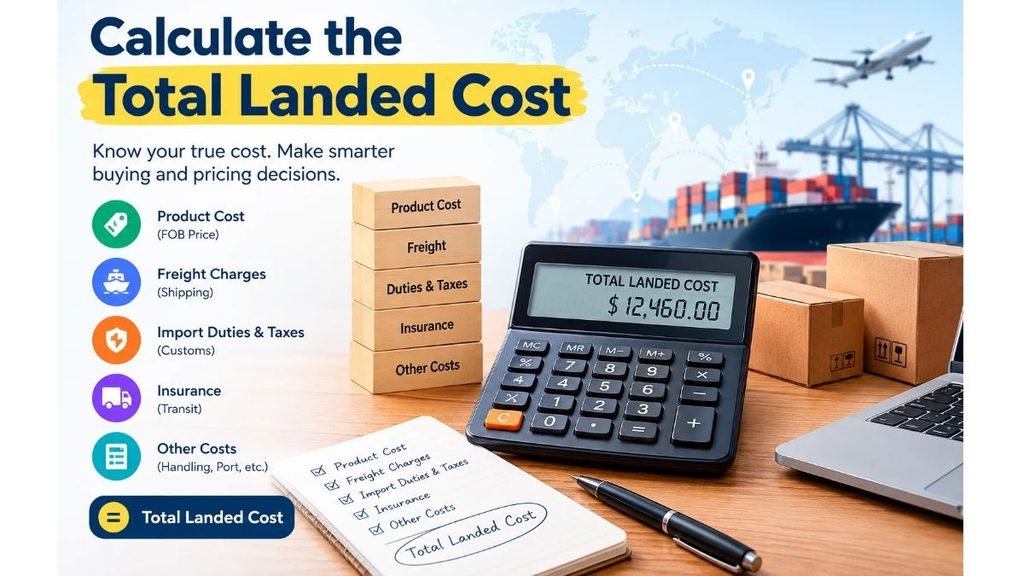
Calculate the Total Landed Cost
The landed cost is the total cost of getting a product ready for sale at its intended destination. It can include the purchase price, freight, insurance where applicable, import duties, brokerage, packaging, and other relevant charges.
A simple calculation is:
Total landed cost per unit = Total order and delivery costs ÷ Number of sellable units
For example, if a purchase and its related delivery costs total $2,000 for 200 sellable garments, the landed cost is $10 per garment.
This figure helps you estimate margins more accurately than the supplier’s unit price alone. Your final retail pricing should also account for payment processing, marketing, storage, returns, overhead, and profit.
Domestic vs. Overseas Clothing Suppliers
Choosing between domestic and international suppliers depends on your priorities. Neither option is automatically better for every clothing business.
| Factor | US-based supplier | Overseas supplier |
|---|---|---|
| Shipping | May be faster for US inventory | Depends on production location and shipping method |
| Product development | Depends on the supplier’s services | Many manufacturers offer custom development |
| Communication | May share your business time zone | Time-zone differences may require planning |
| Customization | Varies by supplier | Varies by factory and production capability |
| MOQ | Depends on inventory and supplier terms | Depends on the manufacturer and product |
| Import requirements | Usually simpler for domestic stock | May involve customs and import documentation |
| Product pricing | Depends on product and order size | Must include freight and applicable import costs |
A US-based distributor may be suitable when you need ready-to-ship products and frequent replenishment. An overseas manufacturer may be worth evaluating when you need custom construction, private labeling, or a particular production arrangement.
Compare the complete purchasing process rather than assuming one location guarantees lower costs or better quality.
When Should You Choose a Custom Clothing Manufacturer?
A custom manufacturer may be a better fit when standard wholesale products do not match your brand’s vision.
For example, you may want a distinctive hoodie fit, a specific fabric weight, custom embroidery, woven labels, or branded packaging. These requirements often need more coordination than purchasing ready-made clothing.
A custom manufacturer can potentially support:
- Product development and technical specifications
- Fabric and trim sourcing
- Pattern development and sampling
- Cutting and sewing
- Printing and embroidery
- Custom labels and hang tags
- Quality inspections
- Packaging and international shipping
The exact services depend on the manufacturer. Confirm what is included in the quote and what you must provide yourself.
Prepare Your Design Requirements
A tech pack is a document that explains how a garment should be made. It can include measurements, materials, construction details, artwork, colors, trims, labels, and finishing instructions.
A complete tech pack can reduce misunderstandings during sampling and production. If you do not have one, ask whether the manufacturer can assist with technical development.
Before placing a bulk order, review the sample carefully. Approve the fit, materials, construction, color, decoration, and other important details in writing.
How Fashion Soul International Supports Custom Apparel Sourcing
Businesses exploring wholesale clothing USA suppliers may also consider overseas manufacturers when they need customized garments rather than ready-made inventory.
Fashion Soul International is a factory-owned custom clothing manufacturer based in Sialkot, Pakistan. The company offers private-label, OEM, ODM, white-label, cut-and-sew, and full-package apparel production.
Its services cover product development, fabric and trim sourcing, sampling, bulk manufacturing, quality control, custom branding, packaging, export documentation, and international shipping.
Product categories include T-shirts, hoodies, streetwear, activewear, sportswear, workwear, jackets, denim, casual clothing, tracksuits, and other custom garments.
Minimum Order Quantity and Sampling
Fashion Soul International publishes a standard MOQ starting at 100 pieces. The actual minimum depends on the product and project requirements, so buyers should confirm the terms during quotation.
The company states that sample development typically takes 7–14 business days. Its published bulk production timeline is generally 20–35 business days after sample approval. Actual timing depends on the project, materials, order details, and production schedule.
Buyers should approve the physical pre-production sample before bulk production begins. This provides an opportunity to check whether the garment matches the agreed specifications.
Quality Control and International Shipping
The company’s stated workflow includes inline quality checks and pre-shipment inspection. Buyers should clarify the inspection scope, acceptance criteria, and any agreed reporting before production.
Fashion Soul International also supports custom branding, packaging, export documentation, and international shipping. Shipping arrangements may include options such as FOB or DDP, subject to the specific order and destination.
For US buyers, confirm the shipping terms, delivery estimates, applicable import duties, customs responsibilities, and total landed cost before committing to an order.
Fashion Soul International manufactures in Pakistan; it should be considered an international manufacturing option rather than a US-based supplier. You can review its services and request a project-specific quotation through the official website at https://fashionsoulintl.com/.
Common Mistakes to Avoid When Choosing Suppliers
Choosing Only by Price
The cheapest quote may involve different materials, weaker construction, less customization, or additional charges that appear later.
Compare specifications, samples, shipping, and service terms before deciding.
Ordering Too Much Inventory
Large orders can reduce the unit price but increase the amount of money tied up in stock. Unsold products can also become difficult to move when trends change.
Estimate demand carefully and consider testing products with a smaller order when the supplier’s terms allow it.
Ignoring Return and Defect Policies
Wholesale orders may have different return rules from retail purchases. Some suppliers do not accept returns for unsold stock or customized garments.
Clarify how shortages, damaged goods, incorrect items, and manufacturing defects will be handled.
Skipping Supplier Verification
Confirm the business’s identity, contact details, and commercial terms. For substantial orders, request references where appropriate and use payment arrangements that provide a clear transaction record.
Be cautious of pressure to pay immediately, unexplained price changes, or suppliers unwilling to provide written order details.
Failing to Approve a Sample
Bulk production magnifies mistakes. If the fit, color, artwork, or measurements are wrong, correcting the issue may be expensive.
Use a written specification and approve a representative sample before authorizing production.
How to Build a Long-Term Supplier Relationship
A reliable supplier relationship requires clear communication and consistent expectations.
Share accurate product specifications, order quantities, delivery requirements, and quality standards. Respond promptly to sample questions and document any approved changes.
After receiving an order, inspect the garments and record recurring issues. This information can help improve future orders and make supplier performance easier to evaluate.
For repeat purchasing, confirm that materials, colors, measurements, and construction remain consistent. Do not assume that a new batch will exactly match an earlier order without agreed specifications and quality checks.
As your business grows, review supplier performance periodically. Consider quality, communication, reliability, total cost, flexibility, and the supplier’s ability to support your next stage of growth.
Frequently Asked Questions
How do I find wholesale clothing USA suppliers?
Search wholesale marketplaces, business directories, trade shows, and industry networks. Narrow your search by product category and order requirements. Verify the supplier, compare written quotes, and order samples before committing to a large purchase.
Do wholesale clothing suppliers require a business license?
Requirements vary by supplier and state. Some wholesalers ask for business registration details or a resale certificate before opening a wholesale account. Check the supplier’s policies and the applicable tax rules for your business location.
What is a good MOQ for a new clothing business?
The right MOQ depends on your budget, product category, expected demand, and supplier terms. Smaller orders can reduce inventory risk, while larger orders may lower the unit price. Compare total costs and avoid purchasing more stock than you can reasonably sell.
Can I buy wholesale clothing and add my own brand label?
Some suppliers offer relabeling or private-label services, while others sell finished products only under existing brands. Confirm that relabeling is permitted and ask about label specifications, customization costs, and minimum quantities.
Are overseas clothing manufacturers suitable for US brands?
Yes, overseas manufacturers can be suitable for US brands seeking custom apparel or private-label production. Buyers should evaluate samples, production standards, communication, shipping, customs requirements, and total landed cost before choosing a manufacturing partner.
What should I ask before placing a wholesale clothing order?
Ask about product specifications, MOQ, unit price, sample availability, payment terms, dispatch or production time, shipping costs, returns, and defect policies. For custom garments, also confirm branding details, sample approval, quality standards, and packaging requirements.
Final Thoughts
Finding the right wholesale clothing USA suppliers requires more than comparing prices. Businesses should evaluate product quality, order quantities, customization options, shipping, supplier communication, and total purchasing costs.
Ready-made wholesalers can help retailers stock products quickly, while custom clothing manufacturers can support original designs and private-label collections. The best choice depends on your business model, customer expectations, and growth plans.
Define your requirements, compare suppliers using consistent specifications, and test product quality before placing a large order. With careful sourcing and clear communication, you can build a more reliable supply chain and create a stronger foundation for your clothing business.