Garment Manufacturing: Complete Guide to Clothing Production
Garment manufacturing is the process of turning fabric and other materials into finished clothing. It includes everything from design and fabric selection to cutting, sewing, quality control, packaging, and shipping.
For clothing brands, understanding this process makes it easier to plan products, communicate with manufacturers, control quality, and manage production costs.
The apparel manufacturing process can vary based on the garment, fabric, design, order quantity, and production method. A basic T-shirt has a different construction process from a jacket, activewear set, or pair of jeans.
This guide explains the complete clothing manufacturing process, the main stages of garment manufacturing process, common garment production methods, quality checks, materials, branding, and what buyers should prepare before production.
What Is Garment Manufacturing?
Garment manufacturing is the organized production of clothing from raw materials. Manufacturers transform fabrics into finished garments by following approved designs, measurements, patterns, construction methods, and quality requirements.
The process usually includes:
- Product design and development
- Fabric and trim sourcing
- Pattern development
- Sample making
- Sample approval
- Fabric cutting
- Sewing and assembly
- Printing or embroidery
- Garment processing
- Quality control
- Finishing
- Packaging
- Export and shipping
The goal is to produce garments that match the approved specifications.
For custom clothing brands, manufacturing can also include labels, hang tags, custom packaging, special finishes, and other branding details.
Fashion Soul International operates as a factory-owned custom apparel manufacturer in Sialkot, Pakistan. Its services include private-label, OEM, ODM, white-label, cut-and-sew, and full-package production.
How Does Garment Manufacturing Work?
The garment manufacturing process starts with a product idea and ends with a finished garment ready for delivery.
Although production can differ between factories and products, the main stages usually follow a clear sequence.
1. Design and Product Development
Every garment begins with an idea.
A clothing brand may start with:
- A sketch
- A technical pack
- Reference images
- A reference garment
- A design brief
- A creative brief
- A mood board
The manufacturer uses this information to understand the product.
Important details may include garment measurements, fabric type, color, stitching, trims, artwork, branding, and construction requirements.
A tech pack is useful because it gives the production team detailed instructions. However, a tech pack is not always needed for the first quotation. Fashion Soul states that customers can request a quotation using design briefs, reference images, sketches, or similar information. A finalized tech pack or suitable sample is needed before sampling begins.
2. Fabric and Material Selection
Fabric is one of the most important parts of clothing production.
The right material affects:
- Comfort
- Appearance
- Weight
- Stretch
- Durability
- Fit
- Cost
- Washing behavior
- Garment construction
Common apparel fabrics include cotton, fleece, French terry, polyester, spandex, nylon, denim, twill, canvas, and Oxford weave.
GSM is another important consideration. GSM means grams per square meter. It describes fabric weight.
For example, a lightweight T-shirt may use a lower GSM fabric, while a heavyweight hoodie may require a higher GSM fabric.
The manufacturer should confirm the fabric composition, weight, color, and finish before bulk production.
Fashion Soul’s listed fabric options include cotton, French terry, brushed fleece, polyester interlock, four-way stretch spandex, moisture-wicking polyester, denim, twill, canvas, and other materials.
3. Pattern Development
A pattern is the template used to cut fabric pieces.
Patterns define the shape and dimensions of different garment sections. These may include:
- Front panels
- Back panels
- Sleeves
- Collars
- Cuffs
- Waistbands
- Pockets
- Hoods
- Other construction pieces
Pattern accuracy matters because small errors can affect the final fit.
For custom clothing, manufacturers may develop patterns from a tech pack, approved measurements, or a physical reference garment.
Pattern grading may also be required when a design needs multiple sizes.
4. Sample Development
Before producing a large quantity, manufacturers usually create a sample.
A pre-production sample allows the buyer to check the actual garment.
The sample can reveal issues that may not be obvious in a sketch or digital design.
A buyer can review:
- Fit
- Measurements
- Fabric
- Color
- Stitching
- Construction
- Artwork
- Labels
- Trims
- Overall appearance
This stage is important because changes are easier before bulk production begins.
Fashion Soul International states that its sample development typically takes 7–14 business days after design confirmation and the required information is available.
5. Sample Approval
After the sample is completed, the buyer reviews it.
The buyer may request changes to measurements, fabric, artwork, stitching, or other details.
Once the sample meets the requirements, the buyer provides approval.
This approved sample becomes an important production reference.
Fashion Soul states that bulk production does not begin until the customer approves the physical pre-production sample in writing.
This step reduces misunderstandings between the brand and manufacturing team.
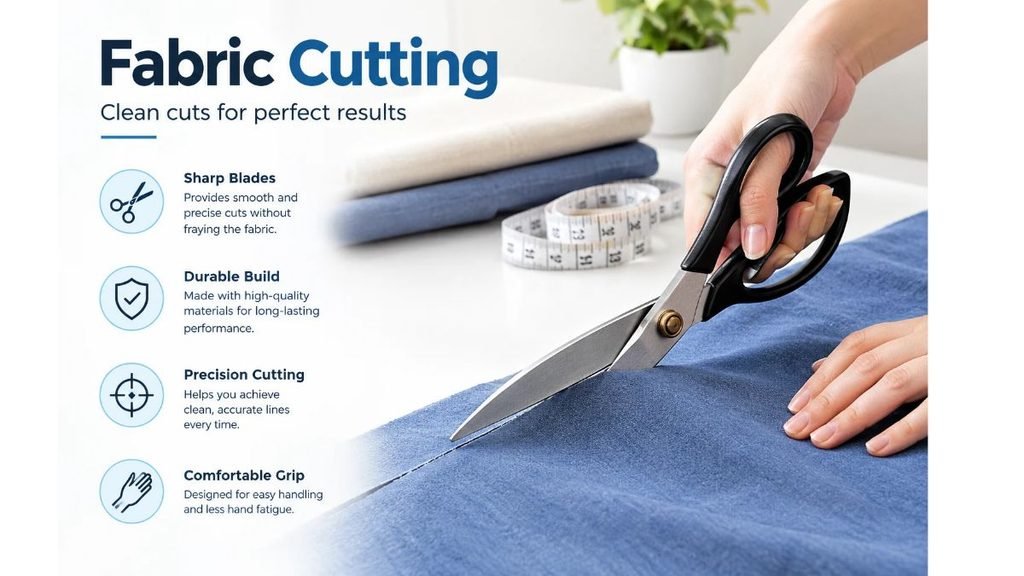
6. Fabric Cutting
After approval, fabric is prepared for cutting.
The fabric may be layered according to the production requirements. Cutting teams then use approved patterns to create the individual garment pieces.
Accurate cutting is essential.
If pieces are cut incorrectly, the final garment may have problems with:
- Measurements
- Symmetry
- Fit
- Shape
- Seam alignment
- Pattern placement
The cutting stage must therefore follow the approved pattern and specifications carefully.
7. Sewing and Garment Assembly
The cut fabric pieces are then assembled.
This is one of the main stages of the clothing production process.
Sewing teams join individual pieces to create the finished garment shape.
Depending on the product, sewing may include:
- Shoulder seams
- Side seams
- Sleeve attachment
- Collar construction
- Pocket attachment
- Waistband attachment
- Cuff attachment
- Hood construction
- Zipper installation
- Reinforced seams
Different garments require different sewing methods.
For example, a hoodie may require a hood, rib cuffs, kangaroo pocket, and heavier fabric. Activewear may require stretch-friendly seams and performance fabrics.
Cut-and-sew manufacturing is particularly useful when a brand wants custom patterns, seams, panels, and construction details.
8. Printing, Embroidery, and Branding
Branding is an important part of modern garment manufacturing.
A clothing brand may add:
- Screen printing
- Embroidery
- DTG printing
- Sublimation
- Puff printing
- Heat transfer
- Rubber printing
- Discharge printing
- Foil printing
The correct method depends on the fabric, artwork, garment construction, quantity, durability needs, and desired appearance.
For example, embroidery can add a raised stitched design, while screen printing is commonly used for graphic artwork.
Manufacturers may also add custom:
- Neck labels
- Woven labels
- Hang tags
- Packaging
- Branded bags
- Other brand elements
Fashion Soul lists several printing and decoration methods and notes that the method should be selected based on fabric composition, construction, design complexity, durability, quantity, appearance, and budget.
9. Garment Processing and Finishing
Garment processing refers to additional treatments or finishing steps performed on clothing.
These processes can change the look, feel, texture, or appearance of a garment.
Common garment finishes include:
- Acid wash
- Enzyme wash
- Stone wash
- Garment dye
- Pigment dye
- Custom overdye
These treatments are especially relevant for denim, streetwear, casual clothing, and fashion garments.
For example, an acid wash can create a distinctive washed appearance. Enzyme washing can affect the softness and surface appearance of certain fabrics.
Garment processing must be controlled carefully because the final result needs to match the approved product specifications.
10. Quality Control During Production
Quality control should not be limited to the final stage.
Manufacturers can inspect garments during production to identify problems early.
Important inspection points include:
- Measurements
- Stitch quality
- Seam construction
- Print placement
- Print registration
- Trim attachment
- Fabric defects
- Color consistency
- Overall appearance
Inline inspection helps identify problems while production is still underway.
This is important because correcting a problem during production can be easier than discovering it after the entire order is completed.
Fashion Soul states that its inline inspections include measurements, stitch quality, print registration, and trim attachment.
11. Final Quality Inspection
After production, garments undergo a final inspection.
The purpose is to check whether the finished products meet the agreed requirements.
Final checks can include:
- Measurements
- Visual appearance
- Construction
- Printing
- Embroidery
- Labels
- Trims
- Packaging requirements
Fashion Soul states that its orders undergo a pre-shipment AQL 2.5 inspection. The company also states that measurements are checked against customer specifications and visual quality is compared with the approved sample.
12. Garment Finishing
After quality inspection, garments can move through final finishing.
Finishing may include:
- Removing loose threads
- Folding garments
- Final appearance checks
- Adding tags
- Preparing labels
- Placing garments into poly bags
- Carton packing
The exact finishing requirements depend on the buyer’s specifications.
For retail products, presentation can be especially important because packaging becomes part of the customer experience.
13. Packaging and Labeling
Packaging protects garments during storage and transportation.
Depending on the order, garments may be:
- Folded
- Tagged
- Packed in poly bags
- Packed in cartons
Custom branding can also be added to packaging.
Labels may contain information such as:
- Brand name
- Size
- Fabric composition
- Care instructions
- Country of origin
- Other required details
International orders may require additional export documentation.
Fashion Soul states that its export documentation can include commercial invoices, packing lists, bills of lading, and certificates of origin.
Understanding the Clothing Manufacturing Process
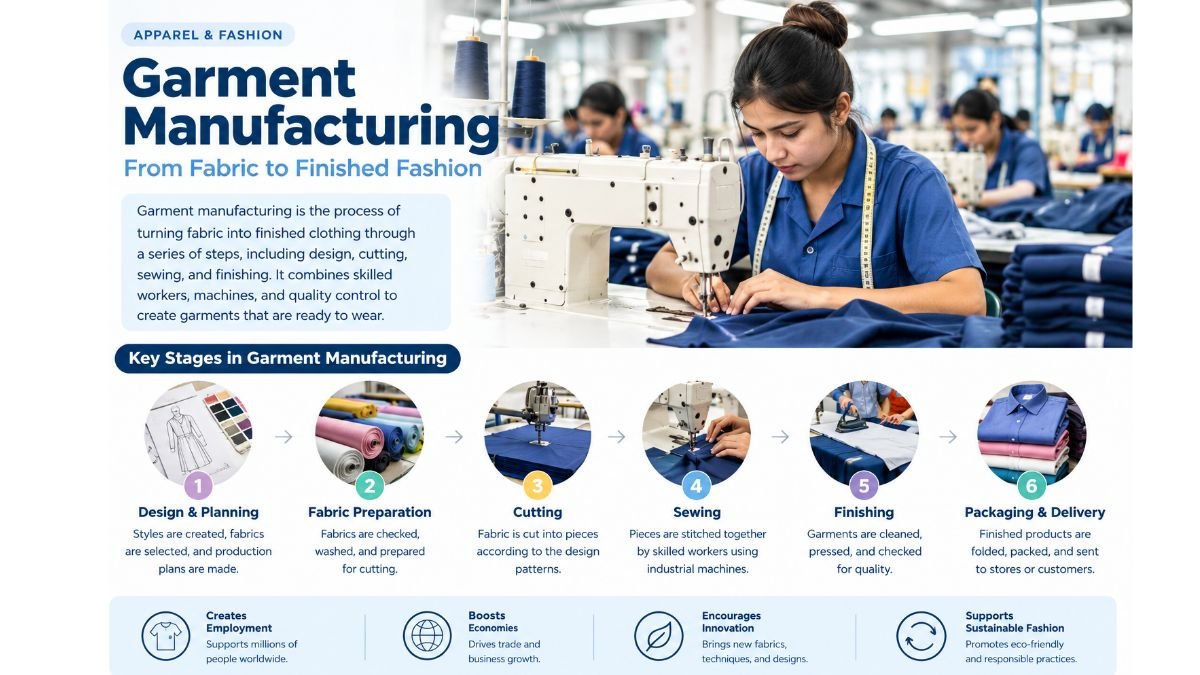
The clothing manufacturing process can be summarized as:
Design → Material Sourcing → Pattern Development → Sampling → Approval → Cutting → Sewing → Decoration → Garment Processing → Quality Control → Finishing → Packaging → Shipping
Not every product uses every step.
For example, a basic T-shirt may have a simpler process than a technical jacket.
A garment with embroidery, special washing, multiple panels, custom trims, and complex construction will require more production stages.
This is why manufacturers need accurate product information before providing a final production plan.
What Is the Garment Industry Process?
The garment industry process involves more than sewing clothes.
It connects product development, materials, manufacturing, quality control, branding, logistics, and distribution.
A typical supply chain may involve:
- Product concept
- Design development
- Material sourcing
- Pattern development
- Sample production
- Buyer approval
- Bulk manufacturing
- Quality inspection
- Branding and finishing
- Packaging
- Export
- Delivery
Different companies may handle these activities differently.
Some clothing brands manage design and materials themselves. Others use a full-package manufacturer that manages several stages on their behalf.
Full-Package Garment Manufacturing
Full-package production can simplify sourcing for clothing brands.
Instead of managing every supplier separately, a brand can work with a manufacturer that coordinates several production requirements.
A full-package service may include:
- Fabric procurement
- Trim sourcing
- Pattern development
- Sampling
- Production
- Quality control
- Labels
- Packaging
- Export documentation
- Delivery
Fashion Soul International offers full-package production and states that its services can cover these stages from material sourcing through delivery.
This model can be useful for startups and established brands that want one manufacturing partner for several production needs.
Types of Garment Manufacturing
There are several common manufacturing models.
Private-Label Manufacturing
Private-label manufacturing allows a brand to sell garments under its own brand identity.
Manufacturing may include custom:
- Fabric
- Fit
- Construction
- Printing
- Embroidery
- Labels
- Hang tags
- Packaging
Fashion Soul states that its standard private-label MOQ is 100 pieces per style, while actual requirements can vary by product and project.
OEM Manufacturing
OEM production is based on the buyer’s original designs and specifications.
The buyer may provide:
- Tech packs
- Patterns
- Design files
- Measurements
- Construction requirements
The manufacturer then produces the garments according to those specifications.
ODM Manufacturing
ODM manufacturing provides more development support.
A brand may start with:
- Mood boards
- Reference images
- Creative briefs
The manufacturing team can then support design development, patterns, prototypes, and production preparation.
White-Label Manufacturing
White-label manufacturing generally uses existing base garment designs that can receive branding customization.
Common products include:
- T-shirts
- Hoodies
- Joggers
- Tracksuits
- Activewear
This model can be useful when a business wants branded apparel without developing every garment from the beginning.
What Buyers Should Prepare Before Production
A smooth garment production project starts with clear information.
Before contacting a manufacturer, prepare as much of the following as possible:
- Product type
- Reference images
- Sketches
- Measurements
- Size range
- Fabric preference
- Fabric GSM
- Colors
- Artwork
- Logo files
- Labels
- Packaging requirements
- Target quantity
- Delivery destination
- Target timeline
A complete tech pack can make communication easier.
However, brands that do not have a finalized tech pack can still begin discussions with a manufacturer if the manufacturer offers development support.
MOQ in Garment Manufacturing
MOQ means minimum order quantity.
It tells buyers the smallest quantity a manufacturer can produce under particular production terms.
MOQ may vary according to:
- Product
- Fabric
- Color
- Construction
- Decoration
- Production model
- Customer requirements
Fashion Soul’s standard MOQ is listed as 100 pieces per style, per color, per size run, but the company notes that product-specific requirements should be confirmed during quotation.
Buyers should always confirm the MOQ for their specific product.
How Long Does Garment Manufacturing Take?
Production time depends on the product and project requirements.
Factors that can affect the timeline include:
- Design complexity
- Fabric availability
- Sample revisions
- Quantity
- Printing
- Embroidery
- Special finishes
- Packaging
- Quality requirements
- Shipping method
Fashion Soul publishes a typical sample turnaround of 7–14 business days and bulk production of 20–35 business days from sample approval. Shipping transit time is separate unless a specific quotation states otherwise.
These figures should be treated as published company timelines rather than a guarantee for every order.
Common Garment Manufacturing Problems
Production problems can happen when product requirements are unclear.
Common issues include:
Incorrect Measurements
Small measurement differences can change garment fit.
Solution: Provide a clear measurement chart and carefully review the pre-production sample.
Fabric Differences
A fabric may look different from what the buyer expected.
Solution: Confirm fabric composition, GSM, color, and finish before production.
Artwork Placement Errors
Prints or embroidery may be positioned incorrectly.
Solution: Provide clear artwork files and placement measurements.
Color Differences
Colors can vary between digital screens and physical materials.
Solution: Approve physical fabric or color references where required.
Poor Communication
Unclear instructions can create production mistakes.
Solution: Keep specifications, approvals, revisions, and production requirements documented.
How to Choose a Garment Manufacturer
When evaluating a manufacturer, look beyond the quoted price.
Consider:
- Manufacturing model
- Product expertise
- Sample process
- MOQ
- Fabric options
- Customization
- Quality control
- Branding services
- Packaging
- Production timeline
- Shipping options
- Communication
- Relevant certifications
- Experience with your product category
Ask how the manufacturer handles sample approval and quality control.
You should also understand which services are included in the quotation.
A factory that handles fabric sourcing, sampling, production, branding, inspection, and shipping may offer a different workflow from a supplier that provides only sewing.
Garment Manufacturing for International Clothing Brands
International brands often need manufacturing partners that understand export requirements and logistics.
Fashion Soul International is based in Sialkot, Punjab, Pakistan, and states that it ships finished apparel to brands in more than 30 countries. Its listed markets include the United States, United Kingdom, Canada, Australia, Europe, and other international markets.
The company also lists air freight, sea freight, DDP, and FOB shipping options.
For international buyers, it is important to confirm the shipping method, destination requirements, documentation, duties, and delivery terms for each order.
Garment Manufacturing at Fashion Soul International
Fashion Soul International is a factory-owned apparel manufacturer based in Sialkot, Pakistan.
The company provides private-label, OEM, ODM, white-label, cut-and-sew, and full-package manufacturing.
Its product categories include streetwear, sportswear, activewear, workwear, jackets, denim, casual wear, tracksuits, T-shirts, hoodies, baby clothing, fitness apparel, uniforms, and other apparel.
The company states that it has:
- 250+ workers
- Production capacity of approximately 50,000–100,000 garments per month
- Served 2,500+ brands
- Shipped to 30+ countries
These are company-published figures and should be understood in that context.
Its stated production workflow includes inquiry and quotation, fabric sourcing, sample development, sample approval, bulk production, inline inspection, pre-shipment inspection, packaging, export documentation, and shipping.
Frequently Asked Questions
What is garment manufacturing?
Garment manufacturing is the process of producing finished clothing from fabric and other materials. It can include design development, sourcing, pattern making, sampling, cutting, sewing, decoration, quality control, finishing, packaging, and shipping.
What is the apparel manufacturing process?
The apparel manufacturing process normally starts with product development and material selection. It then moves through pattern development, sampling, approval, cutting, sewing, decoration, quality control, finishing, packaging, and delivery.
What is the difference between garment processing and garment manufacturing?
Garment manufacturing covers the complete production process. Garment processing usually refers to additional treatments or finishing operations applied to garments, such as washing, dyeing, or special finishes.
What is a garment manufacturing process?
A garment manufacturing process is the sequence of steps used to turn fabric and materials into finished clothing. The exact steps depend on the product and its specifications.
What information does a manufacturer need?
Manufacturers commonly need product details, measurements, fabric preferences, colors, artwork, quantity, branding requirements, and delivery information. A tech pack can provide many of these details in an organized format.
What is MOQ?
MOQ means minimum order quantity. It represents the minimum quantity a manufacturer can produce under specific production terms. MOQ can vary based on the product, fabric, color, construction, and decoration.
Why is sample approval important?
Sample approval confirms that the physical garment matches the buyer’s requirements before bulk production begins. It provides a reference for production and quality checks.
What quality checks are used in garment production?
Quality checks can include measurements, stitching, fabric defects, print placement, embroidery, trims, construction, and overall appearance. Some manufacturers also perform final inspection before shipment.
Can a manufacturer provide branding?
Yes. Depending on the manufacturer, branding services may include printing, embroidery, woven labels, hang tags, and custom packaging.
What is full-package production?
Full-package production means a manufacturer can manage several stages of production for a brand. This can include fabric sourcing, trims, sampling, manufacturing, quality control, branding, packaging, export documentation, and delivery.
Final Thoughts on Garment Manufacturing
Garment manufacturing is a detailed process that connects design, materials, construction, quality control, branding, packaging, and logistics.
Understanding each stage helps clothing brands prepare better specifications and reduce avoidable production problems.
The key stages are simple to remember:
Design → Materials → Patterns → Sampling → Approval → Cutting → Sewing → Decoration → Processing → Quality Control → Finishing → Packaging → Shipping
The exact process will change according to the garment.
A basic T-shirt, technical activewear set, heavyweight hoodie, denim product, and structured jacket all require different production considerations.
For brands planning custom apparel, the most useful starting point is clear product information. Prepare your measurements, fabric requirements, artwork, branding details, quantity, and delivery expectations. Then work with a manufacturer that can explain the production process clearly.
If you are ready to discuss a custom apparel project, you can prepare your design brief, reference images, tech pack, or sample and contact the manufacturing team for a production quotation.