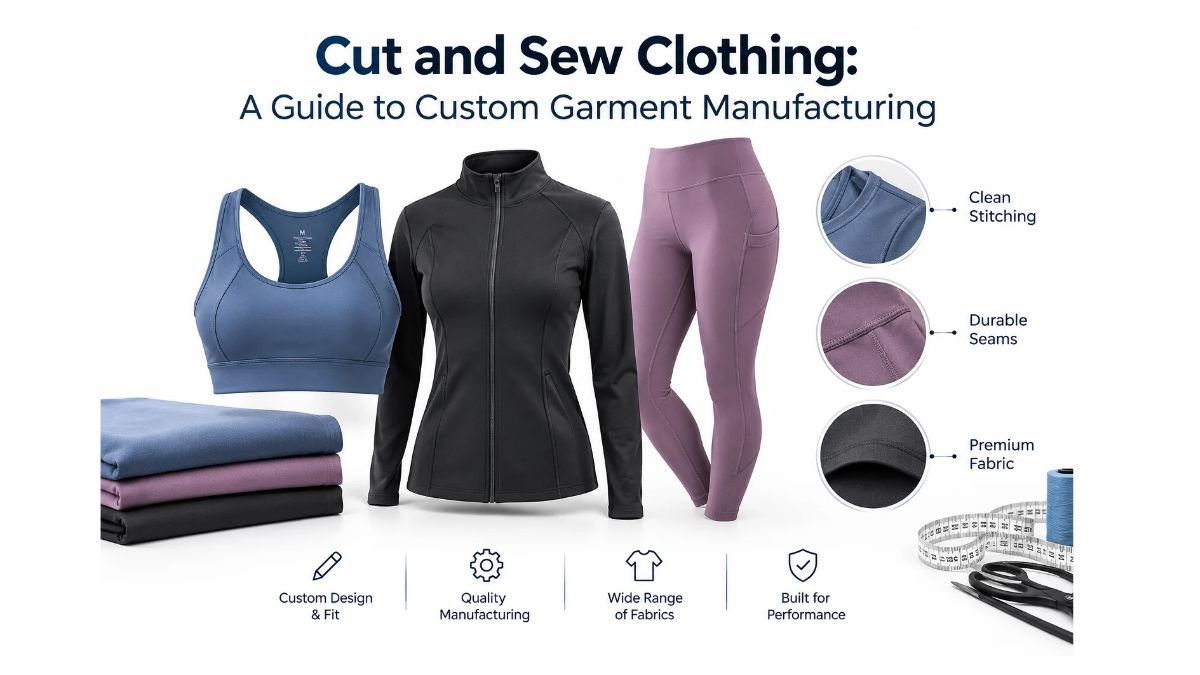
Cut and Sew Clothing: A Complete Guide to Custom Garment Manufacturing
Cut and sew clothing is a popular choice for brands that want more control over garment design, fabric, fit, construction, and branding. Unlike ready-made garments, cut and sew production starts with a specific design and uses fabric that is cut into individual pattern pieces before being stitched together.
This production method gives clothing brands greater flexibility. Brands can develop custom patterns, select fabrics, choose garment details, add labels, and create products that match their identity.
For startups and growing fashion businesses, understanding how cut and sew production works can make sourcing easier. It can also help brands communicate better with a clothing manufacturer and avoid costly production mistakes.
This guide explains what cut and sew clothing means, how the process works, what brands should prepare, and how to find a suitable custom clothing manufacturer.
What Is Cut and Sew Clothing?
Cut and sew clothing refers to garments made by cutting fabric according to patterns and then sewing those pieces together to create the finished product.
The process usually begins with a clothing design. The design is then developed into measurements, patterns, fabric specifications, and construction details.
The manufacturer cuts the selected fabric according to the approved pattern. The cut pieces are then assembled and sewn together.
This approach is different from using an existing blank garment. With cut and sew production, brands can have more control over the garment’s:
Shape
Fit
Fabric
GSM
Panels
Seams
Sleeves
Pockets
Necklines
Cuffs
Waistbands
Labels
Printing
Embroidery
Packaging
This makes cut and sew production useful for brands developing original clothing collections.
How Does Cut and Sew Manufacturing Work?
A typical cut and sew clothing process includes several stages. Each stage affects the final garment, so brands should review details carefully before bulk production.
1. Design Development
The process starts with a design concept.
A brand may have a finished sketch, technical drawing, tech pack, mood board, reference garment, or simple creative brief.
The manufacturer needs enough information to understand the intended garment.
Important details may include:
Garment type
Measurements
Fabric type
Fabric weight
Color
Fit
Construction
Decoration
Branding
Label requirements
Packaging requirements
A clear design reduces confusion during development.
2. Pattern Development
The design is converted into patterns.
Patterns determine the shape and dimensions of the individual fabric pieces. They are important for garment fit and construction.
For example, a hoodie may require separate pattern pieces for the body, sleeves, hood, cuffs, waistband, and pocket.
A custom pattern can be developed based on the brand’s measurements and desired fit.
3. Fabric Selection
Fabric is one of the most important decisions in cut and sew clothing.
Different garments require different fabric properties. A streetwear hoodie may need a heavier fleece, while a lightweight T-shirt may require a lighter cotton fabric.
Fabric selection can involve:
Fiber composition
GSM
Stretch
Hand feel
Durability
Breathability
Surface finish
Color
Shrinkage
Intended use
For example, Fashion Soul’s published fabric options include cotton, French terry, brushed fleece, bonded fleece, polyester interlock, four-way stretch fabrics, moisture-wicking polyester, Supplex nylon, denim, twill, canvas, and Oxford fabrics.
Fabric weights also vary by product. Custom T-shirts can use approximately 160–280 GSM fabrics, while hoodies can use heavier options such as 280, 320, 380, or 460 GSM.
The correct fabric depends on the garment and design requirements.
4. Sample Development
Before bulk production, a manufacturer develops a physical sample.
Sampling allows the brand to evaluate the actual garment instead of relying only on digital files.
Brands can check:
Fit
Measurements
Fabric
Color
Stitching
Construction
Print placement
Embroidery
Labels
Overall appearance
Fashion Soul states that its sampling process generally takes 7–14 business days after design confirmation and required information are available.
The exact timeline can vary depending on the product and development requirements.
5. Sample Approval
Sample approval is an important production checkpoint.
A brand should review the physical sample carefully. If changes are needed, they should be communicated before bulk manufacturing begins.
At Fashion Soul, bulk production proceeds after physical pre-production sample approval.
This creates a clear reference for the production team.
6. Fabric Cutting
Once the design and sample are approved, the fabric can be prepared for cutting.
The approved patterns guide the cutting process. Each pattern piece needs to match the required measurements and construction.
Accurate cutting is important because errors can affect the final garment’s shape and fit.
7. Sewing and Assembly
After cutting, individual fabric pieces are assembled.
Sewing operators join the pieces according to the approved construction requirements.
Different garments may require different stitching methods and machines.
Construction can include:
Seams
Hems
Necklines
Sleeves
Pockets
Cuffs
Waistbands
Panels
Zippers
Closures
The construction details should match the approved design and sample.
8. Decoration and Branding
Many cut and sew clothing brands add decoration after or during garment construction.
Common decoration methods include:
Screen printing
DTG
Sublimation
Embroidery
Puff printing
Heat transfer
Rubber applications
Discharge printing
Foil
The right method depends on the fabric, design, quantity, durability requirements, appearance, and budget.
Branding can also include woven labels, printed labels, hang tags, patches, and custom packaging.
9. Quality Control
Quality control should continue throughout production rather than only at the end.
Manufacturers may inspect measurements, stitching, construction, decoration, trims, and overall garment quality.
Fashion Soul’s published process includes inline inspection and pre-shipment AQL 2.5 inspection.
The approved sample and specifications provide important references for checking bulk garments.
10. Packaging and Shipping
After quality checks, garments can be folded, labeled, packed, and prepared for export.
Depending on the order and destination, international shipping can be arranged by air or sea.
Fashion Soul offers shipping options including DDP and FOB, depending on the quotation and order requirements.
Export documentation can include commercial invoices, packing lists, bills of lading, and certificates of origin where applicable.
Why Choose Cut and Sew Clothing?
Cut and sew production gives brands more design control than many ready-made options.
Custom Fit
Brands can create specific measurements and silhouettes.
This is useful when a brand wants an oversized, relaxed, fitted, cropped, boxy, or structured look.
Custom Fabrics
Brands can select fabrics based on the product’s purpose and design.
They can consider GSM, stretch, softness, durability, weight, and surface finish.
Unique Construction
Cut and sew allows brands to create custom panels, seams, pockets, sleeves, collars, and other construction details.
This can help a product look different from standard blank garments.
Custom Branding
Brands can add their own labels, prints, embroidery, hang tags, and packaging.
This supports a consistent brand identity.
Product Development
Cut and sew production is useful when a brand has an original idea that cannot be achieved easily with an existing blank garment.
Cut and Sew vs. Ready-Made Clothing
The main difference is the level of customization.
Ready-made garments are already developed and produced according to an existing design. A brand may add its logo or other decoration.
Cut and sew production starts with the brand’s requirements.
| Feature | Cut and Sew | Ready-Made |
| Pattern | Custom | Existing |
| Fit | Customizable | Usually predetermined |
| Fabric | Selected for the project | Already selected |
| Construction | Customizable | Existing |
| Branding | Highly customizable | Usually added afterward |
| Product development | Required | Limited |
| Design control | High | Lower |
Neither model is suitable for every business. The right approach depends on the brand’s product, budget, timeline, and customization requirements.
How to Get Custom Clothing Manufacturer
If you want to launch custom apparel, finding the right manufacturer is an important step.
The process of finding a manufacturer should begin with your product requirements.
Define Your Product
Before contacting manufacturers, decide what you want to produce.
For example, you may need:
T-shirts
Hoodies
Tracksuits
Jackets
Activewear
Workwear
Polos
Denim
Streetwear
Uniforms
Also define the expected fit, fabric, design, and branding requirements.
Prepare Your Design Information
A manufacturer needs clear information to understand your product.
Useful materials can include:
Technical drawings
Measurements
Tech packs
Reference images
Fabric requirements
Color references
Artwork
Logo files
Label designs
Packaging details
If you do not have a complete tech pack, some manufacturers may support product development using a creative brief, mood board, or reference images.
Ask About MOQ
MOQ means minimum order quantity.
A manufacturer may set MOQ based on style, color, size run, fabric, decoration, or production model.
Fashion Soul’s published standard MOQ is 100 pieces per style, per color, per size run. However, actual requirements can vary based on the product and production details.
Always request a product-specific quotation before planning your order.
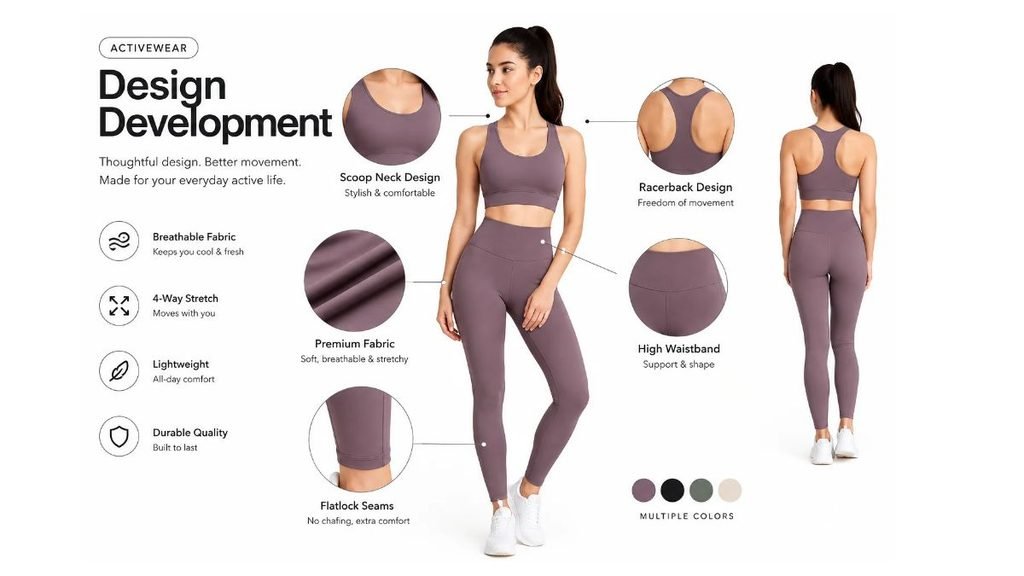
Activewear Design Development Features
Discover premium white label activewear designed for comfort, flexibility, durability, and everyday performance.
White Label Activewear Design and Fabric
Explore breathable fabrics, four-way stretch, lightweight materials, and comfortable fits for modern activewear collections.
Premium Activewear Design Development Details
Discover scoop necklines, racerback designs, supportive high waistbands, and flatlock seams for enhanced comfort and style.
Request a Sample
Do not rely only on photographs or digital mockups.
A physical sample helps you evaluate the actual garment.
Check:
Fabric
GSM
Measurements
Fit
Stitching
Color
Decoration
Labels
Construction
Give clear feedback before approving the production sample.
Review Quality Control
Ask the manufacturer how quality is checked during production.
Important questions include:
Is there inline inspection?
Are measurements checked?
Is the approved sample used as a reference?
Are prints and embroidery inspected?
Is there a final inspection?
What quality standard is used?
A clear QC process can help reduce production issues.
Understand Production Timelines
Ask how long sampling and bulk production may take.
Fashion Soul states that sampling generally takes 7–14 business days after design confirmation. Its published bulk production timeline is generally 20–35 business days from sample approval, excluding shipping unless the quotation states otherwise.
Actual timing can vary by product, order details, and production requirements.
Check Shipping Options
International brands should understand how finished garments will reach their destination.
Ask whether the manufacturer supports:
Air shipping
Sea shipping
DDP
FOB
Export documentation
This is particularly important when ordering from an overseas manufacturer.
What Should You Send to a Cut and Sew Manufacturer?
The more clearly you communicate your requirements, the easier product development becomes.
Product Name
Give the manufacturer a clear name for each product.
Technical Information
Include measurements, construction details, fabric specifications, and sizing.
Artwork
Provide high-quality artwork for printing or embroidery.
Color Information
Specify your preferred garment, print, trim, and branding colors.
Fabric Requirements
Mention fiber type, GSM, stretch, finish, and hand feel where known.
Branding Requirements
Include labels, hang tags, patches, packaging, and other brand elements.
Quantity
Provide your expected quantity by style and color if possible.
Destination
Tell the manufacturer where the goods need to be delivered so shipping options can be considered.
Common Products Made Through Cut and Sew
Cut and sew clothing can be used across many apparel categories.
T-Shirts
Brands can customize the fit, neck, sleeves, fabric weight, length, seams, and decoration.
Hoodies
Hoodies can be developed with different fleece weights, hoods, pockets, cuffs, panels, and branding.
Tracksuits
Tracksuits can combine custom jackets and trousers with specific fabrics, trims, panels, and embroidery.
Activewear
Performance products may require stretch fabrics, moisture management, ergonomic construction, and specific measurements.
Jackets
Cut and sew manufacturing can support custom outerwear shapes, panels, closures, pockets, and fabric choices.
Workwear
Workwear can be developed around specific functional requirements, durability needs, pockets, trims, and branding.
Streetwear
Streetwear brands often use custom silhouettes, heavier fabrics, unique panels, oversized fits, embroidery, prints, and custom labels.
Cut and Sew Clothing for Startups
Startups often need to balance customization with manageable production quantities.
A manufacturer that supports smaller production runs can make it easier to test a new product concept.
However, startups should not focus only on MOQ.
Other factors matter too, including:
Sample quality
Communication
Fabric options
Production capability
QC process
Branding support
Packaging
Shipping
Lead times
A lower MOQ does not automatically mean the manufacturer is suitable for a particular product.
The manufacturer should be able to meet the product’s actual requirements.
Private Label and Cut and Sew Manufacturing
Private label and cut and sew production can work together.
Private label focuses on selling products under a brand’s identity. Cut and sew focuses on how the garments are developed and constructed.
For example, a clothing brand may create a custom hoodie with a specific fabric, oversized fit, custom pocket, embroidered logo, woven label, and branded packaging.
The manufacturer can then produce that garment under the brand’s name.
Fashion Soul provides private-label, OEM, ODM, white-label, cut-and-sew, and full-package production services.
OEM, ODM, and Cut and Sew
These terms describe different approaches to product development.
OEM
OEM production is based on the customer’s original designs, technical information, or patterns.
ODM
ODM can begin with a mood board, reference image, or creative brief. The manufacturer supports development based on the customer’s direction.
Cut and Sew
Cut and sew describes the garment construction method. It can be part of an OEM, ODM, private-label, or full-package production project.
Understanding these terms helps brands communicate their requirements more clearly.
How to Choose a Custom Clothing Manufacturer
When comparing manufacturers, consider the complete production process.
Manufacturing Model
Confirm whether the company is a direct factory, sourcing agent, or trading company.
Fashion Soul International is a factory-owned apparel manufacturer based in Sialkot, Pakistan.
Product Experience
Check whether the manufacturer works with your type of apparel.
A sportswear brand may need different capabilities from a fashion or workwear brand.
Sampling Process
Understand how samples are developed, reviewed, and approved.
Quality Control
Look for a documented inspection process.
Customization
Ask about fabric, GSM, patterns, decoration, labels, packaging, and construction options.
Communication
Clear communication is important throughout product development.
Shipping
International brands should understand available shipping and export options before placing a bulk order.
Why Brands Work With Fashion Soul International
Fashion Soul International Private Limited is a factory-owned custom clothing manufacturer based in Sialkot, Punjab, Pakistan.
The company provides private-label, OEM, ODM, white-label, cut-and-sew, and full-package apparel production.
Its published services cover product development, fabric and trim sourcing, sampling, bulk production, quality control, branding, packaging, export documentation, and international shipping.
Fashion Soul states that its manufacturing operation includes more than 250 workers and production capacity of approximately 50,000–100,000 garments per month. The company also states that it has worked with more than 2,500 brands and ships finished apparel to more than 30 countries.
Its published standard MOQ is 100 pieces per style, per color, per size run, although requirements can vary by product.
The company also publishes ISO 9001:2015 and ISO 14001:2015 certifications, along with REX registration and other business registrations.
For brands developing custom apparel, these capabilities can support the process from product development through finished-garment delivery.
Common Mistakes in Cut and Sew Production
Starting Bulk Production Too Early
Always review and approve the physical sample before bulk production.
Providing Incomplete Information
Missing measurements, artwork, fabric specifications, or branding details can create confusion.
Ignoring Fabric Specifications
The same garment design can look very different in different fabrics.
GSM, fiber composition, stretch, and finish all affect the final result.
Focusing Only on Price
Production cost matters, but brands should also consider quality, sampling, communication, QC, shipping, and customization.
Not Planning Packaging
Labels, hang tags, polybags, cartons, and other packaging requirements should be discussed early.
Changing the Design During Bulk Production
Major changes after approval can create delays and additional costs.
Cut and Sew Clothing Production Checklist
Before starting production, confirm the following:
Final design approved
Measurements confirmed
Pattern approved
Fabric selected
GSM confirmed
Colors confirmed
Artwork approved
Labels confirmed
Decoration method selected
Sample approved
Quantity confirmed
MOQ confirmed
Production timeline confirmed
Quality control process understood
Packaging confirmed
Shipping method confirmed
Export requirements discussed
This checklist can help reduce avoidable communication problems.
Frequently Asked Questions
What does cut and sew clothing mean?
Cut and sew clothing is made by cutting fabric into pattern pieces and sewing those pieces together to create a finished garment.
Is cut and sew better than blank clothing?
It depends on the brand’s needs. Cut and sew offers more control over fit, fabric, construction, and design, while blank clothing can be simpler for basic products.
Can startups use cut and sew manufacturing?
Yes. Startups can use cut and sew production when they want custom garments. They should consider MOQ, sampling, budget, and product complexity.
How do I get a custom clothing manufacturer?
Start by defining your product, preparing your design information, researching suitable manufacturers, asking about MOQ and samples, reviewing quality processes, and requesting a product-specific quotation.
What is the MOQ for cut and sew clothing?
MOQ varies by manufacturer and product. Fashion Soul’s published standard MOQ is 100 pieces per style, per color, per size run, but requirements can vary.
How long does cut and sew production take?
Timelines depend on the product and order. Fashion Soul states that sampling generally takes 7–14 business days, while bulk production is generally 20–35 business days after sample approval.
Can I add my own labels to cut and sew clothing?
Yes. Custom labels, hang tags, printing, embroidery, patches, and packaging can be part of a custom clothing project.
Conclusion
Cut and sew clothing gives brands greater control over garment development. From fabric and GSM to patterns, fit, stitching, decoration, labels, and packaging, brands can build products around their own requirements.
The process starts with a clear design and continues through pattern development, fabric selection, sampling, approval, cutting, sewing, decoration, quality control, packaging, and shipping.
For brands asking how to get custom clothing manufacturer, the most important step is to define the product before contacting manufacturers. Clear designs, measurements, fabric requirements, quantities, branding details, and delivery information make communication easier.
Choosing a manufacturer should involve more than comparing prices. Review its product capabilities, MOQ, sample process, quality control, customization options, production timeline, and shipping support.
Fashion Soul International provides factory-owned custom apparel manufacturing from Sialkot, Pakistan, with private-label, OEM, ODM, white-label, cut-and-sew, and full-package services for international clothing businesses.
If you are developing a new apparel collection, prepare your product information and contact a manufacturer for a product-specific quotation and sample discussion.