White Label Manufacturer: A Complete Guide for Clothing Brands
Choosing the right white label manufacturer is an important step for businesses that want to launch their own clothing line without building a factory or managing every part of the production process. White label manufacturing allows businesses to purchase ready-made products, customize them with their branding, and sell them under their own brand name. This approach can help entrepreneurs reduce development time, simplify production, and focus on marketing, customer service, and business growth.
For fashion startups, established clothing brands, online stores, and boutique owners, working with the right manufacturing partner can make launching new products more manageable. From selecting fabrics to adding custom labels and packaging, manufacturers can provide different services depending on their capabilities.
Businesses searching for white label manufacturers USA may prefer domestic production because of communication, shipping convenience, and easier access to samples. However, international manufacturers can also offer competitive pricing, larger production capabilities, and a wider range of customization options.
Understanding how white label manufacturing works, what services manufacturers provide, and how to compare suppliers can help businesses make informed decisions. This guide explains the process, benefits, costs, and essential factors to consider when choosing a white label manufacturer for your clothing brand.
What Is a White Label Manufacturer?
A white label manufacturer produces goods that another business can sell under its own brand name. Instead of developing and manufacturing every product independently, a company works with an existing manufacturer that supplies ready-made or standardized products.
The business can then add its branding through labels, packaging, logos, and other permitted customizations. The finished products are marketed as part of the business’s own product range.
In the clothing industry, a white label manufacturer may produce T-shirts, hoodies, leggings, sweatshirts, sportswear, jackets, uniforms, and other apparel. Depending on the supplier, products may be available in standard colors, sizes, fabrics, and designs, with options for additional customization.
For example, an entrepreneur starting an activewear brand might purchase existing leggings from a manufacturer, add a custom logo and branded labels, and sell them through an online store. The entrepreneur does not need to establish a sewing facility or purchase industrial manufacturing equipment.
White label manufacturing is also used in beauty, home goods, accessories, personal care, and many other industries. The central idea remains the same: one company manufactures a product, while another company sells it under its own brand.
How Does White Label Manufacturing Work?
White label manufacturing generally follows a straightforward process. The exact steps depend on the product, the manufacturer’s services, and the level of customization required.
1. Choose Your Product Category
The first step is deciding what you want to sell. Clothing entrepreneurs should identify their target market and choose products that match their brand identity.
Popular categories include:
- Basic T-shirts and polo shirts
- Hoodies and sweatshirts
- Activewear and gym clothing
- Leggings and sports bras
- Casual dresses and tops
- Jackets and outerwear
- Workwear and uniforms
- Children’s clothing
Starting with a focused product category can make inventory planning and marketing easier. Rather than introducing many unrelated products, a new brand may benefit from launching a small collection that serves a specific audience.
2. Research Potential Manufacturers
Once you have selected your products, compare manufacturers based on quality, pricing, minimum order quantities, customization options, and delivery timelines.
Some suppliers specialize in basic garments, while others focus on sportswear, premium fashion, or sustainable apparel. Selecting a manufacturer with experience in your category can help reduce production problems.
Request product catalogs, fabric details, size charts, and samples before making a large commitment.
3. Select Product Specifications
The next step involves choosing the details of your products. These may include fabric composition, garment weight, colors, sizing, stitching, fit, and finishing.
For white label clothing, the available specifications depend on whether the manufacturer supplies standardized products or permits modifications.
You should confirm which details can be changed and which are fixed. This helps ensure that the products meet your brand’s quality expectations.
4. Add Your Branding
Branding is an essential part of white label manufacturing. Depending on the agreement, you may be able to add woven labels, printed neck labels, hangtags, packaging, embroidery, or printed logos.
For example, a manufacturer may offer plain cotton T-shirts that can be sold with your brand name, logo, and customized packaging.
Before production begins, confirm artwork requirements, logo placement, color matching, and any additional charges for branding.
5. Approve Samples and Place an Order
Whenever possible, request a sample before placing a bulk order. Examine the fabric, stitching, fit, measurements, logo placement, and overall finishing.
If the sample meets your expectations, confirm the order quantity, final specifications, price, payment terms, and expected delivery date.
6. Inspect and Sell the Products
After production, the garments should be checked for defects, measurement inconsistencies, incorrect labels, and other quality issues.
Once the products are approved and delivered, your business can photograph them, create product listings, and begin selling through its preferred channels.
White Label vs. Private Label Manufacturing
White label and private label manufacturing are closely related, but they are not always identical. Understanding the difference can help businesses select the right production model.
White Label Manufacturing
White label products are generally existing products that multiple businesses can purchase and sell under their own branding. Customization may be limited to labels, logos, packaging, and selected product details.
This model is suitable for businesses that want to launch products quickly without investing heavily in product development.
Private Label Manufacturing
Private label manufacturing often involves a closer relationship between a brand and its manufacturer. The business may have more control over product specifications, materials, colors, fit, construction, and other design details.
For example, a clothing brand might work with a private label manufacturer to develop a unique hoodie with a specific fabric weight, custom sizing, distinctive stitching, and branded trims.
The precise distinction varies between suppliers. Some manufacturers use the terms interchangeably, so it is important to confirm the services included in the agreement.
Which Option Is Better for Your Business?
White label manufacturing can be a practical starting point for entrepreneurs who want to test demand and launch products with limited development work.
Private label manufacturing may be more appropriate for businesses that want distinctive products, stronger design control, and a more differentiated brand identity.
Your decision should depend on your budget, product strategy, desired customization level, and long-term business goals.
Benefits of Working With a White Label Manufacturer
Working with an experienced white label manufacturer offers several advantages for businesses entering the apparel market.
Lower Initial Investment
Building a clothing factory requires substantial investment in machinery, workspace, employees, utilities, and production management. White label manufacturing allows businesses to outsource these responsibilities.
Entrepreneurs can use existing production facilities instead of purchasing equipment or hiring a complete manufacturing team.
Although inventory, branding, shipping, and marketing still require funding, outsourcing production can reduce the financial barriers to entering the market.
Faster Product Launches
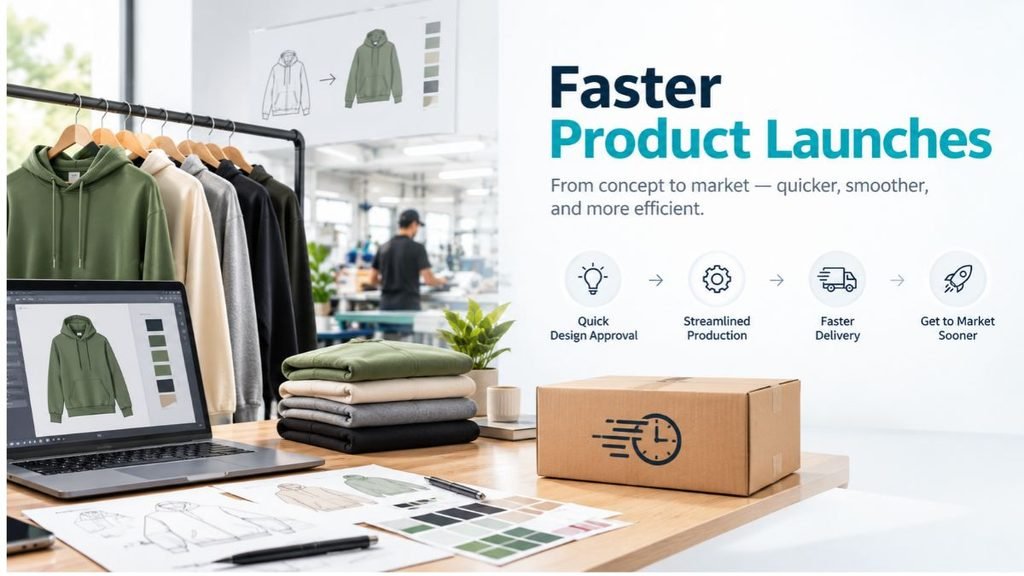
Because manufacturers already have established products and production processes, white label manufacturing can reduce the time needed to prepare a collection.
A business may not need to spend months developing patterns, testing prototypes, and arranging specialized production equipment.
However, lead times vary according to order size, customization requirements, material availability, and factory capacity. Businesses should always confirm realistic delivery estimates before announcing a launch date.
Access to Manufacturing Expertise
Professional manufacturers understand fabric selection, garment construction, stitching methods, finishing techniques, and production planning.
Their experience can help businesses avoid common mistakes, especially when the entrepreneurs do not have a technical background in clothing production.
An experienced supplier can also explain product limitations and recommend suitable materials for different uses.
Easier Brand Development
White label manufacturing allows businesses to concentrate on developing their identity rather than managing every production detail.
Entrepreneurs can focus on brand positioning, website development, social media, product photography, and customer relationships while their supplier handles the agreed manufacturing tasks.
Flexible Product Selection
Many manufacturers offer several product categories, colors, sizes, and fabric options. This allows brands to build a coordinated collection without developing every item independently.
For example, a fitness brand might launch T-shirts, shorts, hoodies, and sweatpants using products already available through its supplier.
Potential for Business Growth
As a business grows, it may increase its order quantities, introduce additional products, or negotiate improved commercial terms.
An established manufacturing relationship can support this growth, provided the supplier has sufficient capacity and can maintain consistent quality.
How to Find White Label Manufacturers USA
Businesses looking for white label manufacturers USA should evaluate suppliers based on their product specialization, service quality, production capabilities, and commercial terms.
Working with a US-based manufacturer may offer practical advantages for businesses selling primarily to American customers. Domestic shipping can be easier to coordinate, communication may be more convenient, and sample delivery may be faster.
However, not every US-based clothttps://fashionsoulintl.com/blog/find-clothing-suppliers/hing supplier offers white label services, and not every company advertising American manufacturing produces all its goods domestically. Verify the supplier’s actual services and production locations before signing an agreement.
Use Online Manufacturer Directories
Online business directories and manufacturing platforms can help you identify potential suppliers.
Search for terms such as:
- White label clothing manufacturers USA
- Private label apparel manufacturers USA
- Custom T-shirt manufacturers USA
- White label activewear manufacturers
- Wholesale clothing manufacturers USA
- Custom hoodie manufacturers USA
Review each supplier’s website carefully. Look for product catalogs, customization details, minimum order quantities, contact information, and evidence of relevant manufacturing experience.
Do not rely solely on directory listings or promotional claims. Contact the manufacturer directly to confirm its capabilities.
Attend Apparel Trade Shows
Apparel trade shows can help entrepreneurs meet suppliers, inspect samples, compare fabrics, and discuss production requirements.
These events may provide opportunities to evaluate different manufacturers in one place and establish professional relationships.
Before attending, prepare questions about product quality, order quantities, pricing, lead times, and branding options.
Request Recommendations
Recommendations from experienced brand owners, industry professionals, and business networks can help you identify potential suppliers.
When receiving a recommendation, ask about the person’s actual experience with the manufacturer, including communication, product consistency, delivery reliability, and problem resolution.
A supplier that works well for one business may not necessarily meet the requirements of another.
Contact Manufacturers Directly
After creating a shortlist, contact suppliers with a clear description of your requirements.
Explain which garments you want to purchase, how many pieces you need, what branding you require, and when you expect delivery.
Ask whether the company manufactures products in its own facility, uses subcontractors, or sources finished garments from other suppliers.
These questions can help you understand what the supplier actually controls and which services it can reliably provide.
White Label Manufacturers USA vs. International Manufacturers
Choosing between domestic and international manufacturing requires comparing more than the unit price.
Both options can be suitable, depending on your order size, product requirements, budget, and target customers.
Advantages of US-Based Manufacturing
US-based manufacturers may offer shorter domestic shipping routes, easier communication for American businesses, and more convenient access to local samples or factory visits.
Domestic production can also be useful for brands that want to market verified US manufacturing as part of their product story.
However, costs may be higher for some products because of labor, facility, material, and operating expenses. Pricing varies significantly between manufacturers and product categories.
Advantages of International Manufacturing
International manufacturers may provide competitive pricing, specialized production capabilities, and access to established textile and apparel supply chains.
Countries with developed garment manufacturing industries can offer a wide range of fabrics, printing techniques, embroidery, and bulk production services.
For example, businesses may consider suppliers in Pakistan, China, Bangladesh, India, Turkey, and other manufacturing regions.
International production requires careful planning for freight, customs clearance, duties, taxes, payment arrangements, and longer transit times.
Compare the Total Landed Cost
The lowest quoted unit price does not always represent the lowest overall cost.
Your comparison should include:
- Garment manufacturing cost
- Branding and packaging expenses
- Sampling and development fees
- Domestic or international freight
- Customs duties and applicable taxes
- Inspection and quality control
- Payment processing or transfer fees
- Potential costs of delays or defective products
Calculate the total cost of getting acceptable products into your warehouse or fulfillment center. This gives you a more realistic basis for comparing suppliers.
What Services Does a White Label Clothing Manufacturer Offer?
The services offered by white label manufacturers vary widely. Some provide finished products with basic branding options, while others offer more comprehensive apparel production services.
Ready-Made Garments
Many suppliers maintain catalogs of existing garments. These products may be available in standard sizes, colors, and fabrics.
Ready-made products can help businesses reduce development time, although the available designs may also be offered to other brands.
Custom Labels and Hangtags
Manufacturers may attach woven labels, printed labels, care labels, size labels, and branded hangtags.
These details can create a more consistent brand presentation and help products look professional.
Confirm that all labels include the required information for the markets where you intend to sell.
Printing and Embroidery
Depending on the supplier, branding methods may include screen printing, direct-to-garment printing, heat transfers, sublimation, and embroidery.
The best technique depends on the fabric, artwork, expected durability, order quantity, and desired appearance.
Ask for a sample of the actual printing or embroidery method before approving a large production run.
Packaging Customization
Some manufacturers provide branded polybags, boxes, stickers, tissue paper, and other packaging options.
Packaging requirements should be agreed upon in advance because custom materials may increase costs and production time.
Quality Control
Quality control may include checks for stitching defects, fabric problems, incorrect measurements, color differences, printing errors, and packaging mistakes.
Ask the manufacturer what inspections are included, when they occur, and how defects are handled.
Do not assume that every supplier provides independent inspections or comprehensive testing.
How Much Does White Label Manufacturing Cost?
The cost of working with a white label manufacturer depends on several variables. There is no single price that applies to every product or supplier.
Product Type and Fabric
A basic cotton T-shirt usually has different production requirements from a technical sports bra, insulated jacket, or performance legging.
Fabric composition, weight, finishing, stretch, durability, and availability can all affect the price.
Specialty fabrics and complex constructions generally require more careful sourcing and production planning.
Order Quantity
Some manufacturers offer lower per-unit prices for larger orders because production and setup costs can be distributed across more pieces.
However, larger orders also require more upfront capital and create greater inventory risk.
Choose order quantities based on realistic demand rather than assuming that a larger order is always more profitable.
Branding Requirements
Labels, embroidery, screen printing, special trims, and customized packaging may increase the cost per item.
Some suppliers charge setup fees for artwork, screens, digitizing, or specialized printing processes.
Ask for an itemized quotation so you can understand which costs are included.
Shipping and Taxes
Shipping expenses depend on package weight, dimensions, distance, delivery method, and destination.
International shipments may also involve customs duties, brokerage charges, and applicable taxes.
These expenses should be included when calculating your final selling price.
Sampling and Development
Some suppliers charge for samples, pattern adjustments, special fabric sourcing, or other development work.
Even when samples are inexpensive, shipping and revision costs can add up. Confirm these charges before starting the process.
How to Choose the Right White Label Manufacturer
Selecting a supplier is a business decision that can affect product quality, customer satisfaction, profitability, and brand reputation.
Check Product Quality
Request samples and inspect the garments carefully. Examine stitching, seams, fabric feel, shrinkage, fit, measurements, printing, and finishing.
If the product requires specific performance characteristics, such as stretch recovery or moisture management, ask whether the manufacturer can provide appropriate testing or supporting documentation.
Understand Minimum Order Quantities
Minimum order quantity, commonly called MOQ, refers to the smallest order a supplier accepts under specified conditions.
Some manufacturers have low minimums for standard products but higher minimums for custom colors, fabrics, or designs.
Ask whether the MOQ applies per style, color, size, or total order. Understanding these conditions helps you plan inventory and avoid unexpected costs.
Review Communication and Reliability
A good manufacturer should provide clear information about prices, specifications, timelines, and production requirements.
Notice how quickly the supplier responds, whether answers are specific, and whether commitments are documented.
Consistent communication becomes especially important when managing samples, bulk production, and international shipments.
Confirm Production Capacity
A supplier may be suitable for a small launch but unable to handle larger orders later.
Ask about typical lead times, available production capacity, seasonal demand, and how the company handles urgent orders.
If you plan to scale, determine whether the manufacturer can maintain consistent quality as quantities increase.
Review Agreements and Payment Terms
Written agreements should explain product specifications, pricing, payment schedules, delivery dates, inspection requirements, and procedures for handling defective goods.
Clarify who owns any custom artwork, patterns, or developed designs, where relevant.
Avoid relying on informal promises for important commercial terms.
Common Mistakes to Avoid When Choosing a Manufacturer
Entrepreneurs can reduce manufacturing risks by avoiding several common mistakes.
Choosing Only by Price
A low quote may exclude labels, packaging, inspection, shipping, or other services. It may also come with quality compromises or unclear production terms.
Compare complete quotations and evaluate the quality of the finished product, not just the initial price.
Skipping Sample Approval
Ordering in bulk without checking a sample can lead to incorrect sizing, poor stitching, unexpected fabric quality, or branding errors.
Always establish a clear sample approval process before authorizing production whenever practical.
Ignoring Delivery Timelines
Manufacturing delays can affect product launches, promotional campaigns, and customer orders.
Ask for a realistic schedule covering material sourcing, production, quality inspection, and shipping. Include a reasonable buffer for unexpected issues.
Ordering Too Much Inventory
Large orders may reduce unit costs, but unsold inventory ties up cash and storage space.
New brands should use market research, preorders where appropriate, and small initial collections to estimate demand before making substantial commitments.
Failing to Verify Supplier Claims
A polished website does not guarantee that a company has the capabilities it advertises.
Verify business information, request samples, ask for references where available, and confirm manufacturing locations and subcontracting arrangements.
Is White Label Manufacturing Suitable for Small Clothing Brands?
White label manufacturing can be a useful option for small clothing brands that want to launch without investing in a complete production operation.
It allows entrepreneurs to test product ideas, establish a visual identity, and learn how customers respond to different garments.
For example, a startup could begin with a small collection of T-shirts and hoodies, use existing product designs, and add custom labels and packaging. After identifying its best-selling products, the brand could invest in more distinctive designs or expanded collections.
The most suitable approach depends on the supplier’s minimum order requirements and customization policies. Some manufacturers accept small orders for standard garments, while others require larger commitments.
Small businesses should also consider cash flow, inventory management, customer acquisition costs, and expected profit margins.
White label manufacturing simplifies certain production tasks, but it does not eliminate the work involved in building a successful business. Product positioning, marketing, customer support, and consistent quality remain essential.
Building a Strong Clothing Brand With White Label Products
A manufacturer supplies the products, but your business creates the brand experience. To stand out in a competitive clothing market, focus on a clear audience, consistent quality, and a recognizable identity.
Define Your Target Audience
Identify the customers you want to serve. Your audience could include fitness enthusiasts, streetwear shoppers, minimalist fashion consumers, outdoor workers, or boutique customers.
Understanding their preferences helps you choose appropriate fabrics, colors, fits, and price points.
Develop Consistent Branding
Use consistent logos, labels, packaging, product photography, and messaging across your website and marketing channels.
Your branding should communicate what makes your products relevant to your intended customers.
Focus on Product Presentation
High-quality photographs and accurate product descriptions can help customers understand what they are buying.
Include clear size charts, fabric composition, care instructions, fit details, and information about available colors.
Avoid making claims about sustainability, performance, or manufacturing origin unless you can substantiate them.
Monitor Customer Feedback
Customer reviews and return reasons can reveal problems with sizing, durability, comfort, and product expectations.
Use this information to refine your product selection and discuss improvements with your manufacturer.
Over time, these adjustments can help you build a more reliable product range and strengthen customer loyalty.
Questions to Ask Before Hiring a White Label Manufacturer
Before placing an order, prepare a list of questions to clarify the supplier’s services and expectations.
- Do you manufacture the products directly or source them from other companies?
- What clothing categories and fabric options do you offer?
- What is your minimum order quantity per style and color?
- Can you add my logo, labels, hangtags, and packaging?
- Are product samples available before bulk production?
- What is the estimated sampling and production timeline?
- How do you inspect products for quality?
- What happens if delivered goods contain defects?
- What payment terms and shipping methods are available?
- Can you support larger orders if my business grows?
- Where are the products manufactured?
- Are there any additional charges beyond the quoted unit price?
Request written answers wherever possible. Keeping specifications and commercial terms documented helps prevent misunderstandings during production.
Frequently Asked Questions
What Is the Main Purpose of a White Label Manufacturer?
A white label manufacturer produces existing or standardized products that another business can sell under its own brand. This allows companies to launch products without establishing their own manufacturing facilities.
Are White Label Manufacturers USA Better Than International Suppliers?
Not necessarily. US-based manufacturers may offer convenient communication and domestic shipping, while international suppliers may provide different pricing structures and production capabilities. The best choice depends on quality, total landed cost, lead time, customization, and business requirements.
Can I Start a Clothing Brand With White Label Manufacturing?
Yes. You can begin with existing garments, add permitted branding, and sell the finished products through an online store, boutique, or other sales channel. You still need to budget for inventory, marketing, fulfillment, and customer service.
Do White Label Manufacturers Have Minimum Order Quantities?
Many manufacturers set minimum order quantities, although requirements vary by product and supplier. Standard garments may have different minimums from customized fabrics, colors, or designs.
Can White Label Products Be Customized?
Yes, depending on the manufacturer’s services. Common options include custom labels, logos, hangtags, packaging, printing, and selected product modifications. Confirm available options before placing an order.
What Is the Difference Between White Label and Wholesale Clothing?
Wholesale clothing generally refers to products purchased in bulk for resale. White label manufacturing specifically involves selling products under your own brand, often with branding or packaging options. Some suppliers offer both services.
How Can I Verify a Clothing Manufacturer?
Request samples, check business information, review references where available, confirm manufacturing locations, and discuss quality inspection procedures. A written agreement should define specifications, prices, timelines, and responsibilities.
Conclusion
Choosing the right white label manufacturer can help entrepreneurs and established businesses introduce branded products without managing every aspect of garment production. By using existing products and adding appropriate branding, businesses can simplify product development and concentrate on building their customer base.
When comparing white label manufacturers USA with international suppliers, evaluate the complete cost, product quality, customization options, delivery timelines, and supplier reliability. A low initial quote should never be the only factor in your decision.
Start by defining your product requirements, researching qualified manufacturers, requesting samples, and confirming minimum order quantities. Review the production agreement carefully and establish a clear quality control process before committing to bulk orders.
With careful supplier selection and a well-planned brand strategy, white label manufacturing can provide a practical foundation for launching a clothing business and expanding into new product categories as demand grows.