Startup Fashion Tech Pack: A Complete Guide for New Clothing Brands
A startup fashion tech pack is one of the most important documents for launching a clothing brand. It turns a fashion idea into clear manufacturing instructions. It explains how a garment should look, which materials it should use, how it should fit, and how it should be produced.
Many new clothing entrepreneurs begin with sketches, reference pictures, or inspiration from existing garments. These are useful starting points, but manufacturers need more detailed information before they can create accurate samples and bulk orders.
A professional tech pack helps connect your creative ideas with the manufacturing process. It can reduce confusion, improve communication, support accurate costing, and help maintain consistency across production.
Whether you are launching a streetwear label, activewear business, casual clothing line, or private-label brand, understanding tech packs can make product development easier.
This guide explains what a fashion tech pack includes, how startups can create one, common mistakes to avoid, and how to prepare your designs for manufacturing.
What Is a Startup Fashion Tech Pack?
A startup fashion tech pack is a technical document that contains the information needed to manufacture a clothing product. It is prepared by a fashion designer, brand owner, or product development team and shared with the manufacturer.
The document explains the garment’s design, measurements, materials, construction, colours, labels, and finishing details.
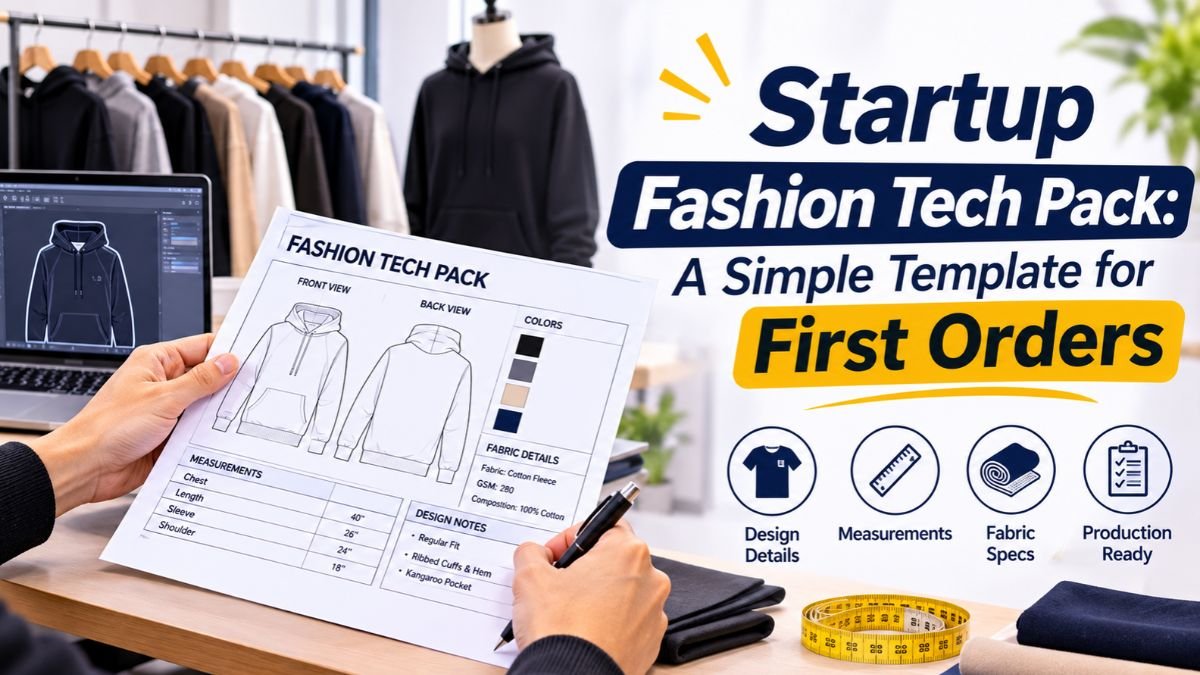
For example, if you want to manufacture a custom hoodie, your tech pack should explain:
- Hoodie style and design
- Fabric composition and weight
- Main garment measurements
- Stitching and construction details
- Hood and pocket design
- Rib specifications
- Colour references
- Logo placement
- Labels and hang tags
- Packaging requirements
The manufacturer uses these details to understand your expectations and develop the product.
A tech pack is not simply a fashion sketch. It is a production-focused document that helps turn a design into a physical garment.
Why Do Startups Need a Fashion Tech Pack?
New clothing brands often have creative ideas but limited manufacturing experience. A tech pack gives them a structured way to communicate product requirements.
Without clear specifications, manufacturers may interpret a design differently from what the brand expects.
Here are several reasons why startups should prepare a tech pack.
1. Clear Communication With Manufacturers
A tech pack provides one reference document for the product.
Instead of explaining every detail through separate messages, you can share measurements, fabric information, construction notes, and artwork in one place.
This makes communication easier for both the brand and the production team.
2. More Accurate Product Costing
Fabric, trims, construction, printing, and embroidery all affect garment costs.
A detailed tech pack helps the manufacturer understand what the product requires. This makes it easier to prepare a quotation based on the requested specifications.
If important details are missing, the initial estimate may need to change after the manufacturer reviews the design.
3. Better Sample Development
The first sample should follow the brand’s intended design as closely as possible.
A tech pack gives the pattern maker and sample team clear instructions. It helps them understand measurements, fabric choices, seam details, and finishing requirements.
You can then review the physical sample and request changes where needed.
4. Consistency During Bulk Production
Once a sample is approved, the manufacturer needs a clear reference for bulk production.
The tech pack helps document the approved specifications. It can reduce differences in measurements, materials, colours, and construction across garments.
5. Easier Product Development
A clothing startup may begin with one hoodie or T-shirt and later introduce more styles.
Using a consistent tech pack format helps organise product information as the collection grows.
Each style can have its own technical document while following the same development process.
What Should a Fashion Startup Tech Pack Include?
A useful tech pack should include all important information needed to understand and manufacture the garment.
The exact sections depend on the product. A basic T-shirt requires different details from a technical jacket or performance tracksuit.
The following sections are commonly useful.
1. Cover Page and Style Information
The cover page identifies the product and provides basic information.
Include:
- Brand name
- Product name
- Style number
- Collection name
- Season
- Document date
- Revision number
- Designer or contact details
A unique style number helps organise multiple products.
For example, a startup could use a code such as TSH-001 for its first T-shirt and HD-001 for its first hoodie.
2. Technical Flats
Technical flats are clear, flat drawings of the garment.
They usually show the front and back views. Additional views may be needed for products with complex construction.
For a hoodie, technical flats can show:
- Front body
- Back body
- Hood shape
- Sleeve construction
- Kangaroo pocket
- Cuffs
- Hem
- Drawstrings
- Zipper, if applicable
Technical drawings should focus on construction rather than artistic presentation.
They help the manufacturer understand the product’s shape and details.
3. Bill of Materials
A Bill of Materials, commonly called a BOM, lists the materials and components used in a garment.
It may include:
| Component | Example specification |
|---|---|
| Main fabric | Cotton fleece |
| Rib fabric | Cotton-elastane rib |
| Sewing thread | Matching polyester thread |
| Main label | Woven brand label |
| Care label | Printed care label |
| Drawstring | Custom cotton drawstring |
| Eyelets | Metal eyelets |
| Hang tag | Custom printed tag |
The BOM should include the required material details wherever possible.
If a component is not finalised, mark it as pending rather than allowing the manufacturer to guess.
4. Fabric Specifications
Fabric information is essential because it affects the garment’s appearance, comfort, weight, and performance.
Your tech pack should identify:
- Fabric type
- Fibre composition
- GSM
- Fabric construction
- Stretch requirements
- Surface finish
- Colour
- Special performance requirements
GSM means grams per square metre. It describes the weight of a fabric.
For example, a lightweight T-shirt and a heavyweight hoodie usually require different fabric weights.
Do not select fabric based on GSM alone. Fabric structure, yarn, finishing, and intended use also affect how it feels and performs.
5. Measurement Specification Sheet
The measurement sheet explains the required garment dimensions.
It is also called a measurement chart or size specification sheet.
For a T-shirt, measurements may include:
- Chest width
- Body length
- Shoulder width
- Sleeve length
- Sleeve opening
- Neck width
- Hem width
For trousers, measurements may include:
- Waist
- Hip
- Front rise
- Back rise
- Inseam
- Outseam
- Thigh
- Leg opening
Clearly explain where and how each measurement should be taken.
6. Size Grading
Size grading explains how measurements change between sizes.
For example, a brand may offer XS, S, M, L, and XL.
Each size needs defined measurements. The grading rules should maintain the intended fit across the full size range.
Do not assume that every manufacturer uses the same grading system. Provide your preferred size chart and confirm it during sample development.
7. Colour Specifications
Your tech pack should identify the colours required for the garment.
Useful colour information may include:
- Pantone references, where applicable
- Digital colour references
- Approved fabric swatches
- Contrast colour details
- Print and embroidery colours
Screen colours may look different from actual dyed fabric. Physical lab dips or fabric swatches can help confirm the final colour before bulk production.
8. Stitching and Construction Details
This section explains how the garment should be assembled.
Include details such as:
- Seam type
- Stitch type
- Stitch density, where specified
- Seam allowance
- Reinforcement points
- Hem construction
- Binding details
- Pocket construction
Clear construction notes are particularly important for products with panels, special seams, or functional features.
9. Artwork and Branding Placement
If your garment includes logos, graphics, or embroidery, provide clear artwork instructions.
Include:
- Artwork file
- Logo dimensions
- Placement measurements
- Colour specifications
- Printing or embroidery method
- Position on the garment
Avoid relying only on a picture showing the logo. Include exact placement measurements so the production team can reproduce the design accurately.
10. Labels, Hang Tags, and Packaging
Branding details should also appear in the tech pack.
These may include:
- Main neck label
- Size label
- Care label
- Brand hang tag
- Woven patches
- Packaging bags
- Carton requirements
Specify label placement, dimensions, material, and artwork where possible.
How to Create a Startup Fashion Tech Pack Step by Step
You do not need to have a large fashion company to prepare a tech pack. A startup can begin with one product and develop the technical details gradually.
Here is a practical process.
Step 1: Finalise Your Product Idea
Start by deciding what you want to manufacture.
Choose the product category and define its purpose.
For example:
- Oversized streetwear hoodie
- Regular-fit cotton T-shirt
- Performance leggings
- Custom tracksuit
- Denim jacket
- Relaxed-fit joggers
Think about your target customer, intended price range, fabric preferences, and overall design.
A clear product idea makes the next steps easier.
Step 2: Collect Design References
Gather reference images, sketches, and inspiration.
You can use these to explain the garment’s silhouette, colour, pockets, panels, artwork, and other features.
Organise your references so the manufacturer understands which image relates to each design detail.
Remember that reference images should communicate your own requirements. Do not assume that a manufacturer can reproduce every detail from a single photograph.
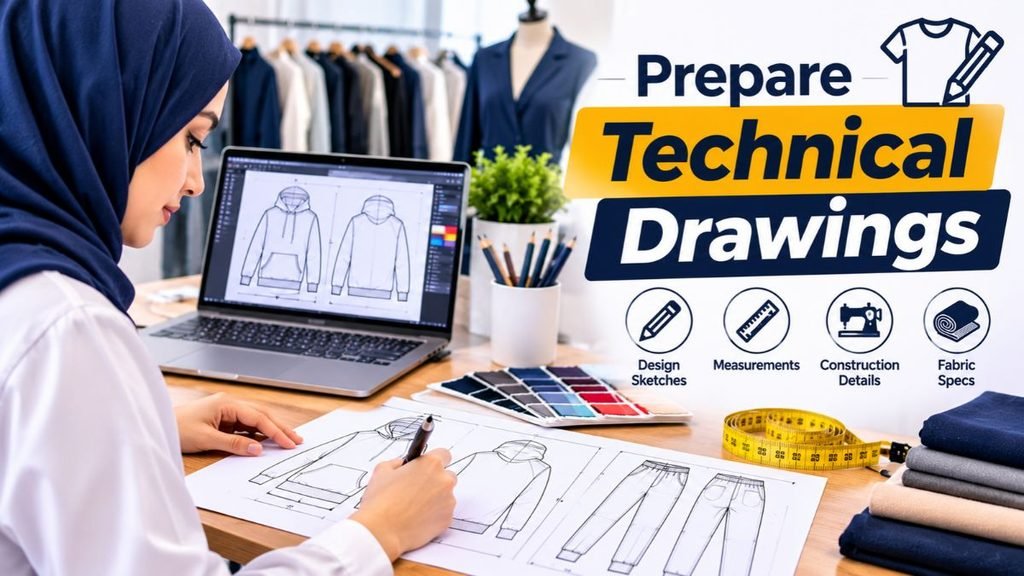
Step 3: Prepare Technical Drawings
Create front and back technical flats.
Add close-up drawings for special features such as pockets, collars, cuffs, zippers, and panel construction.
You can prepare drawings using suitable fashion design software or work with a technical designer.
The drawings should be clean, clear, and labelled.
Step 4: Choose the Fabric
Select the fabric based on the product’s purpose.
Consider:
- Comfort
- Weight
- Durability
- Stretch
- Breathability
- Surface appearance
- Washing requirements
- Target cost
If you are unsure about the fabric, discuss suitable options with your manufacturer.
Request swatches so you can compare the actual material before approving it.
Step 5: Create the Measurement Chart
Decide how the garment should fit.
Choose whether the style is oversized, regular, slim, relaxed, or fitted.
Prepare the measurement chart for your base size. Then define how the remaining sizes should be graded.
Be specific about measurement points and tolerances.
Step 6: Add Construction Details
Explain the stitching, seams, pockets, hems, cuffs, and other construction requirements.
For example, a hoodie may need:
- Double-layer hood
- Kangaroo pocket
- Ribbed cuffs
- Ribbed bottom hem
- Reinforced pocket corners
- Matching drawstrings
The details should match your approved design.
Step 7: Add Branding and Artwork
Prepare your logo files and artwork in suitable formats.
Specify the placement, dimensions, colours, and decoration method.
If you want embroidery, explain the design size and location. If you want printing, identify the artwork and preferred appearance.
The manufacturer can advise whether the selected method is suitable for the fabric and order requirements.
Step 8: Review the Complete Document
Before sending your tech pack, check that the information is complete.
Confirm that:
- Drawings match the written descriptions.
- Measurements are clear.
- Fabric specifications are included.
- Colours are identified.
- Artwork files are attached.
- Labels are described.
- Construction notes are understandable.
- The document has a revision number.
A careful review can reduce avoidable questions during sampling.
Step 9: Send It to Your Manufacturer
Share the document with your selected manufacturer.
You can also provide reference garments, sketches, or additional notes if they help explain the product.
The manufacturer can review the requirements and discuss fabric availability, production methods, MOQ, pricing, and sample development.
Step 10: Review and Approve the Sample
The tech pack guides the first sample, but the physical garment still needs to be checked.
Compare the sample with your specifications.
Review measurements, fit, fabric, stitching, colour, artwork, and finishing.
If changes are needed, update the document and clearly identify the revised details.
Bulk production should proceed only after the agreed pre-production sample is approved.
Best Tools for Creating a Fashion Tech Pack
Startups can use different tools depending on their design experience, budget, and product complexity.
Adobe Illustrator
Adobe Illustrator is commonly used to create technical flats and detailed fashion drawings.
It allows designers to prepare clean vector illustrations and add construction notes.
It is useful for brands that want precise visual documentation.
CLO 3D
CLO 3D is a digital garment design tool.
It allows designers to create and visualise garments in a three-dimensional environment.
It can help with digital product development, although physical samples may still be required to verify actual fabric and construction.
CorelDRAW
CorelDRAW can be used for vector illustrations, logo placement, artwork, and technical design layouts.
Some designers prefer it for preparing garment drawings and production documents.
Microsoft Excel
Excel can help prepare measurement charts, BOMs, colour details, and product specifications.
It is a practical option for organising technical information in tables.
Google Sheets
Google Sheets offers a collaborative way to manage product specifications.
Team members can review information and track updates.
However, the final production document should be organised clearly and shared in an agreed format.
Common Tech Pack Mistakes Startups Should Avoid
A tech pack does not need to be complicated, but it must be clear.
Many first-time clothing brands make mistakes because they focus on design appearance and overlook manufacturing details.
1. Missing Measurements
A drawing may show the garment’s shape, but it does not provide exact dimensions.
Include a measurement chart with clear points of measurement.
2. Unclear Fabric Information
Writing “soft cotton fabric” is not enough for accurate sourcing.
Specify fibre composition, fabric type, GSM, and any important performance requirements.
3. Using Low-Quality Artwork
Small or unclear logo files can create problems during printing and embroidery.
Provide high-quality artwork and confirm the required production format with your manufacturer.
4. No Colour References
Colour descriptions such as “dark blue” or “light grey” can be interpreted differently.
Use suitable colour references and approve physical swatches where necessary.
5. Changing Details Without Updating the Document
If you change the pocket size or fabric after sampling, update the tech pack.
Use revision numbers and dates so the manufacturer knows which version is current.
6. Skipping Physical Sample Approval
A digital document cannot fully show how a garment feels, fits, or behaves.
Review the physical sample before approving bulk production.
7. Adding Too Many Unnecessary Details
A tech pack should be complete, not confusing.
Include details that help manufacture the product. Avoid unrelated notes or contradictory instructions.
How Much Does a Startup Fashion Tech Pack Cost?
The cost of creating a tech pack depends on the product and the amount of work required.
A basic T-shirt tech pack may need fewer details than a technical jacket with multiple panels, zippers, pockets, lining, and specialised construction.
Factors that affect the cost include:
- Design complexity
- Number of product views
- Measurement specifications
- Size grading requirements
- Artwork preparation
- BOM development
- Construction details
- Number of revisions
- Designer experience
Some founders prepare their own documents using design software and spreadsheets. Others hire freelance technical designers or work with a manufacturer’s product development team.
Before paying for a tech pack, confirm what the service includes. Ask whether it covers technical flats, measurements, BOM, grading, artwork placement, and revisions.
Do You Need a Tech Pack Before Contacting a Manufacturer?
No. A complete tech pack is helpful, but it is not always necessary for the first conversation.
A startup can contact a manufacturer with:
- A design brief
- Reference images
- Sketches
- A mood board
- A reference garment
- Estimated order quantity
- Fabric preferences
These materials can help the manufacturer understand the project and provide initial guidance.
However, before sampling, the manufacturer generally needs a finalized tech pack or a suitable physical sample for reverse engineering.
Fashion Soul International states that a tech pack is not required to request a quotation and that its team can assist with tech-pack creation. The required production information must still be finalised before sampling.
How a Tech Pack Helps With Clothing Manufacturing
A tech pack connects the design stage with actual garment production.
It helps different teams understand the same product requirements.
Product Development
The document helps the product development team organise the design, measurements, materials, and construction.
Fabric Sourcing
Fabric specifications help the sourcing team identify suitable materials.
Pattern Making
Measurements and technical drawings help pattern makers develop the garment pattern.
Sampling
The sample team uses the document to create a physical version of the design.
Bulk Production
The approved specifications provide a reference during cutting, stitching, finishing, and quality inspection.
Quality Control
Inspectors can compare the finished garments with the approved measurements and construction requirements.
This makes a tech pack useful throughout the product lifecycle, not just during the design stage.
Startup Fashion Tech Pack and Manufacturing at Fashion Soul International
Fashion Soul International is a factory-owned custom clothing manufacturer based in Sialkot, Pakistan. The company works with startups, growing clothing brands, retailers, wholesalers, and established apparel businesses.
Its services include private-label, OEM, ODM, white-label, cut-and-sew, and full-package production.
For startups, the product development process can begin with a design brief, reference images, sketches, a creative brief, or a technical pack.
A finalized tech pack or suitable reference sample is needed before sampling. Fashion Soul International also states that its team can assist with tech-pack creation.
Product Development Support
A startup can share its product idea and discuss the intended style, fabric, measurements, construction, and branding requirements.
This helps establish the information needed for a production-ready document.
Fabric and Trim Sourcing
The manufacturer supports fabric and trim sourcing based on the product requirements.
Brands should confirm the material composition, GSM, colour, and other specifications before sampling.
Sample Development
Fashion Soul International publishes a sample development timeline of 7–14 business days after design confirmation and receipt of the required information.
The physical sample allows the brand to review the garment before bulk production.
Sample Approval and Bulk Production
The company states that bulk production begins only after the customer approves the physical pre-production sample in writing.
This gives the brand an opportunity to check the product against the agreed specifications.
Quality Control
The company’s stated process includes inline quality inspections and pre-shipment AQL 2.5 inspection.
Checks can cover measurements, stitching, print registration, trim attachment, and overall product quality.
MOQ for Startup Brands
Fashion Soul International publishes a standard MOQ starting at 100 pieces per style, per colour, and per size run.
Actual requirements can vary according to fabric, product, construction, decoration, and customer needs. Startups should confirm their specific requirements during quotation.
International Shipping
The company supports international shipping and provides options such as air freight, sea freight, DDP, and FOB, depending on the order.
This allows international brands to discuss production and delivery requirements with the manufacturing team.
Frequently Asked Questions About Startup Fashion Tech Packs
What Is a Fashion Tech Pack?
A fashion tech pack is a technical document that explains how a clothing product should be manufactured. It includes drawings, measurements, fabric details, construction instructions, colours, branding, and packaging requirements.
Do Startups Need a Tech Pack?
A tech pack is strongly useful for startups because it helps communicate product requirements. It reduces confusion during sampling and provides a reference for bulk production.
Can I Create a Tech Pack Without Fashion Design Experience?
Yes. You can start with a basic template, reference images, and measurement information. However, complex garments may require help from a technical designer or manufacturer.
What Is the Difference Between a Fashion Sketch and a Tech Pack?
A fashion sketch mainly communicates the visual design. A tech pack includes technical information such as measurements, materials, construction, labels, and production instructions.
Can a Manufacturer Help Create a Tech Pack?
Some manufacturers provide product development and tech-pack support. Fashion Soul International states that its team can assist with tech-pack creation.
What Software Is Best for Creating a Tech Pack?
Adobe Illustrator, CLO 3D, CorelDRAW, Excel, and Google Sheets can all support different parts of tech-pack development. The best choice depends on your design needs and technical experience.
What Is a BOM in a Fashion Tech Pack?
BOM stands for Bill of Materials. It lists the fabrics, trims, labels, threads, zippers, and other components required to manufacture a garment.
Is a Tech Pack Required for a Clothing Manufacturer Quote?
Not always. Some manufacturers can review reference images, sketches, and design briefs to provide an initial quotation. More complete technical information is generally needed before sampling.
How Many Pages Should a Tech Pack Have?
There is no fixed page count. A simple T-shirt may need a short document, while a complex jacket or performance garment may require several pages.
When Should a Tech Pack Be Updated?
Update it whenever an approved product detail changes. This may include measurements, fabric, colour, artwork, construction, labels, or packaging.
Final Thoughts
A startup fashion tech pack is an essential tool for turning a clothing idea into a manufacturable product. It explains the design, materials, measurements, construction, branding, and finishing requirements in one organised document.
For new clothing brands, a clear tech pack can improve communication, support accurate costing, guide sample development, and help maintain consistency during bulk production.
You do not need a large team to begin. Start with one product, collect your design references, define the fabric and measurements, and document the important construction details.
Once your specifications are ready, share them with a suitable clothing manufacturer. Review the physical sample carefully and approve the final details before bulk production.
With proper planning and clear technical instructions, startups can build a stronger foundation for launching and growing their fashion brands.
The article follows your Fashion Soul SEO and company information guidelines. I can also prepare the SEO title, meta description, short slug, and focus keyphrase for “startup fashion tech pack.”