Activewear Tech Pack: A Complete Guide for Clothing Brands
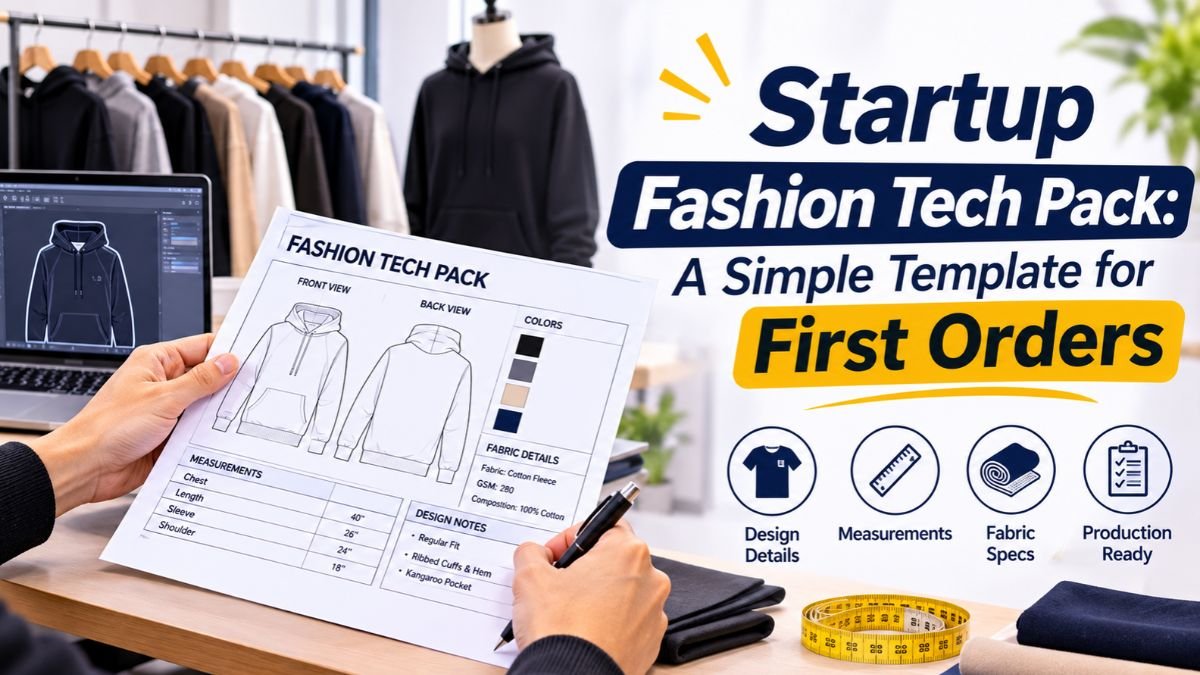
An activewear tech pack is an important document for turning a fitness clothing design into a production-ready garment. It explains how a product should look, fit, feel, and perform. It also gives manufacturers the details they need to produce garments according to your expectations.
Whether you are developing leggings, sports bras, gym shirts, workout shorts, or performance jackets, clear technical information can prevent costly mistakes. It helps reduce confusion during sampling and bulk production.
For clothing brands, a well-prepared tech pack makes communication with suppliers easier. It also helps control fabric selection, measurements, stitching, colors, trims, and branding.
This guide explains what an activewear tech pack includes, how to create one, and what manufacturers need before production. You will also learn how to prepare a tech pack for manufacturer communication and avoid common product development problems.
What Is an Activewear Tech Pack?
An activewear tech pack is a technical document that contains the complete specifications of an activewear product. It tells a manufacturer how to develop and produce the garment.
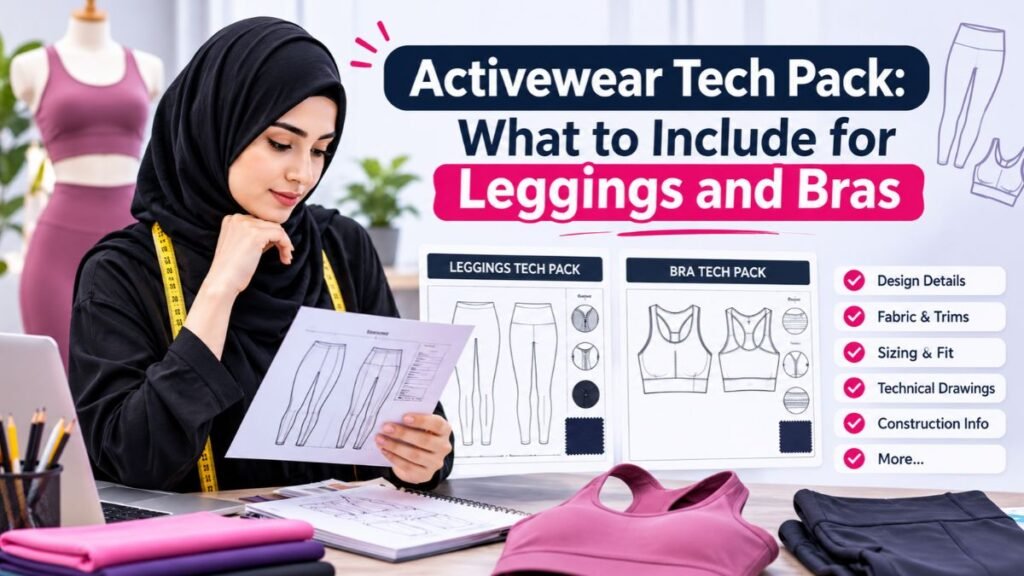
It usually includes technical drawings, measurements, fabric details, construction instructions, color references, trims, labels, and decoration information.
For example, a leggings tech pack may explain:
- The garment’s front and back design
- Waistband height and construction
- Fabric composition and weight
- Stretch and recovery requirements
- Inseam and outseam measurements
- Stitching and seam details
- Logo placement
- Color references
- Size grading instructions
These details help the production team understand your design without relying on guesswork.
An activewear tech pack is different from a simple fashion sketch. A sketch shows the appearance of a garment. A tech pack explains how to make it.
Why Is an Activewear Tech Pack Important?
Activewear requires careful product development. Fitness garments must support movement and provide the right fit. Their fabric and construction also affect comfort and performance.
Without clear specifications, a manufacturer may interpret your design differently. This can lead to incorrect measurements, unsuitable materials, or unwanted construction changes.
A detailed tech pack helps solve these problems.
1. It Improves Communication With Manufacturers
A tech pack gives your manufacturer one reference document for the product. Both sides can review the same design and technical requirements.
You can explain details such as fabric type, stitching, measurements, and branding. This reduces the need for repeated explanations.
2. It Helps Maintain Product Consistency
Clothing brands often develop several sizes and colorways. A technical document helps keep important product details consistent.
For example, the same leggings design may be produced in black, navy, and grey. The tech pack records the approved specifications for each version.
3. It Supports Accurate Sampling
A pre-production sample helps you check the design before bulk manufacturing. However, the sample can only follow your instructions when those instructions are clear.
A complete tech pack gives the sampling team useful information about fabric, fit, measurements, and construction.
4. It Helps Control Production Costs
Unclear specifications can cause revisions, material changes, and production delays. These problems may increase development costs.
A detailed document helps identify requirements earlier. It also gives manufacturers better information for estimating materials and production work.
5. It Makes Quality Checks Easier
A manufacturer needs clear standards to inspect a finished garment. Your tech pack can provide measurement charts, construction details, and approved material references.
The quality team can compare production garments against these specifications.
What Should an Activewear Tech Pack Include?
A professional tech pack should cover every important part of the garment. The exact information depends on the product and its construction.
Here are the main sections to consider.
1. Product Overview
Start with basic information about your activewear product.
Include:
- Product name
- Style number or SKU
- Product category
- Collection name
- Season, if relevant
- Development date
- Revision number
- Brand name
For example, you might name a product “High-Waist Training Leggings.” Give it a unique style number so your manufacturer can identify it.
A clear product overview also helps when your brand develops multiple products.
2. Technical Flat Sketches
Technical flat sketches show the garment from different angles. They help manufacturers understand its shape and construction.
Most activewear tech packs should include front and back views. Side views or close-up drawings may also be useful.
For leggings, drawings can show:
- High-rise waistband
- Side pockets
- Gusset shape
- Seam placement
- Ankle opening
- Logo position
For sports bras, drawings may show strap width, neckline shape, back design, and elastic placement.
Use arrows and labels to identify important features. Add close-up illustrations when a construction detail is difficult to understand.
3. Fabric Specifications
Fabric selection is one of the most important parts of activewear development. Different fabrics offer different levels of stretch, support, softness, and breathability.
Your tech pack should identify the required fabric as clearly as possible.
Include:
- Fabric composition
- Fabric type
- GSM
- Stretch direction
- Fabric finish
- Surface texture
- Color
- Performance requirements
GSM means grams per square meter. It describes the weight of a fabric.
Common activewear materials include polyester, nylon, elastane, and different blends. Four-way stretch spandex fabrics are often considered for garments that need movement in multiple directions.
Moisture-wicking polyester may suit training tops and other workout garments. Nylon blends may be considered when a brand wants a particular softness or surface feel.
However, do not select fabric based on its name alone. Ask for swatches and test the material for your intended product.
4. Measurement Specifications
A measurement chart explains the garment’s required dimensions. It is essential for controlling fit across different sizes.
For leggings, measurements may include:
- Waist circumference
- Hip circumference
- Front rise
- Back rise
- Inseam
- Outseam
- Thigh width
- Leg opening
For a sports bra, the chart may include:
- Chest width
- Underbust measurement
- Body length
- Strap width
- Band height
- Neckline depth
Clearly state the measurement method. For example, explain whether a measurement is taken flat or around the garment.
Also identify the base size used for the sample. The manufacturer can then use the approved grading instructions to develop other sizes.
5. Size Grading Instructions
Size grading means adjusting a pattern to create different garment sizes.
A tech pack should identify the required size range. This might include XS to XL or another range suitable for your target customers.
Do not assume every measurement increases by the same amount between sizes. Different garment areas may require different grading rules.
Work with your pattern maker or manufacturer to confirm the grading approach. Review the fit across the size range before approving bulk production.
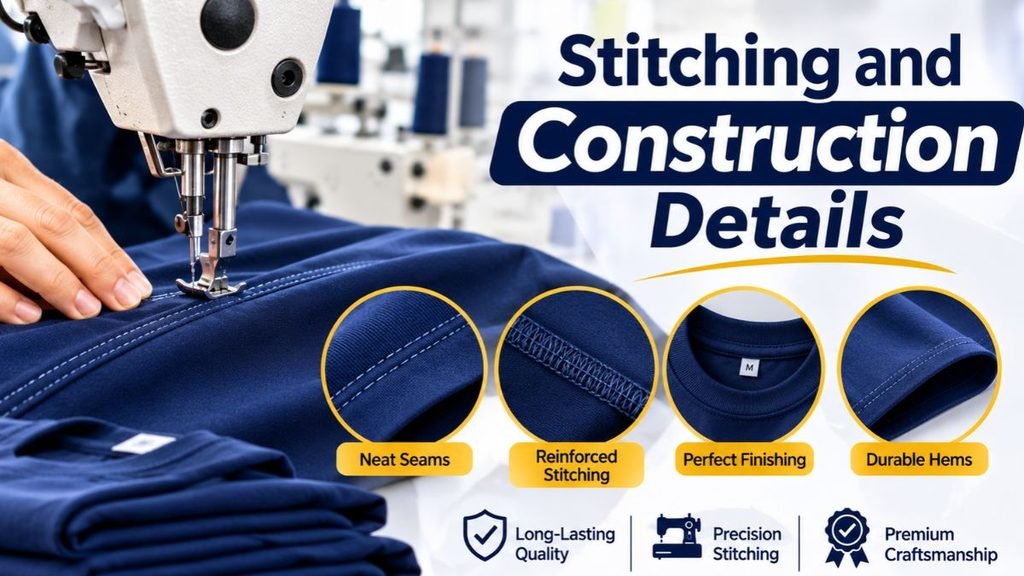
6. Stitching and Construction Details
Construction instructions explain how the garment should be assembled.
Activewear needs seams that support movement and suit the fabric. Your tech pack should identify the required seam types and important construction features.
Possible details include:
- Flatlock seams
- Overlock stitching
- Coverstitch finishing
- Reinforced stress points
- Elastic attachment
- Waistband construction
- Gusset construction
- Hem finishing
For example, a pair of training leggings may require stretch-friendly seams. A sports bra may need reinforced strap attachment and suitable elastic support.
The correct construction depends on the design, fabric, and intended use.
7. Color Specifications
Your tech pack should identify every required garment color.
Use consistent color references where possible. Pantone references can help communicate specific shades, but physical fabric approval remains important.
Include separate color details for:
- Main fabric
- Contrast panels
- Waistbands
- Stitching
- Elastic
- Zippers
- Printed designs
- Logos
If your product has several colorways, create a separate colorway section. This helps prevent confusion during material sourcing and production.
8. Trims and Accessories
Trims are the additional components used to complete a garment.
Depending on your activewear design, these may include:
- Elastic bands
- Drawcords
- Zippers
- Zipper pulls
- Bra cups
- Waistband cords
- Plastic adjusters
- Metal accessories
- Size labels
- Care labels
Specify the material, color, size, placement, and finish of each trim.
For example, a pair of gym shorts may include an elastic waistband and adjustable drawcord. The tech pack should explain their required appearance and construction.
9. Logo and Branding Details
Branding is important for private-label activewear products. Your tech pack should show exactly where each logo or brand element belongs.
Include:
- Logo artwork
- Logo dimensions
- Placement measurements
- Print or embroidery method
- Color references
- Label design
- Hang tag details
- Packaging instructions
Common decoration options include screen printing, embroidery, heat transfer, and sublimation.
Choose a method based on the fabric, design, appearance, and required durability. For example, sublimation is generally suitable for compatible polyester fabrics. It is not a universal option for every textile.
10. Packaging Instructions
Packaging details help the manufacturer prepare finished garments for delivery.
Your tech pack or packaging specification can include:
- Folding method
- Polybag requirements
- Size stickers
- Hang tags
- Barcode labels
- Carton packing instructions
- Branded packaging
If your products will be sold through online stores or retail shops, confirm the packaging requirements before production begins.
How to Create an Activewear Tech Pack Step by Step
You do not need to complete every technical detail alone. However, you should prepare the design information before contacting a manufacturer.
Follow these steps to organize your product.
Step 1: Define Your Activewear Product
Start by deciding what you want to manufacture.
Choose a specific product, such as:
- Gym leggings
- Sports bras
- Workout shirts
- Training shorts
- Compression tops
- Athletic jackets
- Tracksuits
Then identify its purpose. A running top may have different requirements from a yoga top.
Think about your target customer, intended activity, fit, and price range.
Step 2: Prepare Design References
Collect visual references that explain your idea.
You can use sketches, inspiration images, existing garments, or digital designs. Mark the details you want to include.
Do not rely on a single reference image if it leaves important areas unclear. Add notes for the front, back, sides, and special features.
Step 3: Select Suitable Fabrics
Research materials that match your product’s intended use.
Consider stretch, recovery, softness, weight, breathability, and opacity. For leggings, squat coverage may be an important product requirement.
For training shirts, moisture management and comfort may matter more.
Request fabric swatches before confirming your selection. Testing the actual material is more useful than relying only on a supplier’s description.
Step 4: Build the Measurement Chart
Select your base size and record the required garment measurements.
Use clear measurement names and consistent measuring methods. Include a diagram if a measurement point may be misunderstood.
You should also decide how the garment should fit. For example, describe whether leggings should have a close fit or a more relaxed training fit.
Step 5: Add Construction and Branding Details
Explain the seams, panels, trims, and finishing methods.
Add logo files and placement measurements. Include close-up drawings when needed.
Make sure your instructions match the selected fabric. A construction method that works well with one material may not suit another.
Step 6: Organize the Document
Place the information in a clear order. Use tables, diagrams, labels, and short instructions.
Add a revision number and date. This helps everyone identify the latest approved version.
Step 7: Review With Your Manufacturer
Share the document with your production partner. Ask them to review the specifications and identify any unclear or difficult requirements.
Discuss fabric availability, construction feasibility, trims, and estimated costs.
A manufacturer may suggest changes to improve production. Review those suggestions before changing your approved design.
Step 8: Review and Approve the Sample
The manufacturer develops a sample using the agreed specifications.
Check its fit, measurements, fabric, stitching, color, branding, and overall appearance. Test the garment in ways that match its intended use.
Record any changes clearly. Update the tech pack before approving the final version.
What Makes an Effective Tech Pack for Manufacturer Communication?
A tech pack for manufacturer use must be clear, complete, and practical. It should help the production team understand your requirements without guessing.
Keep these points in mind:
Use clear technical drawings: Show important construction features from multiple angles.
Provide accurate measurements: Include measurement points, units, and the base size.
Identify materials: Specify fabric composition, GSM, color, and other relevant properties.
Explain construction: Identify seam types, finishing, and special details.
Attach original artwork: Provide clear logo and print files when required.
Control document versions: Mark updated specifications so old instructions are not used.
Ask for a technical review: Let the manufacturer identify missing details before sampling.
A document does not need complicated design software to be useful. Accuracy and clarity matter more than decoration.
Activewear Tech Pack Examples by Product Type
Different activewear products require different technical information. Here are examples of details to include.
Leggings Tech Pack
A leggings document should focus on fit, stretch, waistband construction, and seam placement.
Important specifications include:
- Fabric composition and GSM
- Stretch and recovery expectations
- Waistband height
- Rise measurements
- Inseam and outseam
- Gusset design
- Pocket placement
- Hem construction
- Logo position
- Size grading
If the leggings are designed for training, consider how the fabric behaves during movement. Check opacity and fit during product testing.
Sports Bra Tech Pack
A sports bra needs clear instructions for support, fit, and construction.
Include:
- Cup or lining details
- Strap width
- Neckline shape
- Underbust measurements
- Elastic specifications
- Back design
- Fabric composition
- Stitching details
- Logo placement
- Size range
Also explain the intended support level. The design and material choices should match that purpose.
Gym T-Shirt Tech Pack
A gym shirt may require details about fit, fabric weight, ventilation, and finishing.
Include:
- Body measurements
- Sleeve length
- Neckline construction
- Shoulder seams
- Fabric composition
- GSM
- Color
- Hem finishing
- Print or logo placement
If the shirt has mesh panels or special ventilation features, show their exact locations.
Workout Shorts Tech Pack
Workout shorts can include several design features. These may include elastic waistbands, drawcords, pockets, and inner liners.
Specify the waistband construction, inseam, leg opening, pocket dimensions, and drawcord details.
If the shorts include an inner layer, provide separate measurements and construction notes for it.
Common Mistakes to Avoid When Preparing an Activewear Tech Pack
Even a good design can face production problems when technical information is incomplete.
Avoid these common mistakes.
1. Providing Only Inspiration Images
Images show the general appearance, but they rarely explain every production detail.
Add measurements, fabric information, construction notes, and technical drawings.
2. Leaving Fabric Specifications Incomplete
Writing “stretch fabric” is not enough for accurate product development.
Explain the required composition, weight, stretch direction, and other relevant properties. Confirm the actual material with swatches.
3. Ignoring Size Grading
A sample may fit well in one size but perform differently across other sizes.
Provide a grading plan and review the size range before bulk production.
4. Using Unclear Logo Placement
A logo that is not measured can appear in the wrong position or size.
Show its placement on the technical drawing. Add dimensions and reference points.
5. Forgetting Construction Details
Small features can affect the finished garment. These include seam types, elastic width, pocket openings, and reinforcement.
Document them before sampling.
6. Making Changes Without Updating the Tech Pack
Brands sometimes approve a change during sampling but forget to update the document.
This creates a risk of different teams following different instructions. Update the file whenever an approved specification changes.
How to Work With an Activewear Manufacturer
Choosing a suitable manufacturer is an important part of product development. A supplier should understand your design and explain how it can be produced.
Before selecting a manufacturing partner, consider the following:
Review Product Experience
Ask whether the manufacturer works with the type of activewear you want to develop.
Leggings, sports bras, compression garments, and training tops may require different materials and construction methods.
Discuss Fabric and Material Options
Ask about available performance fabrics. Discuss composition, GSM, stretch, recovery, and finishing.
Request swatches when you need to compare materials.
Confirm Sampling Procedures
Ask how the manufacturer develops pre-production samples. Find out how revisions are handled and what approval is needed before bulk production.
Understand MOQ and Production Timelines
MOQ means minimum order quantity. It is the smallest quantity a manufacturer accepts for a particular order or production setup.
Ask how MOQ changes by style, color, fabric, and decoration. Also confirm sample and bulk production timelines in writing.
Review Quality Control
Discuss how measurements, stitching, trims, prints, and finished garments are checked.
Ask what happens when a sample or production item does not match the approved specifications.
How Fashion Soul International Supports Activewear Product Development
Fashion Soul International is a factory-owned custom clothing manufacturer based in Sialkot, Pakistan. The company works with startups, growing brands, retailers, and established apparel businesses.
Its services include private-label, OEM, ODM, white-label, cut-and-sew, and full-package production.
For activewear development, the company lists products such as leggings, workout apparel, training wear, and fitness garments. Its stated fabric options include polyester interlock, four-way stretch spandex, moisture-wicking polyester, and other materials.
Customers can begin with a design brief, technical pack, reference images, sketches, or a reference garment. A tech pack is not required to request a quotation. However, a finalized tech pack or a suitable sample for reverse engineering is required before sampling.
The company also states that its team can assist with tech-pack creation.
Product Development and Sampling
Fashion Soul International’s stated workflow includes fabric and trim sourcing, pre-production sample development, sample approval, and bulk production.
The published sample turnaround is 7–14 business days after design confirmation and receipt of the required information.
Customers review the physical pre-production sample before bulk production begins. The company states that written approval is required before bulk production.
MOQ and Production
The company’s standard private-label MOQ starts at 100 pieces per style. Actual requirements can vary by product, fabric, color, construction, and decoration.
Its published bulk-production timeline is generally 20–35 business days after sample approval. Shipping transit time is separate unless a quotation states otherwise.
Quality Control
The company’s stated process includes inline inspections during production. These checks can cover measurements, stitch quality, print registration, and trim attachment.
The company also states that it conducts pre-shipment AQL 2.5 inspections.
For brands developing custom activewear, clear technical specifications help make sampling and quality discussions more productive.
Checklist Before Sending Your Activewear Tech Pack
Review your document before sharing it with a manufacturer.
- Product name and style number are included.
- Front and back technical drawings are available.
- Important construction details are labeled.
- Fabric composition and GSM are specified.
- Color references are included.
- Measurement chart is complete.
- Base size is identified.
- Size grading requirements are explained.
- Stitching and seam details are listed.
- Trims and accessories are documented.
- Logo artwork and placement are provided.
- Packaging requirements are included.
- Revision number and date are visible.
- Open questions are listed for the manufacturer.
This checklist can help you identify missing information before the sampling stage.
Frequently Asked Questions
1. What is an activewear tech pack?
An activewear tech pack is a technical document that explains how an activewear garment should be made. It includes drawings, measurements, fabric specifications, construction details, colors, trims, and branding instructions.
2. Why does an activewear brand need a tech pack?
A tech pack helps communicate product requirements to manufacturers. It reduces confusion, supports accurate sampling, and provides specifications for quality checks during production.
3. What should I include in an activewear tech pack?
Include technical drawings, fabric details, GSM, measurements, size grading, stitching instructions, trims, colors, logo placement, labels, and packaging requirements.
4. Can I send a tech pack to a manufacturer without a physical sample?
Yes. A complete tech pack can provide the information needed to begin product development. However, the manufacturer may still need to develop and approve a physical sample before bulk production.
5. Can a manufacturer help create an activewear tech pack?
Some manufacturers offer product development support and can assist with technical documentation. Confirm the exact service before starting your project.
6. What fabric details should a leggings tech pack include?
A leggings tech pack should identify fabric composition, GSM, stretch direction, recovery expectations, color, and relevant finishing details. It should also explain the required fit and opacity.
7. Is a tech pack required to get a manufacturing quotation?
Not always. Some manufacturers can provide an initial quotation using a design brief, reference images, sketches, and quantity information. Final technical specifications are usually needed before sampling.
8. How do I update a tech pack after sample revisions?
Record every approved change in the document. Update the measurements, drawings, materials, or construction notes as needed. Add a new revision number and date, then share the updated file with the manufacturer.
9. What file format should I use for a tech pack?
PDF is a practical format for sharing an approved tech pack. Some brands also maintain editable files in spreadsheets or design software. Confirm which formats your manufacturer accepts.
10. Can one tech pack cover multiple activewear colors?
Yes. One product tech pack can include several colorways when the construction and specifications remain the same. Add clear color references for each version and identify any differences.
Final Thoughts
An activewear tech pack helps turn a clothing idea into clear manufacturing instructions. It brings design, fabric, measurements, construction, branding, and packaging details into one document.
For activewear brands, this information is especially useful. Fit, stretch, recovery, and construction all affect how a garment performs.
Prepare your specifications carefully and review them with your manufacturer. Approve a physical sample before starting bulk production. Keep the final document updated whenever a design change is approved.
If you are developing custom leggings, sports bras, gym shirts, or other fitness apparel, Fashion Soul International can support product development, fabric sourcing, sampling, and custom manufacturing. Share your design brief or technical pack to discuss your product requirements.