Clothing Makers in USA: How to Find the Right Garment Manufacturer
If you are searching for clothing makers in USA, you may be looking for more than a factory that can sew garments. You may need a manufacturer that understands your designs, fabric requirements, branding, quality standards, order size, and delivery needs.
Choosing a clothing manufacturer is an important step for a startup, fashion brand, retailer, or online clothing business. The right production partner can help turn an idea into a finished garment. A poor match can create problems with samples, sizing, fabric quality, production costs, and delivery.
This guide explains how clothing manufacturing works, what to look for in USA garment manufacturers, and how a garment manufacturers list can help you compare your options. It also explains when working with an international manufacturer may make sense for a USA-based clothing brand.
What Are Clothing Makers in USA?
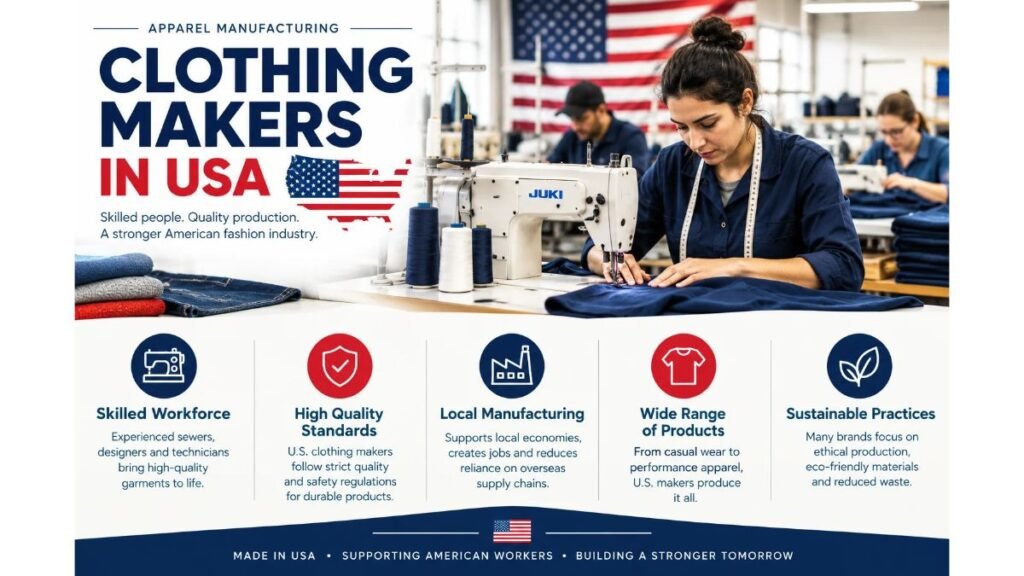
Clothing makers in USA are manufacturers that produce garments for fashion brands, retailers, startups, wholesalers, and other businesses operating in the American market.
These manufacturers may offer different production models. Some focus on cut-and-sew production, while others specialize in private label, custom apparel, uniforms, activewear, or specific garment categories.
A clothing manufacturer may provide some or all of these services:
- Pattern development
- Fabric sourcing
- Cutting
- Sewing
- Garment finishing
- Printing
- Embroidery
- Labels
- Hang tags
- Packaging
- Quality inspection
- Bulk production
The exact services depend on the manufacturer.
Some manufacturers work from finished tech packs. Others provide product development support for brands that have sketches, reference garments, images, or basic design ideas.
For a buyer, understanding these differences is important before contacting a factory.
Why Do Brands Search for USA Clothing Manufacturers?
USA-based brands often begin their search locally because location can affect communication, shipping, sampling, and production planning.
Working with a domestic manufacturer may offer convenient communication and easier coordination for some businesses. It can also be useful when a brand needs frequent product development or wants to visit a manufacturing facility.
However, location is only one factor.
A manufacturer should also match your:
- Product type
- Order quantity
- Fabric requirements
- Quality expectations
- Customization needs
- Budget
- Production timeline
- Branding requirements
- Shipping requirements
For example, a startup producing 100 custom hoodies has different requirements from an established retailer ordering thousands of garments.
That is why a garment manufacturers list should be treated as a starting point, not the final answer.
What Should You Look for in a Garment Manufacturers List?
A useful garment manufacturers list should contain more than company names.
Before contacting a manufacturer, collect information about each potential supplier.
1. Manufacturing Type
First, determine what type of production the manufacturer offers.
Common models include:
- Cut-and-sew manufacturing
- Private-label manufacturing
- OEM manufacturing
- ODM manufacturing
- White-label production
- Full-package production
OEM generally means the buyer provides the original product specifications.
ODM involves more design and development support from the manufacturer.
Private label allows a brand to sell garments under its own branding.
White label usually involves existing garment styles that can receive the buyer’s branding.
Knowing these terms makes it easier to identify manufacturers that fit your project.
2. Product Specialization
Not every clothing factory produces every garment.
Some manufacturers focus on:
- T-shirts
- Hoodies
- Sportswear
- Activewear
- Denim
- Jackets
- Workwear
- Uniforms
- Kidswear
- Streetwear
Check whether the factory has experience with the construction and materials your product requires.
A technical activewear product, for example, may require stretch fabrics and moisture-wicking materials. A heavyweight streetwear hoodie may need a completely different fabric and construction approach.
3. Minimum Order Quantity
MOQ means minimum order quantity.
It tells you the smallest quantity a manufacturer is willing to produce under a particular production arrangement.
MOQ can vary based on:
- Product
- Fabric
- Color
- Construction
- Decoration
- Size range
- Production model
- Customer requirements
Do not assume that one advertised MOQ applies to every product.
Ask the manufacturer for the MOQ for your specific garment.
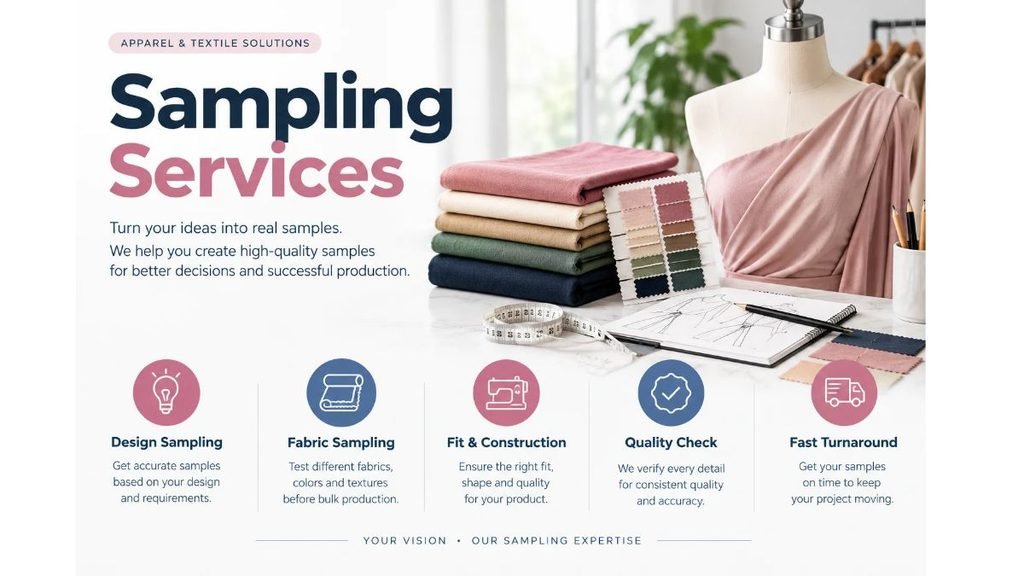
4. Sampling Services
Samples help you evaluate a product before committing to bulk production.
A proper sample process can help identify issues with:
- Measurements
- Fabric weight
- Fit
- Stitching
- Construction
- Print placement
- Embroidery
- Labels
- Color
- Trims
A physical pre-production sample is especially useful for custom garments.
For example, Fashion Soul International states that bulk production begins after physical sample approval. Its published sample turnaround is 7–14 business days, starting after design confirmation and required information are available.
What Information Should You Send to a Clothing Manufacturer?
Manufacturers need clear product information to provide an accurate quote.
You may provide:
- Design sketches
- Reference images
- Tech packs
- Reference garments
- Fabric preferences
- Target quantity
- Size specifications
- Color requirements
- Branding requirements
- Packaging requirements
- Target timeline
A tech pack can make communication easier because it provides technical instructions for production.
However, Fashion Soul International states that a tech pack is not required to request a quotation. Before sampling, the company requires a finalized tech pack or a suitable sample for reverse engineering.
If you do not have a complete tech pack, ask whether the manufacturer provides development assistance.
Understanding Fabric Before Production
Fabric selection affects how a garment looks, feels, fits, and performs.
One important measurement is GSM, which means grams per square meter. It describes fabric weight.
A higher GSM often indicates a heavier fabric, but fabric performance also depends on fiber composition and construction.
For example:
| Product | Possible Fabric Considerations |
| T-shirt | Cotton, jersey, heavyweight cotton |
| Hoodie | Fleece, French terry, cotton blends |
| Activewear | Stretch and moisture-wicking fabrics |
| Denim | Denim weight and weave |
| Workwear | Twill, canvas, durable woven fabrics |
Fashion Soul International lists cotton, fleece, French terry, polyester, spandex, nylon, denim, twill, canvas, and Oxford weave among its fabric groups.
The correct fabric depends on the garment and its intended use.
Printing and Embroidery Options
Branding is another major part of clothing production.
Common decoration methods include:
- Screen printing
- DTG printing
- Sublimation
- Puff printing
- Heat transfer
- Rubber printing
- Discharge printing
- Foil printing
- Embroidery
Each method has different applications.
For example, embroidery can work well for logos and textured branding. Screen printing can suit many graphic designs. Sublimation is often used for suitable performance garments.
The best option depends on the fabric, garment construction, design complexity, durability needs, quantity, appearance, and budget.
Private Label Clothing for USA Brands
Private-label manufacturing is useful for brands that want garments sold under their own brand identity.
A private-label manufacturer may provide:
- Custom garments
- Brand labels
- Hang tags
- Packaging
- Custom printing
- Embroidery
- Custom fabrics
- Custom fits
This model gives a brand more control than simply purchasing generic wholesale clothing.
Fashion Soul International offers private-label manufacturing and states a standard MOQ of 100 pieces per style, per color, per size run, while also noting that MOQ can vary according to product and production requirements.
For a small clothing brand, this can make private-label production more accessible than very large production runs.
OEM and ODM Manufacturing
When reviewing clothing makers in USA or international suppliers, you may also encounter OEM and ODM services.
OEM Manufacturing
OEM production works from the buyer’s product specifications.
These may include:
- Original designs
- Tech packs
- Patterns
- Measurements
- Fabric specifications
- Construction details
The manufacturer then produces the garment according to those requirements.
ODM Manufacturing
ODM is useful when a brand needs more design and development support.
A manufacturer may work from:
- Mood boards
- Reference images
- Creative briefs
- Design concepts
The process can include product development, patterns, and prototypes.
Fashion Soul International provides both OEM and ODM manufacturing services as part of its apparel production model.
Cut-and-Sew Clothing Manufacturing
Cut-and-sew production starts with fabric that is cut into garment components.
Those components are then assembled through sewing and finishing processes.
Custom cut-and-sew manufacturing can involve:
- Custom patterns
- Panels
- Seams
- Construction details
- Measurements
- Garment finishing
This approach is useful when you want a garment built around your own specifications instead of modifying an existing basic product.
When comparing clothing makers in USA, check whether the company actually provides the construction work your product requires.
Full-Package Clothing Manufacturing
Some brands prefer to work with one manufacturing partner for several stages.
This is often called full-package production.
A full-package manufacturer may handle:
- Fabric procurement
- Trim sourcing
- Pattern development
- Sampling
- Bulk production
- Quality control
- Labels
- Packaging
- Export documentation
- Delivery
Fashion Soul International describes its full-package production service as covering these types of activities, including production, quality control, branding, packaging, export documentation, and delivery.
For a growing brand, having several production stages coordinated by one supplier can simplify communication.
How to Compare Clothing Makers in USA
Instead of choosing a manufacturer based only on location, compare practical production factors.
| Factor | Questions to Ask |
| Product | Does the factory make your garment type? |
| MOQ | What is the MOQ for your exact product? |
| Samples | Can you approve a physical sample first? |
| Fabric | Can the factory source your required fabric? |
| Branding | Are labels, printing, and embroidery available? |
| Quality | What inspections are performed? |
| Timeline | How long does sampling and bulk production take? |
| Packaging | Can the factory follow your packaging requirements? |
| Shipping | What delivery options are available? |
| Communication | Who will manage your production project? |
This approach gives you a more useful comparison than simply counting manufacturers.
USA Manufacturing vs. International Manufacturing
A USA clothing manufacturer is not automatically the right fit for every brand.
International manufacturing can also be worth considering.
The decision may depend on your product, quantity, target market, development needs, and shipping requirements.
For example, a USA clothing brand may compare:
- Domestic production
- International production
- MOQ
- Manufacturing costs
- Sampling
- Shipping
- Quality control
- Production capabilities
- Customization
Fashion Soul International is based in Sialkot, Punjab, Pakistan, and serves international apparel businesses, including brands in the United States. The company states that finished apparel is shipped to brands in 30+ countries.
The company also identifies the USA as its largest market and lists DTC brands, Amazon FBA sellers, streetwear brands, gymwear companies, corporate uniform buyers, and startups among its USA customer types.
This means a USA-based brand can consider both domestic and international manufacturers when building its sourcing strategy.
Why Quality Control Matters
Quality control should happen throughout production, not only when the finished garments are packed.
Important checks can include:
- Measurements
- Stitch quality
- Fabric quality
- Print placement
- Print registration
- Trim attachment
- Color consistency
- Construction
- Finished appearance
Fashion Soul International states that it performs inline quality inspections during production. It also states that a pre-shipment AQL 2.5 inspection is conducted.
AQL means Acceptable Quality Limit. It is used as part of an inspection system to assess whether a production lot meets defined quality requirements.
For your own project, ask the manufacturer exactly what inspection process applies to your order.
Production Timeline
Production timing should be discussed before placing an order.
A typical project has several stages:
Design → Fabric sourcing → Sample → Sample approval → Bulk production → Inspection → Packaging → Shipping
Each stage takes time.
Fashion Soul International publishes a sample development timeline of 7–14 business days and a bulk-production timeline of 20–35 business days from sample approval. Shipping transit time is separate unless a quotation states otherwise.
These figures are company-published timelines. Your actual timeline can depend on the product and project requirements.
Shipping for USA Clothing Brands
Shipping becomes especially important when the manufacturer is outside the USA.
Ask about:
- Air freight
- Sea freight
- DDP
- FOB
- Export documents
- Customs responsibilities
- Transit time
- Delivery address
DDP means Delivered Duty Paid. Under this arrangement, the seller generally manages delivery and applicable import duties and taxes according to the agreed terms.
FOB means Free On Board and defines specific responsibilities for the seller and buyer in the shipping process.
Fashion Soul International states that it offers air and sea freight, along with DDP and FOB shipping options.
Always confirm the exact shipping terms in your quotation.
Common Mistakes When Choosing a Clothing Manufacturer
A manufacturer search can become difficult when buyers focus only on price.
Here are several common mistakes to avoid.
Choosing Only by Price
A low quoted price does not tell you everything about production quality.
Compare the complete offer, including:
- Fabric
- Construction
- Branding
- Sampling
- Quality control
- Packaging
- Shipping
Skipping the Sample
Bulk production without reviewing a sample can create unnecessary risk.
Use the sample to check the product before production moves forward.
Giving Unclear Specifications
A manufacturer cannot reliably produce a custom garment from vague instructions.
Provide clear measurements, fabric requirements, graphics, labels, and construction details.
Ignoring MOQ
A supplier may accept your product but require a quantity larger than your business can manage.
Always confirm MOQ before investing time in development.
Not Asking About Branding
If you need your own labels, hang tags, packaging, or embroidery, confirm these services before production.
Ignoring Shipping
For international production, shipping can affect the total landed cost and delivery schedule.
Discuss shipping before confirming the order.
Questions to Ask Before Selecting a Manufacturer
Before moving forward, ask potential clothing makers:
- What types of garments do you manufacture?
- What is the MOQ for my product?
- Can you make a physical sample?
- How long does sampling take?
- What fabrics can you source?
- Can you follow my tech pack?
- Do you provide pattern development?
- Can you add custom labels?
- Do you offer printing and embroidery?
- What quality inspections do you perform?
- What is the bulk-production timeline?
- Which shipping options are available?
- Can you handle custom packaging?
- What information do you need for a quotation?
- What are the production terms for my specific order?
These questions can help you separate general suppliers from manufacturers that match your actual requirements.
A Practical Way to Build a Garment Manufacturers List
If you are researching manufacturers for your brand, create a simple comparison sheet.
Include columns for:
- Manufacturer
- Location
- Product specialization
- Manufacturing model
- MOQ
- Sample timeline
- Production timeline
- Fabric options
- Branding options
- Quality control
- Shipping
- Packaging
- Contact information
Then remove companies that do not meet your basic requirements.
For example, if your brand needs custom activewear, a factory without suitable stretch fabrics may not fit your project. If you need a small production run, a manufacturer with a very high MOQ may also be unsuitable.
This process saves time because you compare manufacturers based on your actual production needs.
How Fashion Soul International Supports International Brands
Fashion Soul International is a factory-owned apparel manufacturer based in Sialkot, Pakistan.
The company states that it provides private-label, OEM, ODM, white-label, cut-and-sew, and full-package production. Its services include product development, fabric sourcing, sampling, bulk manufacturing, quality control, branding, packaging, export documentation, and international shipping.
The company states that it has:
- 250+ workers
- 50,000–100,000 garments monthly production capacity
- 2,500+ brands served
- Shipping to 30+ countries
These are company-published figures and should be treated as such.
Its product categories include streetwear, sportswear, activewear, workwear, jackets, denim, casual wear, tracksuits, T-shirts, hoodies, baby clothing, kidswear, fitness apparel, uniforms, swimwear, and other apparel categories.
What Type of USA Brand Can Work With an International Manufacturer?
International production may be considered by several types of USA businesses.
Startups
Startups may need smaller quantities, samples, branding, and product development.
E-Commerce Brands
Online brands may need private-label or white-label products with custom packaging.
Streetwear Brands
Streetwear companies may need heavyweight fabrics, oversized fits, graphic printing, embroidery, and special finishes.
Fitness Brands
Activewear businesses may require four-way stretch and moisture-wicking fabrics.
Retailers and Wholesalers
Retail businesses may need larger quantities, private labeling, packaging, and repeat production.
Fashion Soul International lists these customer groups among the businesses it serves.
FAQ About Clothing Makers in USA
What are clothing makers in USA?
They are garment manufacturers that produce clothing for brands, retailers, startups, wholesalers, and other businesses serving the USA market.
How do I find garment manufacturers?
Start by identifying manufacturers that produce your garment category. Then compare MOQ, sampling, fabric options, customization, quality control, timelines, and shipping.
What is MOQ in clothing manufacturing?
MOQ means minimum order quantity. It is the smallest quantity a manufacturer accepts for a particular production arrangement.
Do clothing manufacturers provide samples?
Many manufacturers provide sampling services, but the process and cost vary. Ask about sample development before placing a bulk order.
Do manufacturers provide private-label services?
Some do. Private-label services may include custom garments, labels, hang tags, packaging, printing, and embroidery.
Can a USA clothing brand use an international manufacturer?
Yes. USA brands can work with manufacturers in other countries. The buyer should evaluate production requirements, shipping, import considerations, communication, quality control, and total costs.
What should I include in a manufacturer inquiry?
Include your design information, product type, quantity, fabric preference, size requirements, branding needs, packaging requirements, and desired timeline.
Final Thoughts
Finding the right clothing makers in USA requires more than searching for a long list of factories. You need to understand what your brand actually needs before comparing manufacturers.
Start with your product specifications. Then evaluate MOQ, fabric, sampling, customization, quality control, production time, packaging, and shipping.
A garment manufacturers list can help you discover potential suppliers, but the final choice should be based on whether each manufacturer can meet your specific production requirements.
USA clothing brands can also consider international manufacturing when it fits their sourcing strategy. Fashion Soul International provides private-label, OEM, ODM, white-label, cut-and-sew, and full-package apparel manufacturing from its Sialkot facility and serves international markets, including the United States.
If you already have a design, tech pack, sketch, or reference garment, the next step is to share those details with a manufacturer and request a project-specific quotation.
Ready to discuss your clothing project? Share your design requirements, target quantity, fabric preferences, and branding needs with Fashion Soul International to start the manufacturing conversation.