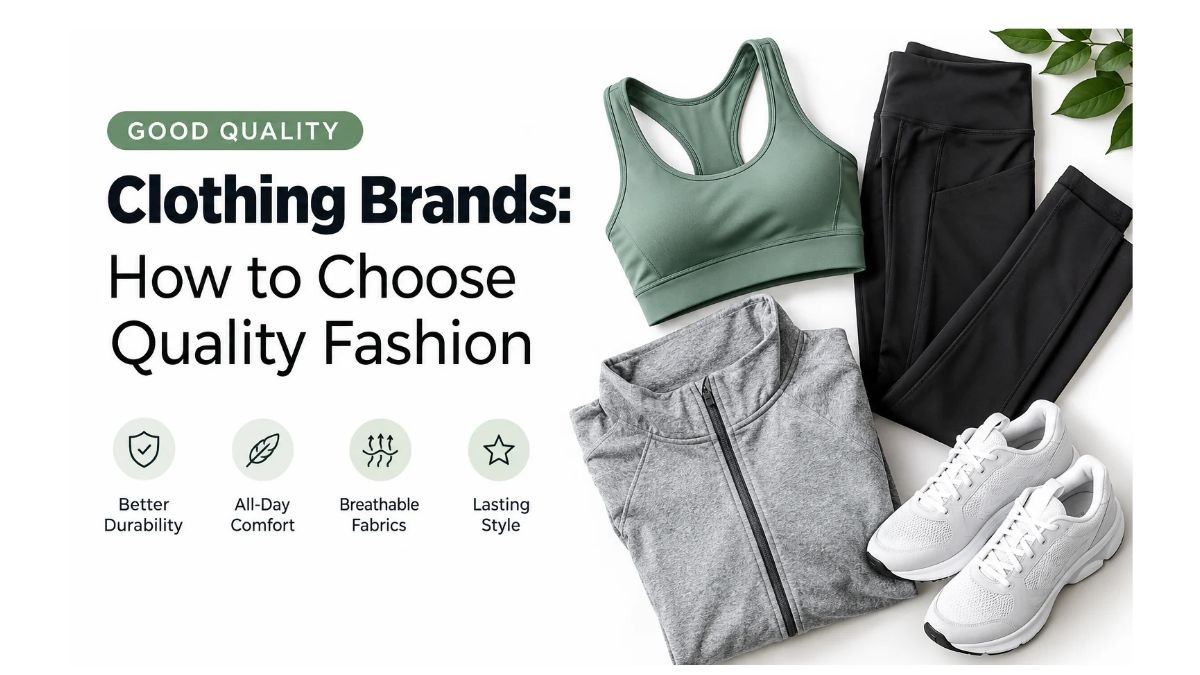
Good Quality Clothing Brands: How to Identify Quality Fashion
Finding good quality clothing brands can be difficult when many products look similar online. A stylish design does not always mean a garment is well made. Quality depends on much more than appearance.
The fabric, stitching, construction, fit, finishing, trims, printing, and manufacturing process all affect how a garment performs over time. These details can help shoppers identify clothing that offers better durability and value.
For clothing brands, understanding quality is just as important. A brand needs reliable fabrics, accurate patterns, strong construction, consistent sizing, and careful quality control. These factors can influence customer satisfaction and repeat purchases.
This guide explains what makes clothing high quality, how to compare quality clothing
brands, and what to look for when choosing garments. It also explains how manufacturers help brands develop durable apparel.
What Makes a Clothing Brand High Quality?
A clothing brand can offer high-quality products in many different styles and price ranges. Quality does not depend only on the price tag.
Several factors work together to determine garment quality:
- Fabric composition
- Fabric weight and GSM
- Yarn and fabric construction
- Stitch quality
- Seam construction
- Pattern accuracy
- Fit and measurements
- Color consistency
- Print or embroidery quality
- Trims and accessories
- Washing and finishing
- Quality inspection
- Manufacturing consistency
A premium-looking garment can still have weak seams or poor fabric. On the other hand, a simple T-shirt can be well constructed and last for years.
This is why evaluating the physical details of clothing is more useful than relying only on branding or price.
How to Recognize Good Quality Clothing Brands
When comparing good quality clothing brands, start with the garment itself.
Look closely at the fabric. Check the seams, stitching, labels, buttons, zippers, prints, and overall construction.
If you are shopping online, product descriptions can provide useful information. Look for fiber composition, fabric type, care instructions, and detailed product photographs.
For brands, these same factors should be considered during product development and sampling.
SEO Title: textile industry world history definition: A Complete Guide
1. Check the Fabric Composition
Fabric is one of the most important parts of clothing quality.
Common materials include:
- Cotton
- Polyester
- Nylon
- Spandex
- Linen
- Denim
- French terry
- Fleece
- Cotton blends
- Performance fabrics
Each fabric has different properties.
Cotton can provide softness and breathability. Polyester is often used for performance clothing because of its durability and moisture-management properties. Nylon can provide strength and abrasion resistance. Spandex adds stretch.
However, the fiber name alone does not determine quality.
The fabric construction, yarn, finishing, weight, and intended use also matter.
For example, a lightweight cotton T-shirt may be appropriate for summer clothing. A heavyweight streetwear T-shirt may need a much higher GSM.
2. Understand GSM
GSM means grams per square meter. It measures fabric weight.
GSM is especially useful when comparing similar garments.
A higher GSM generally means a heavier fabric, but heavier does not automatically mean better.
For example:
- Lightweight T-shirts may use lower GSM fabrics.
- Premium heavyweight T-shirts may use higher GSM fabrics.
- Hoodies often use heavier fleece.
- Activewear may use lighter performance fabrics.
- Jackets can require different fabric weights based on construction and purpose.
The correct GSM depends on the garment.
A brand developing a summer T-shirt should not simply choose the heaviest fabric available. Comfort, drape, breathability, and intended use are also important.
Fashion Soul International’s published manufacturing information includes custom T-shirt fabrics around 160–280 GSM and streetwear fabrics around 240–460 GSM. These ranges show why fabric weight should be selected according to the product rather than treated as a universal quality score.
3. Examine Stitching and Seams
Stitching is another important indicator of garment construction.
Look closely at:
- Straight seams
- Stitch density
- Loose threads
- Seam strength
- Hem construction
- Reinforced areas
- Seam alignment
Good construction should look consistent throughout the garment.
Loose threads do not always mean the entire garment is poor quality, but repeated loose stitching or uneven seams can indicate production problems.
Different garments also require different seam constructions.
Activewear may require stretch-friendly seams. Heavy hoodies need construction that can handle thicker fabric. Workwear may require reinforced areas because the garments face more physical stress.
For brands, these decisions should be defined during product development and sampling.
4. Look at the Fit
Fit is often overlooked when people discuss clothing quality.
A high-quality garment should follow its intended measurements and shape.
Important measurements can include:
- Chest
- Waist
- Shoulder width
- Sleeve length
- Body length
- Inseam
- Rise
- Leg opening
- Neck opening
A garment can use expensive fabric but still feel poorly made if the pattern and measurements are inaccurate.
This is why professional apparel manufacturing involves pattern development, grading, sampling, and measurement checks.
A physical pre-production sample gives a brand an opportunity to review the fit before bulk production.
5. Check the Finishing
Finishing can make a major difference in how clothing looks and feels.
Finishing may include:
- Garment washing
- Enzyme washing
- Stone washing
- Acid washing
- Pigment dyeing
- Overdyeing
- Pressing
- Hem finishing
- Surface treatments
The right finishing method depends on the garment and desired appearance.
For example, a streetwear brand may want a washed appearance. Another brand may want a clean and smooth finish.
Quality finishing should be consistent across the production run.
What Are Quality Clothing Brands Doing Differently?
Quality clothing brands usually pay attention to the complete product rather than focusing on one feature.
A brand may choose good fabric but still have problems with:
- Poor sizing
- Weak seams
- Incorrect labels
- Uneven printing
- Bad trim attachment
- Inconsistent colors
- Poor finishing
Quality requires control at multiple stages.
This starts during design and continues through manufacturing and final inspection.
What Are the Highest Quality Clothing Brands?
People often search for highest quality clothing brands when they want garments that offer better construction and durability.
However, there is no single objective list that can place every clothing brand into a universal quality ranking.
Different brands focus on different products and materials.
For example, one brand may specialize in heavyweight streetwear. Another may focus on technical activewear. Another may concentrate on denim or workwear.
Instead of choosing a brand based only on its reputation, evaluate the specific garment.
Ask:
- What is the fabric composition?
- Is the fabric appropriate for the product?
- How is the garment constructed?
- Are the seams clean and strong?
- Does the garment match the listed measurements?
- Are the prints or embroidery consistent?
- Are the trims securely attached?
- Does the product have clear care instructions?
- Does the manufacturer conduct quality inspections?
These questions provide a more practical way to compare clothing.
Long Lasting Clothing Brands: What Makes Clothes Durable?
People searching for long lasting clothing brands are usually looking for garments that can handle regular use and repeated washing.
Durability depends on several factors.
Strong Fabric
Fabric must match the intended use.
A fabric designed for casual wear may not perform the same way as fabric designed for sportswear or workwear.
Good Construction
Strong seams and appropriate stitching help garments handle regular movement and washing.
Quality Trims
Buttons, zippers, drawcords, snaps, and other components should be suitable for the garment.
Correct Finishing
Finishing should not weaken the fabric or create unwanted changes after washing.
Proper Care
Even high-quality clothing can wear out quickly if it is washed or dried incorrectly.
Care labels are therefore an important part of garment quality.
Why Fabric Alone Does Not Determine Quality
A common mistake is assuming expensive or natural fabric automatically means better clothing.
That is not always true.
A garment’s performance depends on how the fabric works with the design.
For example, activewear often needs:
- Stretch
- Recovery
- Breathability
- Moisture management
- Comfort
- Appropriate weight
A four-way stretch fabric may be more suitable for leggings than a heavy woven cotton fabric.
Similarly, a heavyweight fleece may be suitable for a winter hoodie but uncomfortable for lightweight summer clothing.
Good product development matches fabric properties with garment purpose.
Quality in T-Shirts
T-shirts are among the easiest garments to compare because many brands sell similar designs.
When evaluating a T-shirt, consider:
- Cotton or blended composition
- GSM
- Fabric softness
- Shape retention
- Collar construction
- Shoulder seams
- Sleeve construction
- Hem quality
- Print durability
- Shrinkage
- Color consistency
The collar is particularly important.
A weak collar can lose its shape after repeated washing. Good construction helps the neckline maintain its intended appearance.
Quality in Hoodies
Hoodies require different quality considerations.
Look at:
- Fleece construction
- GSM
- Hood shape
- Rib quality
- Cuff construction
- Kangaroo pocket stitching
- Drawcords
- Zippers where applicable
- Print or embroidery
- Seam strength
Heavyweight hoodies often require appropriate machinery and production methods because thicker fabrics behave differently during cutting and sewing.
Fashion Soul International publishes hoodie fabric options including 280g, 320g, 380g, and 460g weights, depending on the product requirements.
Quality in Activewear
Activewear requires more than attractive design.
Important factors include:
- Stretch
- Recovery
- Moisture management
- Fabric weight
- Seam construction
- Comfort
- Pattern accuracy
- Opacity
- Durability
Leggings, sports tops, gym shorts, and performance garments can place significant stress on fabric and seams.
This makes sampling especially important.
Brands should test movement, fit, stretch, and construction before approving bulk production.
Quality in Denim
Denim quality can involve:
- Fabric weight
- Fiber composition
- Weave
- Stitching
- Hardware
- Wash treatment
- Pocket construction
- Waistband construction
- Fit
Denim can range from lightweight fashion products to heavier jeans designed for regular wear.
Again, the appropriate fabric depends on the intended product.
How Manufacturing Affects Clothing Quality
Manufacturing has a major effect on the final garment.
The process can involve:
- Design development
- Fabric selection
- Pattern development
- Sample creation
- Sample review
- Cutting
- Sewing
- Decoration
- Quality inspection
- Finishing
- Packaging
- Shipping
A mistake at one stage can affect later stages.
For example, inaccurate patterns can cause fit problems. Poor cutting can create inconsistent panels. Incorrect sewing can affect measurements. Poor decoration can reduce the appearance of the final product.
This is ol quality control should happen throughout production.
Why Samples Matter
A sample allows a clothing brand to inspect the product before ordering in bulk.
The brand can check:
- Fabric
- Color
- GSM
- Measurements
- Fit
- Construction
- Stitching
- Printing
- Embroidery
- Labels
- Trims
- Packaging
Changes can then be made before bulk manufacturing begins.
Fashion Soul International states that its standard sample development timeline is 7–14 business days after design confirmation and required information are available. Its stated workflow includes physical pre-production sample approval before bulk production.
Quality Control in Apparel Manufacturing
Quality control should not happen only after production is finished.
It can take place throughout manufacturing.
Fabric Inspection
Fabric can be checked for:
- Color consistency
- Weight
- Surface defects
- Construction
- Shade variation
Measurement Checks
Garments can be compared with approved specifications.
Stitch Inspection
Production teams can check:
- Seam quality
- Stitch consistency
- Loose threads
- Construction details
Decoration Inspection
Prints and embroidery can be checked for:
- Placement
- Registration
- Appearance
- Attachment
- Consistency
Final Inspection
Finished garments can be inspected before packing and shipment.
Fashion Soul International states that its production workflow includes inline inspections and a pre-shipment AQL 2.5 inspection.
How Clothing Brands Build Better Quality Products
A clothing brand that wants to produce high-quality apparel should begin with clear specifications.
A useful product brief can include:
- Product type
- Target customer
- Fabric composition
- GSM
- Color
- Measurements
- Fit
- Construction details
- Decoration
- Labels
- Packaging
- Quantity
- Delivery requirements
A tech pack can make these details easier to communicate.
Reference images and physical samples can also help manufacturers understand the desired result.
Private Label and Quality Apparel
Private-label clothing allows brands to develop garments under their own brand identity.
The process can include:
- Fabric selection
- Custom patterns
- Branding
- Labels
- Packaging
- Sampling
- Bulk production
- Quality control
The brand does not need to manufacture the garment itself.
Instead, it works with an apparel manufacturer that handles the production process.
For businesses building a new clothing collection, this can provide a structured way to turn product ideas into finished garments.
Choosing a Manufacturer for Quality Clothing
If you are building a clothing brand, choosing the manufacturer is an important decision.
Consider these areas:
Manufacturing Experience
Look for a manufacturer with experience in the type of apparel you want to produce.
Sampling Process
Ask how samples are created and approved.
Quality Control
Understand when and how inspections happen.
Fabric Options
Check whether the manufacturer can source fabrics suitable for your products.
Customization
If you need custom patterns, labels, prints, embroidery, or packaging, confirm that these services are available.
MOQ
Minimum order quantities should fit your business stage.
Communication
Clear communication helps reduce errors during development.
Shipping
Understand available shipping methods and export requirements before placing an order.
Fashion Soul International is a factory-owned apparel manufacturer based in Sialkot, Pakistan. The company provides private-label, OEM, ODM, white-label, cut-and-sew, and full-package manufacturing for international clothing businesses.
Its published services include fabric sourcing, product development, sampling, bulk production, quality control, branding, packaging, export documentation, and international shipping.
What Should Clothing Brands Ask Before Production?
Before starting an order, ask the manufacturer:
- What fabric options are available?
- What GSM is suitable for my product?
- What is the MOQ?
- How long does sampling take?
- Can I approve a physical sample?
- How are measurements checked?
- What quality inspections are performed?
- What printing methods are available?
- Can you produce custom labels?
- Can you provide custom packaging?
- What shipping options are available?
- What information is needed for a quotation?
These questions can help prevent misunderstandings.
Good Quality Clothing Is About Consistency
One excellent sample is not enough.
A clothing brand needs consistency across the entire production run.
Every garment should follow the approved specifications as closely as possible.
That includes:
- Fabric
- Color
- Measurements
- Stitching
- Decoration
- Labels
- Trims
- Finishing
Quality control helps identify differences before products reach customers.
Common Mistakes When Buying Clothing
People sometimes judge clothing quality based only on price.
Other common mistakes include:
Choosing Fabric by Weight Alone
Heavy fabric is not automatically better.
Ignoring Construction
A beautiful fabric cannot compensate for poor stitching.
Ignoring Fit
Incorrect measurements can make an otherwise good garment uncomfortable.
Buying Without Checking Care Instructions
Improper washing can shorten garment life.
Judging a Brand by One Product
A brand may offer different quality levels across different product categories.
Skipping Samples
For clothing businesses, skipping physical samples can create expensive production problems.
How to Compare Clothing Brands Before Buying
A simple comparison process can help.
Start with fabric composition.
Then compare:
- Fabric weight
- Construction
- Stitching
- Fit
- Finishing
- Trims
- Product details
- Care instructions
For online shopping, read the product specifications carefully.
For businesses, request samples and technical information before committing to bulk production.
This approach is more useful than simply searching for a list of the highest quality clothing brands.
Frequently Asked Questions
What are good quality clothing brands?
Good quality clothing brands usually focus on appropriate fabrics, accurate construction, consistent sizing, strong stitching, reliable finishing, and quality control. The right choice depends on the type of clothing you need.
What makes clothing long lasting?
Durability depends on fabric, construction, stitching, trims, finishing, garment use, and care. Strong fabric alone does not guarantee a long-lasting garment.
Are expensive clothes always better quality?
No. Price does not automatically prove quality. Compare fabric, construction, fit, finishing, and durability instead.
How can I identify quality clothing?
Check the fabric composition, stitching, seams, fit, hems, trims, labels, printing, and overall finishing. Product specifications and care instructions can also provide useful information.
What does GSM mean in clothing?
GSM means grams per square meter. It describes fabric weight and can help compare fabrics used for similar garments.
Are heavyweight clothes always better?
No. Heavyweight fabric can be useful for certain garments, such as streetwear or winter hoodies, but lighter fabrics may be more suitable for summer clothing or activewear.
Why are samples important for clothing brands?
Samples allow brands to check fabric, fit, measurements, construction, decoration, labels, and other details before bulk production.
How do clothing manufacturers control quality?
Quality control can include fabric inspection, measurement checks, inline production inspection, decoration checks, final inspection, and pre-shipment audits.
Final Thoughts
Finding good quality clothing brands requires more than looking at logos or prices. Quality comes from the complete garment.
Fabric choice, GSM, construction, stitching, fit, finishing, trims, decoration, and manufacturing controls all contribute to the final result.
The same principle applies to clothing businesses. Brands that want durable apparel should define their product specifications clearly, choose suitable fabrics, review physical samples, and work with manufacturers that have a structured quality-control process.
Whether you are comparing quality clothing brands, researching the highest quality clothing brands, or looking for long lasting clothing brands, focus on measurable product details rather than marketing language.
For clothing brands developing their own products, a reliable manufacturing process can make those quality standards easier to achieve. From fabric sourcing and sampling to bulk production and inspection, each stage has a role in creating consistent apparel.